Stranger Than Fiction: True Story of “Thai Woman” Who Survives Scammer Gang and Regaines Her Freedom

Lessons drawn from the story of a Thai woman who was unfortunate to be lured by a group of scammers using a new and sophisticated method. What began as a simple desire to find an online job led her into hell in Cambodia. Before she could miraculously survive and escape, what did she have to go through and encounter? Thai PBS Verify brings her real-life experience here.
How did the deception begin?
The young female victim, Ms. C (pseudonym), recounted the story that led her into hell in Cambodia. While she was searching for a job through online platforms, she came across a Facebook post advertising a position as a chat admin responding to customer inquiries and working at a parcel dispatch point in a warehouse, with a salary of more than 20,000 baht per month. This caught Ms. C’s interest, and she added the contact on the platform LINE to discuss the work plan. They later arranged a meeting in Bangkok. At the time, she had no suspicions at all, as the job she applied for appeared to be an ordinary position, and the pay was not unusually high.
She went on to say that upon arriving at the meeting point at Mo Chit Bus Terminal, she met individuals who claimed to be staff sent to take her to a workplace near the border. The group then took her onward to Sa Kaeo province. However, upon reaching the destination, she encountered a group of armed men waiting there. They confiscated her mobile phone and important documents before detaining her and others, forcing them to walk through forested areas and use natural routes to cross the border into Cambodia.
At that moment, Ms. C realized something was wrong and believed she was being deceived, but it was already too late to resist or escape.

Victims deceived into working as scammers in Cambodia
What was life like after being deceived?
The beginning of life in hell started once Ms. C had successfully crossed the border. She said she was taken to have her face scanned in order to open accounts and verify her identity, before her bank accounts were seized. She was then moved to three different locations before finally being taken to the actual scammer hub. She did not know where this place was located in Cambodia. There, she was forced to begin work that involved deceiving and luring others to face the same fate she herself never wanted from the start. She stated that if she failed to follow orders, she would be physically abused.
As for what she had to do each day, it was exactly as many people have heard or learned about: being beaten, coerced, and threatened in order to be trained to deceive others. Each day involved working 12–18 hours with no days off for rest. Otherwise, victims would be detained or physically assaulted, instilling fear until they submitted to orders.
During more than two months that Ms. C was held captive, she said to have been forced to work and reach the goals for her ‘bosses,’ a term everyone used to refer to Chinese supervisors. During detention, she herself was subjected to electric shocks, which forced her to comply and work as a scammer. She also recounted witnessing a Thai man being physically assaulted and electrocuted until he died before her eyes. This incident left other victims too frightened to resist or fight back. As for the man who died, she said she never knew what ultimately happened to him or where his body was taken.
How did she survive from hell in Cambodia?
Her escape and struggle for survival began after a young South Korean male student was found dead in Kampot province, Cambodia, in August 2025. Following the incident, South Korean authorities sent officials to the area and launched a serious crackdown on transnational criminal groups. When news of this reached the scammer base where she was being held, the ringleaders of the criminal network ordered the relocation of their base to evade the South Korean-led crackdown.

South Korea repatriates the ashes of a 22-year-old student who died in Cambodia
As soon as she learned the news, she and several other Thai victims discussed plans to escape. Their common understanding was that “escaping as a group would increase the risk of being caught.” They therefore agreed to flee separately to improve their chances of success. When the day came for the relocation of forced laborers, she and other Thai victims seized the moment to walk out of the building and run off in different directions. She herself kept running, fleeing desperately without regard for her own life.
At that moment, she thought only, “I just want to survive.” She kept running until she came across a garbage dump, where she hid and waited. Eventually, a local Cambodian woman found her, and she came out to ask for help. The Cambodian woman then had her son take Ms. C to hide at their home. She later used another mobile phone she had secretly kept to contact her family and ask for help, so they could coordinate with the relevant authorities. This ultimately led to her being able to return to Thailand.
Ms. C stated that the impact of being deceived in this case went beyond facing legal action, as the bank accounts she was forced to open were used for fraud. At present, she is also suffering psychological effects, including persistent insomnia and heightened anxiety whenever she hears people screaming. These symptoms stem from the physical abuse she endured while being held captive in Cambodia.
Assistance and information on victims identified
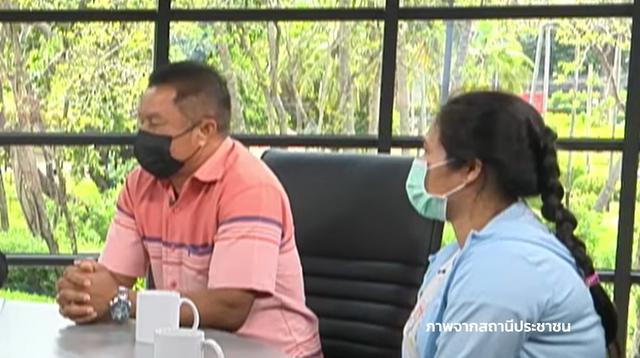
Thai PBS Verify interviewed Mr. Jaruwat Jhinmarka, Vice President of the Immanuel Foundation. He provided information on the victims identified. In addition to the case of Ms. C, who was a victim and has been rescued, there are still many other victims who continue to be deceived into working in such operations, whether as direct victims or as people who were later deceived by others. Based on estimates and current data from the foundation’s rescue efforts, around 1,400 victims have been identified so far, and the number continues to rise, especially among those lured through invitations to work together.
However, when viewed proportionally, cases of deception still account for the largest share. The growth rate of criminal operators and masterminds remains relatively low compared to the growing number of victims who continue to be deceived.

Images of sample online job posts that victims were lured into applying for show that scammers deliberately set salaries at a modest level to make the jobs appear ordinary.
What is alarming is that statistics since June 2025 have reported an increase in the number of people being deceived into such work, despite border closures and clashes along the Thai–Cambodian border.
This is because real criminals have never cared about any government or any law. As a result, the number of victims continues to increase, along with increasingly sophisticated methods that are harder to detect. In the past, victims were lured into working in Cambodia directly, but as fewer Thais fell for such schemes, scammers changed tactics by claiming the jobs were located in Thailand, such as in Bangkok. Victims would then be taken to border provinces before being transported across to Cambodia. They use every possible method to deceive people into going along willingly, doing whatever it takes to get them as close to the border as possible.

Mr. Jaruwat Jhinmarka, Vice President of the Immanuel Foundation
There are, for example, job postings on social media platforms and online spaces from people we do not know, or companies on Facebook that may be legitimate or may be scammers. So, it is better to be suspicious from the start. If a job requires traveling onward from Bangkok to other provinces that may be high-risk areas for being taken across the border, it is advised not to take the risk or show interest, before it becomes too late, as has happened in many cases.
What do current scam tactics look like?
What is most clearly visible is the evolution of scammers. Unlike legitimate organizations, they do not openly announce, publicize, or advertise themselves through the media or to the public. Instead, they evolve quietly, like a disease or a hidden threat that adapts to overcome human awareness and every innovation we create.
In the early stages, criminal groups often used unusually high pay figures to easily lure victims into their trap, with meeting points set in border provinces. However, recent cases show that scammers have begun lowering salaries to levels comparable to ordinary wages and setting meeting locations in major cities or economic zones, making it harder for victims to anticipate or conduct preliminary checks.
Equally important are “awareness and instinct” for self-preservation, and the ability to question things internally. As in the story of Ms. C, she explained that she was lured by more sophisticated tactics, such as salary figures that were close to the general minimum wage in Thailand, and meeting locations that were set in major cities or crowded areas.
We should thoroughly check information about any company we are about to meet with, including the meeting place. Instead of being a main office or company headquarters, it may turn out to be a location resembling a transit hub, from which it is easy to travel onward to anywhere else.
This also includes the conditions set by companies for applicants to many positions, which under normal circumstances should be clearly specified, such as:
- The number of positions available
- Required skills (no matter how simple the position may be)
How can we avoid, detect, and survive from these scammers?
Regarding this final point—how to avoid, verify, and protect oneself from criminal scam networks—Police Lieutenant Colonel Wasuthep Jaiin from the Patrol and Special Operation Division has provided the following information and recommendations.
Schemes by scammer groups can be seen in many job recruitment posts, especially for high-risk occupations such as accounting staff, chat agents, or those hired to withdraw money or wait in queues. One of the clearest red flags that should raise suspicion or prompt closer scrutiny is the “tagline or invitation used in the job advertisement,” because applying for a position with a legitimate or large company normally requires multiple steps, such as:
- Background checks
- Skills assessment
- Interview appointments
These processes may be complicated, time-consuming, and involve clear details about how many positions are available, which roles are being recruited, and in what numbers.
If we encounter job posts that appear overly welcoming, with no conditions or limitations, and only involve casual discussions about meeting locations or requirements related to opening bank accounts, financial accounts, or telecommunications networks, we should be especially cautious. Such offers may be scams intended to lure people into a trap.
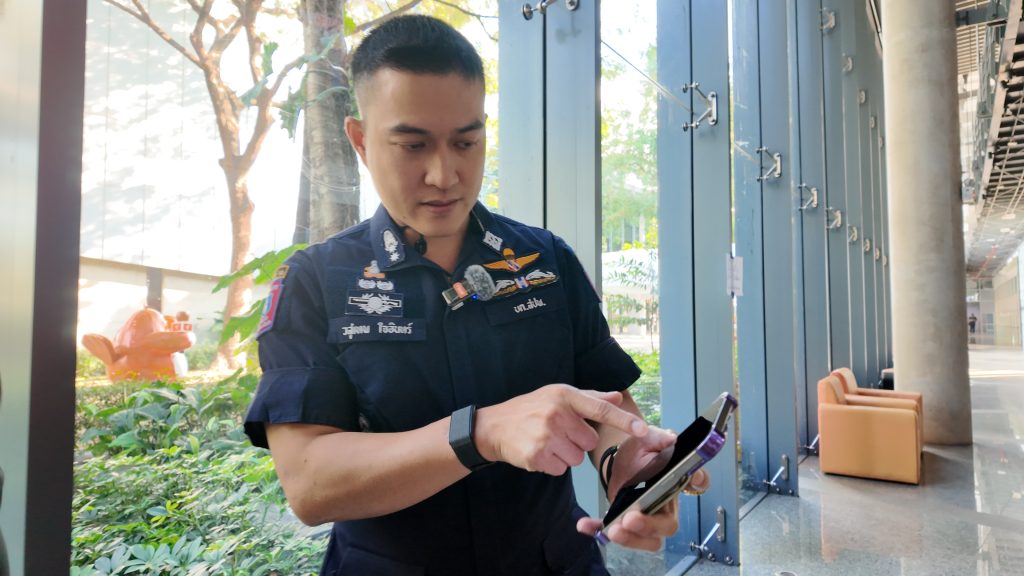
Police Lieutenant Colonel Wasuthep Jaiin, Patrol and Special Operation Division
In addition, Pol. Lt. Col. Wasuthep stated that Thailand’s Ministry of Commerce has already created and launched a website for checking business registrations, namely the Department of Business Development, or DBD (Department of Business Development). The site compiles extensive information under the category of a “business database,” allowing users to search for and verify companies that are being referenced, including:
- Date of registration
- Registered capital
- Office location
- List of shareholders
- Current status and financial statements of the company
However, this does not mean such information can be trusted 100 percent, as there are real cases in which scammer groups establish legally registered businesses as front companies to deceive victims. Still, if a company cannot be found or verified on the website at all, it can be reasonably assumed to be an illegal operation.
In the worst-case scenario, when a victim is about to be taken across the border and handed over to a scammer base—whether the perpetrators are armed and tightly controlling the victim, or exercising looser control with only their bare hands—the best advice from police is to “be brave and run for your life.” There have been many cases in which victims managed to escape simply because they dared to run and resist the scammers, as long as they were still within their own country or territory.
The reason for this is largely based on the mindset that scammers see victims as mere pawns that can be discarded at any time. If one victim cannot be successfully lured, there are always others who can replace them. They do not want to fixate on a single target or let a situation escalate, as that increases the risk of being tracked down and eventually arrested. Therefore, even if fleeing results in injuries, if one has the courage to run, the chances of survival are still much higher.