Distorted claims on PM Anutin allowing oil exports to Laos while limiting domestic refueling
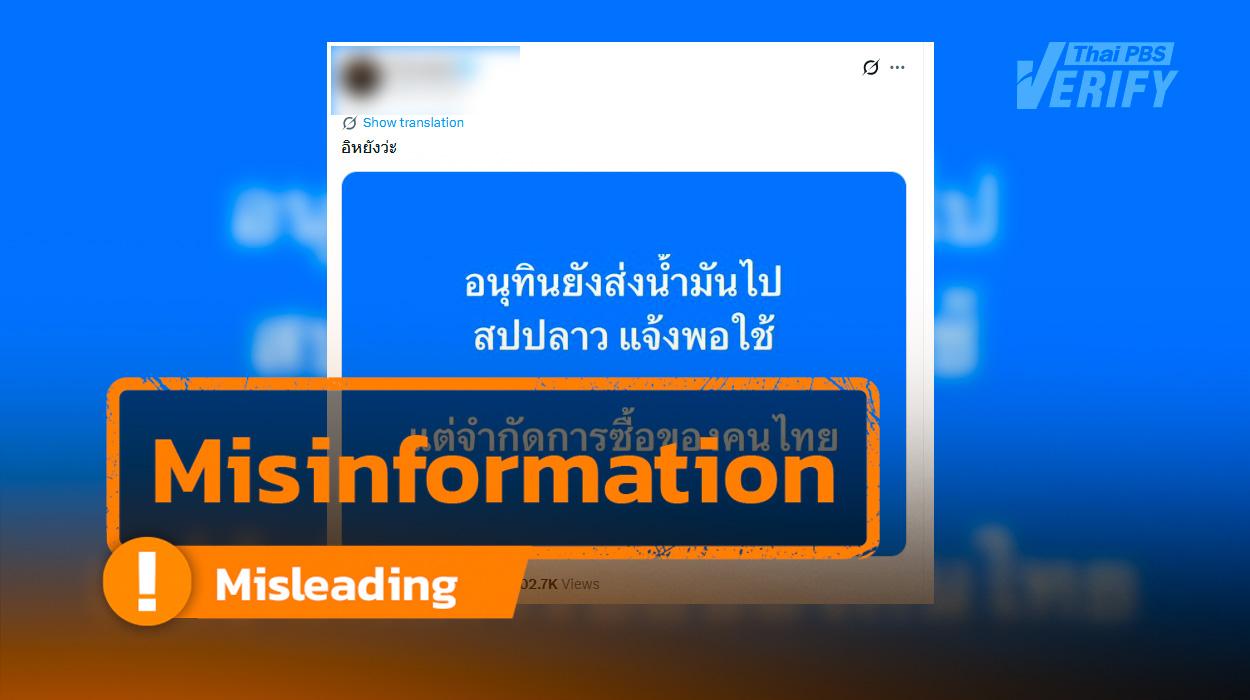
It is found to be untrue. In fact, the government does not have a policy restricting refueling; rather, limitations in certain areas stem from management and distribution issues.
Thai PBS Verify found the piece of misinformation on: X
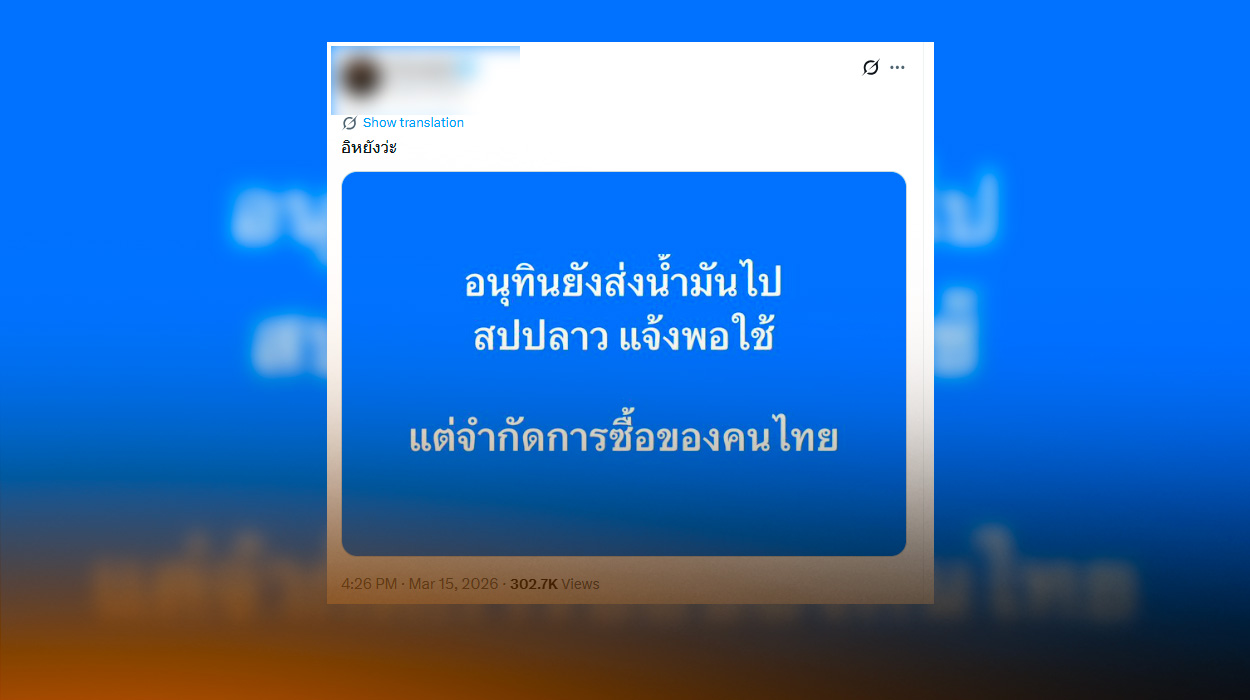
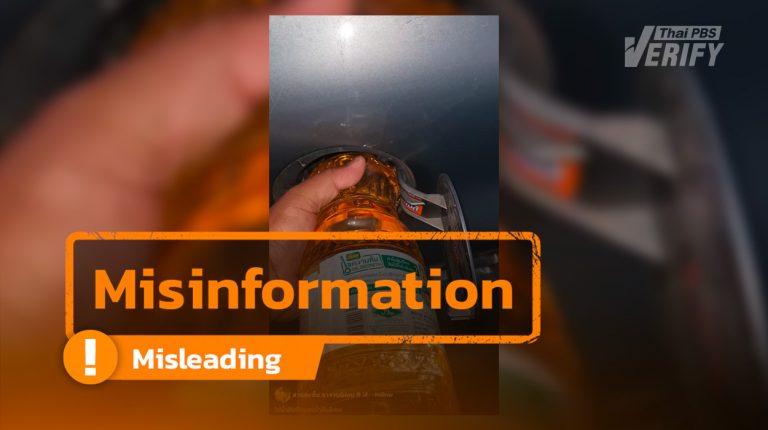
A screenshot of the claim that Anutin continues exporting oil to Lao PDR and reassures sufficient supply while restricting purchases among Thais.
As some citizens were unable to refuel because several gas stations ran out of stock and were awaiting delivery, widespread questions have been raised regarding the government’s management approach amid the prolonged tensions in the Middle East.
Thai PBS Verify discovered a post from an X user stating, “Anutin continues exporting oil to Lao PDR, pointing out sufficient supply, but restricts purchases among Thais,” which has garnered 301,000 views, 6,700 comments, and over 1,700 reposts.
Does PM Anutin really allow oil exports to Laos?
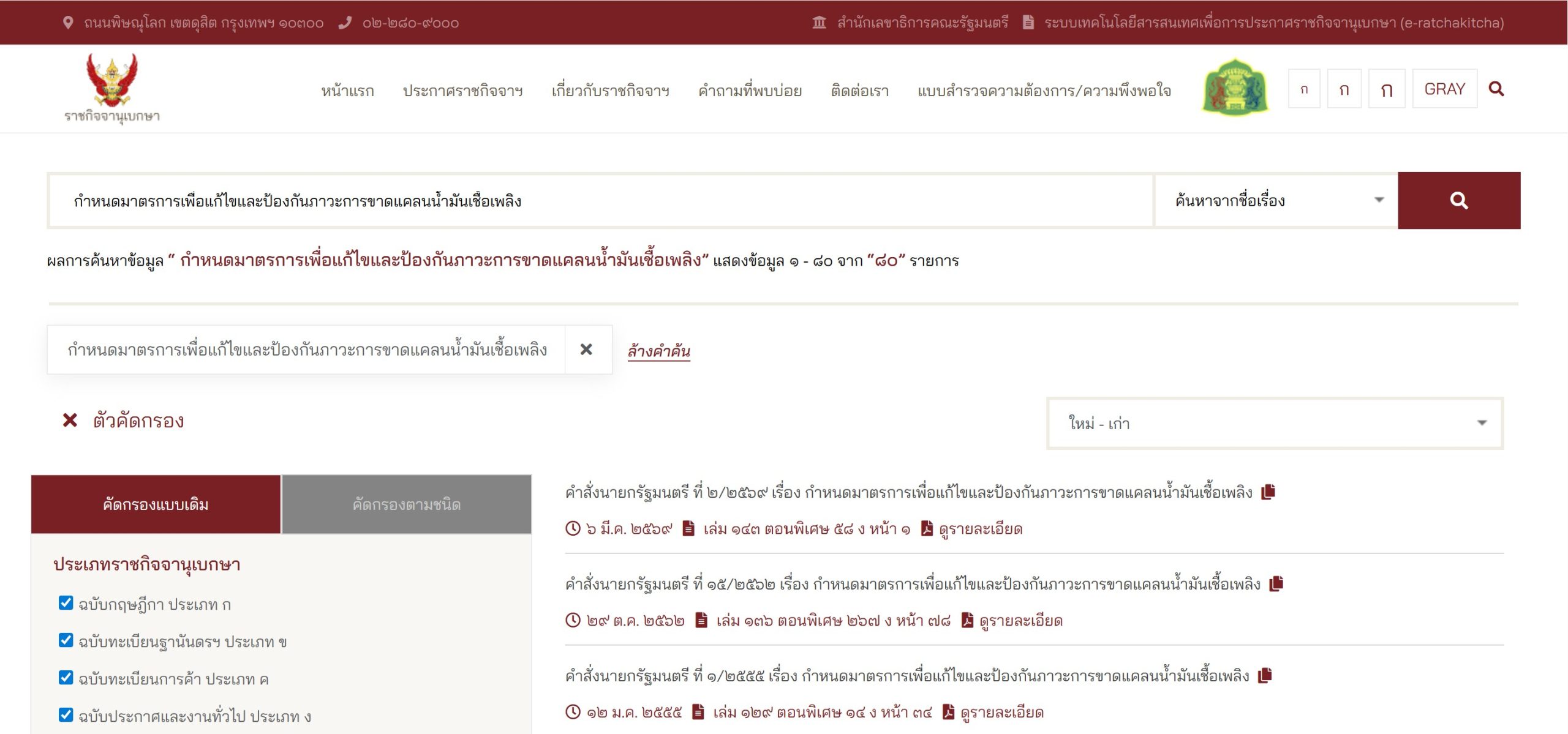
Searching the keyword “oil export,” Thai PBS Verify found a publication titled “Measures to resolve and prevent fuel shortages (กำหนดมาตรการเพื่อแก้ไขและป้องกันภาวะการขาดแคลนน้ำมันเชื้อเพลิง”)” on the Royal Gazette website, featuring Prime Minister’s Order No. 2/2026, dated March 6, 2026.
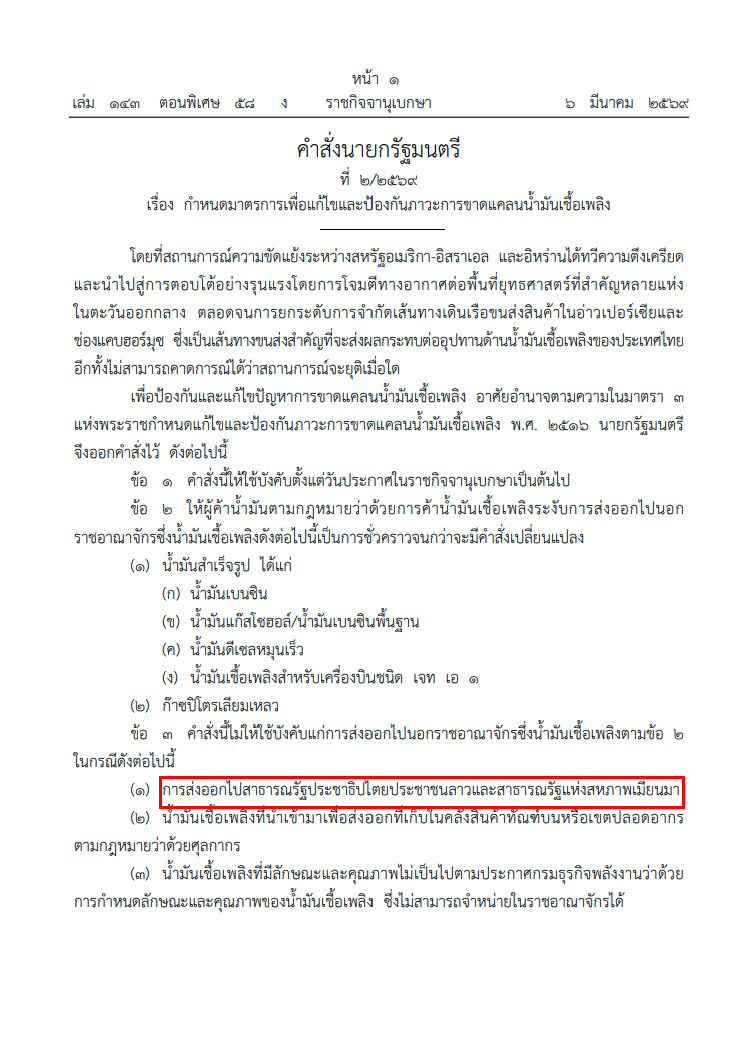
The order requires oil traders to temporarily suspend fuel exports until further notice. This covers various types of refined petroleum products, including benzine, gasoline or base gasoline, high-speed diesel, Jet A-1 aviation fuel and liquefied petroleum gas (LPG).
However, there are exceptions in certain cases, such as exports to Laos and Myanmar, exports of oil imported for storage in bonded warehouses or free trade zones, and oil that does not meet quality standards for domestic sale.
Additionally, following a meeting of the Center for Administration and Monitoring of the Middle East Conflict Situation on March 15, 2026, Mr. Anutin confirmed in an interview that oil exports to Laos are continuing as normal. He cited mutual energy reliance, as Thailand purchases a majority of Lao hydroelectric power and Myanmar’s natural gas.
Are there restrictions on Thai people’s refueling?
Thai PBS Verify searched another keyword “Anutin” and found a March 15, 2026 news report showing the Prime minister urging the public to conserve fuel and confirming no signs of a shortage.
The report noted that following a center’s meeting, Mr. Anutin revealed that all oil operators unanimously confirmed there are no signs of domestic fuel shortages. As national fuel reserves have increased from 60 days to approximately 90–100 days, he urged citizens to avoid panic buying, but rather to use fuel economically to bolster energy security.
He also emphasized that Thailand’s energy system remains stable, as electricity is primarily generated from natural gas while oil exports to Laos proceed normally. The fluctuating oil prices are in line with the global market, and the government will utilize the State Oil Fund to subsidize prices as much as possible, while also negotiating diverse international oil procurement.
However, the investigation found no mention whatsoever of restricting oil purchases by Thai citizens.
Where did the restriction measures come from?
Found by Thai PBS Verify, a March 14, 2026 report noted that PTT and Bangchak gas stations had clarified viral social media claims regarding refueling limits. These circulated guidelines suggested caps of 500 baht for 4-wheel vehicles and 1,000 baht for 6-wheelers and above, and a suspension of unmetered container sales, exempting public service vehicles.
PTT clarified that such guidelines were merely “recommendations” to manage a recent surge in demand rather than mandatory measures, reassuring the public that the energy situation remains normal and has not reached a crisis level
Meanwhile, Bangchak had previously issued a measure requesting cooperation to limit refueling, capping it at 700 baht per day for 4-wheel vehicles and 3,000 baht per day for vehicles with 6 wheels or more, effective from March 13. However, the company has recently announced the cancellation of this measure.
What is the current energy situation in Thailand?
Regarding the energy situation as of March 19, 2026, the government raised fuel prices to ease the State Oil Fund’s burden after a 15-day diesel cap at 29.94 baht per liter. Effective March 18, Diesel B7 rose by 50 satang to roughly 30.44 baht per liter, with a new 33-baht ceiling. Benzine and gasoline prices increased by about 1 baht per liter, except for E20 and E85, which received slight price cuts via formula adjustments to promote alternative energy.
Concurrently, The Anutin administration launched the “Energy Saving Plus Squared” initiative to address Middle East uncertainties. The measure mandates remote work for government agencies where feasible, suspends overseas study trips, and grants 24-hour operational waivers for oil transport trucks to resolve localized supply gaps triggered by panic buying.
Furthermore, contingency plans have been prepared, such as limiting gas station operating hours to 10:00 PM if the situation escalates, although this has not yet been implemented.
To alleviate living costs and mitigate the impact of fluctuating energy prices, the government confirmed it will cap electricity rates at 3.88 baht per unit for the May–August 2026 billing cycle.
What is the truth?
Thai PBS Verify looked into the social media post in question and found that the claims were “partially true.” While oil exports to Laos are factual, confirmed by the Royal Gazette and Mr. Anutin’s interview, claims of restricting Thai buyers are distorted. The refueling guidelines for different vehicles were merely recommendations for domestic allocation following panic buying, not a government mandate.
Translation edited by: Peerachai Pasutan

Related Content