Decontextualized naval exercises in Gulf of Oman shown as Iranian attack in Strait of Hormuz
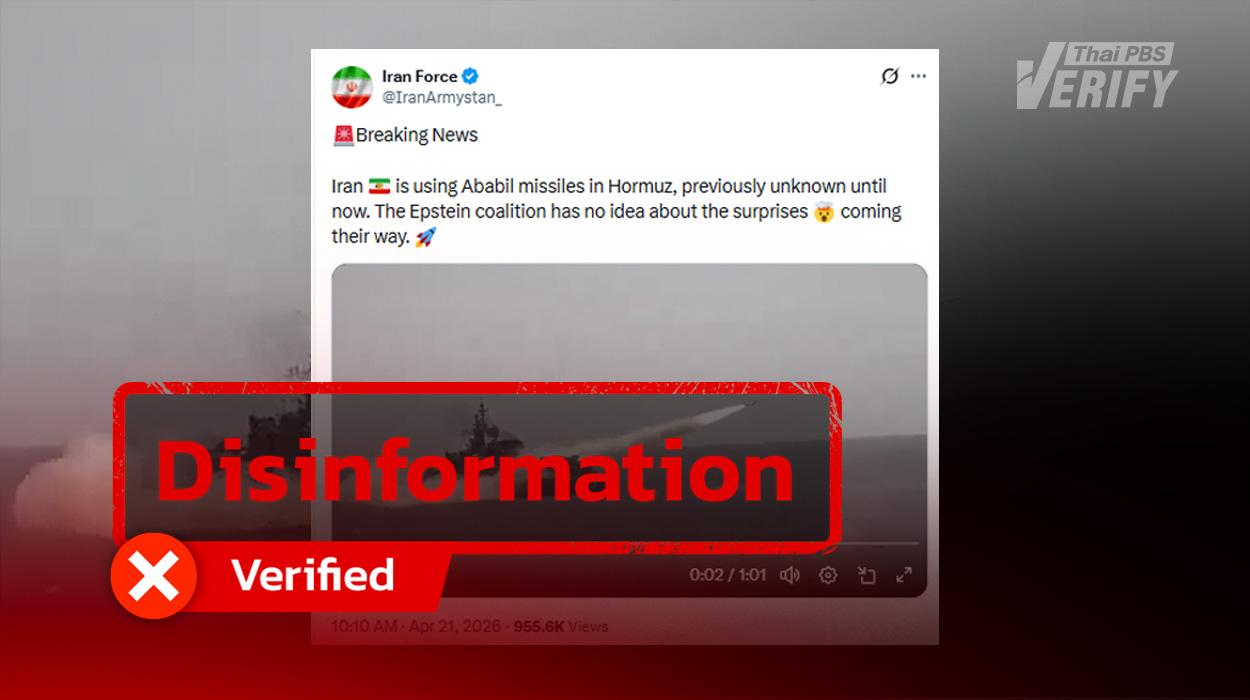
Thai PBS Verify found the piece of disinformation on: X
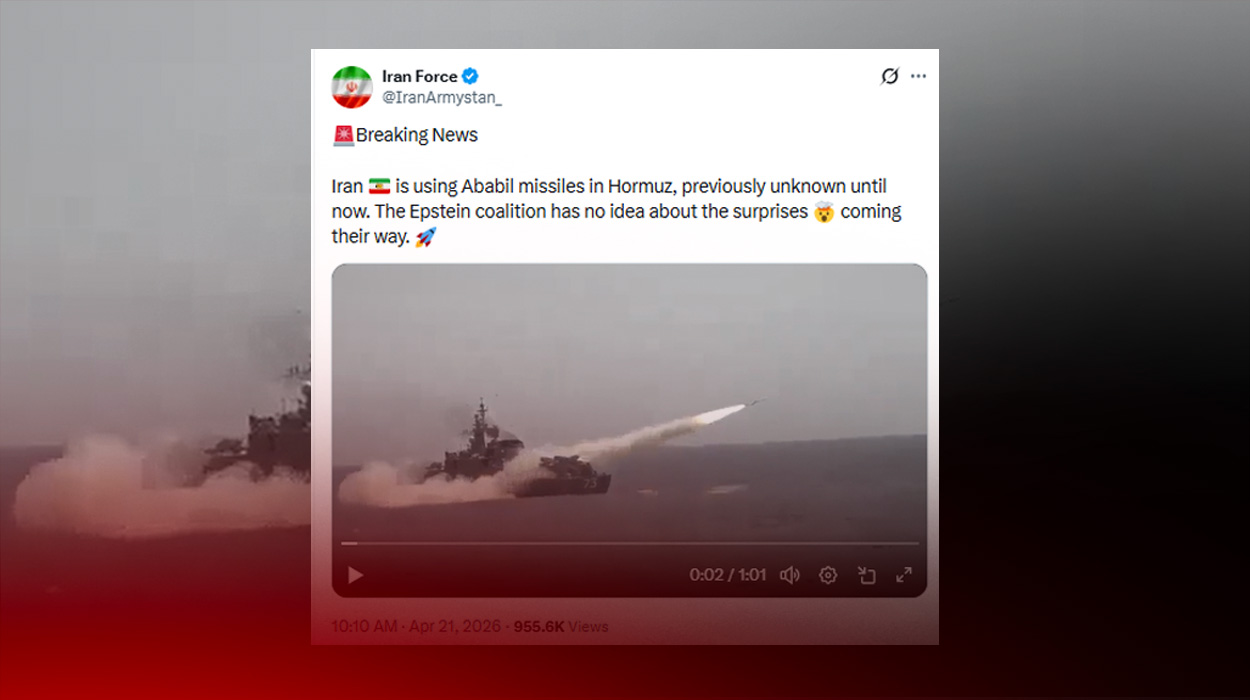
A video showing a naval strike went viral on X, with users purportedly claiming it showed an active Iranian assault in the Strait of Hormuz.
Thai PBS Verify detected an X account, circulating a video of naval bombardment with a caption that reads:
“Iran 🇮🇷 is using Ababil missiles in Hormuz, previously unknown until now. The Epstein coalition has no idea about the surprises 🤯 coming their way. 🚀”
The post was viewed 886,200 times, with 20,000 reactions, 746 comments and 3,700 reposts.
The footage in question is real, but decontextualized
Thai PBS Verify utilized Google Lens to verify the footage and found a direct match with an Army Recognition article from August 22, 2025. Entitled ‘Iran Navy fires cruise missiles in first major strategic exercise after Israel war,’ the report details how Iran had launched its major maritime exercise, ‘Sustainable Power 1404,’ across the Gulf of Oman and the Northern Indian Ocean in August 2025.
This exercise was the first of its kind since the 12-day war with Israel in June that year—a conflict that severely impacted Iran’s nuclear facilities and air defense capabilities.
During the drill, anti-ship cruise missiles like the Qadir and Nasir were fired from the IRIS Sabalan and IRIS Ganaveh, coordinated with coastal batteries, UAVs and electronic warfare units. This live-fire test was designed to showcase Iran’s recovery and enhanced naval deterrence. It reflected a strategic shift in Iran’s military doctrine—aiming for long-range blue-water capabilities rather than relying solely on conventional littoral defense.
Furthermore, the exercise reportedly reflected Iran’s long-term strategy to bolster its missile capabilities, safeguard critical infrastructure and leverage regional alliances. These efforts were designed to prepare for the possibility of a prolonged conflict with Israel in the future.
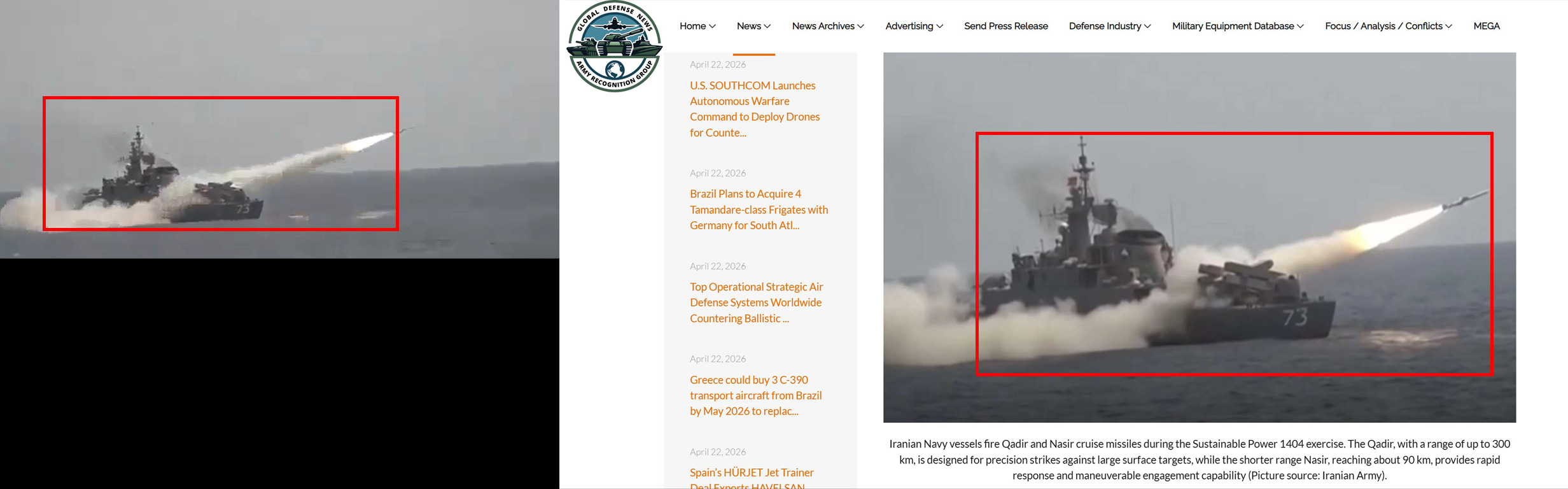
A visual comparison between the vessel featured in the social media post (left) and the original naval drill image from Army Recognition (right).
What is the current situation in Iran?
The situation between the U.S. and Iran has grown increasingly strained after U.S. Central Command went public with images of Marines boarding and seizing an Iranian-flagged cargo ship in the Gulf of Oman.
The vessel was reportedly seized after ignoring hours of persistent warnings, prompting a strike on its engine room to disable it. President Donald Trump has since affirmed that the ship is being investigated for violating U.S. sanctions.
Iran has denounced the seizure as ‘piracy’ and a breach of the ceasefire, threatening a firm response. State media claims that retaliatory drone strikes have already targeted U.S. naval vessels. Meanwhile, Iran maintains it will not re-enter negotiations with the U.S., even as the interim ceasefire expires on April 22nd. Attention remains focused on Islamabad, where tightened security and orders for luxury hotels to evacuate for ‘official state business’ suggest that a sensitive diplomatic mission may be imminent.
President Trump has declared that the ceasefire with Iran will remain in effect indefinitely until a conclusive deal is reached, though he emphasized that military pressure through naval blockades will continue. This diplomatic window was reportedly opened at the behest of the Pakistani Prime minister to facilitate further mediation. While Shehbaz Sharif expressed hope for a successful resolution in Islamabad, Tehran has lashed out, labeling the U.S. naval presence a violation of the truce and an act of aggression. Iran has signaled its defiance by pulling out of the scheduled talks in Pakistan, leaving the future of regional peace in a precarious state as the standoff intensifies.
What is the truth?
The video in question includes footage from an Iranian military exercise dated August 22, 2025. This debunks claims of its relevance to today’s conflict. Amidst this misinformation, the actual situation remains tense: Mohsen Rezaee, former head of the IRGC, has publicly declared that Iran has the strategic power to strike and submerge U.S. warships using its missile arsenal.
Verification Process
Google Lens: A visual search of the footage revealed a direct match with a report by the Army Recognition website titled ‘Iran Navy fires cruise missiles in first major strategic exercise after Israel war,’ which was originally published on August 22, 2025.
Potential impacts of disinformation
- International perception: It creates a false impression of an “active military assault” between Iran and Western nations, risking public panic and distorting the overall reality of regional conflicts.
- Global energy markets: Since the Strait of Hormuz is a critical oil gateway, fake news can lead to fluctuating oil prices as investors react to false alarms.
- Erosion of information credibility: The proliferation of fabricated videos causes the public to lose trust in legitimate news sources, leading to widespread confusion between fact and fiction.
- Tool for political propaganda: Misinformation can be used to fuel animosity or spread propaganda, further escalating conflicts without cause.
- Fueling emotional sharing: High-impact, realistic visuals trigger emotional responses, causing the content to go viral quickly and making corrective measures less effective.
What to do with this misinformation?
- Pause before sharing: Avoid the urge to share immediately, regardless of how convincing or emotional the content may be. Mis/disinformation is often designed to trigger an impulsive reaction.
- Check the source: Is the poster reliable? Look for confirmation from trusted news outlets. If there’s no clear evidence, be suspicious.
- Conduct a reverse search: Utilize tools like Google Reverse Image Search to determine if the footage is old, from a military drill or being used out of context
- Be wary of sensationalism: Fake news frequently employs provocative language—such as “Attack,” “War,” or “Urgent”—to incite fear and encourage sharing without critical thinking.
Translation edited by: Peerachai Pasutan