Fact Check: Could the announcement of an election date be postponed after parliament’s dissolution if border tensions remain?
On December 11, 2025, Prime Minister Anutin submitted a request for a Royal Decree dissolving the House of Representatives, paving the way for a new general election. According to the 2017 Constitution, Section 103, the key provisions in the event of dissolution are:
Within 5 days after the Royal Decree takes effect, the Election Commission must officially announce the election date in the Royal Gazette. The election must be held within not less than 45 days and not more than 60 days from the effective date of the decree. The election must take place on the same day nationwide.
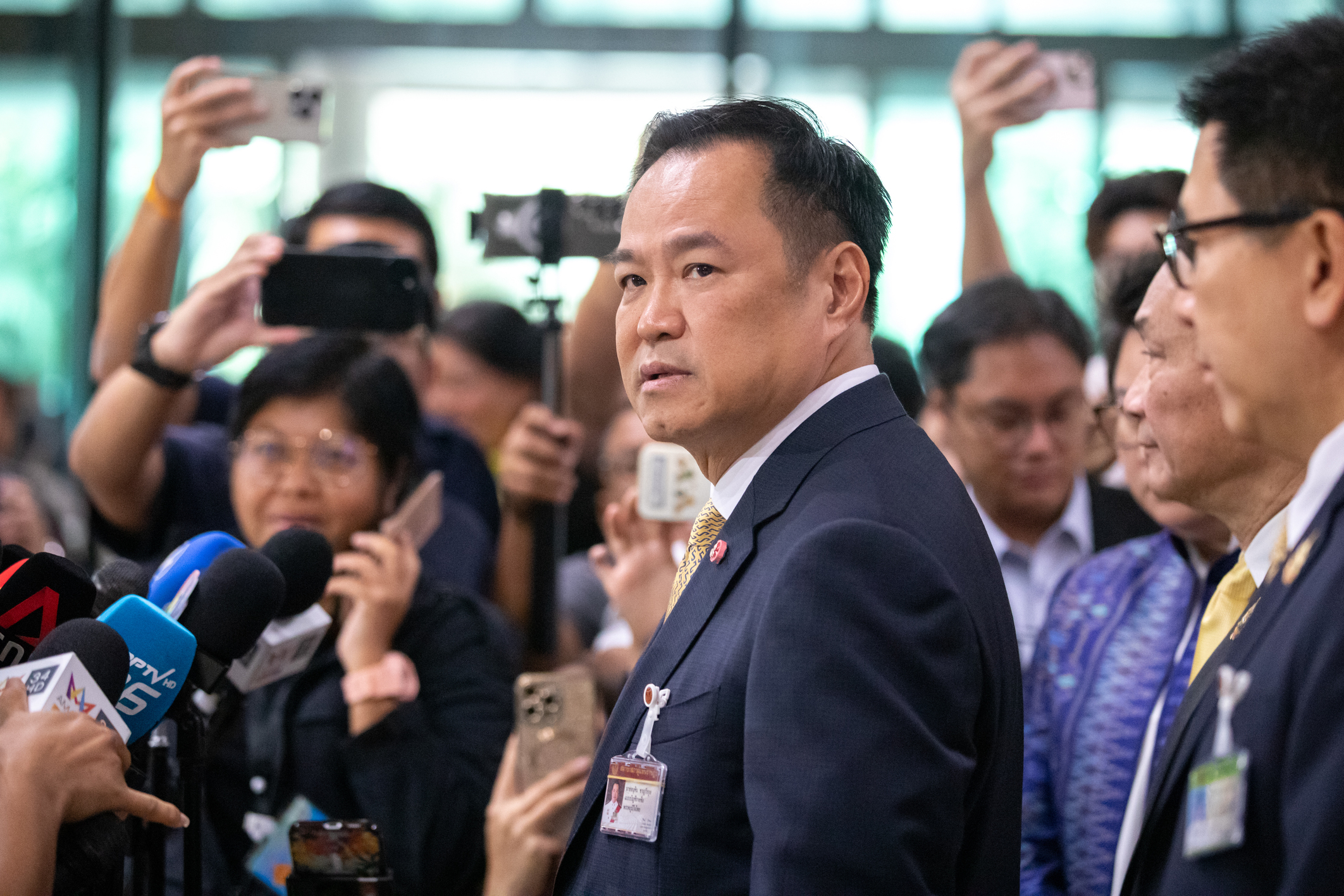
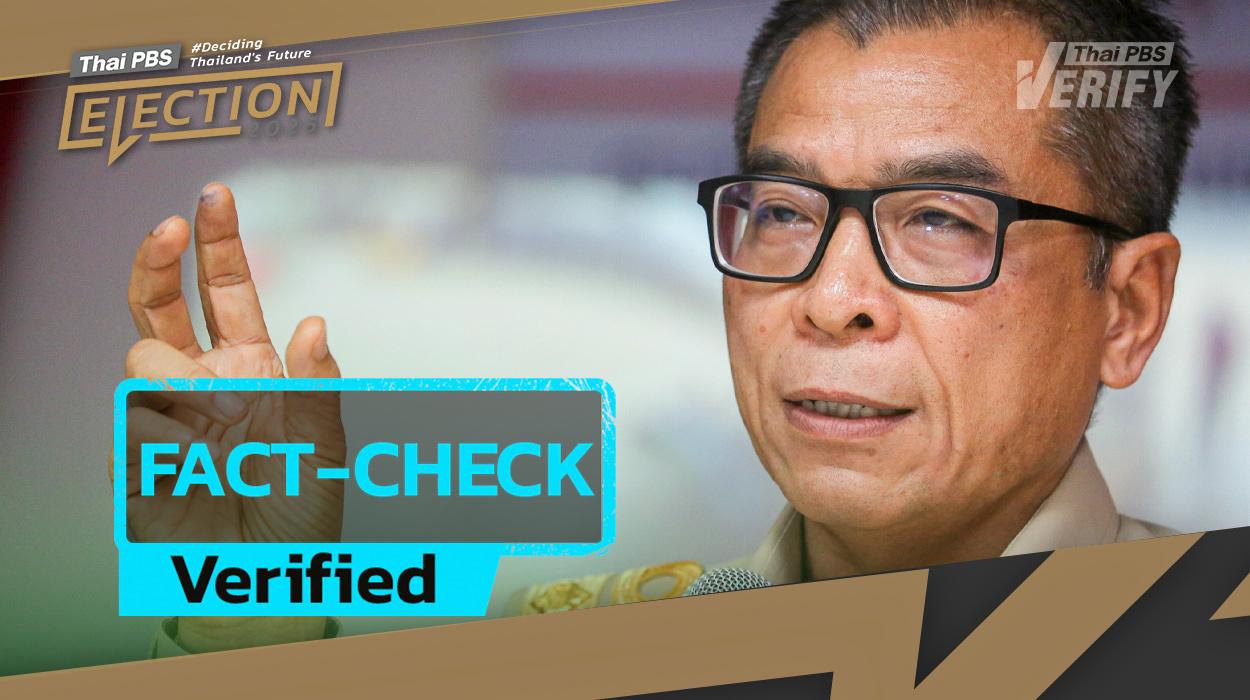
Anutin Charnvirakul
However, due to the ongoing conflict along the Thai–Cambodian border, many parties have expressed concern that the election schedule might be affected or postponed. On December 12, 2025, Sawang Boonmee, Secretary‑General of the Election Commission (EC), clarified regarding the extension of the election following the dissolution of parliament beyond 60 days that:
Under the law, once a Royal Decree is issued, the EC must announce the election date and the number of constituencies within 5 days. This ensures that a clear election date is set. As for future circumstances, he noted that the law provides mechanisms to address any issues that may arise.
The EC is scheduled to meet on Monday, December 15 to consider constituency boundaries, and to hold discussions with Cabinet representatives on the referendum process. On Tuesday, December 16, the EC will officially announce the election date and the schedule for candidate registration.
As for whether the situation along the border would allow the election to be held on the same day nationwide, Sawang explained:
“The situation occurring in 4–5 provinces along the northeastern border already has legal solutions. According to Section 104 of the Constitution, if there is a necessary reason, the Election
Commission can set a new election date. However, the election must be held within 30 days after the incident ends. This constitutes a new election date and an extension for the entire country, because elections must be conducted on the same day nationwide.” This constitutes a new election date and an extension for the entire country, because elections must be conducted on the same day throughout the kingdom.” But in the case of a by‑election such as in Sisaket Province, we apply Section 102. If there is a problem in certain polling stations or specific areas, then a new voting day can be set. The terminology used is different.”
Sawang also addressed the case in which an election cannot be held on the scheduled date. He explained that the Election Commission has the duty to ensure that elections are conducted properly and honestly, taking into account all those involved: polling station officials, candidates who must campaign, and citizens with the right to vote. We must consider both convenience and safety. These are the factors the EC will use in making its decisions, with provincial directors responsible for assessing local conditions.
However, since no one knows when such situations will end, extending the election date is the first available solution. Another possible option is advance voting by registration, meaning voting outside one’s designated polling station. This would need to be carefully reviewed and assessed. If the extension option is used, then once the incident has ended and no further obstacles remain, the election must be held within 30 days.
Until now, there is no legal provision for holding elections inside evacuation centers. In such cases, registered voters may need to be transported to polling stations. Sawang emphasized that the EC will do its utmost to ensure that elections are conducted transparently and safely for both voters and candidates.
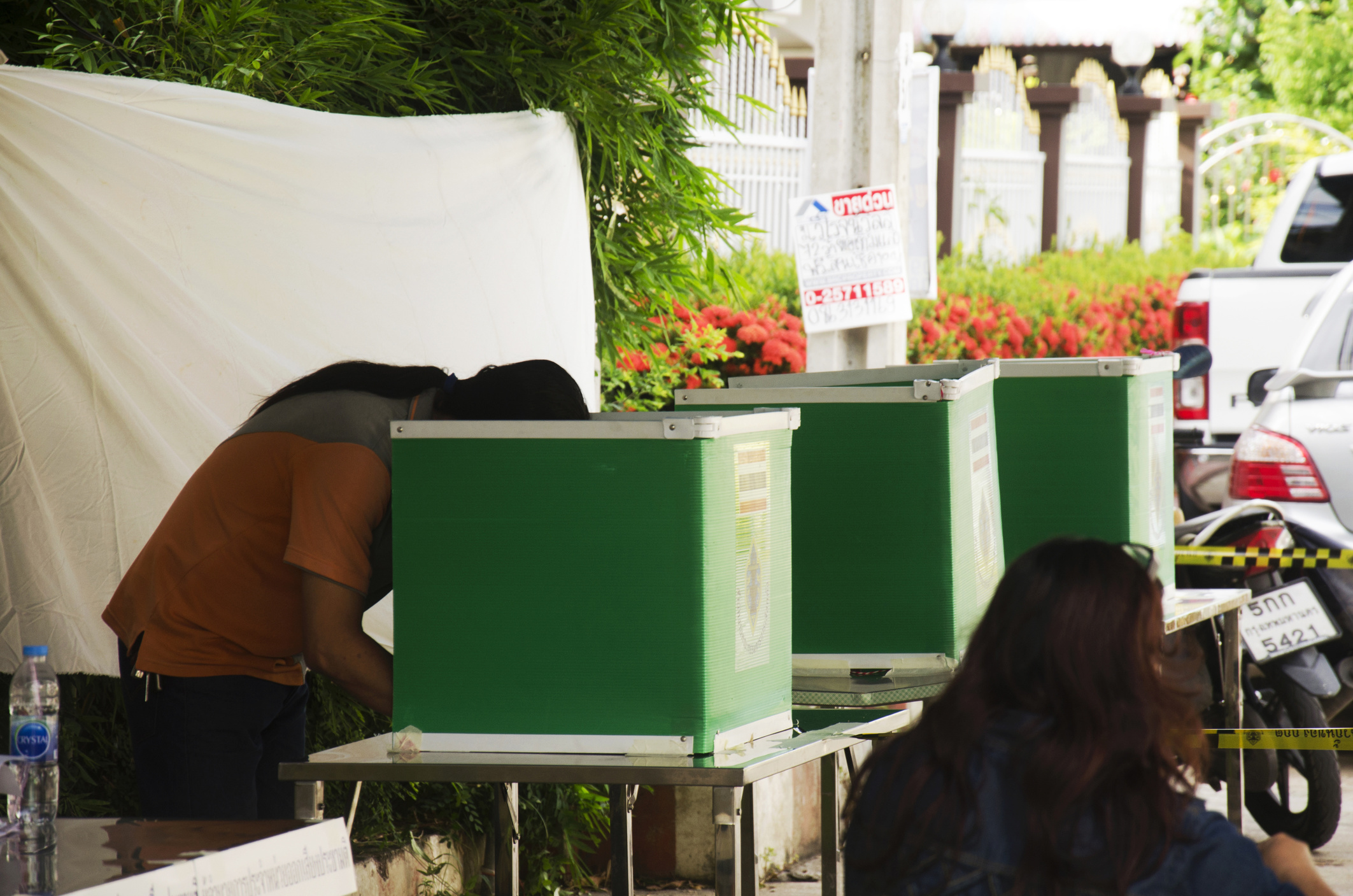
A reference image related to Thailand’s election booths from 2021
Fact-Check: Can the election date be postponed?
The claim made by Sawang Boonmee, Secretary‑General of the Election Commission (EC), stated:
“The situation occurring along the border in 4–5 northeastern provinces already has legal solutions. According to Section 104 of the Constitution, if there is a necessary reason, the Election Commission can set a new election date. However, the election must be held within 30 days after the incident ends. This constitutes a new election date and an extension for the entire country, because elections must be conducted on the same day nationwide.”
Is this statement true?
With reference to the Constitution of the Kingdom of Thailand, B.E. 2560 (2017), it states as
follows:
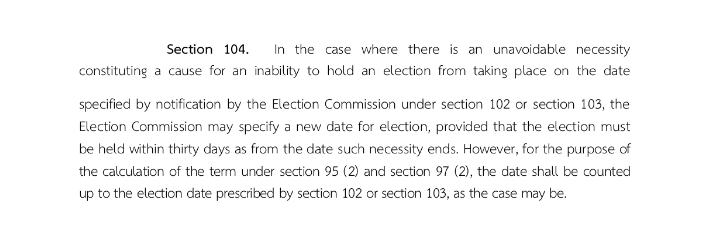
“Section 104 In the case of an unavoidable necessity that prevents the holding of an election on the date announced by the Election Commission under Section 102 or Section 103, the Election Commission may set a new election date. However, the election must be held within thirty days from the date the incident ends. For the purpose of calculating the term of office under Section 95 (2) and Section 97 (2), the calculation shall be based on the election date originally set under Section 102 or Section 103, as the case may be.
As for the statement made by the Secretary‐General of the Election Commission, which noted
that: “In the case of a by‐election in Sisaket Province, we apply Section 102. When there are problems in certain polling stations or specific areas, that is considered the setting of a new voting day. The terminology used is different.”
With reference to the Organic Act on the Election of Members of the House of Representatives,
B.E. 2561 (2018), it states as follows:
“Section 102 In the case that voting in any polling station cannot be conducted due to riot, flood,
fire, force majeure, or other necessary reasons, if the incident occurs before election day, the
constituency election commission shall designate a new polling place where eligible voters can
conveniently cast their ballots. If a new polling place cannot be designated, voting in that polling
station shall be suspended, and the matter must be reported to the Election Commission
promptly.
In the case that the incident under paragraph one occurs on election day, the constituency
election commission or the polling station committee shall announce the suspension of voting in
that polling station and promptly report to the Election Commission.
The actions under paragraph one and paragraph two shall be carried out in accordance with the
rules and procedures prescribed by the Election Commission.
Upon receiving the report under paragraph one or paragraph two, the Election Commission shall
promptly consider and set a new voting day for that polling station, or issue another order as necessary to ensure honesty and fairness in the election.”
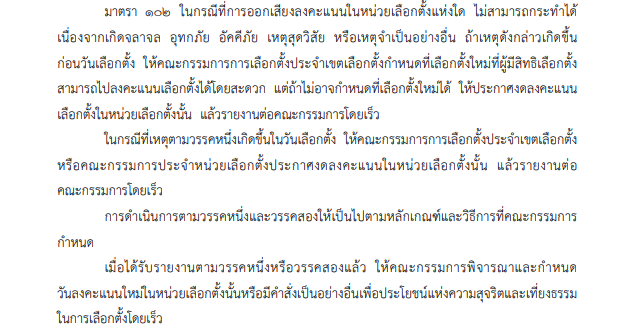
*Disclaimer: the translation of this Section was not provided by the Election Commission as the original file could not be accessible.
In summary, if any polling station cannot be opened for voting due to riot, flood, fire, or other necessary reasons before election day, the constituency election commission may relocate the polling station to a new site where voters can conveniently exercise their rights. If no new location can be arranged, voting in that polling station shall be suspended, and the matter must be promptly reported to the central Election Commission.
What is the truth?
In the case of concerns that the election following the dissolution of parliament might be
postponed due to tensions along the Thai–Cambodian border, Sawang Boonmee,
Secretary‐General of the Election Commission (EC), explained that the law provides solutions for such situations. He cited Section 104 of the Constitution, which allows the EC to set a new election date if there is an unavoidable necessity. However, the election must be completed within 30 days from the end of the incident, and the new election date must be the same nationwide.
At the same time, Sawang noted that if problems occur only in certain areas or polling stations, it is not necessary to postpone the election nationwide. In such cases, Section 102 of the Election Act can be applied to set a new voting day only for the affected polling stations or areas. A review of the legal provisions confirms that the Secretary‐General’s statement is accurate. The law clearly sets out the framework and conditions for both scenarios: postponing the election nationwide, and rescheduling voting in specific polling stations.
Verification Process
Information were verified by referencing the clarification from Sawang Boonmee, Secretary‐General of the Election Commission (EC), alongside an examination of the provisions of the Constitution of the Kingdom of Thailand B.E. 2560 (2017)—especially Sections 103 and 104—as well as Section 102 of the Organic Act on the Election of Members of the House of Representatives B.E. 2561 (2018), to compare whether the EC’s conditions and powers align with the claim.
Related tags

Most Viewed