Fact check : Pheu Thai’s 20-Baht Metro Flat Fare Policy—Is ‘Immediate Implementation’ Feasible?

Thai PBS Verify looks back at the timeline of this policy from its inception to the present to examine its implementation progress. Meanwhile, academics note that whether the policy can be effectively implemented, it depends on prevailing political conditions and the regulatory authority of the Ministry of Transport.
Thai PBS Verify found the source from: Facebook

A Facebook user shared an image of Pheu Thai Party’s campaign policies regarding the 20-baht flat-rate rail fare and the 10-baht air-conditioned bus fare.
Thai PBS Verify has identified a Facebook account sharing a photo of a Pheu Thai Party campaign banner. The text on the banner reads: “20-baht flat-rate metro fare, to be implemented immediately, as well as 10-baht fare for air-conditioned buses.”
The post is captioned: “Is this photo authentic or edited? I’ve seen this policy since the time of Ms. Yingluck [Shinawatra]’s government through to Ms. Ung-ing [Paetongtarn Shinawatra]’s. What strikes me most is the words ‘implement immediately.’ What does ‘immediately’ actually mean…?” The post has garnered 708 reactions, 45 comments, and has been shared more than 85 times.
Thai PBS Verify has verified the 20-baht flat-rate metro fare policy and found that Pheu Thai Party has proposed this measure since the governments of Yingluck Shinawatra, Srettha Thavisin, and Paetongtarn Shinawatra.
Thai PBS Verify has mapped out the policy’s timeline to illustrate its origins and its status, evaluating whether it is truly feasible.
Tracing the timeline of the 20-baht flat-rate metro fare
As the 20-baht flat-rate metro fare has been a recurring campaign promise of Pheu Thai Party in every election, it has consistently become a highlighted issue under scrutiny as to whether the project can actually be realized. From the administration of former Prime Minister Yingluck Shinawatra to that of Ms. Paetongtarn Shinawatra’s, let’s see how this policy has progressed year by year.
In 2011
- May 2011: Pheu Thai Party unveiled its “20-baht flat fare” campaign policy, aiming to reduce the cost of living for urban residents and encourage a shift toward rail transport.
- August 23–25, 2011: The Yingluck administration delivered its policy statement to Parliament, incorporating the restructuring of mass transit fares into a unified system (Common Ticket) and the 20-baht flat fare as an “urgent policy to be initiated within the first year.”
- September 2011: Air Chief Marshal Sukampol Suwannathat, Minister of Transport, began negotiations with the Mass Rapid Transit Authority of Thailand (MRTA) and the State Railway of Thailand (SRT). Legal hurdles were identified regarding existing contracts between the state and private concessionaires (BTS and BEM), which prevented the government from ordering immediate fare reductions without providing compensation.
- October 2011: Great floods occurred, leading to the diversion of resources and budget toward national recovery. Consequently, the rail policy was delayed. (Click to view archived original content)
In 2012
- May 2012: The Ministry of Transport reached a preliminary conclusion that implementing the 20-baht flat fare would require the state to provide approximately 8 billion baht in annual subsidies to cover the lost revenues.
- June 2012: Following a cabinet reshuffle, Chadchart Sittipunt assumed the role of Deputy Minister of Transport (later becoming Minister). He assessed that the “20-baht flat fare could not be implemented immediately” due to the following reasons:
- The Common Ticket system had not yet been completed.
- The network coverage was insufficient (at the time, only the Green Line, Blue Line, and Airport Rail Link were in operation).
- The policy would only become cost-effective once more rail lines were completed or a sufficient number of routes were in service.
- September 2012: The Ministry of Transport proposed a “Phase 1” model, which involved reducing fares only on state-operated lines (such as Airport Rail Link). However, this plan faced challenges regarding insufficient revenue to cover maintenance costs.
In 2013
- March 2013: The government pushed forward the 2-trillion-baht loan bill for infrastructure investment. It was stated that once all 10 planned rail lines were constructed, the state would have greater absolute authority in managing fare structures.
- August 2013: Minister of Transport Chadchart Sittipunt stated in an interview that the 20-baht policy could only become a reality once new rail projects (where the state holds contract control) were completed. He estimated this would occur between 2015 and 2017.
- November 2013: Political tensions escalated due to the PDRC protests, causing government operations regarding economic policies to come to a standstill.
In 2014
- March 12, 2014: The Constitutional Court ruled that the 2-trillion-baht loan bill was unconstitutional. This resulted in the termination of the primary mechanism intended to build the rail network necessary to support the 20-baht policy.
- May 22, 2014: A coup d’etat occurred, and the 20-baht flat-rate metro fare policy was never initiated.
In 2023
- April 28, 2023: Pheu Thai Party campaigned on the 20-baht flat-rate fare policy. (Click to view archived original content)
- September 11, 2023: The Ministry of Transport clarified to Parliament that the policy would be piloted on the SRT Red Line and MRT Purple Line within three months.
- September 17–21, 2023: The boards of the State Railway of Thailand (SRT) and the Mass Rapid Transit Authority of Thailand (MRTA) approved the 20-baht flat fare.
- October 16, 2023: The Cabinet approved the 20-baht fare measure for the SRT Red Line and MRT Purple Line.
- November 30, 2023: The EMV (Europay, Mastercard, and Visa) contactless payment system was launched for seamless travel between the Red and Purple Lines, with the total fare capped at 20 baht.
In 2024
- November 29, 2024: The Cabinet approved an extension of the 20-baht measure for the SRT Red Line and MRT Purple Line through November 2025.
- June 13, 2024: MRT Blue Line fares were adjusted, increasing the maximum rate to 45 baht.
- October 16, 2024: The Ministry of Finance and the Ministry of Transport initiated a study on establishing a fund to buy back metro concessions from private operators.
- October 22, 2024: The Ministry of Transport began exploring a “congestion charge” (traffic tax) to generate revenue for subsidizing rail fares.
In 2025
- January 29, 2025: The Cabinet approved the draft Joint Ticket Management Act.
- February 13, 2025: Parliament accepted the Joint Ticket Management Act in principle.
- March–May 2025: The Ministry of Transport proposed utilizing government budgets and MRTA profits to subsidize the 20-baht fare.
- July 21, 2025: The Bangkok Metropolitan Council approved the 20-baht fare (contingent upon compensation).
- August 25, 2025: Registration for the 20-baht metro fare opened via the “Tang Rat” application.
- September 30, 2025: The initial phase of the 20-baht measure for the SRT Red Line and MRT Purple Line expired.
- October 1, 2025: The 20-baht fare for the Red and Purple Lines was extended until November 30, 2025.
- October 22, 2025: The Bangkok Metropolitan Administration (BMA) increased fares for the Green Line extensions.
- October 29–30, 2025:
- The Administrative Court ordered the BMA to settle its debts with BTS.
- The Ministry of Transport proposed a “40-baht daily cap” pass.
- November 25, 2025: The Cabinet greenlit the 40-baht daily flat-rate metro fare.
- December 1, 2025: The 40-baht daily pass was officially launched for the Red and Purple Lines.
What is the status of the 20-baht flat-rate metro fare policy?
From December 1, 2025, to November 30, 2026, the Ministry of Transport has introduced a daily flat-rate pass for commuters using the MRT Purple Line, operated by the Mass Rapid Transit Authority of Thailand (MRTA), and the SRT Red Line, operated by SRT Electrified Train Co., Ltd. (SRET). Under this measure, the maximum fare is capped at 40 baht per day for the public and 30 baht per day for students.
Passengers can travel across both systems with unlimited trips throughout the day from 5:00 AM to 12:00 AM. This is accessible via EMV cards from any bank, as well as Mangmoom EMV and MRT EMV cards.
Furthermore, senior citizens, people with disabilities, children, and state welfare cardholders continue to receive their full existing discount privileges or fare exemptions. This measure is considered the first step in advancing the “Common Ticket” system, which the government aims to enable citizens to use across the entire rail network with a single card in the future. This is in accordance with the Cabinet resolution on November 25, 2025, which approved the Ministry of Transport’s proposal.
The Feasibility of Advancing the 20-Baht Flat Fare Policy
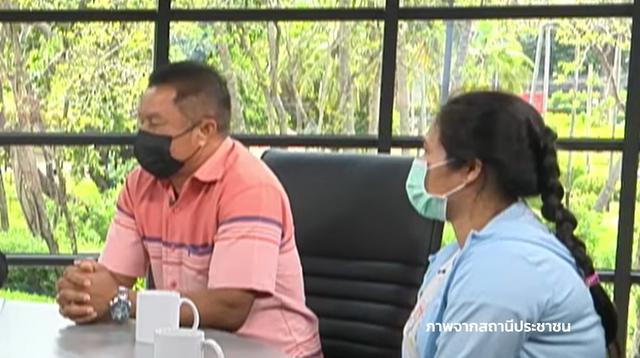
Dr. Purawich Watanasukh, faculty member of the Faculty of Political Science at Thammasat University, observed that the 20-baht flat-rate metro fare is a policy that Pheu Thai Party has already initiated following the 2023 general election. He notes that the policy is feasible on routes under direct government supervision, such as the SRT Red Line and the MRT Purple Line. (Click to view archived original content)

Dr. Purawich Watanasukh, a faculty member of the Faculty of Political Science at Thammasat University
However, the feasibility of driving this policy forward after the next election depends on two critical factors: leading the government formation and maintaining oversight of the Ministry of Transport. At the same time, in the context of a coalition government, interests and positions of coalition partners must also be taken into account when deciding whether to push this policy into fruition.
What is the truth?
Although Pheu Thai Party has raised the 20-baht flat-rate metro fare policy since the administration of former Prime Minister Yingluck Shinawatra, several factors remain critical to its success. These include whether the party can successfully form a government and translate the pledge into a concrete reality, and whether it will secure direct oversight of the Ministry of Transport. Meanwhile, another policy highlighted by Pheu Thai in this election—the 10-baht air-conditioned bus fare—is also a significant issue to watch.
Verification Process
- Policy timeline verification: A verification of the 20-baht flat-rate metro fare timeline reveals that this has been a flagship policy of Pheu Thai Party from the administration of former Prime Minister Yingluck Shinawatra through to that of Paetongtarn Shinawatra’s.
- Source verification: Thai PBS Verify interviewed Dr. Purawich Watanasukh, faculty member of the Faculty of Political Science at Thammasat University. He noted that the likelihood of this policy’s success depends on the election results and whether the party secures oversight of the Ministry of Transport.