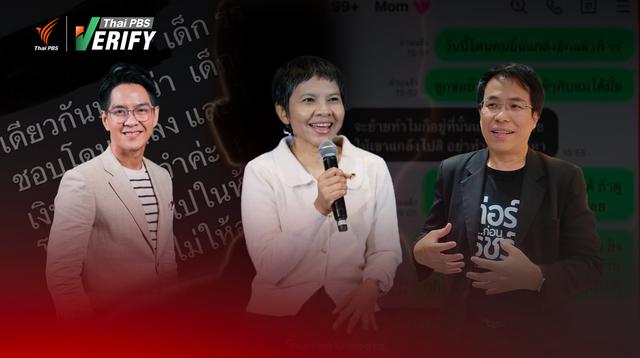
“Thai Kao Mai” pushes “free education up to PhD level”; academics say 12-year free education must comes first
since the administration of former Prime Minister Abhisit Vejjajiva. Education experts point out that although the idea reflects good intentions, there are significant practical constraints. They argue that the country should first ensure that 12 years of free education truly becomes a reality.
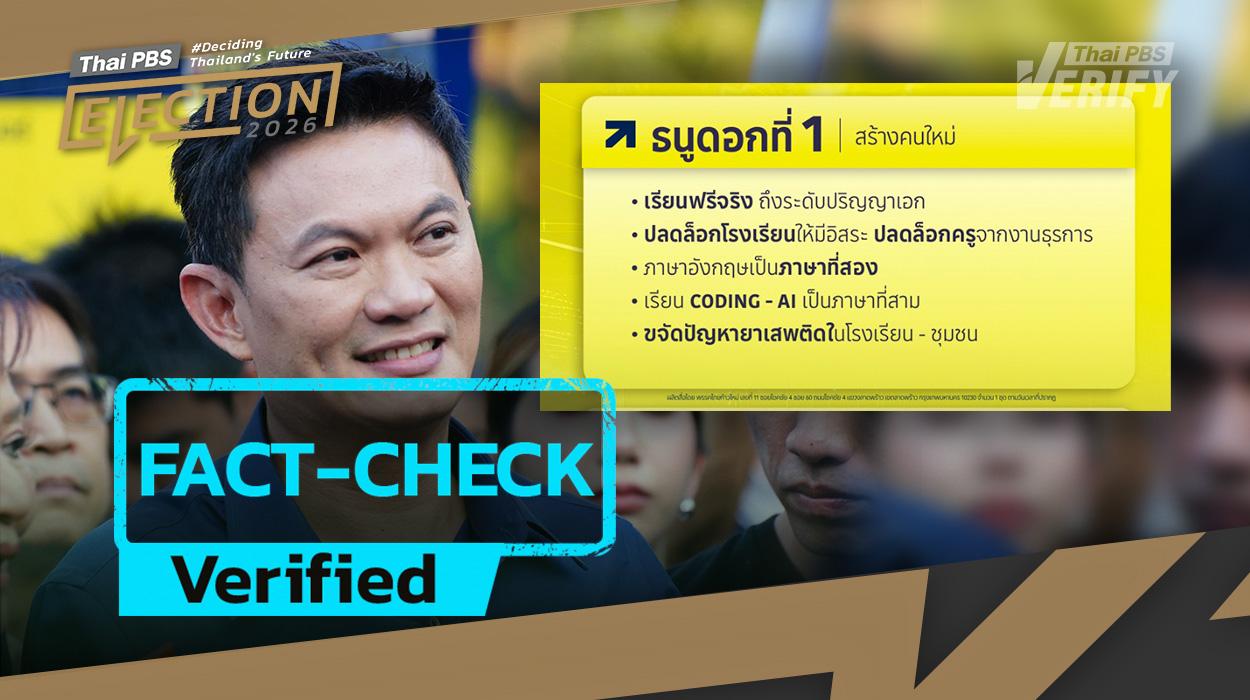
Thai Kao Mai Party published images outlining its education policy on the party’s Facebook page on December 30, 2025, stating:
“Thai Kao Mai Party believes that education should not be a burden on families, but an investment by the nation. The state must take responsibility for essential education expenses, from basic education through to the doctoral degree, to give every Thai child the opportunity to study according to their potential, regardless of family background, and to build a society where ability — not poverty — determines the future.”
This free education policy is one of the key policies under the party’s concept of developing a new generation, led by Dr. Suchatvee Suwansawat, leader of Thai Kao Mai Party.
Considering this issue, Thai PBS Verify has therefore reviewed the timeline of “free education” policies to examine which political parties have previously used such policies in their election campaigns, how they have evolved, and what directions they have taken up to the present.
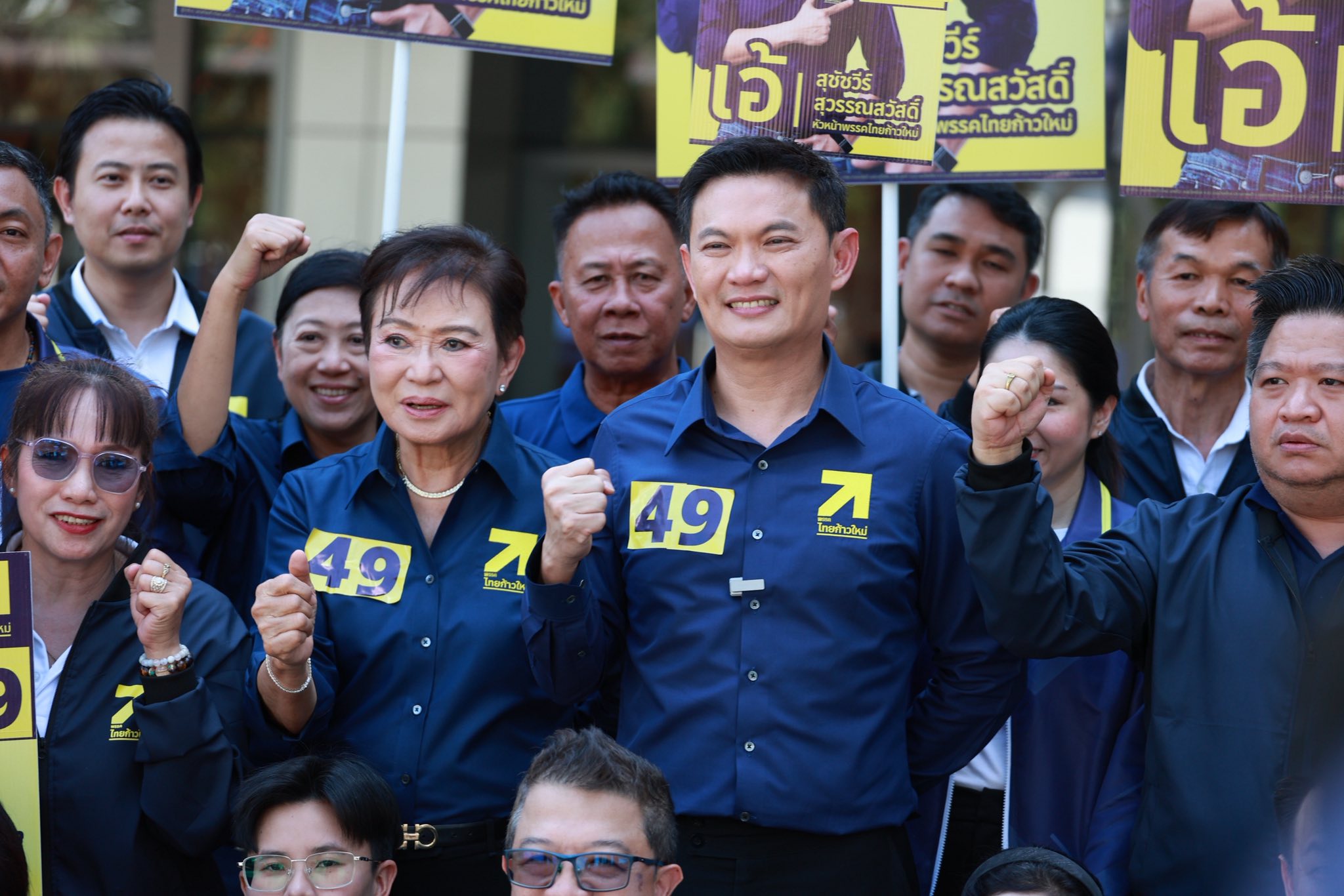
Dr. Suchatvee Suwansawat, leader of Thai Kao Mai Party
When did Thailand’s free education policy begin?
The free education policy was once a major campaign pledge during Abhisit Vejjajiva’s government and began to be implemented in a concrete manner in 2009 under the policy titled “15 Years of Free, Quality Education.” It covered education from kindergarten through upper secondary school, including vocational education (“Por Wor Chor” in Thai). The state subsidized five main categories of expenses: tuition fees, textbooks, learning materials, student uniforms, and learner development activities.
The policy aimed to reduce the financial burden on households and to guarantee equal educational opportunities. It later became a foundational education policy that subsequent governments and political parties have built upon and expanded in new dimensions—such as reducing hidden costs, providing free education at a higher education level, and linking education to future skills.
■ Around 2009: Under Prime Minister Abhisit Vejjajiva’s term, the policy “15 Years of Free, Quality Education” was launched, covering education from kindergarten through upper secondary school/vocational certificate level. The state subsidized five main expenses — tuition fees, learning equipment, uniforms, textbooks, and activities—which became the foundation of Thailand’s free education policy still in use today.
■ 2022–2023: Thai Sang Thai Party, led by Khunying Sudarat Keyuraphan, was among the first parties to announce a policy of “free education through a bachelor’s degree.” The policy emphasized shortening the length of study to three years (graduating at age 18–19) to reduce education costs and enable students to enter the labor market more quickly.
■ During the 2023 election: Competition over education policy intensified, with many parties strengthening their free education proposals.
■ 2023: Move Forward Party (now People’s Party): Promoted the slogan “truly free education,” focusing on hidden costs such as free school lunches at all levels and free student transportation, as well as free vocational education up to a higher vocational diploma level (“Por Wor Sor”).
■ 2023: Pheu Thai Party: Emphasized a “Learn to Earn” system, free learning via digital platforms, and the “One Tablet per Child” policy (providing tablets with internet access) to reduce inequality.
■ 2023: Bhumjaithai Party: Proposed “free education up to a bachelor’s degree,” a nationwide virtual school system offering free online learning, and a five-year suspension of student loan repayments.
■ 2025: “Free AI education and student loan debt relief” — Thai Kao Mai Party highlighted its “Four Arrows” strategy, stressing that education “must be free up to PhD level.” The policy emphasizes not only free education, but also graduating without debt, including the cancellation of Student Loan Fund (SLF) debt
Breaking down Thailand’s free education budget at present
According to the budget summary document for the 2026 fiscal year, the Ministry of Education has been allocated a total budget of 355,108.5 million baht, an increase of 14,333 million baht from the previous year.
Regarding the budget for the free education policy at each level, when considering the average allocation per student per year, kindergarten students receive an average of 6,400 baht, reflecting increases in teaching management costs and activity fees. At the primary level, the average allocation is about 6,561 baht per student, adjusted upward in a stepwise manner in line with the Cabinet’s resolutions.
Lower secondary students receive an average of around 9,810 baht per person per year, with an emphasis on funding learner development activities and learning materials. Upper secondary students receive an average of more than 10,000 baht per person per year, along with additional support for digital devices such as tablets or laptops under the “Anywhere Anytime” program.
Meanwhile, students in vocational certificate programs (Por Wor Chor), years 1–3, receive the highest average allocation at around 14,083 baht per person per year, due to higher costs for training materials and specialized equipment specific to each field of study.
Make 12 years of free education a reality before expanding to higher levels
Prof. Dr. Sompong Jitradab, expert and critic of Thailand’s education system, gave his opinion on election periods, where many political parties promote education policies — particularly various forms of free education. Thai Kao Mai Party is among those pushing education policy seriously: its proposal for free education up to the doctoral level is seen as a well-intentioned policy that reflects growing attention to education among political parties. This is considered beneficial for society.
However, Prof. Dr. Sompong noted that providing free education up to a doctoral level at present remains very difficult and may require another 20 years. This is because Thailand has yet to fully realize 12 years of genuinely free education. Although the law stipulates free education without fees, in practice there are still many hidden costs, placing a burden on parents and causing some children to drop out of the education system.
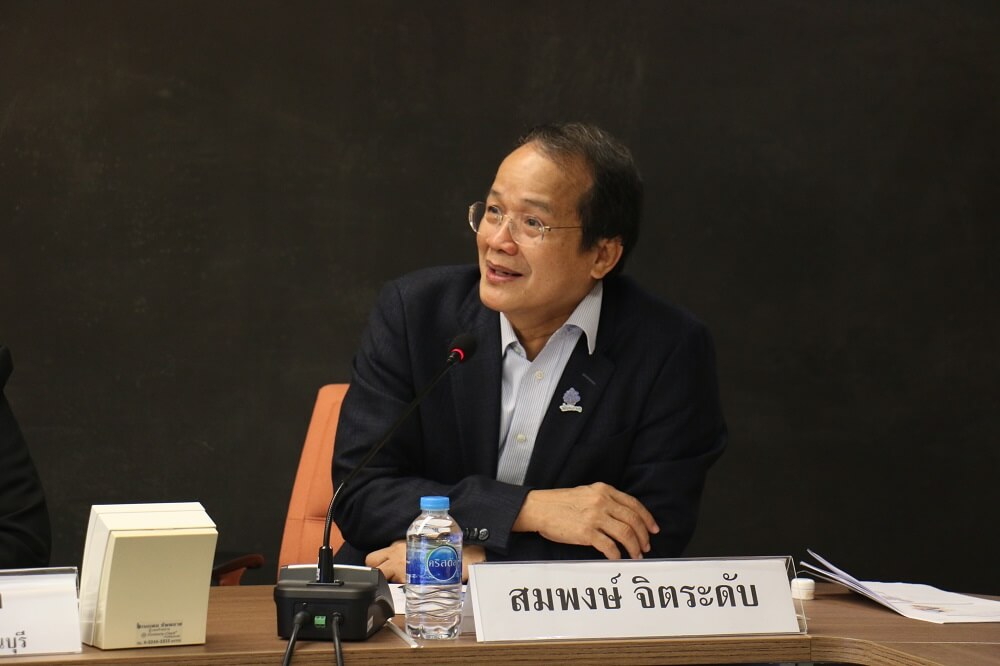
Prof. Dr. Sompong Jitradab, expert and critic of Thailand’s education system
Prof. Dr. Sompong recommended that priority should be given to making 12 years of free education a reality first. If the policy can be extended to provide free education up to a bachelor’s degree level, this would be a more appropriate and feasible approach. Undergraduate education helps develop skills, improve human capital, and create better employment opportunities. In contrast, providing free education up to a doctoral level is highly specialized, requires substantial funding, and is not intended for most of the population.
Moreover, extending free education to a doctoral level could worsen degree inflation, a trend already evident at bachelor’s and master’s degrees. Moreover, a doctorate is highly specialized and resource-intensive rather than mass-oriented.
Prof. Dr. Sompong therefore argues that providing free education through a bachelor’s degree is a more balanced policy goal, as it can enhance competencies, improve workforce quality, and boost employability, while remaining reasonable and well aligned with Thailand’s current national context during this election period.
What is the truth?
Thai PBS Verify found that the free education policy has existed before. Its first concrete implementation began in 2009 during the government of Prime Minister Abhisit Vejjajiva under the policy titled “15 Years of Free, Quality Education.” Under this policy, the state assumed responsibility for five major education-related expenses, forming the foundation of the free education system that remains in place today.
However, the free education policy has then been upgraded and reinterpreted in response to changing political and economic contexts. Political parties in more recent years, particularly from 2022 onward — have expanded the scope beyond basic cost reductions to include ideas such as free higher education, shorter study periods, reduction of hidden costs, and closer links between education, the labor market, and future skills such as digital technology and AI.
In terms of funding, governments continue to support the free education policy. The budget summary for the 2026 fiscal year shows that the Ministry of Education received more than 355,108.5 million baht, an increase of 14,333 million baht from the previous year, with higher allocations for free education at several levels, especially upper secondary and vocational education.
Academics argue, however, that priority should be given to making 12 years of free education “truly free,” with no hidden costs. If the policy is to be expanded to higher education, providing free education up to a bachelor’s degree level is seen as more consistent with Thailand’s national context, particularly in terms of human capital development and workforce preparation.
Verification Process
- Policy timeline review: An examination of the policy timeline shows that the project has already existed but was limited to a 15-year education period.
- Source and budget review: A review of budget data shows that funding has been allocated to this policy every year, with the budget increasing annually.
- Source interviews: Thai PBS Verify interviewed academics who recommended prioritizing 12 years of free education and extending support up to a bachelor’s degree level before expanding further.

Related Content