United Thai Nation Party’s 25‑Baht Fuel Policy – Experts Comment It Is Hard to Implement and Could Lead to Massive Debt
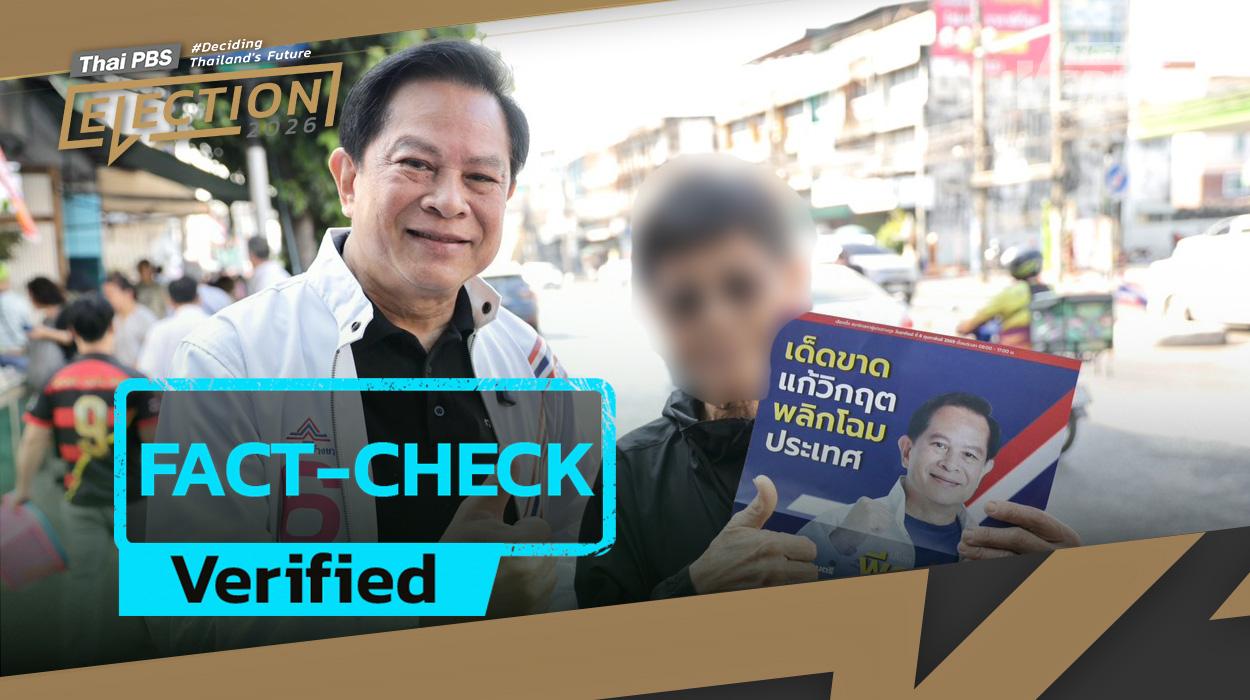
The United Thai Nation Party posted a video from Channel 9 program ‘Hear from Both Sides (Fang Hu Wai Hu)’, featuring the party’s leader and first prime ministerial candidate Pirapan Salirathavibhaga. He proposed reforming the Oil Fund and promoted a model of a ‘National Oil Reserve Treasury,’ which would cut gasoline and diesel retail prices to 25 baht per liter.
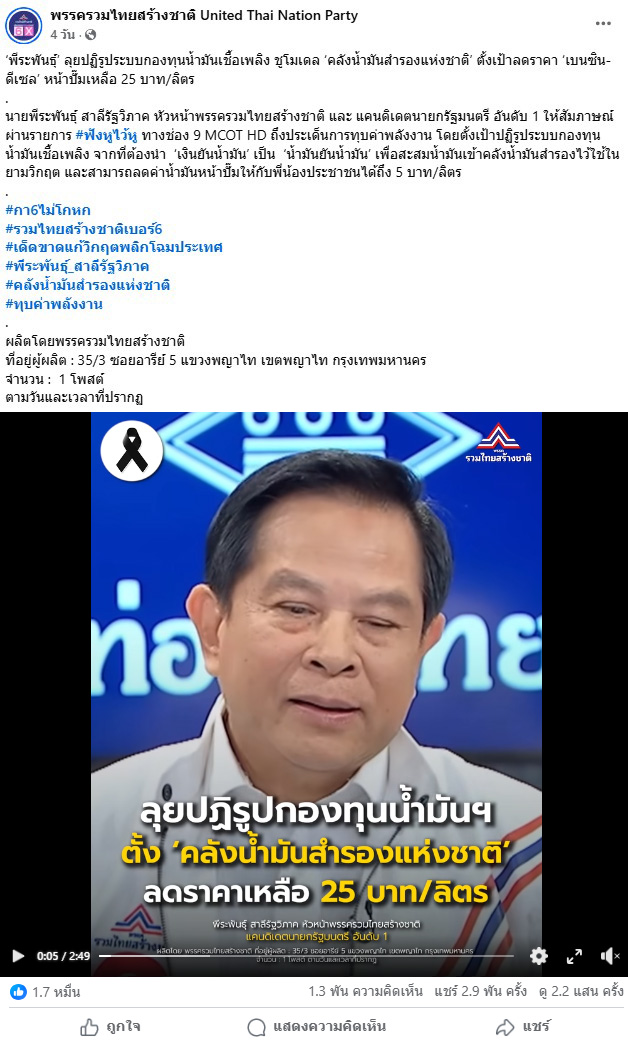
The United Thai Nation Party’s leader and first prime ministerial candidate Pirapan Salirathavibhaga on a ‘Fang Hu Wai Hu’ higtlight video
Regarding the video post, Thai PBS Verify reviewed the timeline of the measure to “reduce diesel and gasoline prices to 25 baht per liter,” examining whether any political parties had previously used it as a campaign policy, and assessing the current approaches to fuel pricing policies.
United Thai Nation Party’s fuel policy timeline
Feb 25, 2023: The party launched its first set of policies, emphasizing a continuation of former key figure Gen. Prayut Chan‑o‑cha’s work, including energy price management during the global crisis.
Mar 21, 2023: The party released a promotional clip outlining 13 major policies, with one key focus on “solving high-priced fuel and cost of living.”
Apr 18, 2023: The party leader Pirapan Salirathavibhaga stressed the need to “restructure fuel pricing,” stating the party aimed to amend energy laws to ease people’s burdens, not just provide temporary subsidies.
Apr 26, 2023: Gen. Prayut formally announced the “Accomplished, Ongoing, Planned” policy campaign of 16 points, highlighting “low-cost fuel” and management of LPG and electricity for target groups and farmers.
Sep 2023 (after the government formation): As Minister of Energy, Pirapan Salirathavibhaga pushed measures to reduce diesel prices below 30 baht per liter and later cut gasoline prices, fulfilling campaign pledges.
Energy policy battle in the 2023 election
In the 2023 general election, the policy of “reducing fuel and energy prices” became one of the key campaign issues. While the public were facing a high cost of living, political parties competed to present different approaches and figures for lowering energy prices in various models as follows:
- Palang Pracharath Party (Mar 2023):
Mingkwan Saengsuwan announced the “People’s Oil” policy, with headline promises to cut gasoline by 18 baht/liter and diesel by 6 baht/liter, through restructuring taxes and marketing margins.
- United Thai Nation Party (Apr 2023):
It promoted the “Accomplished, Ongoing, Planned” policy, focusing on “restructuring” unfair fuel pricing and “lowering” prices to support target groups such as farmers and public transport drivers.
- Pheu Thai Party (Apr 2023):
It declared an urgent 100‑day policy to immediately reduce fuel and electricity prices if elected, aiming to stimulate the economy. (Implemented in Sep 2023 after forming the government, cutting diesel to no more than 30 baht/liter.)
- Democrat Party (Apr 2023):
It proposed abolishing Import Parity (benchmarking against Singapore import prices), arguing Thailand produces some fuel domestically. This would lower prices by at least 1.20 baht/liter without borrowing.
- Bhumjaithai Party (Apr 2023):
While not specifying per‑liter reductions, it emphasized “clean energy” policies such as free solar panels for households to reduce electricity bills and a scheme to buy electric motorcycles with installments of 100 baht/month, reducing reliance on oil.
What is the situation with diesel and gasoline prices?
The government’s fuel pricing policy continues to emphasize “price stabilization and cost‑of‑living relief” through the Fuel Fund mechanism.
- Diesel pricing policy
The current government’s main policy is to cap diesel prices at no more than 30 baht per liter to control transport costs and consumer goods prices.
- Latest update (Jan 9, 2026): The Fuel Fund Executive Committee approved a further 0.50 baht/liter reduction, bringing the retail diesel price to 29.94 baht/liter in Bangkok and surrounding areas.
2. Gasoline/gasohol pricing policy
Unlike diesel, gasoline prices are not fixed at a strict cap. Instead, the government adjusts the Fuel Fund contribution rates to lower retail prices periodically in response to global market conditions.
- Latest update: Retail prices for gasoline and gasohol were cut by 0.50 baht/liter, effective since Jan 9, 2026 to ease household burdens at the start of the year.
- Estimated retail prices: *Gasohol 95: ~30.85 baht/liter; Gasohol 91: ~30.48 baht/liter; E20: ~28.64 baht/liter
3. Fuel Fund Status (as of January 2026)
The Fuel Fund remains in a “negative” balance overall, though the situation has improved compared to earlier periods.
- Overall balance: Deficit of about 3-4.7 billion baht
- Oil account: Positive, with accumulated surplus of about 34–36 billion baht
- LPG account: Heavily negative, with a deficit of about 39 billion baht (due to the ongoing burden of subsidizing household cooking gas prices)
Cutting fuel prices to 25 baht: Relief or fiscal burden?
Professor Praipol Koomsup, former Dean of Economics at Thammasat University and energy expert, explained that current prices of diesel are around 30 baht/liter, while gasoline’s is slightly higher. To reach 25 baht/liter, prices must drop by about 5 baht. The largest cut could come from excise tax, which is about 4–5 baht/liter. The remainder (2–3 baht) would need to be subsidized from the Fuel Fund. However, the Fuel Fund is already in deficit by tens of billions of baht. Using it further would deepen debt. Government tax revenues are already below target. Cutting fuel prices would ease the cost of living for citizens but cause the state to lose significant revenue and increase the debt burden of both the Fuel Fund and the government.
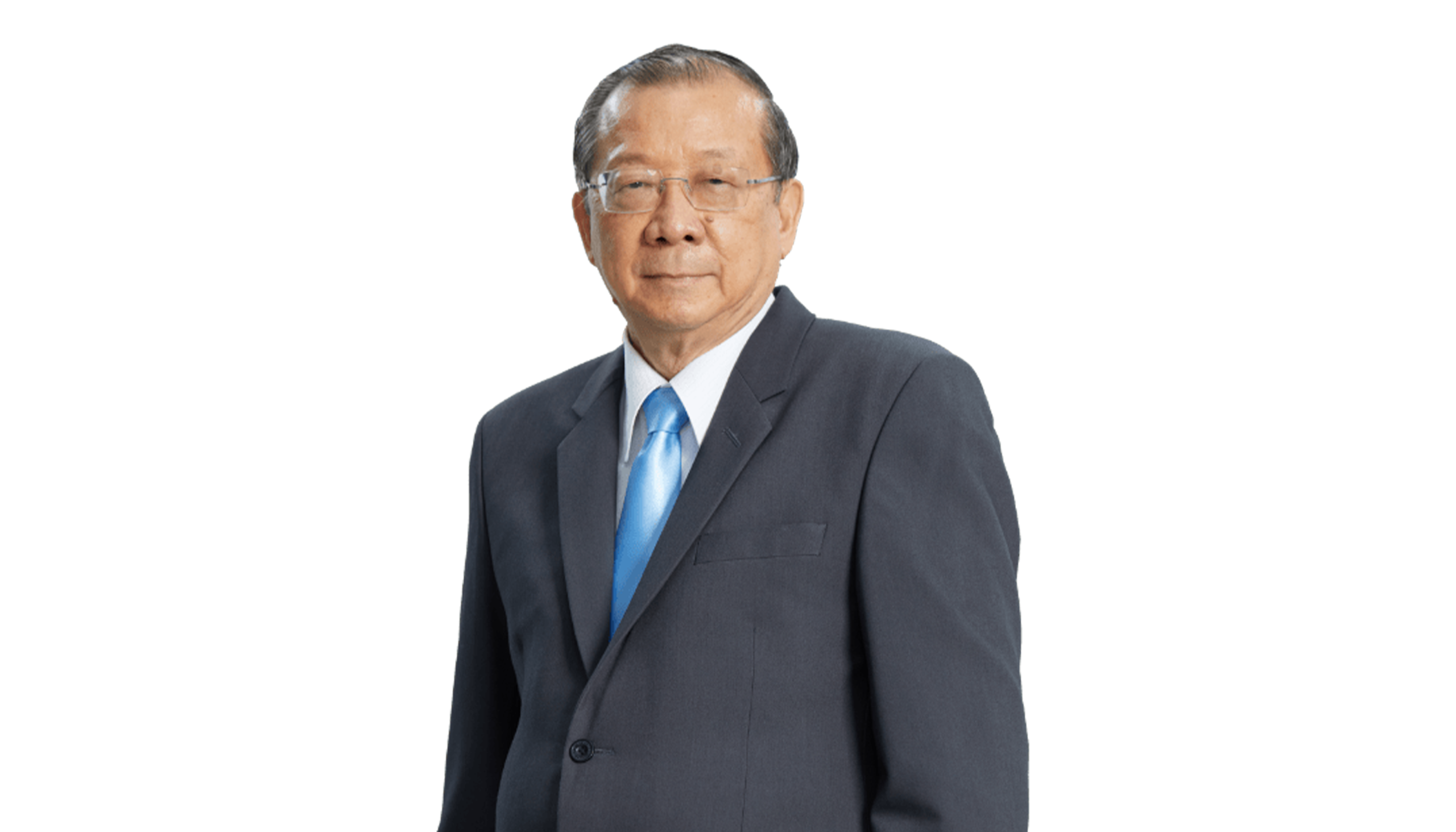
Professor Praipol Koomsup, former Dean of Economics at Thammasat University and energy expert
For a long‑term approach to reducing energy burdens, Dr. Praipol Koomsup suggested that government assistance should be “targeted,” focusing on low‑income groups or holders of state welfare cards. Instead of cutting fuel prices nationwide—which is costly and inefficient—the government could subsidize fuel or cooking gas based on essential consumption levels. Moreover, high‑income households are not significantly affected by fuel prices. Therefore, targeted subsidies also help reduce the risk of market distortion. For example, in the past, when cooking gas (LPG) prices were cut too deeply, it led to smuggling abroad. By focusing assistance on specific groups, support becomes more effective, using less budget and avoiding creating structural problems in the energy system.
What is the truth?
Thai PBS Verify examined the United Thai Nation Party’s energy policy after its leader and first prime ministerial candidate, Pirapan Salirathavibhaga, had appeared on Channel 9 program ‘Hear from Both Sides (Fang Hu Wai Hu).’ In the interview, he proposed reforming the Fuel Fund system by creating a “National Oil Reserve Treasury” and pledged to lower retail gasoline and diesel prices to 25 baht per liter. This aligns with his background as a former Minister of Energy, making energy policy a key selling point for the party.
Meanwhile, academics caution that such a policy would impose a heavy fiscal burden on the state. They argue that if energy assistance is truly needed, it should be targeted at low‑income groups or welfare card holders, rather than cutting fuel prices across the board.
Mr. Pirapan later pointed out that despite Thailand’s ability to produce fuel, referring to the Mean of Platts Singapore (MOPS) principally causes high retail gas prices in Thailand. He thus suggested stopping the use of the MOPS benchmark and adopting a ‘cost-plus pricing,’ by which selling prices are determined by adding an appropriate markup. This would realistically reduce the prices of fuel domestically produced.
Addressing remarks on excise tax abolition, Mr. Pirapan insisted that the party had not considered stopping collection of such tax, which still generates revenues to the state. But he would change some tax rate regulations: The Ministry of Energy would regain authority in fixing the excise tax ceiling in accordance with the past gas price control. At present, fuel prices are determined by the Ministry of Finance.
In addition, the Strategic Petroleum Reserve (SPR) could replace the current Fuel Fund and help decrease gas prices. Instead of setting a “fund,” “petrol” would be reserved in a national stockpile under the Petroleum Act. The latter allows royalty payment either in cash or petrol. Consequently, Thailand would be able to stockpile fuel without further purchase and stabilize domestic gas prices with no liabilities to the state. It was claimed that in this way, the Fuel Fund would no longer be public debt, but a valuable asset to the country.
Verification Process
1. Policy timeline check: The timeline review shows that the United Thai Nation Party had previously campaigned on this issue.
2. Data check: During the 2023 election, Palang Pracharath Party, the United Thai Nation Party, Pheu Thai Party, and Democrat Party emphasized policies to reduce fuel prices by 6–30 baht per liter. Bhumjaithai Party instead proposed installing solar panels to reduce reliance on oil.
3. Source check: Thai PBS Verify interviewed Professor Dr. Praipol Koomsup, former Dean of Economics at Thammasat University and energy expert. He argued that lowering fuel prices to 25 baht/liter would impose excessive fiscal costs on the government. Instead, he recommended targeted subsidies only for low‑income groups or welfare card holders.

Related Content