False claim of Nipah virus: DDC confirms no case found in Thailand
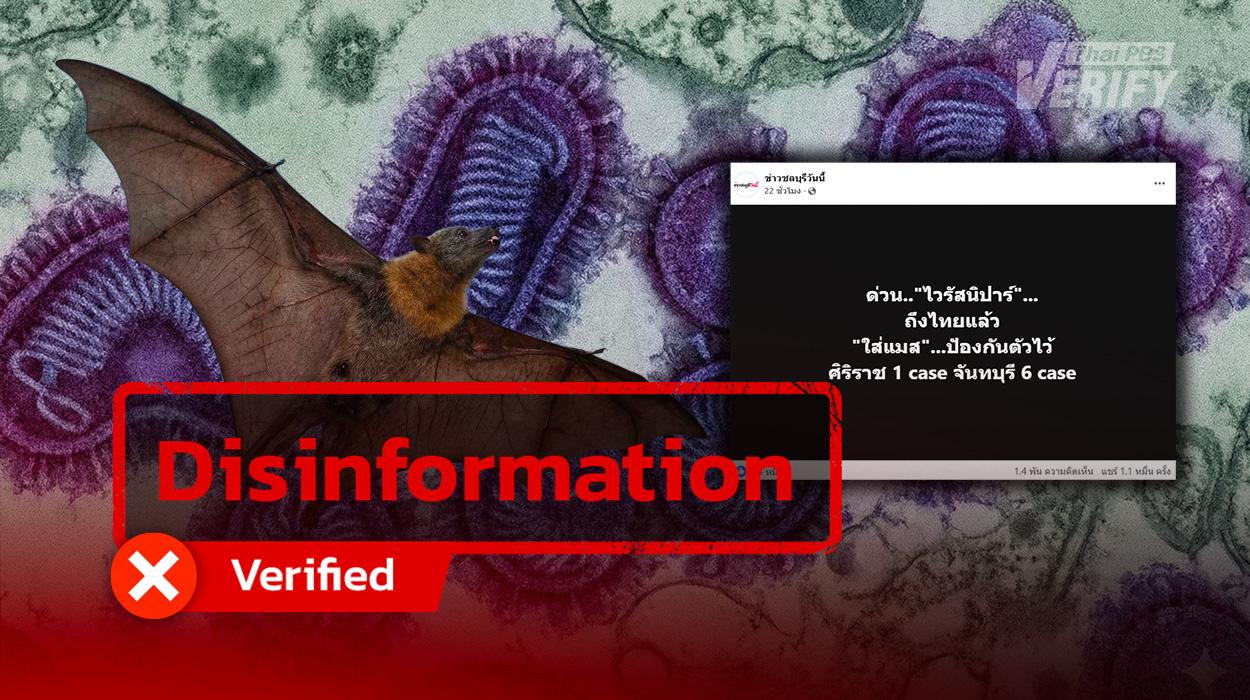
The post was shared more than ten thousand times. Thai PBS Verify investigated the matter. Most recently, the Department of Disease Control confirmed it was “fake news,” emphasizing that Thailand remains safe from the Nipah virus. The actual outbreak situation is in India with a recent report of one death.
Thai PBS Verify found the piece of fake news from: Facebook
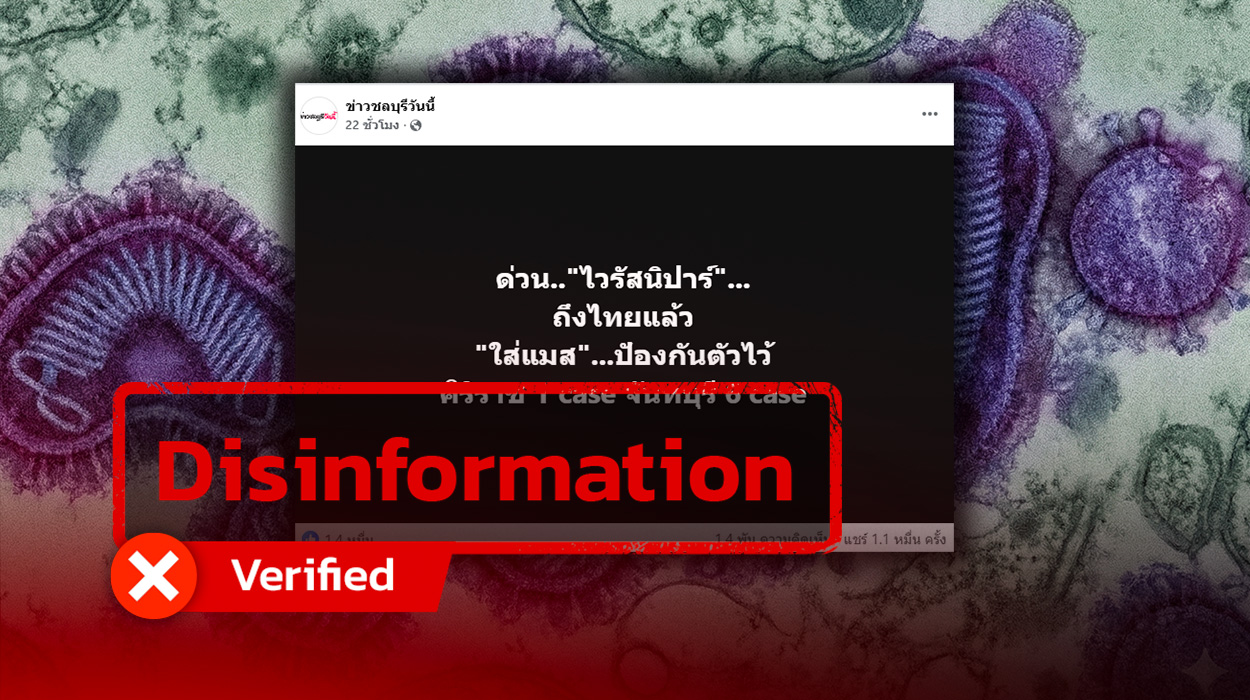
Viral post falsely claimed “Nipah Virus” had reached Thailand with one case at Siriraj and six other cases in Chanthaburi
Thai PBS Verify ตรวจสอบพบเพจเฟซบุ๊กชื่อ ข่าวชลบุรีวันนี้ ซึ่งมีผู้ติดตามกว่า 290,000 คน โพสต์ข้อความระบุว่า
Thai PBS Verify found that a Facebook page called “Chonburi News Today (ข่าวชลบุรีวันนี้),” which has more than 290,000 followers, posted the message stating:
Urgent… ‘Nipah Virus’…
Already reached Thailand.
‘Wear a mask’… protect yourself.
Siriraj 1 case, Chanthaburi 6 cases
The post received 14,000 reactions and was shared more than 11,000 times.
Was the Nipah virus really spreading in Thailand?
We verified the claim with the Department of Disease Control (DDC), the Ministry of Public Health, which confirmed that the news was fake. It was an old piece of misinformation that had previously been circulated to create panic and was reposted again. Authorities reaffirmed that no cases of Nipah virus had been found in Thailand.

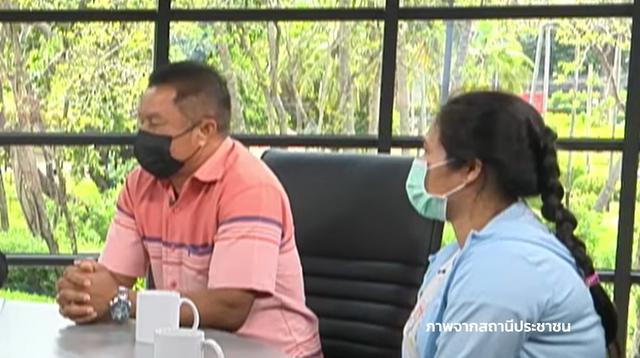
Health authorities confirmed Nipah Virus news “is fake” and there was no confirmed case in Thailand.
What is the Nipah Virus and how does it spread?
The Nipah virus is transmitted from animals to humans. It is normally spread from animals—such as fruit bats—to humans, or through contaminated food. The disease was first identified in 1999 during an outbreak among pig farmers in Malaysia and Singapore.
Where is the latest outbreak?
The most recent Nipah virus outbreak has occurred in India. On January 13, 2026, the UK Health Security Agency—the UK government’s disease surveillance agency—and The Economic Times, the Indian media outlet, reported confirmed cases of Nipah virus in West Bengal state, totaling two cases. On January 27, India’s Ministry of Health and Family Welfare confirmed that all 196 close contacts tested negative.
However, most recently, The Times of India reported that an Indian public health worker infected with the Nipah virus in December, died from cardiac arrest at a private hospital in Barasat, West Bengal, on Thursday, February 12, 2026. Doctors stated that although she had recovered from the Nipah infection, she suffered from multiple complications. Another case, a male nurse, has already recovered from the infection.
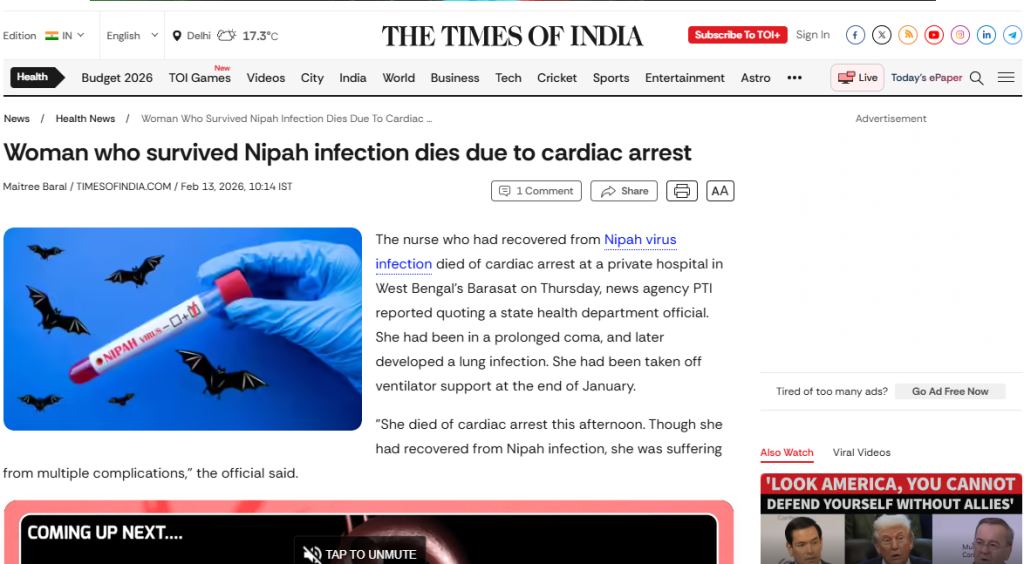
สื่อของประเทศอินเดีย รายงานเจ้าหน้าที่สาธารณสุขหญฺิงที่ติดเชื้อไวรัสนิปาห์ ล่าสุดเสียชีวิตแล้วเมื่อวันที่ 12 ก.พ. 69 ที่ผ่านมา
Is there a treatment for the Nipah virus?
Prof. Emeritus Dr. Wasun Chantratita, Head of Center for Medical Genomics, Ramathibodi Hospital, stated that potential treatments are currently in the second phase of three-phase clinical trials. If a severe outbreak were to occur, a vaccine could be rapidly produced in less than one year. The vaccine would likely use mRNA technology, like the COVID-19 vaccines. He explained that human trials had already been conducted, but not on a large scale because outbreaks have been limited—typically involving only a few cases before subsiding. As a result, vaccine development has not been considered highly urgent.

Prof. Emeritus Dr. Wasan Chantratita, Head of Center for Medical Genomics, Ramathibodi Hospital
What is the truth?
Thai PBS Verify looked into the matter and concluded the investigation as follows:
- Thailand remains free of the virus: the Department of Disease Control under the Ministry of Public Health clearly confirmed that the claim of “one Nipah case at Siriraj and six other cases in Chanthaburi” was “fake news.” Thailand has not found any Nipah virus patients at all. The information was old news previously circulated to create panic and reposted.
- The actual situation is in India: the most recent Nipah virus outbreak occurred in West Bengal state, India. On February 12, 2026, Indian media reported that a public health worker who had been infected in December died from complications (cardiac arrest) after recovering from the disease. Another patient, a male nurse, has fully recovered.
Verification Process
- Tracing the source: the origin of the fake news was found to be a Facebook page called “Chonburi News Today” (with over 290,000 followers). The page published an urgent warning message misleadingly claiming that the virus had already entered Thailand.
- Confirming with the main authority: the team directly contacted the Department of Disease Control under the Ministry of Public Health, the primary agency responsible for disease surveillance, to verify the status of Nipah cases in Thailand.
- Checking with international media: reports from international media, particularly outlets in India, were reviewed. They found only the death report of one previously infected patient, with no additional infections confirmed from the latest outbreak.
Impacts of this piece of misinformation
- Causing public panic: the use of alarming words or phrases such as “urgent” and “it has reached Thailand,” along with references to specific hospitals and provinces, led people to fear an outbreak despite there being no factual basis.
- Creating misinformation on health issues: it led to a misunderstanding that the situation was so severe that people needed to “wear masks” to specifically prevent Nipah virus infection, even though the disease does not spread as easily as COVID-19
- Damaging credibility: it negatively affected the reputation of Siriraj Hospital and Chanthaburi province, which were falsely mentioned in the misleading claims.

Reactions of people who received this piece of misinformation
What to do with this misinformation?
- Stay calm — don’t immediately believe “urgent” claims: fake news reports often use emotionally charged words to create fear and quickly share the information.
- Check reliable sources: don’t trust a post just because it comes from a popular page. Verify the information with credible sources such as the Department of Disease Control, the Ministry of Public Health, or reputable news outlets.
- Understand the nature of the disease: the Nipah virus does not spread as easily as influenza. Diagnosis requires both PCR testing and blood tests to ensure accurate detection.
- Stop the spread: if you are unsure about the accuracy of the information, do not share it. Refraining from forwarding unverified claims helps break the cycle of misinformation.

Related Content