Video claiming Iranian 1,800-rocket attack on Dubai’s Burj Khalifa is AI‑generated
Thai PBS Verify found the piece of misinformation on: X
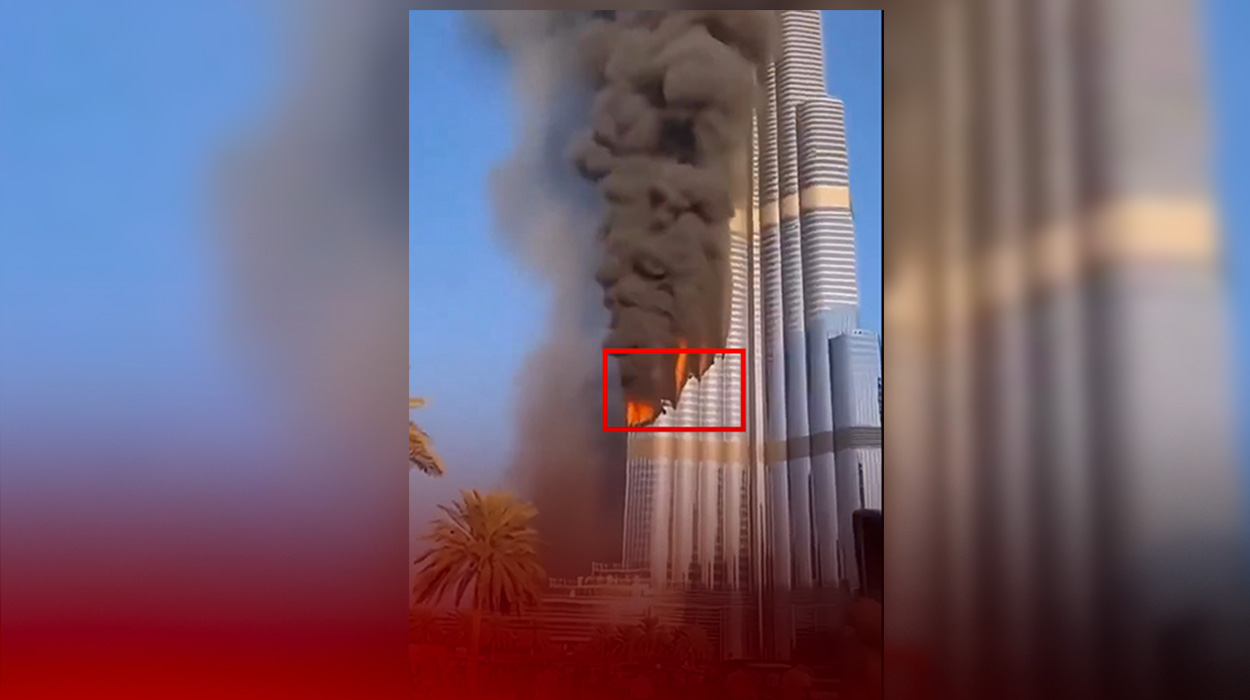
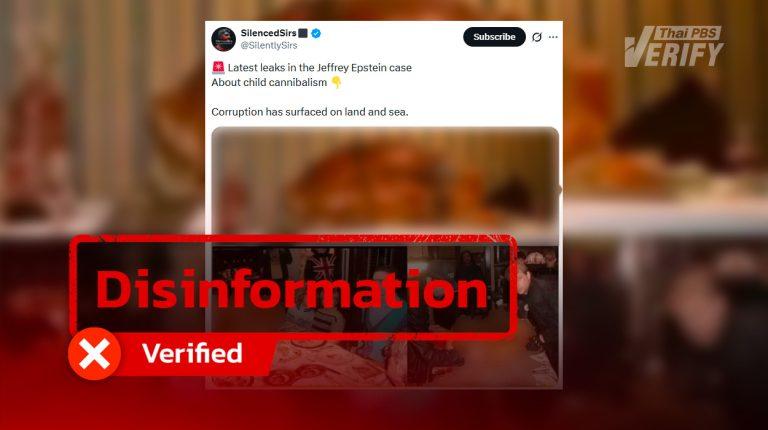
A screenshot from an X account which shared a video showing Burj Khalifa on fire amid public chaos.
Thai PBS Verify found an account on X which had shared a video showing a building on fire amid public chaos. The video caption reads: “Iran fired 1,800 missiles at Burj Khalifa. Every single missile hit the target. #USAirForce #Russia #SaudiArabia #Netanyahu.”
The post received 50,000 views, 57 comments, and 59 reactions.
Indicated beneath the video, the source of the video was another verified account “Mojtaba Khamenei.” When the team clicked on the link, the exact video was found with a note: “Readers added context to this video on another post — Misinformation! The video is AI-generated. Nothing to do with reality.” This led to further investigation whether the video in question was really fake.
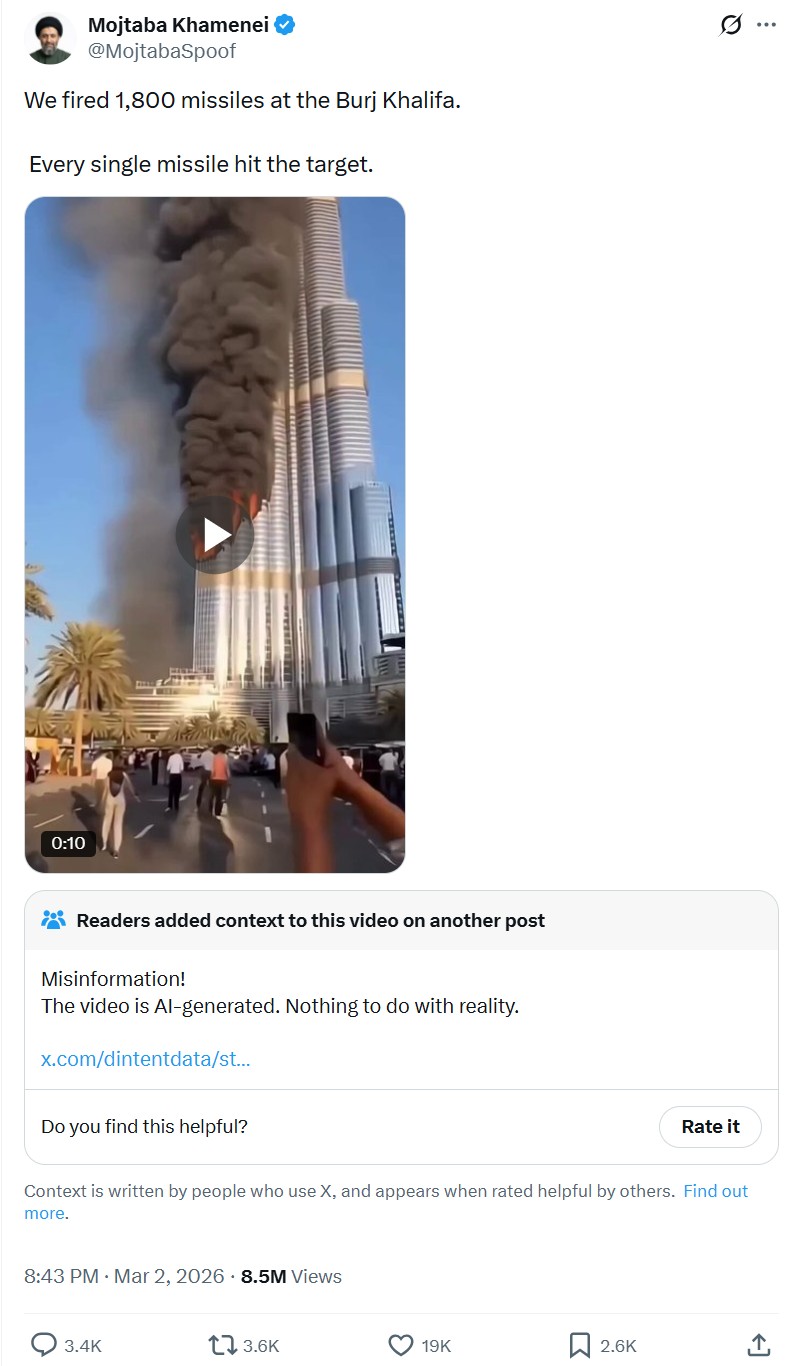
The original video was posted by an X account named “Mojtaba Khamenei.”
Was Dubai’s Burj Khalifa really attacked?
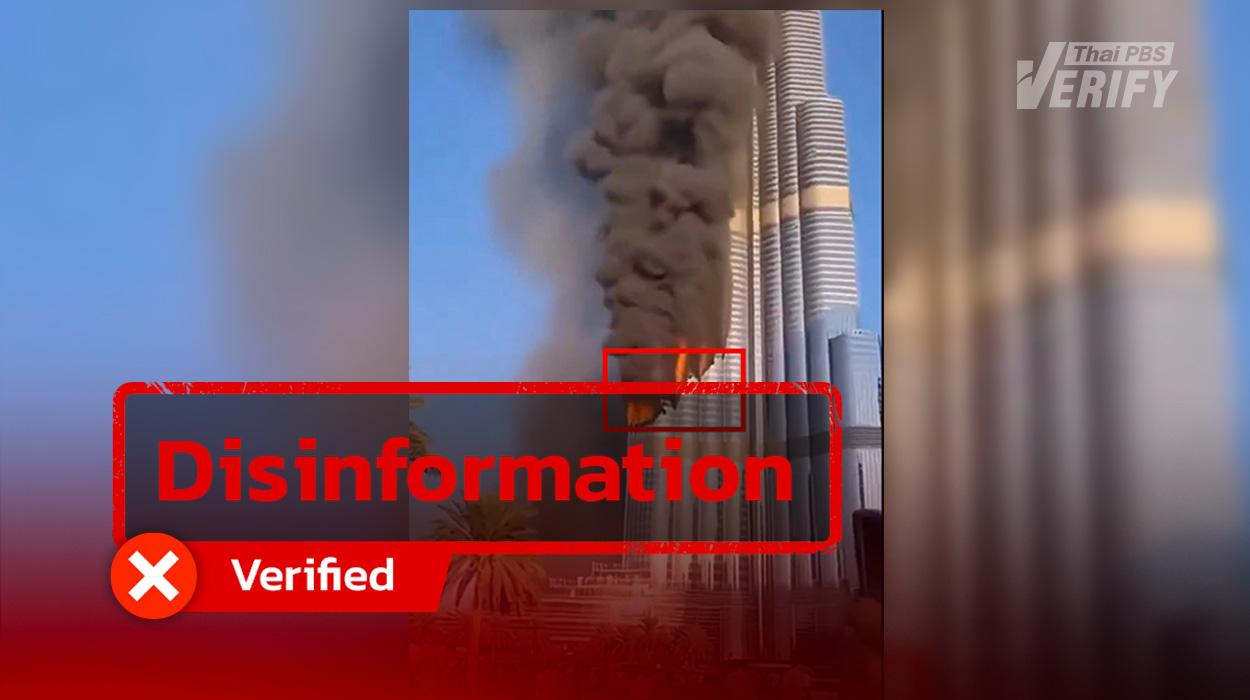
Thai PBS Verify examined the video closely and identified suspicious signs suggesting it was AI-generated.
1. Smoke patterns: The smoke rising from the building appears in repeated “loops” and moves with an unnatural stiffness, inconsistent with the height of the structure and the strength of wind at that altitude.
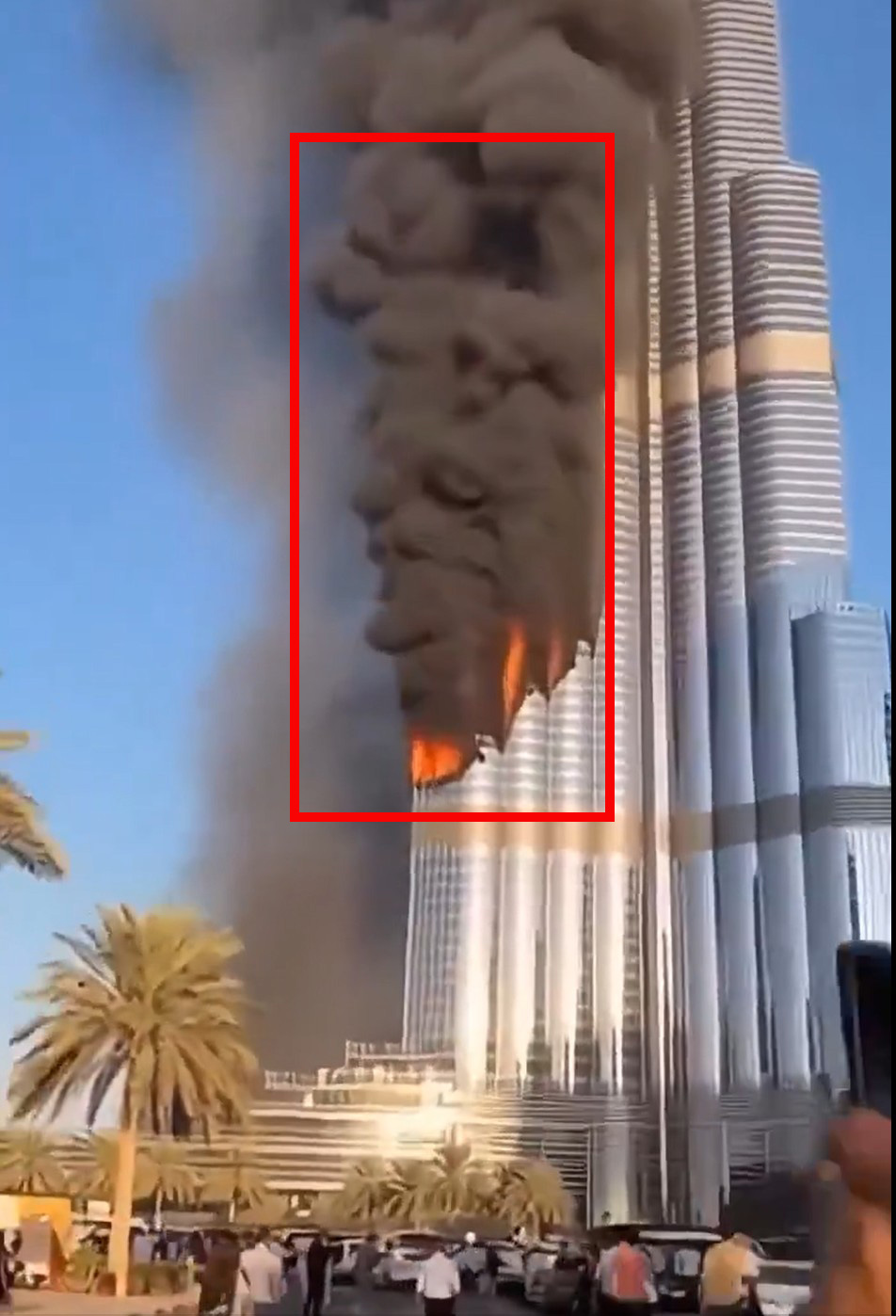
2. Light and shadow: The flames do not reflect naturally on the building’s surfaces or nearby glass. In addition, the fire origin seems to “float” away from the structure.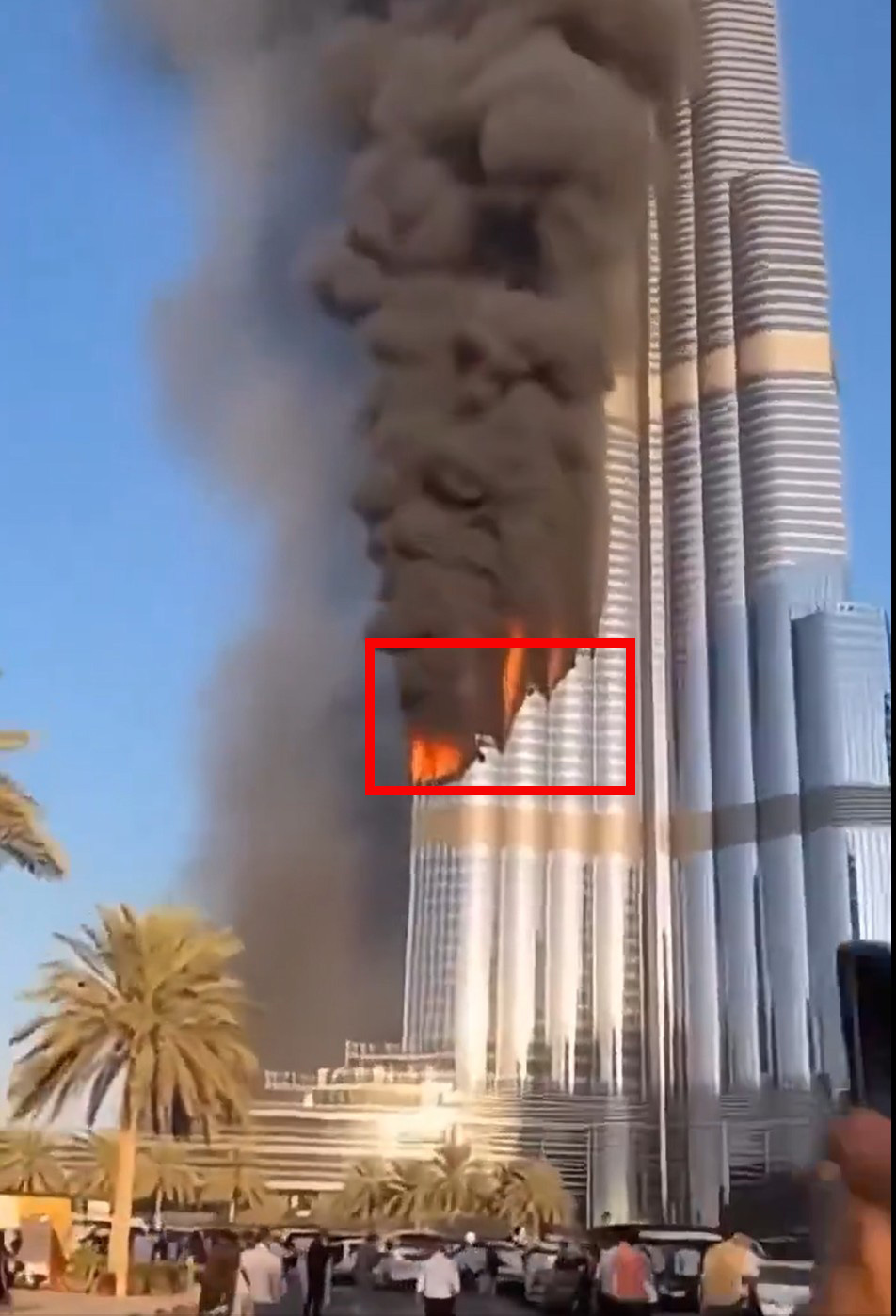
3. Condition of the building: A world-class skyscraper like the Burj Khalifa is equipped with highly advanced fire-suppression systems. In the event of a blaze of this magnitude, the glass and exterior structure would show clear physical damage or breakage — far more than what appears in the video.
How to spot that Burj Khalifa in the video was not real?
In addition, when comparing the building on Google Maps with the Burj Khalifa shown in the video, Thai PBS Verify found noticeable differences at the lower part of the structure.
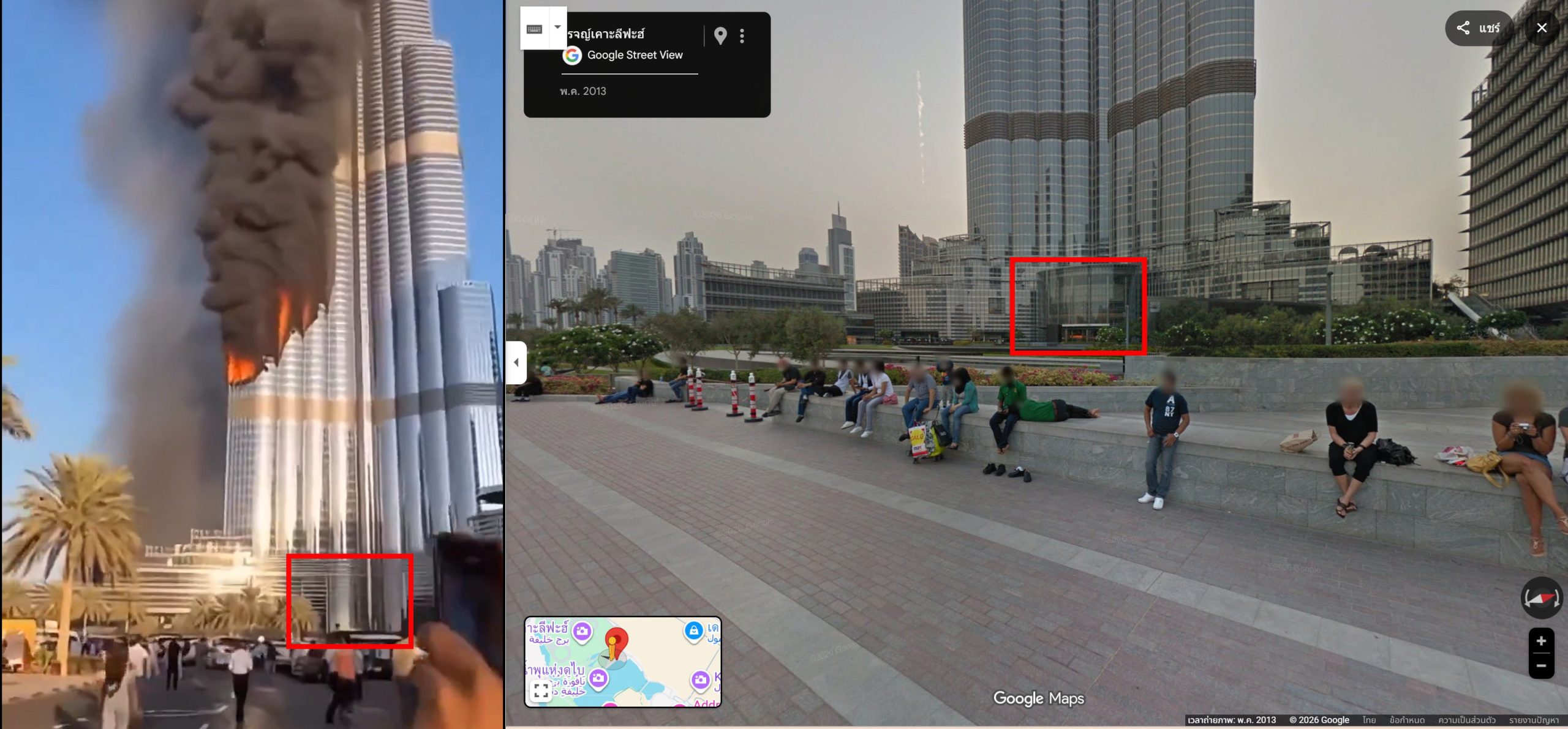
Comparison of the building in the video in question (left) and the Burj Khalifa on Google Maps (right).
At the same time, Thai PBS Verify analysed the video with HIVE Moderation, AI-video detection tool, and found that it was identified as AI-generated with a probability of 99.9%.
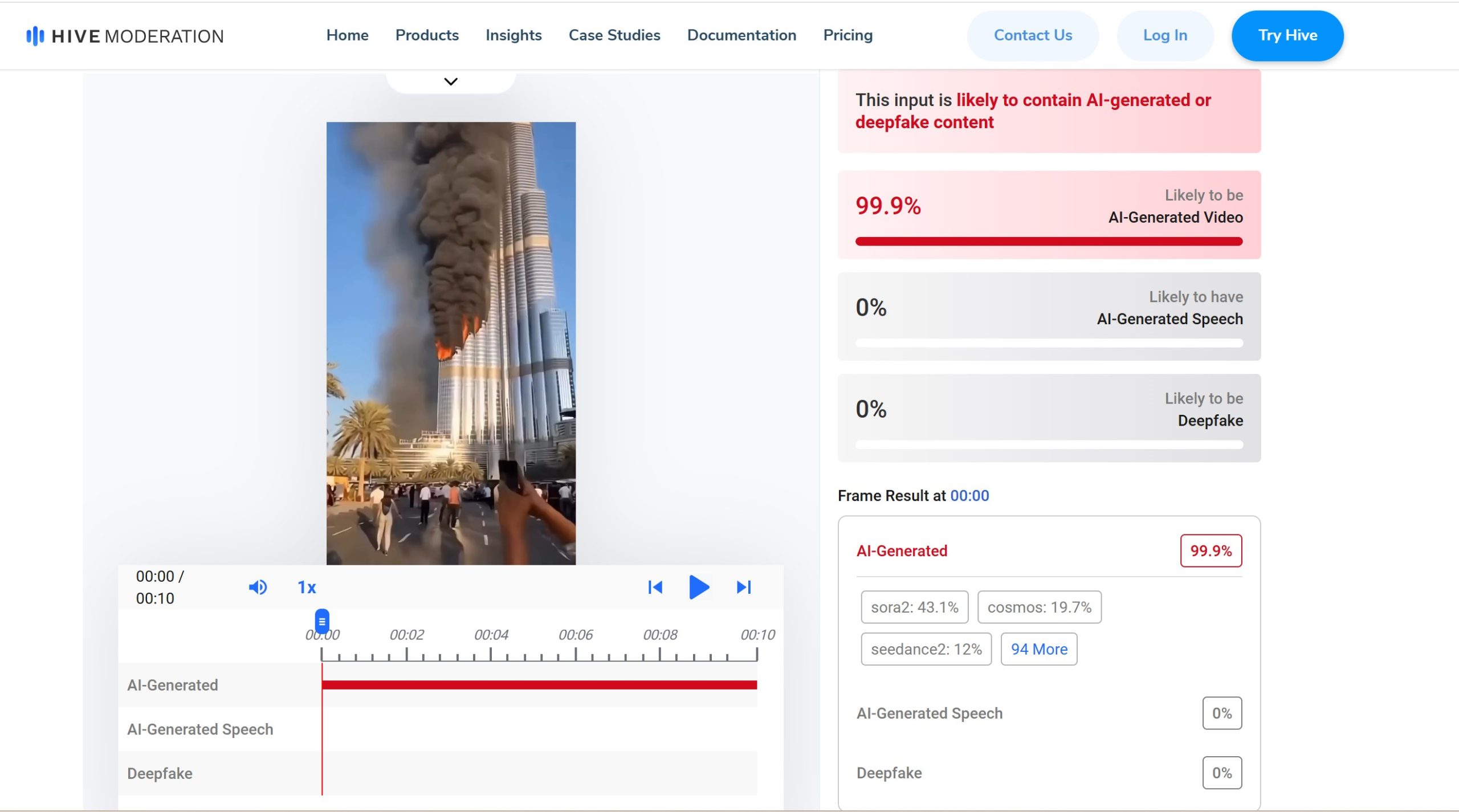
A screen shout of the video tested with HIVE Moderation, which identified it as AI-generated with 99.9% certainty.
Current situation in Dubai following the Iran–U.S. clashes
On March 1, 2026, the official Emirates News Agency (WAM) reported that the city’s Civil Defense and Disaster Management team successfully contained a minor fire on the exterior of the Burj Al Arab Hotel. No injuries were reported. Authorities in the Emirates stated that the incident was caused by debris from a drone that had been intercepted and fell onto the site.
What is the truth?
Thai PBS Verify has investigated the footage of the alleged skyscraper explosion. Initial visual inspections, combined with advanced tools, confirm with 99.9% certainty that the video is an AI-generated fabrication. Furthermore, a cross-reference with Google Maps proves that the building depicted in the viral clip is not the Burj Khalifa. In reality, the recent incident involved the Burj Al Arab Hotel just sustaining minor impacts from falling drone debris following an interception.
Verification Process
1. AI video markers: The smoke moves in unnatural, repeated loops and appears overly sluggish compared with the building’s height. Moreover, the firelight also looks artificial, failing to reflect on the building’s glass.
2. Google Maps comparison: A further check with Google Maps shows that the building in the clip differs from the actual Burj Khalifa, particularly at the lower part of the structure.
3. AI‑detection tools: When tested with HIVE Moderation, the video was flagged as AI‑generated with 99.9% certainty.
4. Official sources: Reports from Dubai’s Government Media Office confirmed only a minor fire on the exterior of the Burj Al Arab hotel, caused by debris from an intercepted drone.
Impacts of misinformation
- Inciting public panic: Claims that “1,800 missiles struck a major landmark” can trigger widespread chaos, leading to the desperate hoarding of resources or disorganized evacuations. Such environments may increase the risk of physical injuries and traffic accidents.
- Obscuring critical information: During times of unrest, accurate information regarding evacuation routes or shelters is a matter of life and death. Fake news creates confusion, making it difficult for the public to discern which official directives to follow.
- Erosion of confidence: As a global hub for business and aviation, like Dubai, images of the burning Burj Khalifa directly undermine investor and tourist confidence. This misinformation can lead to cancellations of hotels and international flights.
- Disruption of aviation operations: Even if airports remain partially operational, false reports of a massive strike may compel airlines to suspend flights longer than necessary, resulting in a ripple effect that damages the global economy.
- Escalation of conflict: Distorted data regarding the number of missiles or intended targets can be weaponized as a pretext for disproportionate military retaliation. This type of misinformation risks an unnecessary escalation of hostilities based on mutual misunderstanding.
- Undermining state credibility: Disinformation campaigns often aim to make citizens feel that their government is incapable of protecting them or is concealing the truth. This effectively erodes public trust and compromises internal national security.
What to do with this misinformation?
- Apply the “Stop, Think and Check” principle: If a story makes you feel alarmed or angry, do not share it immediately. Fake news is often designed to provoke emotions. Consider whether the claim is plausible — for example, 1,800 missiles hitting a landmark would be global headline news, not just a social media post. Moreover, you should question the source, e.g., who has shared it, and what might their motive be?
- Use reverse image search: Take a screenshot from the video and run it through Google Lens or TinEye to see if the image has appeared elsewhere before, or in a movie/video game.
- Check reliable news outlets: Visit more than one trusted news site. If no credible reports confirm such a major incident, assume it is likely false.
- Look for AI inconsistencies: Pay attention to details AI often gets wrong, such as unrealistic light and shadow (e.g., fire not reflecting on glass), looping smoke patterns, or distorted building structures when viewed closely.
- Do not share and warn others: Once confirmed as false, avoid reposting the news, even to criticize or mock. Sharing only amplifies the reach through algorithms. Instead, alert friends or communities that the content is misinformation.
Translation edited by: Peerachai Pasutan

Related Content