Post Claims “Treenuch” Told Cambodian Workers Not to Leave Thailand on Feb. 13, 2026 – In Fact, It Was Set to Lao and Vietnamese Workers
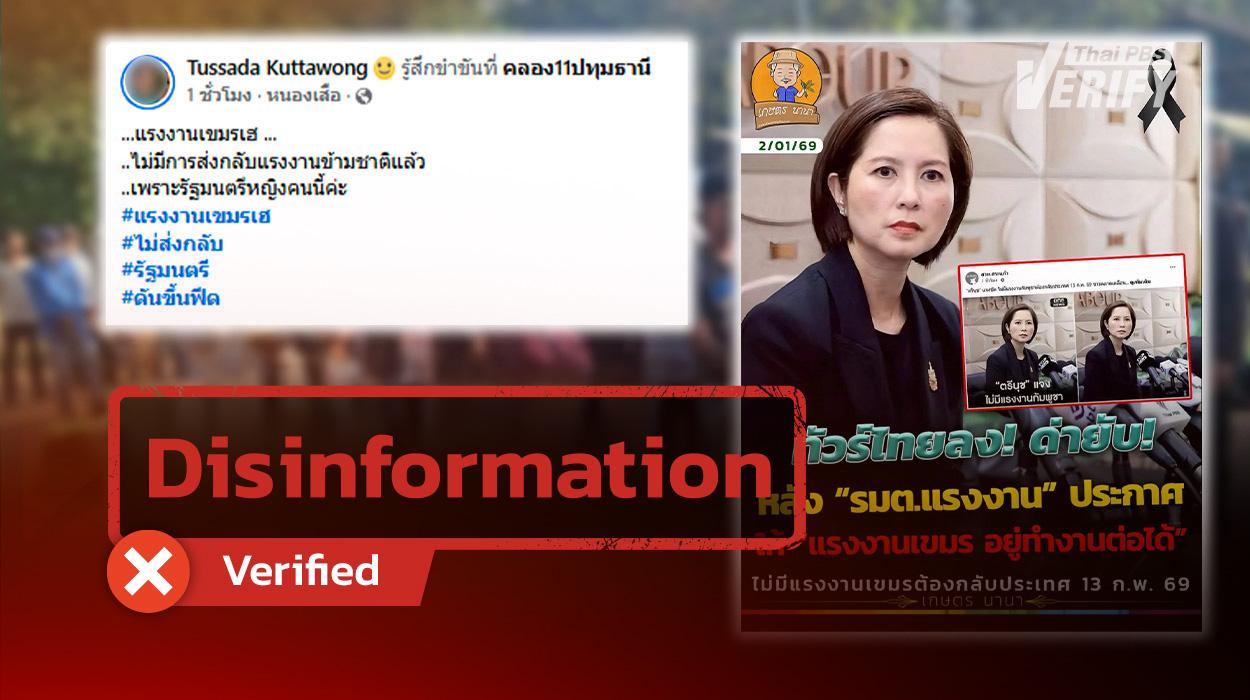
Thai PBS Verify identified the source of the fake news from: Facebook
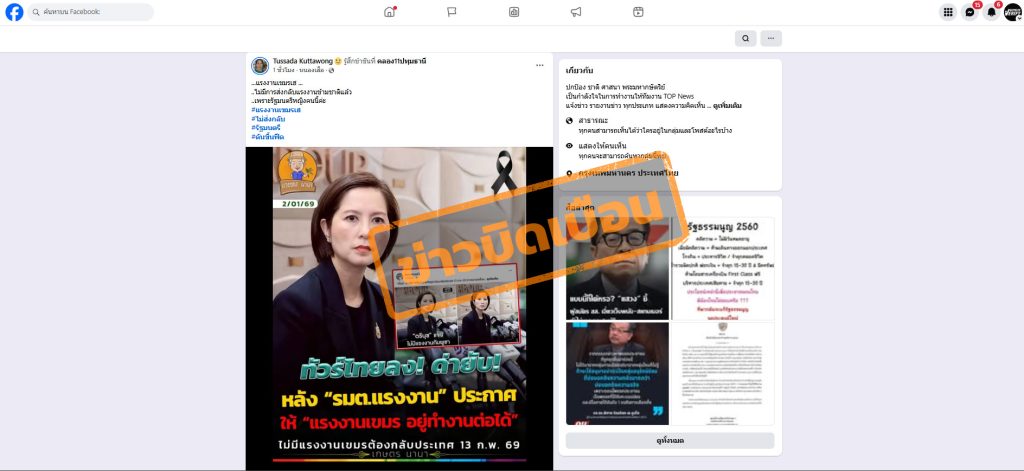
Post Claims “Treenuch,” Minister of Labour, told Cambodian workers not to return to their country on February 13, 2026.
Thai PBS Verify found that a Facebook user named Tussada Kuttawong posted a status with the following caption:
…Cambodian workers rejoice…
…there will be no deportation of migrant workers anymore…
…because of this female minister…
#CambodianWorkersRejoice
#NoDeportation
#Minister
#BoostTheFeed
The image used in the post shows Ms. Treenuch Thienthong, Minister of Labour, along with text stating:
Backlash and criticism spark!
The “Minister of Labour” announced
“Cambodian workers can continue working.”
No Cambodian workers must return to their country on February 13, 2026.
The post was published on January 10, 2026, in a Facebook group called “TOP NEWS THAILAND Fans,” where it received 60 reactions and 70 comments.
Must Cambodian workers return to their country?
Thai PBS Verify examined the publication using the Google Lens reverse image search tool, and found that the image matches a press conference by Ms. Treenuch, which took place on December 24, 2025, regarding migrant workers in Thailand who would be required to return to their home countries on February 13, 2026.
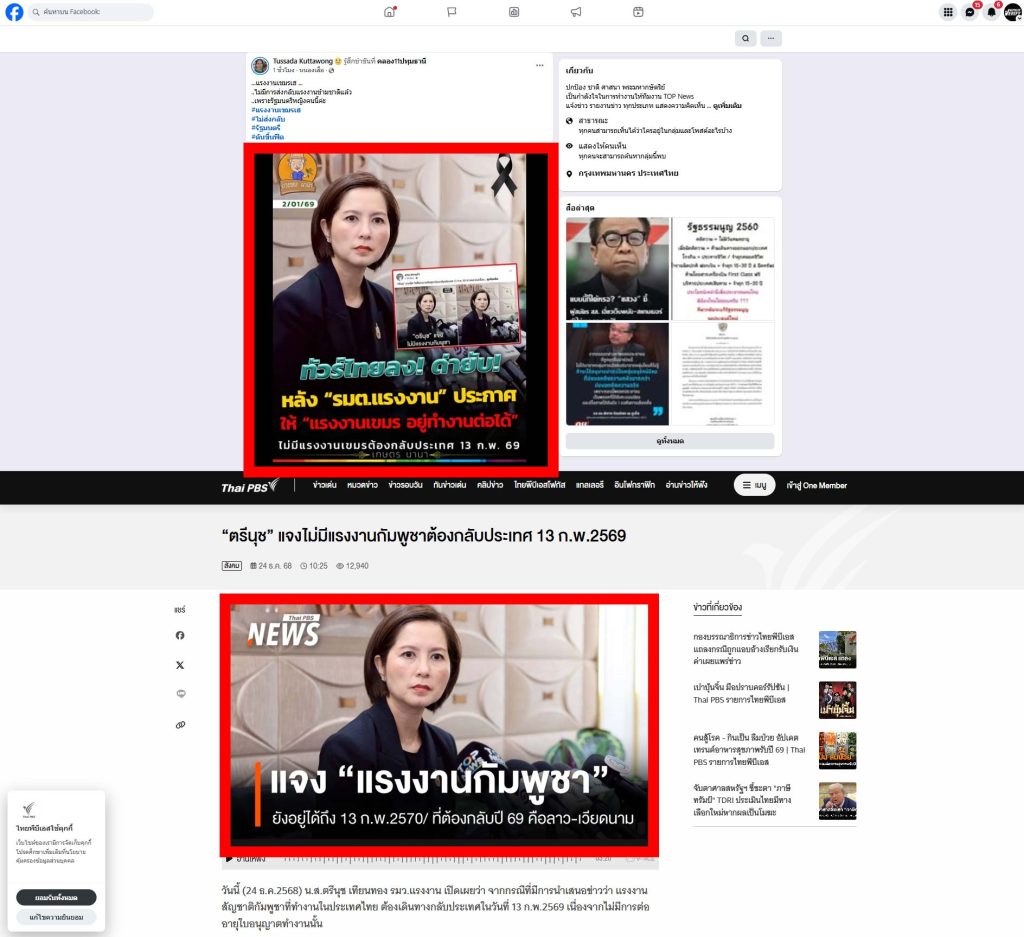
Screenshot showing a Facebook user’s post (top) compared with an image from a press conference by Ms. Treenuch Thienthong, Minister of Labour, December 24, 2026 (bottom).
What did the Minister actually say?
According to reports by Thai PBS, Ms. Treenuch addressed a rumor originating from news outlets: the latter had claimed that Cambodian workers working in Thailand must return to their country on February 13, 2026 due to the non-renewal of their work permits.
The Ministry of Labour clarified that this was a misunderstanding, as only migrant workers of Lao and Vietnamese nationality would be authorized to work until February 13, 2026, in accordance with the Cabinet resolution on February 4, 2025.
However, another Cabinet resolution on December 2, 2025 granted a deferral, allowing these foreign workers to stay in the Kingdom and continue working for an additional year, until February 13, 2027.
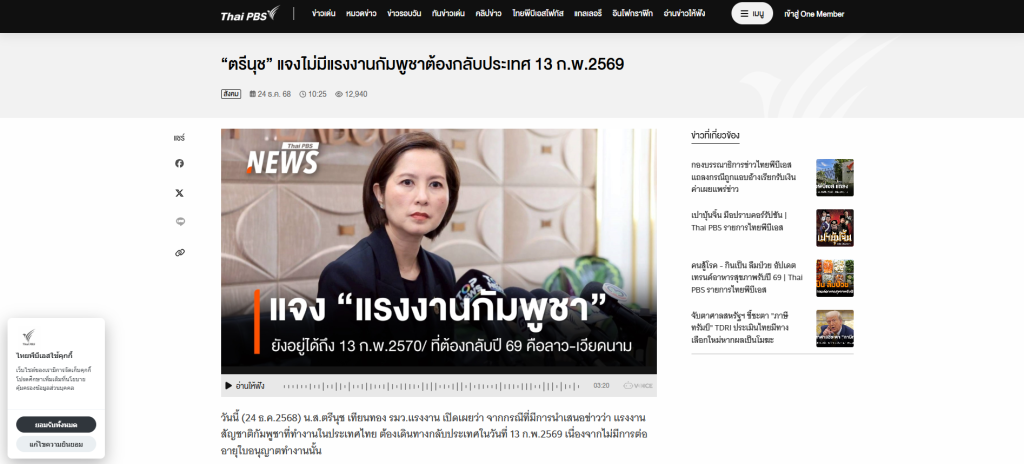
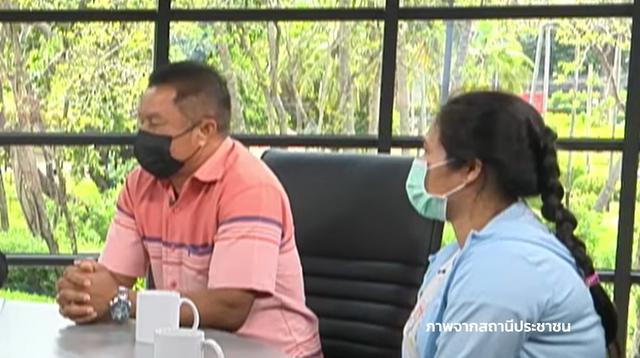
News image from Thai PBS showing Ms. Treenuch Thienthong’s press conference on Dec. 24, 2025 about migrant workers’ return deadline of Feb. 13, 2026.
Meanwhile, regarding foreign nationals of Cambodian nationality, those who are in an irregular or undocumented status are permitted to work until March 31, 2026, thanks to the Cabinet resolution on September 24, 2024,
As for Cambodian nationals who have already renewed their work permits (whose original permits expired on February 13, 2025), they are allowed to remain in the Kingdom and continue working until February 13, 2027, as the Cabinet approved on September 24, 2024, and February 4, 2025. These workers may renew their permits one more time, for a period not exceeding two years, until February 13, 2029.
Therefore, there is no group of Cambodian workers whose work permits expire on February 13, 2026.
What is the truth?
The alleged deadline does not apply to Cambodian workers. Originally, the group whose work permits set to expire on February 13, 2026 were Lao and Vietnamese nationals (under the Cabinet resolution on February 4, 2025). Nevertheless, the Cabinet later passed a resolution on December 2, 2025, granting them a one-year extension period to work until February 13, 2027.
Status of Cambodian workers
For Cambodian workers, there has never been any group scheduled to have permits expire on February 13, 2026, because:
- Workers who have renewed their permits are allowed to remain and work until February 13, 2027, and may extend their permits up to 2029.
- Workers with irregular status are permitted to work until March 31, 2026 (under the Cabinet resolution dated September 24, 2024).
Verification Process
Image verification: by Google Lens
It was found that the image used in the post was genuine, taken from Ms. Treenuch’s press conference on December 24, 2025. It was held to clarify misunderstandings about migrant workers’ departure deadlines.
Content verification:
Relevant Cabinet resolutions were reviewed (September 24, 2024; February 4, 2025; and December 2, 2025). The findings confirmed that the information on deferrals and the target groups by nationality was consistent with the Ministry of Labour’s explanation. But it was misrepresented and distorted in social media posts.
Impacts of this false information
Incitement of hostility:
The use of sensational wording, such as “backlash!” or “criticism,” was intended to provoke public emotion and foster prejudice based on false information against Cambodian workers and the Minister.
Loss of confidence in government policy:
The distortion suggesting that the government discriminates or grants special privileges to a particular nationality without economic justification undermines public trust in overall labour management.
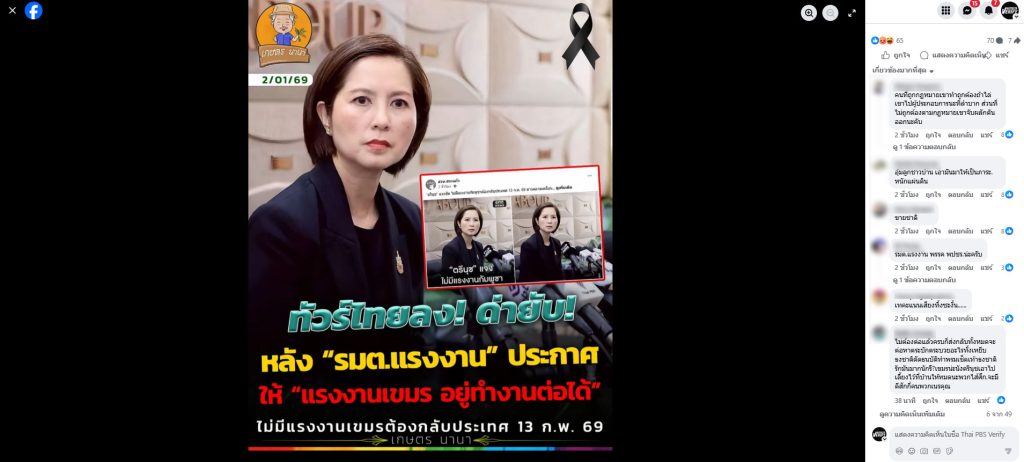
Screenshot showing comments within the post
What to do with this misinformation?
Verify the source:
If the information comes from a personal post in a closed group with a clear political agenda, it should be cross-checked with mainstream news outlets or official agency pages, such as the Department of Employment.
Do not hurry to share:
Reacting emotionally based only on a headline may turn a person into an unwitting agent in the spread of fake news.
Use fact-checking tools:
If you are not sure, the information can be submitted to fact-checking organizations, or tools such as Google Lens can be used to preliminarily verify the source of images on your own.