ถึงจะอยู่ไกลเกินกว่าที่จะเอื้อมถึง แต่ ‘ดวงดาว’ ต่าง ๆ ส่งอิทธิพลต่อโลกมหาศาล จนมนุษย์ได้คิดค้นองค์ความรู้ที่เรียกว่า ‘โหราศาสตร์’ และ ‘ดาราศาสตร์’
Despite the distance, stars and constellations are closely related to all life on Earth. To explain phenomena in the sky, humans have created two sets of knowledge called ‘astrology’ and ‘astronomy.’ [Scroll down for the English version.]
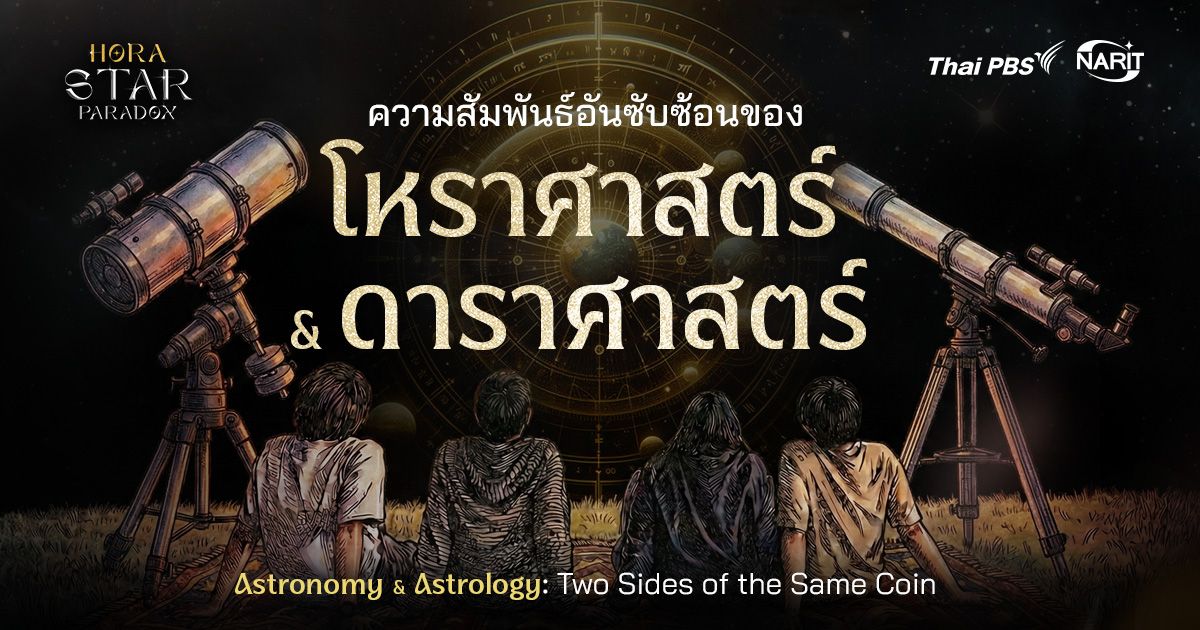
ทั้งโหราศาสตร์และดาราศาสตร์ต่างมีดวงดาวเป็นพื้นฐานเหมือนกัน และถูกพัฒนาค่อนข้างจะคู่ขนานกันมานานนับพันปี ยกตัวอย่างเช่นชาวจีนที่สามารถระบุชื่อดาวได้ตั้งแต่ 1,300 ปีก่อน พร้อมทั้งแบ่งท้องฟ้าออกเป็น 28 หมู่นักษัตรตามคติความเชื่อ ยิ่งในภาษาอังกฤษ รากศัพท์คำว่า ‘astrology’ (โหราศาสตร์) และ ‘astronomy’ (ดาราศาสตร์) ก็ย้ำไว้เป็นนัยว่า ทั้ง 2 ศาสตร์นี้ตั้งต้นจากสิ่งเดียวกัน โดย ‘astro-’ มาจากภาษากรีกโบราณ ‘ἄστρον [อัสตรอน]’ แปลว่า ‘ดาว’ หรือ ‘αστέρι [อัสเตริ]’ ในภาษากรีกปัจจุบัน
กระนั้นก็ดี ดาราศาสตร์แยกตัวออกจากโหราศาสตร์ จนกลายเป็น ‘วิทยาศาสตร์’ ได้ หลังจากกาลิเลโอ กาลิเลอิ ยกกล้องโทรทรรศน์ขึ้นส่องฟ้าในปี พ.ศ. 2152 (ค.ศ. 1609) 3 ศตวรรษถัดมา มนุษย์ก็ ‘เอื้อม’ ถึงดวงจันทร์ได้สำเร็จด้วยภารกิจอะพอลโล 11 ของ NASA เมื่อปี 2512 (ค.ศ. 1969) ขณะที่โหราศาสตร์ถูกผูกโยงกับ ‘ความเชื่อ’ หรือคำว่า ‘สายมู’ ในทุกวันนี้ อีกทั้งยังบ่งบอกวันสำคัญทางศาสนาหรือลัทธิความเชื่อต่าง ๆ จนเกิดพิธีกรรมตามมาในสังคม
กล่าวอีกอย่างหนึ่ง แม้จะมองสิ่งเดียวกัน แต่มนุษย์กลับ ‘อ่าน’ ดวงดาวต่างกันไปคนละทาง แต่ละคืน บ้างอาจอยากรู้ปรากฏการณ์ทางดาราศาสตร์นั้นนี้ ส่วนบางคงเฝ้ารอสัญญาณจากนภาและคำทำนายโหราศาสตร์ คำถามที่น่าคิดต่อก็คือ จริง ๆ แล้ว ธรรมชาติบอกอะไร และส่งอิทธิพลต่อ ‘เรา’ อย่างไรบ้างผ่านดวงดาว ?
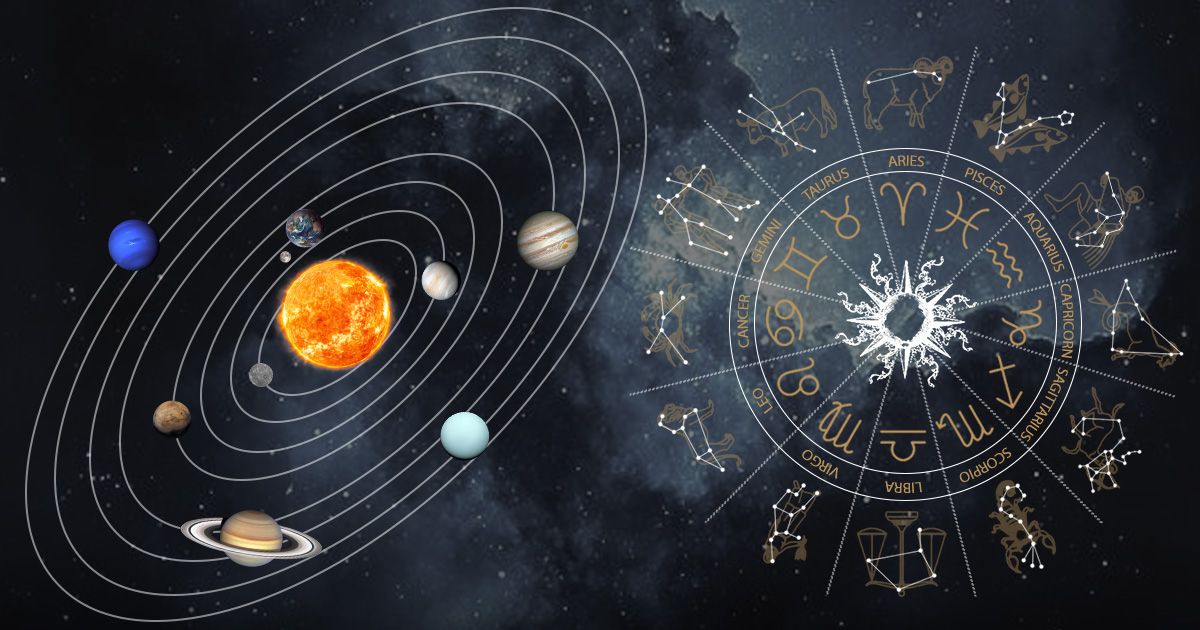
ความสัมพันธ์อันซับซ้อนระหว่าง 'ดาราศาสตร์' กับ 'โหราศาสตร์'
นิยาม ‘ความแม่น’ ระหว่างโหราศาสตร์กับดาราศาสตร์
โหราศาสตร์และดาราศาสตร์ล้วนศึกษาดวงดาวเหมือนกัน แต่วัตถุประสงค์ต่างกัน ศาสตร์แรกใช้ดวงดาวต่าง ๆเป็น ‘ดัชนี’ อย่างหนึ่งว่า คนคนหนึ่งน่าจะมีชีวิตเป็นอย่างไร โหรต้องอาศัยวันเวลาเกิด ปัจจัยแวดล้อม สถิติดวงดาว และ ‘ศิลปะการตีความ’ มาประกอบการ ‘พยากรณ์’ ร่วมด้วย ส่วนศาสตร์ที่สองสนใจว่า ดวงดาว ดาราจักร และจักรวาลเกิดขึ้นมาได้อย่างไร แล้วปรากฏการณ์บนฟากฟ้าส่งผลอย่างไรต่อมนุษย์บ้าง นักดาราศาสตร์จะต้องตั้งสมมติฐาน และ ‘พิสูจน์’ ตามหลัก ‘วิทยาศาสตร์’
แน่นอนว่า ความถูกผิดของทฤษฎีดาราศาสตร์จะรู้ได้ต่อเมื่อมีการทดลองแล้ว อีกทั้งยังสามารถถูกโต้แย้งและหักล้างได้เสมอ หากมีคำอธิบายที่ดีกว่าปรากฏขึ้นมา แต่ ‘ความแม่น’ ของการทำนายทางโหราศาสตร์ล่ะ จะวัดให้เห็นชัดได้อย่างไร ?
“ในเชิงพยากรณ์ ถ้าถูกต้องสัก 70-80 เปอร์เซ็นต์ ก็ถือว่าแม่นแล้วครับ แล้วนักพยากรณ์ก็วัดจาก ‘ฟีดแบ็ก’ [คำตอบกลับของผู้รับคำทำนาย] หรือลูกค้าเก่ากลับมา” อ.วรพล ไม้สน กรรมการมูลนิธิสมาคมโหรแห่งประเทศไทยฯ และอดีตเลขาธิการสมาคมดาราศาสตร์ไทย ให้ความเห็นในวงสนทนาของงาน ‘Hora Star Paradox ส่องดาว เล่าดวง รหัสฟ้า…ชะตาคน’ ที่จัดขึ้นช่วงปลายเดือนมกราคม 2569 โดยไทยพีบีเอสและ NARIT (สถาบันวิจัยดาราศาสตร์แห่งชาติ (องค์การมหาชน))
สิ่งที่ดูจะซับซ้อนในการพิสูจน์ความแม่นในทำนายทางโหราศาสตร์ – หรือการดูดวงแบบใดก็ตาม – อยู่ที่ว่า ผู้ทำนายจะ ‘พูด’ คำพยากรณ์ออกมาอย่างไร แล้วคนรับคำทำนายจะเห็นว่า คำพยากรณ์นั้นตรงกับประสบการณ์ของตัวเองอย่างไร ในวงสนทนาของงาน ‘Hora Star Paradox’ ดร.พิเศษ จียาศักดิ์ รองผู้อำนวยการ ส.ส.ท. ได้แบ่งปันประสบการณ์ดูดวงขณะที่ยังเป็นนักศึกษา “เขา [คนที่ดูดวงให้] บอกว่า ‘คุณจะต้องทำงานร่วมกับคนที่ไม่ดี’ เราก็ไม่เชื่อเขานะ แต่พอมาดูชีวิตเราอีกที... ช่วงเวลาประมาณ 20 กว่าปี [ที่เป็นทนาย] ก็ต้องไปแจ้งความร้องทุกข์ เอาคนผิดมาลงโทษ เพราะตอนนั้นเราทำงานด้านลิขสิทธิ์ แล้วมันมีเทปผีซีดีปลอมเยอะ ก็อาจจะเป็นเรื่องนี้” ดร.พิเศษ เล่า “แต่ตอนนั้น เราก็ว่าเขา [คนที่ดูดวงให้] ว่า ‘ไม่แม่นเลย’ เขาก็หน้าเสียเลย (หัวเราะ)”
ดร.พิเศษ กล่าวต่อว่า เขาเชื่อใน ‘birth chart’ หรือพื้นดวงเกิด ในฐานะเครื่องมือที่ทำให้คนเรา “รู้จักตัวเอง” และ “ยืนยันตัวตนเพื่อให้เราก้าวไปข้างหน้าได้อย่างมั่นคง” แต่ส่วนตัวนั้น ดร.พิเศษ ไม่ได้เชื่อใน ‘คำทำนายล่วงหน้า’ จากโหราศาสตร์ ด้านดร.ศรัณย์ โปษยะจินดา กรรมการผู้ทรงคุณวุฒิในคณะกรรมการสถาบันวิจัยดาราศาสตร์แห่งชาติ มองว่า ในทางวิทยาศาสตร์ ดวงดาวนั้นย่อมส่งผลต่อการดำรงชีวิตของมนุษย์อยู่แล้ว ตัวอย่างง่าย ๆ เช่น ดวงอาทิตย์ส่งความร้อนและความอบอุ่นต่อมนุษย์ และดร.ศรัณย์เองก็เคยศึกษาโหราศาสตร์เป็นเวลาหลายปี แต่สุดท้าย เขา “ไม่เชื่อ” ว่า ดวงดาวจะกำหนดเส้นทางชีวิตของปัจเจกแต่ละคนได้
“โหราศาสตร์เป็นความเชื่อนะครับ และมัน ‘falsifiable’ [พิสูจน์ว่าถูกหรือผิด] ไม่ได้ แต่ [ในความคิดของผม] มันเป็น ‘coincidence’ หรือเหตุบังเอิญ… ผมไม่ได้ไปลบหลู่เขานะครับ ไม่ใช่ว่าไม่เชื่อแล้วต้องไปลบหลู่ เพียงแต่ว่า มันก็ทางใครทางมันครับ สุดท้ายแล้ว [ชีวิต] อยู่ที่ ‘กรรม’ คือการกระทำของตัวเอง” ดร.ศรัณย์ “[ทั้งนี้] ถ้าเราไม่มีความเชื่อใด ๆ เลยก็ไม่ได้นะครับ เพราะว่าจะไม่มีคุณธรรมหรือคำว่าดีชั่ว ใช่ไหมครับ แต่เราต้องมีสมดุลระหว่างความเชื่อกับความรู้ควบคู่กันไป”
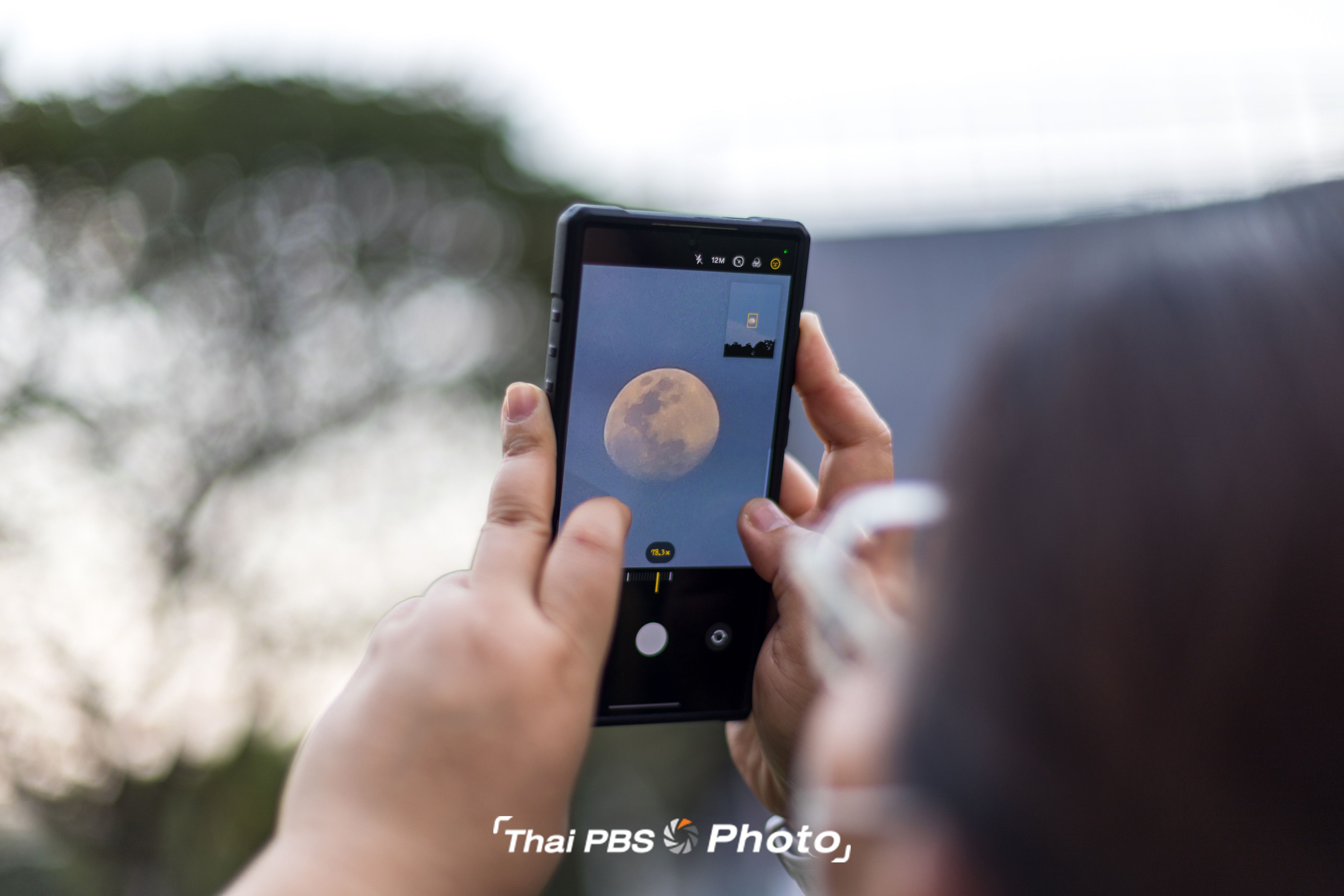
ภาพจากงาน 'Hora Star Paradox ส่องดาว เล่าดวง รหัสฟ้า...ชะตาคน' เมื่อวันที่ 30 มกราคม 2569
โหราศาสตร์และดาราศาสตร์ในฐานะ ‘สื่อกลาง’ เชื่อมโยงใจผู้คน
ปฏิเสธไม่ได้ว่า โหรศาสตร์หลอมรวมเข้ากับวิถีชีวิตคนไทย พร้อมทั้งมีการศึกษามาอย่างยาวนาน จนได้รับการขึ้นทะเบียนมรดกภูมิปัญญาทางวัฒนธรรมของชาติ เมื่อปี 2557 และถึงเรื่อง ‘ความเชื่อ’ จะขึ้นอยู่กับวิจารณญาณและประสบการณ์ของแต่ละคน แต่โหราพยากรณ์ก็ช่วยให้ผู้คนได้ ‘พูดคุยสารทุกข์สุกดิบ’ กันก่อนที่โลกจะรู้จักคำว่า จิตวิทยาและการบำบัด ตามความเห็นของดร.แทนไท ประเสริฐกุล นักสื่อสารวิทยาศาสตร์ เจ้าของรายการ Witcast “ผมรู้สึกว่า การดูดวง – ไม่ว่าจะด้วยดวงดาว ลายมือ หรืออะไรก็แล้วแต่ – ผมมองว่า มันเป็น ‘เครื่องมือ’ ที่ให้คนสองคนได้มานั่งด้วยกัน แล้วก็หารือเรื่องชีวิตกัน มากกว่าที่จะเป็นเกี่ยวกับตัวดวงดาวจริง ๆ”
ด้านกรทอง วิริยะเศวตกุล นักสื่อสารดาราศาสตร์และเจ้าของเพจ KornKT กล่าวว่า การไปดูดวงผ่านดาวก็สามารถสะท้อนถึงสภาพจิตใจของผู้คน รวมถึงความเป็นไปทางเศรษฐกิจ-สังคมเป็นนัย ๆ ด้วยเช่นกัน “ถ้ามองไปถึงโครงสร้างของสังคมว่า การที่เราต้องพึ่งพากับดวงเนี่ย มันคือความไม่แน่นอนครับ อาจมองในภาพเศรษฐกิจว่า จะมีเงินพอไหม จะมีงานแน่นอนไหม จะไม่โดนไล่ออกหรือเปล่า จะได้ที่เรียนที่ดีหรือเปล่า... มันก็ย้อนกลับไปถึงภาพกว้างไว้ว่า เรามีอุปสงค์และความต้องการ มากกว่าอุปทานที่มีให้”
ในฐานะคนทำคอนเทนต์ กรทองให้ความเห็นต่อว่า ความสนใจของผู้คนเกี่ยวกับโหราศาสตร์ ก็อาจเป็น “จุดเริ่มต้นที่ดี” ให้ผู้คนเหล่านี้ศึกษาเรื่องดาราศาสตร์ต่อไป ส่วนคนทำสื่อเองก็ต้องหาวิธีการถ่ายทอดเรื่องวิทย์ให้น่าติดตามด้วย “ส่วนในมุมของผม เราทำสื่อด้านอวกาศ ก็จะเป็นงานของเราว่า จะทำอย่างไรให้คนมาอินต่อ ถ้าเขาอินเรื่องการดูดวง เราจะดึงว่า ‘เฮ้ย เรื่องอวกาศก็น่าดูเหมือนกันนะ’ มันมีเรื่อง ‘ว้าว’ ที่เกี่ยวข้องกับชีวิตประจำวันของเขาได้เหมือนกัน” กรทองกล่าว
เมื่อพูดถึงสื่อ ปัจจุบัน สื่อต่าง ๆ ก็นำเสนอทั้งเรื่องดาราศาสตร์และโหราศาสตร์ผ่านหลากหลายมุมมอง แต่สำหรับสื่อสาธารณะล่ะ จะสะท้อนเรื่องราว ‘โหราศาสตร์’ ในสังคมอย่างไร ? “คำว่า ‘สื่อสาธารณะ’ หมายความว่า เราต้องสะท้อนทั้งความคิดและมุมมองที่หลากหลายนะครับ เราจะต้องทำให้เขาเห็นครับว่า อะไรที่เป็นประโยชน์กับสังคมและตัวเขาเอง” ดร.พิเศษ ตอบ “เช่นเรื่องโหราศาสตร์... ถ้าบางสิ่งบางอย่างบอกเขาว่าจะมี ‘พระศุกร์เข้าพระเสาร์แทรก’ ก็คือปัญหา ความยากลำบากใช่ไหมครับ เราก็อยากจะให้คนมีวิจารณญาณกับองค์ความรู้ และตอบโต้ [กับสถานการณ์เช่นนั้น] อย่างมีพละกำลังที่จะไปต่อได้ครับ”
ดวงดาวบนฟากฟ้าบอกอะไรหลายอย่างแก่มนุษย์เราเสมอ และมีหลากหลายแนวทางให้เราตีความ อย่างไรก็ดี ต่อให้ไม่คิดถึงเรื่องดาราศาสตร์หรือโหราศาสตร์ การแหงนหน้าดูดาวเฉย ๆ ก็อาจทำให้เราหลบลี้ความวุ่นวาย และนำพาให้เราพบเจอกับความสงบในใจได้ สุดท้ายแล้ว ก็ขึ้นอยู่กับว่า ใครจะ “เลือก” มองดาวแบบใดกัน
วิเคราะห์ความเชื่อมโยงกับความย้อนแย้งของ ‘โหราศาสตร์’ และ ‘ดาราศาสตร์’ ในรูปแบบ data visualization ผ่านโปรเจกต์ Hora • Star • Paradox ดู(ดวง)ดาว ความย้อนแย้งระหว่าง “อ่านดวง” กับ “อ่านดาว” ได้แล้ววันนี้ ที่: www.thaipbs.or.th/TheVisualStar
แขกรับเชิญ: ดร.ศรัณย์ โปษยะจินดา, อ.วรพล ไม้สน, กรทอง วิริยะเศวตกุล, ดร.แทนไท ประเสริฐกุล และดร.พิเศษ จียาศักดิ์
สัมภาษณ์: สิปปกร ศรีครุตวสนะ และธนบัตร ลิ้มธนสาร
เรียบเรียงและแปล: พีรชัย พสุทันท์
Astrology and astronomy have long been developed in parallel throughout history. For example, Chinese people were able to identify stars and constellations 1,300 years ago, while dividing the celestial sphere into Twenty-Eight Mansions or xiu in Chinese astrology. Even the words ‘astrology’ and ‘astronomy’ emphasize their shared history, with the prefix -as deriving from ‘ἄστρον’ in ancient Greek, meaning ‘star,’ or ‘αστέρι’ in the modern language.
Nevertheless, after Galileo Galilei had observed the stars with his telescope in 1609, astronomy separated from astronomy and became a branch of sciences. More than three centuries later, the Moon was reachable, as a group of Apollo 11 astronauts landed on the satellite in 1969. Astrology itself was more considered as a ‘belief,’ which some might pessimistically call ‘superstition’ in the present day. Astrology is still also crucial in religious calendars, rituals and traditions until today.
In other words, we, human beings, read the constellations differently. Each night, some may be curious about stellar phenomena; some may wonder if the sky sends ‘signals’ which lead to astrological interpretations and predictions. The question of this paradox is: what does nature really tell and influence us via the stars?
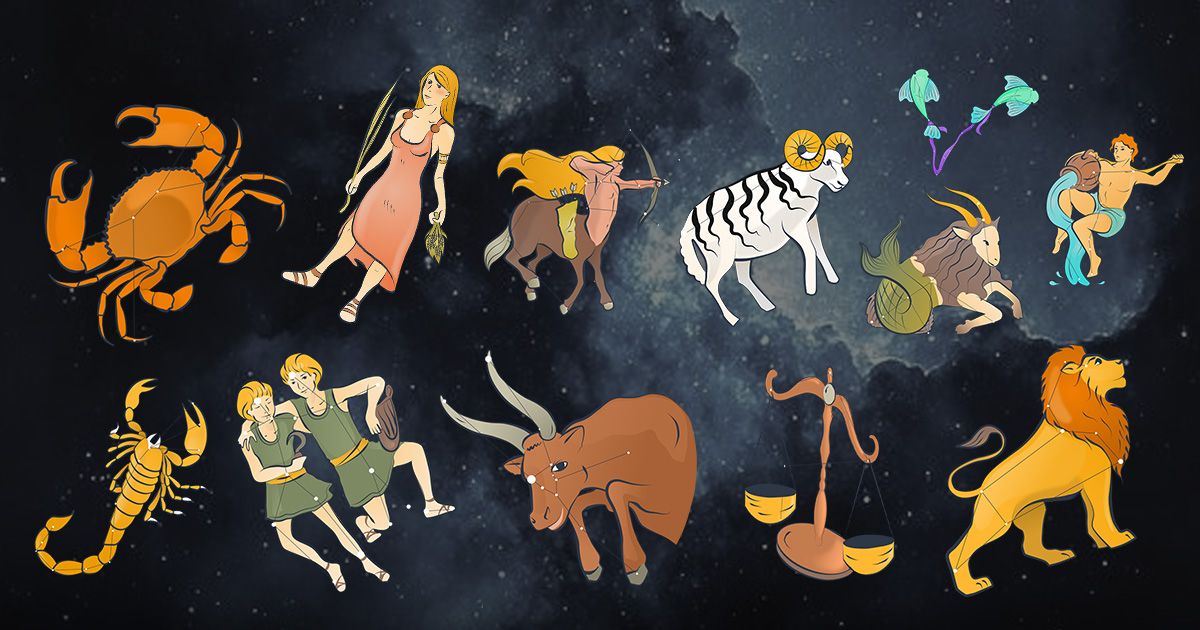
Constellations and zodiac signs
Definitions of ‘accuracy’ between astrology and astronomy
Astrology and astronomy both focus on stars, but for different purposes. Astrology uses stars and constellations as an ‘index’ to foretell what one’s life will be. Still, astrologers need birth date and time, contexts, astronomical chronology and ‘art of interpretation’ to predict one’s life. On the other hand, astronomy is interested in the origins as well as influences of stars, galaxies and the Universe. Astronomers must prove their hypotheses based on scientific rules.
Accuracy in any astronomical theories can indeed be tested with experiments and calculations. And all theories are arguable and falsifiable if better evidence appears. But in astrology, how can its accuracy be clearly proven?
“If predictions are 70-80 percent correct, we can consider them accurate… Astrologers also wait and see if their customers later give ‘feedback’ [whether the predictions were correct] or return to them,” commented Vorapon Maison, Committee of the Astrological Association of Thailand Foundation under the Patronage of the Supreme Patriarch and former Secretary of the Thai Astronomical Society, during the ‘Hora Star Paradox’ panel discussion and stargazing event. The happening was organized in late January 2026 by Thai PBS and NARIT (National Astronomical Research Institute of Thailand (Public Organization)).
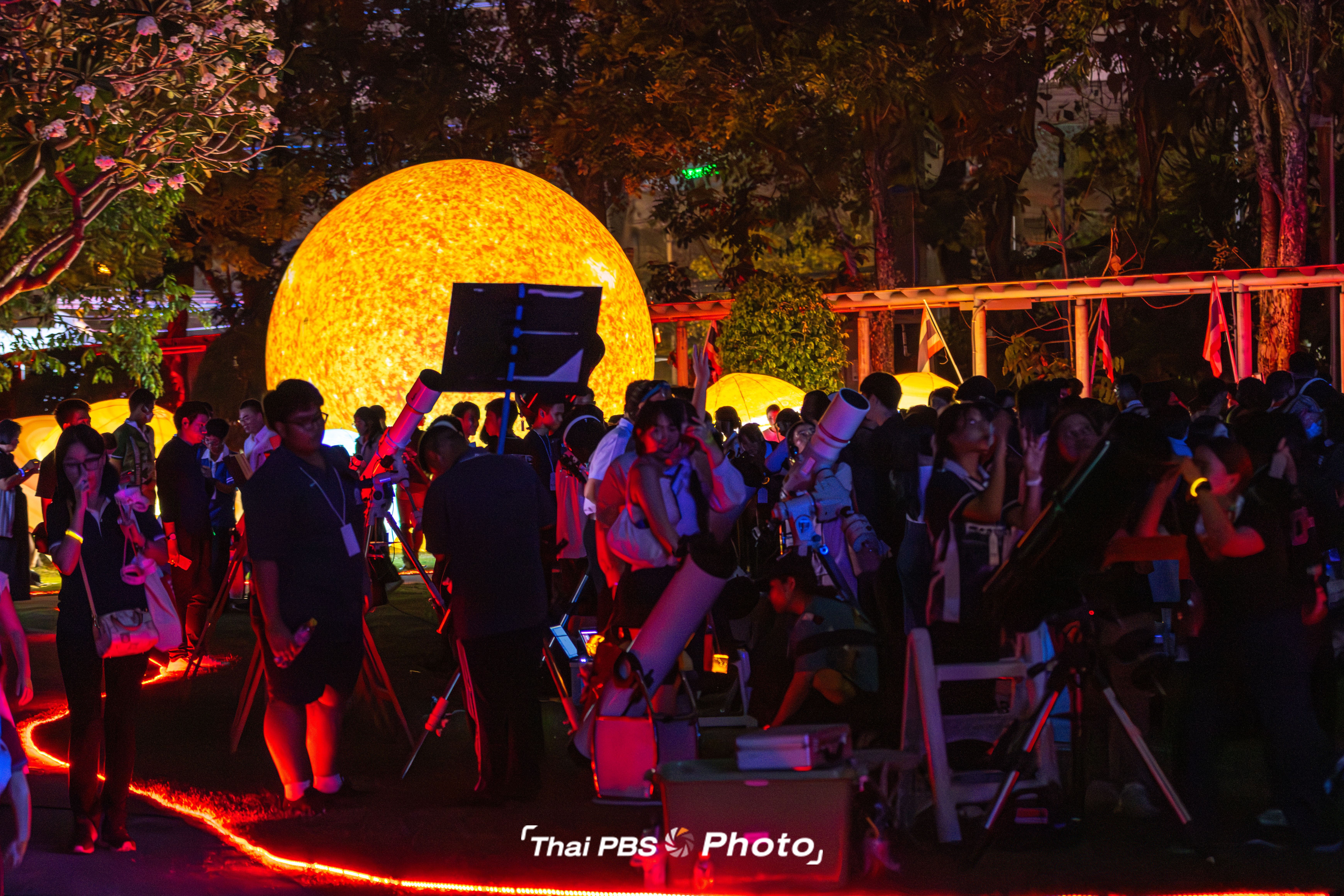
Participants during the 'Hora Star Paradox' stargazing and talk event on January 30, 2026
It is also difficult to measure accuracy in astrology – or any form of fortunetelling – because it depends on 1) how each astrologer interprets and ‘speaks’ to their customer, and 2) whether that customer finds their experience matching the predictions. On the Hora Star Paradox panel, Thai PBS Deputy Director General Piset Chiyasak shared his experience of consulting a fortuneteller during his bachelor’s degree: “He told me ‘your work will be involved with bad people.’ I didn’t believe him. But for more than two decades, I, as a lawyer, had to file complaints and bring wrongdoers to justice. At that time, there were issues with illegal DVDs. So, this might have been what the foreteller had said to me.”
Dr. Piset added that he believes in birth charts as tools for “self-discovery” and “self-confidence” so that “we can move forward with strength.” Still, personally he doesn’t believe in ‘predictions’ from fortunetellers or astrologers. As for Saran Poshyachinda, Distinguished Committee of NARIT, he pointed out that scientifically, stars and their activities always affect all lives and human beings, such as the Sun that gives heat to Earth. Dr. Saran himself also learnt about astrology for years; nonetheless, he “does not think” that stars can foretell each individual’s life.
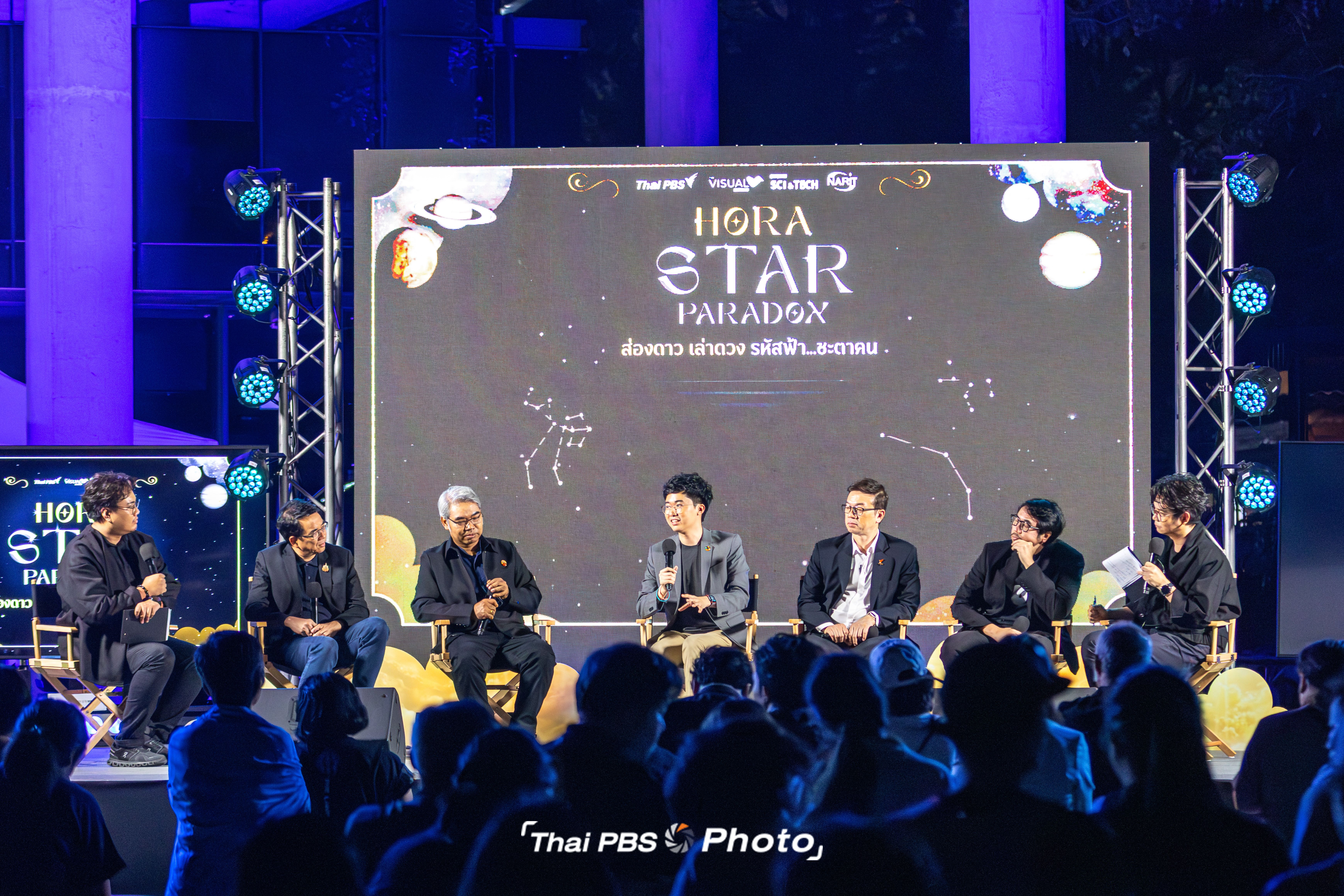
Special guests of the 'Hora Star Paradox' panel on January 30, 2026
“Astrology is a belief, which cannot be falsifiable. But [in my opinion,] it’s about ‘coincidence.’ This doesn’t mean I disrespect astrology. In fact, if we don’t believe in something, it doesn’t mean that we can disrespect it. It’s just that everyone has their own preferences. At the end of the day, our lives depend on ‘krama,’ or our own actions,” Saran said. “Anyway, we should have something to believe in or hold onto. If not, we wouldn’t have moral compass or values in ourselves, right? It’s all about balancing belief and knowledge.”
Astrology and astronomy as ‘tools’ to connect human beings
Astrology has undeniably been integrated into Thai people’s lives and studied for centuries. Thai astrology is so important that it was listed as a national cultural heritage in 2014. Whereas belief depends on each individual’s judgment and experience, astrology has helped people ‘get connected’ and talk about their lives even before the world recognized psychotherapy. As science communicator Tanthai Prasertkul stated: “I personally view fortunetelling – whether through stars, palmistry or other means – as a ‘tool’ that allows two people to meet and discuss their lives. So, in this sense, astrology might not be about stars after all.”
As for Kornthong Wiriyasawetkul, another science communicator and space journalist, he analyzed people’s interest in consulting fortunetellers or astrologers. Such interest could reflect people’s mentality and the socio-economic situation at the time: “Socially speaking, when we rely on fortune, it means we rely on uncertainty. For example, we might ask ourselves: ‘will we have enough money?’ ‘will we get a steady job?’ ‘will we keep this job?’ or ‘will we get to study at a decent university?’ In the bigger picture, it’s like we have more demand than supply in the market.”
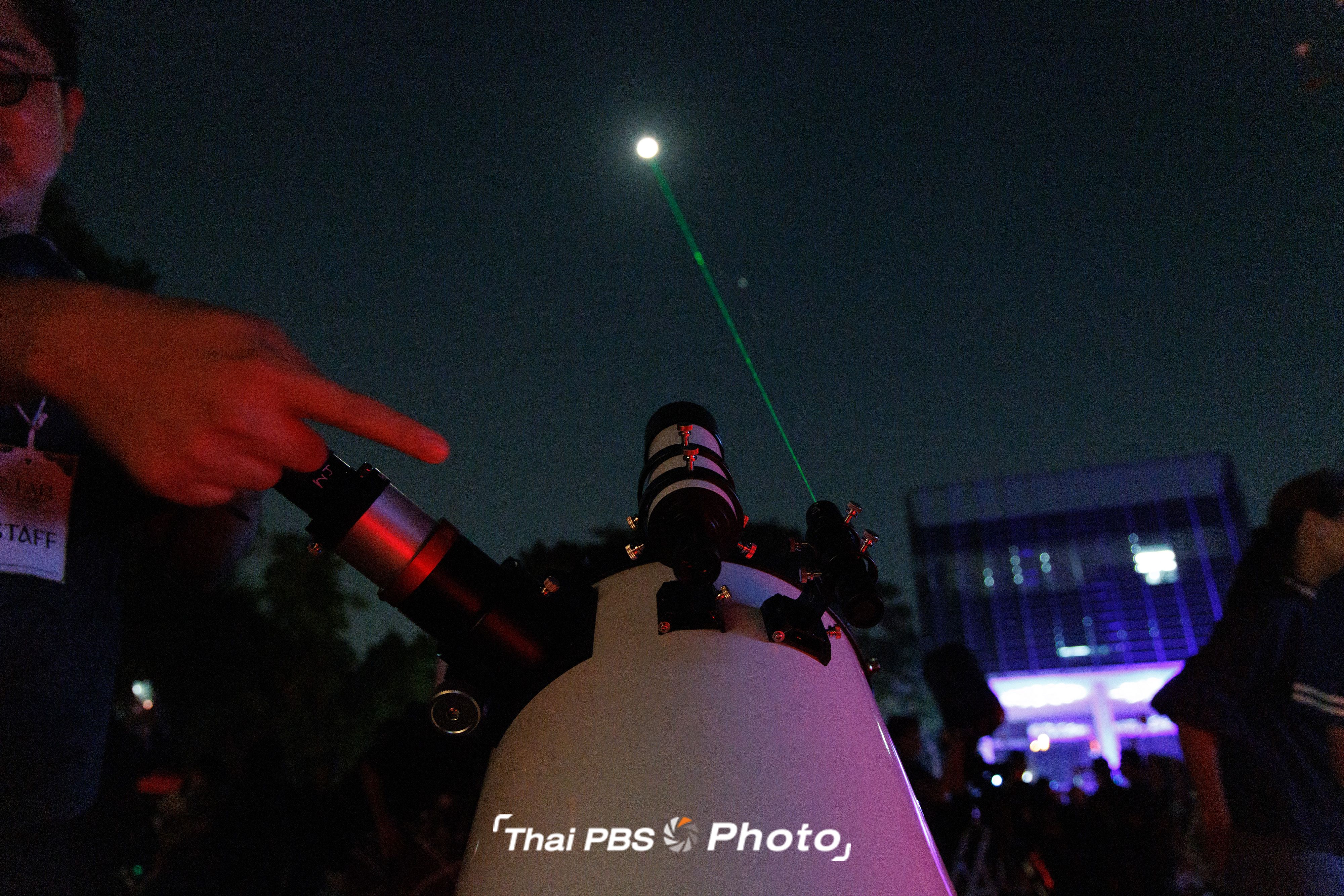
Participants during the 'Hora Star Paradox' stargazing and talk event on January 30, 2026
As he continued, Kornthong thought that an interest in astrology could be “a good start” for people to learn more about astronomy. In their parts, science journalists and content creators should find ways to make science attractive to the public. “As a space journalist, it is my job to make people interested in the issue. If the public loves astrology, I have to tell them ‘space is fun too!’ and it is related to their daily life,” Kornthong added.
Speaking of the media, at present, there are many shows on astrology and astronomy told from different angles. But as for the public media, how can it talk about ‘astrology’ in constructive ways? “Public media’s duty is to present diverse perspectives and opinions. We must show the public what is beneficial to society and themselves,” Piset answered. “Concerning astrology… For instance, if an astrologer tells you ‘you’ll get in trouble,’ we, Thai PBS, want the people to have judgment and vigorously respond to any difficulties in life.”
The stars are always speaking to us, and there are countless ways to interpret them. Astrology and astronomy aside, simply gazing at the night sky can bring us peace and quiet our preoccupations. Ultimately, it all depends on how we choose to look up.
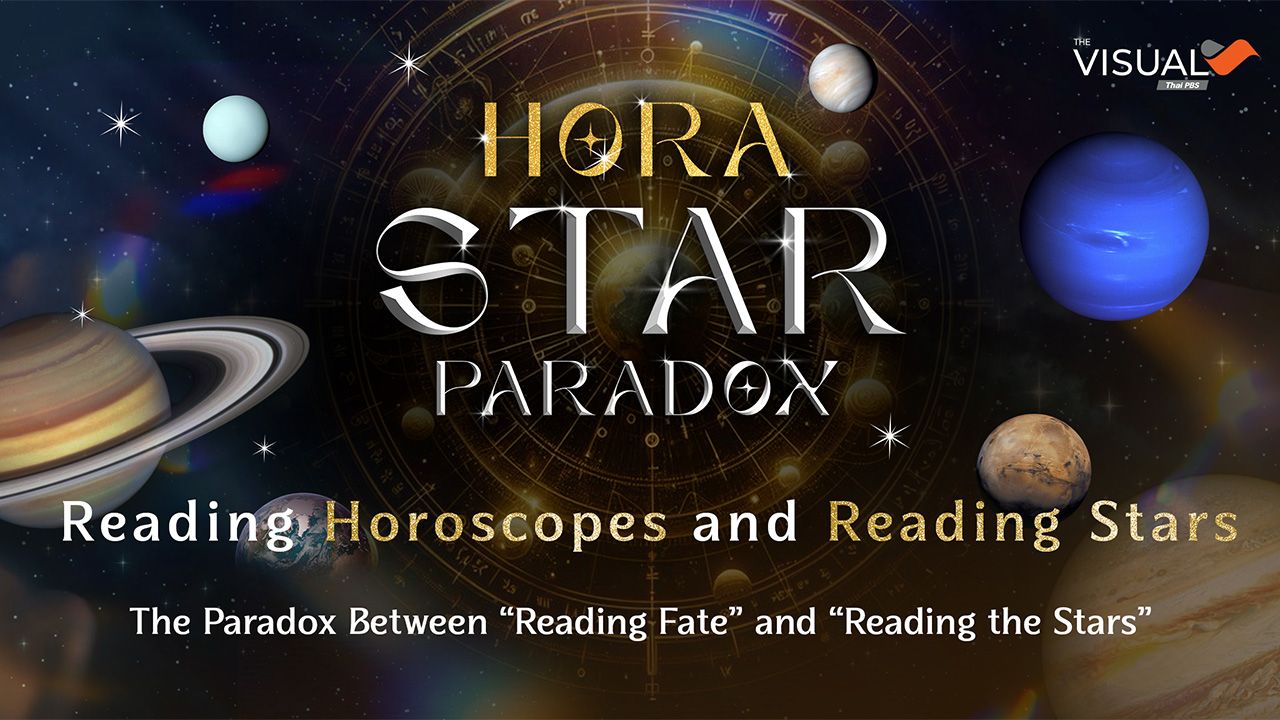
Discover the mysteries behind astrology and astronomy through data visualization' with Hora • Star • Paradox, now available in English version at: www.thaipbs.or.th/TheVisual
Panelists: Saran Poshyachinda, Vorapon Maison, Kornthong Wiriyasawetkul, Tanthai Prasertkul and Piset Chiyasak
Panel discussion conducted by: Sippakorn Srisarutwasara and Tanabut Limtanasarn
Discussion content rearranged and translated by: Peerachai Pasutan