Thailand’s ‘Landbridge’ project: Balancing economic ambition with social impacts
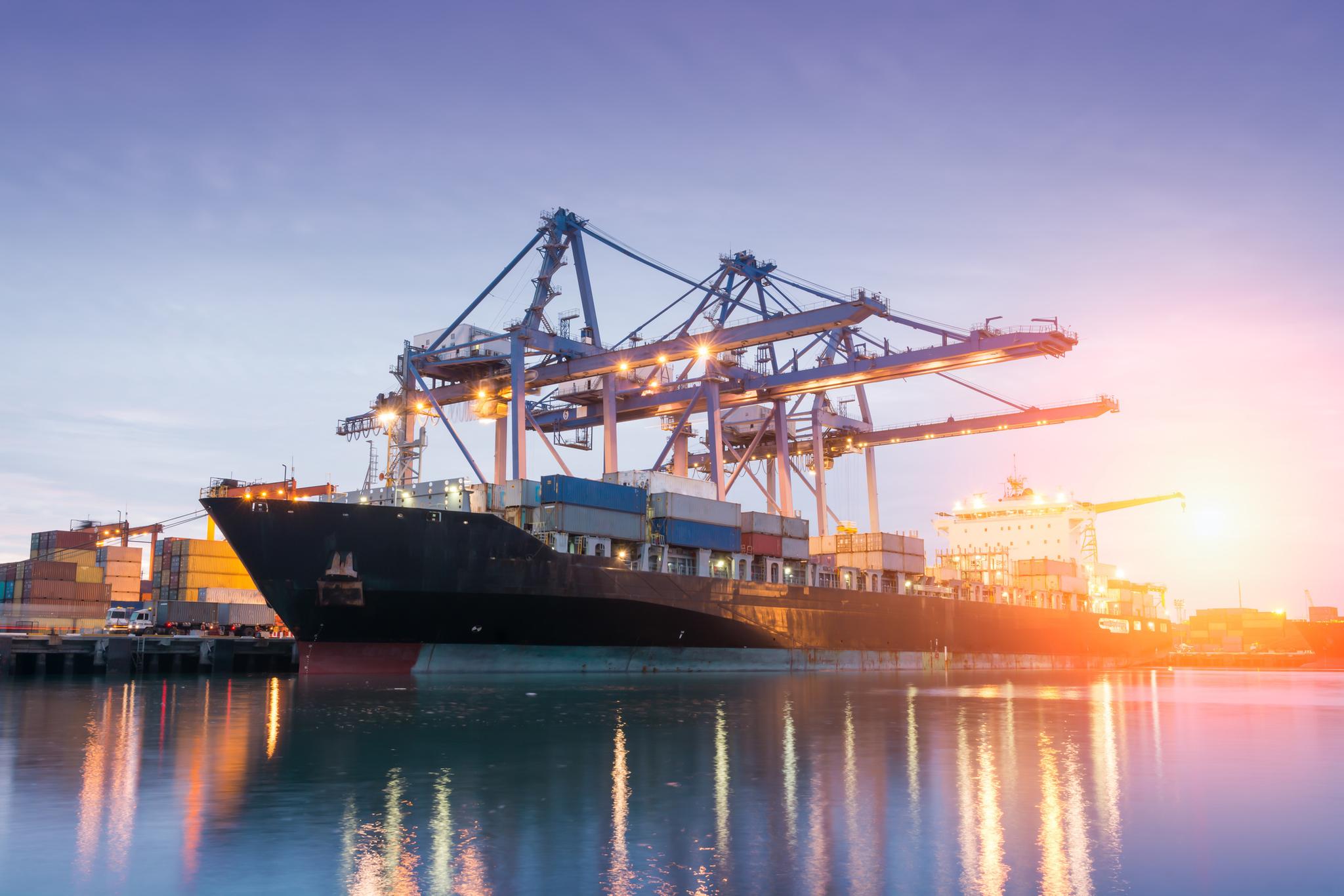
Thailand’s ambitious Southern Landbridge project—a strategic link between the Gulf of Thailand and the Andaman Sea—is moving forward. The Office of Transport and Traffic Policy and Planning (OTP) is now in the process of finalizing feasibility studies and initial designs. This phase also involves rigorous environmental impact evaluations and the crafting of an all-encompassing investment model to ensure the project's long-term viability.
If realized according to plan, the 1-trillion-baht megaproject will be among the grandest in Thailand’s history. It represents a pivotal shift that could redefine the nation’s role as a logistics cornerstone of Southeast Asia.
However, the Landbridge project has recently faced widespread scrutiny, particularly on social media. Concerns have intensified following reports that the government might grant long-term land leases of 50 to 99 years to foreign investors, leading many to fear a potential loss of national sovereignty over land management.
Information of this nature travels fast, and the ’99-year’ timeframe has become a focal point for skepticism. Yet, the truth behind the project is much more sophisticated, involving a layer of conditions and complexities that are often overlooked in the heat of public debate.
Meanwhile, the shadow of geopolitical risk looms over the long-term leasing debate, keeping both the public and investors on high alert. The core challenge remains: can the government steer this giant project to not only drive growth but also to foster inclusive prosperity for SMEs and improve the well-being of the Thai people?
What is a landbridge?
Conceptually, Thailand’s Southern Landbridge is an ambitious infrastructure development project aiming to connect the Gulf of Thailand to the Andaman Sea via a land-based corridor, between Chumphon and Ranong provinces. It offers a streamlined solution to bypass traditional shipping lanes that are significantly more indirect and time-intensive.
The project features the construction of two deep-sea ports: Laem Ao Ang in Ranong and Laem Riu in Chumphon, each designed to handle a maximum capacity of approximately 20 million TEUs. These ports will be linked by an 89-kilometer transport network, integrating a motorway, dual-track railways (supporting both standard and meter gauges), oil and gas pipelines, and comprehensive logistics support areas.
Designed as a public-private partnership (PPP), this initiative invites private entities to invest in and manage operations over a 50-year period. The state’s role will focus on securing the necessary land through expropriation and co-investing in the rail network, backed by a range of strategic benefits to encourage private participation.
With an overall investment of around 1 trillion baht, the development will unfold across four stages. The goal is to commence initial operations in 2030, reaching full maturity and completion by 2039.
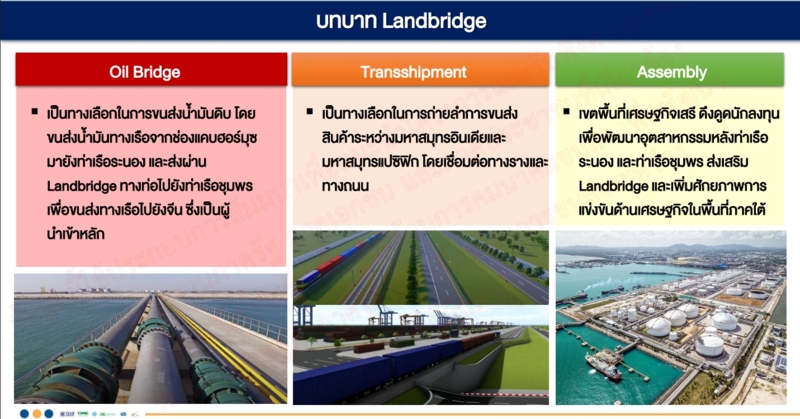
The Thai Landbridge is designated to be a game-changer for regional trade, slashing both time and expenses for cargo moving between two oceans. It serves as a much-needed relief to the congested Strait of Malacca, which currently handles a staggering 80,000-plus vessels every year, offering a faster and more efficient path for global commerce.
By bridging the two coasts, the project would trim 1,000 kilometers off existing routes, saving cargo ships up to three days at sea. Beyond mere speed, it represents Thailand’s ambition to lead as a logistics gateway, promising to revitalize the Southern economy and invite a new wave of meaningful investment.
Should the project proceed as planned, it will stand as a nation-defining megaproject valued at over 1 trillion baht. At its core is the development of two major deep-sea ports—Laem Riu in Chumphon and Laem Ao Ang in Ranong—with each designed to handle 20 million TEUs in cargo capacity.
Alongside the port facilities, the project includes a 94-kilometer transit corridor designed to provide seamless connectivity through a combination of modern motorways and dual-track rail systems.
The total investment is strategically allocated into three primary components:
- Port development: Over 630 billion baht
- Single rail transfer operator (SRTO): Over 140 billion baht
- Connectivity infrastructure (Road & Rail): Over 220 billion baht
The project is scheduled for its initial launch in 2030, with a target for full-scale operations by 2039.
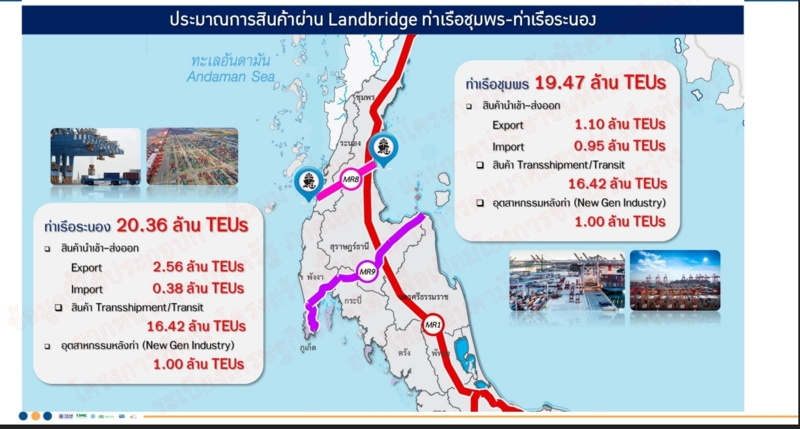
The Thai government’s vision to establish a new national economic hub thanks to the Landbridge
The Thai government envisions the Landbridge as a pivotal mechanism in elevating Thailand to a regional logistics hub. By significantly reducing maritime transit times, the project is expected to enhance the nation’s overall economic competitiveness.
Beyond a simple transport link, the project seeks to unite the SEC and the EEC into a cohesive development powerhouse. This transformation is expected to quintuple the South’s GDP growth—rising from 2% to 10%—while opening up over 200,000 new jobs for the local workforce.
The government is actively advancing the Southern Economic Corridor (SEC) Bill to pave the way for future growth. The roadmap includes presenting the bill to the Cabinet in 2026 and completing all necessary EIA and EHIA evaluations by 2027.
Cabinet acknowledges NHRC’s recommendations regarding Landbridge Project
On May 5, 2026, the Thai Cabinet acknowledged the recommendations regarding the Landbridge project (Chumphon–Ranong), a key transport infrastructure initiative for the Southern Economic Corridor, as proposed by the National Human Rights Commission (NHRC).
Key to this resolution is the instruction for the NESDC to facilitate inclusive public hearings across Chumphon and Ranong. By reflecting the needs of every professional group, this process ensures that local residents have a genuine voice in determining how their region is developed.
Furthermore, all relevant agencies are directed to integrate public feedback and research findings into the project’s deliberation process. Utmost importance must be placed on ensuring that the development aligns with local potential and, most importantly, addresses the genuine needs of the people.
Meanwhile, the Cabinet has tasked the Ministry of Transport with leading a joint effort to study these suggestions. Together with the Ministry of Natural Resources and Environment, the Ministry of Interior, and the NESDC, they will carefully assess the project’s viability and ensure that every step taken is well-considered and thoroughly planned.
A summary of these considerations is required to be sent back to the Secretariat of the Cabinet within 30 days. This step is crucial to prepare the project for its next round of Cabinet review and official decision-making.
The establishment of a new committee to re-evaluate the Landbridge project’s viability
Despite the government’s push for the Landbridge, the project has met with strong resistance from diverse sectors—ranging from experts to environmental groups. This pushback has led to the formation of a newly appointed committee tasked with providing a more thorough and balanced study of the project’s impact.
The committee is chaired by Finance Minister Ekniti Nitithanprapas, with Mr. Pakorn Nilprapunt serving as vice-chairman. Its membership reflects a multi-sectoral approach, comprising representatives from government agencies, the private sector, and civil society.
The committee is tasked with a critical mission: to evaluate the project’s potential, listen to public concerns, and deliver its findings to the government within 90 days. It also holds the power to form specialized sub-groups or bring in external experts to provide additional insight whenever necessary.
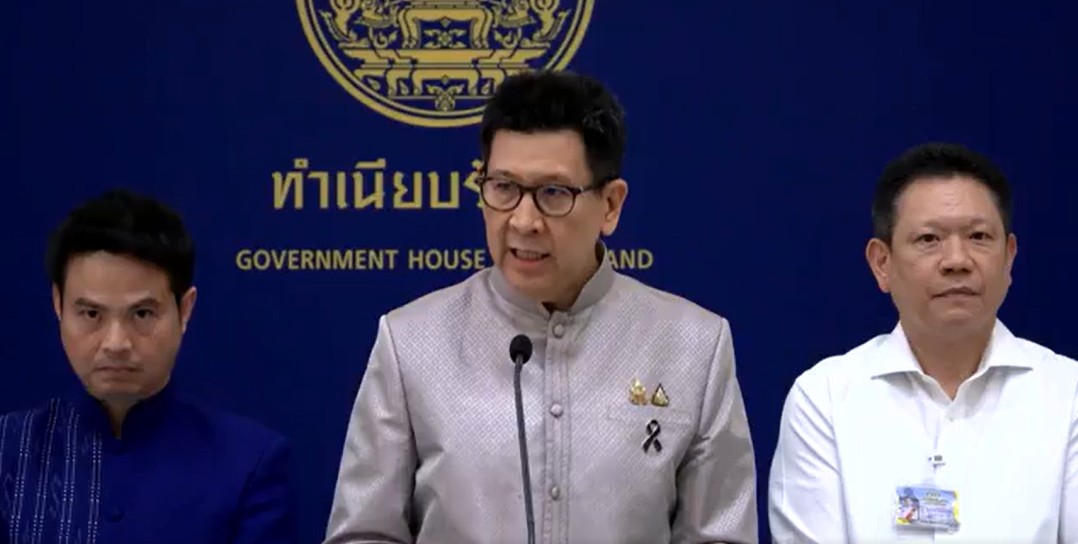
Mr. Ekniti Nitithanprapas, in his capacity as Deputy Prime Minister and Minister of Finance.
Key concerns: Economic, environmental, and legal dimensions
According to the public consultation documents under Section 77 of the Thai Constitution, the Southern Economic Corridor (SEC) Bill focuses on three primary objectives:
- Infrastructure and logistics development: Bridging the Gulf of Thailand and the Andaman Sea.
- Investment promotion: Stimulating both domestic and foreign direct investment.
- Regional hub integration: Elevating the area into a premier regional economic and transportation gateway.
In terms of governance, the law calls for a ‘Policy Committee’ to steer the project efficiently while ensuring that public freedoms remain protected. However, the plan continues to meet with significant resistance from various stakeholders—from local voices to academic experts and social advocates.
Key considerations revolve around three main pillars: economic worthiness, environmental sustainability, and legal compliance.
- Transparency issues: Despite the project’s massive price tag, critics point to “cloudy” feasibility data and insufficient environmental reporting.
- The 99-year lease controversy: Provisions in the SEC Bill for 99-year land rights (50+49 years) are viewed as a significant risk, potentially undermining sovereignty and yielding poor value for money.
- Social & ecological footprint: The local community is bracing for inevitable shifts in their environment and livelihoods.
- “Cloaked” industrial zones: Some observers suspect the Landbridge is a “Trojan Horse” for expanding industrial zones rather than purely a logistics gateway.
- Crony capitalism concerns: Critics argue the top-down policy favors big business over local residents. The biggest winners are likely to be major construction firms, real estate giants, and the banking sector.
OTP affirms: No land ownership for foreigners
The Office of Transport and Traffic Policy and Planning (OTP) has stated that the project does not grant foreign investors land ownership. Instead, it provides ‘leasehold rights’ within a legal framework, with a maximum ceiling of 99 years. The OTP emphasizes that this duration is not a universal mandate for every case; rather, such a ceiling is a standard practice in many countries to instill confidence in investors for large-scale projects requiring significant capital and long-term recovery periods.
The authorities retain the power to rescind rights should any conditions be breached. Rather than a one-size-fits-all approach, each application is evaluated individually to ensure it aligns with the country’s best interests. This framework allows for specific requirements—such as local hiring and the utilization of domestic raw materials—to maximize the project’s positive impact on the local population.
Academics warn that the Landbridge project may lack economic viability
However, Associate Professor Dr. Piti Srisangnam, Faculty of Economics at Chulalongkorn University, analyzed the project through a ‘geopolitical’ lens on a Thai PBS program. He argued that the pivotal question is not whether the project should proceed, but rather how to ensure its economic viability while mitigating long-term risks.
Can the Thai Landbridge truly serve as a viable alternative to the Strait of Malacca?
Assoc. Prof. Dr. Piti Srisangnam noted: “I find the current understanding to be quite misplaced. A trillion-baht project needs to be a daily workhorse, not just an emergency backup.
“The real bottleneck is the ‘Double Handling’ issue. You have to move containers from sea to rail and back to sea again, which adds layers of time and cost. Shorter distance does not always mean higher efficiency or lower price. Moreover, the world is now full of options—from Singapore’s mega-port expansions to China’s transcontinental railways and energy corridors. The competition is much stiffer than before.”
Questions have been raised as to whether this project truly aligns with China’s strategic interests
Mr. Piti also stated: “Based on my analysis, this idea did not originate from China, but is rather a homegrown Thai concept. It stems from the desire to have a ‘mega-project’ for roadshows to impress potential investors.
“However, the crucial question remains: have we conducted sufficiently in-depth studies before proceeding with a project of this magnitude?”
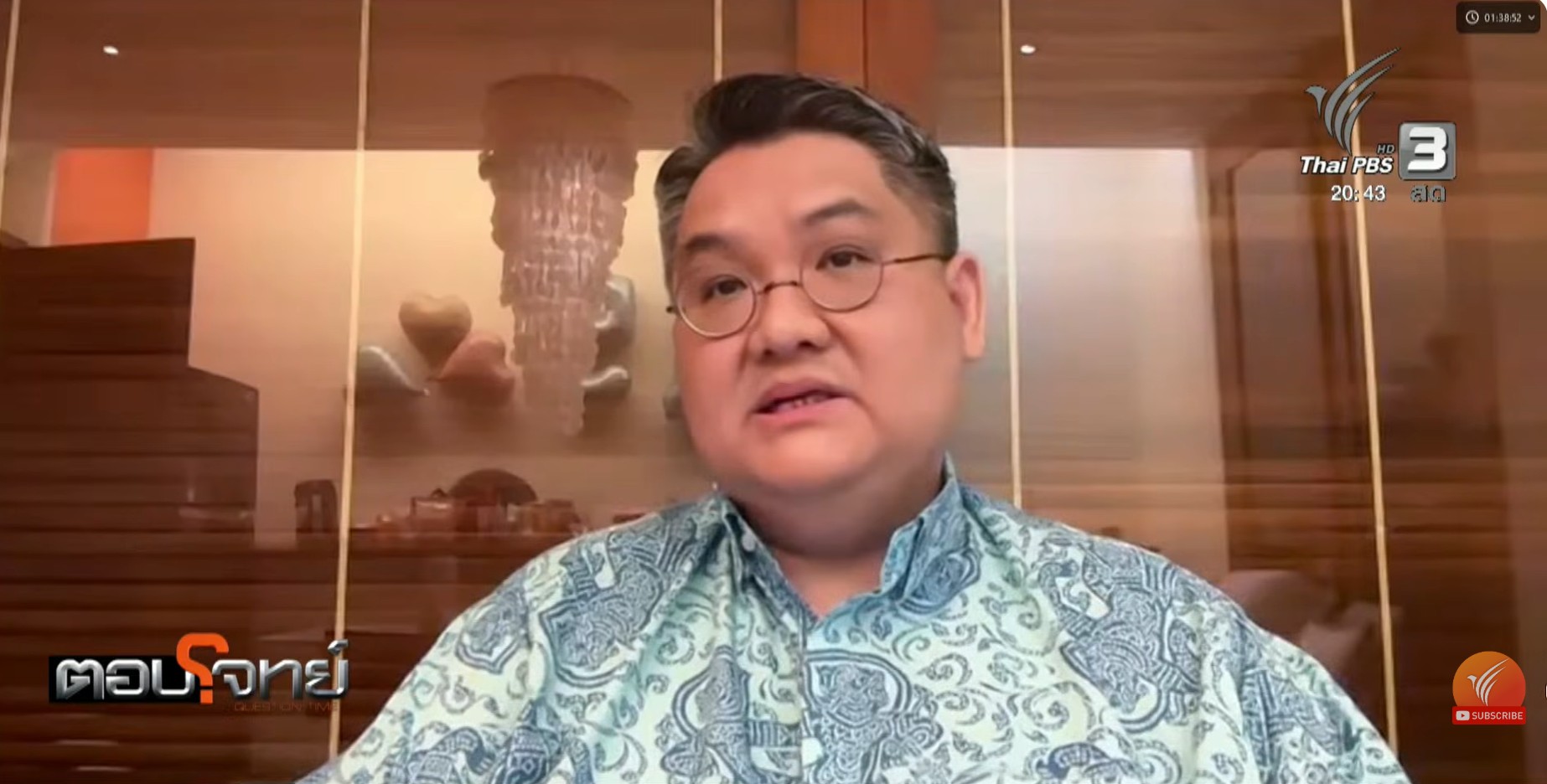
Associate Professor Dr. Piti Srisangnam, Faculty of Economics, Chulalongkorn University.
What about the ‘Thai Canal’ concept, which is often discussed in conjunction with this project?
“We should strictly avoid going down this path,” said Dr. Piti. He pointed out that the canal would immediately become a geopolitical prize. “Once warships can sail through, major powers—not just the U.S., but also China, Japan, and Europe—will vie for influence and military access. Any choice Thailand makes could fracture existing ties and pull us into global power struggles.
“Beyond security, the environmental toll would be immense. Merging two different marine environments would shock the ecosystem, causing saltwater to seep into underground reservoirs, which would be a death blow to our agriculture and tourism.”
In comparison, does the Landbridge remain a superior alternative?
As Dr. Piti Srisangnam observed: ‘At least with the Landbridge, we aren’t creating a route for warships. It keeps the focus on trade and the economy, steering clear of direct military implications.
How should Thailand strategically position the Landbridge project?
Assoc. Prof. Dr. Piti Srisangnam argues for a strategic ‘repositioning.’ He advises against viewing the Landbridge as a direct competitor in trans-oceanic shipping, as this could lead to avoidable tensions. Instead, Thailand should act as a ‘Gateway’ for landlocked neighbors like Laos and other inland areas. By integrating these goods into the Thai local value chain before exporting them, Thailand would redefine its role: becoming an indispensable ally to the region, not a threat to existing routes.
From an investment perspective, what should be Thailand’s strategic move?
Mr. Piti emphasized that monopolization by any single nation must be strictly prohibited. Instead, Thailand should employ economic diplomacy to attract a diverse range of investors—including China, Japan, India, the U.S., and Europe. When all parties share a mutual stake in the project, they will naturally balance one another, thereby enhancing the project’s overall stability.
What should be Thailand’s practical point of departure for this project?
Assoc. Prof. Dr. Piti noted: “We don’t have to do it all in one go. The focus should be on practical starts: upgrading Ranong’s port capacity, speeding up regional rail links, and ensuring the Nong Khai dry port connects seamlessly with the China-Laos line. By mastering these smaller-scale projects to a world-class standard, we create a solid foundation that will naturally scale up into the bigger picture.”
Is the Landbridge a ‘go’ or a ‘no-go’?
Assoc. Prof. Dr. Piti suggested that the real challenge lies in “how to do it smart.” He warned that clinging to a grand vision of being a world-class link while ignoring the facts may turn this project into a burden. On the contrary, if Thailand realigns its strategy and operates with transparency, the Landbridge has the potential to transform from a risk into a landmark opportunity for Thailand.
Ultimately, the Landbridge project stands at a critical crossroads, caught between the opportunity to elevate the national economy and lingering concerns over its impact and transparency.
The government’s next test extends beyond mere economic figures. It must now prioritize clear communication, open dialogue, and public confidence, providing a firm assurance that this massive undertaking will be inclusive and equitable for all.