Images of alleged IRGC missile on Minab’s school found to be footage from unrelated event
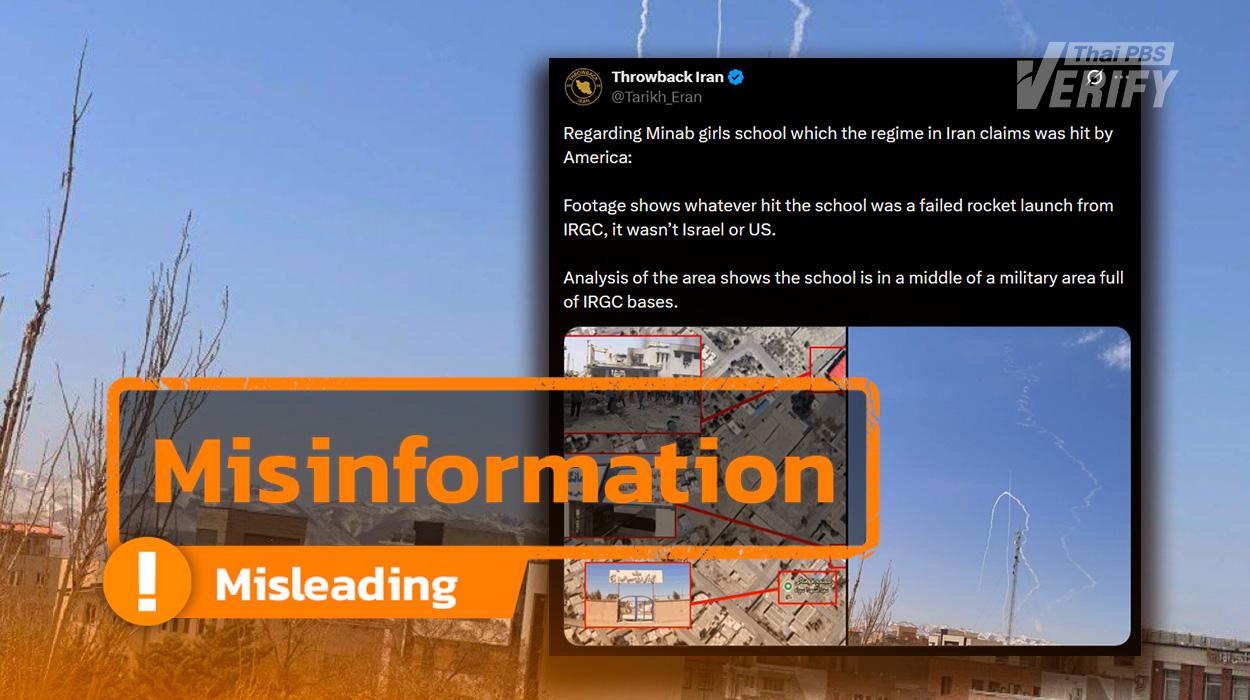
Thai PBS Verify found the piece of misinformation on: X
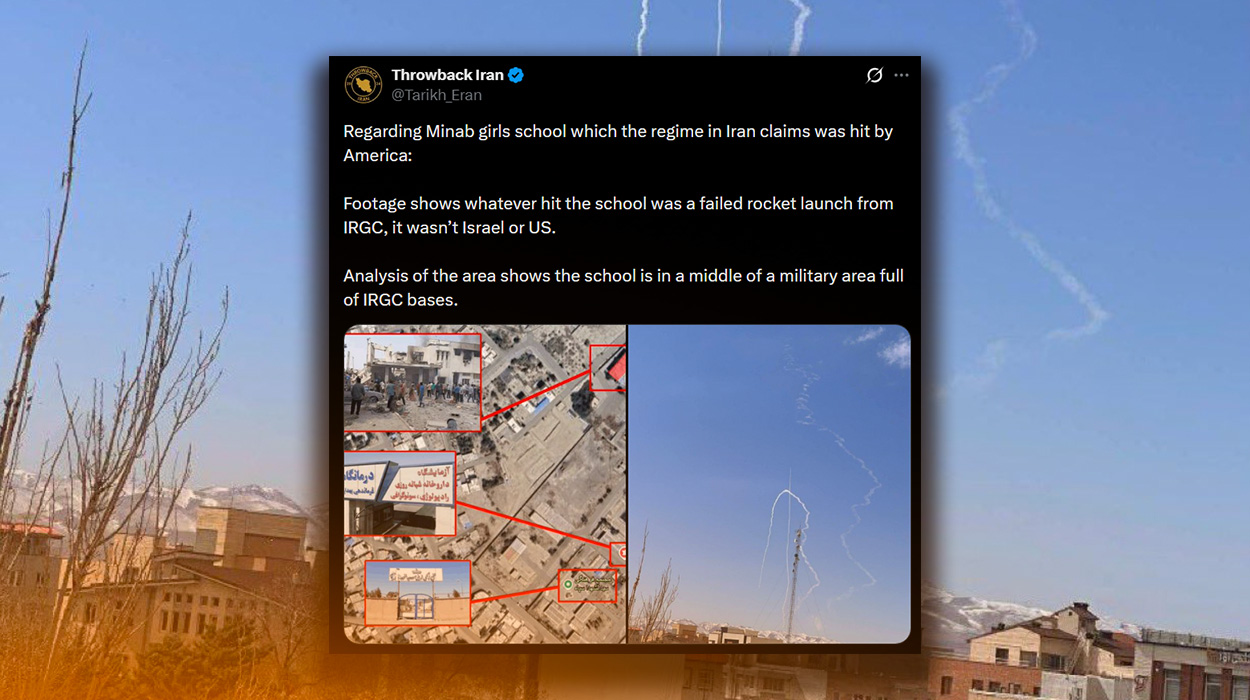
A screenshot from the ‘Throwback Iran’ page, which claimed on February 28, 2026 that an IRGC missile had malfunctioned and struck a local school.
Thai PBS Verify discovered a post on X by a page named ‘Throwback Iran.’ Published on February 28, 2026, the content of the post is as follows:
“Regarding Minab girls school which the regime in Iran claims was hit by America:
Footage shows whatever hit the school was a failed rocket launch from IRGC, it wasn’t Israel or US.
Analysis of the area shows the school is in a middle of a military area full of IRGC bases.”
The post garnered over 1.4 million views, 13,000 likes, 5,900 retweets, 2,700 bookmarks, and 508 comments. While many reactions were sarcastic towards the Iranian military, some users provided counter-arguments and disputed the claim.
After the review, Thai PBS Verify found that the account was created in February 2024 and is based in the United States. Since its inception, the account has undergone four name changes and only recently received its verified status in January 2026.
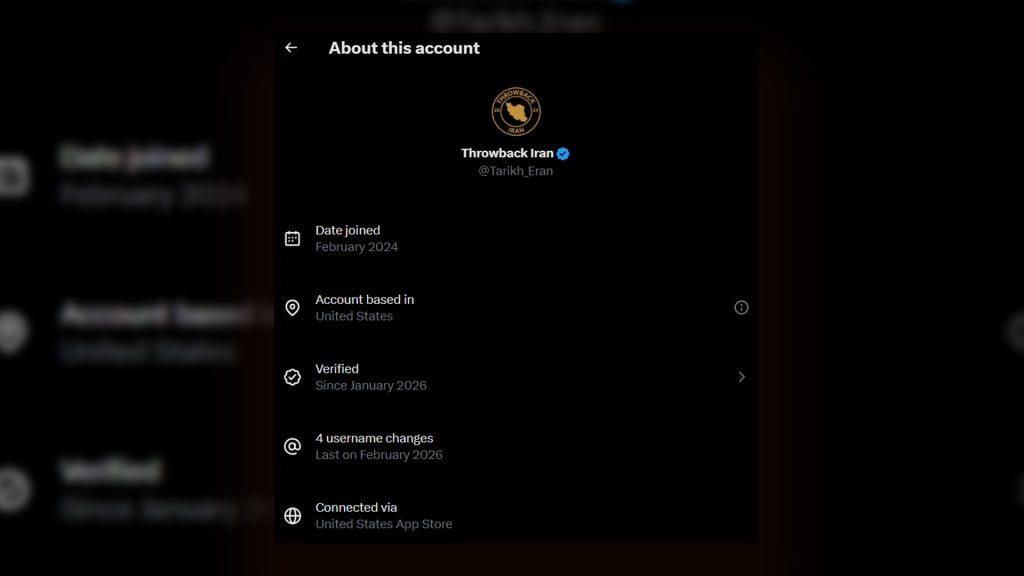
A screenshot shows the account transparency details of the ‘Throwback Iran’ page on X.
The footage of the alleged IRGC missile failure is not true
Upon closer examination, Thai PBS Verify identified several inconsistencies within the image. The original post claimed that the footage was captured in Minab, Southern Iran. However, the geographical features in the image—specifically the snow-capped mountain peaks—do not align with the actual climate and landscape of the region.
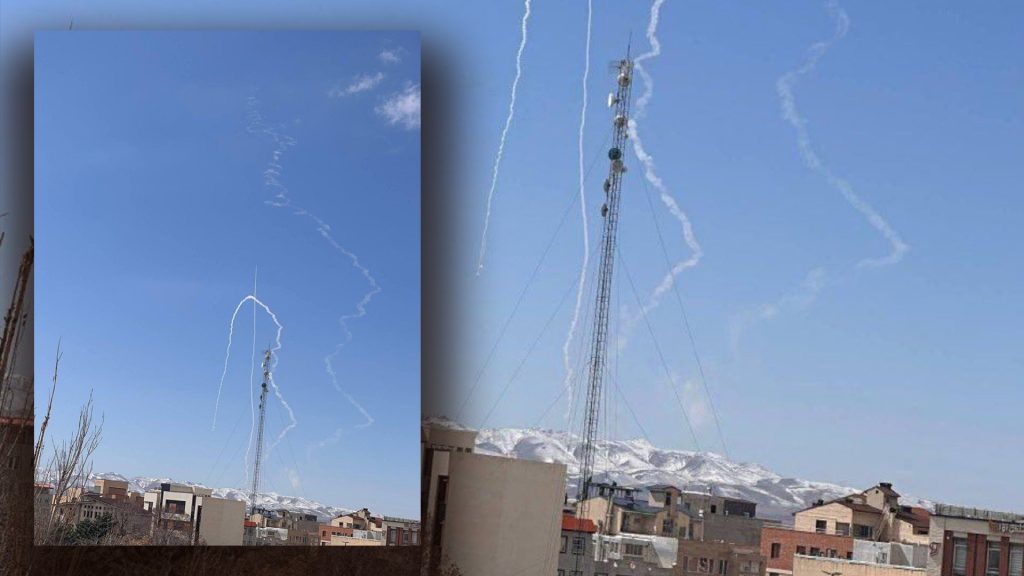
Visual evidence from the post purportedly shows that a missile crash in Minab contains snowy mountain scenery, which does not match the actual geography of the region.
Additionally, the team was able to identify a key landmark within the image: ‘Ava Dental Clinic Zanjan.’ This building is located in the city of Zanjan, Zanjan Province, Iran—which is more than 1,300 kilometers away from the actual impact site at the school. It is not close to the location mentioned in the viral post at all.
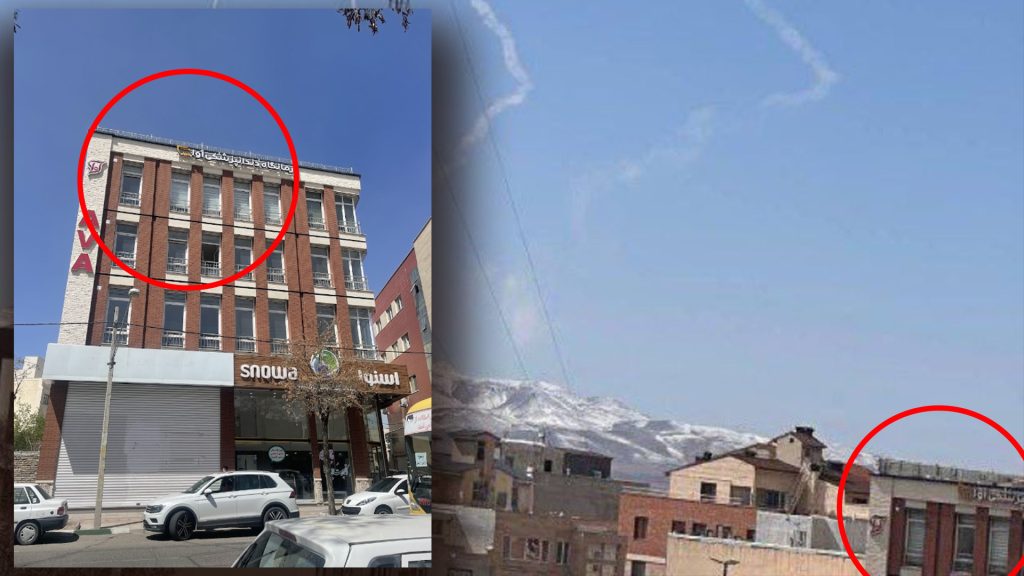
A comparison between the Ava Dental Clinic Zanjan (left) and the building featured in the viral post (right) reveals identical architectural details.
Where was the location of the real school attack?
Thai PBS Verify further conducted a map search to verify the school’s location, confirming that it is indeed situated within the city of Minab.
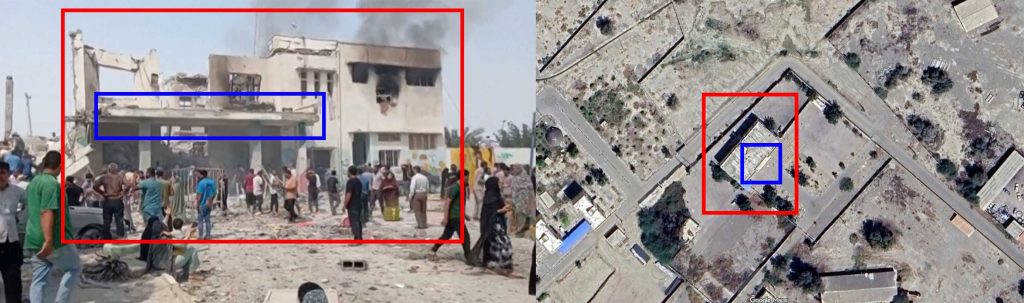
Red Frame: The building identified as the site of a severe airstrike on an all-girls elementary school in Minab, Hormozgan Province, Southern Iran. Blue Frame: Specific architectural details showing the building’s balcony area.
The team also found that the ‘Minab School’ location was actually pinned as a pharmacy. Additionally, the entrance’s signs could be translated through Google Translate as:
Shahid Afzalan Specialized Clinic – Navy Medical Command, Islamic Revolutionary Guard Corps (IRGC)
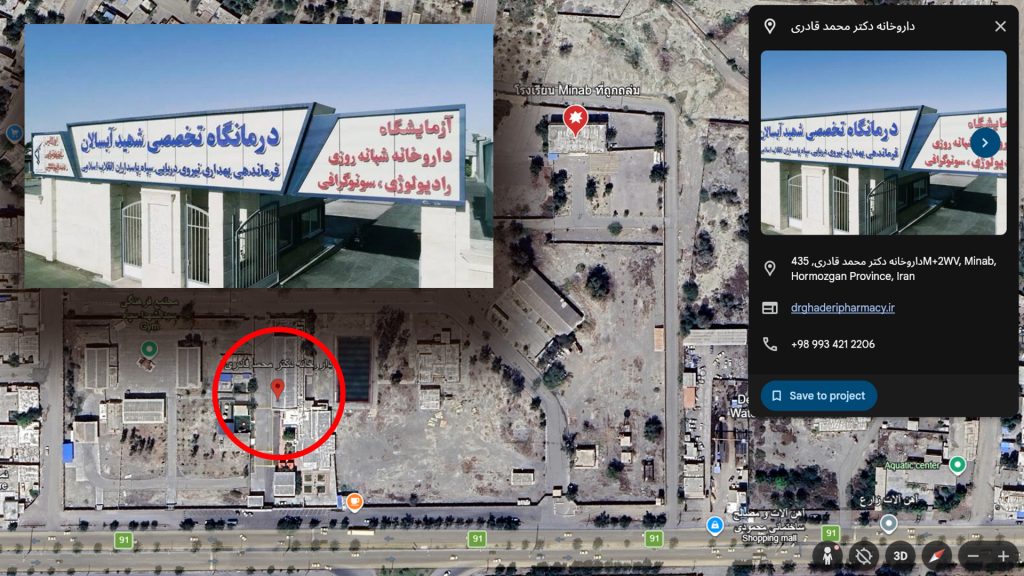
An image of the pharmacy’s pinned location, accompanied by a photo of a large entrance gate displaying the sign: ‘Shahid Afzalan Specialized Clinic – Navy Medical Command, Islamic Revolutionary Guard Corps (IRGC).
In addition, a geographical verification reveals that the two sites are situated more than 1,300 km apart.
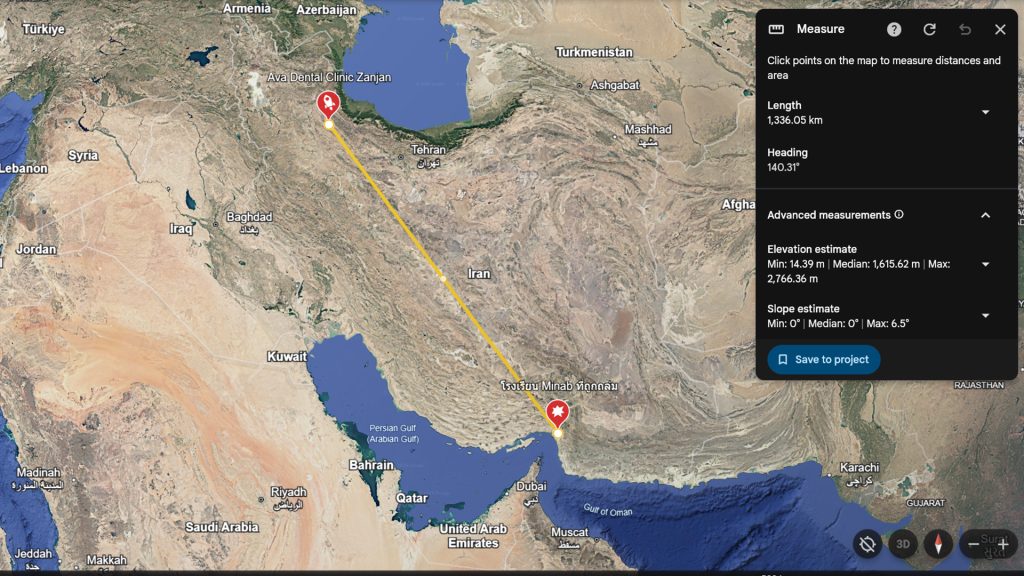
The distance between the Iranian cities of Zanjan and Minab is more than 1,300 km.
Current situation updates
Regarding the latest developments, Thai PBS News reported that on March 3, 2026, Iranian authorities held a mass funeral for the victims of the elementary school attack in Minab. Officials attributed the strike to the United States and Israel, confirming a death toll of 168. During the ceremony, Iranian authorities stated that the American public should question their leader on how these children could possibly be considered a threat to national security.
Meanwhile, Reuters reported that the United Nations Human Rights Council (UNHRC) had called for an urgent, impartial and comprehensive investigation into the deadly school attack. The UNHRC emphasized that those responsible for the strike have an obligation to investigate and transparently disclose all relevant facts and information.
The school was struck on the first day of military operations launched by the United States and Israel against Iran. U.S. Secretary of State Marco Rubio stated that American forces would never intentionally target a school, while Israel confirmed that an investigation into the incident was currently underway.
However, the United Nations Human Rights Council stated that there is currently insufficient information to determine whether the attack constitutes a war crime.
What is the truth?
The information by the ‘Throwback Iran’ page, claiming that a failed missile crash occurred in the city of Minab, is false. Our investigation confirms that the image of the missile crash was actually taken in Zanjan, which is more than 1,300 kilometers away from the site of the elementary school attack in Minab.
Verification Process
- Visual analysis & geolocation: With geographical features (snow-capped mountains) and architectural details, the actual location was identified as the Ava Dental Clinic in Zanjan, confirming it is not situated in the city of Minab.
- Google Maps & Google Translate: Verification of the coordinates in both images confirms that the missile crash site in Zanjan is located over 1,300 kilometers away from the elementary school attack in Minab.
Impacts of the misinformation
- Global misinformation: Claiming the incident resulted from an IRGC military error—despite the visual evidence originating over 1,300 km away—constitutes the fabrication of ‘false evidence.’ This act is a deliberate attempt to shift accountability for the tragic event.
- Escalation of conflict and hostility: The misinformation aims to undermine the credibility of the government and military in the eyes of the public. Furthermore, it serves as a provocative tool to incite protests or civil unrest based on fabricated information.
- Public confusion regarding ground truths: When misinformation goes viral, it creates widespread confusion regarding the identity of the actual perpetrators. This complicates the verification process, leading to delays and distracting the public from the objective facts of the investigation.
- Erosion of media and social media credibility: With accounts that mimic historical or news sources—such as ‘Throwback Iran’—misinformation becomes more convincing to the public. This leads to a long-term breakdown in trust, making users increasingly skeptical of all types of information in the future.
What to do with this misinformation?
Initial guidelines for responding to false content
- Refrain from immediate sharing: Information that aggressively targets a specific party is often designed to provoke an emotional response rather than a rational one.
- Verify the source: Examine the account’s history for any patterns of spreading misinformation and check whether it is a verified, credible news organization.
Advanced verification techniques
- Utilize Reverse Image Search tools: Use tools such as Google Lens to trace the origin of images within a post. This helps determine if the footage has been repurposed from previous events (for instance, revealing that the location does not match Minab).
- Look into the geolocation: When a specific location is mentioned, cross-reference it with digital maps to see if the terrain, landmarks, or architecture align with the claims.
- Follow professional fact-checking agencies: Refer to reputable organizations such as Thai PBS Verify, AFP Fact Check, or Reuters to see if the information has already been debunked.
Recommended actions
- Report the post: If a post is clearly identified as false, report it to the platform under the “misleading information” category
- Correct misunderstandings politely: If you see others sharing this information, provide them with accurate data by sharing links from verified sources, such as Thai PBS Verify.
Editor: Nuttapoln Toomma
Translation edited by: Peerachai Pasutan
Related Content
Most Viewed