Viral video claiming Iranian attack on Dubai Airport confirmed as AI-generated
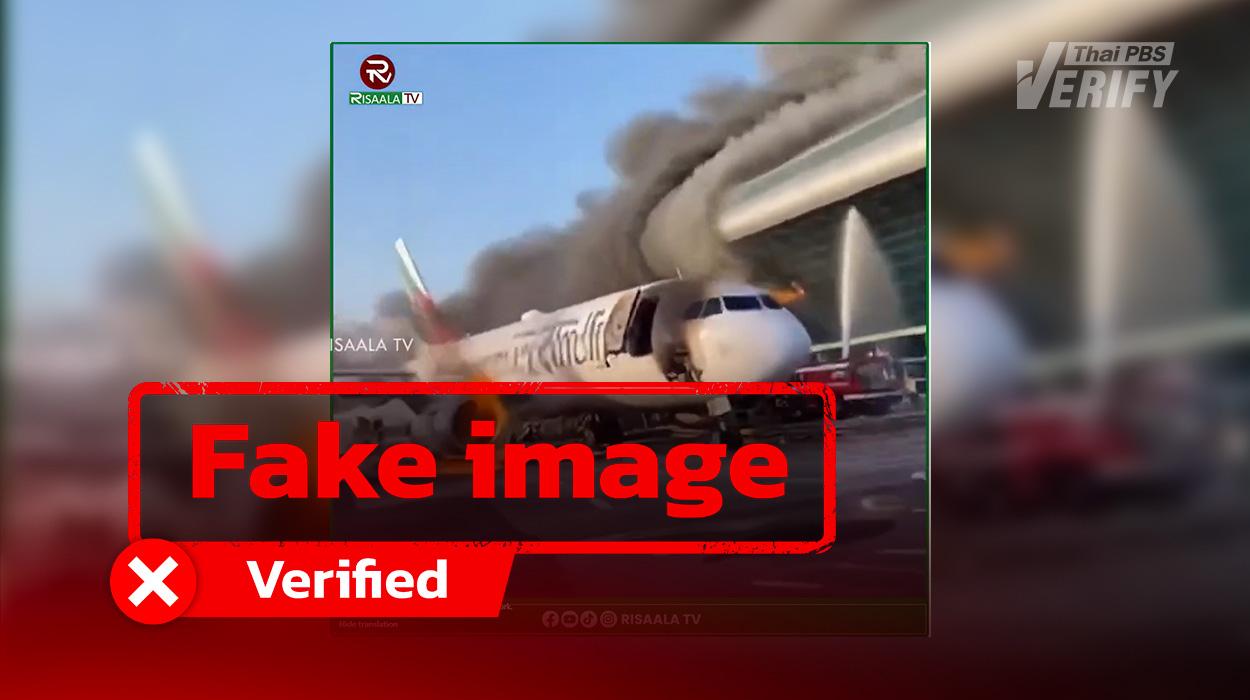
Thai PBS Verify found the fake images on: Facebook
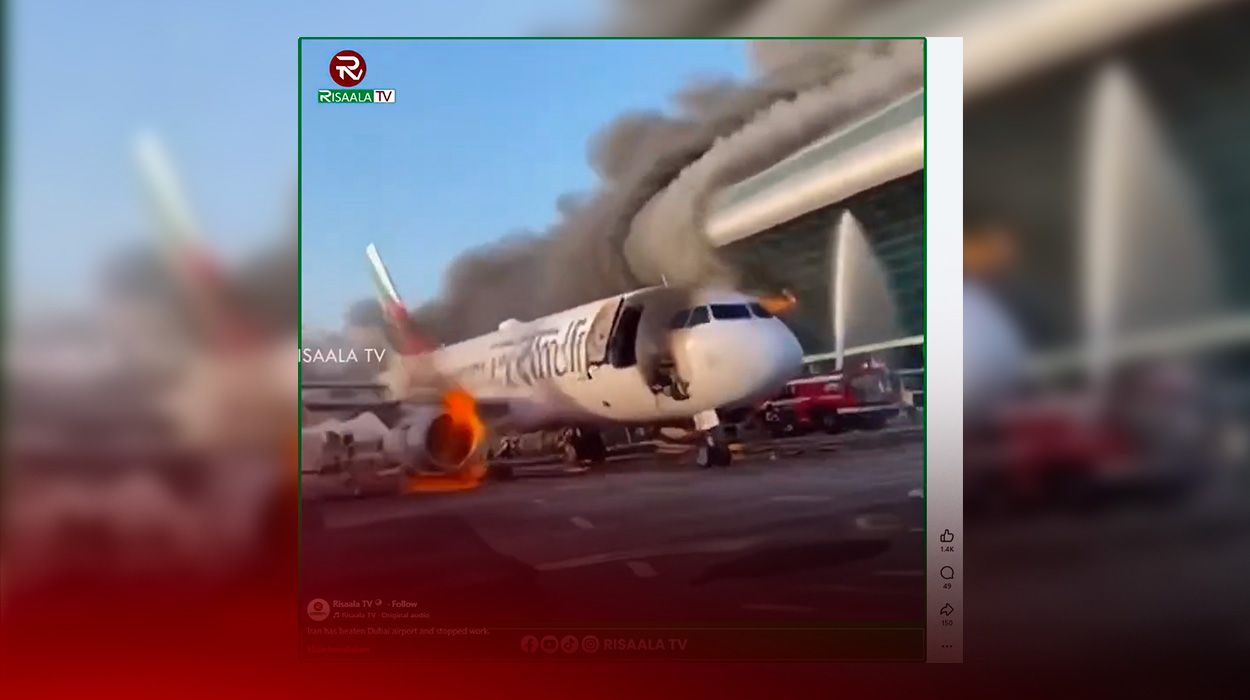
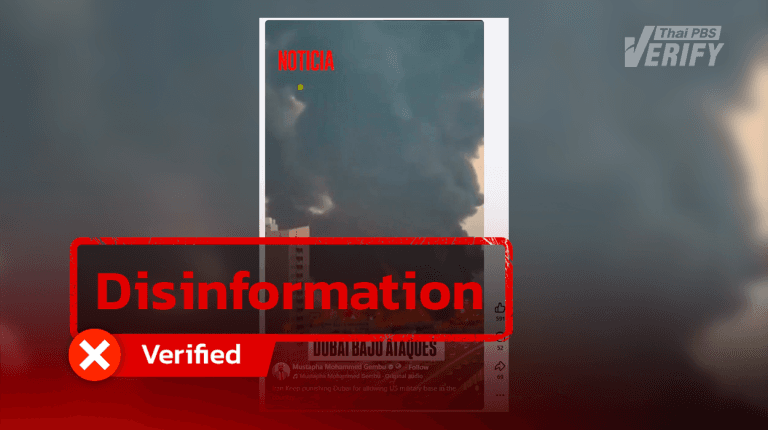
A Facebook page ‘Risaala TV’ shared a video depicting heavy smoke billowing from an airport.
Thai PBS Verify found A facebook page called “Risaala TV” which had posted a video showing significant smoke at an airport. The caption states: “Iran oo garaacday Garoonkii Diyaaradaha ee Dubai iyo shaqo joojin la sameeyay”
It could be translated as following:
“Iranian attack on Dubai International Airport disrupts operations, leading to a temporary suspension of services.”
The post has garnered over 100,000 views, with 1,000 reactions and 46 comments recorded
Dubai Airport was not targeted by an attack
Thai PBS Verify examined the video in question and identified several irregularities suggesting that it may have been AI-generated, based on the following observations:
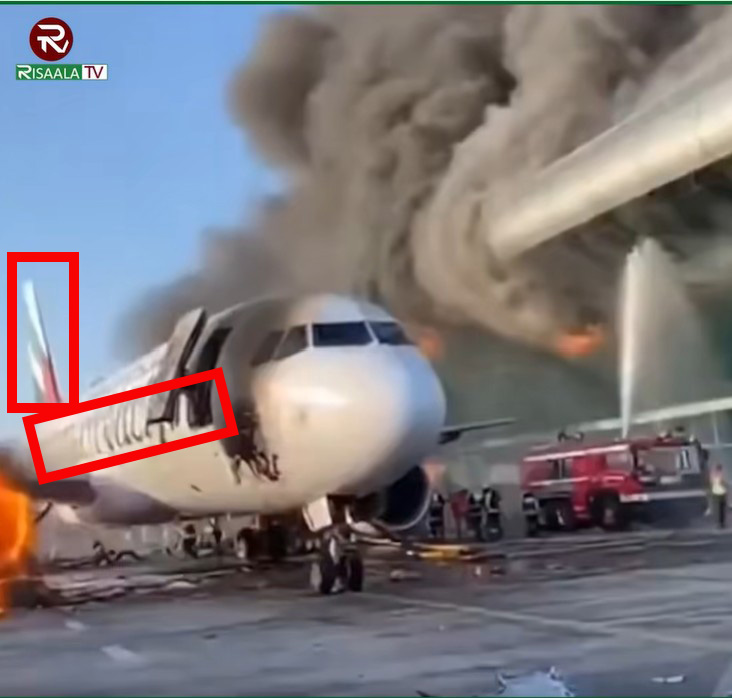
1. Lettering and logos on the aircraft
- Distorted fuselage branding: The airline’s name on the side of the aircraft appears warped and illegible, making it difficult to identify as a clear word.
- Inconsistent tail branding: While the logo on the tail resembles well-known carriers (such as Emirates), the specific details are inaccurate and do not match the official branding of any recognized airline.
2. Appearance of smoke and fire
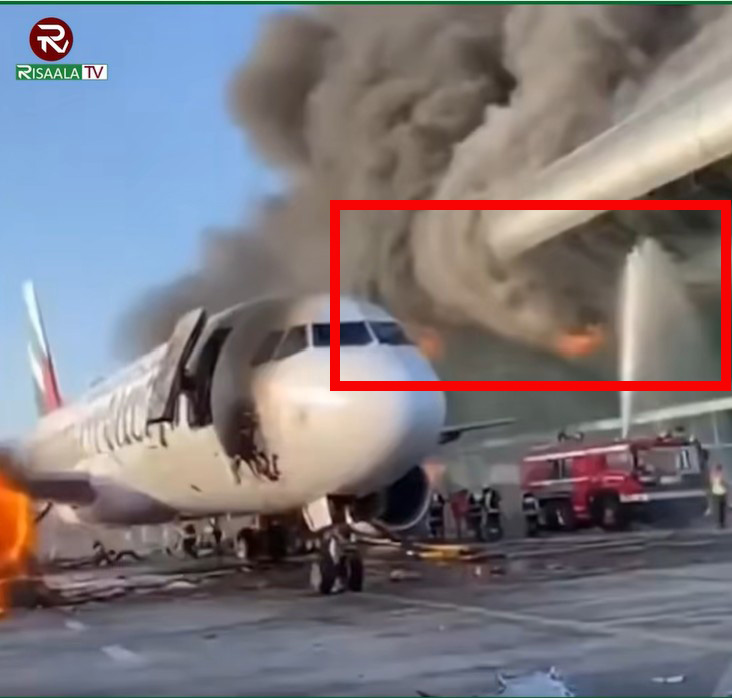
- Smoke patterns: The smoke rising from the building in the background appears as unnaturally rounded clusters (resembling “puffy clouds” rather than actual fire smoke).
- Physical inconsistency: The shape of the smoke lacks realistic movement, and it does not show the shadows or light reflections that would naturally occur from the light sources in the scene.
3. Structural inconsistencies (aircraft door and fire truck)
- The cabin door: The opened door has a strange shape with blurry edges. It looks as if it is “growing” out of the aircraft body rather than being a normal mechanical part.
- The fire truck: The object on the right has distorted proportions; its wheels and body look asymmetrical. Additionally, the water stream appears to come out of nowhere, with no clear connection to the truck itself.
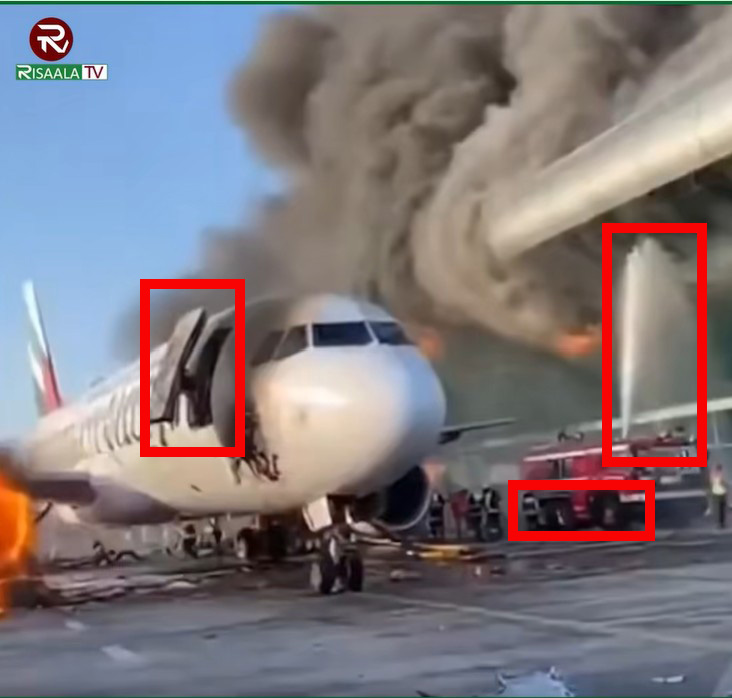
In addition, when the footage was analyzed with AI detection tools like DETECTVIDEOAI, the results showed a 58% probability that the video was AI-generated.
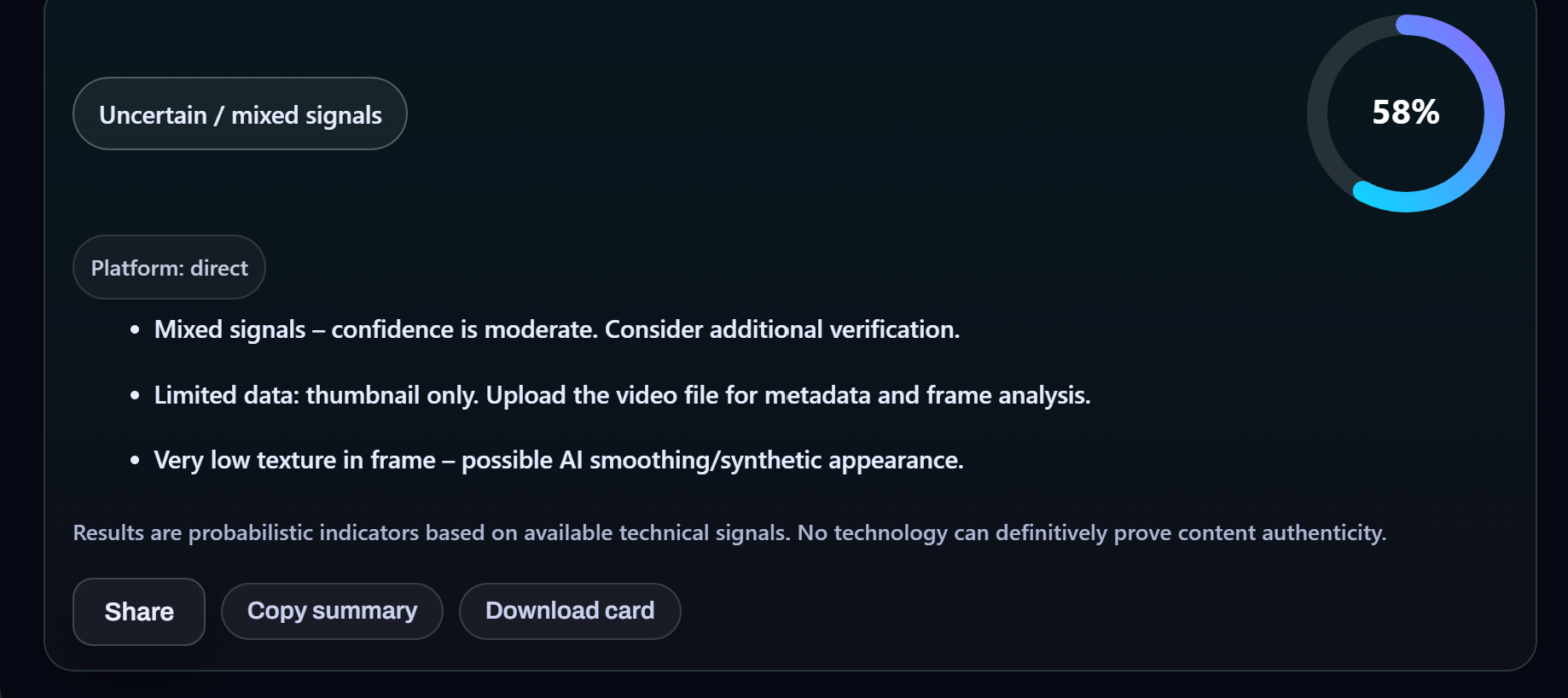
An analysis using the DETECTVIDEOAI tool indicated a 58% probability that the video was generated by AI.
A comparison between the footage and Google Maps
It was found that there is no ‘DUBAI’ lettering in front of the aircraft boarding area, contrary to what is shown in the clip.
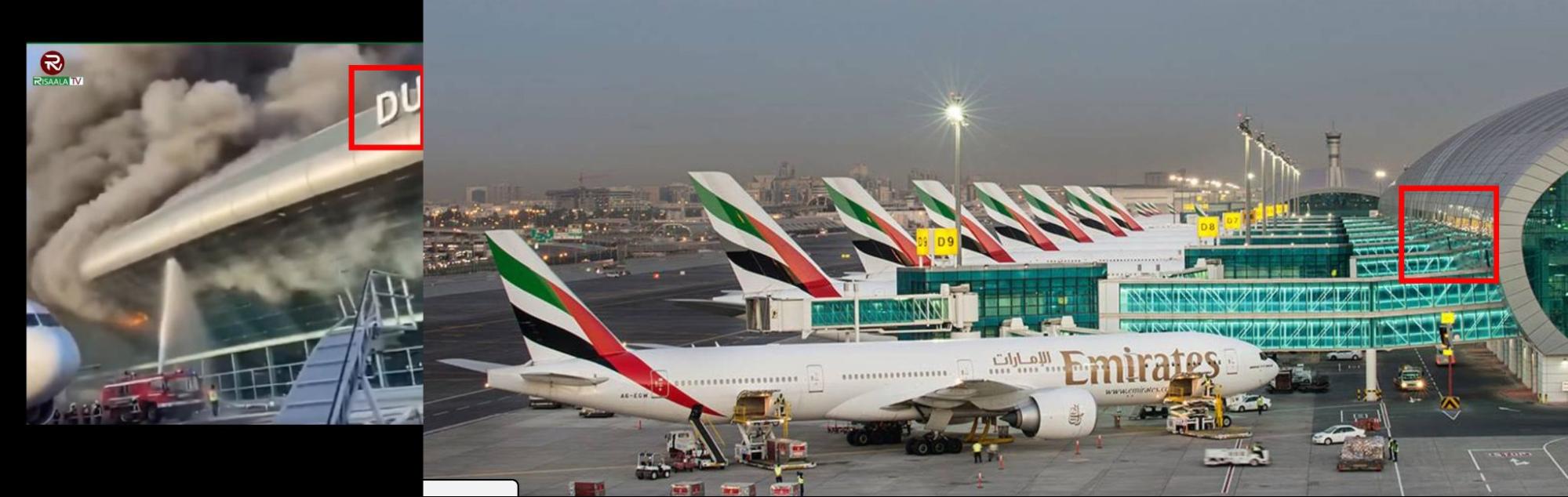
Comparison between the Dubai Airport footage from the clip (left) and the actual view from Google Maps (right).
What is the truth?
On March 1, 2026, Iran launched a new wave of missile and drone strikes against U.S. and Israeli targets across the Middle East. This occurred hours after Iran vowed to retaliate following reports of the assassination of Ali Khamenei. Explosions were reported in Dubai and Doha, and operations at the Dubai International Airport were suspended as tensions continued to escalate.
Verification Process
- Visual inspection: A close review of the footage reveals several signs that the video is not authentic. These include distorted text and logos, as well as unrealistic proportions in the aircraft’s structure and the fire truck. Furthermore, the smoke appears as puffy, cloud-like clusters, which contradicts the laws of physics
- AI video detection analysis: When the footage was analyzed with DETECTVIDEOAI, the results indicated a 58% probability that the video was generated by AI.
- Google Maps verification: When comparing the footage with Google Maps, it was found that the actual airport ground does not have the word ‘DUBAI’ as shown in the video.
- Source verification: Operations at the Dubai International Airport were temporarily suspended following reports of Iranian missile and drone strikes in the Dubai area.
Impacts of the fake image
- Escalation of conflict: Rumors regarding attacks on critical infrastructure, such as international airports, could be used as a pretext for military retaliation. This unnecessarily heightens tensions in an already sensitive situation.
- Impact on the aviation industry: As the Dubai International Airport is a major global aviation hub, reports of explosions can damage passenger confidence. This may lead to flight cancellations and could cause airfares or travel insurance costs to spike.
- Impact on stock markets and oil prices: News of unrest in the Middle East often has a direct impact on global oil prices and stock market volatility, which in turn affects the macroeconomy.
- Public panic: False reports cause widespread fear and anxiety among the relatives of those living in or traveling through Dubai.
- Difficulty in fact-checking: As AI becomes capable of creating highly realistic videos (Deepfakes), the public may experience ‘information fatigue.’ This exhaustion can eventually lead to a decline in trust toward authentic news sources in the future.
What to do with this misinformation?
- ‘Stop’ and think before sharing: No matter how shocking the content is, the goal of misinformation is to exploit ’emotions’ such as fear, anger, or shock, provoking us to spread it without careful thought.
- Verify the source: Check whether reputable news outlets are reporting the story. For a major global event like an airport explosion, every leading international media outlet would certainly cover it. Additionally, investigate the publisher—is it a verified official account, or an anonymous profile recently created to stir up controversy
- Observe visual and audio irregularities: Look for distorted details, unnatural background audio, or the typical short duration of AI-generated videos.
- Use reverse image search tools: Take a screenshot from the video and search for it on Google Images to determine if the visual has been used in other events in the past.
Translation edited by: Peerachai Pasutan

Related Content