TikTok Clip Falsely Claims No One Was Held Responsible for SAO Building Collapse Because It Was Caused by an Earthquake; In Fact, 23 Defendants Have Been Charged and the Case Is Still Before the Court
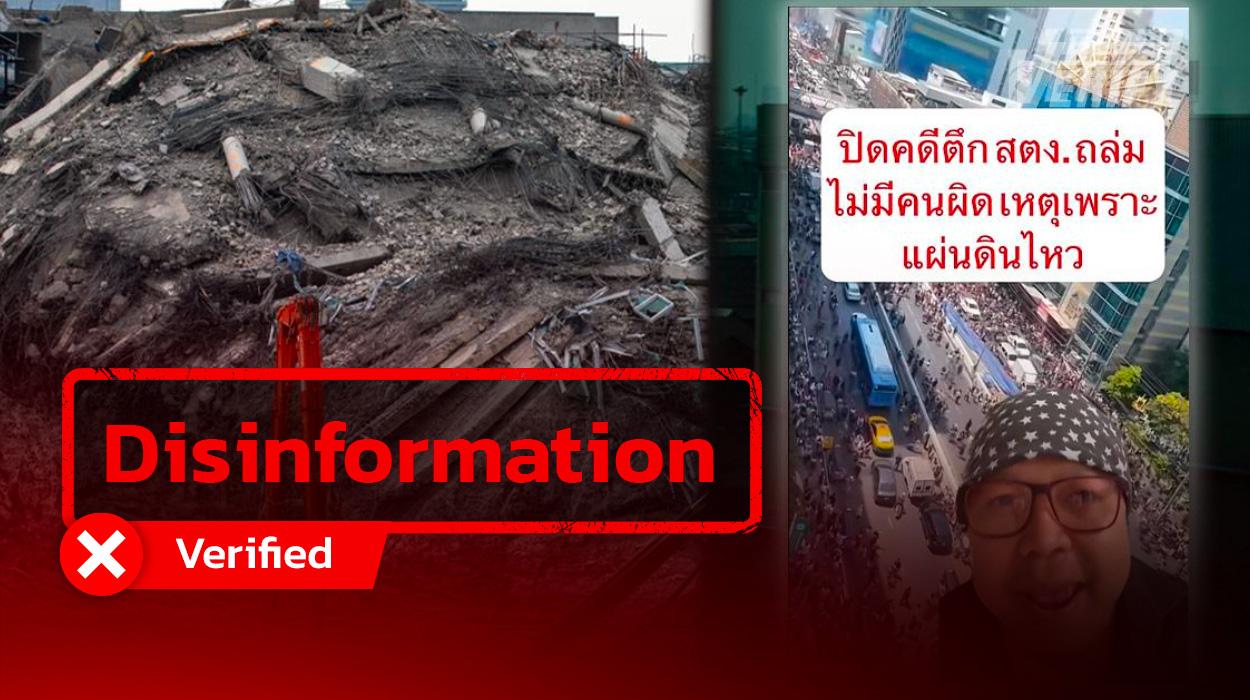
Thai PBS Verify identified the source of the false claim: TikTok
The TikTok post claims that no one was held responsible for the collapse of the State Audit Office (SAO) building because it was caused by an earthquake.
Thai PBS Verify found a video on TikTok posted by user Djtonza Tanawut Janjira, published on 6 June 2026, discussing the SAO building collapse case. The post carries the caption: “SAO building collapse case closed. No one was at fault because it was caused by an earthquake.” The video states:
“Do you all remember this incident? People were running for their lives. The building collapse was truly heartbreaking. Do you know what happened recently? The case has now been closed. In the end, no one was at fault. No one at all. The building’s structure was normal. The materials and the steel that people had questioned earlier were all standard and met the required specifications. No one was responsible. The only thing at fault was the earthquake. In the end, the building collapsed because of the earthquake. What do you think about this?”
The post has been viewed more than 53,700 times and has been shared more than 236 times.
Has the SAO Building Collapse Case Really Been Closed?
A review of relevant information shows that the case has not been closed and remains under legal proceedings. At present, the investigations are being pursued under three categories: criminal charges, nominee shareholder violations, and offences involving state officials.
Criminal Proceedings
Thai PBS Verify found that, according to the Thai PBS report “One Year After the SAO Building Collapse: Where Does the Case Stand?”, the case remains in the justice system.
Investigators from Bang Sue Metropolitan Police Station have completed their investigation, and public prosecutors have decided to indict 23 defendants, including both corporate entities and individuals, before the Criminal Court. The charges cover alleged failures in the design, supervision, and construction of the building that resulted in fatalities, as well as the joint forgery and use of forged documents.
One of the defendants is Premchai Karnasuta, President and Chief Executive Officer of Italian-Thai Development Public Company Limited, the project’s main contractor. After being charged and detained for about six months, he was granted temporary release in late November 2025.
The investigation file, comprising more than 90,000 pages, was submitted by investigators at Bang Sue Metropolitan Police Station on 22 July 2025. Prosecutors subsequently filed the case with the Criminal Court in December 2025. The charges include violations related to the design, supervision, and construction of the building in breach of legal standards, causing death and danger to others, as well as jointly forging and using forged documents under the Building Control Act and the Public Procurement and Supplies Administration Act.
The Criminal Court held its first prosecution witness hearing on 23 July 2026. The prosecution has scheduled 62 witness hearings, while the defence plans to call more than 180 witnesses.
Police have classified the defendants into three groups based on their alleged roles in the case:
- Group 1: Seven building designers. All defendants in this group have been granted temporary release.
- Group 2: Five construction supervisors from PN Synchronize Co., Ltd., KP Consultants and Management Co., Ltd., and W. & Associates Consultants Co., Ltd.
- Group 3: Six construction contractors, including Premchai Karnasuta, Kriangsak Korwatana, and Zhang Chuanling, who carried out the project under the joint venture between Italian-Thai Development Public Company Limited and China Railway No. 10 (Thailand) Co., Ltd.
According to Wiroj Thukhammee, Deputy Director of the Division of Offences Relating to Bidding to State Agencies, the nominee shareholder case is currently before the court, with witness hearings scheduled to begin in September.Meanwhile, the investigation into alleged misconduct by state officials, including malfeasance in office, abuse of official position, and bid-rigging, involves more than 70 individuals. Among them are four senior executives of the State Audit Office (SAO). This case is currently under investigation by the National Anti-Corruption Commission (NACC).
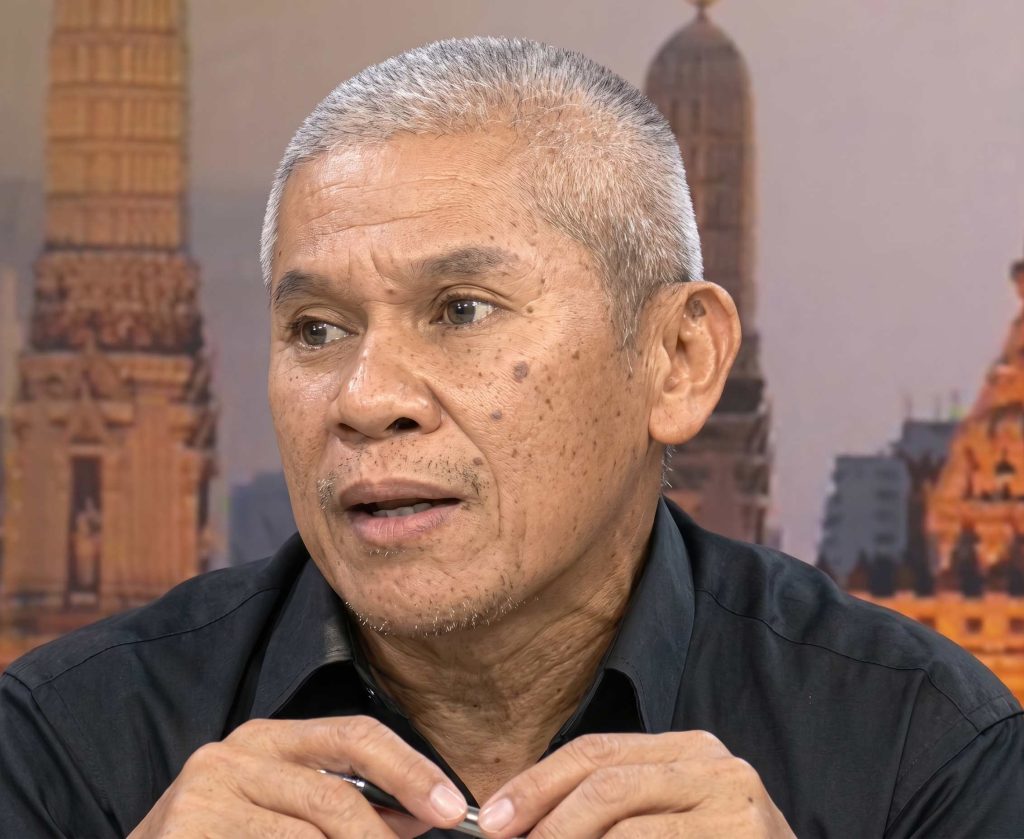
Wiroj Thukhammee, Deputy Director of the Division of Offences Relating to Bidding to State Agencies.
In addition, during the investigation, the Department of Special Investigation (DSI) uncovered allegations involving the unauthorised use of the name of a supervising engineer. The engineer who claimed his name had been misused said that, nearly a year later, nothing had changed, especially among senior government officials, who continued to put their own interests first. As for the legal battle, he said he was not concerned.
In addition to the direct victims, a civil society group led by Damrong Phuttal and Narakorn Tiyayon filed a complaint seeking legal action against Montien Charoenphon, Auditor General of the State Audit Office (SAO), and Prajak Boonyang, former Auditor General, on charges of causing death through negligence and malfeasance in office for unlawfully performing or failing to perform official duties. The case file is currently under consideration by the National Anti-Corruption Commission (NACC).
Nominee Shareholding and State Officials Cases
Meanwhile, the Department of Special Investigation (DSI) told Thai PBS Verify that it has found evidence of offences under the nominee shareholder case (Foreign Business Act B.E. 2542 (1999)) and has already recommended indictments, forwarding the case to public prosecutors. The nominee case is currently before the court, with witness hearings scheduled to begin in September 2026.
As for the case involving state officials accused of malfeasance in office or offences relating to official misconduct, including the bid-rigging case, legal proceedings have been initiated against more than 70 individuals. Among them are four senior executives of the State Audit Office (SAO). The case is currently under investigation by the National Anti-Corruption Commission (NACC).
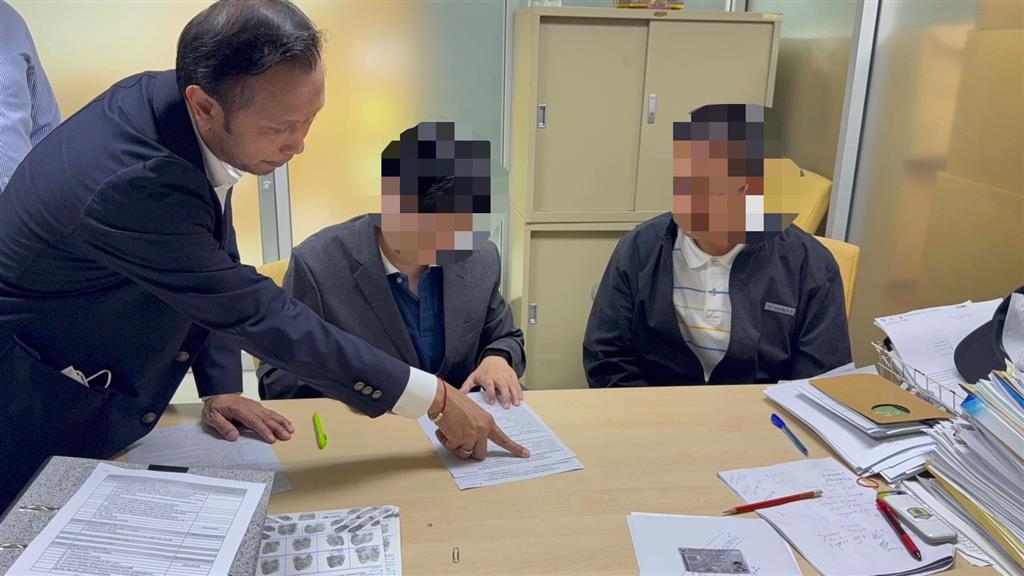
DSI Files Charges Against Suspects Involved in the Case
In addition to the direct victims, a civil society group led by Damrong Phuttal and Narakorn Tiyayon filed a complaint seeking legal action against Montien Charoenphon, Auditor General of the State Audit Office (SAO), and Prajak Boonyang, former Auditor General of the SAO, on charges of causing death through negligence and malfeasance in office for unlawfully performing or failing to perform their official duties. The case file is currently under consideration by the National Anti-Corruption Commission (NACC).
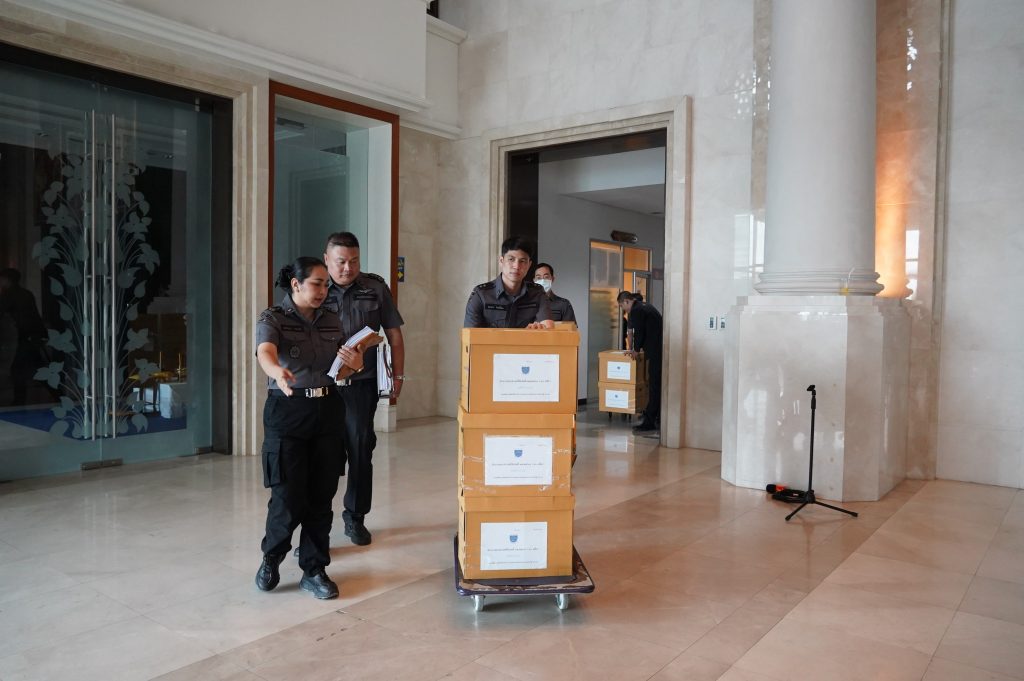
DSI Submits Case File for Prosecution
Was the Building Collapse Caused Solely by the Earthquake?
Prof. Dr. Amorn Pimarnmas, President of the Structural Engineers Association of Thailand and a lecturer at the Faculty of Engineering, Kasetsart University, served as a member of the government-appointed fact-finding committee established under the administration of Prime Minister Paetongtarn Shinawatra. The committee inspected the site and submitted its findings to the relevant authorities within 90 days of the earthquake.
Prof. Dr. Amorn told Thai PBS Verify that the engineering investigation into the State Audit Office (SAO) building collapse clearly concluded that the building’s structural system and construction materials were below standard—meaning the collapse was not caused by the earthquake alone.
According to Prof. Dr. Amorn, a comprehensive investigation conducted by four leading engineering institutions—Chulalongkorn University, King Mongkut’s Institute of Technology Ladkrabang (KMITL), Kasetsart University, and King Mongkut’s University of Technology Thonburi (KMUTT)—in collaboration with the Council of Engineers and the Engineering Institute of Thailand, identified four key factors as the preliminary causes of the SAO building’s collapse. The findings were announced on 30 June 2025.
- The collapse originated from shear failure in the lower part of the building: The damage began on the first to fourth floors, where earthquake-induced shear forces directly affected the shear walls (the elevator shaft walls and stairwell walls), ultimately causing them to fail.
- The concrete quality was below standard: Tests on concrete core samples taken from the shear walls showed that their average compressive strength was below the required standard.
- The structural detailing did not comply with the applicable building regulations: The design details, based on the referenced standards (ACI 318-08 and DPT Standard 1302-52), did not comply with the building regulations that were legally in force (Ministerial Regulation No. 6 B.E. 2527 (1984) and DPT Standards 1301 and 1302-61). Had the detailing complied with the applicable regulations, the building’s shear walls would have been significantly stronger.
- The anchorage length of reinforcing bars at critical connections was too short: The anchorage length of reinforcing bars at the connection between the link beams and the shear walls was shorter than required by law, resulting in structural weakness at these critical joints.
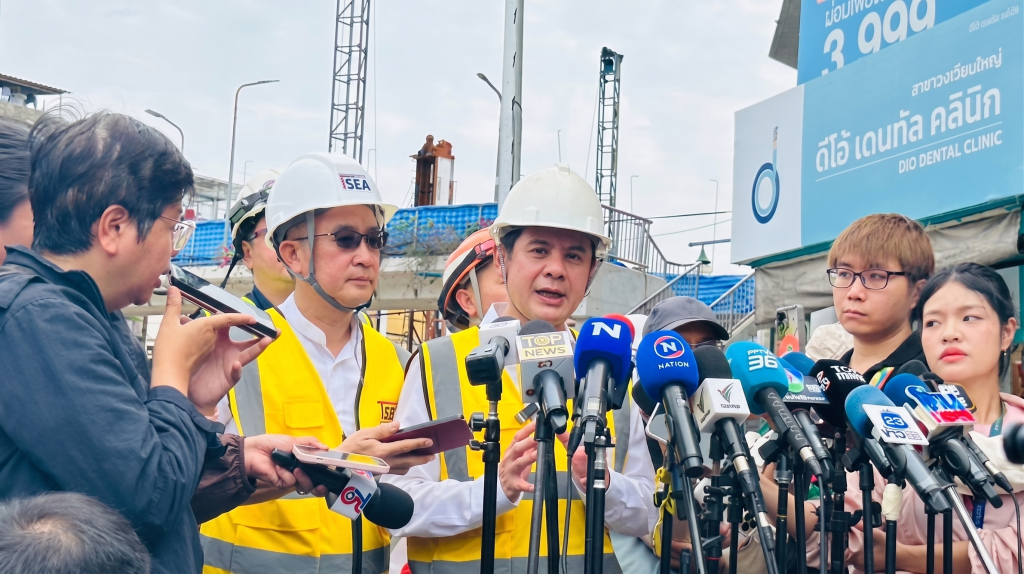
Prof. Dr. Amorn Pimarnmas, President of the Structural Engineers Association of Thailand.
However, he noted that these findings are preliminary conclusions from the fact-finding committee submitted to the government at the time. Each issue may be linked to different parties involved in the project—such as the contractor or the designer—and remains subject to ongoing legal proceedings before the court.
Timeline of the Incident and the Actual Legal Proceedings
- October 2018 – January 2021: The State Audit Office (SAO) signed contracts for the building design (THB 73 million), construction (THB 2.136 billion), and construction supervision (THB 74.65 million).
- 28 March 2025: An earthquake struck, causing the SAO building, which was still under construction, to collapse.
- 30 March 2025: The Prime Minister appointed a fact-finding committee to investigate the incident.
- 30 June 2025: Four leading engineering institutions announced the results of their investigation, concluding that the building had structural deficiencies and that construction materials were below standard.
- 24 February 2026: The Cabinet resolved to assign the Ministry of Finance, through the Comptroller General’s Department, to work with relevant agencies in pursuing legal action in all aspects—civil, criminal, and administrative—to recover the lost public funds.
- Present: The SAO has terminated its contracts with both the construction contractor and the construction supervision consultant, notified the guarantor bank to honor its guarantee, and established a committee to assess damages in preparation for filing compensation claims. More than THB 129 million has already been paid in preliminary compensation.
What Are the Facts?
The case has not been closed and remains before the courts. The claim that the case has been closed and that no one has been held responsible is entirely false. At present, the legal proceedings have been divided into three main cases, all of which are continuing through the justice system:
- Criminal case (23 defendants): Public prosecutors have indicted 23 defendants, including both corporate entities and individuals, before the Criminal Court. They face charges of failing to comply with required standards in the design, supervision, and construction of the building, resulting in fatalities, as well as jointly forging and using forged documents. One of the defendants is Premchai Karnasuta, President of Italian-Thai Development PCL. The Criminal Court held its first prosecution witness hearing on 23 July 2026.
- Nominee shareholder case: The Department of Special Investigation (DSI) has filed charges against suspects for alleged violations of the Foreign Business Act. The case is currently before the court, with witness hearings scheduled to begin in September 2026.
- Corruption and bid-rigging case: Legal proceedings have been initiated against more than 70 individuals, including four senior executives of the State Audit Office (SAO). The case is currently under investigation by the National Anti-Corruption Commission (NACC). In addition, a civil society group has filed complaints against the current and former Auditors General of the SAO on charges of causing death through negligence.
Engineering investigation confirms that the building’s structure and materials were below standard—not that the earthquake alone caused the collapse: The national fact-finding committee concluded that the earthquake acted only as the triggering event, while the
primary causes of the collapse were four structural and material deficiencies:
- The collapse originated from shear failure on the first to fourth floors, affecting the elevator shaft and stairwell walls until they failed.
- The concrete strength in the shear walls was below the required standard.
- The structural detailing did not comply with the building regulations that were legally in force.
- The anchorage length of reinforcing bars at beam connections was shorter than required by law, weakening the structure.
The government has continued legal action and terminated the relevant contracts: The State Audit Office (SAO) has terminated its contracts with both the construction contractor and the construction supervision consultant. It has also established a committee to assess damages in preparation for compensation claims, after already paying THB 129 million in preliminary compensation. In addition, on 24 February 2026, the Cabinet assigned the Ministry of Finance to coordinate with relevant agencies in pursuing all aspects of the legal proceedings in order to recover the lost public funds.
Verification Process
- Reviewed the progress of the legal proceedings and court records: A review of the case timeline found that investigators at Bang Sue Metropolitan Police Station compiled an investigation file of more than 90,000 pages and submitted it for prosecution on 22 July 2025. Prosecutors subsequently filed the case with the Criminal Court in December 2025. The court scheduled its first prosecution witness hearing for 23 July 2026, with 62 prosecution witness hearings planned, while the defence intends to call more than 180 witnesses. Therefore, the claim that the case has been “closed with no one held responsible” is false.
- Verified information with the specialised investigative agency: Thai PBS Verify confirmed with the Department of Special Investigation (DSI) that the nominee shareholder case has been filed before the court, while the case involving alleged misconduct by senior state officials is proceeding through the judicial process and the National Anti-Corruption Commission (NACC).
- Interviewed a structural engineering expert: Thai PBS Verify interviewed Prof. Dr. Amorn Pimarnmas, President of the Structural Engineers Association of Thailand and a member of the government-appointed fact-finding committee. He confirmed that the joint investigation conducted by four leading engineering institutions—Chulalongkorn University, King Mongkut’s Institute of Technology Ladkrabang (KMITL), Kasetsart University, and King Mongkut’s University of Technology Thonburi (KMUTT)—found that the concrete materials and structural design failed to meet required standards and did not comply with applicable building regulations. The collapse was not caused solely by the earthquake, contrary to the claim made in the TikTok video.
Impact of the False Claim
- Undermines public confidence in the justice system: Claiming that the case has been closed with no one held responsible misleads the public into believing that no legal action has been taken. This can erode trust in the judicial process, law enforcement authorities, and independent agencies such as the National Anti-Corruption Commission (NACC) and the Department of Special Investigation (DSI), which continue to handle this complex case involving an investigation file of more than 90,000 pages.
What to do with this misinformation?
- Do not jump to conclusions based on short news clips: Influencer-style news accounts often use emotionally charged language (such as “It’s unbelievable—no one was held responsible at all.”) to drive engagement. The public should verify the status of legal proceedings through credible news organizations that report officially on court developments.
- Do not share the content and help report misinformation: If you come across videos that misrepresent the facts of cases currently before the courts, avoid sharing them further. You can also send the link to the Thai PBS Verify team for fact-checking to help curb the spread of misinformation on social media.


Related Content