Fact Check: Can You Really Pay with Your Palm in China? Revealed The Origins of “Palm Payment”
However, this technology is not brand new. Because palm vein authentication has been under development for decades before being adapted into today’s payment systems.
What is the truth
Thai PBS Verify checked that paying with your palm, referred to as Palm Payment, is real. China has implemented this technology for payments. Users must first register their palm biometric data and link it with their payment account, after which they can scan their palm to purchase items without needing a card or phone.
Nevertheless, the system is not available at every shop in China, as it requires locations that support the technology. Meanwhile, the underlying technology of palm vein authentication was developed over several decades before being built upon for payment systems in many countries, including China.
Thai PBS Verify check this information posted on: Instagram
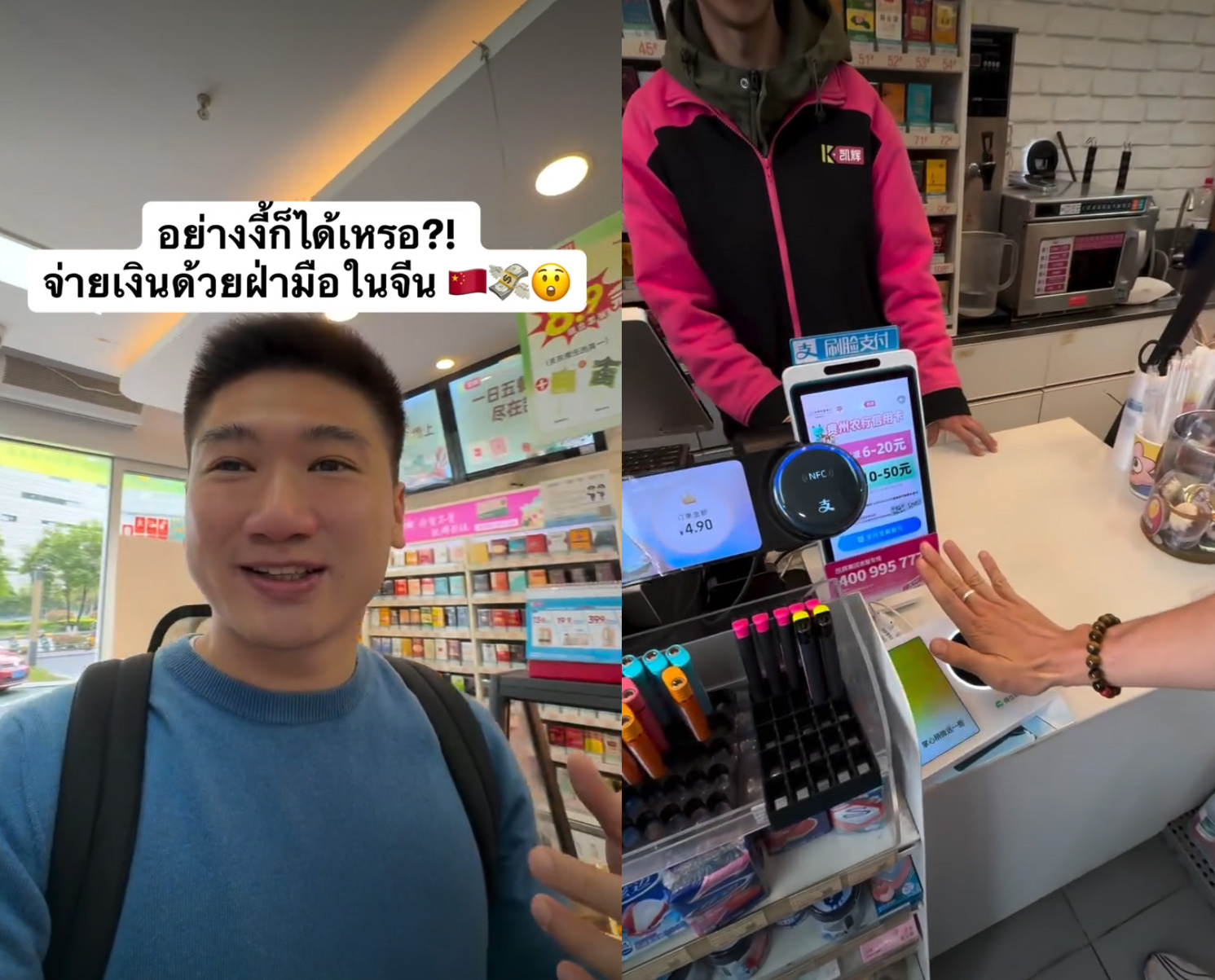
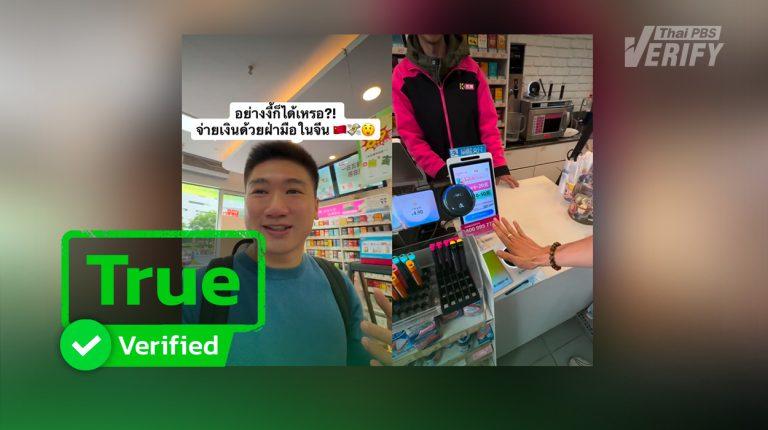
An influencer takes viewers on a tour and demonstrates how to pay using a palm inside a convenience store in China.
A clip was found on Instagram with the caption that,
Paying with a palm 😆🙌🏼🇨🇳
#TravelChina #China #joepanda
With the message as follows.
“Can you really do this? Paying with a palm in China”
In the video, the influencer takes viewers on a tour and demonstrates the palm payment method inside a convenience store in China. The clip has amassed over 1.2 million views and received more than 74,100 likes.
Paying with a palm- is it possible ?
When searching with keywords related to “palm payment”, review clips from several tech content creators were found. In addition, reports were located reflecting that this technology is indeed in real use.
For example, The Standard reported in 2024 stating that “Tencent partners with Visa to launch palm payment services in Singapore.”
Furthermore, in 2023, PPTV noted, “Ultra-futuristic! New payment method in the US—just ‘scan your palm’ and you’re good to go.”
And the foreign media reports, CNN published “You can now pay with your palm in China — from the metro to your coffee,” posted on January 15, 2024, presenting the use of this technology in China for both transit fares and retail purchases. This demonstrates that palm payment technology is genuinely usable in China.
When discussing biometric payment, specifically using the palm, many people might view it as a new technology that emerged only in recent years and may believe China was the pioneer.
However, verification reveals that palm recognition and palm vein identification technology have been under development for a long time. Meanwhile, China, especially Tencent Company, is among those who adapted and integrated this technology into payment systems, enabling its broader practical application in everyday life.
What is “Palm Payment”?
Palm Payment is a form of Biometric Payment that uses the biometric data of a person’s palm for identity verification and links it to payment channels, replacing cards, phones, or cash.
Currently, international media and technology service providers refer to this type of system using various terms, such as “Palm Payment”, “Palm Pay” and “Palm-scan payment.”
Tencent’s system in China uses this technology to recognize both the palm print and the underlying palm vein pattern for touchless identity verification.
Tracing the Technological Journey Before Becoming “Palm Payment”
Citing a report from Springer Nature Link, an academic and scientific publisher, hand vein authentication technology evolved long before its adoption for payments. Academic literature from Springer Nature indicates the following.
- 1985, Joseph Rice in the United States filed a patent related to hand vein authentication technology.
- 1997, Advanced Biometrics, Inc. in the United States introduced a device for palm vein authentication.
- 2003, Fujitsu unveiled a new touchless device model in Japan, stating that “the device shines infrared light onto the palm, captures the vein pattern image, and compares it against data stored in the database without touching the device.”
- 2004, Japanese financial institution Bank of Tokyo-Mitsubishi adopted Fujitsu’s technology to verify customer identities.
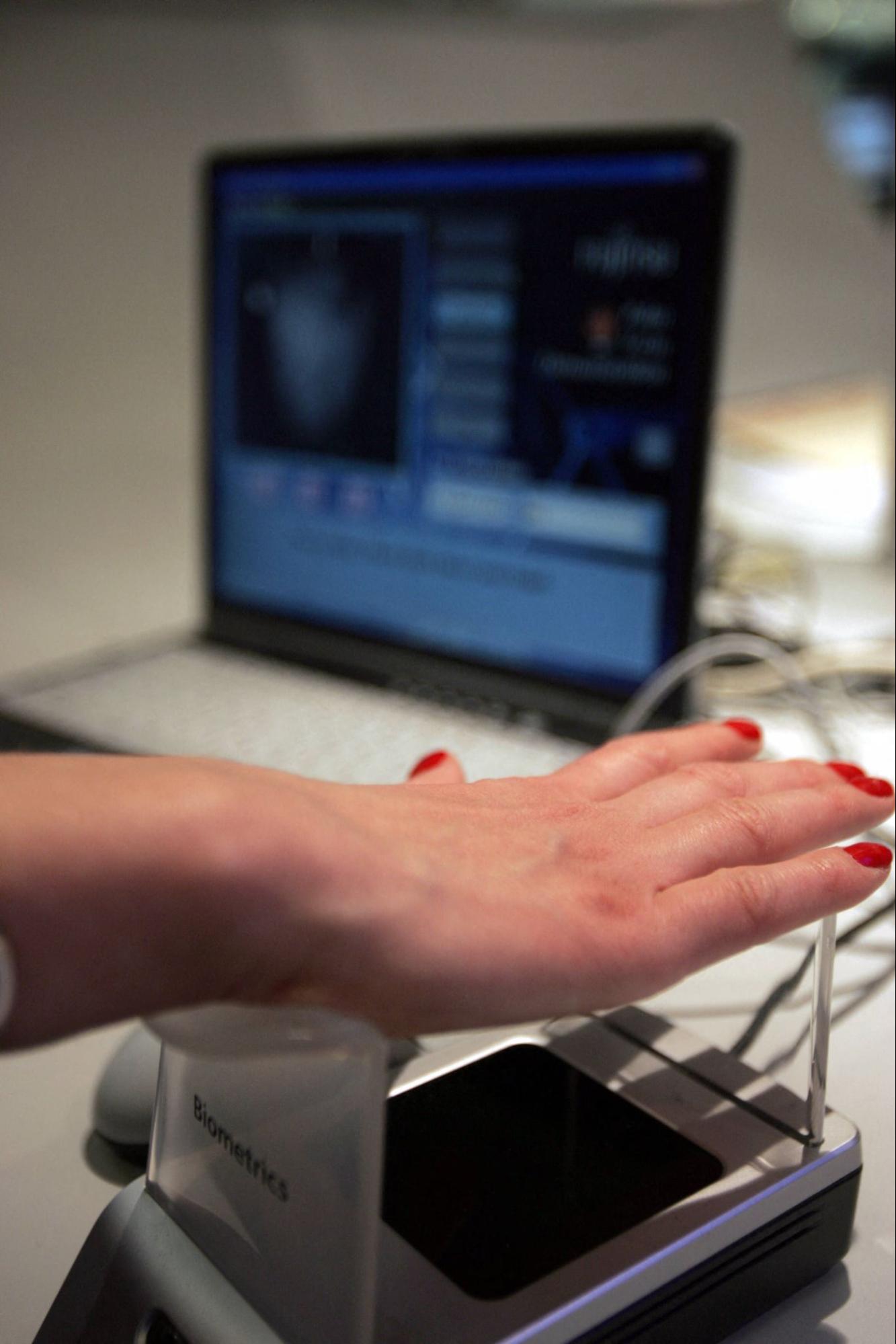
Image from AFP, published on March 11, 2005. Photo by JOHN MACDOUGALL. The caption states: A worker demonstrates Fujitsu’s touchless palm vein authentication device at the CeBIT 2005 Information and Communications Technology Fair in Hanover, Germany, on March 11, 2005.
- In 2017, in South Korea, Lotte Card launched the ‘Hand Pay’ service, a system that enables payments through vein authentication. They began adopting this biometric system after purchasing the technology from Fujitsu.
Furthermore, citing a 2017 Yonhap News report, this system was initiated for purchasing goods at convenience stores in Lotte World Tower and select areas in Seoul.
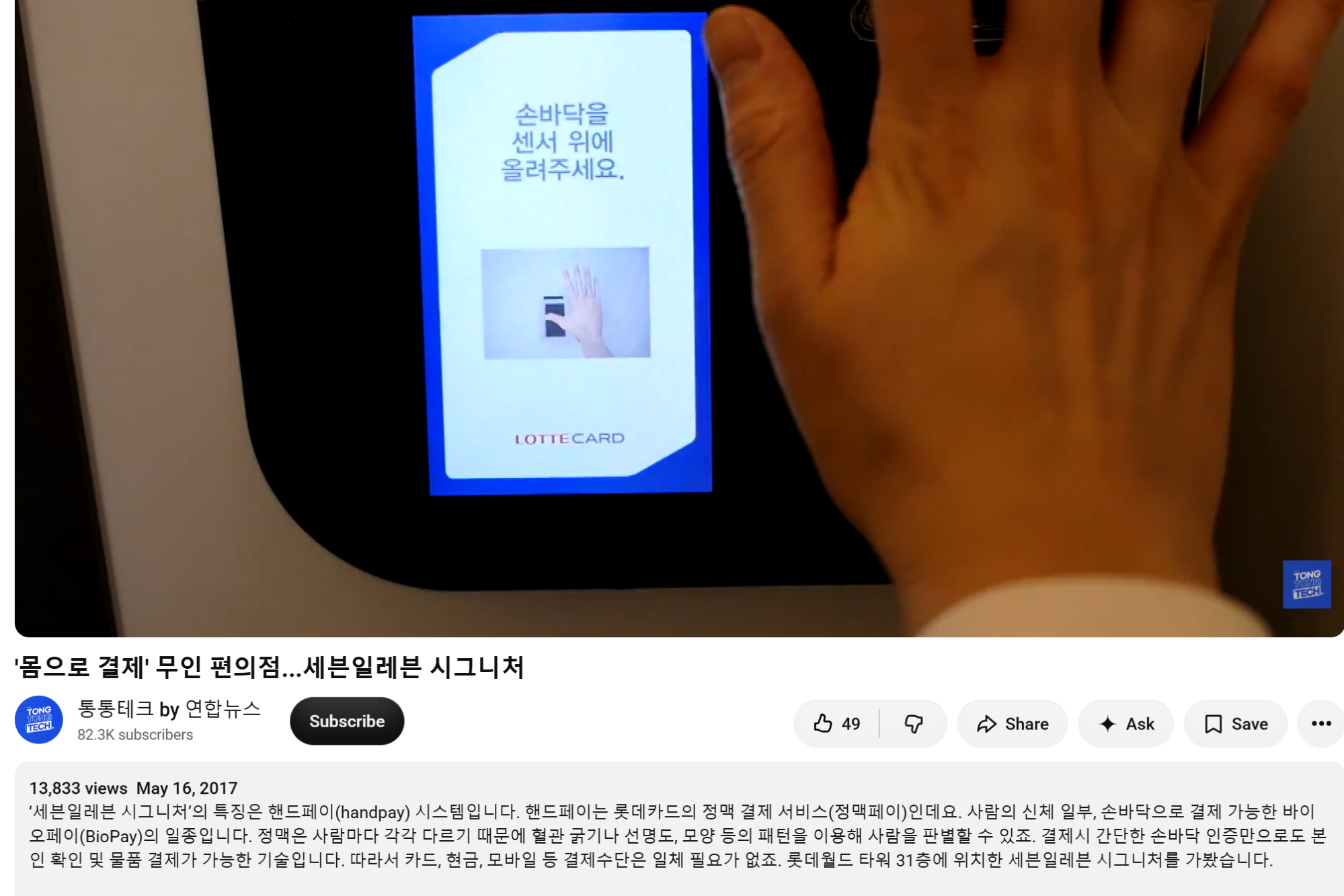
Image from Yonhap.
Currently, Lotte Card has terminated its “Hand Pay” service, the payment system using palm vein authentication. According to an SBS Biz news report on May 19, 2026, Lotte Card is preparing to officially discontinue the Hand Pay service on June 30, 2026, while gradually phasing out usage.
- In 2023, Xinhua stated that a subway line in Beijing allowed passengers to enter and exit “cardless” simply by scanning their palms.
The details reveal that the Beijing Municipal Commission of Transport announced the launch of this new technology pilot project, aimed at implementation on the Daxing Airport Express line, which connects to Beijing Daxing International Airport. Passengers can display their palms to pass through turnstiles at stations along the route after entering their palm data at station ticket machines and authorizing usage via WeChat, the popular messaging application in China. Fares are automatically deducted upon exiting the station.
The developers indicated that this same technology has been deployed in over 1,500 7-Eleven stores, gyms, and sports centers.
- In November 2024, trial usage began with Visa outside mainland China for the first time in Singapore.
- In 2024, Amazon News reported that Amazon One launched an application making it easier for users to sign up for its palm recognition service. Users can take a photo of their palm via the app and add a payment method, after which they scan their palm at an Amazon One device to complete registration and begin using it for payments, venue entry, and identity verification.
Is China Still Using Palm Payment Today ?
Tencent, the system developer, indicates that the system remains in active use at select locations, such as certain convenience store branches, universities, fitness centers, and public transit systems.
As for the registration details in China, users must first verify their identity and link a payment account to the system, then register their palm data by scanning both their palm print and palm vein patterns. When purchasing items, users simply bring their palm close to the scanner, wait for the system to verify that it matches the registered data, allow the money to be deducted from the linked account, and receive payment notification via phone.
Thailand and Biometric Financial Verification Systems
As for Thailand, public information from the Bank of Thailand (BOT) shows no indication of any projects directly utilizing palm scanning for payments. However, other forms of biometric technology have been implemented in financial services, with the BOT operating a Regulatory Sandbox for Biometrics featuring 19 participating service providers.
Source: 롯데카드, 손바닥만 대면 카드결제 OK
Verification Process
1.Keyword Search: Searching with keywords related to “palm payment” turned up review clips from several tech content creators. In addition, reports were located reflecting that this technology is indeed in real use.
Such as, The Standard and foreign media reports, such as CNN, presented the use of this technology in China for both transit fares and retail purchases. This demonstrated that palm payment technology is genuinely usable in China.

Related Content