Recognizing the “Dubai Prince” Scam: How Deepfakes Are Used to Create Romance Before Demanding Money
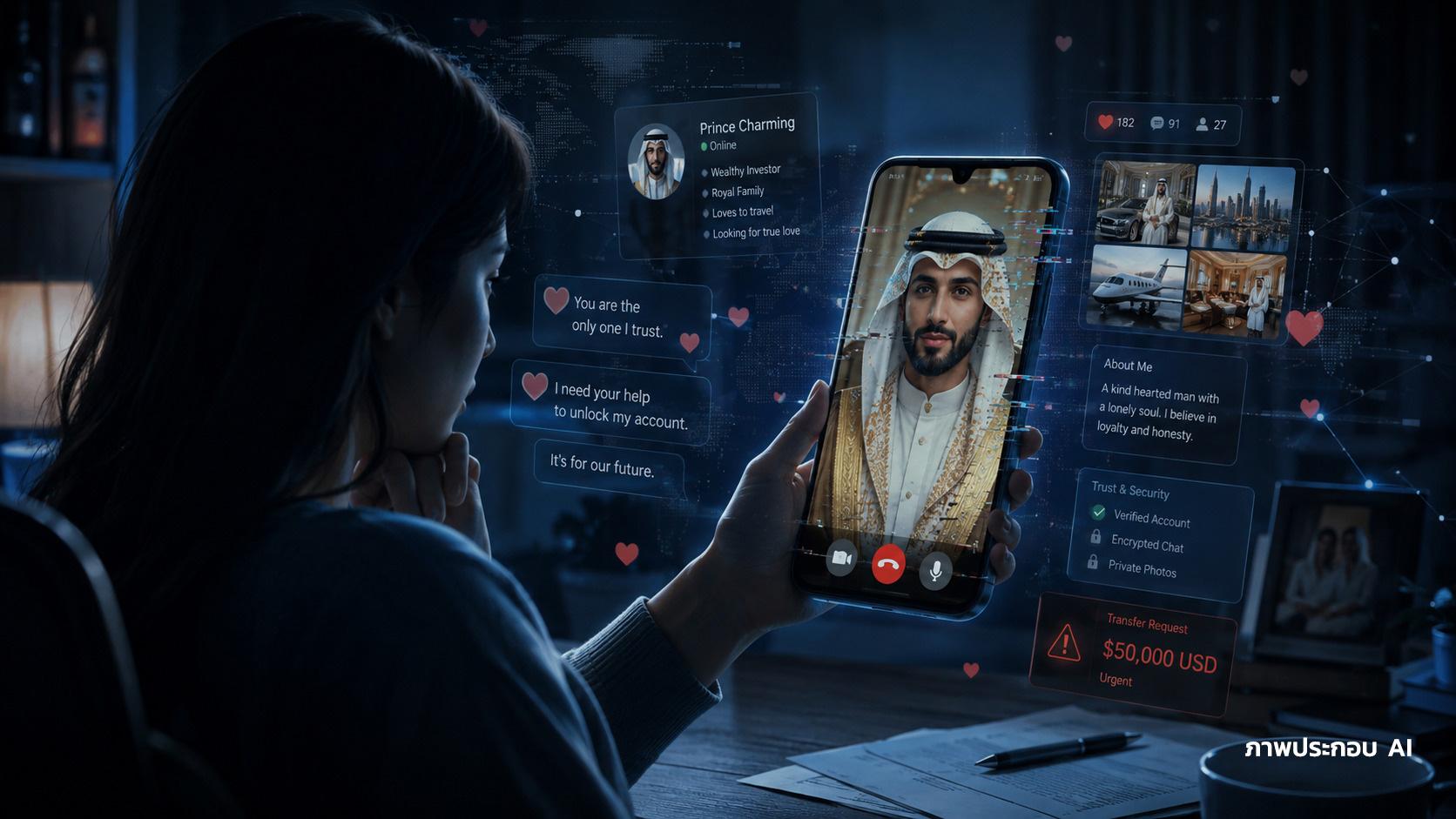
When an online romance does not begin with two people who genuinely know each other, it may instead begin with a carefully fabricated identity designed to appear authentic—from photographs and social media accounts to affectionate messages and even video calls that appear to show a real person.
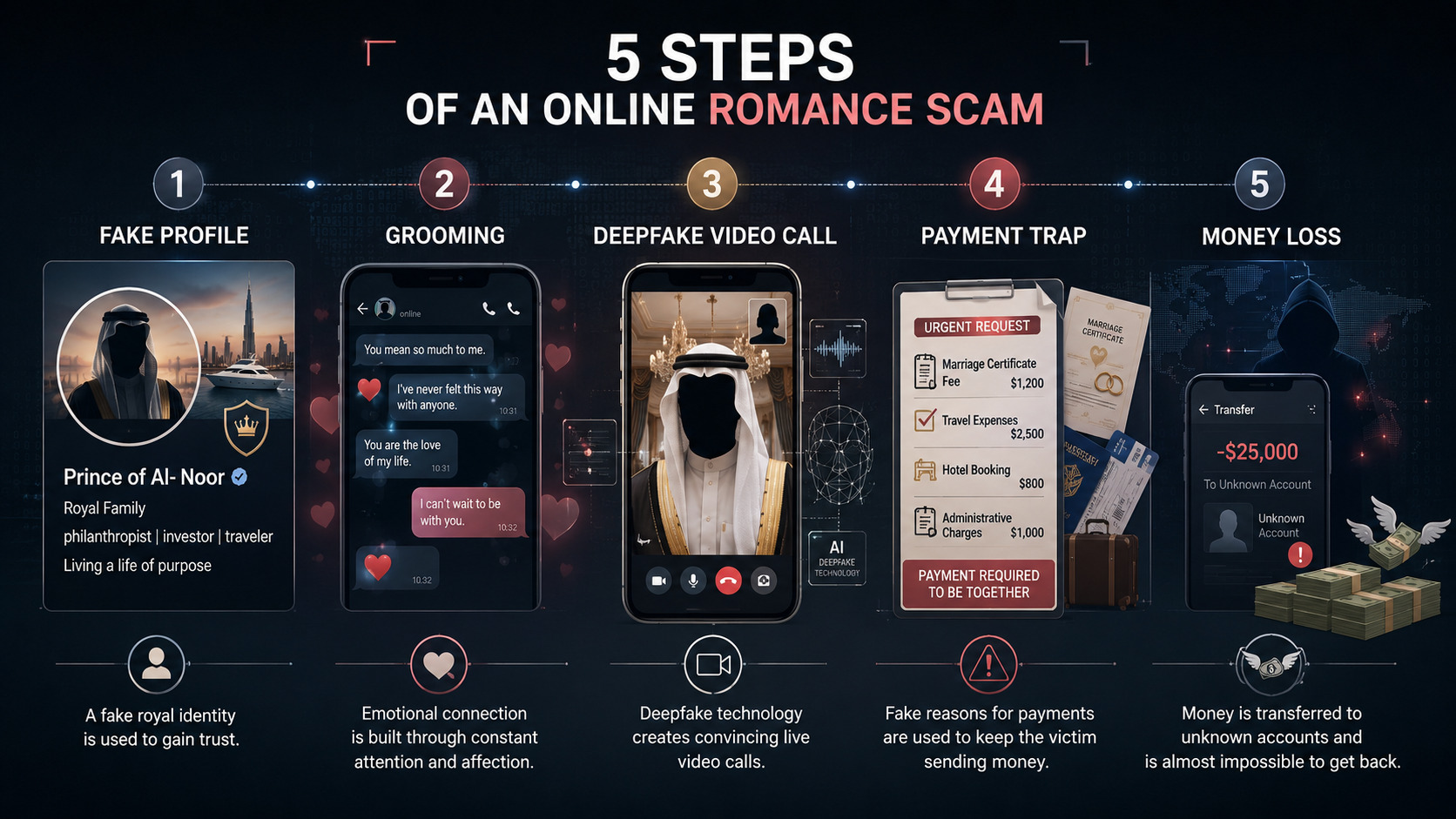
One example of this type of scam involves the impersonation of Sheikh Hamdan bin Mohammed bin Rashid Al Maktoum, Crown Prince of Dubai, widely known as “Fazza.” Scammers use publicly available images and information to create fake accounts, eventually developing romantic relationships with victims before asking them for money.
Creating a “Prince” Online
Scammers exploit the fame and public image of Sheikh Hamdan, who has a large following on social media, to lend credibility to fake accounts.
Groups and social media accounts impersonating the prince have been found online, featuring seemingly realistic images, such as photographs of the prince holding a red rose or kneeling with a ring. Scammers have also incorporated genuine messages or poems into their conversations to make the fabricated identity appear more convincing.
Some accounts allow followers to contact the “prince” directly via WhatsApp or Telegram. Although some users have warned that these accounts are fraudulent, the images and narratives presented can nevertheless make viewers associate the fake accounts with the real individual.
ภาพประกอบ AI
From Sweet Messages to Building Trust
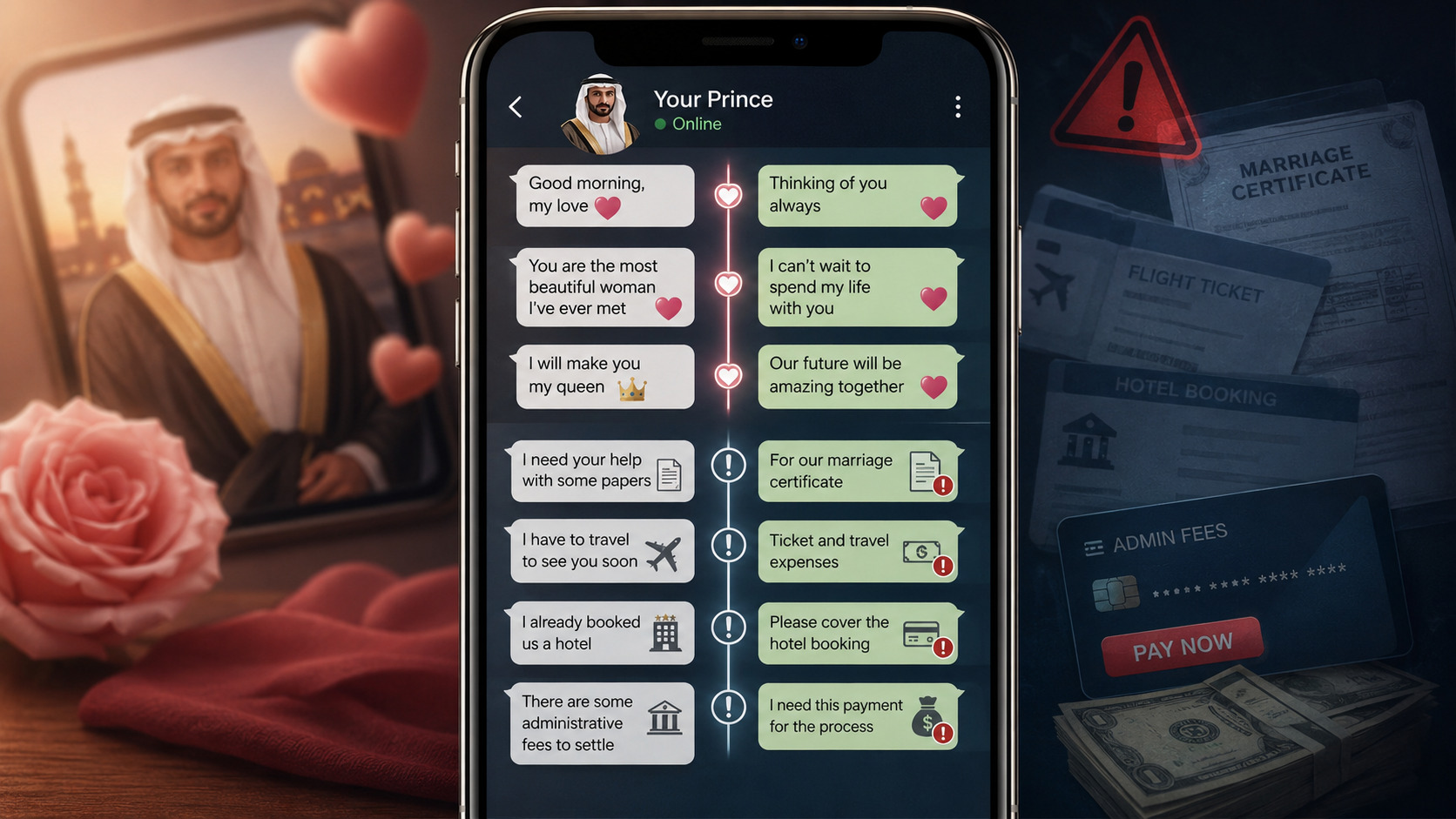
Once a victim shows interest, scammers typically move the conversation to private channels and continuously send affectionate or caring messages to establish an emotional bond.
Maria, who has requested that her real name and age be withheld, said she first encountered someone claiming to be Sheikh Hamdan on a dating website before moving the conversation to a messaging application.
She recalled that the person continued sending her messages, even while she was asleep, making her feel that the two of them had developed a strong emotional connection.
This tactic is characteristic of a romance scam, in which criminals manipulate victims by establishing an intimate or romantic relationship. Scammers typically do not ask for money immediately. Instead, they first work to build trust. Once victims become emotionally attached, they may find it increasingly difficult to question the other person’s identity or intentions.
A Video Call Does Not Necessarily Mean You Are Talking to a “Real Person”
What makes this type of scam even more convincing is the use of technology capable of generating or altering a person’s face in real time during a video call.
In Maria’s case, the scammer contacted her via WhatsApp video call, with the image appearing remarkably similar to Prince Hamdan. Although the image occasionally flickered or displayed unusual visual artifacts, the lip movements appeared synchronized with the person’s speech, making the overall interaction seem credible.
However, Maria noticed something suspicious: the voice did not match the person being impersonated.
Information from this particular case does not confirm which AI tool was used to create the video. Nevertheless, technologies capable of changing a person’s face and controlling facial movements in real time are now available, enabling scammers to produce increasingly realistic video content.
Therefore, seeing someone’s face and speaking with them through a video call should not, by itself, be considered sufficient evidence of their identity.
When Romance Becomes an Excuse to Demand Money
After establishing a relationship and gaining the victim’s trust, the next step is often to create a reason for requesting money, typically by citing expenses, documentation, or travel costs.
In Maria’s case, the scammer claimed that she needed to pay approximately 100,000 Philippine pesos, or around US$1,625, to obtain a marriage certificate and a “royal family membership card,” which he claimed were required for her to move to Dubai for work.
After Maria made the payment, the scammer demanded an additional 60,000 Philippine pesos, or approximately US$974, allegedly as a hotel reservation fee for their planned meeting.
This pattern illustrates how scammers manufacture “obstacles” or expenses to make victims feel that they must continue paying in order for the relationship—or the plans described by the scammer—to move forward.
The Warning Signs That Raised Suspicion
Maria became suspicious when the scammer suggested meeting at a hotel and demanded additional money. She then checked the other person’s Facebook account, which was later taken down, and discovered that the account listed its location as Nigeria.
Maria subsequently ended contact and refused to send any more money.
The incident highlights the importance of verifying information beyond the conversation itself. When victims are emotionally attached, making decisions based solely on information provided by the other person can cause them to overlook warning signs.
The Scam May Not Stop at Financial Fraud
More broadly, when a romance scammer succeeds in gaining a victim’s trust and obtaining personal information, the risks may extend beyond financial losses.
Victims may be persuaded to disclose personal information, send private photographs or videos, or provide details about their families and assets. Such information may later be used to pressure victims or demand additional payments.
In some cases, the fraud may escalate into sextortion, in which victims are threatened with the release of private photographs or information unless they pay money.
In addition, stolen funds may be transferred through third-party accounts, overseas accounts, or digital-asset channels, potentially making it more difficult to trace the flow of money.
However, these mechanisms represent risks commonly associated with romance scams in general and do not mean that Maria experienced every stage of such a scam.
ภาพประกอบ AI
It Is Not Only the “Dubai Prince” Whose Identity Is Being Misused
The use of celebrities’ names and images to commit fraud is not new. There have previously been cases involving scammers impersonating various public figures, including a case in which a French victim was defrauded by someone claiming to be actor Brad Pitt, resulting in a substantial financial loss.
What has changed is that technology now enables scammers to create increasingly convincing supporting evidence for fabricated stories—from photographs and voices to videos.
Four Ways to Protect Yourself If a “Celebrity” Flirts With You Online
1. Do Not Rely Solely on Photos or Video Calls to Verify Someone’s Identity
Even if an image appears identical to a real person, it can be artificially generated or manipulated. Verify the person’s identity through official channels and other independent sources.
2. Be Cautious When the Other Person Starts Asking for Money
Be particularly alert when someone claims to need money for fees, documents, travel expenses, hotel reservations, or other costs supposedly required to keep the relationship moving forward.
3. Check Accounts and Information Across Multiple Sources
Search for the person’s name, photographs, and social media accounts. If the information does not match or an account shows suspicious activity or an unusual history, stop communicating and conduct further verification.
4. Do Not Keep It to Yourself
If the other person tries to persuade you to keep the relationship secret or discourages you from consulting family members or people close to you, treat this as a warning sign. Having someone else help verify the information may reveal inconsistencies that you could otherwise overlook.
According to case statistics covering August 16–22, 2026, from Thailand’s Anti-Online Scam Center (ACSC), 79,311 cases were reported through the Thaipoliceonline system, with total damages amounting to 2.775 billion baht. This compared with 73,251 reported cases during the previous period, August 9–15, 2026.
Fraud involving the purchase and sale of goods and services remained the most common category, with 4,892 reported cases. Financial and investment fraud, meanwhile, resulted in losses of nearly 756 million baht, making it the category associated with the highest financial losses.
The provinces with the highest numbers of reported cases were:
- Bangkok: 129 cases, with damages of 16.5 million baht
- Chiang Mai: 30 cases, with damages of 560,000 baht
- Samut Prakan: 29 cases, with damages of 1.1 million baht
When analyzed by the gender and age of victims who are frequently targeted, women continue to account for a larger proportion of victims than men. People aged 21–30 also remain the highest-risk age group, consistently ranking as the group most frequently targeted by scammers over the past several months.
When classified by type of crime, people aged 21–30 also rank among the top three groups in terms of the number of victims:
- Fraud involving the purchase or sale of goods and services
- Impersonation fraud
- Fraud involving false offers of benefits
The “Dubai Prince” case therefore serves as an important lesson: modern scammers no longer rely solely on fabricated messages. They can construct an entire fictional narrative—from a social media identity and an emotional relationship to a video call that appears remarkably authentic.
At a time when technology can make someone who is not physically present appear on a screen, verifying a person’s identity through multiple independent sources is more important than simply believing what we see.
Source: dawn, Conflict Advisory