Victim or Villain? When the Deceived Must Stand Trial as a ‘Mule Account’

The sound of engines pulling up at Ban Khlong Luek checkpoint in Aranyaprathet District, Sa Kaeo Province, was not just a sign that the journey had ended. It also marked the beginning of another reality that few had ever imagined. For those stepping off the vehicles, there was both relief at setting foot on Thai soil again and lingering fear still visible in their eyes.
Many had gone through experiences difficult to put into words. Some lost their entire life savings. Others had been cut off from their families for months. And some only realized at the very last moment that returning home did not mean true freedom. Because as soon as they arrived, what awaited them was not only the chance to rebuild their lives, but also the justice system—treating them as “suspects” due to bank accounts they had never intended to use for wrongdoing.
The Trap of a Seemingly Credible Opportunity
The story of “Au” reflects the plight of digital‑era victims whose journey began with ordinary hope. She was simply a working woman looking for new opportunities in life when she came across a job posting on Facebook that looked trustworthy. The details were complete—reasonable salary, clear working hours, and straightforward duties such as replying to customer chats as an admin. The page’s credibility and large following left her with little doubt, so she reached out. When she was invited to attend a short training in Sa Kaeo Province, she saw it as the first step toward a promising future. What she did not realize was that it was actually the doorway to a carefully laid trap. From the moment she arrived at the meeting point at Mo Chit, her life began to drift off its familiar path, with hardly any chance to question or turn back.
A Path That Slowly Consumes Freedom
The deception did not happen all at once. It pulled victims in step by step, following a deliberate pattern—from persuading them to open multiple bank accounts supposedly for work, to housing them in places crowded with others in the same situation, and eventually controlling their movements without any chance to refuse or escape. One night, she was taken onto a vehicle and driven to a remote area. The destination was not the office she had been promised, but a desolate crossing point used for illegal border transit. Under pressure and the watch of armed men, she had no choice but to obey. Everything unfolded too quickly for her to gather her thoughts, and before she realized it, she was in another country—without documents, without money, and without any freedom to make decisions about her own life.
When Victims Become Defendants
In the end, although Au was rescued and able to return to Thailand, what she carried back was not only psychological scars but also unexpected legal burdens. The bank accounts she had been tricked into opening were later used as tools for transferring money from criminal networks. As a result, her name became tied to financial damages worth millions of baht—even though, in reality, she had never received a single baht from those accounts. Her situation turned into the most painful contradiction: being both a “victim” and a “defendant” at the same time, with almost no chance to fully explain her truth to the justice system.
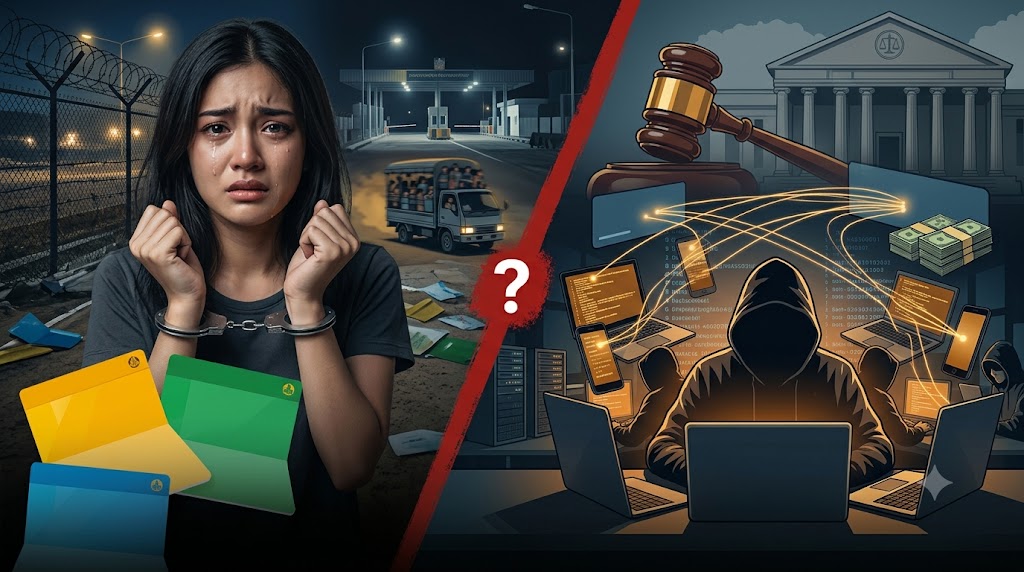
AI‑generated image
A Tragedy That Did Not Happen to Just One Person
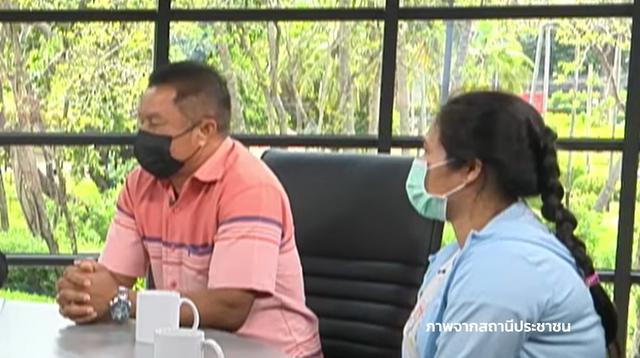
This kind of incident did not happen to her alone. It was also reflected in the stories of other families—such as the case of “Uncle Chian.” His son and daughter‑in‑law decided to apply for jobs through Facebook, hoping for stable work in Bangkok and a steady income. Both traveled to the appointment and boarded a van with other applicants, with no warning signs that anything was amiss. Only later, when the route shifted from the capital toward the border, did the truth begin to unfold. Eventually, they were taken to a location controlled by armed men, then forced across the border and compelled to open bank accounts in various forms before being abandoned without help. This ordeal not only left deep scars on those directly involved but also inflicted heavy consequences on their families—uncertainty, fear, and severe financial burdens.
Warnings That Still Haven’t Reached Everyone
Ratchaphon Maneelek, Director of the Anti‑Human Trafficking Division at the Ministry of Social Development and Human Security, explained that the key message government agencies have consistently tried to communicate is that working abroad legally must go through clear, verifiable processes only. There are no jobs such as “online admin, work from home” in neighboring countries as advertised on social media. The challenge, however, is that modern scams have become increasingly complex and sophisticated. Offenders use psychological tactics, build credibility through social media platforms, and exploit the needs of people searching for income opportunities as a way to reach victims. This leaves many trapped in situations that are difficult to avoid—even when warnings and information had already been issued beforehand.
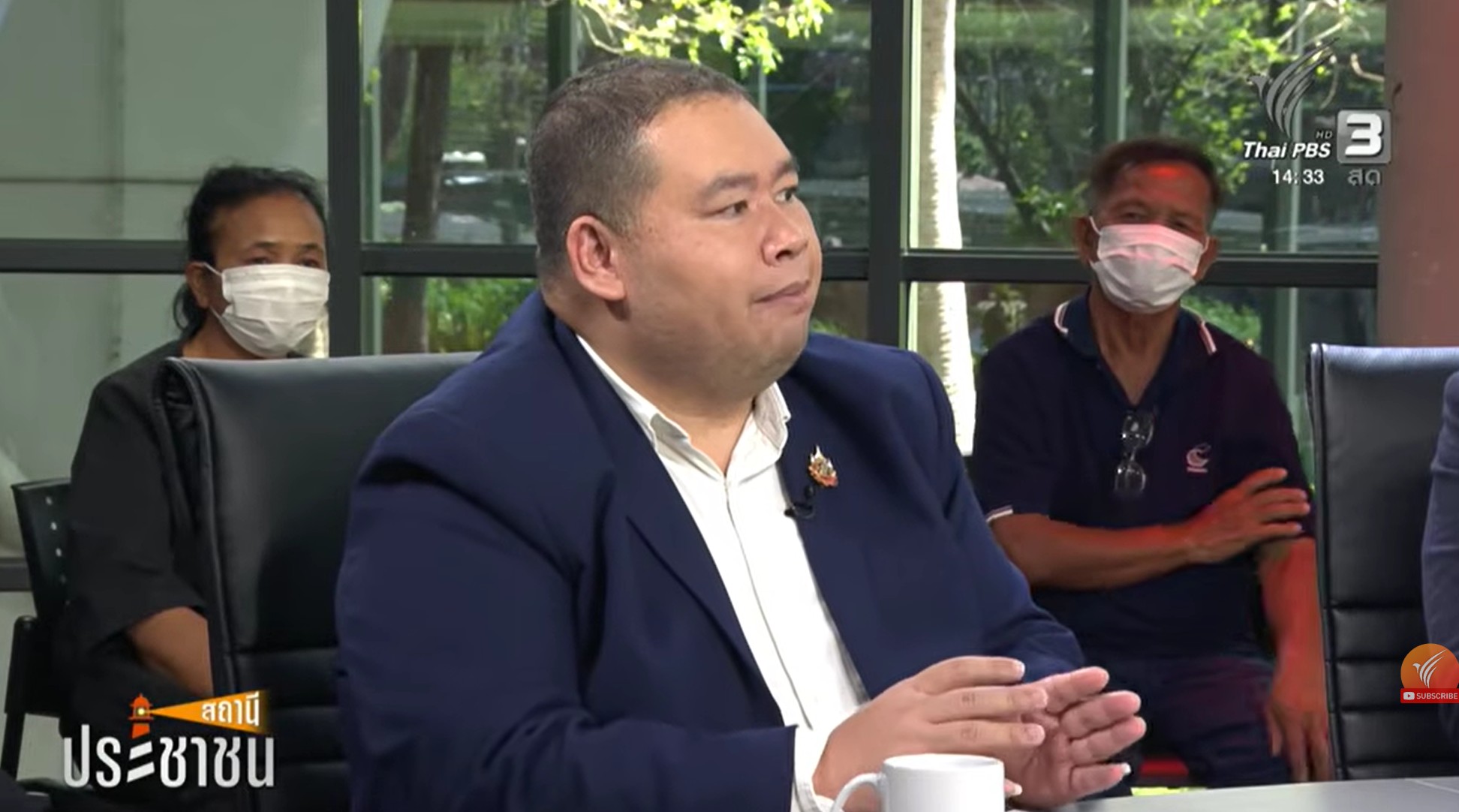
Mr. Ratchapon Maneelek, Director of the Division of Anti-Trafficking in Persons, Ministry of Social Development and Human Security
The Difficulty of Separating “Victims” from “Offenders”
Jaruwat Jinmakka, Vice President of the Immanuel Foundation (IMF), noted that one of the most complex aspects of this issue is the process of distinguishing victims from perpetrators. In practice, this requires consideration of many factors—such as behavior before traveling, evidence of communication, testimony, and the surrounding context of each case. In reality, however, such information is often incomplete or cannot be legally proven with clarity. At the same time, the financial damage caused by the accounts involved is undeniable. This forces authorities to proceed with legal action immediately to prevent wider repercussions. Such circumstances place victims under burdens far beyond any wrongdoing they intended—or, in many cases, never intended at all.
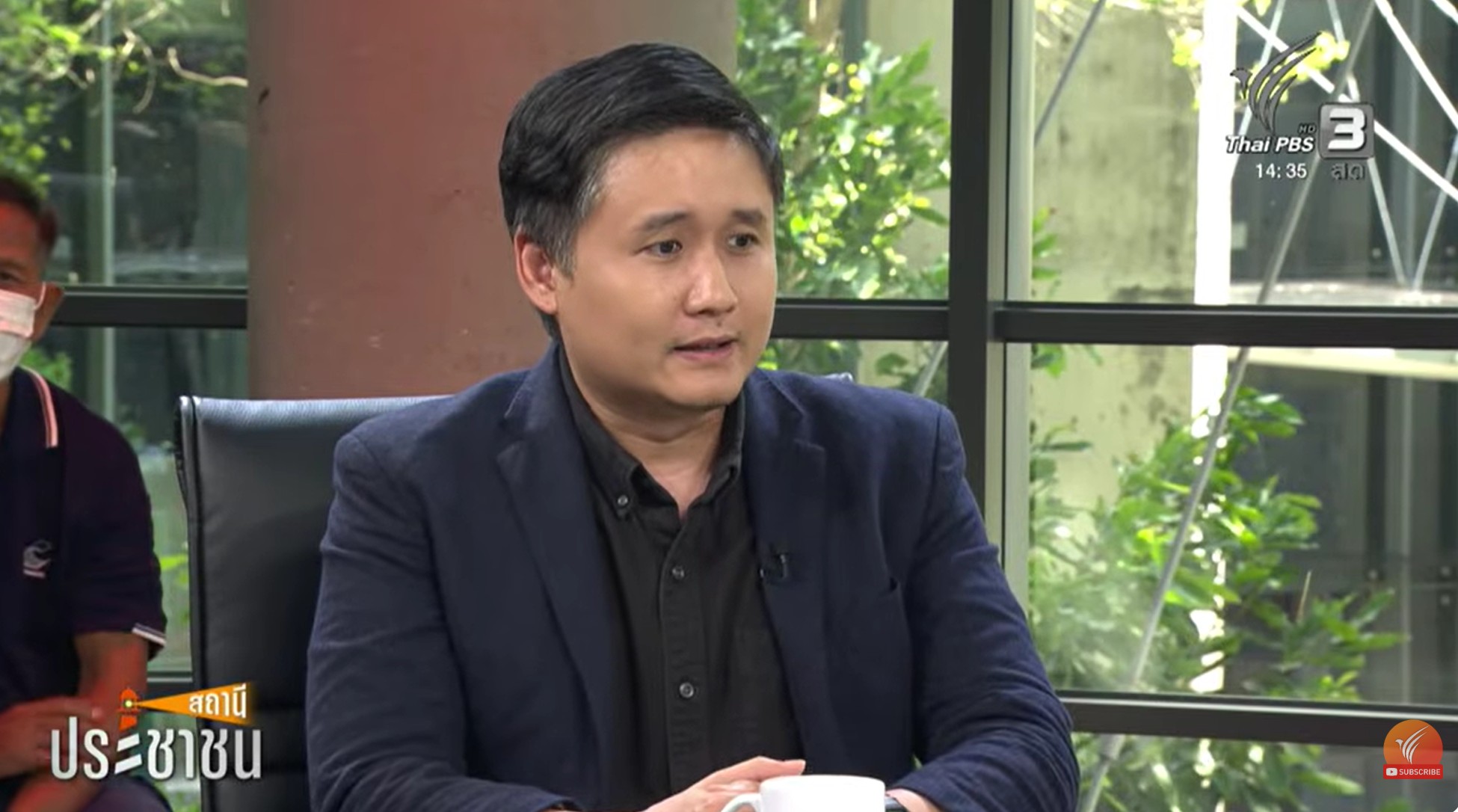
Jaruwat Jinmakka, Vice President of the Immanuel Foundation (IMF) )
The Economic Scars on Families
Beyond the legal consequences, the economic burden is another dimension that severely damages the families of victims. Many households are forced to borrow money or sell assets to transfer funds in support of relatives trapped abroad, hoping to improve their living conditions in dire circumstances. Some families end up sending money almost daily—just to secure food, water, or even basic safety. These realities show that the impact of this type of crime is not limited to the direct victims alone, but extends to those around them, who must share the losses both financially and emotionally.
The Invisible Criminal Networks
At its core, this problem is tied to transnational criminal networks with clear structures and substantial resources. The buildings or sites used to confine victims are often sealed off from the outside world, equipped with strict security systems, and disguised as legitimate businesses such as casinos or investment companies. This makes access and suppression extremely difficult. Even with efforts from many sectors to address the issue, these networks continue to adapt and operate.
Ultimately, the key question may not be only about who is the victim and who is the offender. It is about how we can build a system that protects innocent people from exploitation while effectively prosecuting the true perpetrators. If this problem is left unresolved, the story of Au or Uncle Chian’s family will not be the last—and the cycle of deception will keep producing new victims endlessly in Thai society.
Source: People’s Station program