Beware! Fake Traffic-Fine SMS Scams: How to Check Whether a Traffic Ticket Is Genuine
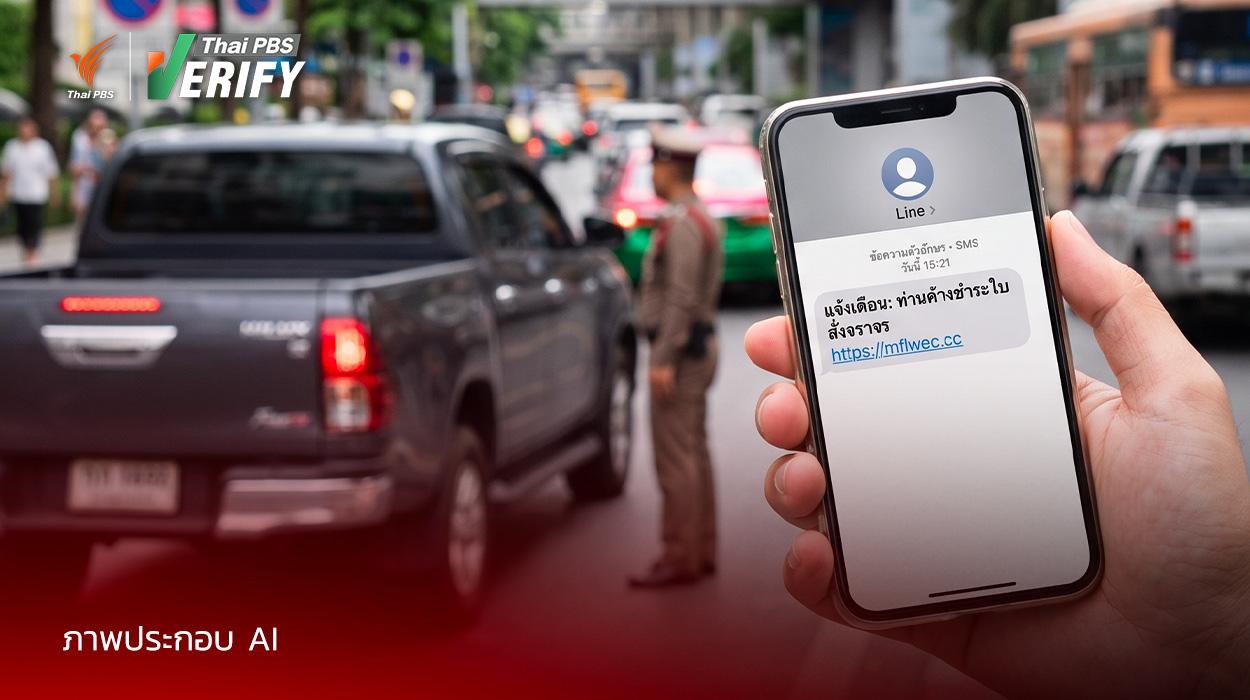
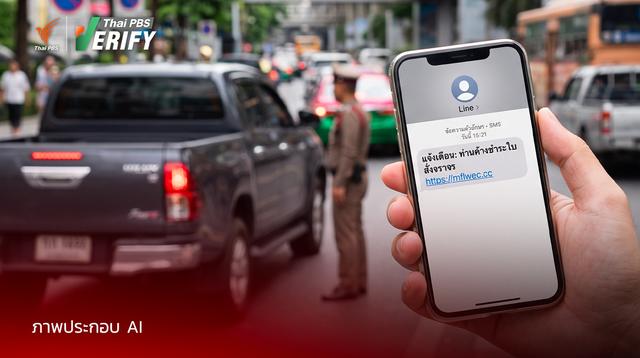
Scammers are increasingly sending SMS messages claiming that recipients have “outstanding traffic fines.” By exploiting fear and panic, they pressure people into clicking malicious links designed to steal their money and personal information. So, how can you check whether a traffic ticket is genuine? Thai PBS Verify has compiled the information you need.
Thai PBS Verify has found widespread circulation of fraudulent SMS messages falsely claiming that recipients have an “outstanding traffic ticket,” accompanied by suspicious links intended to frighten recipients into clicking them. Once clicked, these links may be used to steal money and personal information, potentially turning unsuspecting recipients into victims.
Here are the key warning signs of fake SMS messages, along with safe ways to verify whether a traffic ticket is genuine.
How Can You Tell if an SMS Is Fake?
- It is sent from an ordinary mobile number or from an unfamiliar sender name.
- It contains an embedded link, such as a bit.ly link or another suspicious-looking URL, asking you to click it to check your ticket.
- It uses threatening language designed to cause panic, such as “Your driver’s license may be suspended” or “Your payment is overdue.”
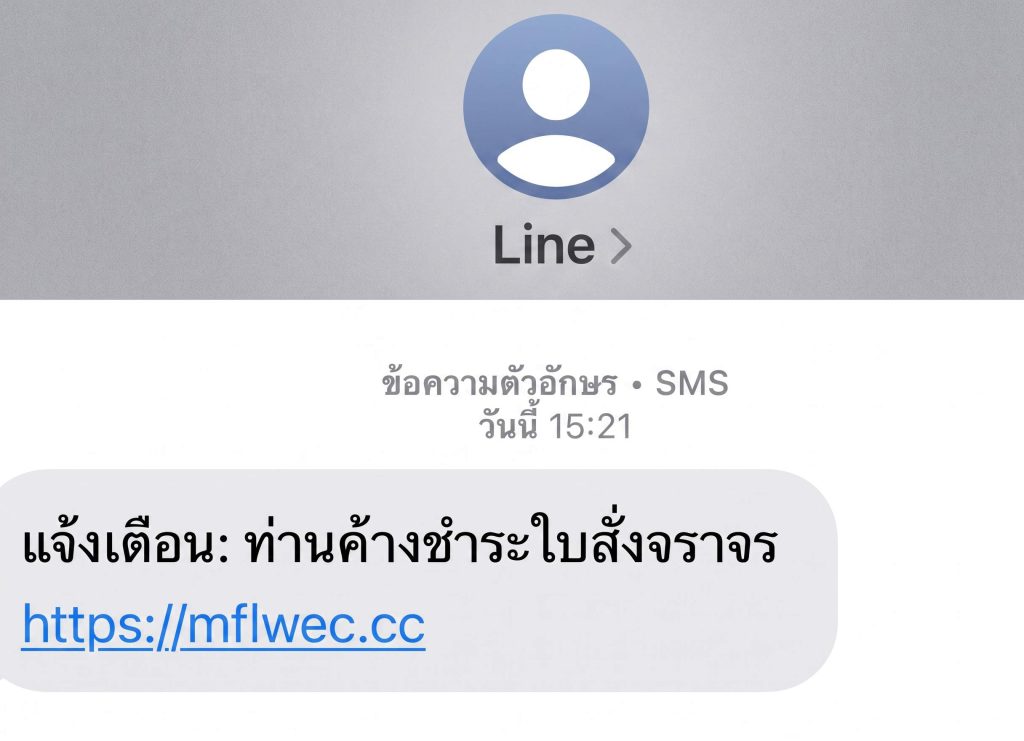
Example of a fake SMS
What Happens If You Click the Link?
If you accidentally click the link and follow the scammer’s instructions, several things may happen:
- You may be tricked into providing personal information, such as your full name, telephone number, or national identification number.
- You may be tricked into entering credit or debit card information so that the scammers can make unauthorized charges. Instead of simply paying the fine, you could end up losing the money in your account.
- You may be tricked into installing a malicious money-stealing app. In some cases, the link may direct you to install an unfamiliar application that scammers can use to remotely control your mobile phone.
What Should You Do If You Have Already Fallen for the Scam?
If you have accidentally entered your information or transferred money, take the following steps immediately:
- Block your account/card: Contact the bank that issued your card or manages your account immediately and ask it to suspend the relevant services.
- File an online police report: Report the incident through url Thai Police Online https://www.thaipoliceonline.go.th or contact the Cyber Police hotline at 1441.
“Make Sure Before You Pay”: What to Do When You Receive a Suspicious SMS
- Check where the SMS came from.
- Never click the attached link.
- Enter information only through official websites to prevent your personal information from being stolen through fake websites.
- Use the ticket number to verify the ticket through the Royal Thai Police e-Ticket system.
- Do not rush to make a payment.
- Contact the relevant website or originating agency directly to verify the information.
Why Do Scammers Continue to Succeed?
Woraphat Phuengphong, an independent academic specializing in criminology and victimology, explained why these types of scams continue to successfully deceive victims.
Put simply, scammers are casting a wide net. They do not expect every attempt to succeed. From their perspective, even a small number of people who “accidentally follow the instructions” is enough. They combine deception with behavioral psychological techniques to manipulate victims into taking action.
The key principles commonly used include:
- Curiosity: Scammers create an information gap in the victim’s mind, making them wonder what has happened and feel compelled to do something immediately. The easiest response is to click the link they have received.
- Fear + Urgency: Scammers pressure victims so that they have little time to think and feel they must act immediately to prevent a potentially more serious problem.
- Authority: Scammers use the names of trusted organizations or make their messages appear to be official SMS notifications from platforms that closely resemble legitimate ones, discouraging victims from stopping to question their authenticity.
- Making the situation appear personally relevant: Scammers make the message seem directly connected to the recipient’s circumstances, thereby increasing its credibility.
- Low cost, high return: From the scammers’ perspective, the cost of sending these messages is extremely low, while the potential return is high.

Ultimately, scammers are not fighting against new technology.
They are exploiting natural patterns of human behavior that remain largely unchanged.
You Cannot Stop Curiosity—but You Can Change How You Respond to It
It is almost impossible to eliminate curiosity altogether. Instead, greater attention should be given to how we respond to our curiosity.
It is similar to being intensely curious about other people’s affairs: we may want to know what is happening, but that does not necessarily mean this is the right moment to find out. What matters is how we respond to that impulse. The same principle can be applied to suspicious messages.
One simple approach is the “STOP–SEPARATE–VERIFY” principle:
- STOP: When you receive a message that makes you feel frightened, excited, curious, or rushed, immediately treat it as a warning sign.
- SEPARATE: Use your judgment to separate the message from the action it is asking you to take. You can read an SMS without necessarily doing what it tells you to do.
- VERIFY: If you want to find out what has actually happened, verify the information through an official channel. For example, open your bank’s app, a transport-related app, or a website you already know and access it yourself rather than clicking a link in an SMS.
You can even establish a personal rule, such as never clicking any link received via SMS. This helps build a habit of separating decision-making from simply receiving information.
These measures may help individuals protect themselves. But when viewed from a broader societal perspective, simply telling people to “beware of scammers” could be interpreted in another way: Are we placing too much responsibility on potential victims?
Perhaps we should shift the perspective and encourage victims—or members of the public who may become victims—to recognize that:
Scammers are not trying to make you look foolish. They are trying to make you act too quickly and fall for the scam.
Department of Land Transport Confirms It Does Not Send SMS Notifications for Traffic Fines
The Department of Land Transport (DLT) has stated that it does not have a policy of sending SMS messages notifying members of the public about outstanding traffic fines or providing links for them to make payments.
The department also does not have a policy of making telephone calls to request personal information, asking people to transfer money, or sending payment links via SMS or LINE. Therefore, such messages or calls do not originate from the Department of Land Transport.
If you receive an SMS or a phone call from someone claiming to be a DLT official, do not click any links, do not download unfamiliar applications, and do not transfer money based on the caller’s or sender’s claims.
If you have any questions or concerns, you can contact the Department of Land Transport hotline at 1584.