Beware of Overseas Job Scams: More Than 80 Victims Lose Nearly THB 20 Million

More than 80 victims have filed complaints after Goldtech House HR Co., Ltd. allegedly claimed it could arrange overseas employment in Finland and Canada, offering packing and factory jobs with salaries of up to THB 90,000 per month. The company subsequently collected document-processing fees and additional expenses, but the applicants were ultimately unable to travel or take up the promised jobs. Preliminary estimates place total financial losses at nearly THB 20 million. Several victims later came forward to share their experiences on the People’s Station (Sathani Prachachon) program.
Over 80 Victims Recruited for Jobs in Finland and Canada
According to victims, the scam began when they came across recruitment ads on Facebook claiming the company could secure employment in Finland and Canada. Advertised positions included packing and general factory labor, promising monthly earnings of tens of thousands of baht, which drew considerable interest from people seeking to work abroad.
Some applicants initially contacted the firm via Line before traveling to its office in the Don Mueang area of Bangkok for in-person interviews. They reported being interviewed by foreign nationals with the assistance of a Thai interpreter. The company also presented promotional videos depicting job duties and work environments, giving the recruitment process an air of legitimacy.
One victim recounted applying for a position at a food-processing plant filleting salmon. They were promised an estimated monthly income of THB 90,000—excluding overtime—along with one free meal per day, complimentary accommodation, and a two-year employment contract.
Processing Fees Collected, Followed by Escalating Demands
Another victim stated that after passing the interview, the company demanded an initial payment of THB 12,500, citing processing fees for paperwork and visa applications. Shortly afterward, the firm requested an additional THB 65,000.
Several victims were informed that a pre-departure training session would be held. However, as the scheduled date approached, company representatives became unreachable. Applicants were also pressured into exchanging foreign currency beforehand, under the pretext that the agency offered preferential exchange rates.
One applicant noted that staff presented what appeared to be a Canadian visa, prompting them to pay a further sum—unaware at the time whether the document was genuine or fraudulent.

Elaborate Facade: Physical Office and Foreign Interviewers Used to Gain Trust
Victims revealed that the operation was structured across multiple touchpoints: initial outreach via Facebook and Line, an on-site interview at a formal office, interactions with foreign interviewers, and video presentations showcasing job routines.
One applicant described the facility as a well-equipped, three-story building that gave the impression of an established corporate agency. Screens throughout the premises showed footage of various factory processes, such as fruit cleaning and salmon processing. The applicant was subsequently interviewed by two foreign nationals through a Thai interpreter.
Furthermore, the agency’s Facebook page appeared credible, boasting regular updates, an extensive follower base, reposted informational graphics from government agencies, and prompt replies in public comment sections. An inspector from the Department of Employment affirmed that authorities consistently work to rebut such false online claims and continue to pursue legal action against fraudulent operators.
Legally Registered Entity, but Missing Financial Filings
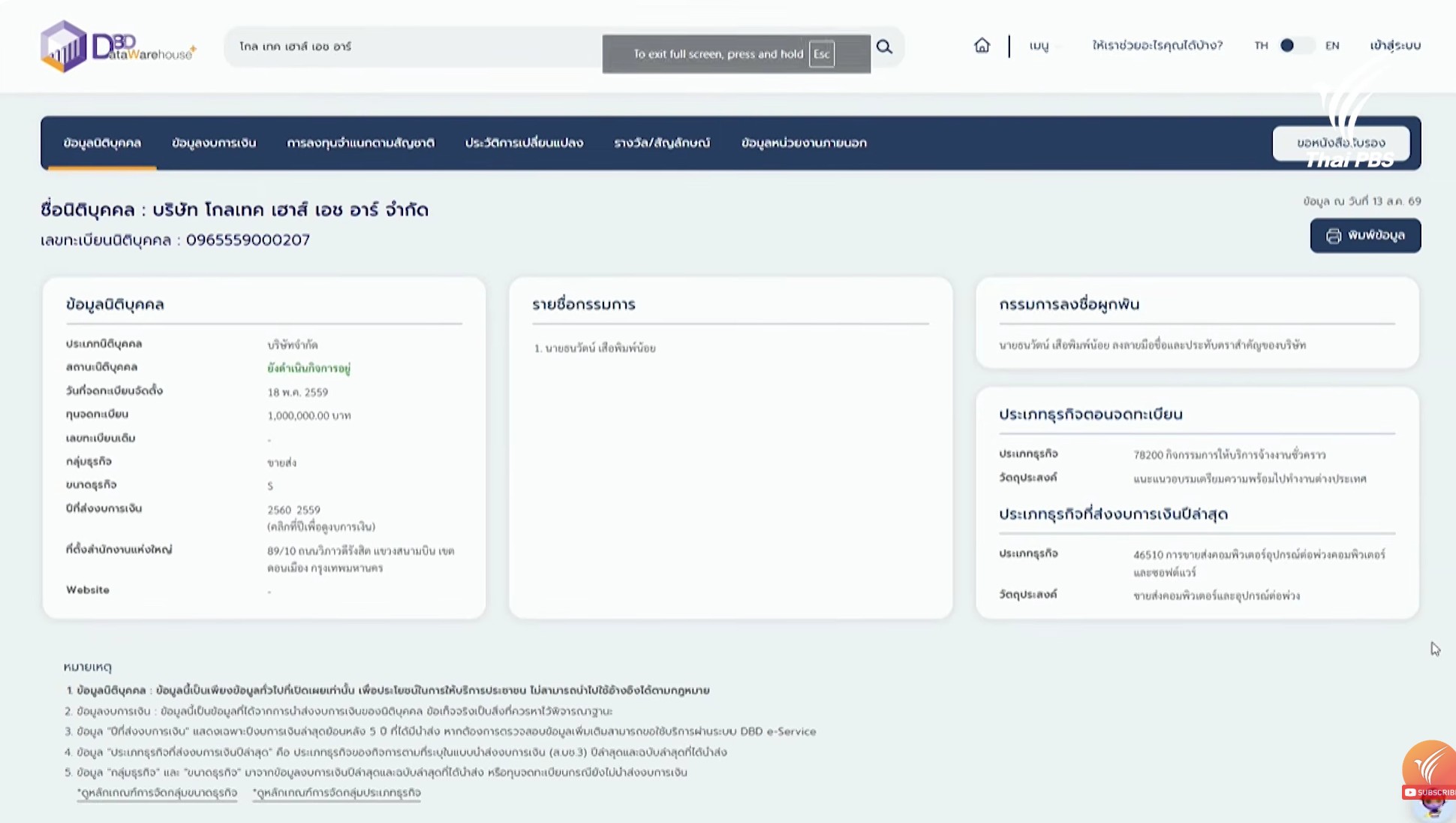
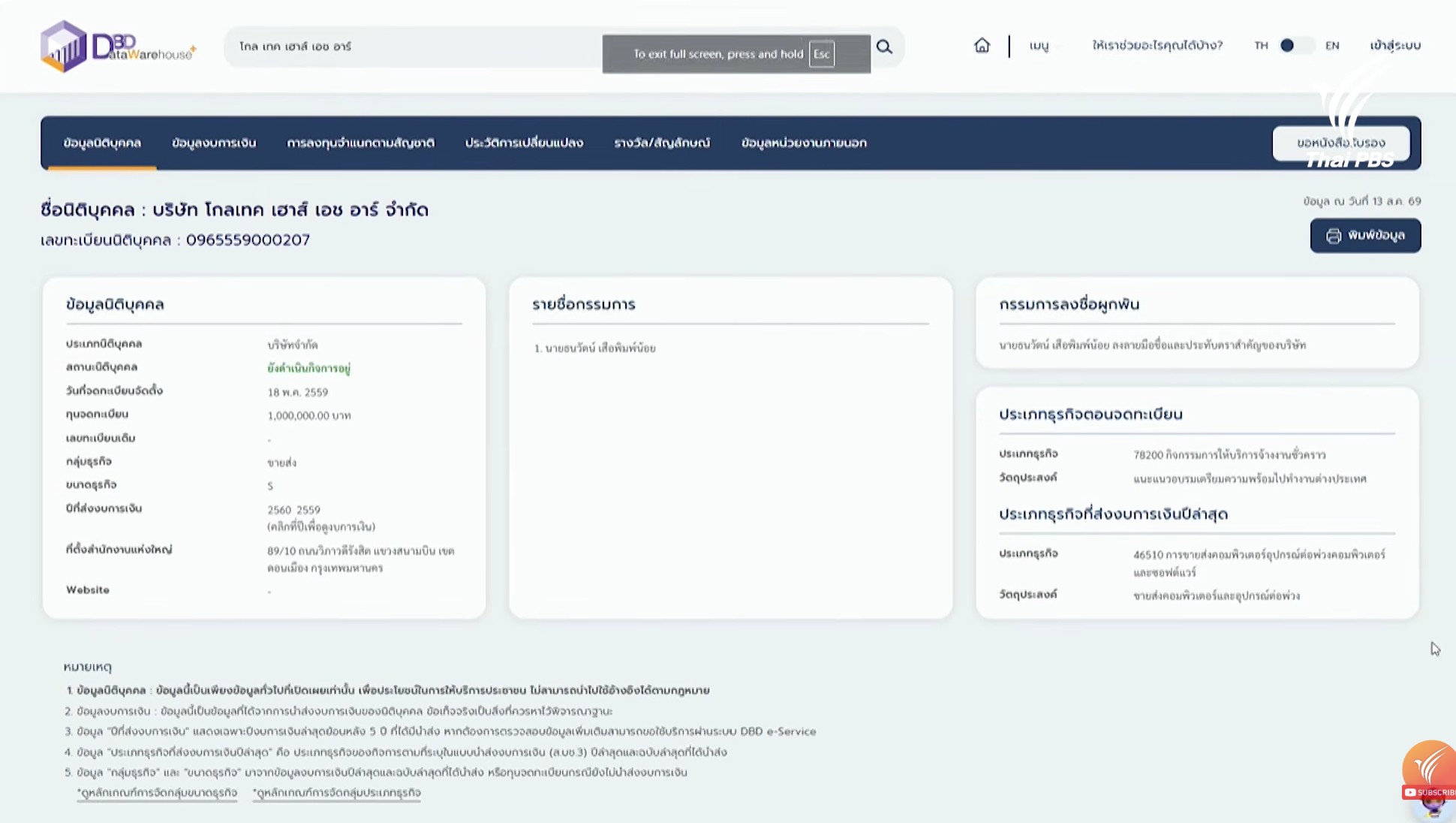
Records highlighted on the program confirmed that the business was registered as a legal entity, which may have led job seekers who performed basic preliminary checks to assume it was legitimate.
However, corporate records indicated that the company had failed to submit mandatory financial statements since 2017, despite its active registration status. Labor officials stress that prospective workers must conduct thorough background checks with regulatory agencies, rather than relying solely on business registration numbers.
Five Legal Channels for Working Abroad
Mr. Sonthaya Kalasri, Inspector of the Department of Employment, explained that Thai nationals may legally travel abroad for work through only five authorized channels:
- Licensed private recruitment agencies authorized for overseas placement
- The Department of Employment (government-to-government programs)
- Deployment directly arranged by an existing domestic employer
- Overseas apprenticeships or training programs arranged by an employer
- Independent job-seeking by individual workers
Prospective workers should strictly verify recruitment pathways and regulatory clearance before transferring any money. Mr. Sonthaya warned that if a recruiter claims they can bypass destination-country age limits or immigration requirements—such as offering to “buy age” or falsify credentials—the offer is almost certainly a predatory scam intended to swindle victims out of their funds.

Mr. Sonthaya Kalasri, Inspector of the Department of Employment, detailing the legal channels and regulatory safeguards for Thais working abroad.
Verify Before Transferring: Department of Employment Issues Warning
The Department of Employment advises anyone receiving job offers abroad—whether through personal referrals or online media—to verify the details directly with the department before signing agreements or transferring money.
Inquiries can be made at the department’s central offices or any Provincial Employment Office nationwide. Job seekers should never accept unverified promises at face value.
For legitimate overseas employment, traveling via government-arranged channels involves minimal to no service fees. When utilizing licensed private recruitment agencies, all service charges and processing costs are legally capped. For individuals traveling independently, both the prospective workplace and the employment contract must be vetted and approved by relevant labor authorities prior to departure.
Never Work Abroad on a Tourist Visa
The department strictly warns against traveling abroad on a tourist visa with the expectation of finding employment after arrival. Workers must secure appropriate work permits and legal clearance prior to departing Thailand.
Adhering to lawful procedures protects workers from forced labor, human trafficking schemes, and the perils of undocumented status abroad. The government aims to ensure that overseas Thai laborers enjoy safe working conditions and sustainable livelihoods to support their families.
Moreover, legal workers remain within an official safety net. Officials highlighted the Smart TOEA mobile application, which logs worker deployments and enables travelers to reach Thai labor attachés, embassies, or government agencies promptly in the event of natural disasters, armed conflict, or humanitarian emergencies.

Victims Sunk into Debt in Pursuit of Better Livelihoods
The scam has not only stripped victims of their upfront payments, but has also plunged many into heavy debt. Numerous victims reported borrowing money or taking high-interest loans to cover the agency’s fees, and some had even resigned from existing jobs to prepare for deployment.
Victims emphasized that their primary motivation was to earn an honorable living overseas, repay outstanding obligations, and provide for their families. Instead, they were left empty-handed with mounting liabilities.
Legal Recourse: What to Do If Scammed by an Overseas Recruiter
Lawyer Hathaya Anteng advised that when an organization or company defrauds multiple victims, the affected parties should coordinate collectively. They must compile a registry of victims, financial records, transaction receipts, and documented damages before filing formal police complaints.
Key evidence to preserve and submit includes:
- Bank transfer slips and payment receipts
- Chat correspondence and messaging logs with recruiters
- Destination bank account numbers and beneficiary names
- Screenshots of relevant Facebook pages, advertisements, and websites
- Copies of contracts, registration forms, and related paperwork
- Copies of purported visa stamps or letters issued by the agency
- Archived recruitment advertisements and job postings
Consolidating this evidence allows investigators to trace financial trails and identify conspirators more swiftly. Freezing recipient bank accounts promptly increases the likelihood of recovering assets for the victims.

คุณหัทยา อั้นเต้ง ทนายความ
Key Takeaway: Thorough Due Diligence Protects Job Seekers
This incident illustrates how recruitment scams exploit sophisticated veneers—physical offices, structured interviews with foreign personnel, promotional videos, sizable social media followings, and co-opted government public relations materials—to deceive the public.
Consequently, simply checking whether a firm is registered or operates an active Facebook page is not sufficient. Job seekers must consult the Department of Employment or their Provincial Employment Office before making payments. Immediate red flags include demands for large upfront payments, guarantees of abnormally high pay, or recommendations to bypass statutory immigration requirements.
Those who came forward underscored that their intention in sharing their painful ordeal was to raise public awareness, so that fellow Thais do not fall into similar traps in the future.