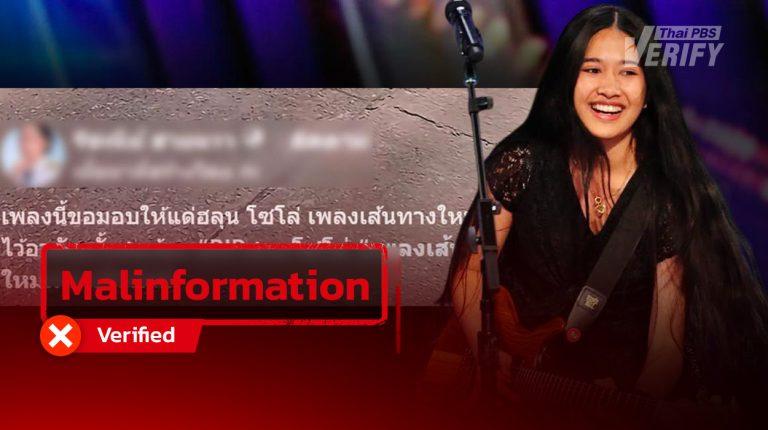
Post Claims “Nene Royal” Wrote and Sang a Tribute Song for “Hlun Solo”
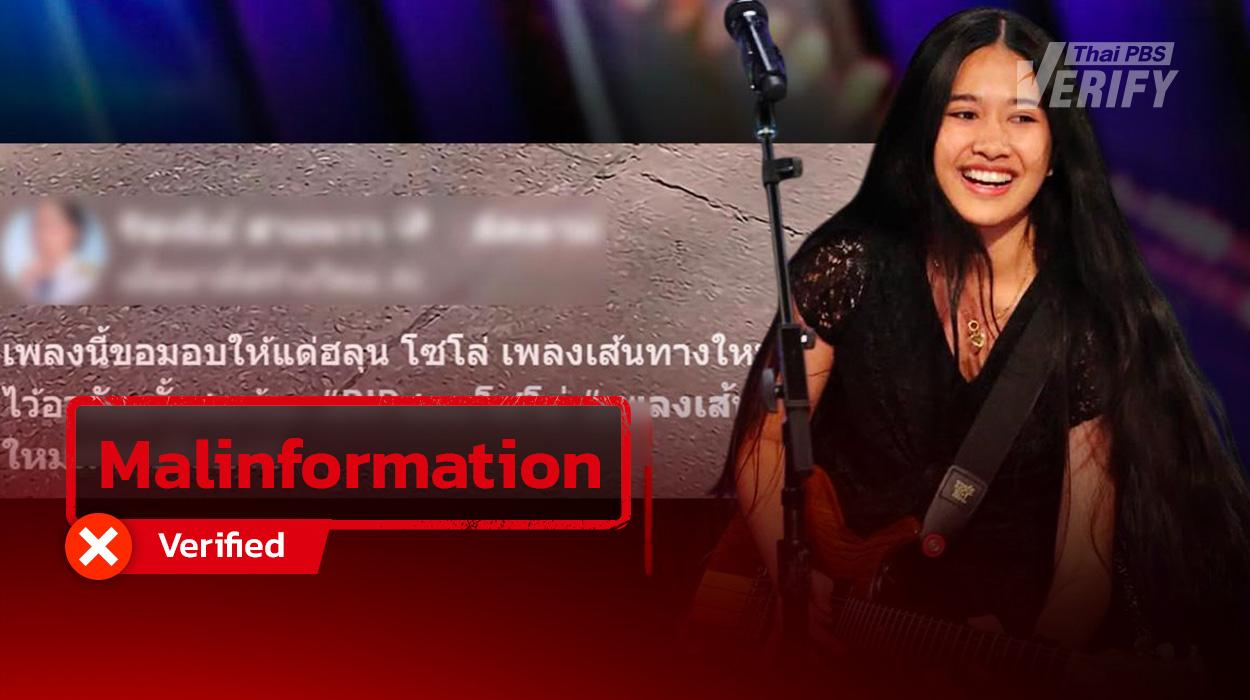
Thai PBS Verify พบแหล่งที่มาของข่าวปลอมจาก: Facebook
An investigation found a Facebook post claiming that “Nene Royal,” or Rattikan Amlor, a 16-year-old musician who appeared on America’s Got Talent 2026, wrote and performed a tribute song for “Hlun Solo,” a well-known travel YouTuber who died in Georgia.
The post stated:
“This song is dedicated to Hlun Solo: ‘A New Path’ (Senthang Mai). A final tribute #RIPHlunSolo #NewPathSong #Nene”
The post was published on August 12, 2026, and had received more than 160,000 views. Most viewers appeared to believe that the song had genuinely been created as a tribute to the well-known travel YouTuber.
Verifying the Clip: Is the Tribute Song for “Hlun Solo” Connected to “Nene Royal”?
The audio in the clip was initially checked using Shazam, a music identification application. The search found no match for the track or for any works by other artists.
A search of recent news reports about “Nene Royal” releasing a tribute song for “Hlun Solo,” as well as a song titled “A New Path,” also found no evidence linking the track to her work.
Thai PBS Verify also examined Nene Royal’s official social media channels across various platforms. No posts or activity indicated that she had written or performed a tribute song for Hlun Solo.
Representative for “Nene Royal” Confirms No Involvement in the Tribute Song
Thai PBS Verify contacted the representative managing Nene Royal by email to ask about the song. Her manager confirmed that Nene had no involvement in the song and had played no part in its creation.
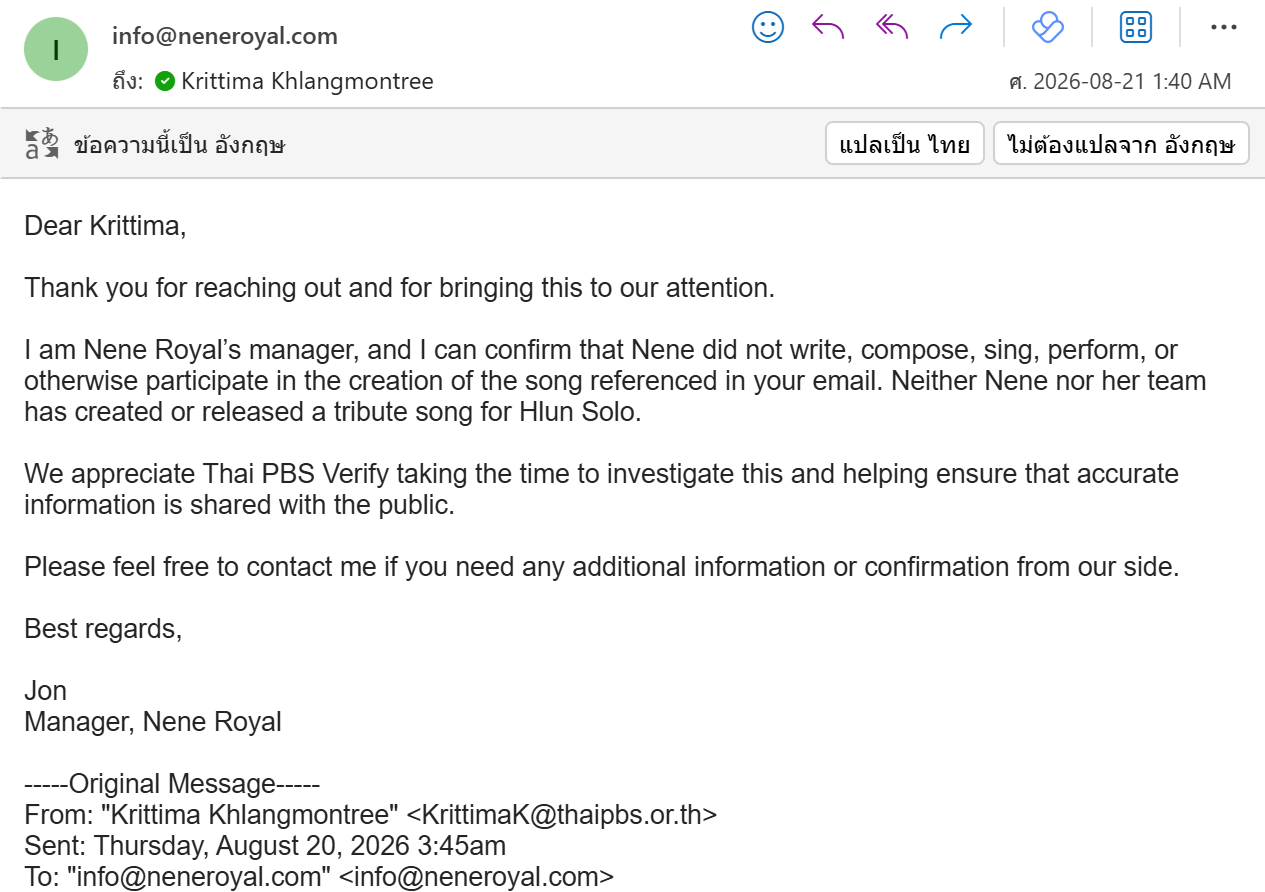
(Screenshot of the email response from Nene Royal’s representative)
A portion of the song was analyzed using the AI Detector tool on the Songprint website. The results indicated a 97% probability that the song was AI-generated.
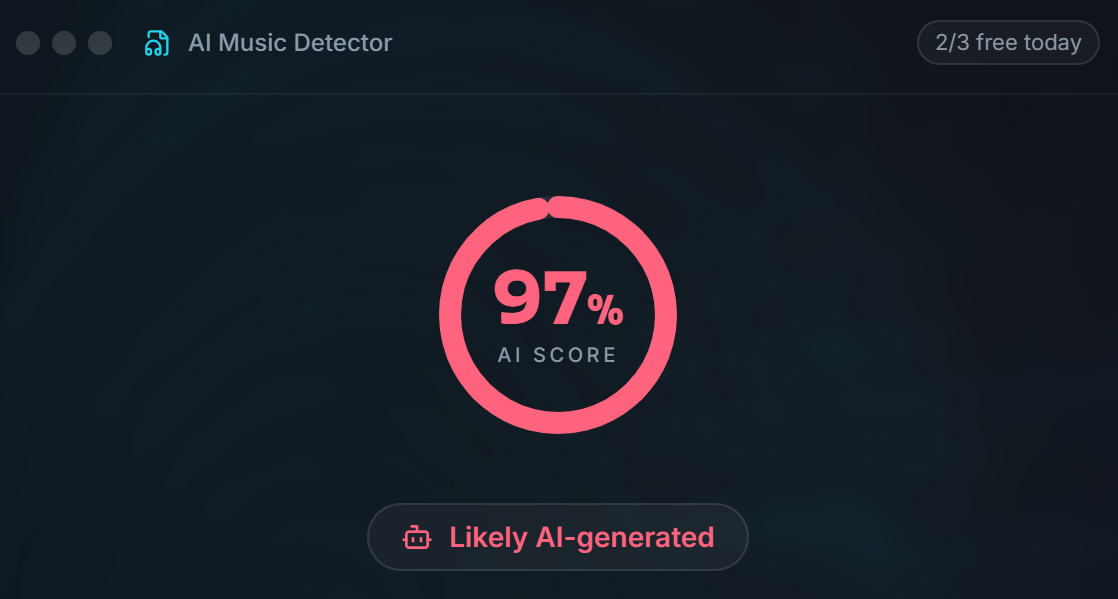
Screenshot of the AI music detection results
Note: Results from AI detection tools should be considered preliminary supporting information and cannot definitively confirm that a song was generated by AI. Such tools may have margins of error, and results may vary depending on the tool and the audio file being analyzed.
In addition, the original clip contained a platform-generated label indicating that it was AI-generated content.
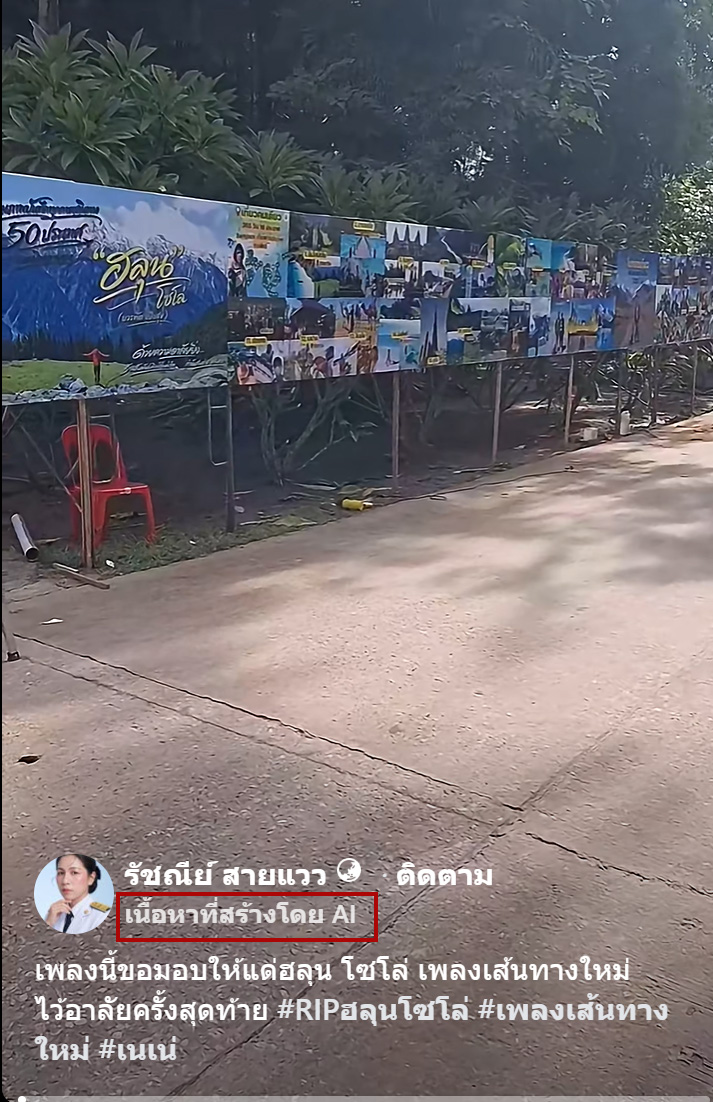
Image from Facebook
When Grief Becomes an Opportunity to Drive Engagement
Dr. Jessada Salathong, a lecturer in the Department of Mass Communication, Faculty of Communication Arts, Chulalongkorn University, commented on the issue.
He observed that using the voice of a person who is currently trending during a period of loss—when the public is highly interested in and discussing both individuals—could attract greater attention and generate more engagement.
Dr. Jessada said that people who place little importance on media ethics or professional standards may not pay much attention to such concerns. He noted that this is particularly worrying in an era when anyone can become a media creator. When everyone has the ability to create content, they can also use AI to generate content based on anyone’s voice in virtually any form.

Dr. Jessada Salathong, Department of Mass Communication, Faculty of Communication Arts, Chulalongkorn University
Dr. Jessada also noted that a person’s voice is an aspect of their identity. If a voice is used for commercial purposes, an important question is who should receive the revenue or royalties generated from its use. If the voice is used in a way that causes harm or is associated with unlawful activity, it must also be considered whether the owner of the voice could be held responsible.
Therefore, such issues should not be overlooked, and media organizations have a responsibility to verify information. Without verification, anyone could use another person’s voice in any way, even while claiming that it was being used for a positive purpose.
What Are the Facts?
The song presented as a tribute to the late travel YouTuber “Hlun Solo” was claimed to have been written and sung by “Nene Royal” as a tribute to him.
Thai PBS Verify checked information about the song and Nene Royal’s social media channels but found no evidence linking the song to her. Her manager also directly confirmed that Nene had no involvement in writing, singing, or creating the song.
As for whether the song was generated by AI, this cannot yet be definitively confirmed, despite Songprint assessing a portion of the audio as having a 97% probability of being AI-generated and the platform labeling the clip as AI-generated content.
Verification Process
1. Identifying the Source of the Audio:
The audio in the clip was initially checked using Shazam, a music identification application. The search found no match for the track.
2. Keyword Verification:
A search of recent news reports concerning “Nene Royal,” the alleged tribute song for “Hlun Solo,” and the song titled “A New Path” found no information or evidence confirming that the song was connected to Nene Royal’s work.
Thai PBS Verify also checked Nene Royal’s social media channels across various platforms and found no posts or activity indicating that she had written or performed a tribute song for Hlun Solo.
3. Contacting Relevant Parties:
Thai PBS Verify contacted Nene Royal’s representative by email to ask about the song. Her manager confirmed that Nene had no involvement in the song and had played no part in creating it.
4. AI Detection Analysis:
A portion of the song was analyzed using Songprint’s AI Detector. The tool indicated a 97% probability that the song was AI-generated.
Impact of False Information
1. Factual Distortion and Public Misunderstanding:
Audiences may mistakenly believe that the artist, Nene Royal, actually wrote and sang the song, causing false information to spread rapidly and widely.
2. Exploiting Loss for Clickbait and Engagement:
The creator of the fake news used the YouTuber’s death to attract attention, taking advantage of fans’ grief to generate views and personal benefits.
3. Reinforcing a Cycle of Deceptive Content:
When people believe and engage with such content through views, likes, and shares, pages or channels producing fake news can benefit from platform algorithms. This can create incentives to produce more deceptive content of the same kind in the future.
4. Erosion of Trust in Online Media:
The widespread circulation of convincing AI-generated content can cause confusion and suspicion among the public and undermine trust in information encountered online.
What to do with this misinformation?
1. Pause Before Sharing:
When encountering news or posts that appear sensational, dramatic, or emotionally charged, pause before immediately liking, sharing, or commenting. This can help prevent yourself from becoming part of the mechanism that spreads false information.
2. Verify Through Official Sources:
If a claim concerns the work of an artist or public figure, check the person’s official social media channels directly to see whether they have made any announcement or promoted the work in question.
3. Check for AI Labels and Anomalies:
Look for warnings or labels provided by platforms, such as Facebook’s “AI-generated content” label. Also watch and listen for unusual characteristics in images, audio, or language that may indicate the use of AI-generated content.
4. Use Digital Verification Tools:
Where appropriate, use available digital verification tools. For example, music identification applications such as Shazam can help trace the original source of an audio track.
5. Report False Content:
Once there is sufficient evidence that content is false, use the platform’s reporting function under categories such as “False Information” or “Impersonation.” This can prompt the platform to review the content and potentially reduce its visibility or remove the post.

Related Content