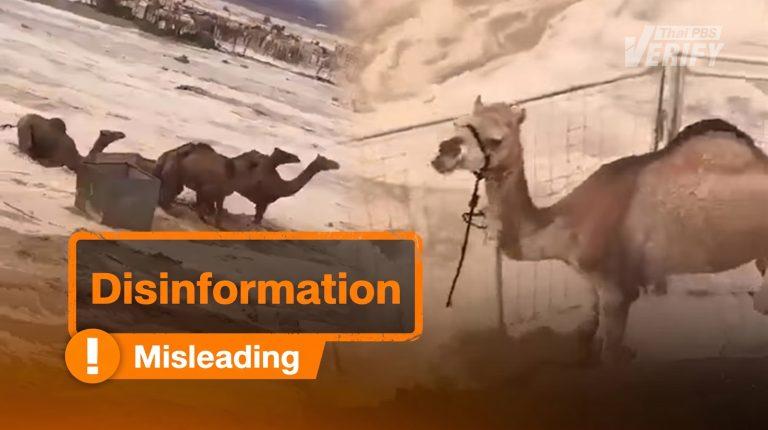
Camel herd swept away by floodwaters falsely linked to Egypt floods, actually 2018 Saudi Arabia video
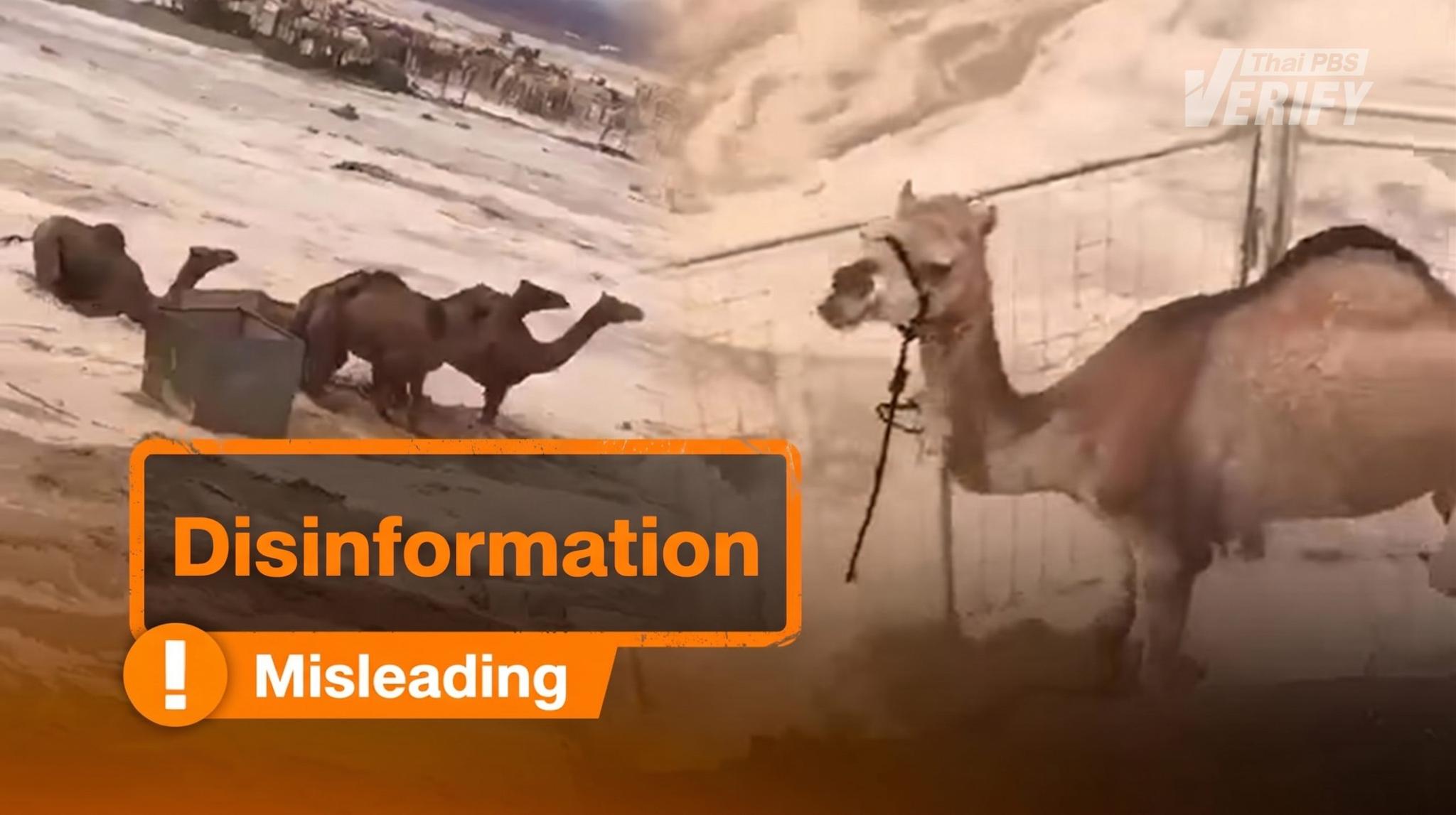
Thai PBS Verify identified Facebook as the source of the misleading claim
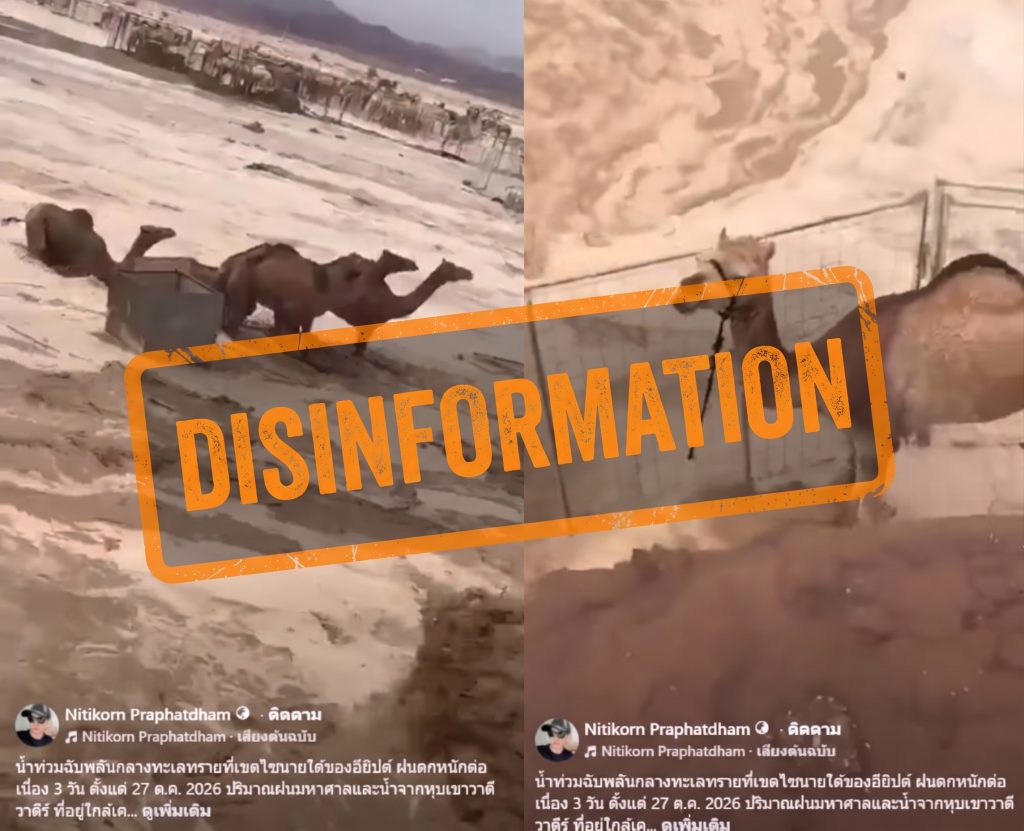
One post claimed that flash floods had struck Egypt’s South Sinai desert after three consecutive days of heavy rain starting on Oct 27, 2026. It alleged that torrential rainfall and runoff from the nearby Wadi Watir valley had transformed the usually arid landscape.
The post was published on Oct 30, 2026, and attracted around 10,000 views.
Thai newspaper Daily News also published the footage under the headline: “Egypt desert flood signals a global crisis”, a report that drew more than 800,000 views after being published on the same day.
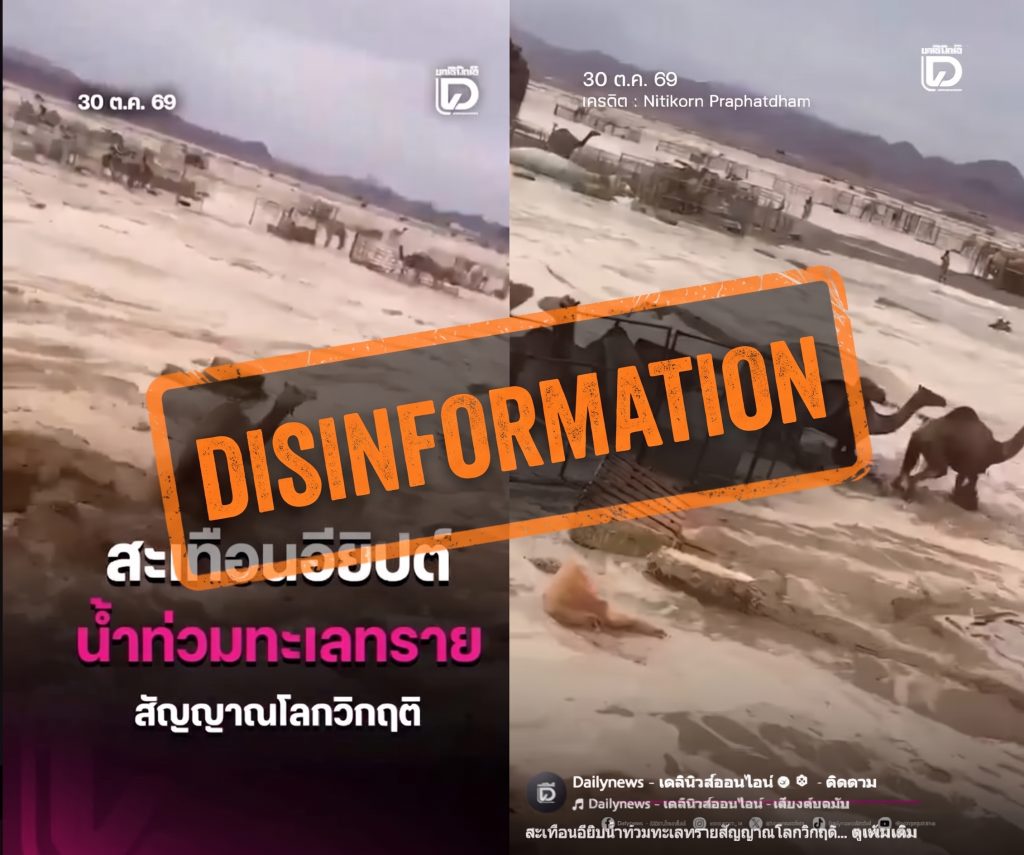
Did the video really show flooding in Egypt?
Thai PBS Verify extracted keyframes from the video using InVID-WeVerify and conducted a reverse image search through Google Lens.
The search led to a fact-check published by India Today on April 19, 2024, which examined the same footage after it was falsely claimed to show flooding in Dubai, United Arab Emirates. That investigation concluded the incident had taken place in Saudi Arabia, not Dubai.
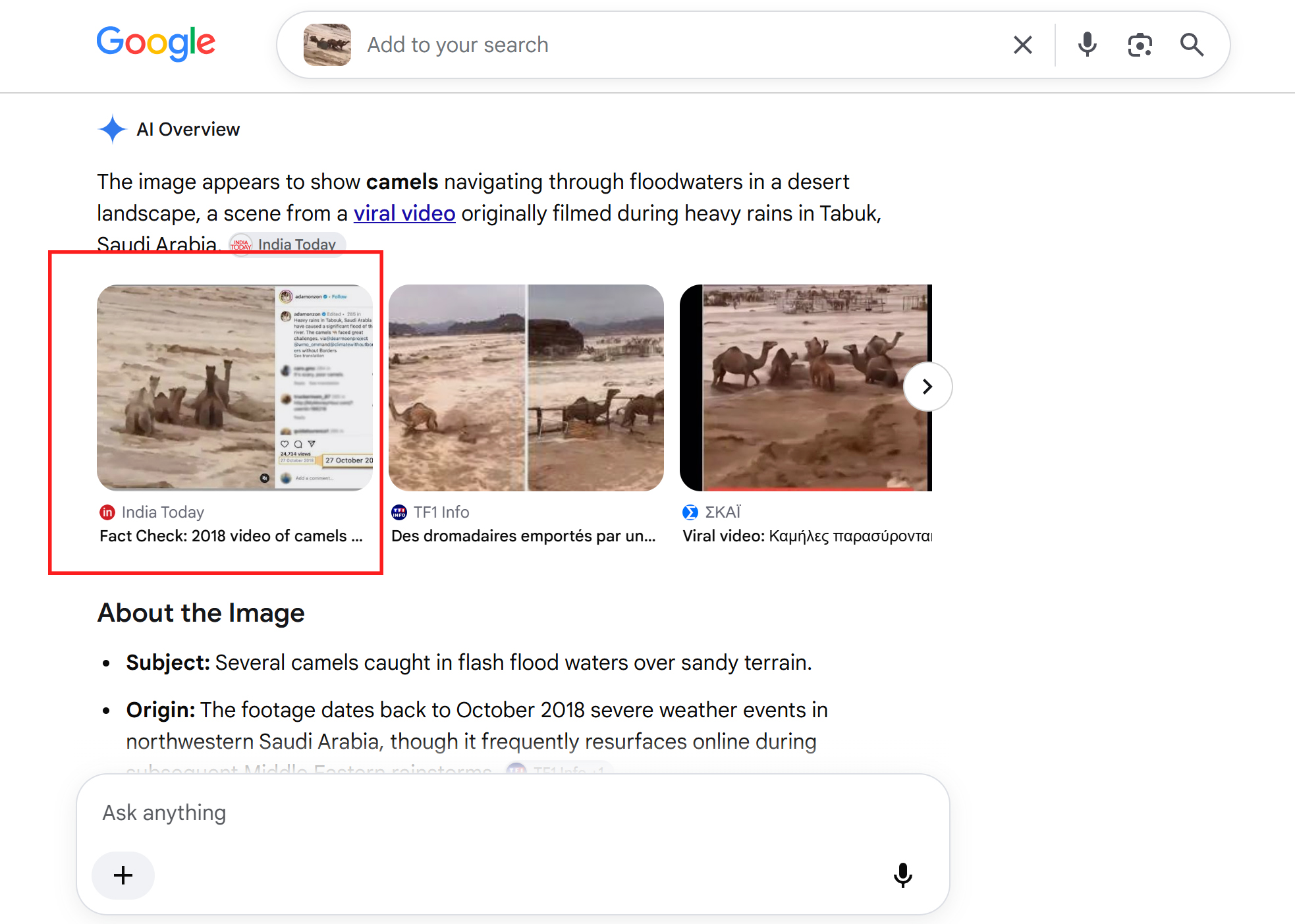
Google Lens search results.
Further searches through Google Fact Check Explorer found several independent fact-checking organisations, including Full Fact and Factly, had previously investigated the footage and reached the same conclusion: it showed flooding in Saudi Arabia in 2018.
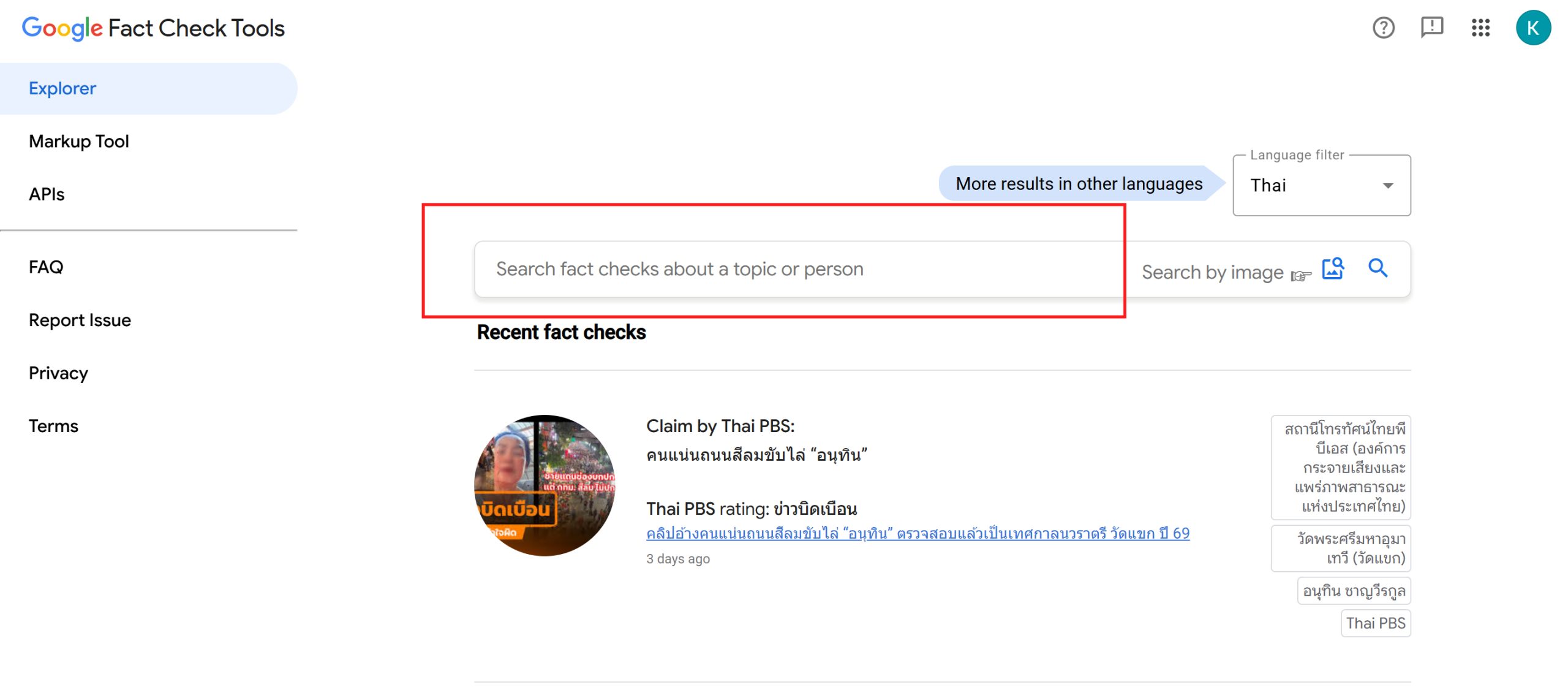
Google Fact Check Explorer search tool.
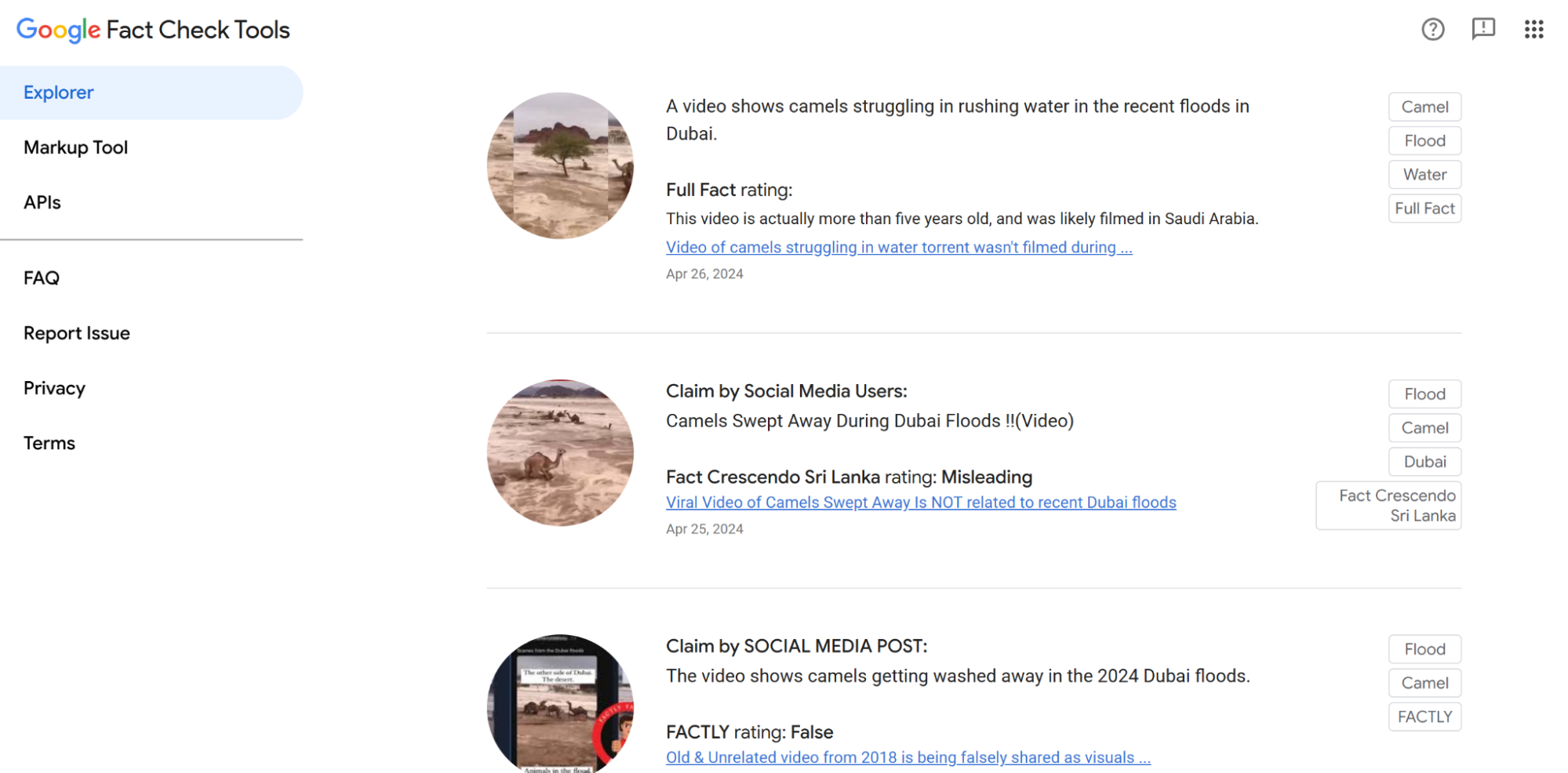
Results from Google Fact Check Explorer.
Additional Google Lens searches located reports published on Oct 26, 2018, stating that the incident occurred in Tabuk, Saudi Arabia.
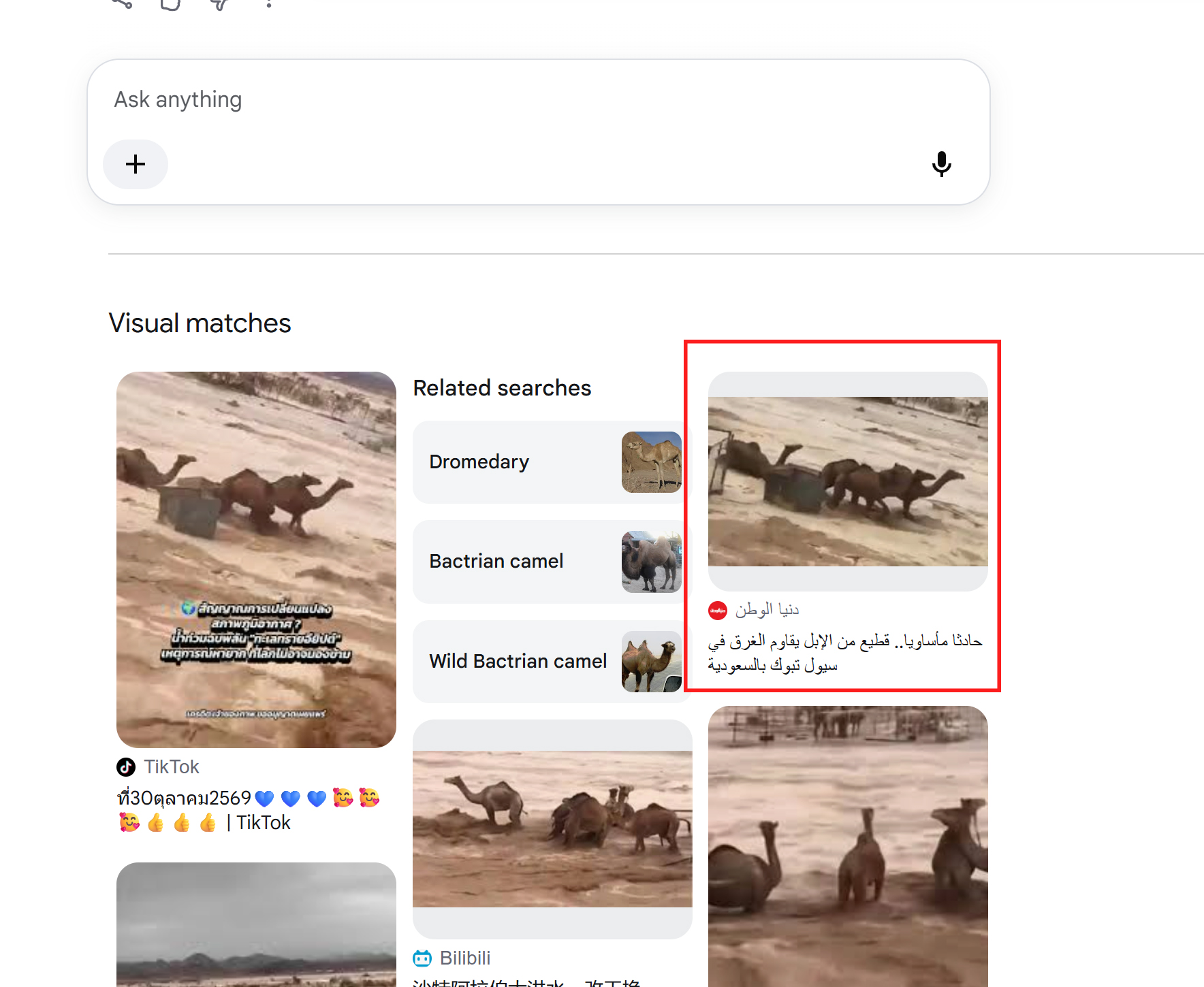
Google Lens search results.
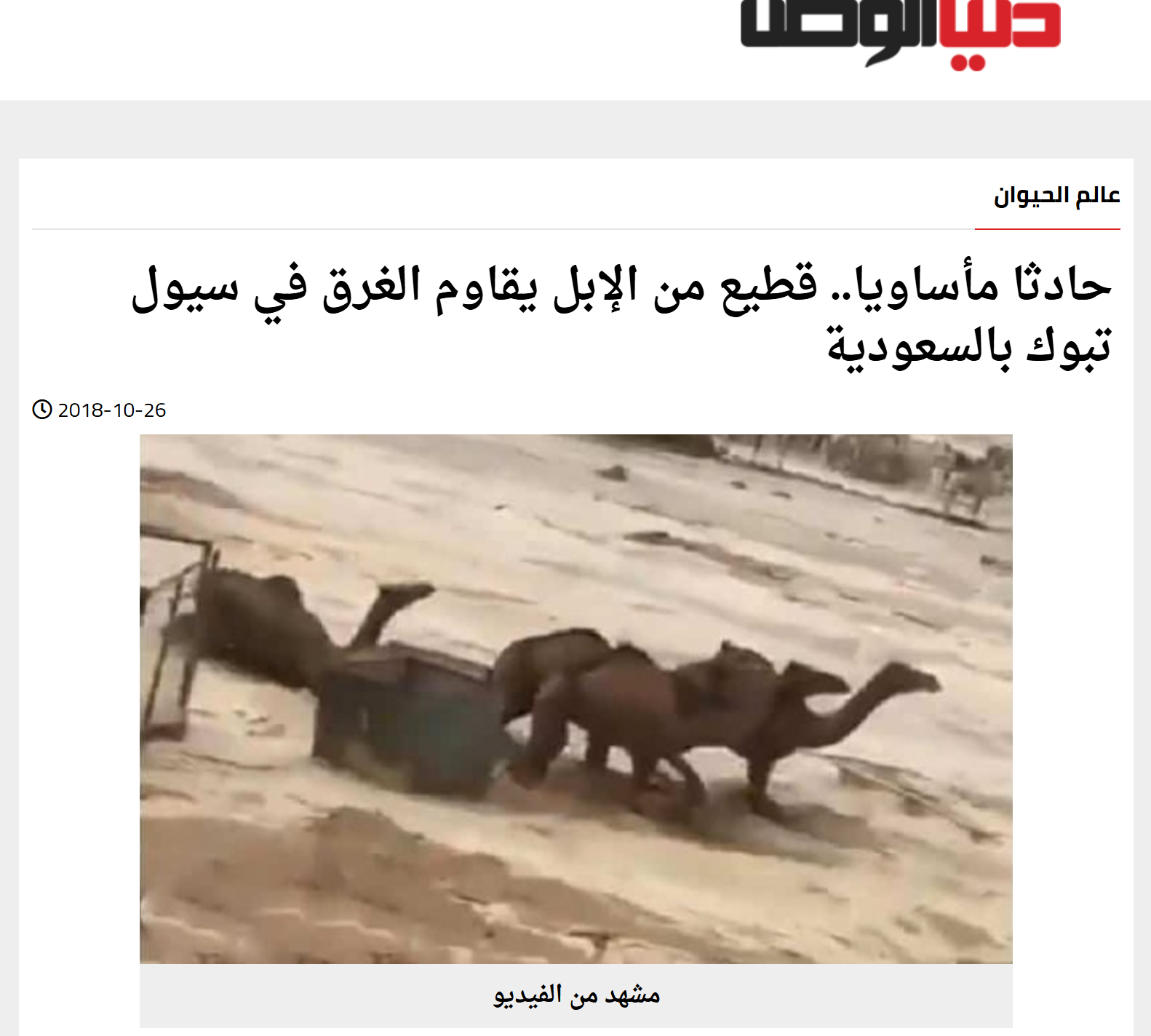
Reports published on Oct 27, 2018, also stated that local authorities and air force units rescued 49 people stranded in valleys after flash floods triggered by heavy rain swept through the Tabuk region.
Did the footage originate in Saudi Arabia?
Using keywords related to flooding and camels in Saudi Arabia in 2018, Thai PBS Verify found matching videos on YouTube posted by three separate channels:
- January December, published on Oct 26, 2018, describing a herd of camels swept away by floodwaters in Tabuk on Oct 25, 2018.
- Salah Sayad, published on Nov 27, 2018, describing camels caught in flash floods in Tabuk.
- Sada News, published on Oct 26, 2018, with a description stating that flash floods had swept away vehicles and camels in Tabuk.
A comparison between footage shared by Daily News and the video uploaded by January December showed identical landscape features, camera angles and surrounding terrain, all indicating the footage originated in Tabuk.
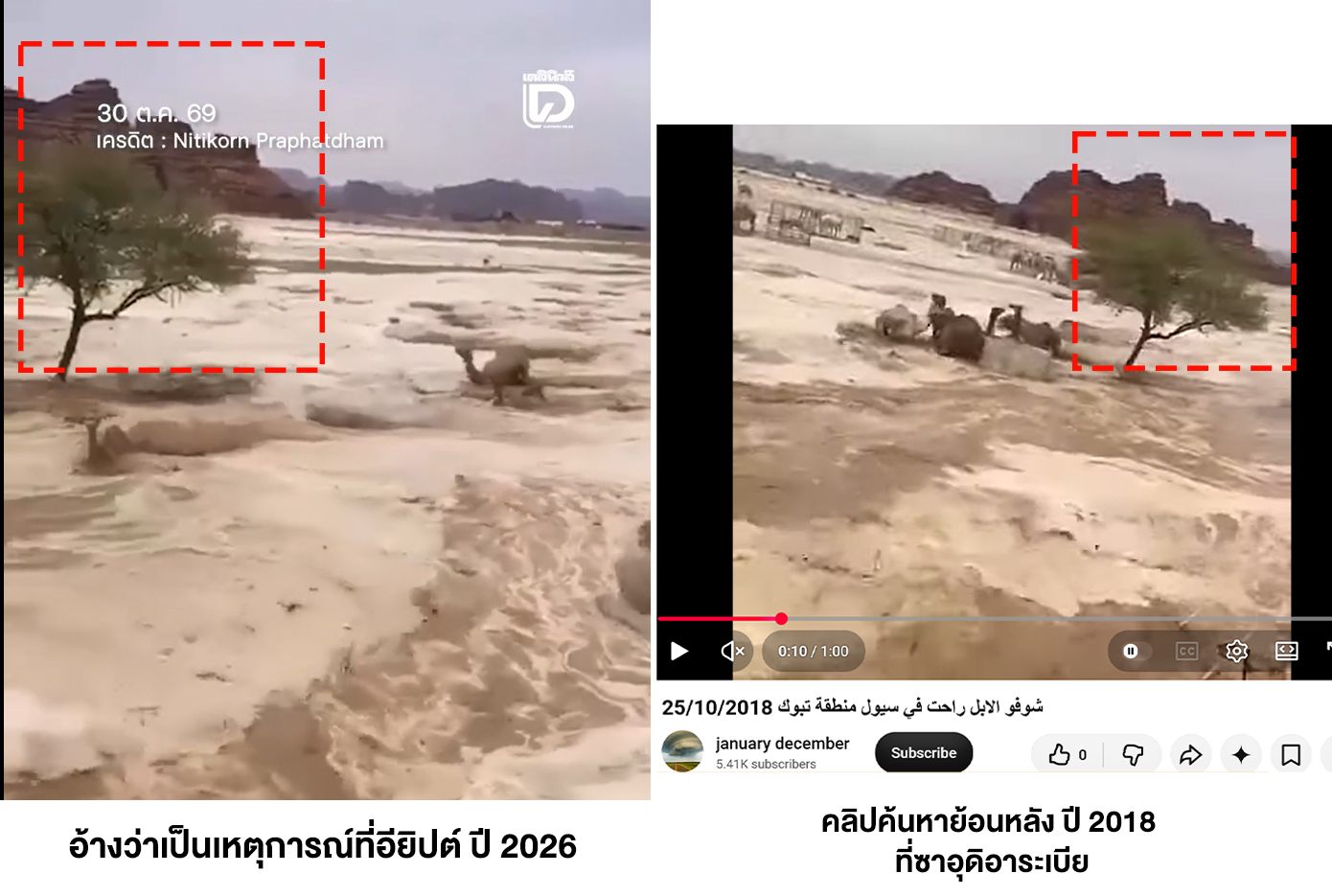
Comparison of mountain formations and vegetation between the two videos.
Investigators also found another recording of the same incident from a different angle, uploaded by Sada News on Oct 26, 2018. The mountains and surrounding landscape closely matched those seen in the clip under review.
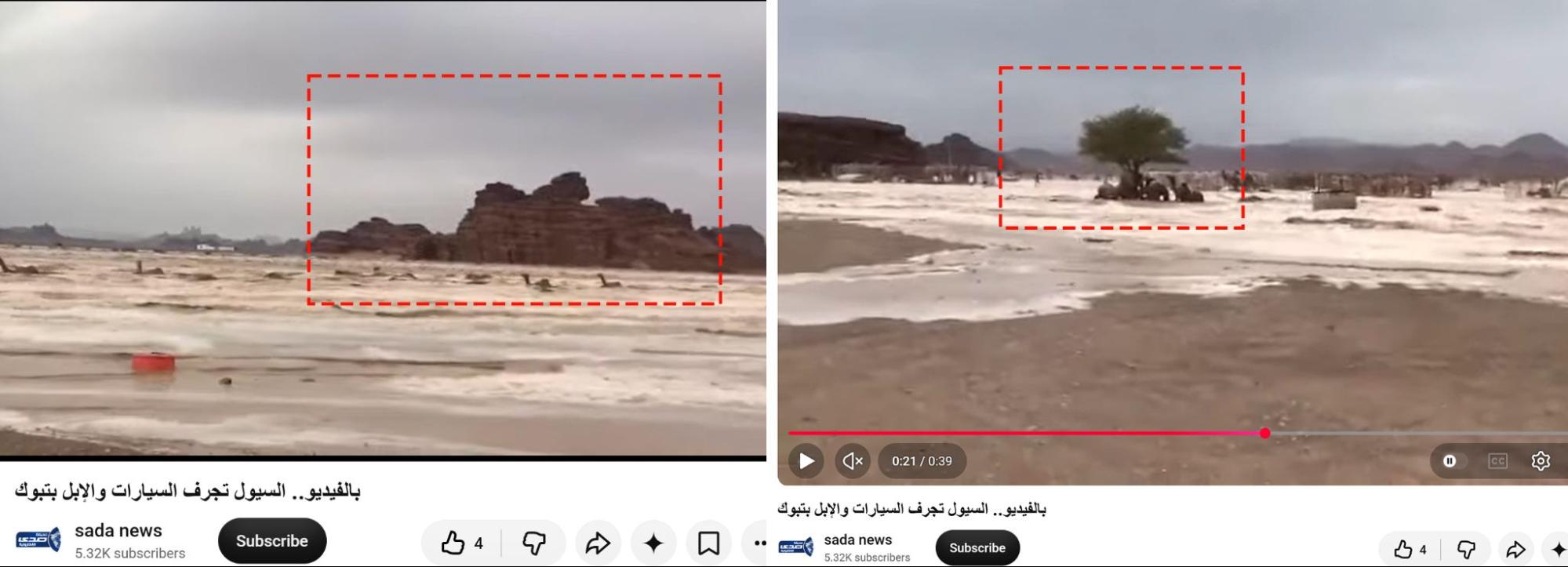
Video recorded from another angle and published by Sada News, identifying the location as Tabuk.
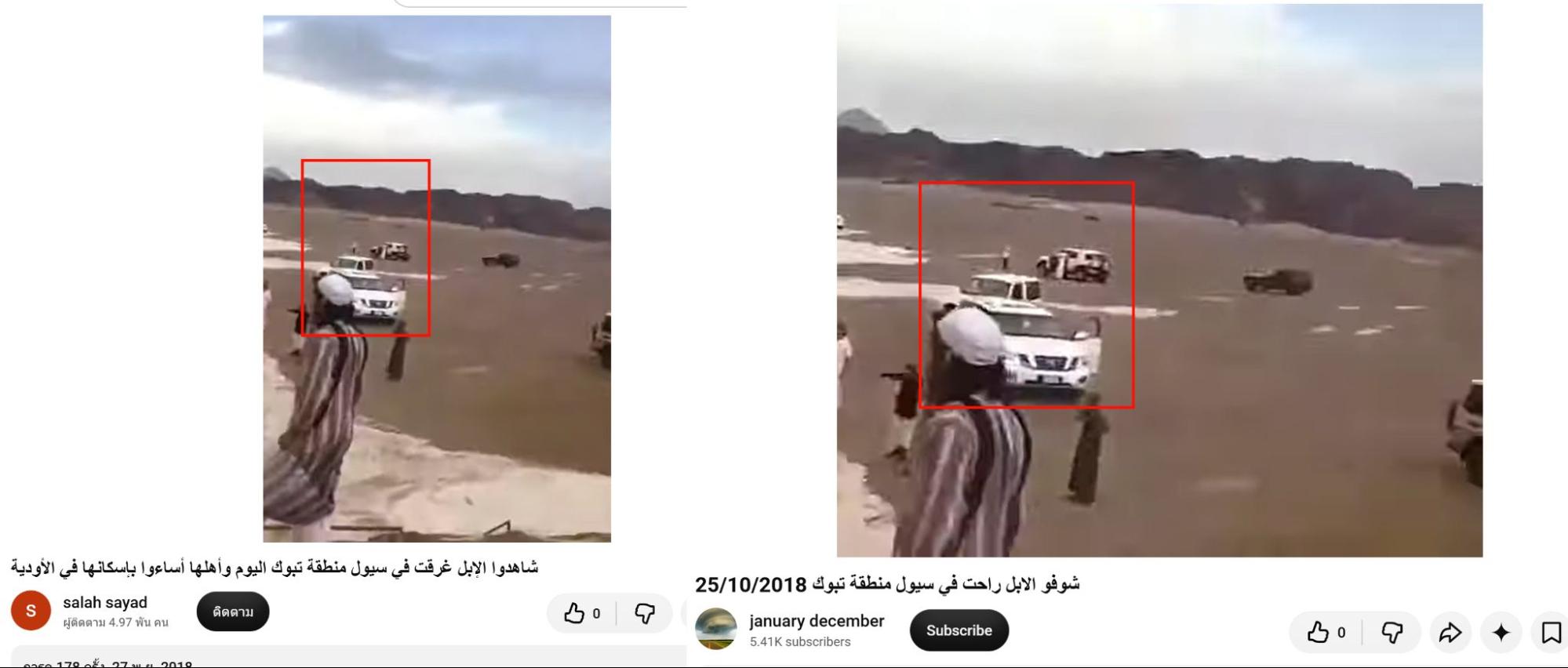
Comparison confirming that clips from Salah Sayad and January December depict the same incident.
When all three videos were compared, the landscape and environmental features were consistent, reinforcing findings that the footage showed camels swept away during flash floods in Tabuk, Saudi Arabia.
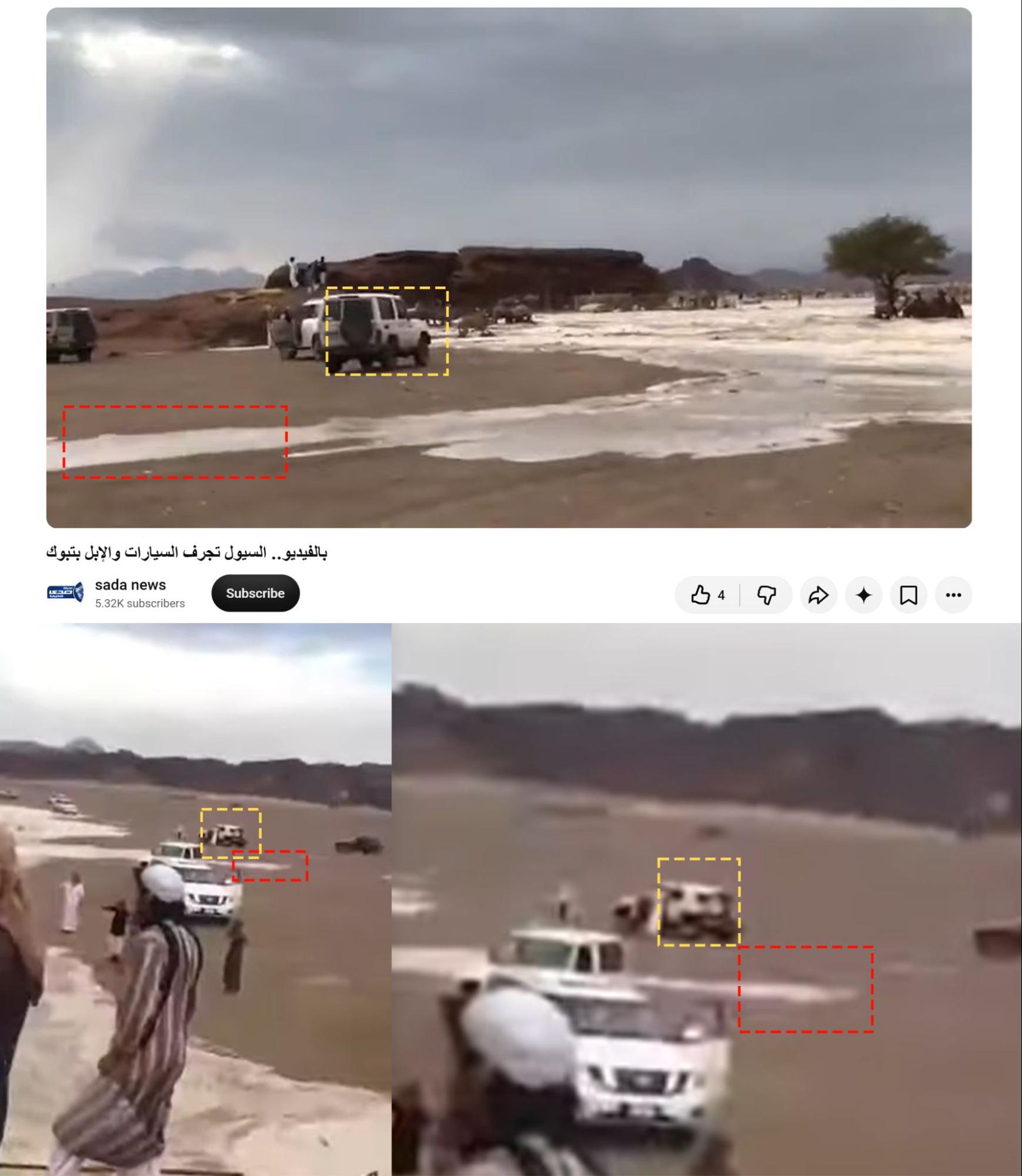
Comparison of three videos identifying the location as Saudi Arabia.
What are the facts?
The video does not show flooding in Egypt as claimed in social media posts.
Instead, it depicts a flash flood that occurred in Tabuk, Saudi Arabia, on Oct 25, 2018. Videos of the same incident have been publicly available on YouTube since October 2018, and all consistently identify the location as Tabuk.
Contemporaneous news reports also confirmed that heavy rainfall and flash flooding struck the region during that period, prompting emergency rescue operations for dozens of stranded residents.
Verification Process
- Thai PBS Verify extracted keyframes from the video using the InVID-WeVerify tool and conducted a reverse image search with Google Lens. The search led to a fact-check report published by India Today on April 19, 2024, which had previously examined the same footage after it was falsely claimed to show flooding in Dubai, United Arab Emirates. The investigation concluded that the incident had actually occurred in Saudi Arabia.
- Further searches using Google Fact Check Explorer found that several fact-checking organisations, including Full Fact and Factly, had previously reviewed the camel herd footage and similarly identified it as showing flash flooding in Saudi Arabia in 2018.
- Additional reporting related to the incident in Tabuk showed that flash floods struck the area on Oct 26, 2018. A separate report published on Oct 27, 2018, said authorities rescued 49 people stranded in valleys after heavy rainfall triggered flooding across the region.
- Using keywords related to flooding and camel herds in Tabuk, researchers found videos on YouTube uploaded by the channels January December, Salah Sayad and Sada News in October 2018. All three identified the location as Tabuk, Saudi Arabia.
- A comparison between the footage under review and videos published by the three YouTube channels showed matching camera angles, terrain features and surrounding landscape. The findings confirm that the clip depicts flash flooding in Tabuk, Saudi Arabia, and not flooding in Egypt as claimed.
Impact of the misinformation
- The misleading claim distorts both the location and timing of the event, leading viewers to believe a recent flood occurred in Egypt when the footage is actually eight years old.
- It may also create misconceptions about ongoing disaster situations by presenting archival footage as a current emergency.
- Images of animals struggling in floodwaters can provoke strong emotional reactions and heighten public anxiety, particularly when accompanied by claims of global environmental crises.
- Using footage from a different country and time period can further confuse public understanding of actual natural disasters and undermine trust in online information.
- Repeated circulation of mislabelled content may also reduce confidence in legitimate disaster reporting, even when accurate information is available.
What to do with this misinformation?
- Check when and where a video was first published before assuming it depicts a recent event.
- Use reverse image search tools such as Google Lens to determine whether the footage has appeared online previously.
- Extract keyframes from videos using verification tools such as InVID-WeVerify and search for matching sources.
- Compare claims against reports from multiple credible news organisations and official agencies, paying attention to dates, locations and details.
- Avoid sharing disaster footage until its authenticity and context have been independently verified, especially when the content could cause public alarm.

Popular Content