Thai PBS Verify uncovers fake Facebook ads claiming “Suthichai Yoon” clashed with ex–Bank of Thailand governor — actually an investment scam
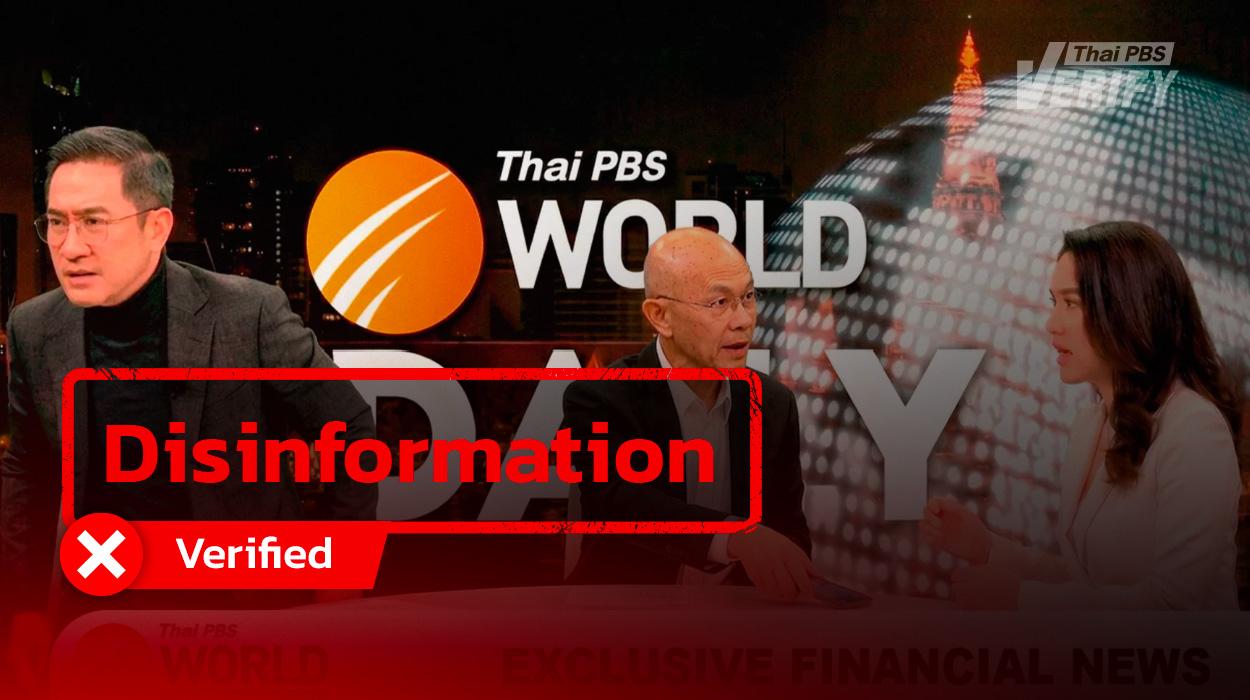
Thai PBS Verify traced the source of this disinformation back to: Facebook
Thai PBS Verify discovered Facebook ads under the name “Horizon News” showing images of well‑known host, Suthichai Yoon, appearing to argue with Dr. Sethaput Suthiwartnarueput, Privy Councilor and former Governor of the Bank of Thailand. But when clicking on the ad, the website appears to mimic the look of a legitimate news outlet — resembling the Bangkok Post. The fabricated story carried the headline:
You are robbing Thai families!” — the program on Thai PBS ended in a scandal: the head of the Bank of Thailand left the studio in a rage
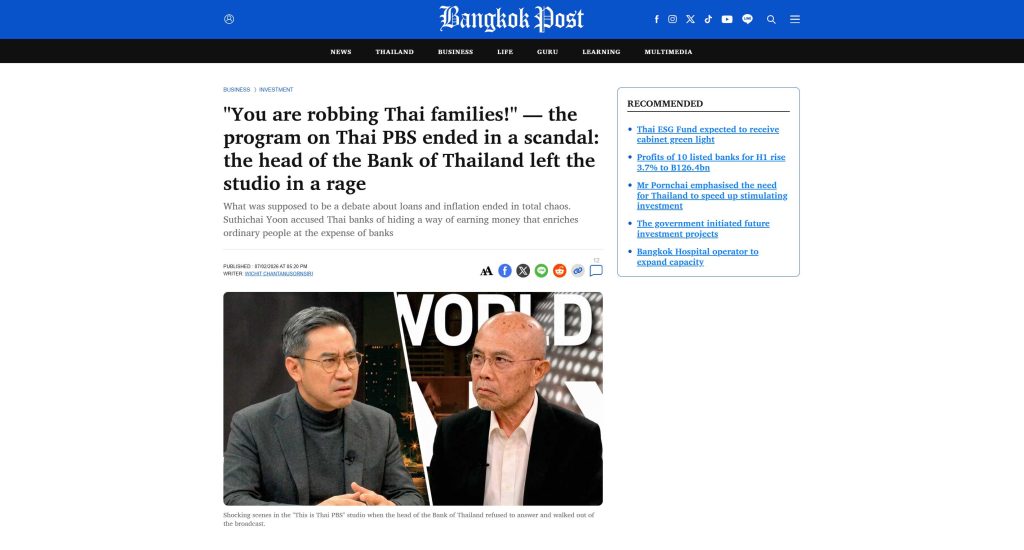
Fake site impersonates the Bangkok Post
Is the program real?
Thai PBS Verify examined the content of the alleged news story, which claimed to have been published on 7 February 2026. The fabricated report summarized that:
During the program “This is Thai PBS” (hosted by Nattha Komolvadhin), chaos broke out when well‑known journalist Suthichai Yoon engaged in a heated argument with Dr. Sethaput Suthiwartnarueput, Governor of the Bank of Thailand, over household debt and interest rates. The story alleged that the governor became furious, removed his microphone, and walked out of the studio in the middle of the live broadcast.

Image from the fake website
In the fabricated conversation, Suthichai Yoon was falsely portrayed as exposing a secret allegedly hidden by the banks. He was said to recommend an AI‑powered automatic trading system called Flux Vexaris, which supposedly could turn an initial investment of 6,500 baht into a monthly income of 250,000 baht with ease, without risk, and ultimately strip banks of their power.
The fabricated story also introduced a character named “Somchai,” a 42‑year‑old Bangkok resident who was said to have once been in debt. According to the false claims, he managed to clear his credit card debt within two weeks and now withdraws hundreds of thousands of baht into his Bangkok Bank account every month, supposedly from a minimum investment of just 6,500 baht.

Image claiming to show a successful investor
The fabricated article also attempted to create expert confirmation by quoting and misusing the names of academics and economists—for example, Dr. Kirida Bhaopichitr, Assistant Minister at the Ministry of Commerce—to endorse the claim that this AI system could truly generate income and was mathematically precise.
At the conclusion, readers were urged to click a registration link, where they were asked to provide their name, email, and phone number. Afterward, a so‑called “personal advisor” would call to pressure them into transferring an initial investment of at least 6,500 baht. The article even imposed artificial urgency (limiting membership to 20 people per day and claiming registration would close by 4 July 2026) to push victims into making quick decisions.
Are the images genuine?
Thai PBS Verify took the images from the fraudulent website and ran them through Hive Moderation’s AI‑image detection tool. The results showed a 99.8% likelihood that the images were AI‑generated, confirming they were fake visuals created by AI.
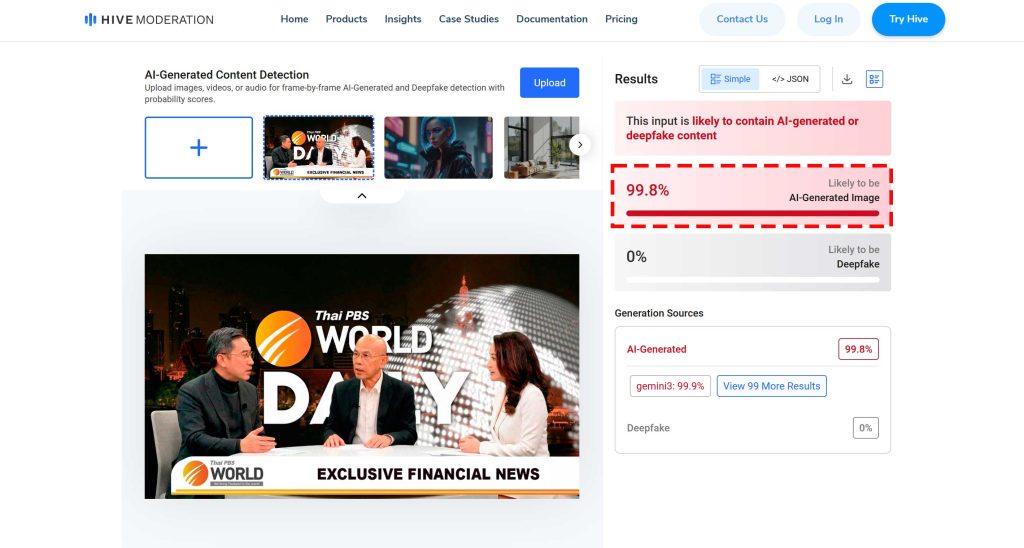
Image found to be AI‑generated
Was there ever a real interview between the two?
A keyword search confirms that Thai PBS World did in fact publish a special interview between Suthichai Yoon and Dr. Sethaput Suthiwartnarueput on 2 March 2024. The genuine program focused on substantive economic issues, including:
- Interest rate policy
Discussing the reasons behind the Bank of Thailand’s monetary policy decisions amid the prevailing economic conditions at that time.
- Thailand’s economic growth
Analyzing the overall structure of the Thai economy, GDP figures, and the challenges of driving sustainable growth.
- Policy tensions
Exploring the perspectives and stance of the Bank of Thailand as an independent institution amid government pressure and differing views on economic stimulus measures
When the genuine interview clip is compared with the fabricated article, it becomes clear that the program contained no heated arguments and no refusal to continue the discussion. Moreover, the studio setting in the authentic broadcast is visibly different from the scenes depicted in the fake version.
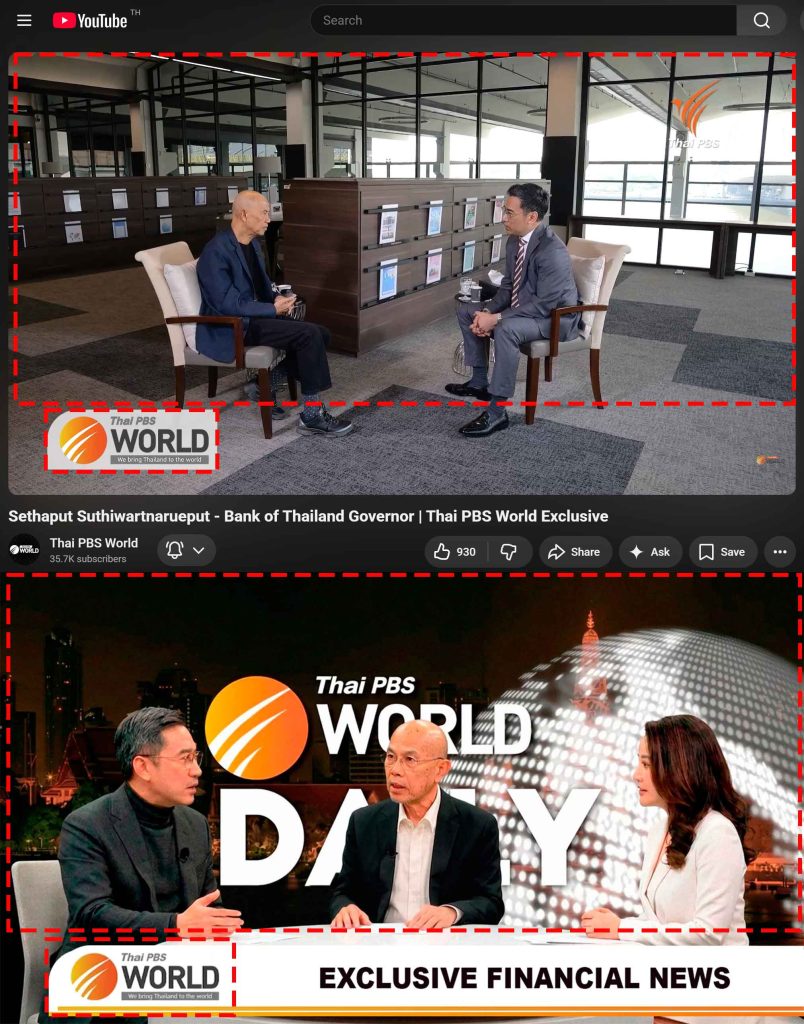
Authentic interview footage (top) compared with the fake website (bottom)
Authentic Interview Clip
Thai PBS World confirmed that there has never been any interview about investment platforms.
Claire Pachimanon, Director of the Thai PBS World Center, told Thai PBS Verify that programs titled “World Daily” or other names shown in the fake footage have never existed in Thai PBS World’s schedule. The logo and typography used in the fabricated clip were imitations, with proportions and layout clearly different from the genuine Thai PBS logo.
The images and visual elements in the fake clip were clearly manipulated and generated using AI.
Regarding the host and interview format, Thai PBS World also confirmed that Suthichai Yoon is not a regular presenter for the channel, and the station has never conducted studio interviews in the manner depicted in the fake video.
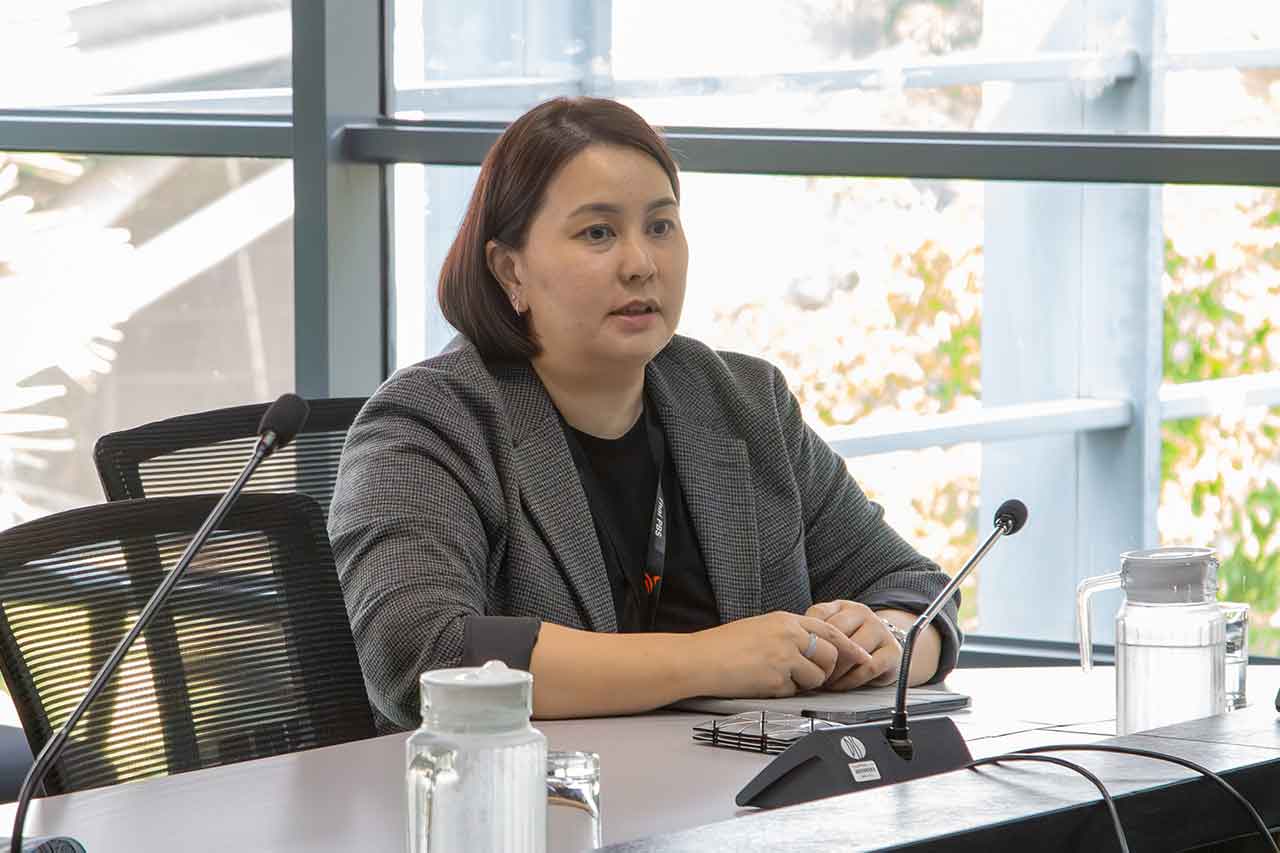
Claire Pachimanon, Director of the Thai PBS World Center
However, it is believed that the fake clip was created by repurposing an older program in which Suthichai Yoon had conducted a field interview with a former Governor of the Bank of Thailand. That genuine video, previously published on the station’s YouTube channel, appears to have been used as the template by malicious actors to fabricate the counterfeit footage.
เรื่องจริงเป็นอย่างไร ?
What is the truth?
- fake news and scam website: The page, which mimicked the appearance of the Bangkok Post, along with the entire interview content, was fabricated by fraudsters as a tool to deceive the public.
- No such investment system as Flux Vexaris: The platform’s claim that an initial investment of 6,500 baht could grow into 250,000 baht per month was nothing more than a call‑center scam. Victims were pressured to submit personal details (name, email, phone number), after which impostors would call to coerce them into transferring money. The scheme also used artificial urgency (deadline of 4 July 2026) to heighten fear of missing out.
- Misuse of names and media outlets: Fraudsters appropriated the images and names of Suthichai Yoon, Dr. Sethaput Suthiwartnarueput, Nattha Komolwatin, and Dr. Kirida Bhaopichitr, fabricating conversations and endorsements without any of these individuals’ knowledge or involvement.
Verification Process
1. AI detection of images
The team submitted the promotional photo—which falsely claimed the two figures were arguing in a studio—to Hive Moderation, a leading AI‑image detection tool. The results were conclusive that the image was 99.8% AI‑generated, indicating it was a synthetic deepfake rather than a genuine photograph.
2. Comparison with authentic footage
Further investigation revealed that both individuals had indeed appeared together in a Thai PBS World interview on 2 March 2024, hosted by Suthichai Yoon (conducted entirely in English). The authentic program focused on interest‑rate policy, GDP structure, and the Bank of Thailand’s independence. In reality, there were no heated arguments, no mention of investment apps, and no storming out of the studio. The discussion ended smoothly and professionally. Fraudsters simply extracted this old clip and used it as a template for AI training and manipulation to fabricate the fake video.
- Confirmation from Thai PBS World management
Claire Pachimanon, Director of the Thai PBS World Center, publicly clarified three key points:
- No program titled “World Daily” (or any other names shown in the fake images) has ever existed in Thai PBS World’s schedule.
- The logo and font used by the fraudsters were imitations, with distorted proportions and layout completely different from the station’s authentic branding.
- Suthichai Yoon is not a regular host of the station, and Thai PBS World has never conducted studio interviews in the manner depicted in the fabricated footage.
Impact of this false information
- Severe financial damage:
- The scam specifically targeted low‑income groups and people struggling with debt, exploiting the credibility of a former Bank of Thailand governor and other respected figures. Anyone persuaded to transfer the minimum investment of 6,500 baht would lose the money immediately and risk having their personal data (name, email, phone number) misused by call‑center gangs for further fraud.
- Undermining trust in media and public institutions: By misusing the Thai PBS World logo and imitating the Bangkok Post’s style, the fraudsters created fake websites that confused the public and distorted perceptions of legitimate news. This also caused serious reputational harm to former senior officials of the central bank.
What to do with this misinformation?
- Always check the website URL: Even if a page looks identical to the Bangkok Post, examine the address bar carefully. Fraudsters cannot use the genuine domain name of the news outlet; instead, they typically rely on odd strings of numbers or unusual English letters mixed together.
- Beware of “too‑easy wealth” claims: Any investment pitch promising hundreds of thousands of baht per month through AI, with no risk and only a small starting sum, should be immediately flagged as a “pyramid scheme or outright fraud.”
- Verify news through official channels: If you see reports of heated disputes involving national figures, cross‑check directly with the official, verified pages (marked with a blue check) of the relevant news organization.
- Do not provide personal data, do not transfer money, and report suspicious content: Never enter your name or phone number into suspicious forms. If you encounter such ads on Facebook, report them as spam or scams immediately, or forward the link to Thai PBS Verify so the team can help screen and protect the wider community.


Related Content