Viral photo of Thai rescuers with Laos cave survivors found to be AI-generated
In reality, the latest update on the genuine rescue operation confirms that five survivors have been safely evacuated from the cave, while search teams continue their urgent efforts to locate the remaining two individuals.
Thai PBS Verify found the fake image on: Threads
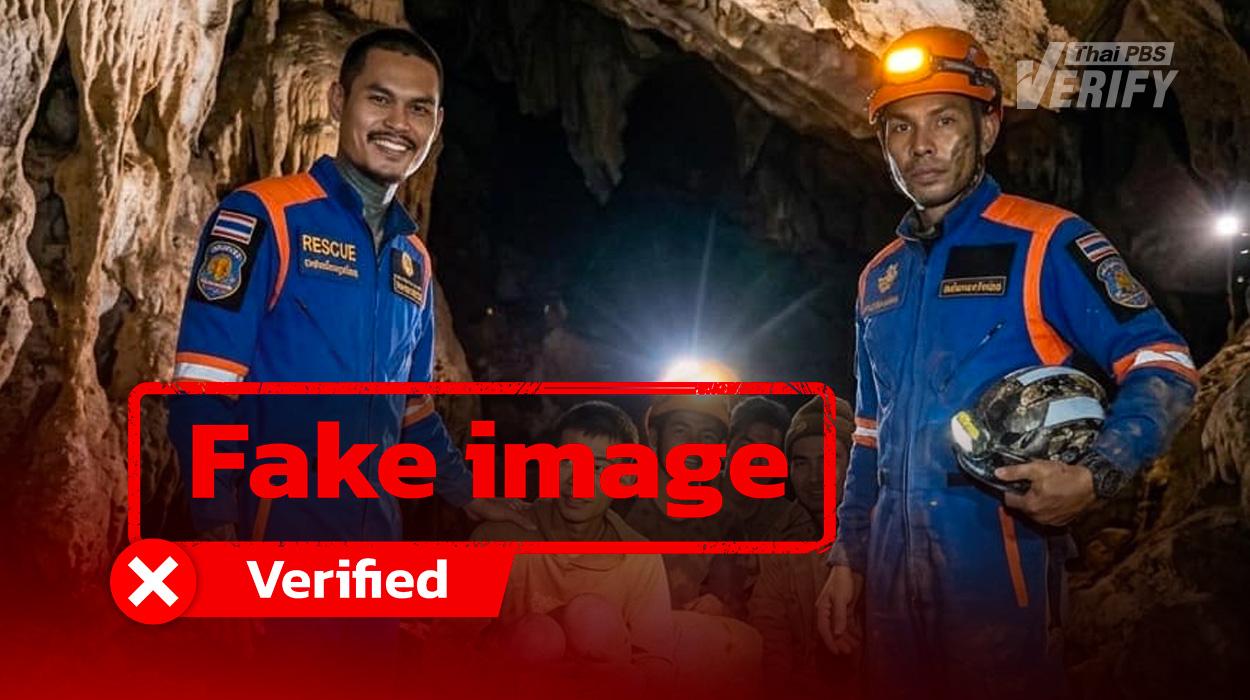
The post in question claims to depict rescuers helping Laos survivors trapped in a cave by flash floods since May 19, 2026, as the latter were exploring for gold. Accompanying the post is an image allegedly showing rescue personnel posing alongside the survivors.
The caption in Thai could be translated as: “A joint operation between Thai rescue teams and international cave diving and exploration experts successfully located and rescued five Laotian nationals, with two individuals still remaining. This professional and highly successful mission deserves the utmost praise. We are absolutely thrilled by this outcome.”
Published on May 27, 2026, the post has amassed over 7,890 views so far.
The image in question is in fact “fake”
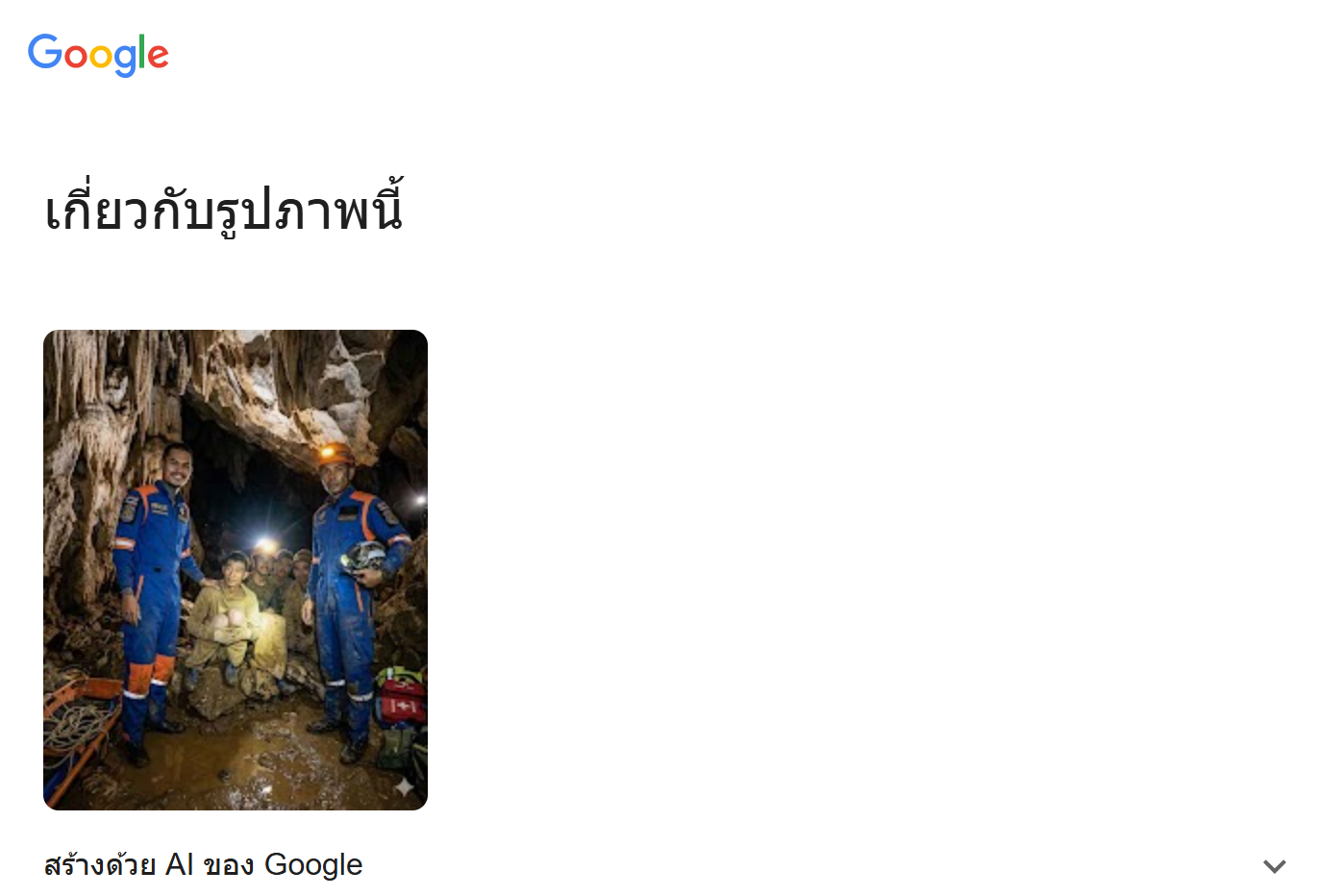
No evidence was found that this photo had previously appeared in any media or on any website. Additionally, Google’s “About this image” section reveals that the picture was AI-generated.
Furthermore, further verification on Hive Moderation revealed a 99.9-percent likelihood that the image is an AI creation.
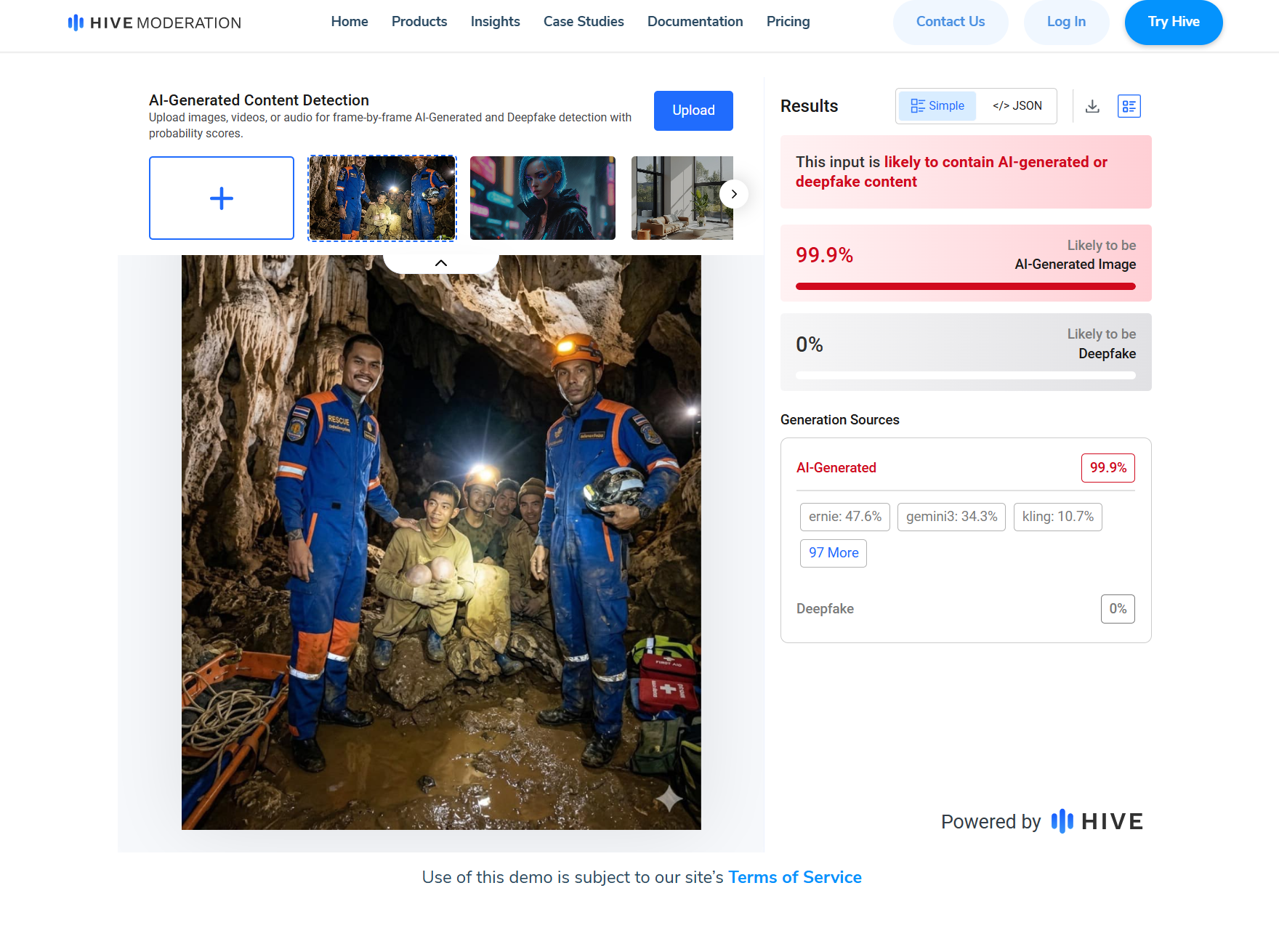
Verification results from the Hive Moderation AI detection tool.
Moreover, the presence of a Gemini watermark at the bottom of the image provides clear evidence of its AI-generated origin.
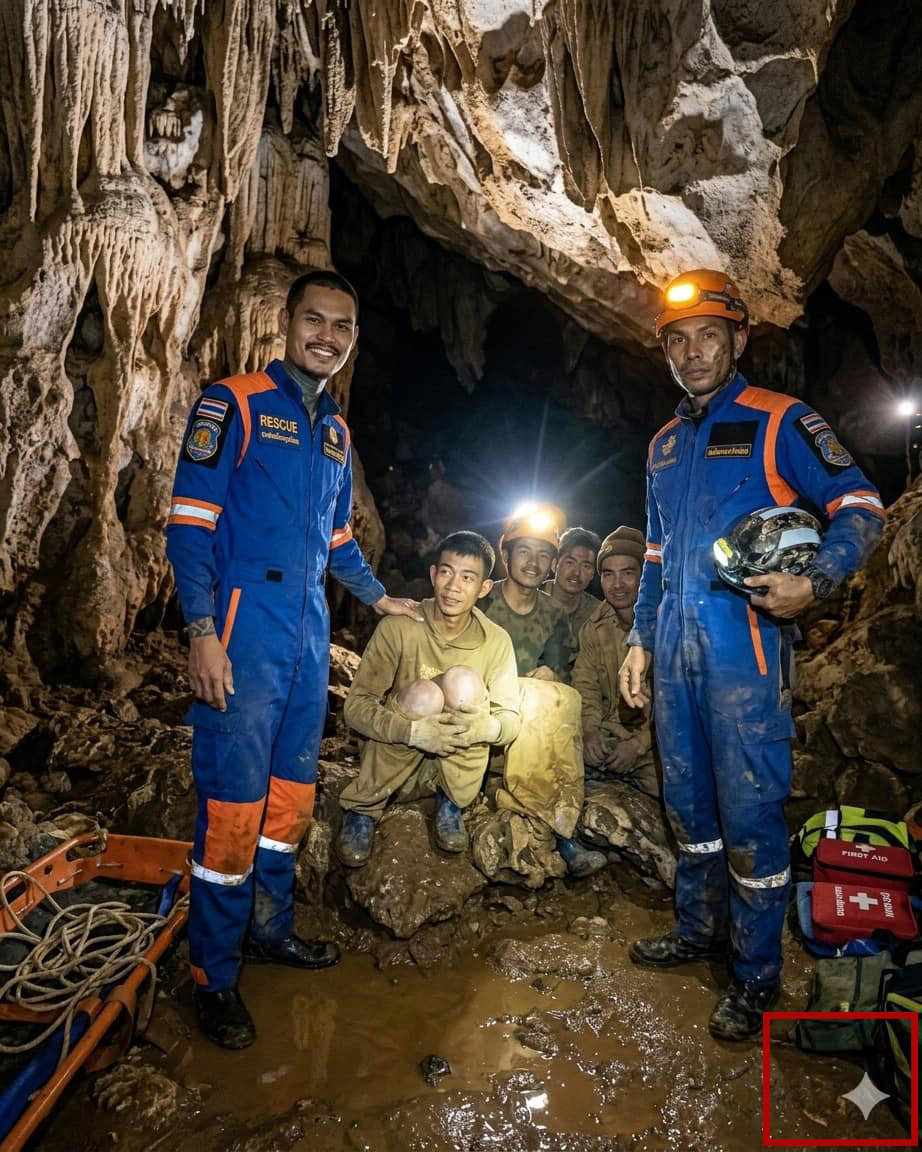
The Gemini watermark appears at the bottom of the image in question.
Thai media reports state that the cave divers who found the five Laotian survivors are Norassed Palasing of Thailand and Mikko Pietari Paasi of Finland.
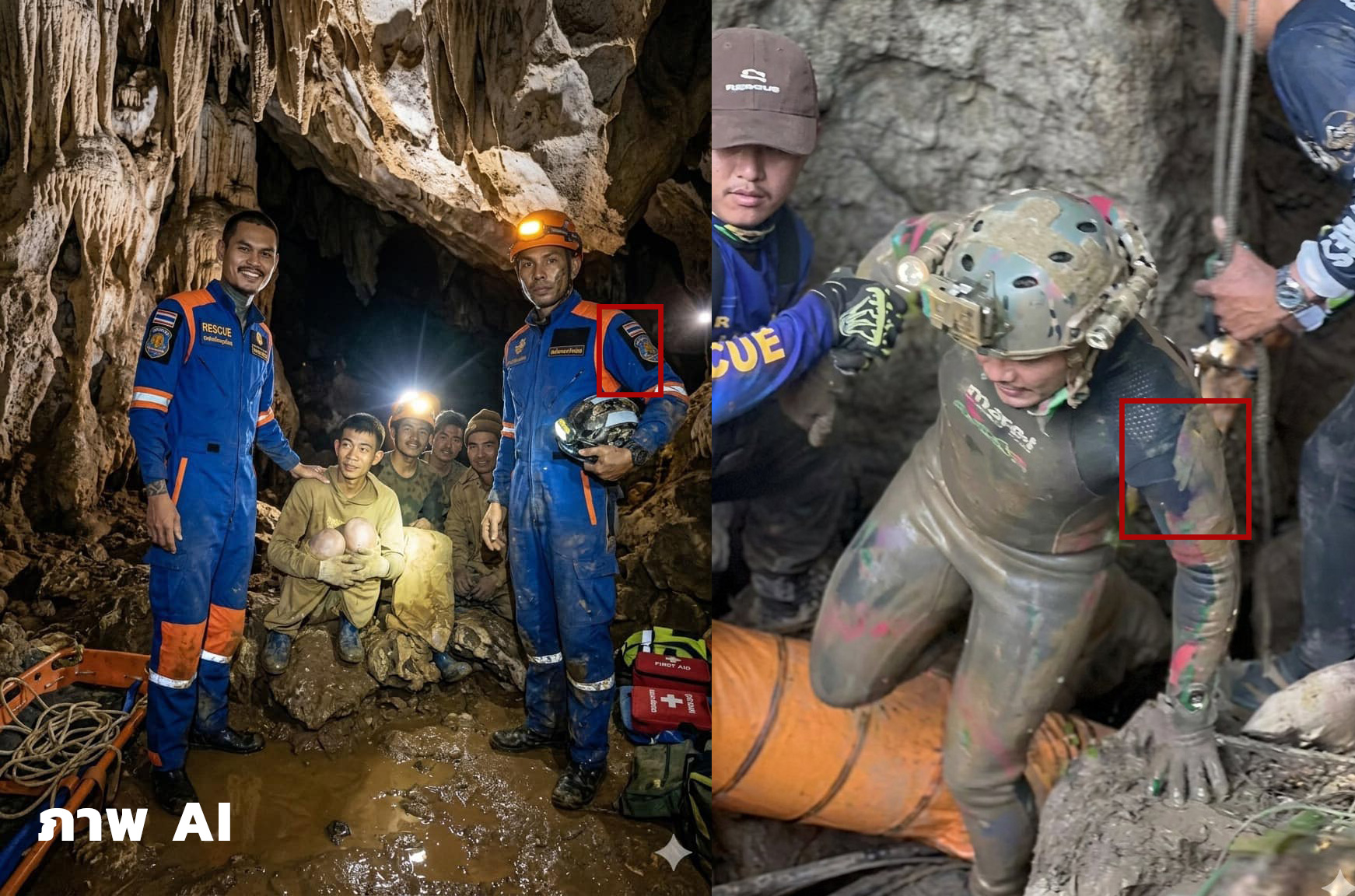
A Comparison between the AI-generated image (left) and the genuine photo featuring Mr. Norased Palasing, a rescue diver. (Photo: Thailand Rescue Diver).
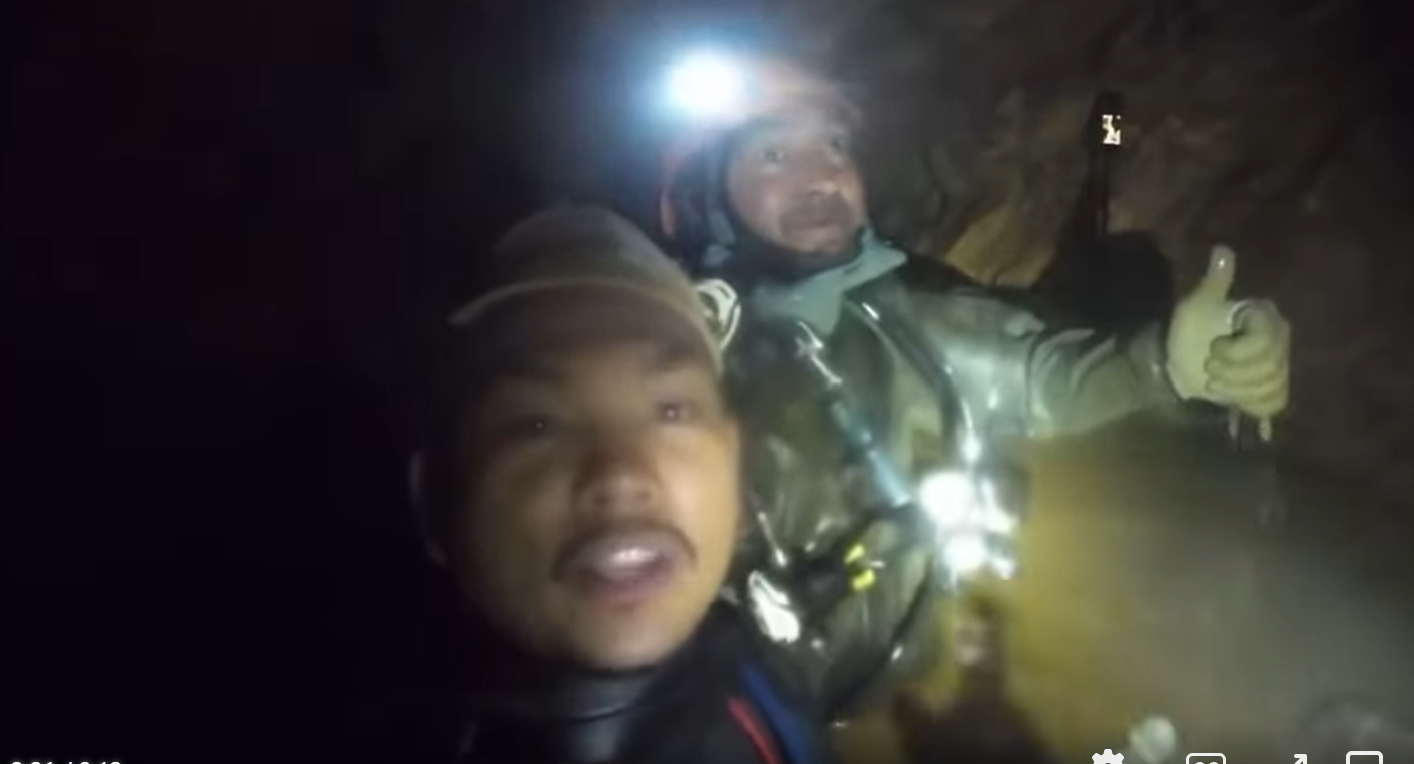
The moment where Mr. Norassed Palasing and Mr. Mikko Pietari Paasi found the cave survivors (Photo: Thailand Rescue Diver).
What is the progress on the rescue operation for the Laotian cave survivors?
According to the latest report from Thai PBS regarding the rescue operation in the mining cave, five Laotian survivors have now been saved. Rescue workers successfully brought out the first individual on May 29, 2026, at 8:30 PM, followed by four more on May 30, 2026. Efforts are currently underway to locate the remaining two individuals.
Providing background on the incident, Thai PBS stated that seven Laotian individuals were trapped inside a cave in Long Cheng, Xaisomboun province, after flash floods caused by heavy rain cut off their gold exploration trip on May 19. The Laotian government requested assistance from Thai rescue teams for the operation. To aid the search, officials have recently set up a LAN and internet connection inside the cave, allowing teams to transmit real-time photos and videos.
In another report released on May 29, 2026, Thai PBS noted that despite locating the five survivors, rescue teams were still unable to bring them out of the cave. Meanwhile, the search for the other two missing individuals continued as they had not yet been found.
“Rescue officials revealed that the evacuation route requires traversing a waterway, which includes a section submerged under 3 meters of water spanning a distance of 27 to 30 meters. Upon assessment, officials determined that it is virtually impossible to have the five survivors wear individual diving gear and dive through the current, as they completely lack advanced cave diving skills and expertise.
“In terms of the search efforts for the final two missing individuals, a preliminary inquiry with the five rescued survivors revealed that they were unable to provide the precise locations of their two remaining colleagues.”
Authentic footage: Moment where five survivors were located inside the cave.
Meanwhile, a BBC report noted that footage from a GoPro camera attached to one of the divers captured the emotional moment the five survivors burst into tears upon seeing the two divers. They were seen sitting on a rock formation above the floodwaters, with their headlamps illuminating the darkness. In the video, a voice can be heard asking, “How many of you are there?” to which a man replies, “Five.”
What is the truth?
The post claiming to show Thai rescuers assisting Laos cave survivors does not feature real imagery from the actual event. Investigations via Google Lens, Hive Moderation’s AI detection tool, and the discovery of a Gemini watermark all indicate that the image was AI-generated.
Verification Process
- Verification via Google Lens: A reverse image search yielded no records of this photo ever being published by any media outlet or website. Furthermore, Google’s “About this image” feature explicitly indicates that the image was AI-generated.
- AI detection assessment: An analysis conducted through the AI detection platform Hive Moderation concluded with 99.9-percent certainty that the image in question was AI-generated. Moreover, the presence of a Gemini watermark at the bottom of the image provides clear evidence of its AI-generated origin.
Potential impacts of the fake photo
- Misleading the public about the real rescue operation: AI-generated photos may cause people to falsely assume that the rescue mission is already finished or further along than reality.
- Impacting information reliability in times of crisis: Sharing fake images and news during a real crisis can leave followers confused and struggling to separate fact from false claims. This ultimately damages confidence in the reports provided by genuine media and response agencies.
- Increasing the risk of widespread misinformation sharing: Realistic images tied to high-interest public events are highly susceptible to rapid sharing, as audiences often mistake them for actual evidence without verifying the source.
- Impacting perceptions of the rescue mission and involved parties: Sharing photos or updates that do not match reality can cause the public to miscalculate the progress, success, or difficulties of the rescue mission. This creates an inaccurate picture of what real ground teams are dealing with.
- Reflecting the challenges of using AI-generated imagery in breaking news: This case demonstrates how AI-generated images can be seamlessly integrated into claims about real-world events. Consequently, verifying the imagery, its origins, and the supporting information has become a critical step before believing or sharing any content.
What to do with this misinformation?
- Avoid believing or sharing based solely on images: Images that appear authentic might not be from the real event. Particularly in breaking news situations or highly publicized rescue operations, you should check if the photo comes from a reliable source or has been released by official media and involved organizations.
- Verify data against various credible sources: For major incidents or emergency situations, you should cross-reference updates with reports from leading news outlets, government bodies, or on-ground organizations. This helps check if the details match, including the casualty or survivor count, operation updates, or authentic event photos.
- Utilize image verification tools for suspicious content: When a post seems doubtful, you can use tools like Google Lens to check its background and see if the photo has been used on other sites or news updates. It is also helpful to look for clues like watermarks, glitches, or visual patterns that suggest it is an AI creation.
- Beware of emotional or exaggerated content: Posts designed to excite, touch people’s emotions, or quickly wrap up a success story can make readers less likely to question if the news is real. You should always look at the text, the photos, and the whole background of the story together.
- Stay updated with the latest information: Rescue operations and crisis situations can change constantly. Information released in the early stages may not match the most recent developments. Following real-time updates from trusted sources will help reduce the risk of receiving or forwarding inaccurate data.