Audio clip of PM Anutin allegedly ordering Thai–Cambodian border opening found to be AI‑generated
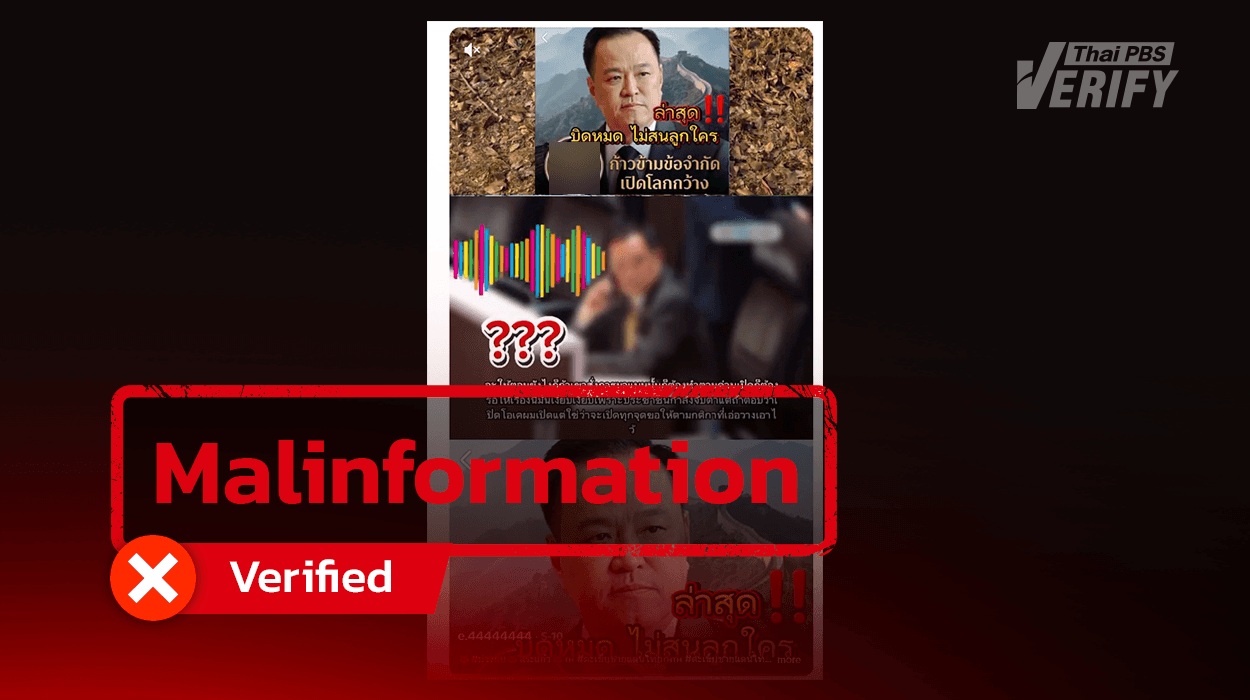
Thai PBS Verify found the piece of malinformation on: TikTok
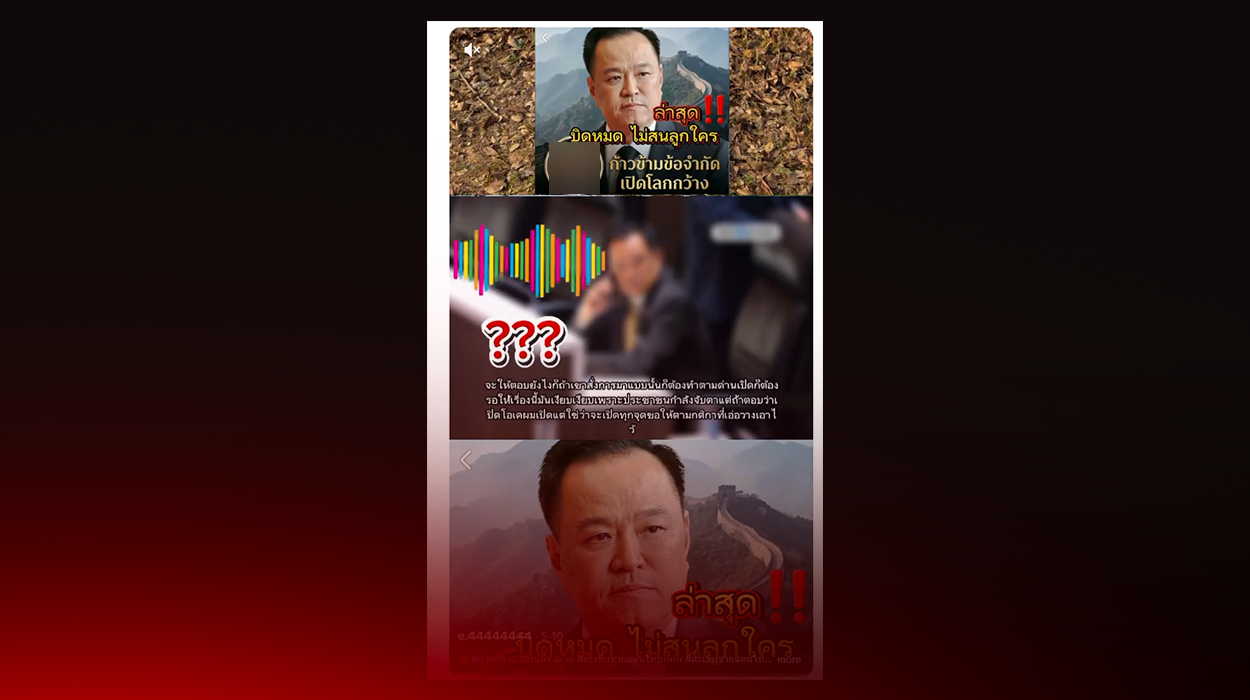
A screenshot of the TikTok post in question.
A TikTok account shared a video claiming to feature the voice of Mr. Anutin Charnvirakul. The post was accompanied by hashtags: ““#บ่าวกบสระแก้ว #ตะเข็บชายแดนไทย🇹🇭🇹🇭 #ตะเข็บชายแดนไทย🇹🇭🇹🇭 #ตะเข็บชายแดนไทย#บ่าวกบสระแก้ว (#BawKob SaKaeo #Thaiborder #Thaiborder #Thaiborder #BawKobSaKaeo).”
The video also displays an on-screen caption: “Recently!! Shut down completely — with no regard for anyone. Breaking through limitations, opening up the world.”
The following are the alleged messages from the audio clip in question:
“How should I respond? If such an order is given, it must be followed. If the border is to be opened, then we must wait until the matter quiets down, because the public is watching closely. But if I am to answer that it is open — okay, I will open it. Yet it does not mean opening every checkpoint; it must be done according to the rules that have been set.”
The post garnered 1,509 reactions and 341 comments, and it was shared more than 920 times.
PM Anutin does not order the opening of the Thai–Cambodian border
Thai PBS Verify examined the audio clip using AI voice-detection tools, such as Hiya Deepfake Voice Detector and Hive Moderation, and the team found that the voice in the clip was likely AI-generated.

Verification results by the Hiya Deepfake Voice Detector tool.
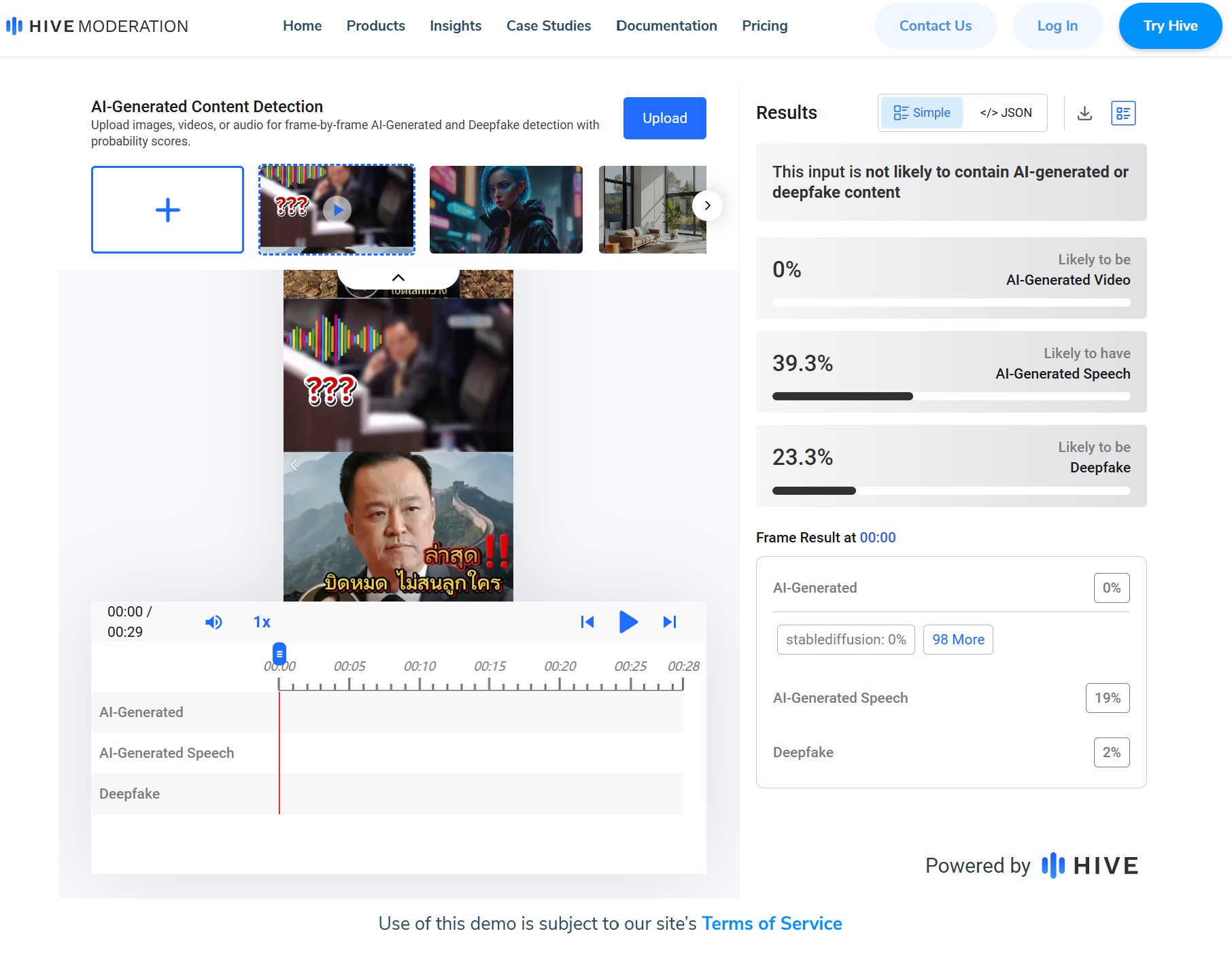
AI and deepfake detection results on Hive Moderation.
Later, Thai PBS Verify transcribed the video, which stated: “How should I respond? If such an order is given, it must be followed. If the border is to be opened, then we must wait until the matter quiets down, because the public is watching closely. But if I am to answer that it is open — okay, I will open it. Yet it does not mean opening every checkpoint; it must be done according to the rules that have been set.”
“It is expected that the border must be opened by early June; otherwise, our economy may suffer. Let’s wait for the signal to quiet down first.”
Thai PBS Verify then searched for the keyword “เปิดด่านชายแดนเดือนมิถุนายน (border opening in June),” but found no evidence of any news reports about border checkpoints opening in June 2026.
How are Thai–Cambodian relations progressing?
On May 9, 2026, following the 48th ASEAN Summit in the Philippines, PM Anutin Charnvirakul reaffirmed Thailand’s role in promoting peace and cooperation in the region. He emphasized ASEAN’s unity amid global volatility and highlighted Thailand’s potential as the “Kitchen of the World” to support food security for member states, stressing that food is more critical than energy in times of crisis.
Thailand has also gained greater confidence from ASEAN partners, which is expected to benefit trade and investment. Meanwhile, discussions with Cambodian leaders continue to adhere to the 2025 ceasefire agreement, with no mention of border openings or demarcation. Cooperation remains within the framework of the joint committee mechanism. In addition, Thailand has received support from the Asian Development Bank (ADB) for future development projects.
What is the truth?
Thai PBS Verify examined the TikTok audio clip claiming Prime Minister Anutin Charnvirakul’ order of reopening the Thai–Cambodian border. The team found that the clip was likely AI-generated by AI, as two AI detection tools (Hiya Deepfake Voice Detector and Hive Moderation) indicated a high probability of AI involvement. At the same time, when the phrase “border opening in June” was searched further, no credible news sources reported such an event.
This aligns with Mr. Anutin’s statement after the ASEAN Summit on May 9, 2026, confirming that there had been no discussions about opening border checkpoints. In conclusion, the clip constitutes false information and may mislead the public about the current border situation.
Verification Process
- AI voice analysis: Using AI voice-detection tools such as Hiya Deepfake Voice Detector and Hive Moderation, the team found a 39.3-percent likelihood of the audio being AI-generated.
- Keyword search: A search for the keyword “border opening in June” yielded no credible news reports about border checkpoints opening in June 2026.
Potential impacts of malinformation
- Creating confusion in society: The public may misunderstand the border situation, believing checkpoints have reopened when in fact they remain closed. This undermines the credibility of official information.
- Affecting travel and local economy: Businesses, transport operators, or migrant workers may make incorrect plans—such as preparing to cross the border prematurely, leading to wasted time, extra costs, and disruption of border trade.
- Undermining trust in public figures: Using AI-generated voices to impersonate political leaders can mislead people about their roles and decisions, damaging reputation and credibility.
- Increasing security risks: Border issues are sensitive; inaccurate information can heighten tensions or cause misunderstandings among communities in border areas.
- Highlighting the problem of AI voice deepfakes: This case shows how AI can be used to create increasingly convincing false content, making it harder for the public to detect and avoid being misled.
- Eroding trust in media and online information overall: Repeated exposure to fake news may lead people to distrust all information, even genuine reports, harming the long-term information ecosystem.
What to do with this misinformation?
- Do not believe or share immediately: Pause before forwarding, especially with content related to government policy or national security, which is often subject to distortion.
- Verify the source: Check whether the information comes from official agencies, mainstream media, or credible pages. If it is an edited clip with no clear origin, treat it with suspicion.
- Cross-check with multiple outlets: Search for the same news across several agencies. If it is genuine, there will usually be consistent reporting, not just a single clip circulating on social media.
- Look for anomalies: AI-generated voices often have unnatural pacing, overly uniform tone, or vague statements lacking key details.
- Refer to on-ground information: For border news, rely on reports from local journalists or relevant agencies, which better reflect the real situation.
- Avoid forwarding even if unsure: Sharing with a caption like “Is this true?” still helps spread fake news unintentionally.
- Follow official sources as primary references: Government agencies or official information centers provide the most reliable confirmation of facts.