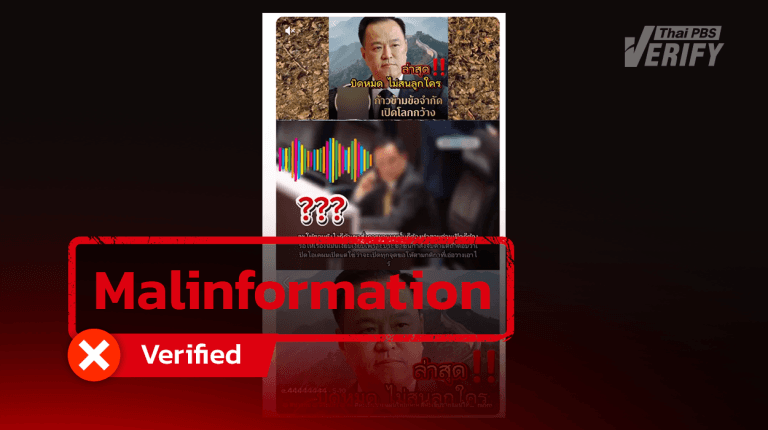
Senator Angkhana Neelapaijit does not urge Thais to help Cambodians build storm shelters
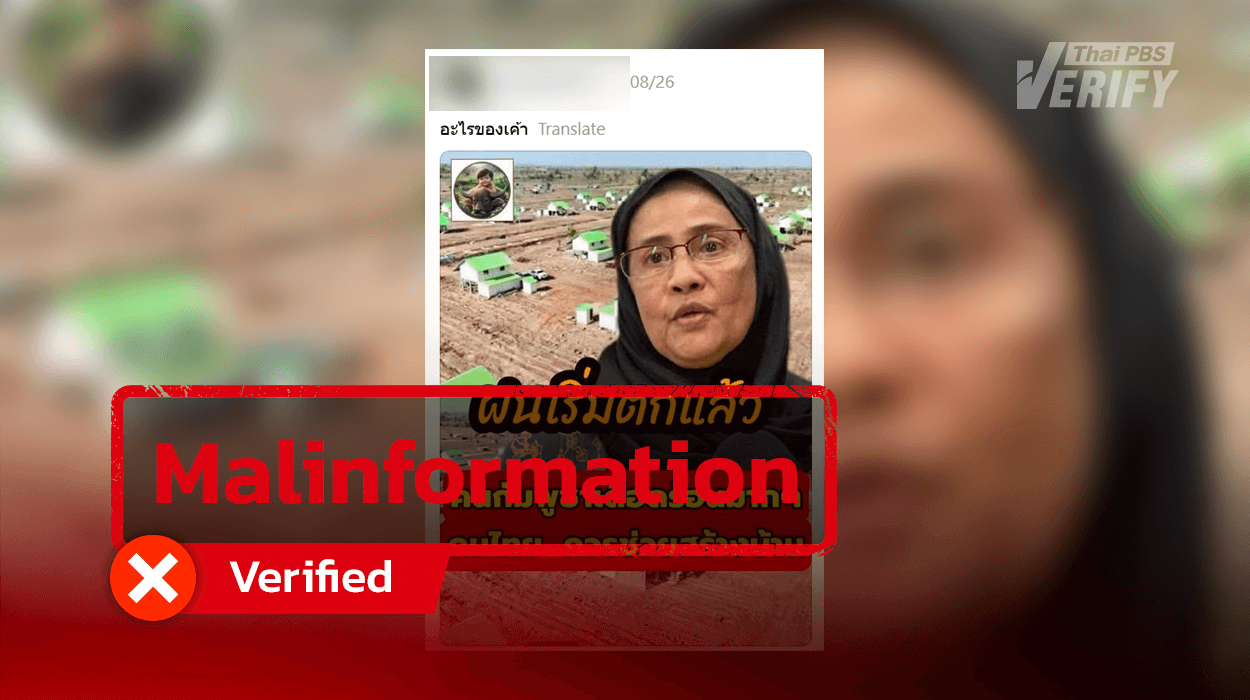
Thai PBS Verify found the piece of malinformation on: Threads
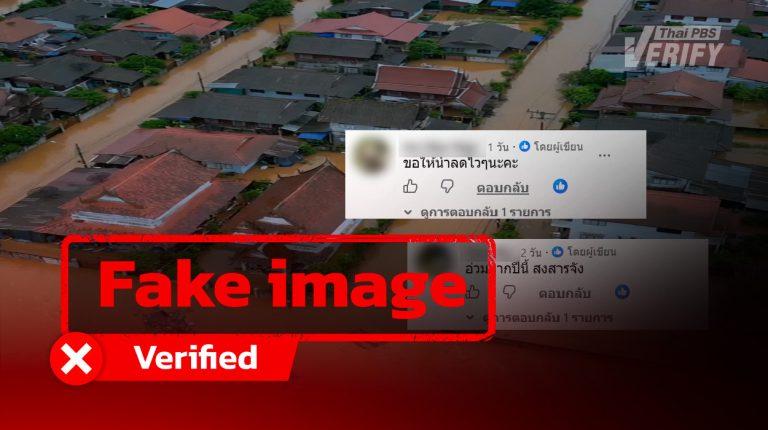
Thai PBS Verify recently identified a viral post targeting Senator and human rights activist Angkhana Neelapaijit. The post attributes a quote to her stating, “Cambodians are suffering, Thais should help build houses,” alongside an image captioned: “The rain has started falling, and Cambodians are in deep trouble. Thais ought to help build houses.” Posted on May 8, 2026, it has reached over 17,700 views, with a large majority of the audience reacting to it as if it were authentic.
Senator Angkhana did not urge the Thai public to help Cambodia
A keyword search regarding this matter yielded no reports or evidence of any such movement by Mrs. Angkhana, nor was there any record of her giving an interview containing the alleged statement.
Following a phone call from Thai PBS Verify to clarify the matter, Mrs. Angkhana personally confirmed that the report is false.
“I have no idea where this news originated, and I personally never made such a statement. Providing assistance is the responsibility of each country’s leadership. But this is entirely fake news.”
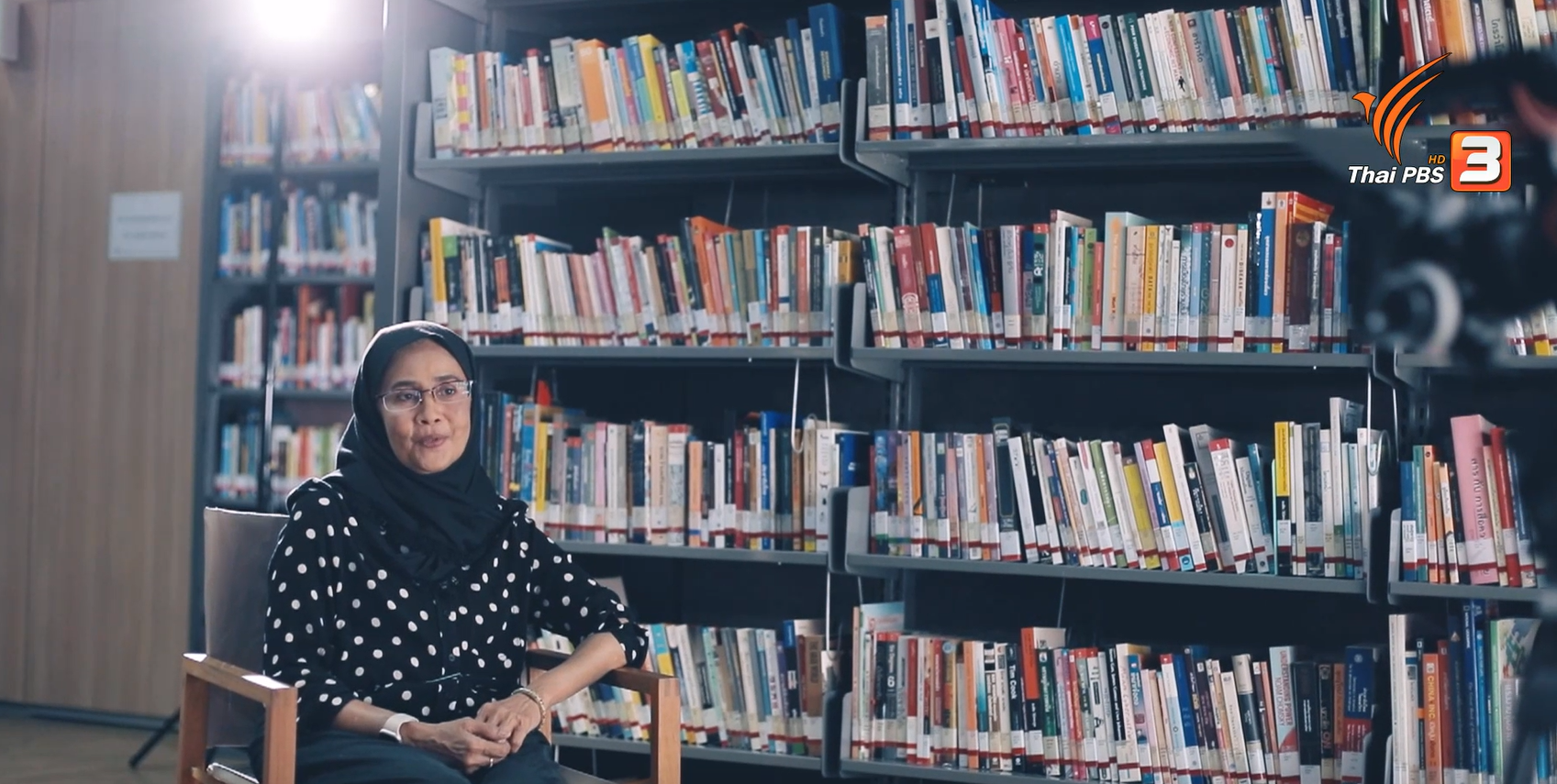
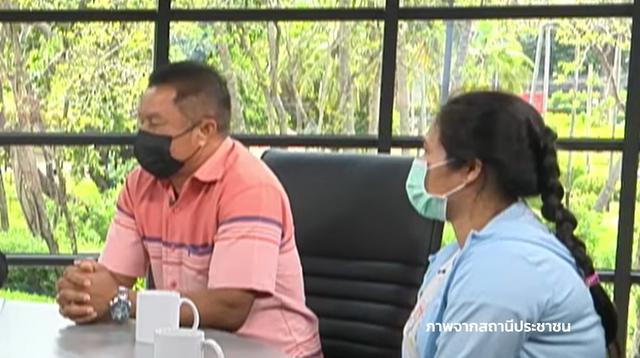
Senator Angkhana Neelapaijit (File photo from Thai PBS program’s ‘The Lessons’)
What is the latest update on the Thai-Cambodian conflict?
In an update on the Thailand-Cambodia conflict, the Ministry of Foreign Affairs stated that a trilateral meeting between Thailand, Cambodia, and the Philippines was held on May 7, 2026, on the sidelines of the 48th ASEAN Summit in Cebu, Philippines. Both nations reiterated their commitment to upholding the ceasefire and settling disputes through peaceful means, based on their amicable ties as neighbors. They also instructed their foreign ministers to explore confidence-building initiatives aimed at a step-by-step restoration of bilateral relations.
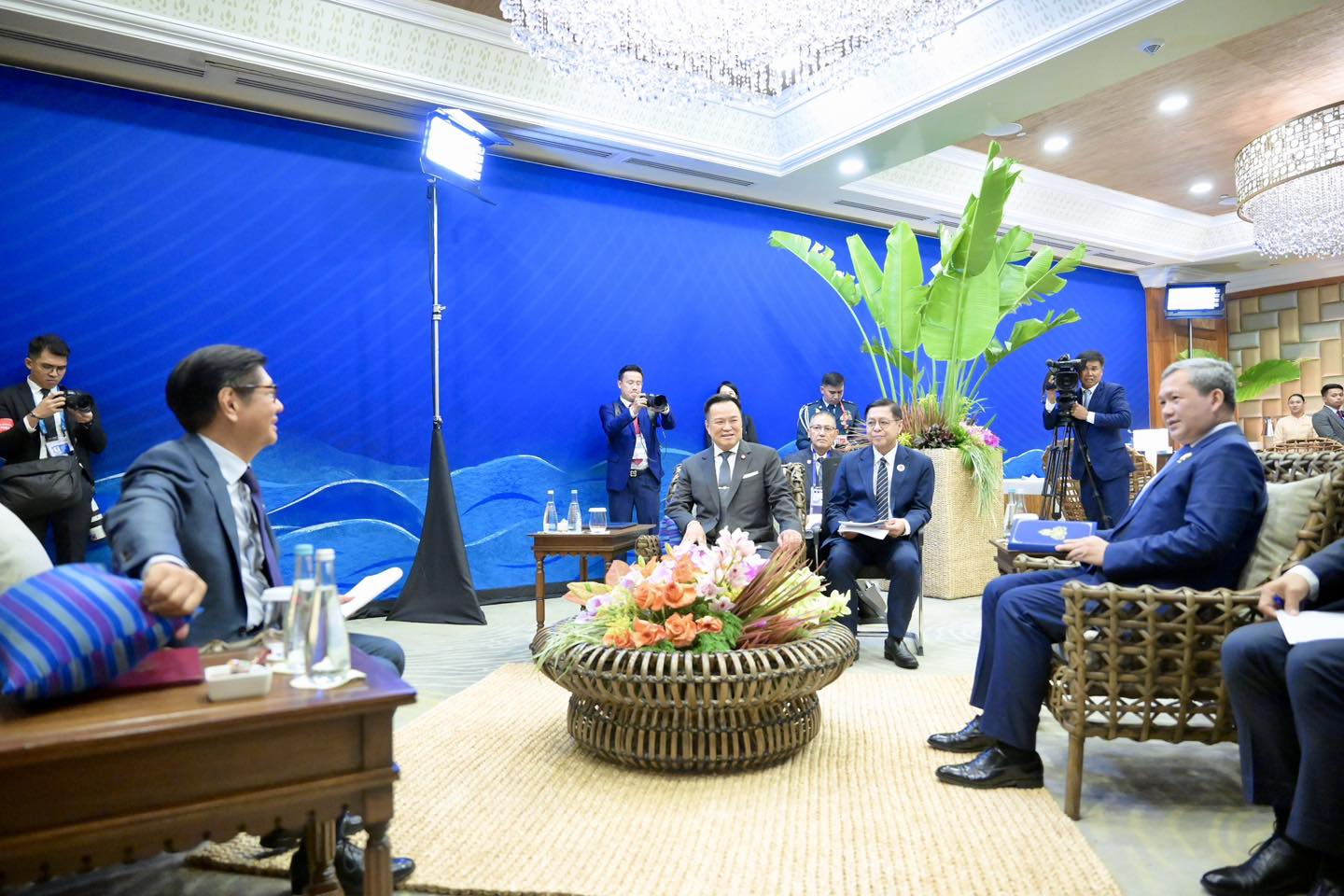
A trilateral meeting during the 48th ASEAN Summit in Cebu, Republic of the Philippines, on May 7, 2026 (Photo: Ministry of Foreign Affairs of the Kingdom of Thailand).
Furthermore, Prime Minister Anutin Charnvirakul revealed on Facebook on May 8, 2026, that he met with Prime Minister Hun Manet for talks during the ASEAN Summit in the Philippines. The Prime Minister officially notified Cambodia of the Thai government’s cancellation of MOU 44. Cambodia acknowledged the notification and indicated that subsequent negotiations regarding maritime benefits would follow the framework of the United Nations Convention on the Law of the Sea (UNCLOS). Both parties also concurred on advancing border talks through the JBC and GBC frameworks, alongside collaborating to suppress call center syndicates and scammers, reiterating their joint desire to preserve peace and ease tensions.
What is the truth?
Thai PBS Verify has debunked a viral post on Threads, claiming that Senator Angkhana Neelapaijit said, “The rain has started, and Cambodians are suffering greatly. Thais should help build houses for them.” The alleged quote was found to be false, with no evidence or records of any such interview.
Additionally, Mrs. Angkhana stated to Thai PBS Verify that she never uttered those words, declaring the report to be fake news.
As for the current Thailand-Cambodia situation, both parties are moving forward with diplomatic frameworks and talks aimed at easing mutual tensions.
Verification Process
- Keyword search: Based on a targeted keyword search concerning the case, no reports or evidence were found regarding Mrs. Angkhana’s public action, and there is no record of her making the alleged statement to the media.
- Direct interview with the concerned individual: In a telephone inquiry conducted by Thai PBS Verify, Mrs. Angkhana herself confirmed that the circulating information is completely fabricated.
Potential impacts of malinformation
- Creating misconceptions about the targeted individual: Linking Senator Angkhana Neelapaijit to fabricated quotes may lead the public to misunderstand her actual political position and viewpoints, which negatively impacts her credibility in the long run.
- Fueling social division and public sentiment: Thailand-Cambodia relations remain a highly sensitive topic. Publicizing such remarks can inflame anger, dissatisfaction, and polarization within society, particularly when the content is truncated or deliberately framed to provoke emotions
- Overshadowing facts with viral trends: When fake news goes viral, public attention often shifts toward emotionally charged messages rather than verified facts from official agencies or credible media outlets. This ultimately leads to distorted public perception.
- Escalating the risk of continuous misinformation sharing: Posts featuring short, emotionally striking messages and invoking the names of public figures tend to spread rapidly despite a lack of supporting evidence. This broadens the reach of the misinformation, making it highly difficult to correct public understanding later on.
What to do with this misinformation?
- Verify the original source: If a post attributes quotes to a public figure, it is essential to check for supporting interview clips, reports from mainstream media, or official statements. One should not rely solely on text accompanied by an image.
- Perform additional keyword searches prior to forwarding: Attempt to search the person’s name combined with the attributed remarks to verify if major news organizations share the same coverage. A lack of cross-referenced data from multiple sources is typically an indicator of misinformation.
- Be cautious of emotionally charged posts: Statements designed to instantly trigger anger, shock, or controversy are often engineered to drive social media engagement. One should pause and verify the information before reacting emotionally.
- Trust official sources and fact-checkers: For highly sensitive political or international issues, always look to government statements, professional news outlets, or certified fact-checkers for the truth.
- Avoid sharing unverified information regardless of certainty: Resharing false reports risks accelerating the reach of misinformation. If the validity of a post remains unconfirmed, you should refrain from distributing it until definitive proof is provided.