Video of missile bombing in Qatar found to be AI-generated
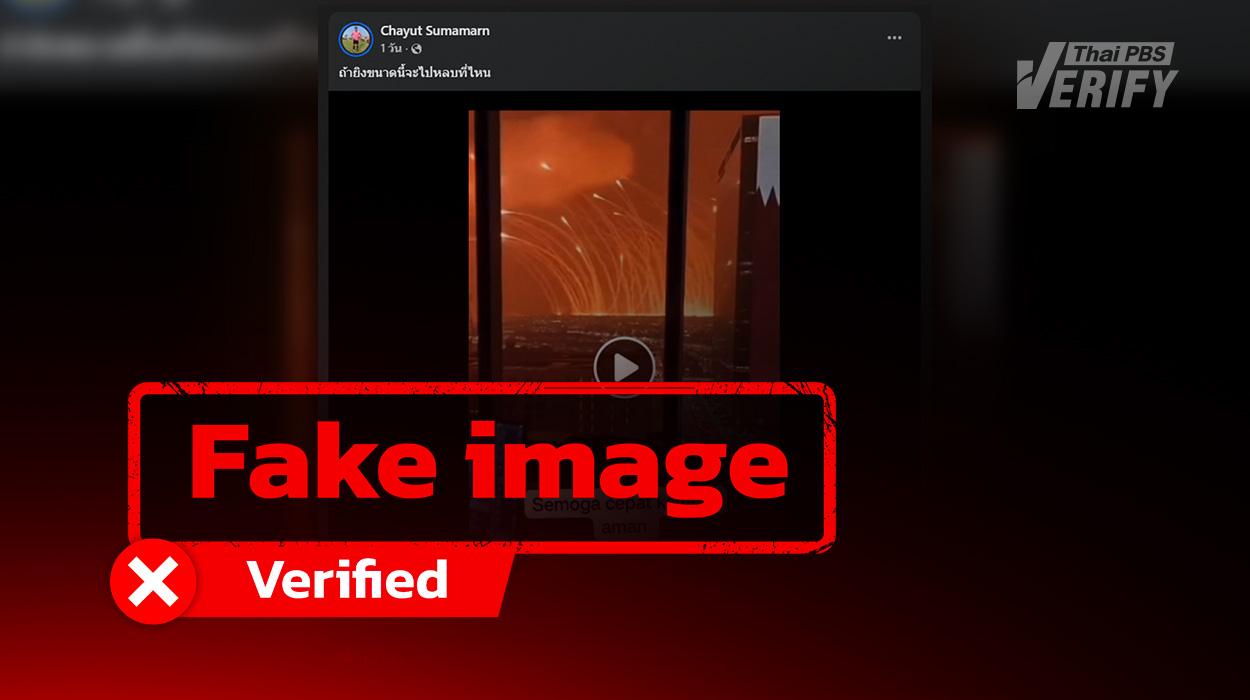
Thai PBS Verify found the AI-generated video on: Facebook
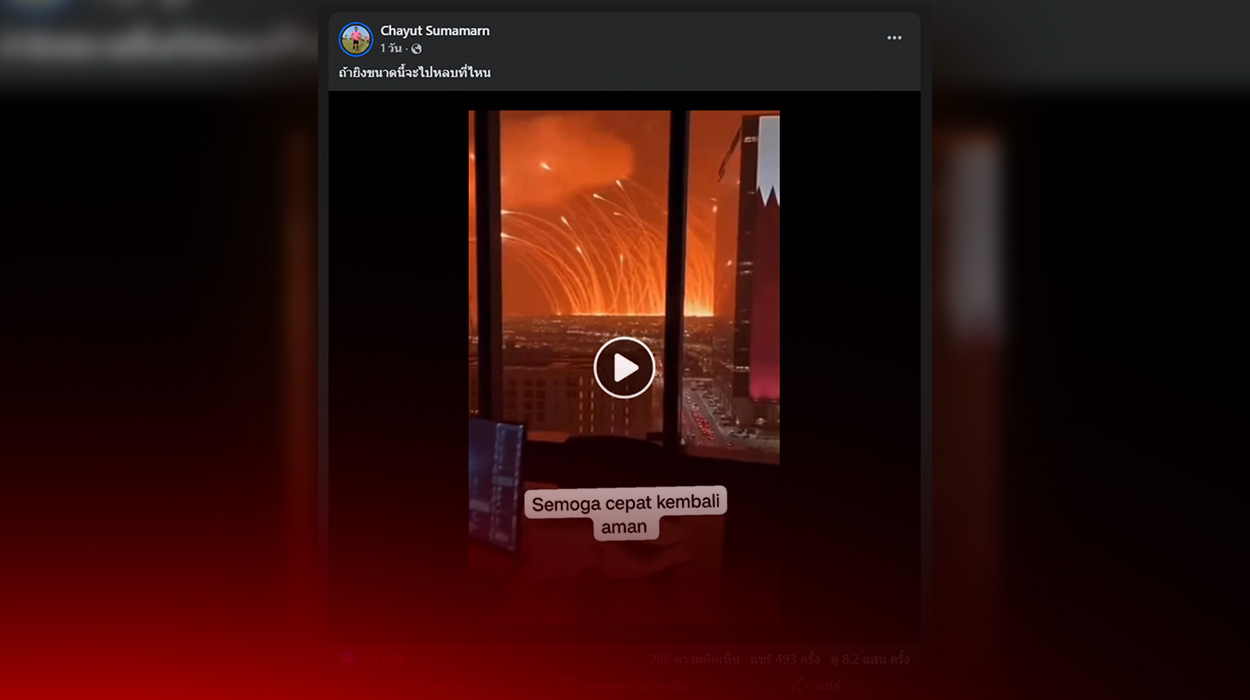
S The video in question was posted on March 5, 2026.
Thai PBS Verify found the video in question was posted on Facebook on March 5, 2026 by a user named ‘Chayut Sumamarn’. The clip shows what appears to be a city with flags resembling Qatar’s national flag hanging on buildings.
The post includes a short caption in Thai:
“If missiles are being fired like this, where could anyone hide?”
The video also contains an Indonesian caption reading:
“Semoga cepat kembali aman”, which translates (via Google Translate) as “Hope you return safely soon.”
The post quickly gained traction, reaching over 820,000 views, more than 16,000 reactions, 266 comments and 493 shares. Most netizens appeared to believe that the clip showed a real event, though some users raised doubts about its legitimacy.
The missile strike video in question is not real
Thai PBS Verify analysed the video using AI image and video detection tools from Hive Moderation. The results indicate a 99.6% probability that the clip was generated using AI. Several visual inconsistencies were also identified:
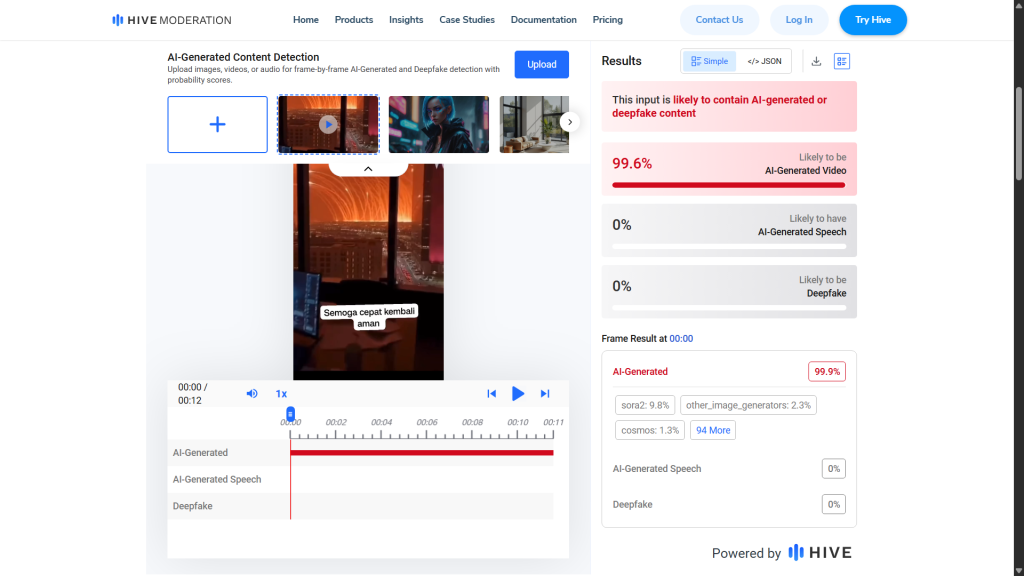
99.6% of the video is likely to be AI-Generated, based on AI image and video detection tools.
Abnormal traffic movement
Vehicles in the lower-right corner move erratically. Some cars appear to move forward and backward unnaturally, when compared with normal vehicle behaviour.
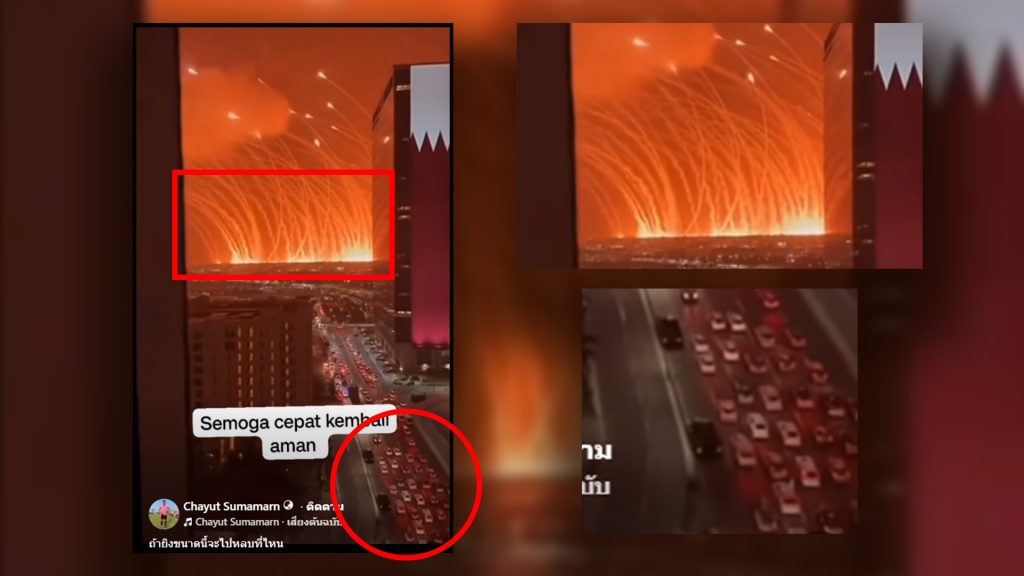
Several inconsistencies are spotted in the video, such as traffic movement (circled) and rocket lighting that are unusually bright (squared).
Lighting anomalies
The rockets in the clip produce an unnaturally bright and stationary light. In real missile launches, light typically trails behind the rocket and gradually fades as it moves away from the launch point.
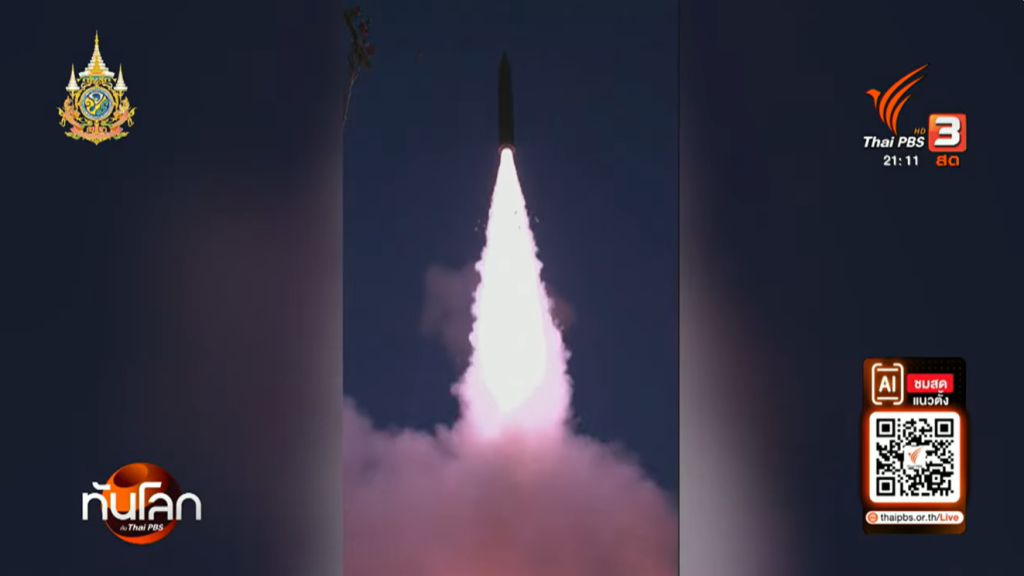
In real night-time rocket launches, the light follows the rocket’s path rather than staying brightly fixed in place as in the AI-generated video.
Thai PBS Verify was able to locate the same clip on TikTok, posted by user ‘Mohsin.rajpoot18’ on March 3, 2026, using Google Lens. The TikTok post clearly labels the video as “AI-Generated Media.” When the clip was shared on other platforms, however, this label was removed, contributing to the spread of misinformation.
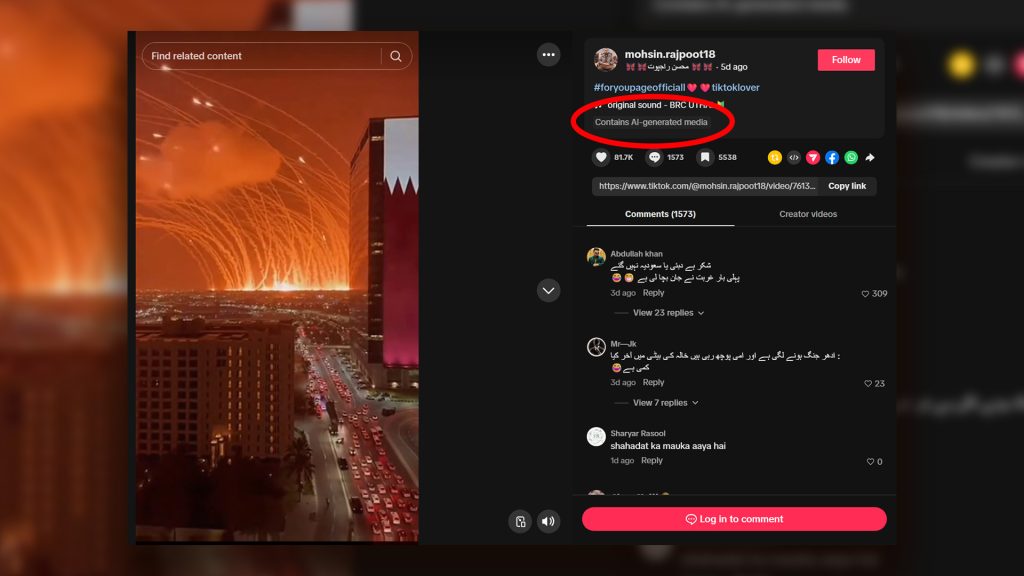
TikTok video posted by ‘mohsin.rajpoot18’ on March 3rd, 2026, clearly identifying that it is AI-generated media.
What is the real situation in Doha?
Thai PBS Verify also reviewed reports on the current situation in Doha, Qatar.
According to reporting by Doha News on February 28, 2026, two missiles struck the Al-Udeid Air Base and one drone targeted a radar base. No casualties were reported.
Director of Media Communications at Qatar’s Ministry of Foreign Affairs, Ibrahim Al-Hashemi, condemned Iran, stating that the attack represented “a blatant violation of national sovereignty” and undermined mutual understanding between the two countries.
Meanwhile, Qatar’s Ministry of Education announced a shift to remote learning starting March 1, and government ministries and institutions were advised to adopt remote work arrangements, including both the public and private sectors.
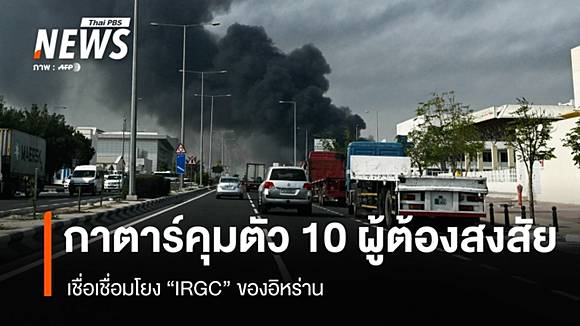
On March 4, 2026, Thai PBS News also reported that Qatari authorities had arrested two groups of suspects, totalling 10 individuals, believed to be operating in Qatar on behalf of Iran’s Islamic Revolutionary Guard Corps (IRGC).
Seven suspects were allegedly tasked with surveillance and intelligence gathering on military sites, while the remaining three were reportedly trained to conduct drone attacks.
Authorities said they seized communication devices, location data of key sites and equipment, and the suspects reportedly confessed to links with the IRGC and to having plans to conduct surveillance and attacks in Qatar.
Qatar’s Foreign Ministry spokesperson also stated that Iranian targets were not limited to military facilities, but potentially the wider territory in Qatar.
What is the truth?
The dramatic footage of dense missile strikes over a city shown in the viral clip did not occur in reality. It is AI-generated media designed to exaggerate the situation.
While there have been real tensions in Doha, including the two missiles hitting Al-Udeid Air Base and a drone attack on a radar site, the situation does not resemble the massive urban missile barrage depicted in the viral video.
Verification Process
AI detection
Analysis using Hive Moderation’s AI Detector found a 99.6% probability that the video was AI-generated.
Physical inconsistencies
- Traffic: Vehicles move erratically and unnaturally—common artefacts in AI-generated videos.
- Lighting: Rocket light appears overly bright and stationary instead of trailing and fading naturally.
Reverse video search
The original video was traced to a TikTok post labeled “AI-Generated Media.” The label disappeared when the clip was shared on other platforms.
Impacts of the fake image
- Widespread panic: Nearly 1 million views and about 500 shares may create unnecessary fear about global conflict and could potentially affect economic and tourist confidence.
- Distortion of reality: Using AI clips as if they were real events undermines the credibility of factual battlefield reporting and confuses audiences about what is genuine news.
What to do with this misinformation?
- Look for small visual details: AI still struggles to realistically animate small moving objects such as cars or crowds. Unnatural motion is often a warning sign.
- Check media labels: Platforms like TikTok and Facebook sometimes label content as “AI-Generated.” Always check captions and descriptions carefully.
- Verify with major news outlets: If a city were under such massive missile bombardment, major international media would report it immediately. If the footage appears only in personal posts, it is likely to be fake.
- Avoid spreading misinformation: “Think before you click. Verify before you share.” If the source is uncertain, not sharing the content in question helps to break the cycle of misinformation.
Editor: Nuttapoln Toomma
Translation by: Nad Bunnag, Thai PBS World
Related Content
Most Viewed