Thai Education Minister’s remarks on Cambodian students’ deportation distorted on social media
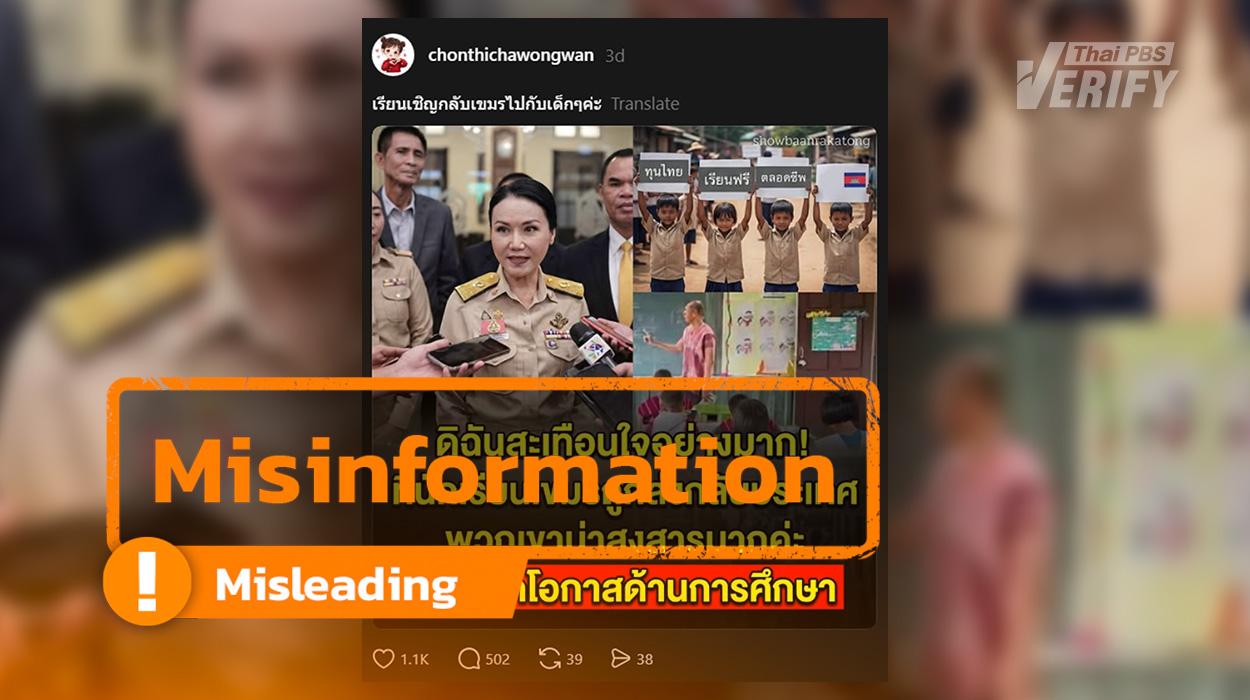
Thai PBS Verify found the piece of misinformation on: Threads
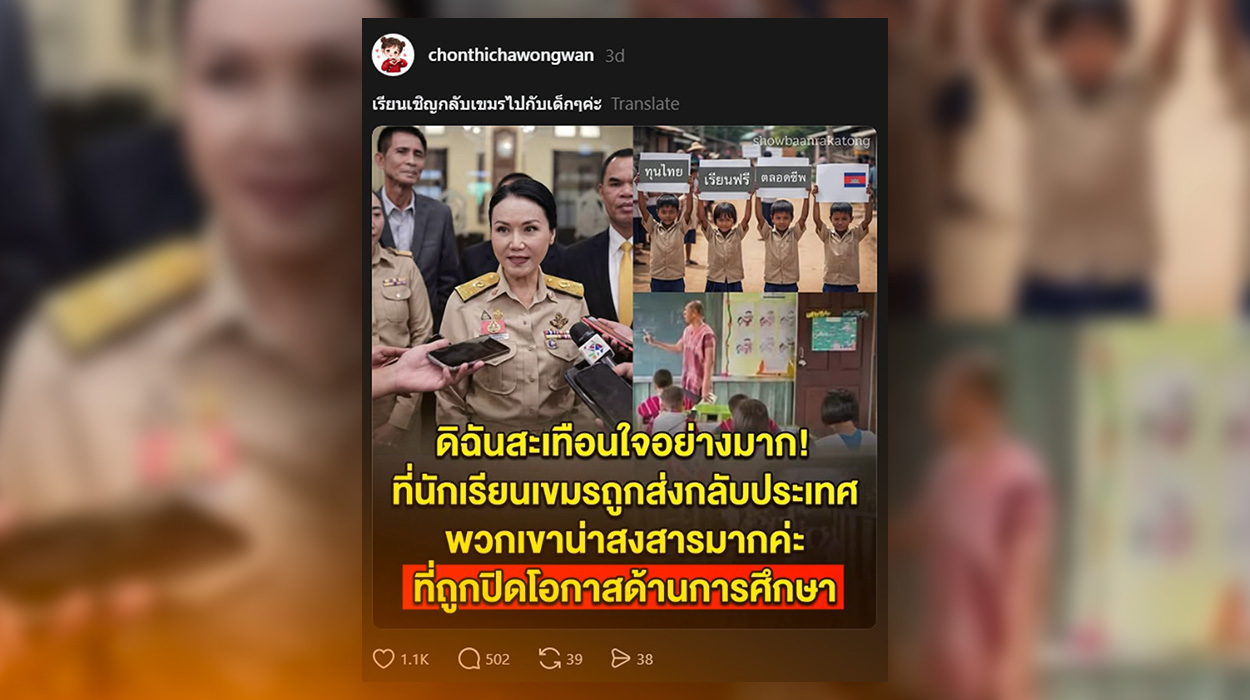
A screenshot of the post in question on Threads, published on February 24, 2026.
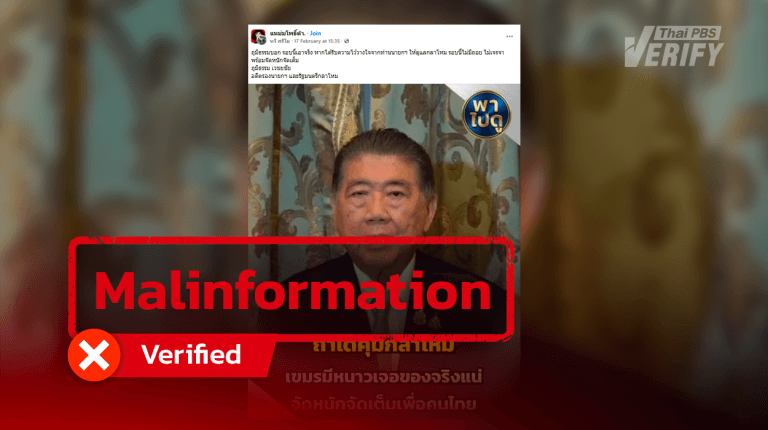
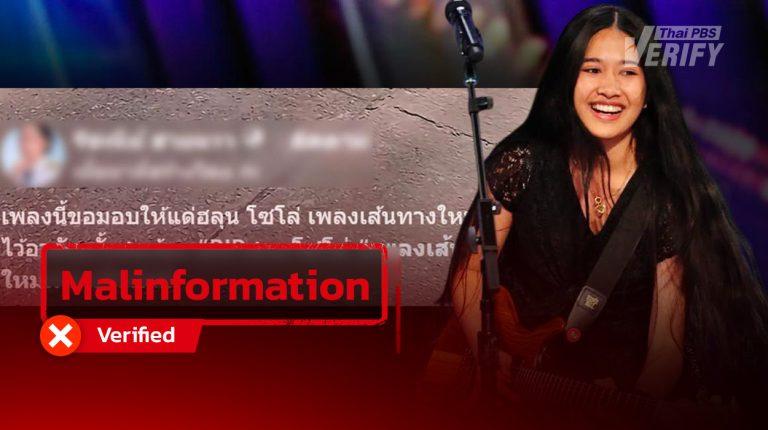
Thai PBS Verify identified a news publication on Threads by a user named “chonthichawongwan” on February 24, 2026. The post references Prof. Dr. Narumon Pinyosinwat, the Minister of Education. She allegedly stated that,
“I am deeply shaken that Cambodian students are being sent back to their country!
They are so pitiful for being denied educational opportunities.”
The post in question gained traction, including over 1,100 likes, 39 reposts, 38 shares, and 502 comments. The majority of comments were directed at Prof. Dr. Narumon in a defamatory and insulting manner.
Minister Narumon’s alleged remarks are not real
Thai PBS Verify search using the keywords “Education Minister is deeply shaken Cambodian students were sent back (รมว.ศึกษาฯ สะเทือนใจ นักเรียนเขมรถูกส่งกลับ)” on the Google search engine. It yielded a news report published by the Office of the Permanent Secretary, Ministry of Education, dated August 28, 2025.
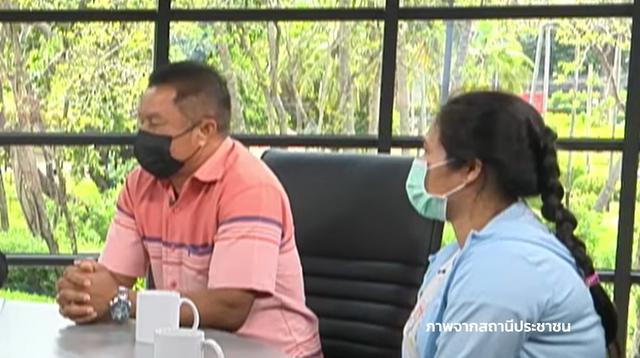
The report covers Prof. Dr. Narumon Pinyosinwat with the case of a 13-year-old Cambodian student who was detained and deported.
The following is the content of the original article:
Prof. Dr. Narumon Pinyosinwat, Minister of Education, commented on the incident involving the student from a school in Buachet district, Surin province, who was apprehended by police on charges of being an undocumented immigrant entering and residing in the Kingdom without a permit. The Minister stated that “This matter must be viewed through the lens of reality from two different perspectives. Speaking as a mother, I feel saddened that such an event occurred to a child of only 13 years old. It is a matter of great distress. Furthermore, I empathize with the teachers who wish to see justice served for their students.
“Speaking as the Minister of Education, I must clarify that humanitarian principles have always guided our educational initiatives; otherwise, these students would certainly not have been enrolled in schools under the Office of the Basic Education Commission (OBEC). However, regarding the situation along the Thai-Cambodian border, it falls under the jurisdiction of local security authorities, who must oversee and proceed in accordance with the law. Therefore, further discussions with the relevant agencies are required to determine the next steps.
“According to reports from the OBEC, it was found that the student’ parents are not Thai nationals. We must investigate the family’s background from the beginning to determine whether their entry into Thailand was legal. If it is possible to regularize their status moving forward, the Ministry of Education stands ready to provide care for the child. In the meantime, I would like to ask all Thai citizens to distinguish between international conflicts and humanitarian principles.”
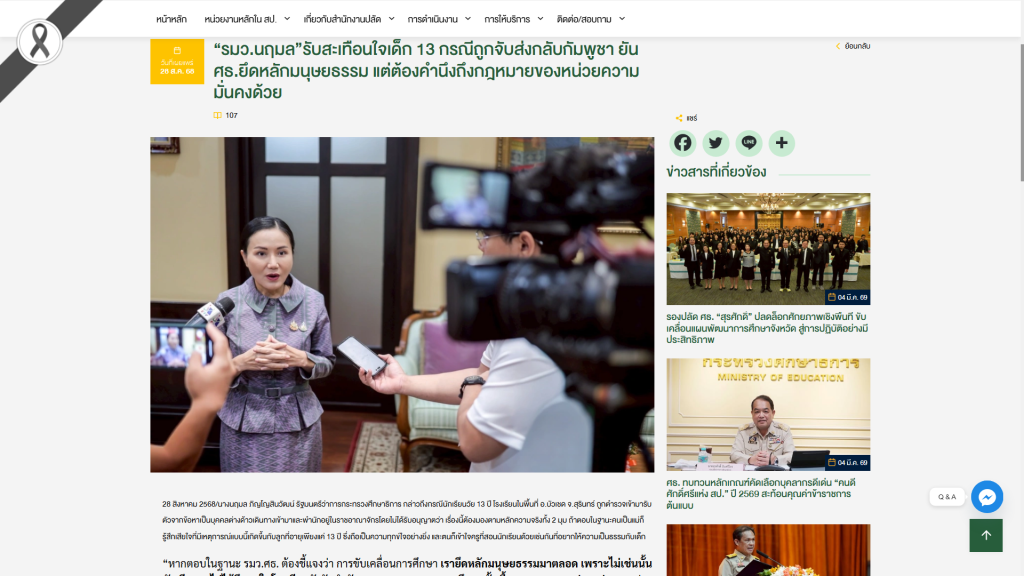
The original news image from the Office of the Permanent Secretary, Ministry of Education website, published on August 28, 2025.
Additionally, further information was discovered on the “MOE 360 Degree” (ศธ.360) Facebook page, which posted a clarification on February 24, 2026. The message reads:
The Ministry of Education clarifies! Claims regarding migrant student enrollment on social media pages are “Fake News.” The Ministry insists that the regulation updates specifically target groups domiciled within Thailand.
Following the dissemination of information by certain social media pages regarding the adjustment of criteria for enrolling non-Thai students, which may have caused public misunderstanding, the Ministry of Education (MOE) clarifies that the information from those pages is “fake news.” Furthermore, the Ministry presents the details according to the latest Ministry of Education announcement as follows.
-
- Updates of the announcement for clarity and alignment with Cabinet resolutions: The Ministry of Education issued a new announcement in 2025 regarding the “Enrollment of Students and Pupils Without Civil Registration Documents or Thai Nationality” (signed on December 3, 2025, and published in the Royal Gazette on January 27, 2026). The primary amendment involves the removal of provisions concerning individuals domiciled abroad who commute across the border for schooling on a daily basis. This is to ensure compliance with the Cabinet Resolution dated July 5, 2005, which mandates that the state extend educational opportunities exclusively to non-Thai individuals who are “residing in Thailand.”
- Adherence to international child welfare standards and Thai law: The provision of education remains in accordance with Section 54 of the Constitution of the Kingdom of Thailand and Section 10 of the National Education Act B.E. 2542 (1999), which dictates that every child must receive equal access to basic education. Furthermore, this aligns with the Convention on the Rights of the Child (CRC), to which Thailand is a party, stating that the state must recognize the rights of all children to access education regardless of nationality or legal status.
- Guidelines for educational institutions: For children without civil registration documents who are residing in Thailand, educational institutions are still responsible for coordinating the issuance of a 13-digit identification number or a Learner Identification Code (G Code). This serves as a database to track the learner until graduation. This is consistent with the legal opinion of the Council of State, which confirms that children residing in Thailand can voluntarily receive compulsory education, and the state is obligated to provide it in the same manner as for Thai nationals.
The purpose of this announcement update is to focus educational management exclusively on children domiciled in Thailand and to exclude those who cross the border daily for schooling. To ensure operations remain transparent and compliant with state regulations, the public is urged not to believe distorted information from the page and to follow accurate news updates through the Ministry of Education’s official channels.
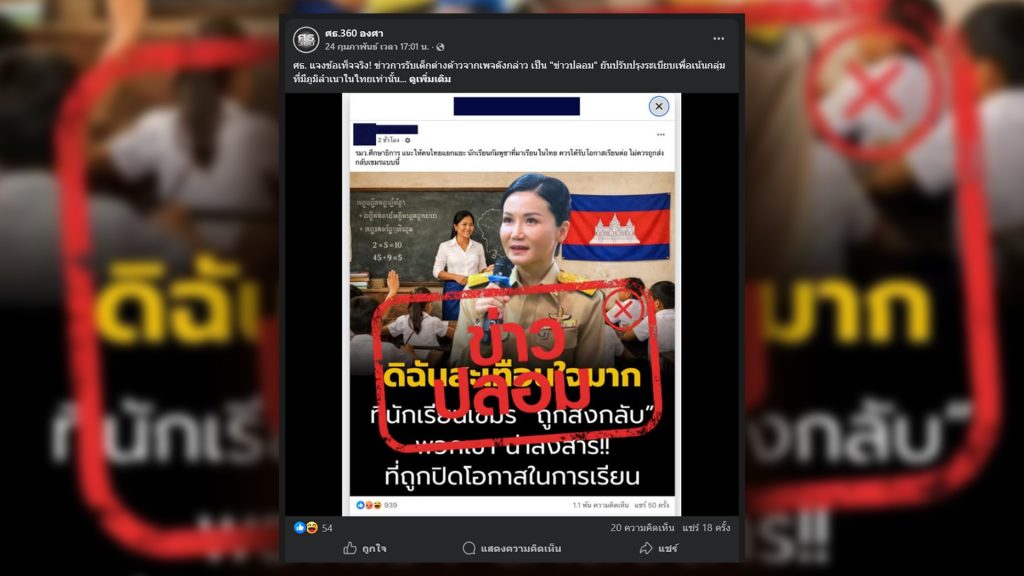
A news graphic from the “MOE 360” Facebook page, published on February 24, 2026.
Given these clarifications, it is evident that the information circulated through social media was presented by omitting the core substance of the matter. Portions of Prof. Dr. Narumon’s remarks were taken out of context and edited with the fabricated addition, “They are so pitiful for being denied educational opportunities,” to make it appear as though the Minister favored Cambodia over Thai law. The full interview clearly states that national security laws enforced by local administrative authorities must be prioritized, and the legality of the individuals’ entry into the country must be verified first.
Is it true that Cambodian students receive free education?
Thai PBS Verify further researched until it found a PDF document titled “Guidelines for the Project Supporting Educational Costs from Kindergarten to the Completion of Basic Education (แนวทางการดำเนินงาน ตามโครงการสนับสนุนค่าใช้จ่ายในการจัดการศึกษา ตั้งแต่ระดับอนุบาล จนจบการศึกษาขั้นพื้นฐาน)” conducted by the Bureau of Policy and Planning, Office of the Basic Education Commission – Ministry of Education, in October 2025. The content can be summarized into these points below.
Relevant government agencies, as designated, shall prepare to care for and develop pre-school children physically, mentally, disciplinarily, emotionally, socially and intellectually, by promoting and supporting the participation of local organizations and the private sector in these operations.
Relevant government agencies shall provide 15 years of basic education with standard and quality, free of charge. The Minister of Education is authorized to determine the expenditure rates for the 15-year education cycle to be proposed through the annual budget preparation process. These expenses include as below.
- Tuition and instruction fees
- Textbooks
- School supplies
- School uniforms
- Student quality development activities
- Other expenses as approved by the Cabinet
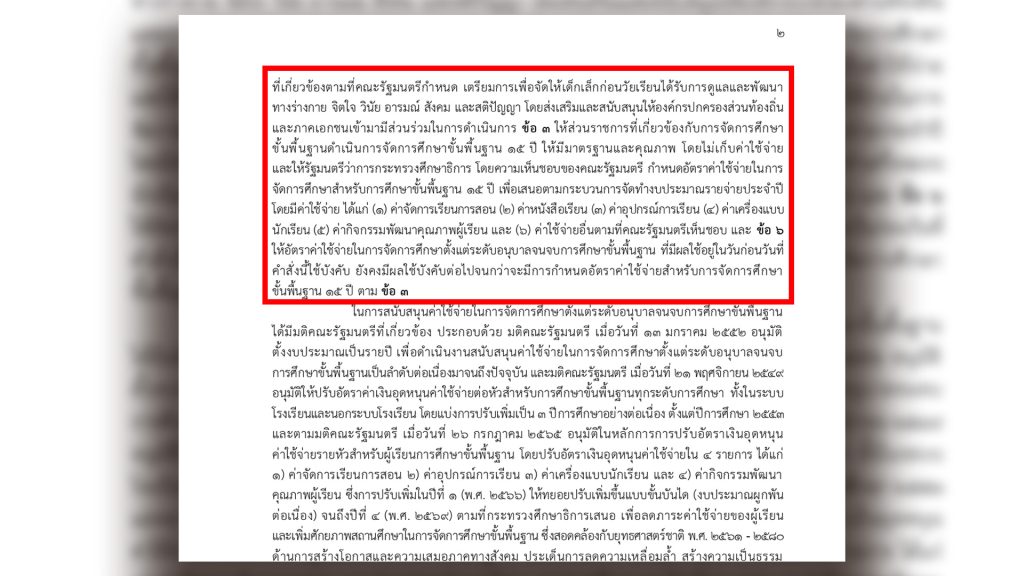
A screenshot from the Ministry of Education Operational PDF file, Page 2.
The Ministry of Education has defined key terms, consisting of major categories. There is support for basic education expenses, basic education, compulsory education, educational levels, educational types and eligible children. In said report, content regarding “G-Code Students” or “Migrant Students” is included, specified as follows*.
- Children without civil registration documents or Thai nationality: School-aged children without Thai nationality residing in Thailand who receive pre-primary and basic education, consisting of the following people.
9.1. Children without legal evidence under the law on civil registration: Children residing in Thailand but lacking legal evidence according to the Civil Registration Act.
9.2. Children without Thor.Ror. 13 (TR 13): Migrant children who have not yet been granted Thai nationality and are not in the central registry; they use a “G” prefix as their learner identification code, having already received an identification code from the Ministry of Interior.
9.3. Children with Thor.Ror. 13 (TR 13): Those who have not yet been granted Thai nationality but whose names are recorded in the central registry.
*Unofficial translations
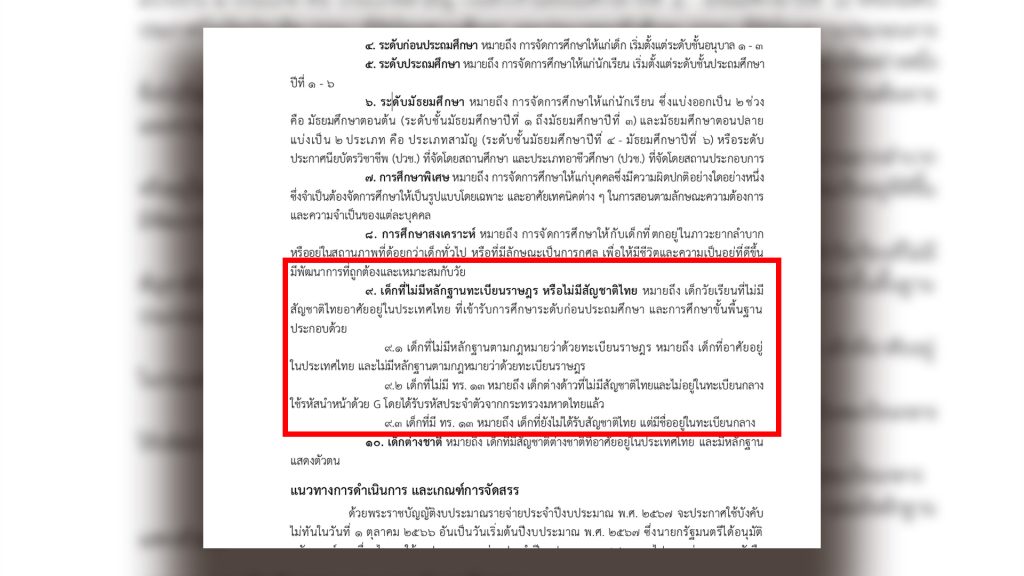
A screenshot from the Ministry of Education Operational PDF file, Page 4.
Furthermore, there are average figures for educational instruction costs that the Ministry of Education must allocate per student, which can be summarized as follows.
- Pre-primary level 1,836 Baht/person/year (918 Baht/person per semester)
- Primary level 2,052 Baht/person/year (1,026 Baht/person per semester)
- Lower secondary level 3,780 Baht/person/year (1,890 Baht/person per semester)
- Upper secondary level 4,104 Baht/person/year (2,052 Baht/person per semester)
These figures do not yet include other expenditures, such as activity fees, necessities, and lunch subsidies, which the Ministry of Education invests in on an annual basis.
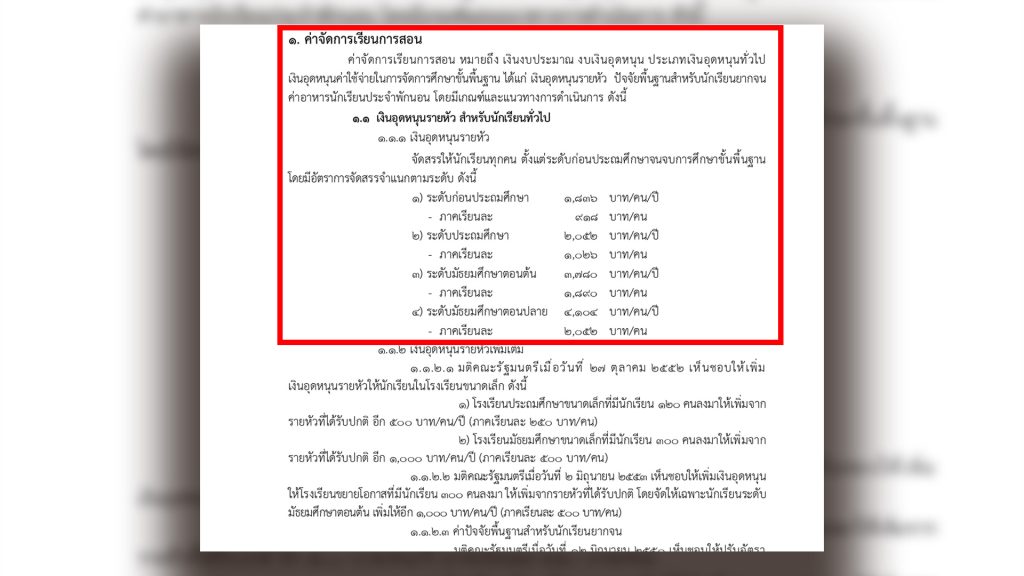
A screenshot from the Ministry of Education Operational PDF file, Page 4.
What is the truth?
Prof. Dr. Narumon Pinyosinwat, Minister of Education, did indeed speak regarding the incident involving the 13-year-old child being returned to Cambodia. However, her remarks were subsequently distorted to incite a public narrative, falsely accusing government figures of sympathizing with Cambodian nationals above Thai citizens.
In reality, the news report from the Office of the Permanent Secretary, Ministry of Education, clearly stated that legal procedures were being followed and requested that the Thai public distinguish between international conflicts and humanitarian principles.
Verification Process
- Retroactive data search: After the team conducted a keyword search, the original interview was located on the Office of the Permanent Secretary, Ministry of Education website. It was discovered that the actual content emphasized “humanitarian principles” alongside “national security laws,” with no intention of opposing the law as claimed.
- Review of latest regulations: A review of the 2025 Ministry of Education announcement (published in the Royal Gazette on January 27, 2026) confirms that the scope for enrolling non-Thai students has been tightened and made more restrictive.
- Analysis of the social media user’s intent: It was found that “quote-cropping” techniques were utilized, alongside the addition of emotionally charged sentences designed to incite hatred toward the individual and the educational institution.
Impacts of the misinformation
- Reputational damage: The Minister of Education was subjected to severe verbal abuse in over 500 comments, all stemming from unsubstantiated and false information.
- Social polarization: The misinformation incites racial conflict by creating a public perception that the state grants greater benefits to foreign nationals than to its own citizens, even though budget allocations are governed by strict regulations and conditions.
- Misconception of government policy: The public was misled into believing that the Thai government allows unrestricted and boundary-free access to free education for anyone crossing the border, thereby undermining public confidence in national security agencies.
What to do with this misinformation?
- Verify dates and origins of the post: Distorted news often repurposes old events to create new narratives. Always verify exactly when the incident occurred.
- Read the full original text: When encountering remarks that appear “extreme” or “dramatic,” search for the full video clip or interview to understand the surrounding context.
- Observe the source: If information originates from a personal page lacking clear references or credible citations, assume it is likely fake news.
- Follow official channels: Cross-check facts through official platforms, such as “MOE 360” or “Thai PBS Verify.”
Editor: Nuttapoln Toomma
Translation edited by: Peerachai Pasutan
Related Content