Fake social media page invents report “Anwar Ibrahim” urges Thailand to stop celebrating Songkran
Thai PBS Verify found the piece of misinformation from: Threads
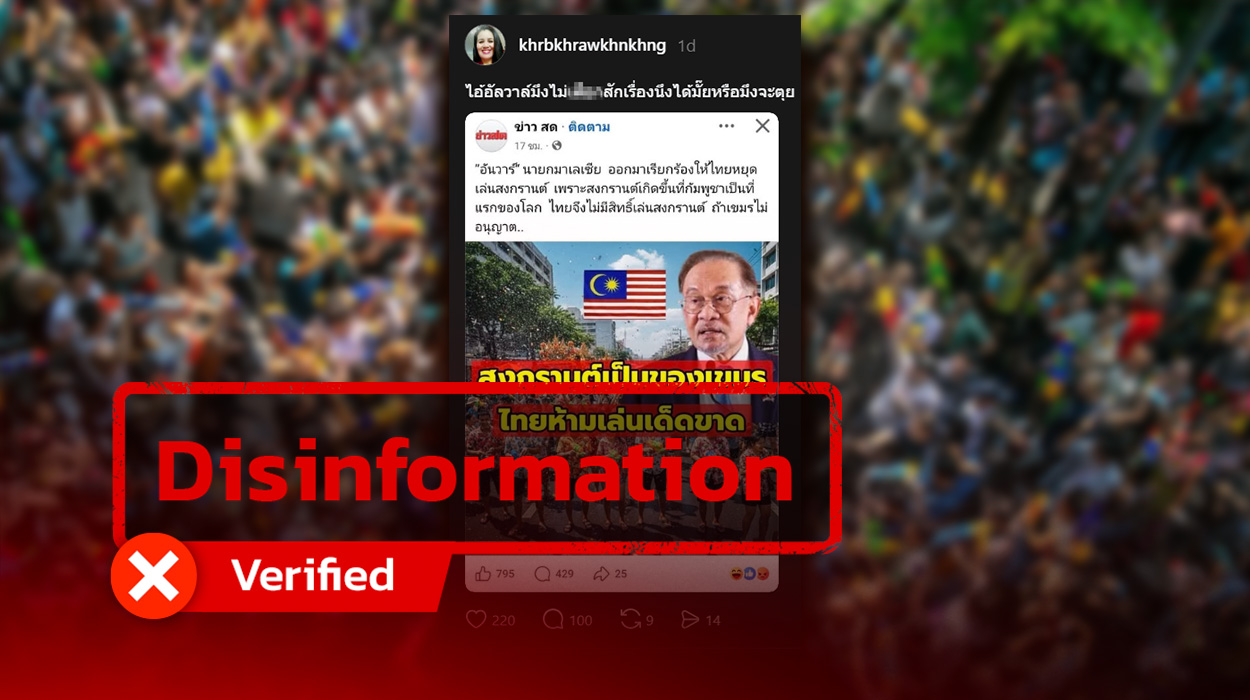
A fake news post was found on Threads on February 19, 2026
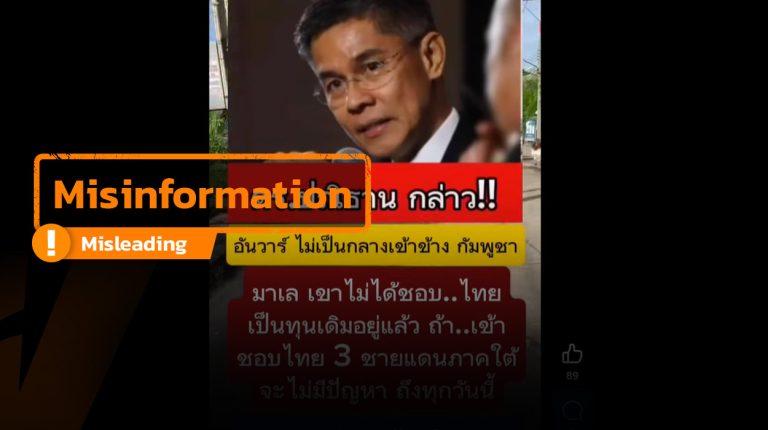
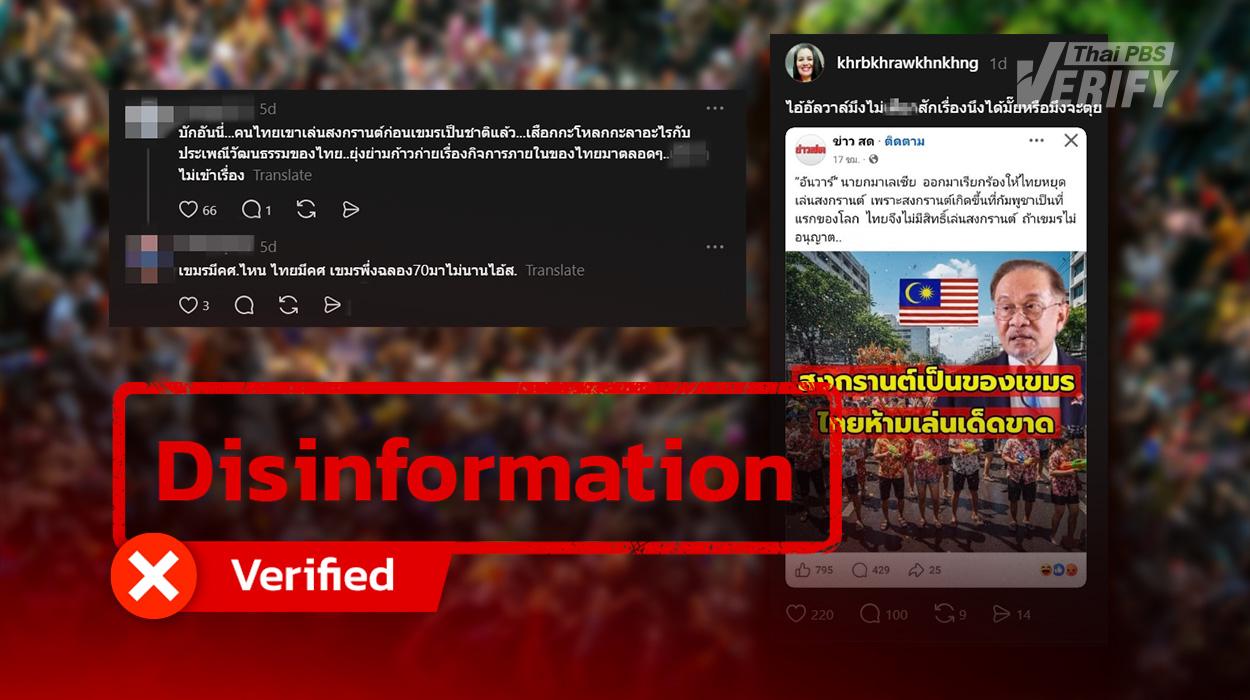
Thai PBS Verify found an image on Threads, posted by a user named ‘Khrbkhrawhnkhng’ on February 18, 2026. The image is accompanied with the caption:
“Anwar, can’t you not be … in even one thing? or you want to pass away?”
Recently, the post has gained more than 220 likes, over 100 comments, 9 reposts, and 14 shares. Most of the comments lean toward believing the news is true, though some users noticed or questioned whether it was real or fake.
Did a well‑known media outlet report the news?
Thai PBS Verify searched using keywords by checking the name of the page in the image. The team found a Facebook page named “ข่าว สด (Khao sod)” which had created a post on February 18, 2026. The caption reads:
“Anwar [Ibrahim],” Prime Minister of Malaysia, has called on Thailand to stop celebrating Songkran because it originates in Cambodia as the first in the world. Therefore, Thailand has no right to celebrate Songkran unless Cambodia gives permission…”
The original post on Facebook was made on February 18, 2026, before it was deleted.
The post drew more than 2,100 reactions, over 808 comments, and more than 46 shares.
We checked the original source that had published the news. It used the name “Khao Sod” and even copied the profile picture of the well-known, authentic “Khaosod” news outlet, causing confusion. The page itself was only created on March 21, 2024, was managed in Thailand, and had more than 230,000 followers.
However, if it were truly the official Khaosod news page, it should be named “Khaosod – ข่าวสด (stylized without a space)” and carries a verified badge. The real “Khaosod” Facebook page includes an email and phone contact link, uses a black‑and‑white profile picture (as part of mourning protocol), and has more than 24 million followers.
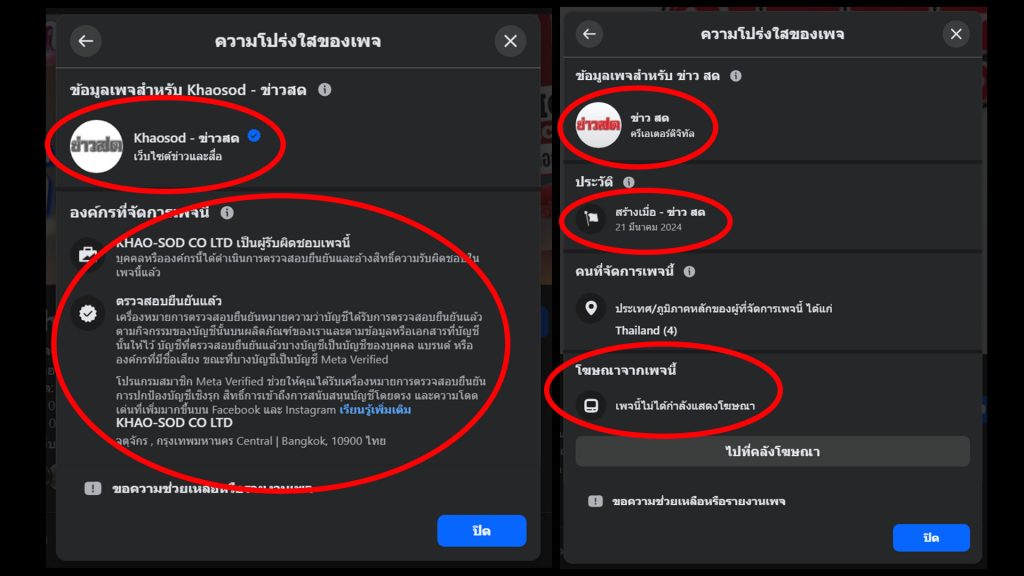
A comparison reveals the difference between the real “Khaosod – ข่าวสด” page (left) and the fake “ข่าว สด (Khao sod)” page.Later, it was found that both the fake news post and the “Khao sod” page had been deleted from the platform on February 19, 2026.
Thai PBS Verify conducted further investigation by searching news agencies in two countries: in Cambodia — Khmer Times, KBN News, Oknha News — and in Malaysia — The Star and Malay Mail. We also searched using the keyword “สงกรานต์ (Songkran / សង្ក្រាន្ត).” However, no content was found mentioning Songkran or making claims similar to the post from the fake “ข่าว สด (Khao sod)” page, especially during February 2026, across all of the websites mentioned.
What are the current updates regarding Songkran?
Thai PBS News published a news article on February 15, 2026, titled “Ministry of Culture points out Cambodia’s submission of ‘Maha Songkran’ to UNESCO does not affect Thailand’s already registered Songkran.”
The article stated that there had been news circulating that Cambodia had proposed the item ‘Mohasangkran chnam thmey,’ the traditional Khmer New Year in Cambodia for consideration as part of UNESCO’s Representative List of the Intangible Cultural Heritage of Humanity.
On February 14, 2026, Ms. Yuthika Israngkul Na Ayudhya, Director‑General of the Department of Cultural Promotion, said that the department had checked information on UNESCO’s official website and confirmed that this was indeed true, as it appeared in the organization’s database system.
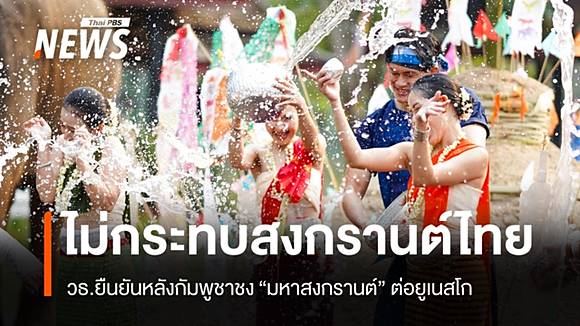
The Ministry of Culture confirms Cambodia’s submission of “Maha Songkran” to UNESCO, affirming that it does not affect Thailand’s Songkran — a report by Thai PBS News.
According to the UNESCO website, Cambodia has one item awaiting for consideration in the year of 2026, namely ‘Traditional Khmer wedding.’ In addition, there is the ‘Mohasangkran chnam thmey’ item, or traditional Khmer New Year, which is in the preparatory stage to enter the consideration process in the following year in compliance with procedural steps of the Convention.
The Director‑General of the Thai Department of Cultural Promotion stated that earlier, in 2021, the Ministry of Culture submitted “Songkran in Thailand, traditional Thai New Year festival” to UNESCO. In 2023, it was officially inscribed on the Representative List of the Intangible Cultural Heritage of Humanity. This registration is fully valid and is not affected by submissions from other countries.
According to the framework of UNESCO’s Convention for the Safeguarding of the Intangible Cultural Heritage, the key objectives are to protect, preserve, and promote the transmission of cultural heritage so that it is not lost, and to raise awareness of its value at the local, national, and international levels. The Convention is not intended to grant exclusive ownership to any single country, since many intangible cultural heritage elements may exist across several nations.
In addition, the Director‑General of the Department of Cultural Promotion cited the case of the Republic of the Union of Myanmar, which submitted “Myanmar traditional New Year Atā Thingyan festival” and had it inscribed on UNESCO’s Representative List of the Intangible Cultural Heritage of Humanity in 2024. This festival is a solar‑calendar New Year tradition held in mid‑April, similar to those in other countries in the region.
Cambodia’s submission is considered a right of a State Party under the Convention. The evaluation will focus on the practices, expressions, and community participation within the territory of the submitting country, along with safeguarding plans and supporting academic evidence.
Ms. Yuthika further stated that Thailand became a State Party to the Convention on June 10, 2016. At present, Thailand has six intangible cultural heritage items inscribed at the international level on UNESCO’s Representative List of the Intangible Cultural Heritage of Humanity:
- Khon masked dance drama (2018)
- Traditional Thai massage, or Nuad Thai (2019)
- Nora, Southern dance drama (2021)
- Songkran (2023)
- Tomyum Kung soup (2024)
- Kebaya (2024 – submitted as a shared heritage together with Malaysia, Singapore, Indonesia, and Brunei)
In addition, there are four items currently being prepared for consideration: Thai traditional dress, Muay Thai, Pha Khao Ma (Thai checkered cloth), and Loy Krathong. The item Thai traditional dress is scheduled to enter the evaluation process in 2026. She emphasized that the Department of Cultural Promotion closely monitors movements of other countries and coordinates with nations in the region to foster understanding and cultural cooperation, leading to international recognition and appreciation of shared intangible cultural heritage.
“The inscription of intangible cultural heritage is a process of safeguarding and transmission, not a competition or a struggle for ownership. Culture is the shared heritage of humanity,” said the Director‑General of the Thai Department of Cultural Promotion.
What is the truth?
The post in question was merely fake news, spread by a Facebook page that was deliberately made to look like a legitimate news outlet. But, the post had no basis. This is confirmed by checking the official news websites of both countries. The post and the fake “Khao sod” page later disappeared from the platform.
Verification Process
- Check on the referenced source: The investigation traced the claim from Threads back to the original post on Facebook. The team was able to confirm that the page was fake. And later, it was eventually deleted.
- Keyword search: Keywords such as the name “Anwar [Ibrahim]” were used to search for the original post on Facebook, which led to the discovery of the fake news. The word “สงกรานต์ [Songkran]” was also translated into English and Khmer to search for related reports on foreign news websites.
- Comparison with other sources: News sites in Malaysia and Cambodia were checked for reports matching the claim made in the fake post. No such reports were found, and no content resembling the claims of the fake page was identified.
Impacts of misinformation
- Misunderstanding between neighbouring countries: Putting words into the mouth of a national leader about conflicts involving another country can create confusion, fuel hatred toward a third country, or escalate tensions further.
- Stirring extreme nationalism: Cultural issues are sensitive. Spreading claims that neighboring countries are interfering or forbidding traditions provokes online insults and hostility, undermining relations between the peoples of both nations.
- Undermining the credibility of real media: Fake pages deliberately using names or logos similar to mainstream or official outlets can mislead those who do not verify carefully, damaging the reputation of legitimate news organizations.
- Echo chamber effect: When people flock to insult in the comments, platform algorithms push the post to wider audiences, creating a cycle of fake news that spreads endlessly.
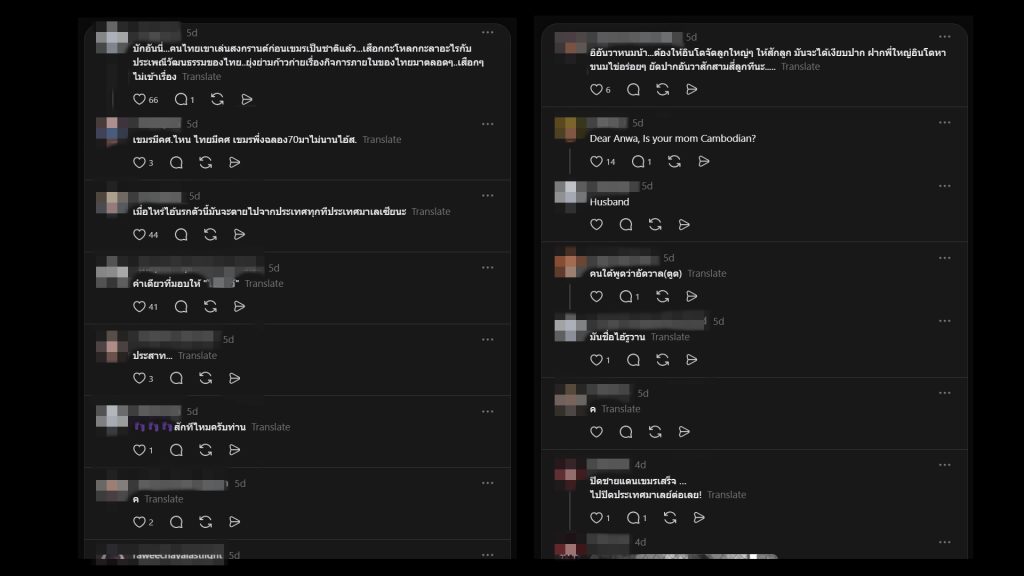
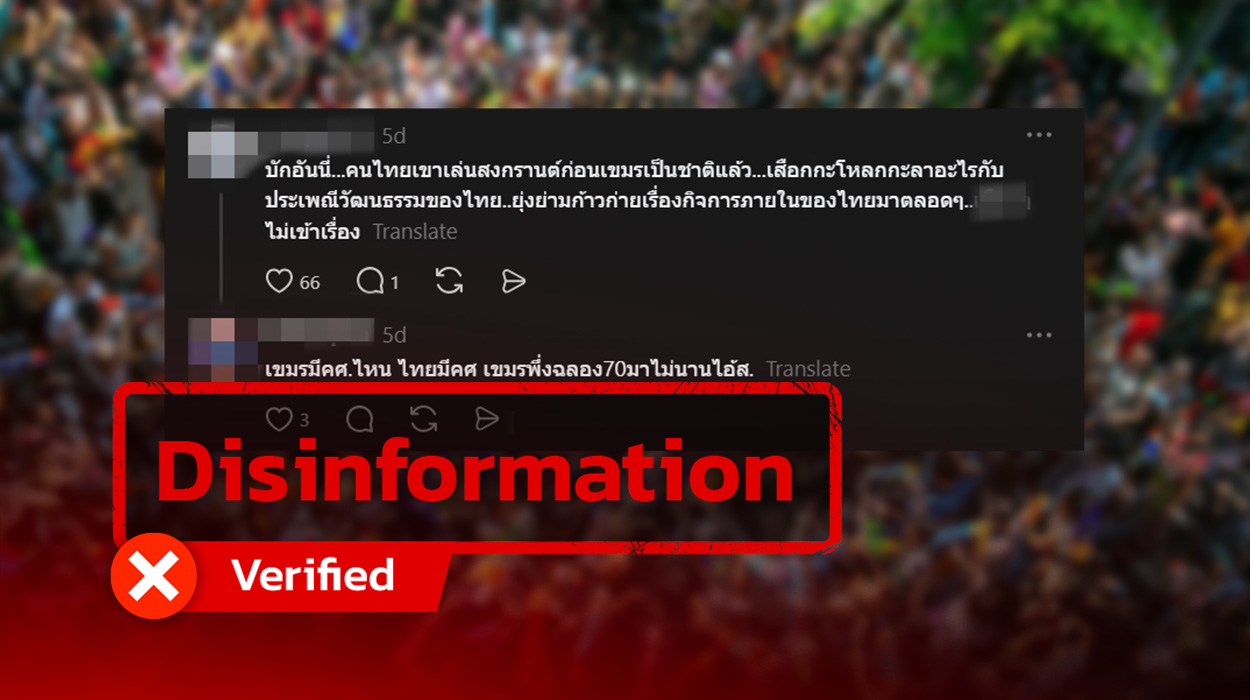
Screenshots of public comments from some users who believed the story to be true
What to do with this misinformation?
- Check for plausibility
- Why would he say that? The Malaysian Prime Minister has no stake or authority to forbid Thailand from celebrating Songkran or to decide whose culture it belongs to.
- Who is the source? Check the page name — it is often an imitation or a fake page, or one that has not been officially verified.
- Cross‑check with other news sources
- If it is a major issue, such as a statement by a national leader, there should normally be coverage by multiple news outlets — often all major outlets in the originating country or the countries involved. If no such coverage exists, assume it is fake news.
- Do not engage
-
- Avoid creating engagement. Even sharing with criticism or reacting angrily increases the visibility of the post.
-
- Do not read comments. The more comments a post receives, the more the platform’s algorithm pushes it into other users’ feeds, further amplifying its reach.
- Report and warn others
-
- Use the report function: Select “False information” so the platform’s system can review the post.
- Warn close contacts: If you see friends or relatives sharing the post, send them a private message — or use another channel outside the post itself — to let them know it is fake news.
Translation edited by: Peerachai Pasutan
Related Content