
หากใครเป็นคอหนัง คงจะเห็นกันว่า ปี 2567 คือช่วงเวลาที่ ‘หนังไทย’ เข้าใกล้เวที ‘ออสการ์’ มากที่สุด
As cinephiles may know, many Thai movies have been recognized internationally over the last two decades. And in 2024, Thai cinema almost reached the Oscar race for the first time in history. [Scroll down for the English version]
ย้อนกลับไปตอนนั้น หลานม่า (กำกับโดยพัฒน์ บุญนิธิพัฒน์) สร้างประวัติศาสตร์ในฐานะหนังไทยเรื่องแรกที่เข้ารอบ 15 เรื่องสุดท้าย เพื่อชิงชัยรางวัลออสการ์ครั้งที่ 97 สาขาภาพยนตร์นานาชาติยอดเยี่ยม ยังไม่นับว่าในปีเดียวกันนั้น ก็เป็นปีที่หนังไทย “ฟีเวอร์” เนื่องจากมีหนังไทยทำเงินเกิน 100 ล้านบาท 8 เรื่อง – รวมถึงหลานม่า– แซงหน้าหนังฮอลลีวูด
แม้เมืองไทยจะมีบุคลากรฝีมือและความพร้อมต่าง ๆ หลายคนคงอดสงสัยไม่ได้ว่า ทำไมหนังไทยถึงยังไม่สามารถเข้าชิงรางวัลออสการ์ได้ แล้วคนในวงการหนังไทย จะต้องทำอย่างไรให้หนังไทยบรรลุเป้าหมายเช่นนั้นได้ ?
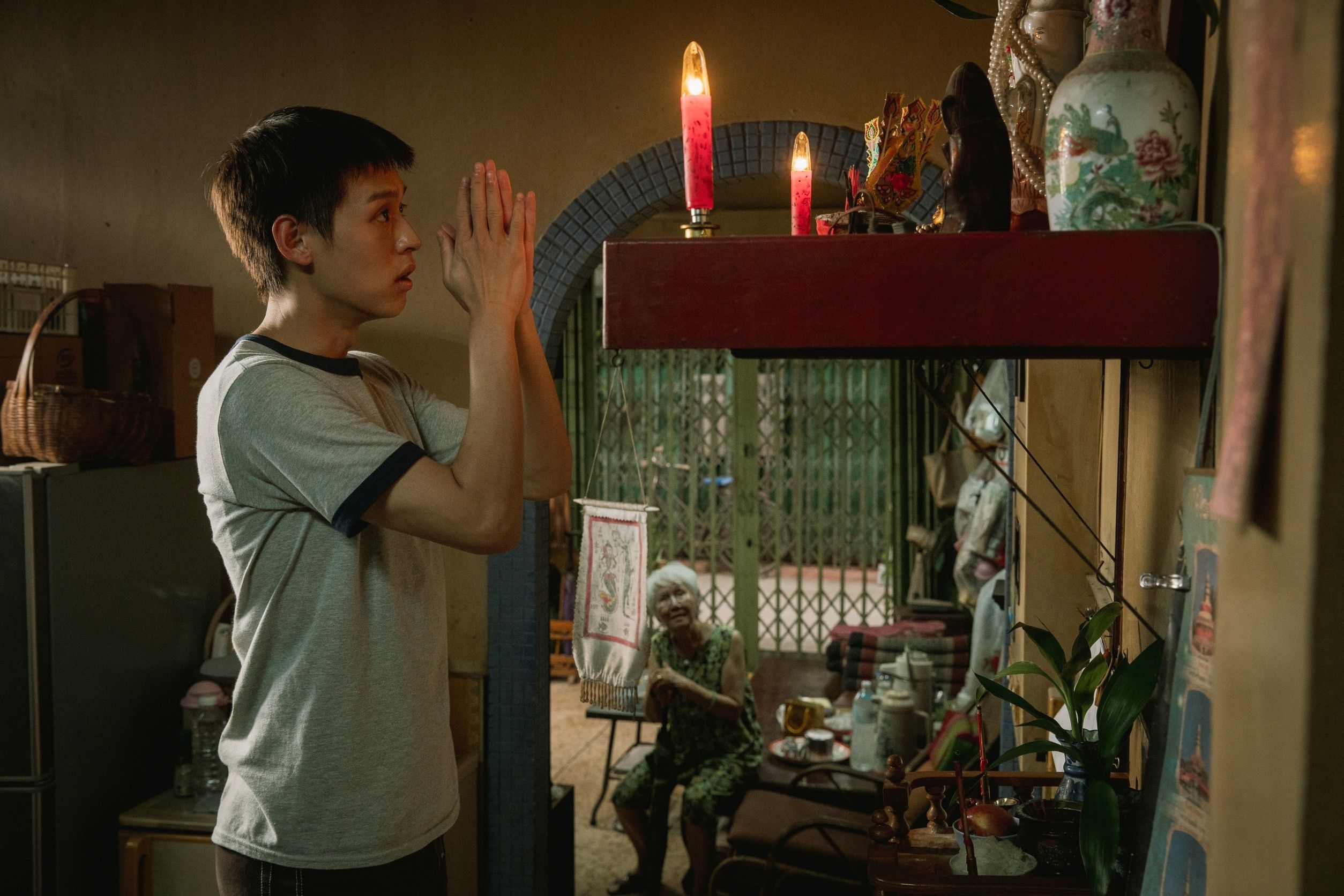
‘หลานม่า’ หนังไทยที่เข้าใกล้เวทีออสการ์มากที่สุดจนถึงขณะนี้ (ภาพ: GDH 559)
‘อิทธิพล’ ต้องมาก่อน ‘กระแส’ เพื่อให้หนังไทยไปออสการ์ ?
ถ้าย้อนดูกระแสธารหนังไทยนับตั้งแต่ต้นศตวรรษที่ 21 จะเห็นได้ว่า มีผลงานและผู้กำกับที่สร้างชื่อเสียงให้วงการมาโดยตลอด อาทิ ฟ้าทะลายโจร ของวิศิษฏ์ ศาสนเที่ยง (พ.ศ. 2543), เรื่องรัก น้อยนิด มหาศาล จากเป็นเอก รัตนเรือง (พ.ศ. 2546), หนังรางวัลปาล์มทองคำ ลุงบุญมีระลึกชาติ ของอภิชาตพงศ์ วีระเศรษฐกุล (พ.ศ. 2553) เรื่อยมาจนถึง ฉลาดเกมส์โกง ของนัฐวุฒิ พูนพิริยะ (พ.ศ. 2560) และภาพยนตร์รางวัล Grand Prix เรื่องล่าสุดบนเวที Semaine de la Critique ผีใช้ได้ค่ะ โดยรัชฏ์ภูมิ บุญบัญชาโชค (พ.ศ. 2568)
อธิป กลิ่นวิชิต – ผู้สื่อข่าวไทยพีบีเอสและผู้เชี่ยวชาญด้านภาพยนตร์ – อธิบายให้ฟังว่า ปกติแล้ว หนังไทยจะส่งออกไปสู่สายตาชาวโลกได้ด้วยการผลักดันของโปรดิวเซอร์หนังผ่านวิธีต่าง ๆ วิธีแรกคือ การเสนอผลงานให้ผู้วางโปรแกรมฉายของเทศกาลหนังต่าง ๆ วิธีที่สองคือ การออกบูทขายหนัง โดยเฉพาะ ‘ตลาดหนัง (Marché du Film)’ ของคานส์ การขอทุนสนับสนุนจากองค์กรต่างประเทศ เช่น Institut français หรือ Creative Europe MEDIA ก็สามารถช่วยให้หนังไปไกลขึ้นได้เช่นกัน ส่วนอีกวิธีหนึ่งคือ การอาศัยค่ายหนังต่างประเทศ อย่างเช่นในช่วงทศวรรษ 2000s เคยมีบริษัทจัดจำหน่ายหนังจากฮ่องกงตระเวนหาหนังไทยสายอาร์ตเฮาส์ เพื่อป้อนตลาดยุโรปที่โหยหาสิ่งใหม่ ๆ อยู่เสมอ
แน่นอนว่า การนำหนังสักเรื่องไปฉายต่างประเทศต้องอาศัยทั้งเงินและเครือข่าย และ 2 สิ่งนี้ก็สำคัญอย่างยิ่งหากจะส่งให้ไปถึงเวทีออสการ์ “ออสการ์เขาคิดคะแนนจาก [สมาชิกของ The Academy] 6,000-7,000 คน ไม่ใช่ว่า คุณแค่ส่งหนังออกไปฉาย คุณต้องรู้จักคนและทำให้กรรมการดูหนังได้มากที่สุด หลายครั้ง วิธีการของคนฮอลลีวูดคือ จัดงานเลี้ยงให้คนมาดูหนัง ซึ่งใช้เงินเยอะกว่า [การประกวดในเทศกาลหนังอื่น ๆ]” อธิป เล่า “หนังไทยเรื่องเดียวที่เข้าใกล้สิ่งนี้คือ หลานม่า แต่วิธีที่หลานม่าทำคือ จัดทัวร์ฉายตามมหาวิทยาลัยและชุมชนต่าง ๆ แล้วพยายามเชิญนักวิจารณ์และท้องถิ่นให้เข้าถึงหนัง... ถ้าถามผม ถือเป็นการเริ่มต้นที่ดีมาก”

พัฒน์ บุญนิธิพัฒน์ (ขวา) ผู้กำกับ ‘หลานม่า’ (ภาพ: GDH 559)
เช่นนี้แล้ว อธิปจึงให้ความเห็นว่า หนังออสการ์มีความเป็น “พาณิชย์” กว่าหนังรางวัลตามเทศกาลต่าง ๆ และยังคงจุดยืน “หนังกระแสหลักที่ดี” ไม่มากก็น้อยในปัจจุบัน ทั้งนี้ ยังมีอีก 2 ปัจจัยที่จะทำให้หนังสักเรื่องได้ชิงออสการ์ ได้แก่ ประเด็นของหนัง และสายสัมพันธ์ประเทศ/ภูมิภาคนั้นต่อสหรัฐฯ
เมื่อย้อนมองหนังที่ชนะรางวัลออสการ์สาขาภาพยนตร์นานาชาติยอดเยี่ยมในช่วง 5 ปีให้หลัง 2 เรื่องเกี่ยวข้องกับสงครามโลกครั้งที่ 2 (All Quiet on the Western Front จากเยอรมนี และ The Zone of Interest จากสหราชอาณาจักร) และอีก 1 เรื่องนั้นมีฉากหลังยุคเผด็จการ (I’m Still Here จากบราซิล) ประเด็นทางการเมืองเหล่านี้ถือเป็นเรื่องที่ “โดนใจ” กรรมการออสการ์มาตลอด
อีกด้านหนึ่ง ตลาดของประเทศ/ภูมิภาคที่ส่งหนังเข้าชิงออสการ์ก็สำคัญ เพราะบ่งบอกถึงความคุ้นเคยระหว่างฮอลลีวูดกับตลาดนั้น ๆ อย่างเช่นญี่ปุ่นที่เป็นตลาดใหญ่ของหนังอเมริกัน และ Drive My Car ก็ชนะออสการ์ในรอบ 5 ปีที่ผ่านมา หรือประเทศสแกนดิเนเวียซึ่งมีสไตล์การทำหนังและส่งออกบุคลากรให้ฮอลลีวูดอยู่แล้ว จึงอาจไม่น่าแปลกใจนักที่ Another Round จากเดนมาร์ก คว้ารางวัลออสการ์ไปได้
“คุณต้องมีความสัมพันธ์เชิงธุรกิจบางอย่างในระยะเวลาที่เพียงพอ มีเครดิตต่าง ๆ ในวงการที่เพียงพอ นี่ก็ต้องอาศัยระยะเวลา ไม่ใช่จะเกิดขึ้นได้ง่าย ๆ ต้องค่อยเป็นค่อยไป หรือคุณต้องมีประเด็นทางการเมืองที่มันโดนใจเขา อย่างออสการ์ครั้งนี้ The Secret Agent [จากบราซิล] ก็เล่าเรื่องเผด็จการ แล้วก็ถ่ายทอดภาพลักษณ์ ‘ทวีปอเมริกา’ ที่ไม่ได้ใช้ภาษาอังกฤษเยอะที่สุดในความเป็นจริง” อธิปสรุป แล้วต้องใช้เวลานานเท่าไหร่ในการสร้างสายสัมพันธ์เหล่านี้ เพื่อให้หนังไทยเอื้อมเวทีออสการ์ได้จริง ๆ ?
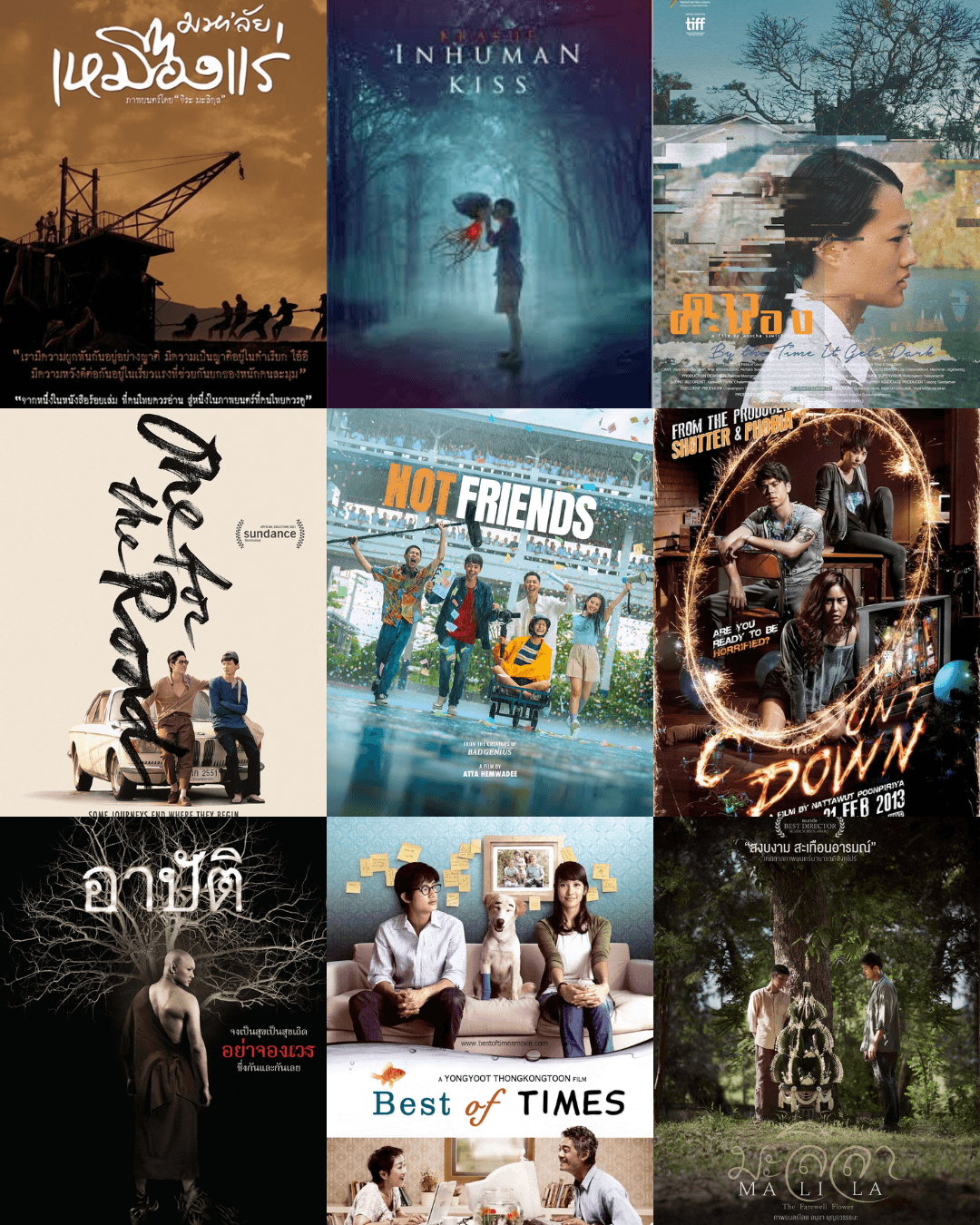
ภาพยนตร์ไทยส่วนหนึ่งที่เป็นตัวแทนในการคัดเลือก สาขาภาพยนตร์ต่างประเทศยอดเยี่ยม บนเวทีออสการ์
หรือ ‘พาราไซต์โมเดล’ คือคำตอบ หากอยากให้หนังไทยไปออสการ์ ?
ในมุมมองของอธิป อย่างเร็วที่สุด หนังไทยมีสิทธิ์เฉิดฉายบนเวทีออสการ์ได้ในอีก 20 ปี เนื่องจากตอนนี้มีค่ายหนังที่พยายามลงทุนในหนังไทยอย่างต่อเนื่อง พร้อมสร้างสายสัมพันธ์ทางธุรกิจกับสตูดิโอต่างประเทศ อธิปมองว่า นี่เป็นโมเดลที่เกาหลีใต้ทำตั้งแต่ทศวรรษที่ 1990 จนมาสำเร็จผลกับ Parasite ที่กลายเป็นหนังที่ไม่ได้พูดภาษาอังกฤษเรื่องแรกที่คว้ารางวัลภาพยนตร์ยอดเยี่ยม ในงานประกาศผลรางวัลออสการ์ครั้งที่ 92 เมื่อ 6 ปีก่อน
“ผมอยากให้ดู Parasite... คุณอาจจะเคยได้ยินว่า ‘อ๋อ เป็นหนังที่รัฐบาลเกาหลีใต้สนับสนุนจนได้ออสการ์’ มันไม่ใช่แบบนั้นครับ” อธิปเกริ่น “ถ้าย้อนดูตอนประกาศว่า Parasite ชนะออสการ์ คนบนเวทีเขาเรียกผู้หญิงหัวแดงคนหนึ่งชื่อ ‘มิกิ ลี’ (Miky Lee) ขึ้นไป เขาเป็นคนที่ทำโรงหนังมัลติเพล็กซ์คนแรกในเกาหลีใต้ แล้วเขาก็เคยลงทุนในค่าย DreamWorks ของฮอลลีวูดด้วย เขาเลยมีสายสัมพันธ์ทางธุรกิจที่ยิ่งใหญ่และยาวนานมาก [จนช่วยผลักดันให้แคมเปญ Parasite ชนะออสการ์] พูดอย่างนี้ คุณจะเริ่มเห็นภาพใช่ไหมครับว่า [หนังเกาหลีใต้] มีสายสัมพันธ์อะไรกับอเมริกา”
“การที่คุณจะโน้มน้าวคนประมาณ 7,000 คน [ให้โหวต] หนังที่คุณฟังภาษาไม่ออก จนได้รางวัลภาพยนตร์ยอดเยี่ยมนั้น มันอาศัยมากกว่า ‘ความเป็นหนังคำวิจารณ์ดี’ เยอะครับ” อธิปกล่าวเพิ่ม ทั้งนี้ ต้องพิจารณาบริบททางเศรษฐกิจ-สังคมของเกาหลีใต้ด้วยว่าเป็น ‘แชโบล (chaebol)’ หรือครอบครองในมือของคนไม่กี่ตระกูล รวมถึงธุรกิจภาพยนตร์ “เขาผูกขาดจัดเลยครับ แต่ว่า ‘แชโบล’ ในวงการหนังเกาหลีใต้ เขาเอารายได้จากหนังฝรั่ง มาทำหนังเกาหลีต่อ แล้วก็ดำเนินการอย่างมีเป้าหมาย อย่างคุณมิกิ ลีนี่ เขาเคยบอกเลยว่า จะเอาหนังเกาหลีให้ได้ออสการ์ หรือปักธงในอเมริกาให้ได้” อธิปให้ข้อสังเกต
กรณีศึกษาของ Parasite และวงการหนังเกาหลีใต้ อาจให้ข้อคิดว่า ‘เอกชน’ คือแรงขับเคลื่อนสำคัญในอุตสาหกรรมหนัง แต่ก็ไม่ได้หมายความว่า ภาครัฐไม่จำเป็นต้องมีบทบาทสนับสนุนใด ๆ เลย “จริง ๆ แล้วรัฐไม่ต้องดันเองอยู่แล้วนะ แต่รัฐควรอำนวยความสะดวก มันจำเป็นต้องมีคนที่ทำให้กลไกของรัฐไม่เป็นอุปสรรคกับการส่งออก สมมติ ถ้าเกิดมี [องค์กร] ที่รวมงานของเอกชนไปขายทีเดียว ก็ใช้ค่าใช้จ่ายถูกกว่า ส่วนเรื่องสวัสดิการและชั่วโมงทำงานที่ไม่สมเหตุสมผล จะแก้ไม่ได้เลยครับ ตราบใดที่ไม่มีสหภาพคอยกำหนดมาตรฐาน [ไม่เช่นนั้น] คนทำหนังไทยที่มีฝีมือส่วนมากก็จะไปรับงานต่างประเทศเหมือนในตอนนี้”
ตกลงแล้ว ‘ออสการ์’ สำคัญกับหนังไทยขนาดไหน ?
ปฏิเสธไม่ได้ว่าในช่วงทศวรรษที่ผ่านมา เวทีออสการ์ได้รับความนิยมลดลงไปมาก อีกทั้งยังเกิดกระแสวิพากษ์วิจารณ์ต่าง ๆ โดยเฉพาะประเด็น #OscarsSoWhite ซึ่งตั้งคำถามว่านักแสดงผู้เข้าชิงรางวัลออสการ์มักจะมีแต่คนขาว หรือความสงสัยเกี่ยวกับการทำแคมเปญ ‘พลังเซเลปฯ’ ที่ “น่ากังขาของ” แอนเดรีย ไรส์บอร์ระห์ (Andrea Riseborough) จาก To Leslie ที่ได้เข้าชิงออสการ์สาขานักแสดงนำหญิงยอดเยี่ยมเมื่อ 3 ปีก่อน หลายคนจึงอาจมองว่า ออสการ์ไม่ได้ทรงพลังอีกต่อไปเมื่อเทียบกับในอดีต
อธิปให้ความเห็นไว้ว่า แท้จริงแล้ว คุณค่าของรางวัลออสการ์นั้นขึ้นอยู่กับคนมอง “ถ้าเป็นผู้ชม มันก็อาจจะไม่สำคัญขนาดนั้นต่อไปแล้วนะครับ ถ้าคุณเป็นคนดูหนัง ก็จะพบว่ามันมีหนังหลายเรื่องที่ดีแต่ออสการ์ไม่เหลียวแล หรือบางเรื่องที่ชนะได้อย่างไรก็ไม่รู้ ก็ยังมีหนังเทศกาลอื่น ๆ อีกเยอะให้ดูครับ...” อธิปเสริม “แต่สำหรับอุตสาหกรรมหนัง ออสการ์มีความหมายอยู่แล้วครับ อเมริกาคือตลาดหนังที่ใหญ่ที่สุดในโลก การที่คุณมีหนังเรื่องหนึ่งไปโผล่ที่นั่น แปลว่าคุณปักธงบางอย่างได้สำเร็จ”
แม้จะเป็นภาพยนตร์อเมริกันและพูดอังกฤษเป็นส่วนใหญ่ทั้งคู่ แต่ Minari และ Everything Everywhere All at Once ก็สะท้อนถึงพลังเอเชียบนเวทีออสการ์ได้หลังปรากฏการณ์ Parasite โดยเฉพาะเรื่องหลังที่ชนะรางวัลภาพยนตร์ยอดเยี่ยม อีกทั้งผู้กำกับร่วมและนักแสดงหลักเชื้อสายเอเชียก็ได้รางวัลด้วยเช่นกัน “อย่างมิเชล โหย่ว (Michelle Yeoh – นักแสดงนำของ EEAAO) ก็ไปโผล่ในซีรีส์เรื่องนั้นเรื่องนี้ [หัวเราะ] นี่เป็นผลจากกระแสเอเชียเหมือนกัน” อธิปกล่าว
“[เมื่อหนังต่างประเทศได้ออสการ์] ผมว่ามันเป็นชัยชนะทางวัฒนธรรมนะ” – อธิป กลิ่นวิชิต
หนทางที่หนังไทยจะไปถึงเวทีออสการ์ไม่ง่ายและยังต้องใช้เวลาพอสมควร อย่างไรก็ตาม ถ้าคนในอุตสาหกรรมมุ่งมั่นผลักดันหนังไทยในระยะยาว และได้รับการสนับสนุนที่ต้องการจากภาครัฐ ผลลัพธ์อย่างน้อยที่สุด วงการหนังไทยก็จะสามารถยืนหยัดได้อย่างยั่งยืนและดีกว่าวันก่อน “อุตสาหกรรมที่คนมันอยู่ไม่ได้ ก็ผลิตงานที่ดีไม่ได้หรอก แต่เมืองไทยมันอยู่มาได้เพราะคนที่ยอมกัดก้อนเกลือกินเพื่อที่จะทำศิลปะในชีวิต” อธิปปิดท้าย
อัปเดตทุกเรื่องศิลปวัฒนธรรมในรายการ ‘ไทยบันเทิง’ ทุกวันจันทร์-ศุกร์ เวลา 10:00 น. และ 16:45 น. และวันเสาร์-อาทิตย์ 20:15 น. ทางไทยพีบีเอส ช่องหมายเลข 3: www.thaipbs.or.th/ArtandCultureThaiPBS

บรรยากาศงานประกาศผลผู้เข้าชิงรางวัลออสการ์ครั้งที่ 98 เมื่อวันที่ 22 ม.ค. 69 (ภาพ: Valerie Macon/AFP)
At the end of 2024, Pat Boonnitipat’s How to Make Millions Before Grandma Dies, aka Lahn Mah, became Thailand’s first submission to advance to the 15-film shortlist for Best International Feature Film at the 97th Academy Awards. It is noted that that year, Thai cinema gained more popularity than Hollywood pictures, as eight Thai films, including Lahn Mah, had grossed over 100 million baht each.
Thai cinema does possess talented personnel and technical readiness. Regardless, some might wonder: “Why have no Thai films been nominated for the Oscars yet?” And another question might follow: What should people in Thai cinema do to attain such goal?
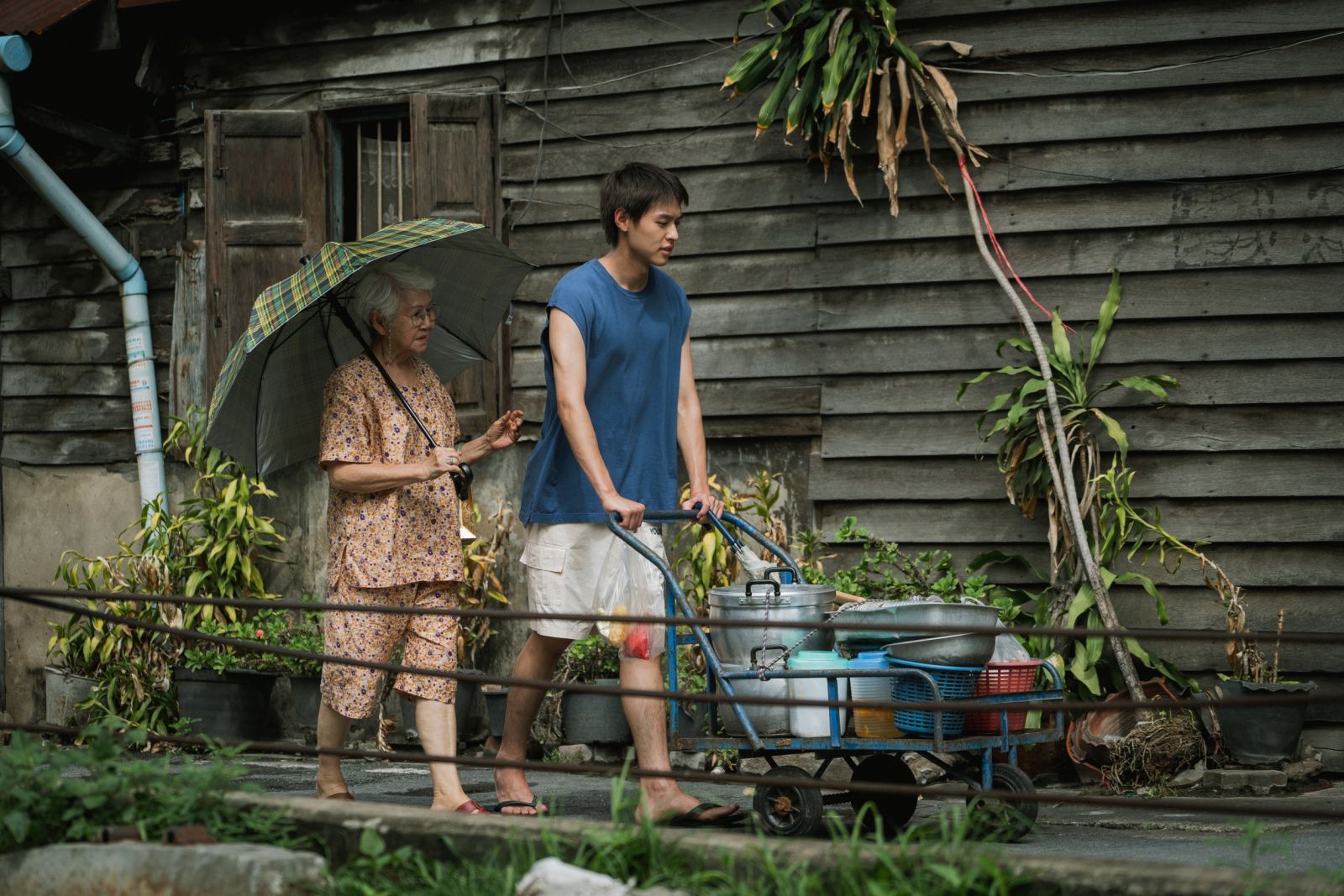
A promotional photo from ‘How to Make Millions Before Grandma Dies,’ aka ‘Lahn Mah,’ the first Thai film shortlisted for Best International Feature Film at the 97th Academy Awards (Photo: GDH 559)
Do relationships with Hollywood matter for Thai cinema’s Oscar races?
Since the beginning of the 21st century, there have always been prominent Thai films on the international stage, such as Wisit Sasanatieng’s Tears of the Black Tiger, Pen-ek Ratanaruang’s Last Life in the Universe, Apichatpong Weerasethakul’s Palm d’Or-winner Uncle Boonmee Who Can Recall His Past Lives, Nattawut Poonpiriya’s Bad Genius and latest Semaine de la Critique Grand Prix-recipient A Useful Ghost by Ratchapoom Boonbunchachoke.

Apichatpong Weerasethakul, one of the Thai ‘New Wave’ film directors, while receiving the Palm d’Or in 2010 (Photo: Francois Guillot/AFP)
Thai PBS reporter and cinema expert, Athip Klinwichit, explains the general process of promoting Thai cinema across the globe. For instance, producers may submit their works to be screened in festivals or sell them in film markets like Cannes’ Marché du Film. Applying for foreign organizations’ grants (e.g., Institut français and Creative Europe MEDIA) is another way to expose Thai films further. Last but not least, connections to international studios are long considered crucial, especially during the 2000s when Thai ‘New Wave’ films were warmly welcomed by European spectators thanks to a Hong Kong-based distributor.
Capital and networking indeed matter to distribute a film worldwide – and the Oscar competitions require both even more. “The Academy has thousands of eligible voting members. So, it’s not just screening your film to the voters, but you must convince them as many as possible. People in Hollywood often hold feasts so that voters come to watch the film. This costs a lot [compared to other film competitions,]” Athip elaborates. “Lahn Mah is still the only Thai film to have done so. But their approach was a bit different: They organized screenings in university campuses and communities instead, and then critics and locals were invited to see the film. I think that was a great start.”
In Athip’s opinion, the Oscars are thus more driven by “commercial” reasons compared to other film competitions. Yet, present-day Oscar-winning pictures still reflect the value of “good, mainstream films” to some degree. However, a chance of getting an Oscar nomination also depends on the film’s messages and the submitting country/region’s relations to Hollywood.
Regarding movie topics and themes, two of the five latest winners for the Best International Feature Film category are related to the Second World War (Germany’s All Quiet on the Western Front and the UK’s The Zone of Interest), while one touches military dictatorship (Brazil’s I’m Still Here). Such political stories are the Oscars’ long-time “favorites” elements.
As for the relations with Hollywood, the market of the submitting country/region also plays an important factor. For instance, Japan is one of Hollywood’s biggest markets, and one of the Japanese submissions, Drive My Car, did win Best International Feature Film in 2022. Another example is Scandinavian cinema: its styles and personnel have long been influential to Hollywood – unsurprisingly, that might be another factor behind the win of Denmark’s Another Round a few years ago.
“You must have significant business relations and a good reputation [in Hollywood] for a period of time. These ties really need time to establish, and it is not an easy task. Or if that’s not the case, the movie must really impress the voters politically. Like this time, Brazil’s The Secret Agent has made several Oscar nominations – not only because it has the background of the dictator era, but it reflects the image of the entire ‘America’ where, in reality, English is not the most spoken language.” Athip summarizes.
That being said, some may now ask: “How long does it take” for Thai cinema to be more visible in Hollywood and eventually reach the Oscars?
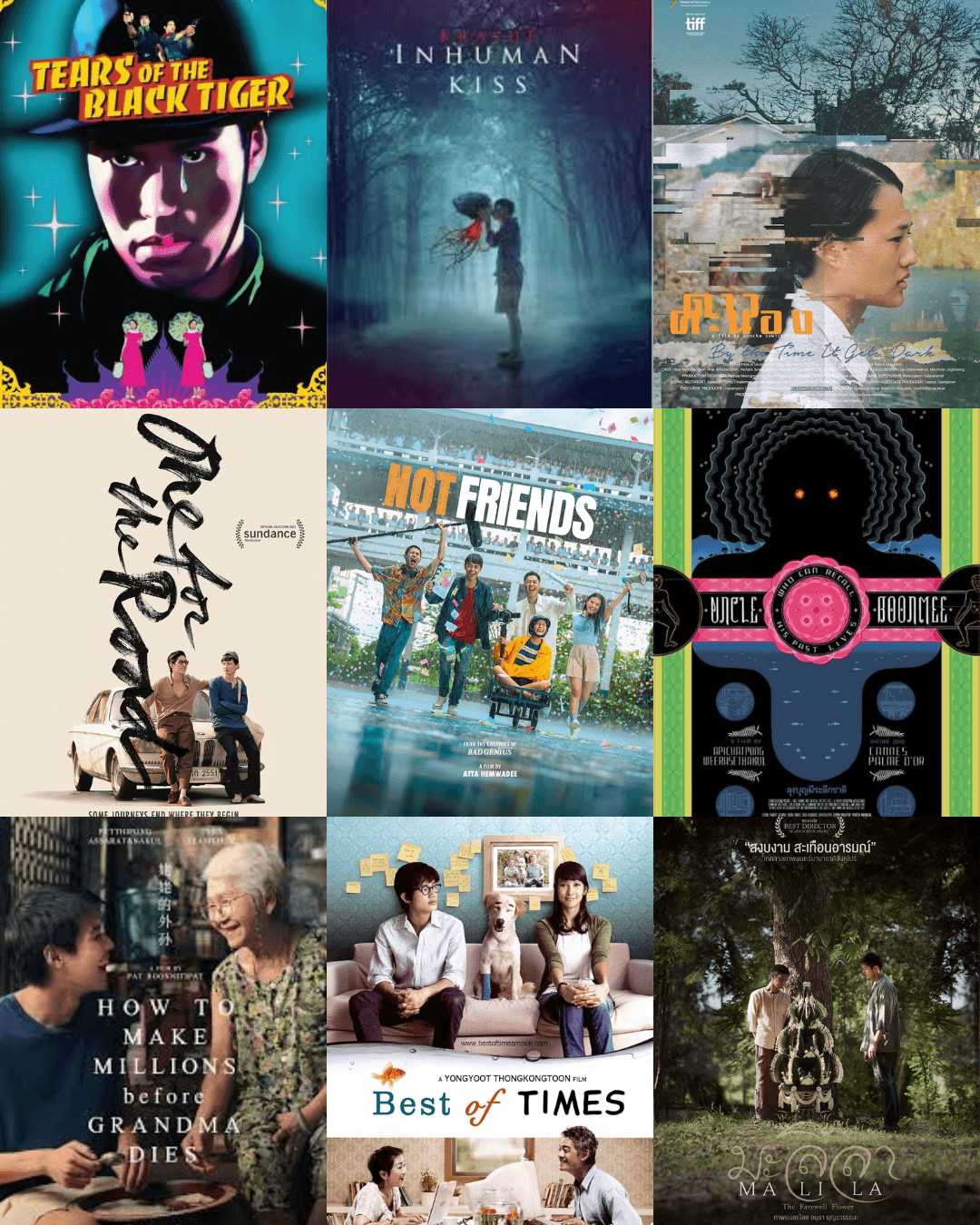
Some of the Thai movies submitted for the Oscars’ Best International Feature Film
If Thai cinema follows Parasite’s footsteps for the Oscar races?
Personally, Athip thinks that it might take “at least” two decades until a Thai film is able to win an Oscar, as a major Thai studio has recently announced plans, investments and international partnerships to promote Thai cinema. Athip considers this model similar to South Korean cinema’s approaches starting in the 1990s, which ultimately yielded Parasite’s Best Picture victory, the first non-English film to achieve so, at the 92nd Academy Awards.
“I’d like to mention Parasite… You might have heard praise that ‘it won Oscars because of the South Korean government’s support.’ Well, that wasn’t the case,” Athip points out. “If you rewatch the Parasite winning announcement, a red-haired lady was called to appear on stage. She is Miky Lee, the first multiplex entrepreneur in South Korea and former investor of DreamWorks. In other words, she has long-established crucial business relationships [that helped Parasite win Oscars.] So, now you might see more concretely how [South Korean cinema] is connected to the U.S.”
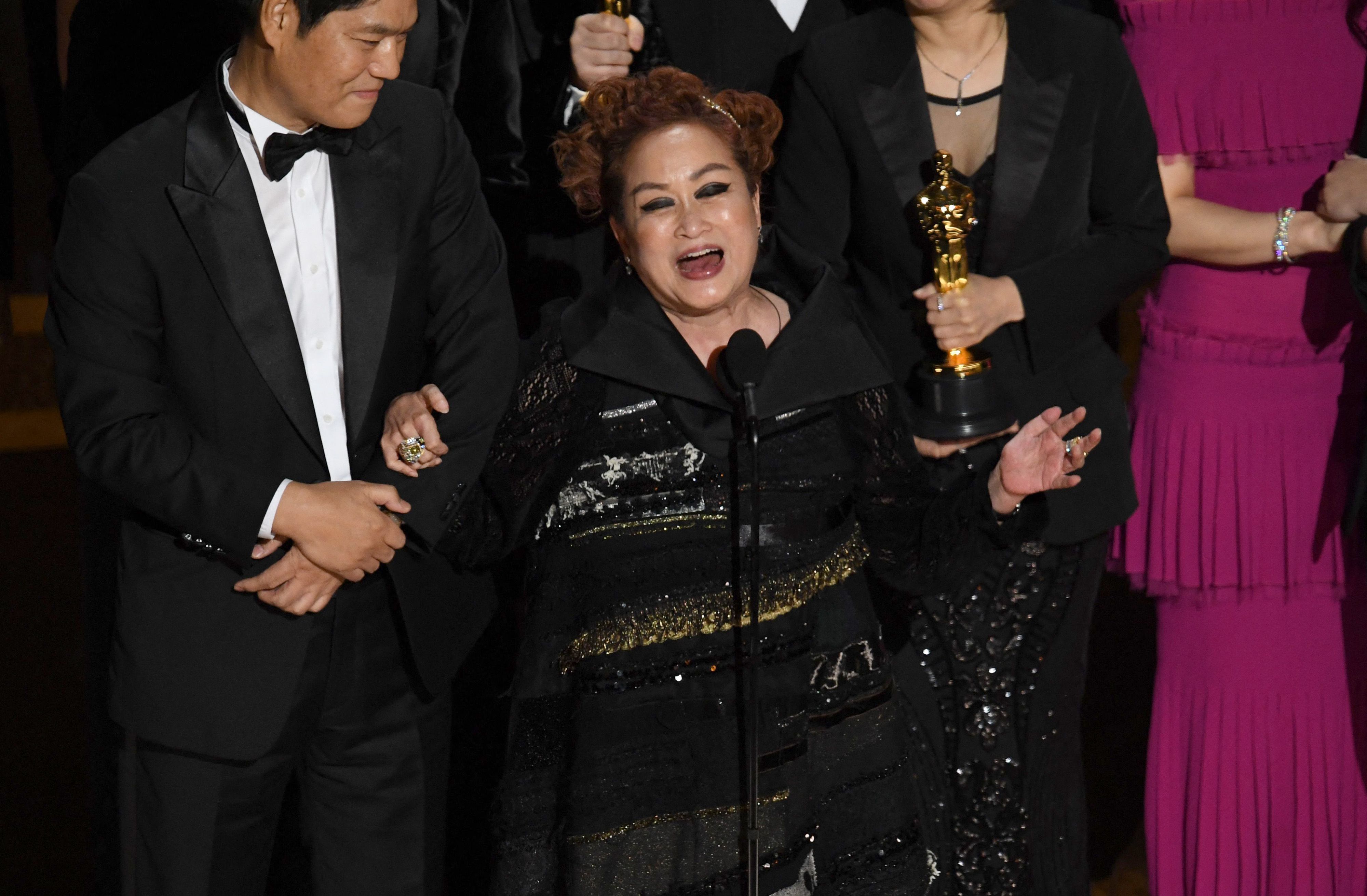
Miky Lee while giving her speech after Parasite’s Best Picture victory at the 92nd Academy Awards (Photo: Kevin Winter/Getty Images via AFP)
“To persuade 7,000 people to vote for a foreign, non-English film, which ultimately won Best Picture, that needed a lot more than quality and great reviews,” Athip adds. However, we have to look at the country’s socio-economic context, where a handful of families possess wealth and run every industry, including cinema. This is known as ‘chaebol’ in Korean. “Monopoly exists there. But in South Korean cinema’s chaebol, Korean movies are funded by revenues from Western films. And they set clear objectives. Miky Lee, for example, used to say that she would bring Korean cinema to America and the Oscars,” Athip remarks.
Case studies from Parasite and South Korea suggest that the private sector in the film industry must set and achieve its own goals. Nevertheless, this absolutely does not mean that public and government aid are inessential. “In fact, authorities don’t have to ‘push’ the industry by themselves, but they do have to facilitate. Someone needs to reduce the officials’ barriers to exporting artistic works. Suppose a public agency sets a booth in the film market, gathering movies from various studios, that will cost less for sure. The other thing is to fix unfair work hours and benefits for workers by establishing a union. Otherwise, skilled Thai filmmakers continue to choose working in foreign productions.”
Is it really necessary for Thai cinema to win the Oscars?
Over the past decade, the Oscars’ popularity has declined, while the Academy has met criticism over its standards. Particularly, the #OscarsSoWhite movement questions the acting nomination lists frequently dominated by white actors. Or three years ago, the Best Actress campaign of To Leslie’s Andrea Riseborough sparked a controversy, as it was allegedly sponsored by ‘celebrities’ power’ and did not follow the traditional campaigning. Thus, the Oscars may no longer be appealing and powerful to some people.
According to Athip, the value of modern-day Oscars is up to different perspectives. “For the film lovers, the Oscar ceremonies are not that important anymore. If you’re a cinephile, you know that there are countless great movies overlooked by the Oscars. Some pictures are not Oscar-worthy. And many good works are to be explored in other film festivals…” Athip adds. “But for people in the world’s film industry, the Oscars always matter, as the U.S. remains the top market globally. Provided that a foreign movie becomes a big success there, that is a real milestone.”
Despite being American films, which largely speak English, both Minari and Everything Everywhere All at Once emphasize the ‘Asian power’ in post-Parasite Hollywood. Apart from Best Picture, Everything Everywhere All at Once received other accolades distributed to Asian people and descendants. “You see Michelle Yeoh appear on countless series after EEAAO. This also results from the Asian phenomenon, too,” Athip says.
“[When a foreign, non-English film wins an Oscar,] in my opinion, it is a cultural win,” – Athip Klinwicit
It definitely takes a lot of time and effort until Thai cinema emerges or even win an Oscar. After all, if people in the industry are determined and receive all necessary government support, at the very least, Thai cinema can sustain and be more hopeful than before. “A repressive industry to its workers cannot produce good works. But Thai cinema has survived because of passionate filmmakers who are willing to struggle and make their art for the world,” Athip concludes.
Explore Thai soft power from different angles with Thai PBS

อ้างอิง | References
- Miky Lee solidifies legacy as visionary architect of Korean cinema, The Korea Times [January 28, 2026]
- Oscars 101: How Academy Awards voting works, Goldderby [January 20, 2026]
- The Oscars’ Andrea Riseborough Controversy, Thoroughly Explained, The New York Times [February 8, 2023]
Cover photo: How to Make Millions Before Grandma Dies (GDH 559)
Words: Peerachai Pasutan