Image of alleged missile strikes on Tel Aviv found to be AI-generated
Thai PBS Verify found the fake image on: X
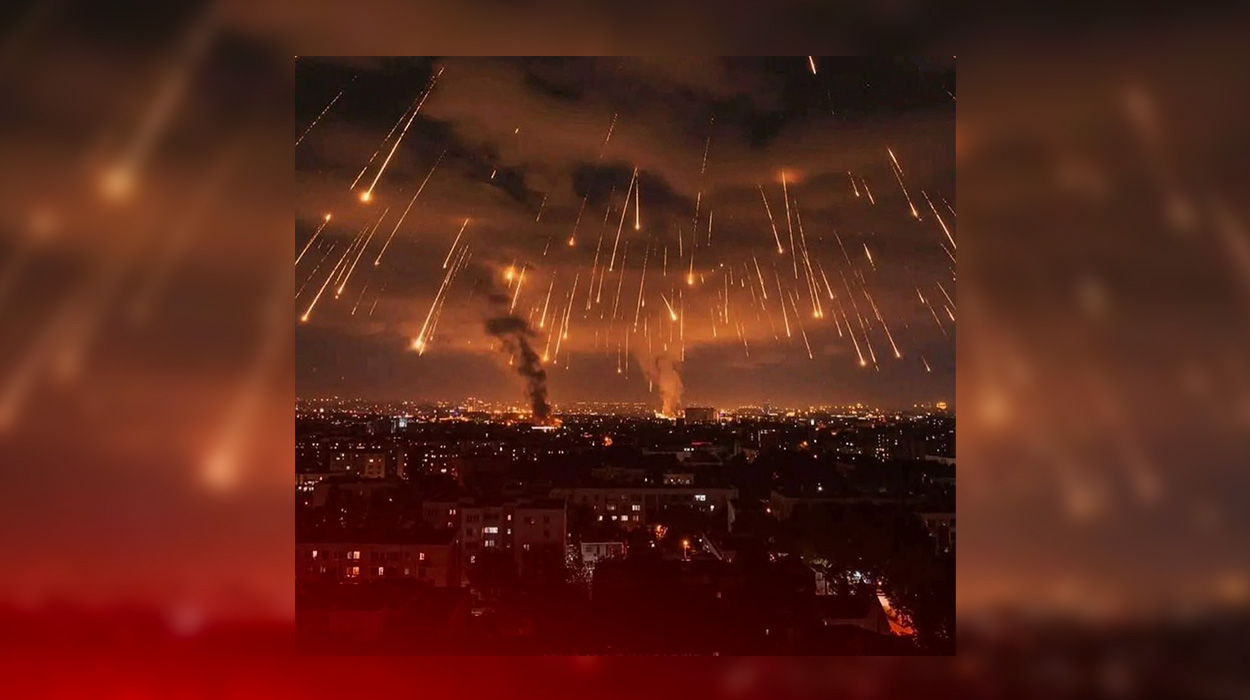
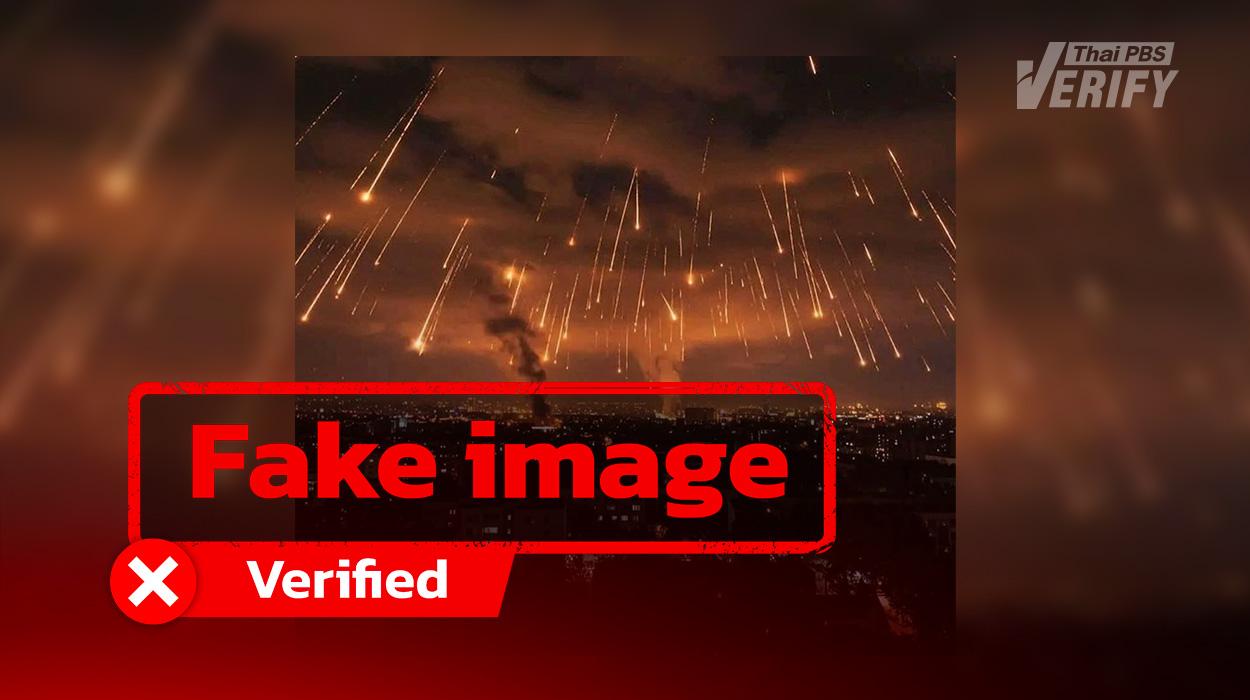
An X account shared an image resembling a fireball falling from the sky into a city.
Thai PBS Verify found that an X account shared an image resembling a fireball falling from the sky into a city. The caption was written in Spanish: “Tel aviv 2 de marzo de 2026. Ataque iraní Entonces… Así se ve la justicia divina?” It could be translated to Thai as: “Tel Aviv, March 2, 2026. Iranian attack. So then… is this what divine justice looks like?”
The post received 202,700 views, 1,100 reactions, more than 2,300 reposts, and 601 comments. The same image was also reposted by other X and Instagram accounts.
This incident in Tel Aviv never really happened
Upon visual inspection, several details suggest the image is unlikely to depict a real incident, as follows:
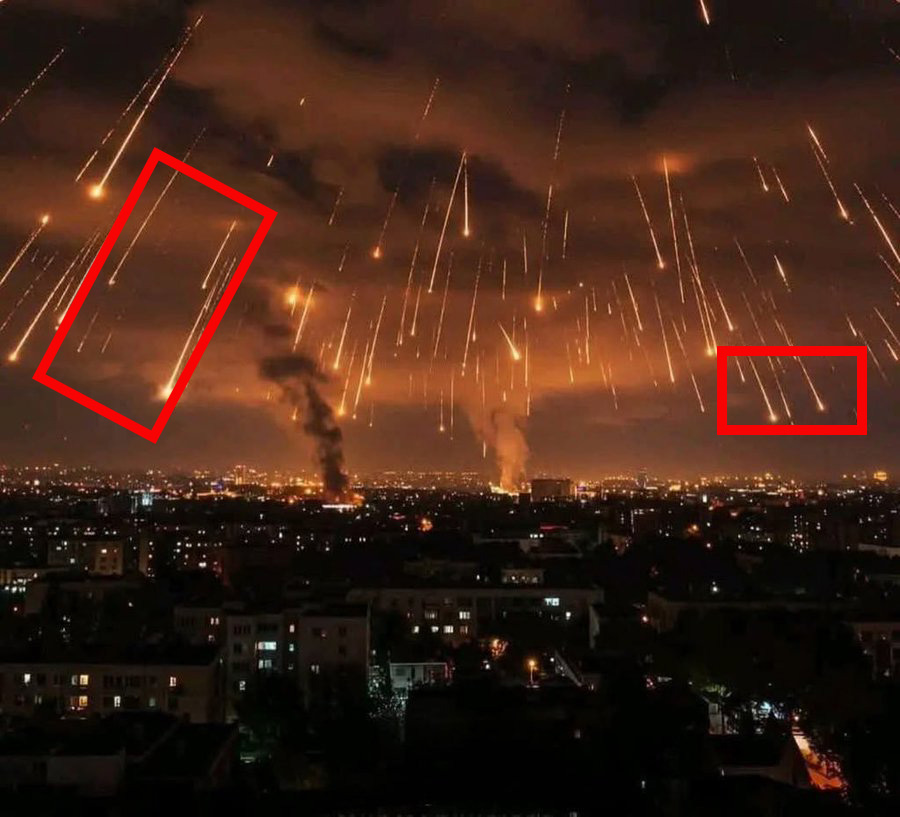
- Trajectory of the light: The orange streaks descending in the image appear unnatural. In real images of missiles or air defense systems, light trails typically show curvature following the missile’s path, centrifugal motion or fragmentation. In this image, however, the streaks appear as “overly parallel straight lines,” resembling digital brush strokes layered onto the scene. Importantly, the brightness remains “uniform along the entire length,” whereas in reality, light emitted by high-speed objects usually varies in intensity along the trajectory, with brighter head and fading tail.
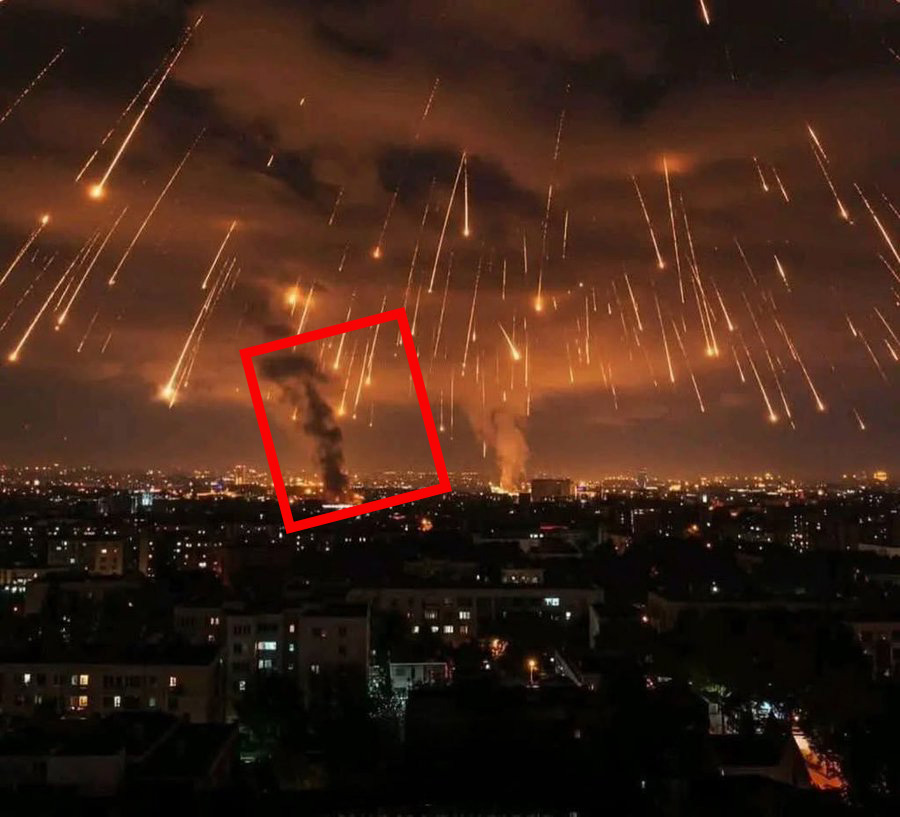
- Smoke and shadows: The dark smoke at the bottom spreads in a way that does not match the brightness of the descending object, and the rising smoke appears to be a graphic overlaid onto the image.
- City details – lights without sources: The lights in the building windows look like orange dots randomly painted on, not corresponding to the structure of the rooms inside the buildings.
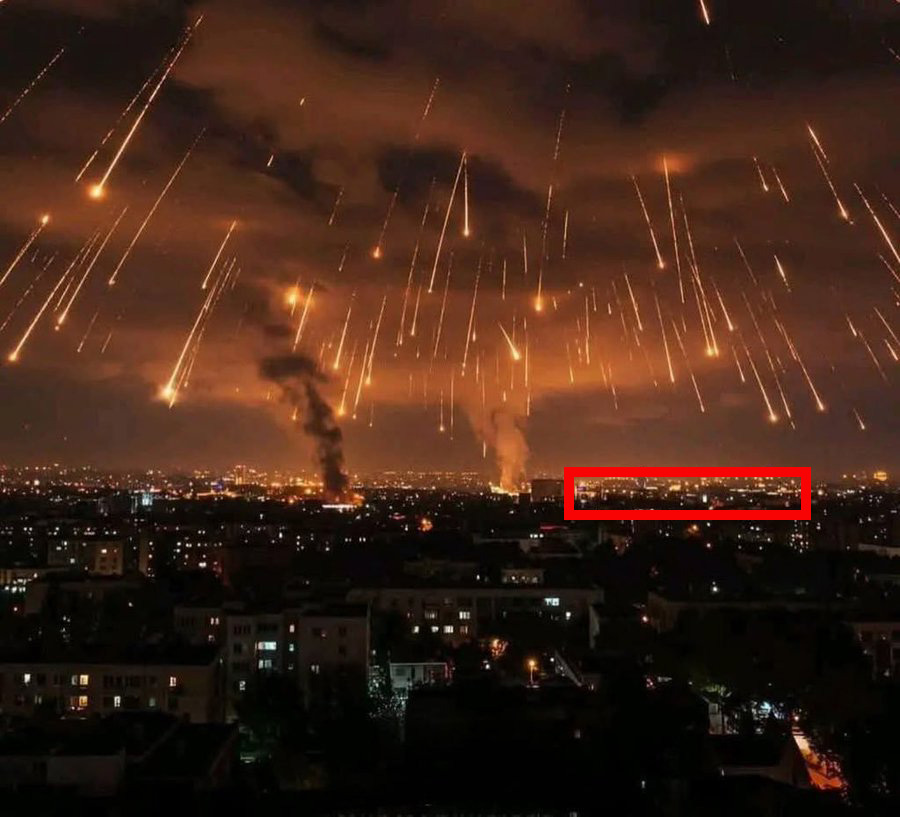
- Symmetry and composition: The difference between the “sky” and the “city” looks like two layers pasted together rather than a single real scene. The bright light in the sky does not reflect onto rooftops or streets as it naturally would, lacking realistic light interaction.
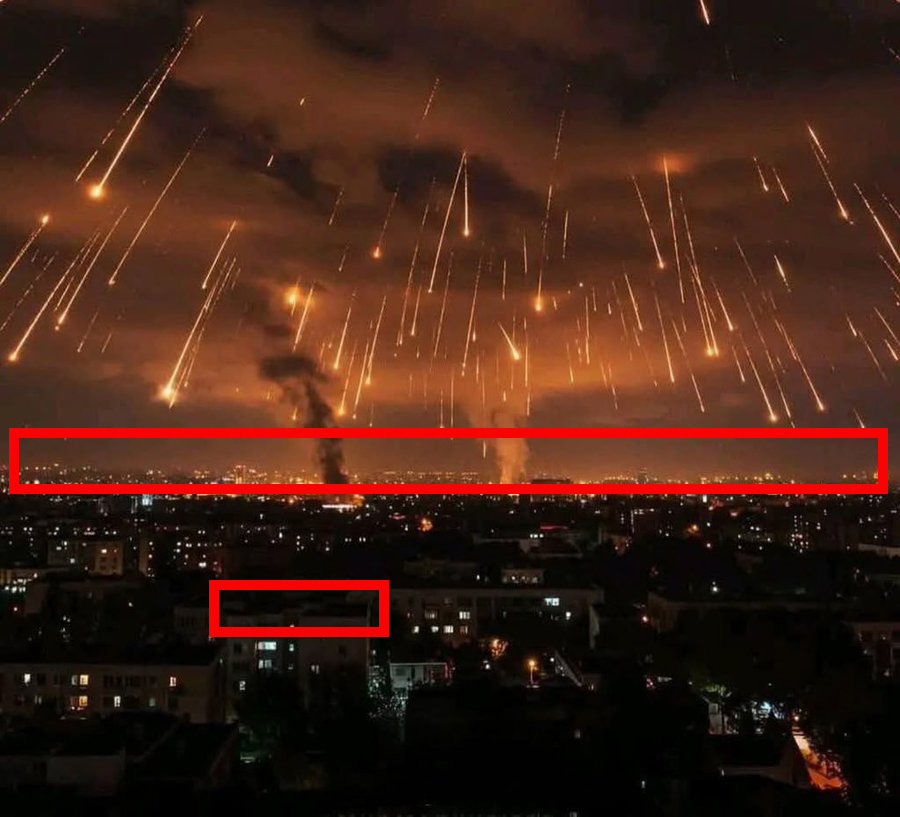
At the same time, Thai PBS Verify analyzed the image with Google Lens and found that it was AI-generated by Google. The image also resembles or is similar to one that appeared in news reports in 2025.
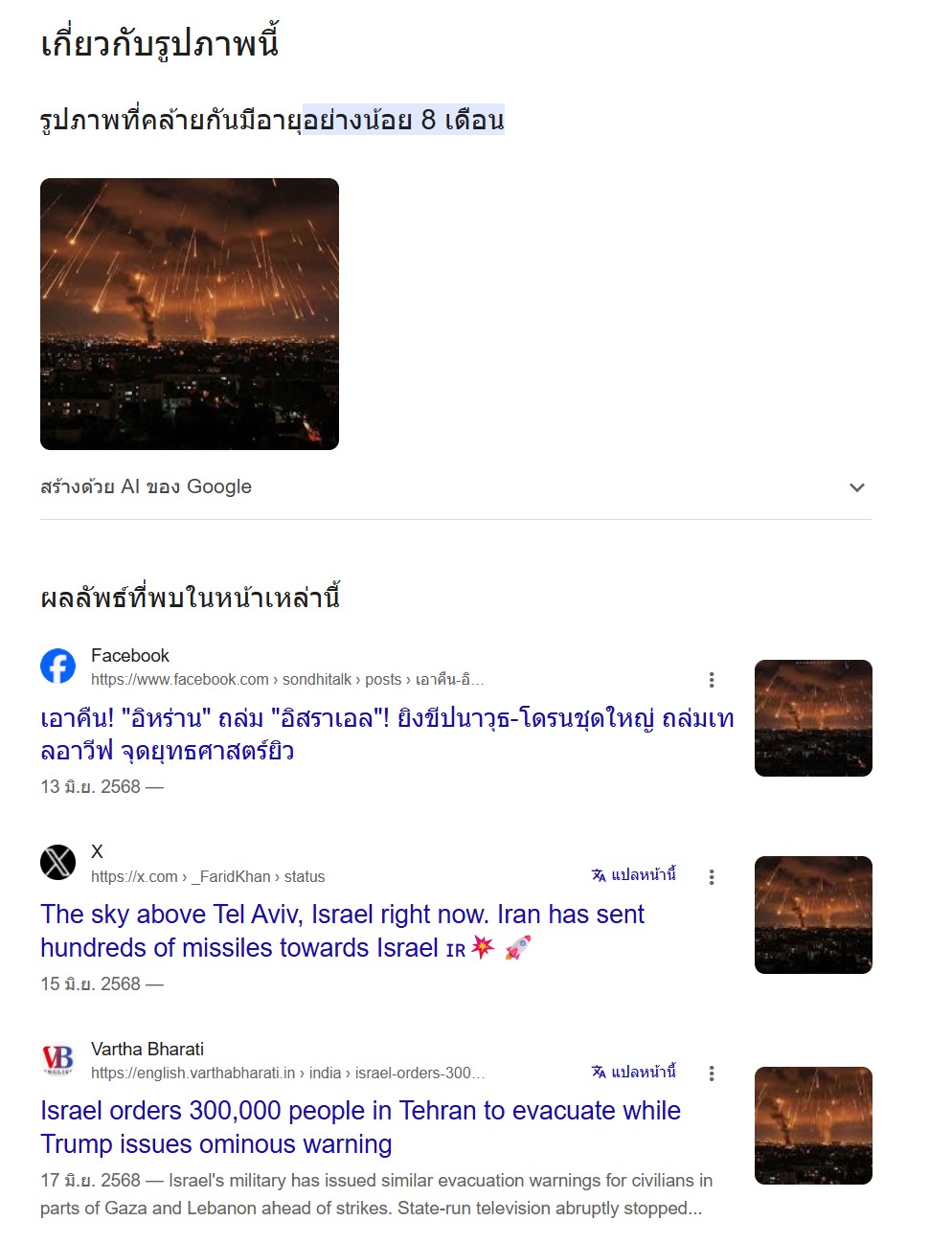
The image verification shows that the image was AI-generated.
Additionally, when the image was checked with the HIVE MODERATION tool, it was found to be AI-generated at a rate of 99%.
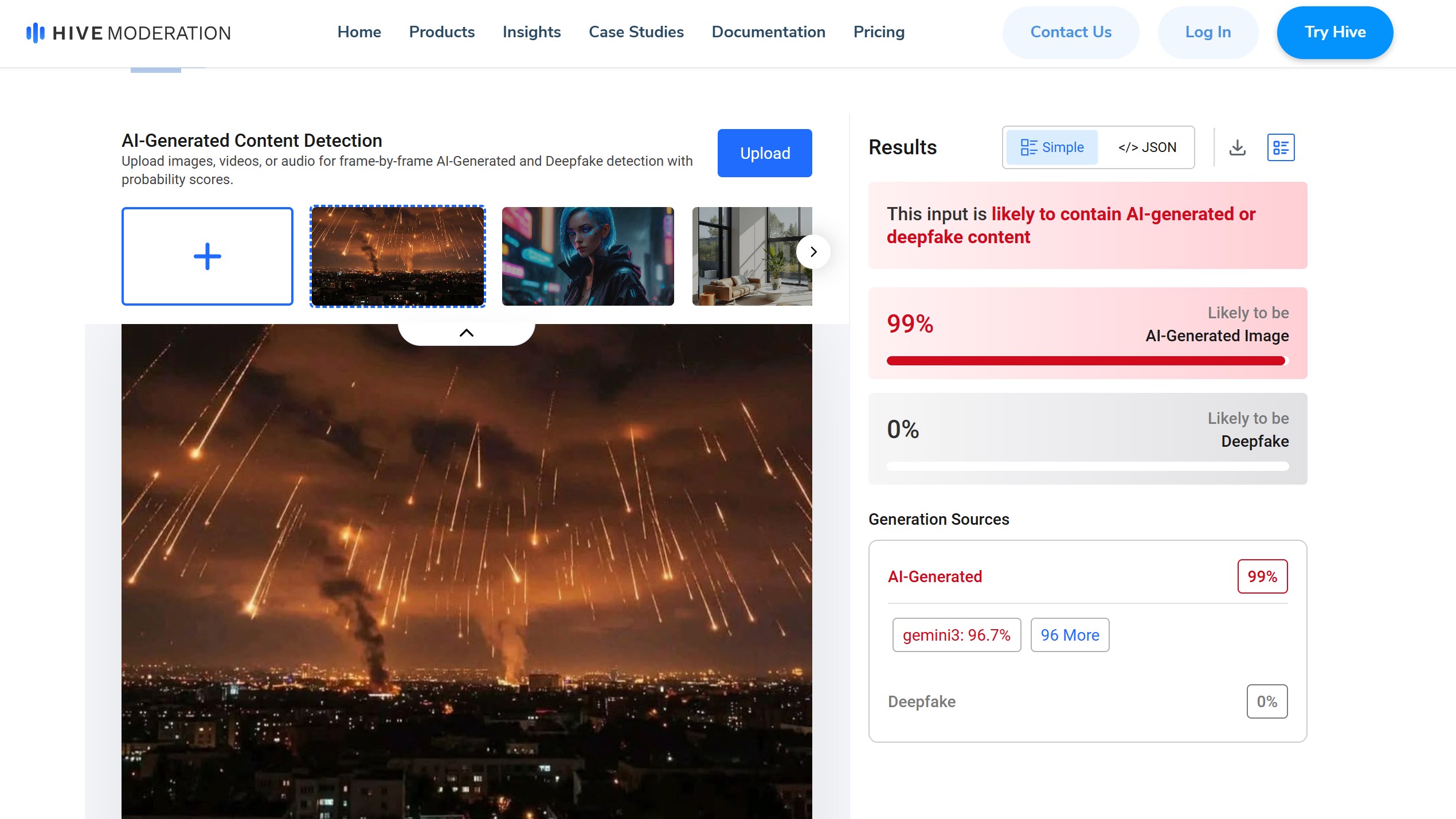
HIVE MODERATION found the image in question to be 99% AI-generated.
Comparison of fake and real images
Comparing the real city of Tel Aviv with the image from the post: Thai PBS Verify conducted a keyword search for “Tel Aviv” and found that AFP news had images of Tel Aviv during the conflict between Iran and Israel on March 2, 2026. The AFP images are different from the ones being shared online.
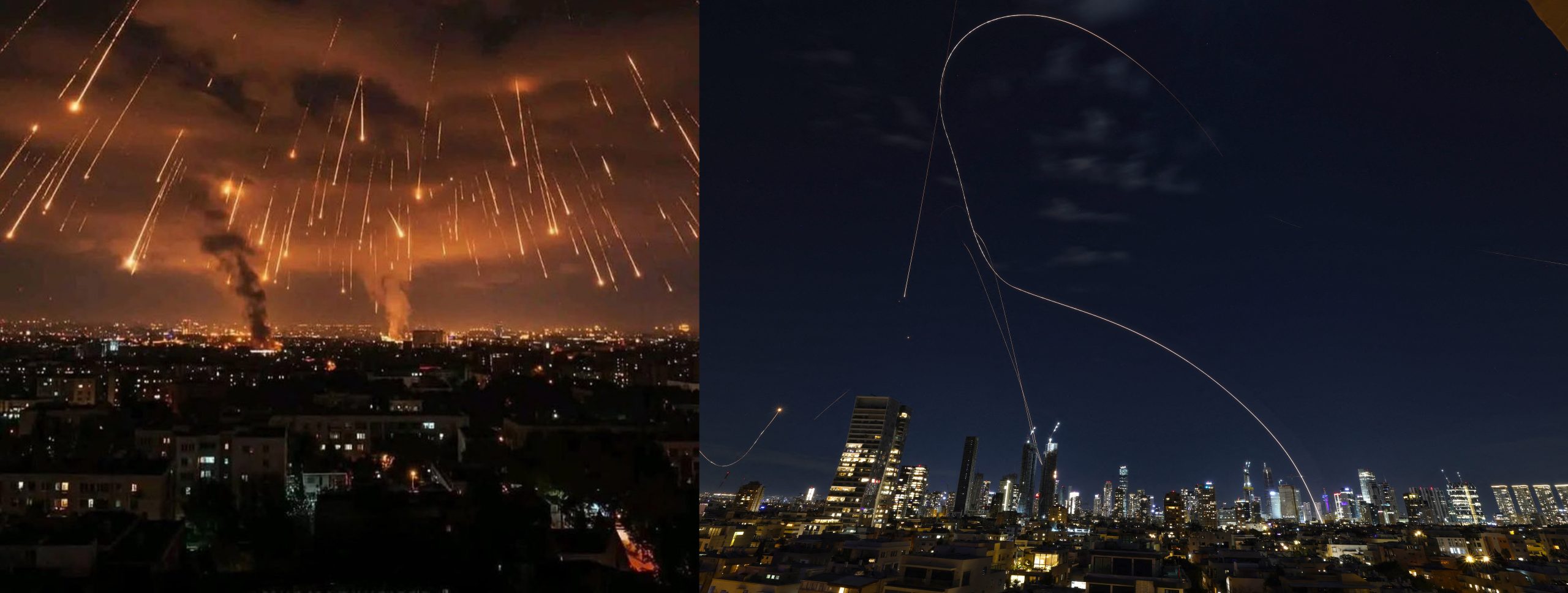
Comparison of Tel Aviv city images: the AI-generated one (left) versus the AFP photography (right).
The caption of the AFP image reads:
“March 2, 2026 – 07:00 AM
Tel Aviv, Israe
Photo by AHMAD GHARABLI / AFP
Rocket trails from an interception by Israel’s Iron Dome missile defence system are pictured over Tel Aviv on March 1, 2026.
The United States and Israel launched strikes against Iran on February 28, with Israel’s public broadcaster reporting that the Iranian supreme leader had been targeted, as the Islamic republic retaliated with barrages of missiles at Gulf states and Israel.”
How is the current situation in Tel Aviv?
According to the Times of Israel website on March 1, 2026, a woman in her 40s, who worked as a caregiver for a foreign elderly person, was killed when an Iranian missile struck a residential building in Tel Aviv on Saturday night. She is reported as the first casualty in Israel from this new round of fighting. Additionally, 27 people were injured, including several young children. Rescue teams are working to assist those trapped in heavily damaged buildings.
Israeli authorities stated that the missile that hit was intact, not just debris from interception. This incident occurred after Israel and the U.S. launched attacks on targets in Iran, prompting Iran to respond with a large number of missile strikes, escalating tensions and increasing the risk of the conflict spreading further.
What is the truth?
Thai PBS Verify checked the image accompanying reports of clashes in Tel Aviv involving Iran. After using image verification tools and Google Lens, the image was found to be AI-generated. They had also previously been used in news reports about Iran launching long-range missiles at various bases across Israel in June 2025, injuring at least 40 people in response to attacks on nuclear facilities.
Therefore, the image does not depict the current events. Meanwhile, the conflict situation in Tel Aviv remains tense.
Verification Process
- Visual inspection: The missile light appears as rigid straight lines with uniform brightness, which is abnormal and does not reflect onto city surfaces. The lights in building windows look like orange dots painted on, and the smoke does not spread naturally.Further examination, with the aid of Google Lens, also confirmed that the image was AI-generated with Google tools. It resembles or is similar to one that appeared in news reports in 2025.
- AI image verification tools: When checked with the HIVE MODERATION tool, the image was found to be 99% AI-generated.
- Keyword search: Searching for “Tel Aviv” found that AFP news had images of Tel Aviv during the conflict between Iran and Israel on March 2, 2026. These images are different from the one being shared online.
- Source verification: The Times of Israel reported that on March 1, 2026, Iran fired missiles at residential buildings in Tel Aviv on Saturday night, resulting in the death of one foreign caregiver and injuries to 27 others. This incident was a response following attacks by Israel and the U.S. on Iran, raising concerns that the conflict could escalate into a wider war.
Impacts of fake images
- Causing panic and misunderstanding: Violent event images presented as real may lead the public to believe the situation is far worse than it actually is, creating unnecessary fear.
- Affecting financial and commodity markets: Fake war news can trigger buying of gold, and cause oil prices, currencies and stock markets to fluctuate due to exaggerated concerns.
- Eroding trust in media and online information: When people discover images are AI-generated, it can create confusion and uncertainty about which news is reliable, undermining overall trust in media.
- Exacerbating international political tensions: False information involving countries or major cities can be used as propaganda tools, increasing conflict and tensions online.
- Making responses to real situations more difficult: When fake information mixes with real news, government agencies and media must spend significant resources verifying and clarifying, complicating crisis communication.
- Highlighting risks from synthetic media: AI technology makes it easy and fast to create realistic event images. Without media literacy skills, the public can easily become victims of distorted information.
What to do with this misinformation?
- Don’t share immediately: If you see images or videos of violent events, pause and verify before forwarding, especially content that provokes shock, anger, or fear.
- Check the source: Determine if the information comes from a credible news outlet, cites official agencies, or is just a post from a personal account.
- Observe details in the image: Look for abnormalities such as shadows, lighting, object proportions, text or unnatural composition, which may indicate AI-generated images.
- Search news from multiple sources: For major international events, reports should appear from multiple mainstream media outlets. If you cannot find corroborating information, remain skeptical.
- Use reverse image search: Check whether the image has been used before or newly created.
Translation edited by: Peerachai Pasutan

Most Viewed