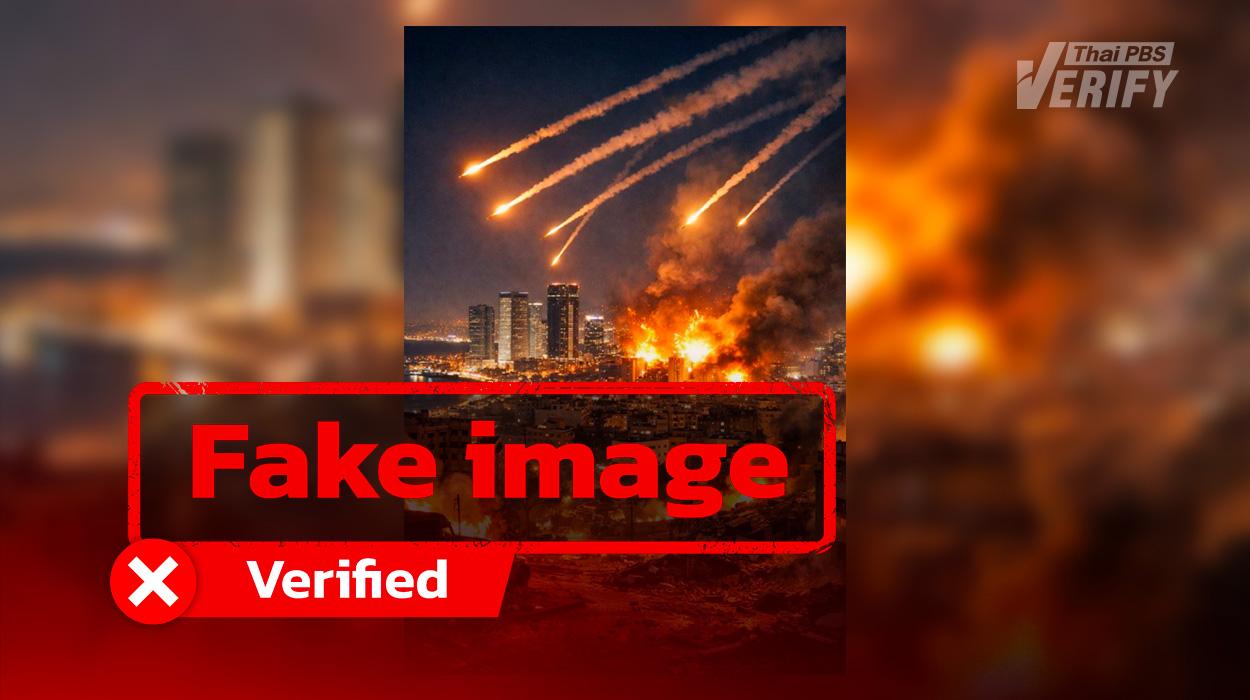
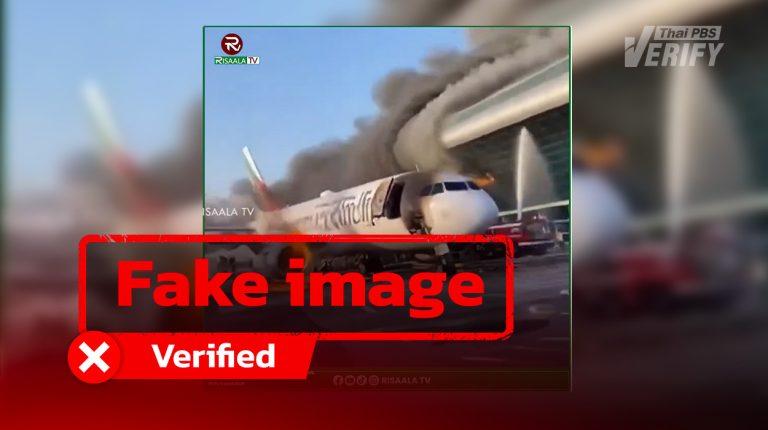
Image of missile attack on Tel Aviv found to be AI-generated
Live footage and reports from international wire services, such as AP and AFP, confirm that while tensions are real, the level of destruction is not as severe as claimed in the viral post.
Thai PBS Verify found the fake image on: X
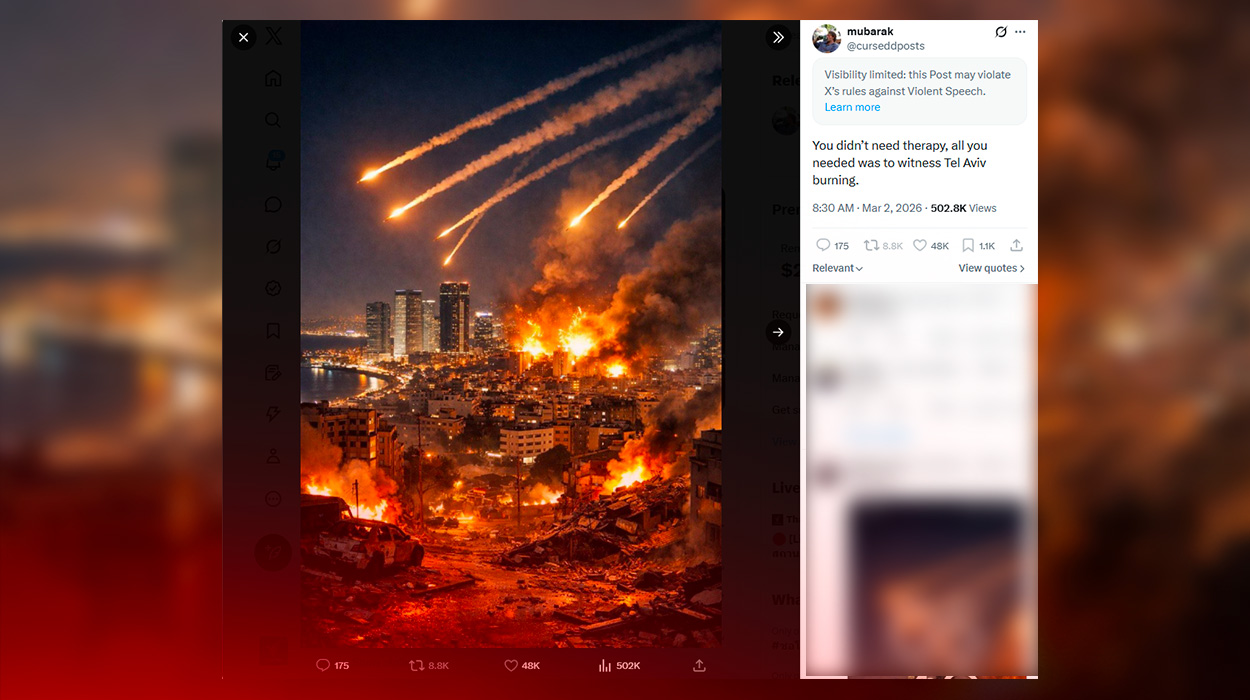
The post claimed that Tel Aviv was severely damaged during tensions between US-Israel and Iran.
A post circulating on X, claims that Tel Aviv was severely damaged as the conflict between Israel, the U.S. and Iran escalates. The accompanying caption reads:
You didn’t need therapy, all you needed was to witness Tel Aviv burning.
The post was published on March 2, 2026, and has attracted over 501,863 views.
The image in question is not real
A reverse image search, using Google Lens, found no matches in international news reports. The image only appeared on social media accounts, without citing sources.
Further analysis, using AI-detection tools from Hive Moderation, found a 99.9% likelihood that the image was AI-generated.
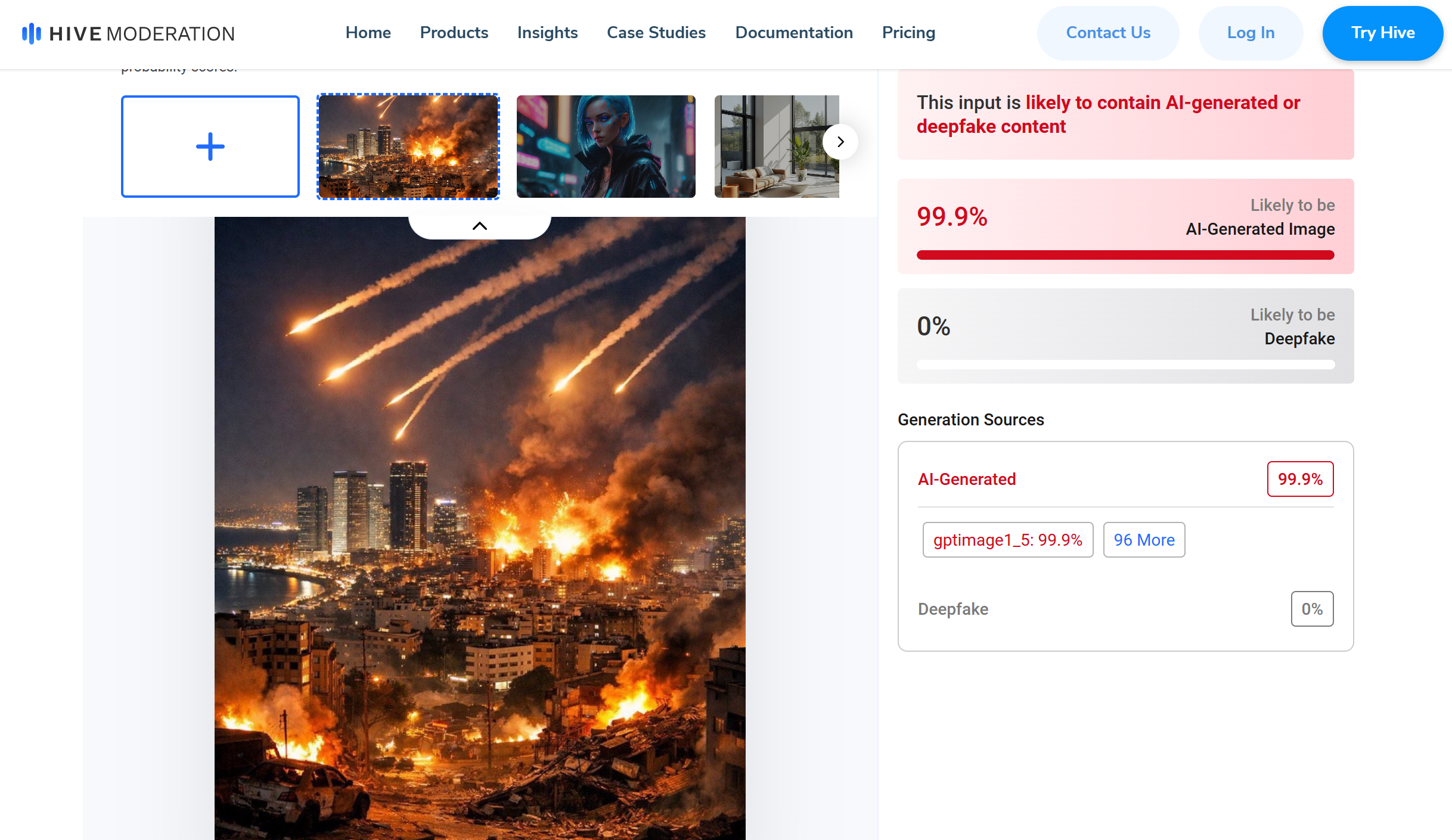
AI-Detection tools found that the photo is 99.9% likely to be AI-generated.
Mr. Sathaphon Phattanakhuha, CEO of Guardian AI, has confirmed that the image is likely generated by AI, while spotting various irregularities compared to news footage from credible news sources. Such anomalies include the shapes of the missiles, which differ significantly from real footage, the fire and smoke appearing unnatural and lack of realism in the overall composition.
Thai PBS Verify also researched live footage from AP, from March 2, 2026. While the footage confirms real tension and missile activity, the scale of the damage was not as devastating as that depicted in the viral AI-generated image.
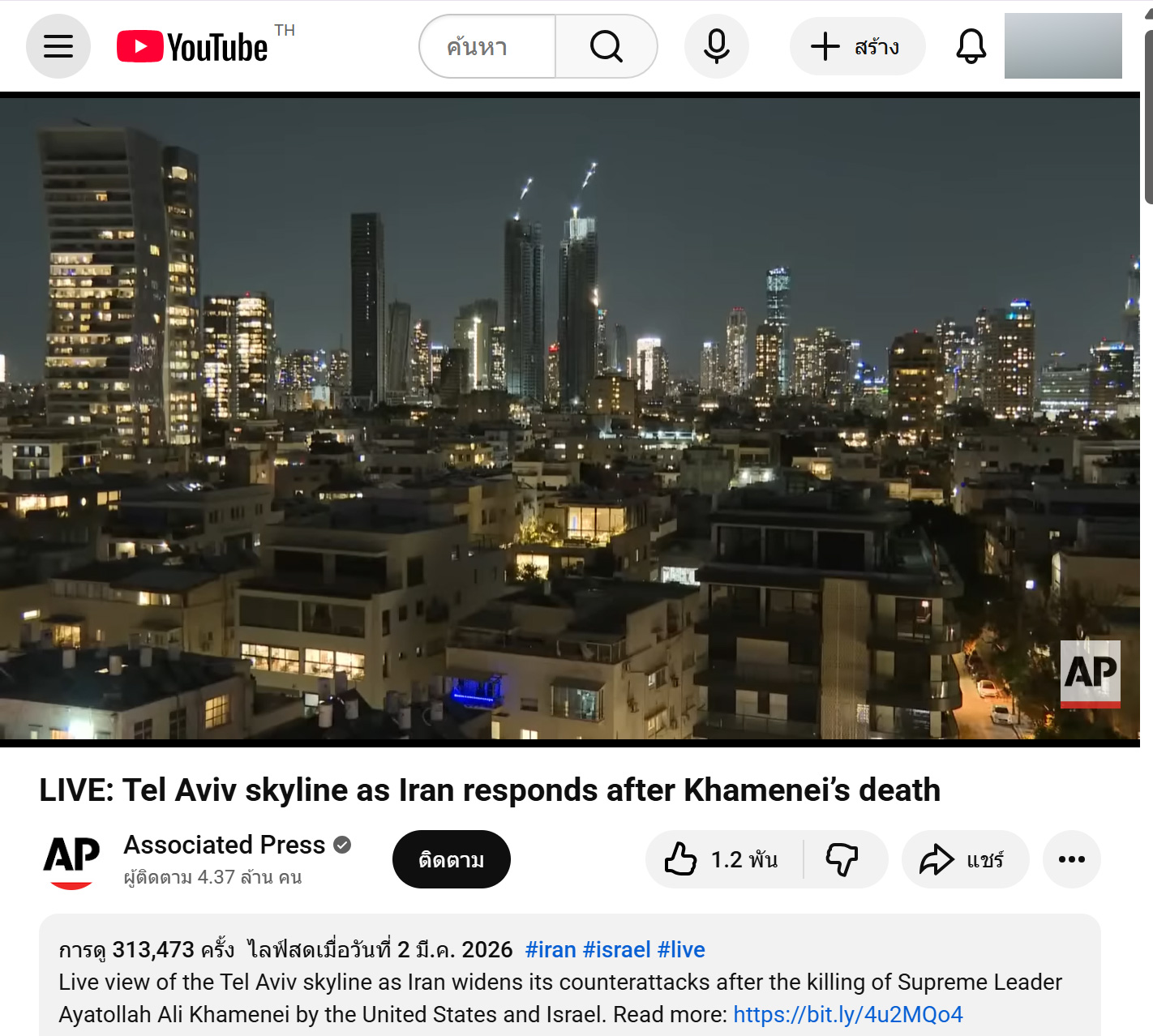
A screenshot of the AP live streaming in Tel Aviv on March 2, 2026
An AP live streaming of Tel Aviv skyline on March 2, 2026
This is compared to file photos of Tel Aviv on March 1, 2026 (via AFP).
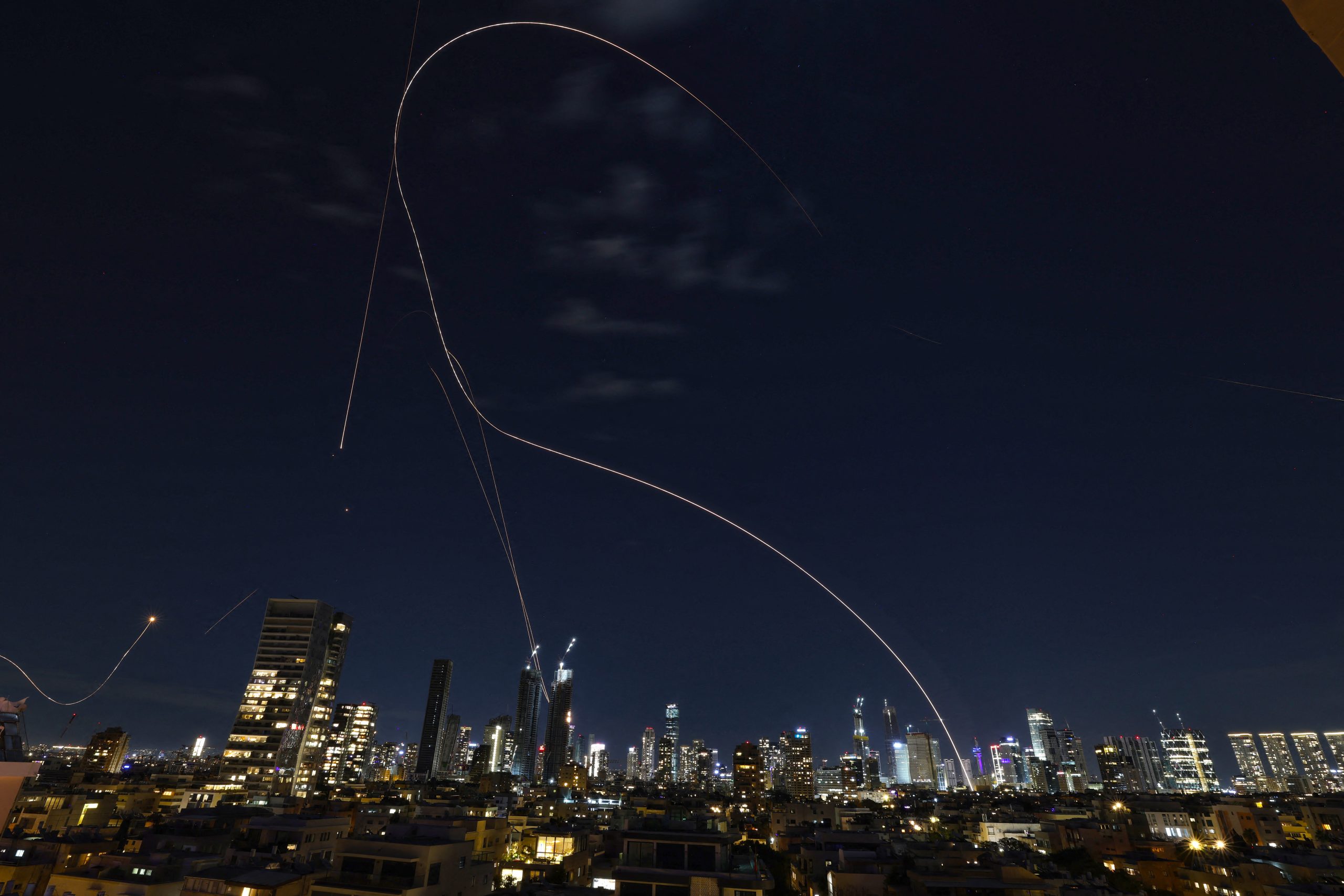
Tel Aviv, Israel Photo by AHMAD GHARABLI / AFP
Pictures from AFP images on March 1 show missile interception by Israel’s ‘Iron Dome’ defence system, with realistic lighting, trajectories and sky composition. These differ from the viral image. The caption also says that the United States and Israel launched strikes against Iran on February 28.
Meanwhile, Israel’s public media reported that Iran’s supreme leader was the target of the attacks and Iran responded by firing missiles at targets in the Persian Gulf and Israel.
Below is the atmosphere in Tel Aviv on March 16, 2026 (via AFP)
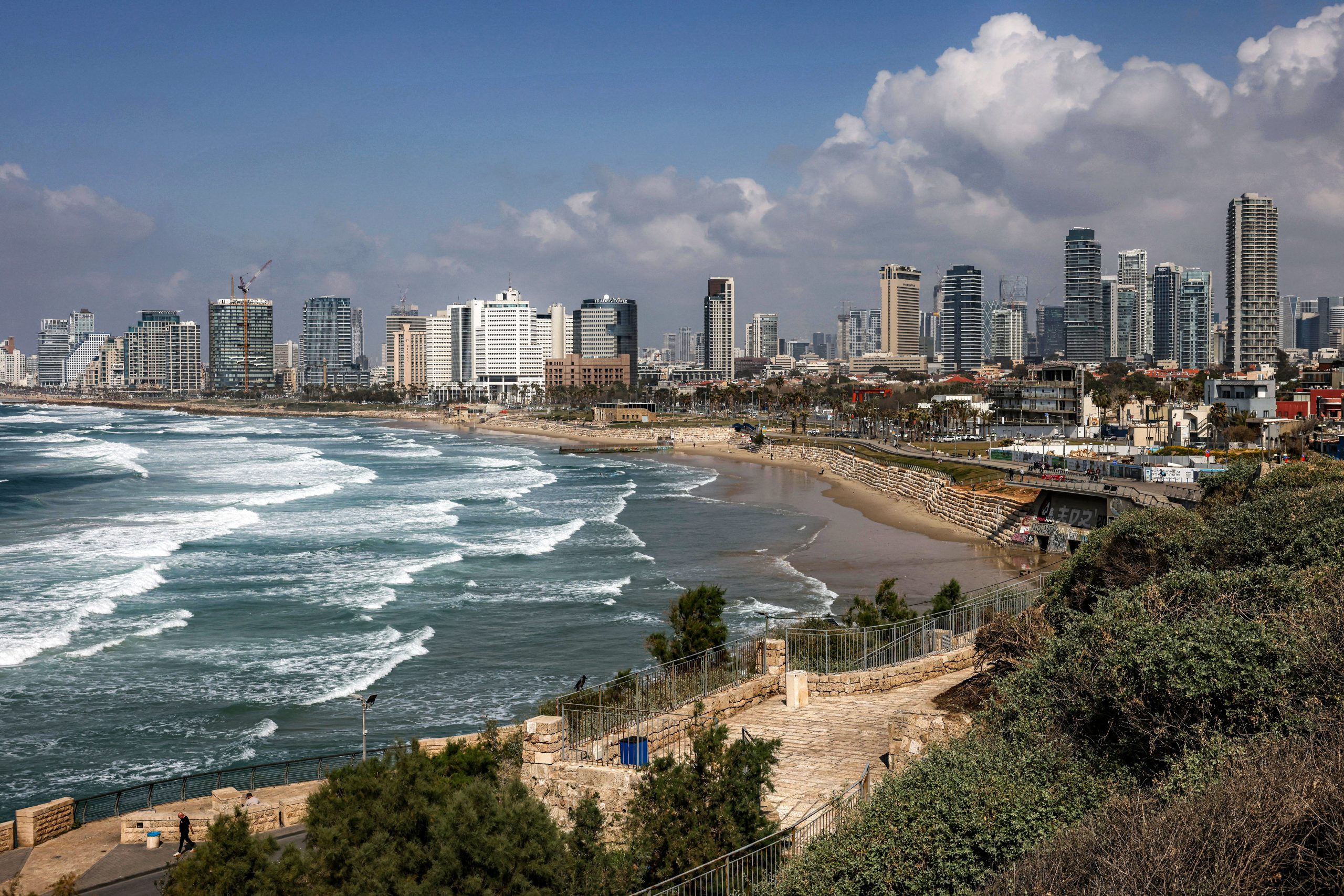
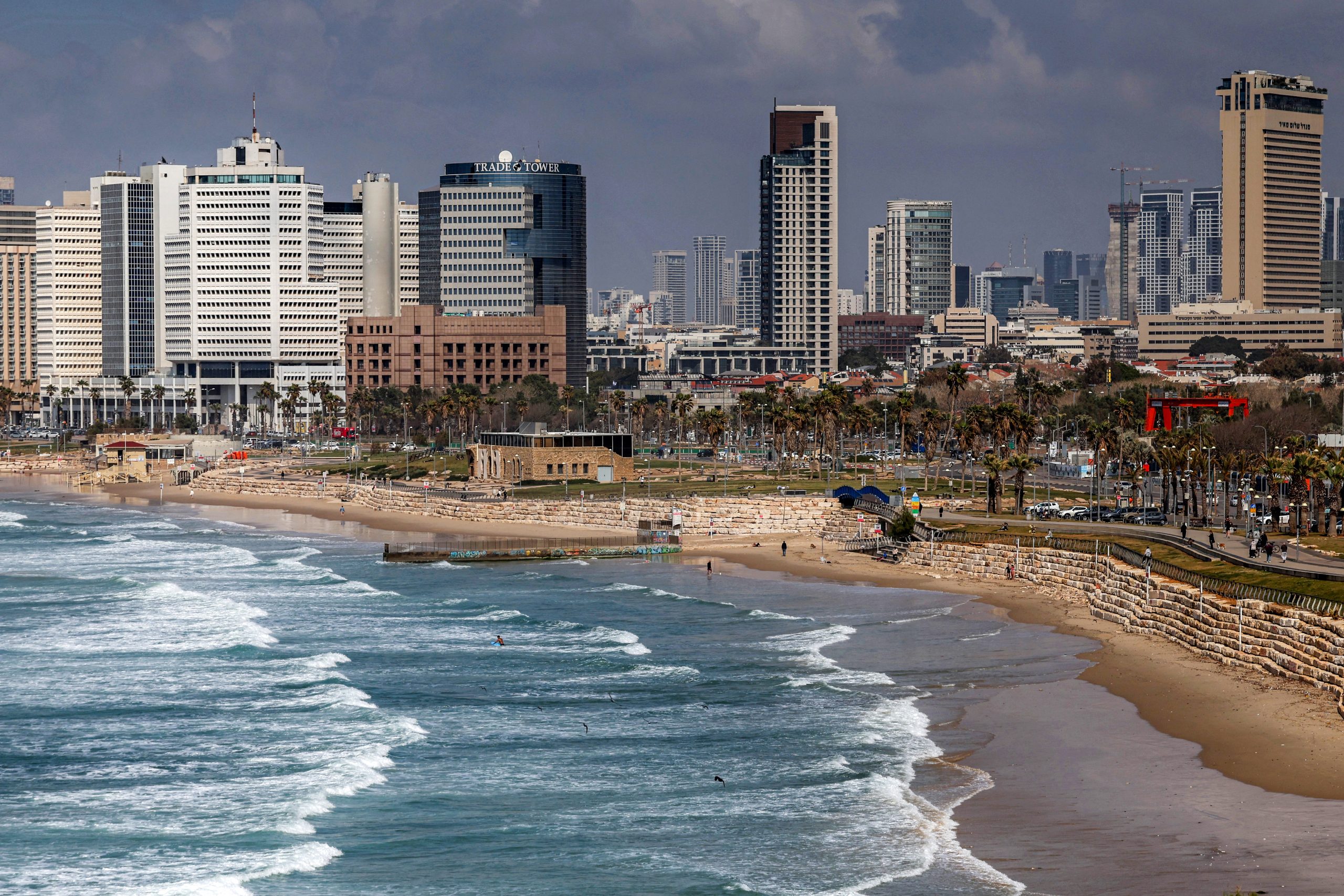
Captions on these AFP photos mention that journalists have had to work under increased restrictions during the US-Israel – Iran conflict. Authorities in several countries in the Middle East have limited reporters’ movements, including restrictions on capturing and broadcasting images and live video from sensitive areas. Some governments and armed groups have also prohibited the release of images showing rocket or drone attacks, including visuals from other security-related locations.
Due to these limitations, the images and videos that are made public may not fully reflect every detail of the situation. They do, however, still provide a clear picture of the overall atmosphere in the city and its surrounding areas.
What really happened in Tel Aviv
According to Reuters:
- March 2, 2026: Air raid sirens were heard across Israel, including in Jerusalem, after missiles were launched from Iran.
- March 3, 2026: Israeli army reports that Iran has fired missiles, targeted at Tel Aviv, and that their rescue and emergency teams are on duty to address the situation. Israeli authorities report three people injured and that they are receiving medical treatment
What is the truth?
Thai PBS Verify found a post claiming that Tel Aviv was devastated during the clashes between US-Israel and Iran. The photo was posted on March 2, 2026. Using Google Lens, the photo was not found in any credible sources, only through social media accounts. AI-detection tools also found that the photo in question is 99.9% likely to be AI-generated.
Guardian AI’s CEO also spotted various anomalies, from its missiles and flames to the smoke, which looks unnatural and lacks photorealism. Photos from credible news agencies, such as AP and AFP, particularly from March 1 and 2, show that the damage was not as severe as the image in question, despite real tensions on the ground.
Verification Process
- Google Lens: No matches were found in international news reports. The image was only found on various social media platforms, shared by unofficial accounts with no identified source.
- AI image detection: AI-verification tools from Hive Moderation found that the image is 99.9% likely to be AI-generated.
- Expert consultation: Guardian AI’s CEO confirmed that the image is likely AI-generated. Several irregularities can be observed when compared with verifiably real news images, the missile characteristics differ significantly, while the fire and smoke elements appear unnatural and unrealistic.
- Cross-checking with live footage: A review of live footage from AP on March 2, 2026, showing the situation in Tel Aviv, confirms that the severity of the damage does not match the devastation depicted in the viral image, Additionally, the image was compared with overall city atmosphere visuals and news photos from AFP.
Potential impacts of the fake image
- Public panic and fear due to exaggerated visuals
- Distorted understanding of real-world events
- Rapid spread of false information through social media
- Psychological stress
What to do with this misinformation?
- Check if the source is a reputable news outlet
- Use tools like Google Lens or AI detectors
- Compare with trusted agencies like AP, AFP or Reuters
- Avoid sharing unverified content
Translation by: Nad Bunnag, Thai PBS World

Related Content
Popular Content