AI-generated clip falsely claims Chao Phraya overflowed banks
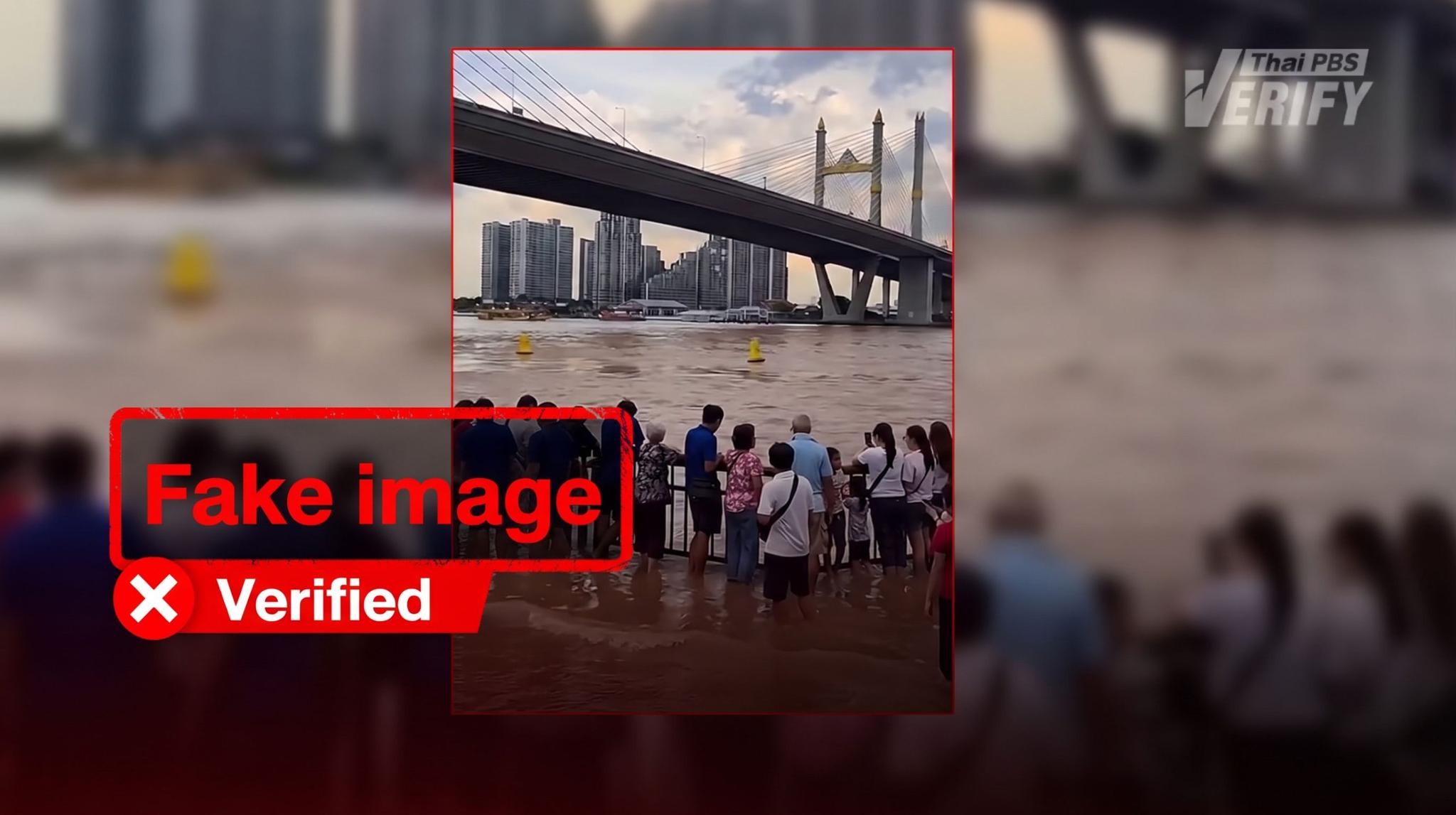
Thai PBS Verify traces fake footage to Facebook
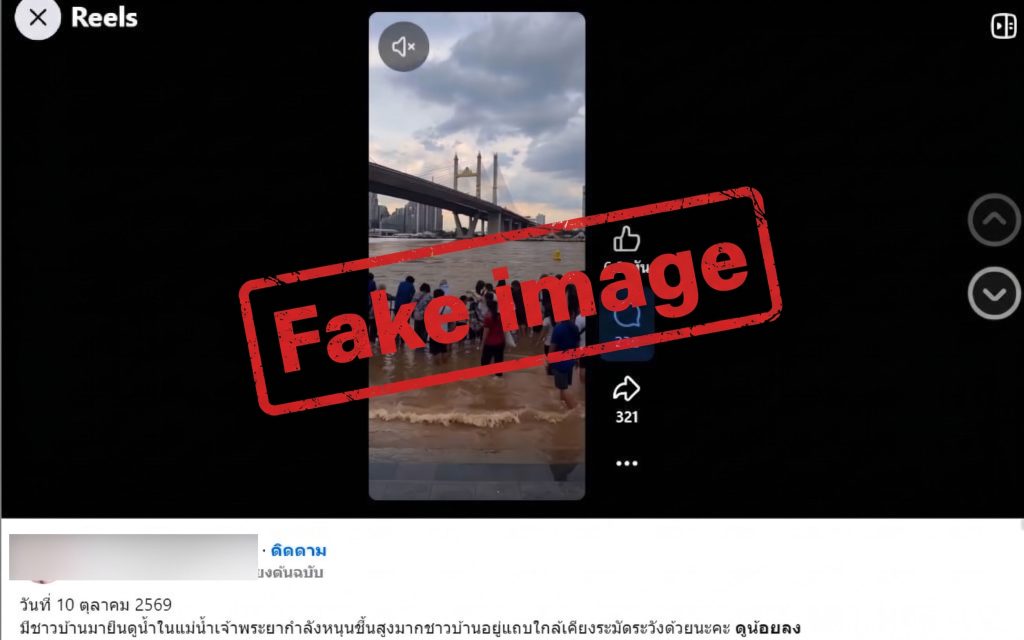
Investigators found a Facebook post sharing a video that claimed the Chao Phraya River had reached an exceptionally high level. The footage showed people standing in floodwater and gathering to watch the situation unfold, accompanied by the warning:
“On Oct 10, 2026, local residents gathered to watch the Chao Phraya River rise to a very high level. People living nearby should take caution.”
The clip was posted on Oct 11, 2026, and attracted about 690,000 views.
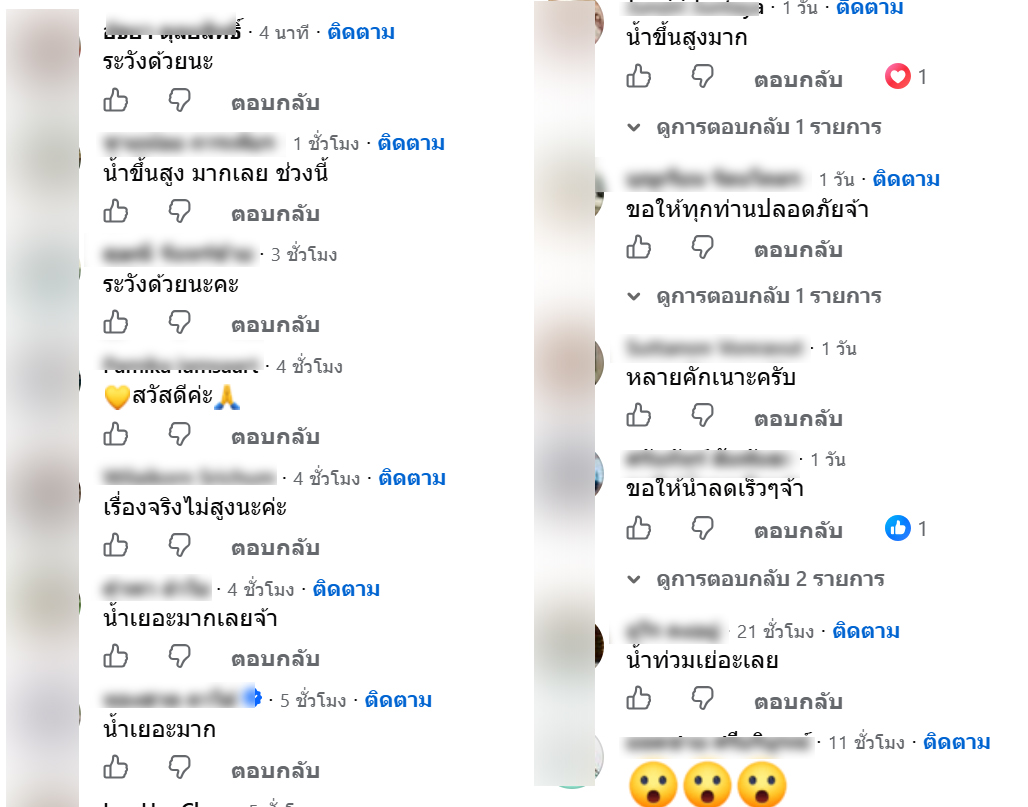
Comments posted beneath the clip
Was the clip real?
A reverse-image search using Google Lens on selected frames did not locate an original version of the video. Thai PBS Verify then analysed the footage using AI-detection tools from Hive Moderation, which suggested it was likely AI-generated.
Although some segments returned a lower probability of AI generation, further searches using Google Lens still failed to uncover an original source for the footage.
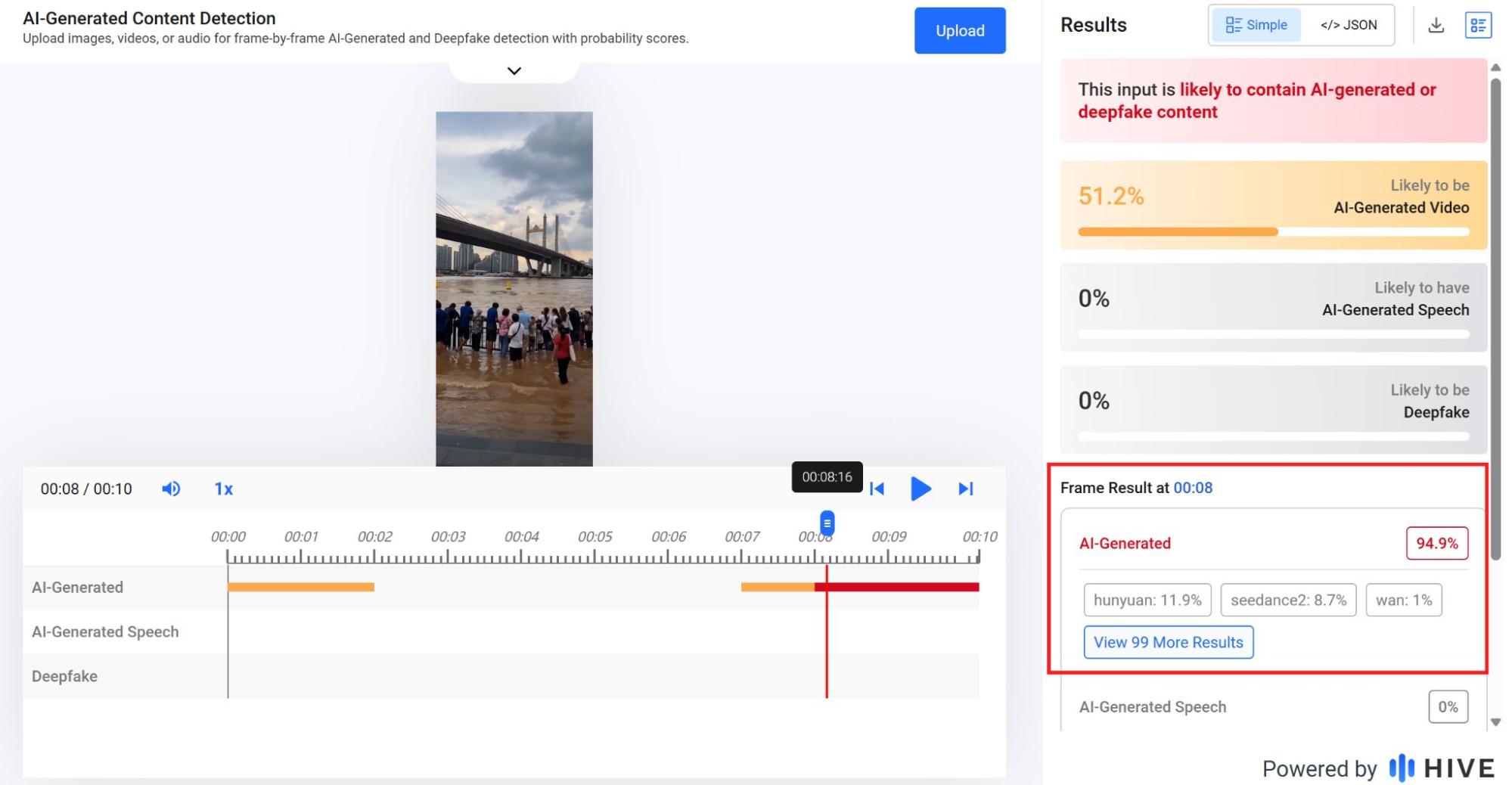
Analysis using an AI-detection tool
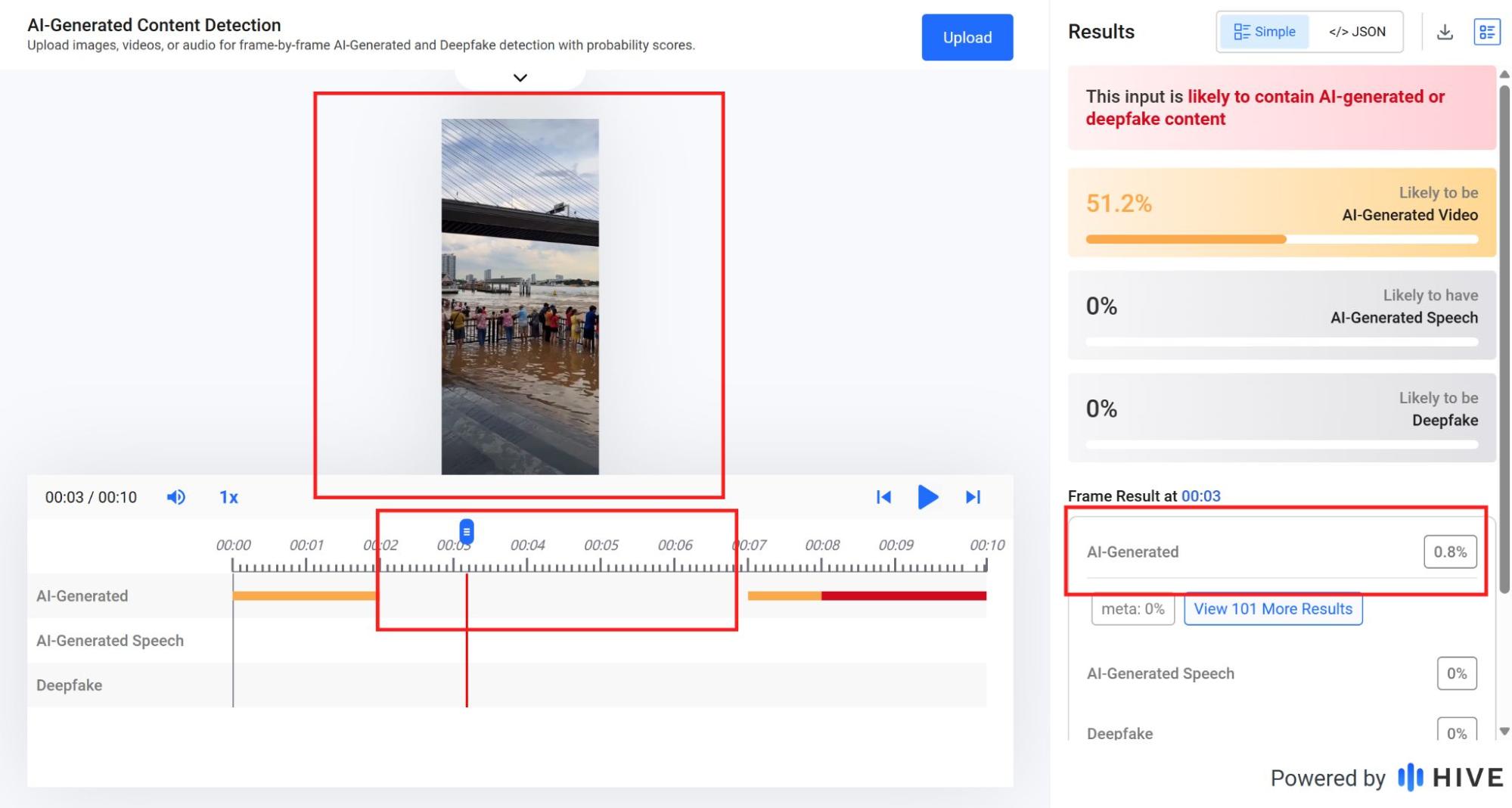
Some parts of the clip showed a lower likelihood of AI generation, prompting additional Google Lens searches, but no original source was found.
Investigators also reviewed the posting history of the account and found it had previously shared multiple AI-generated videos.
Clues indicating the clip was AI-generated
Thai PBS Verify identified several visual irregularities commonly associated with AI-generated content.
1. Multiple individuals in the clip appeared to have highly similar body shapes and clothing, including three people wearing pink outfits.
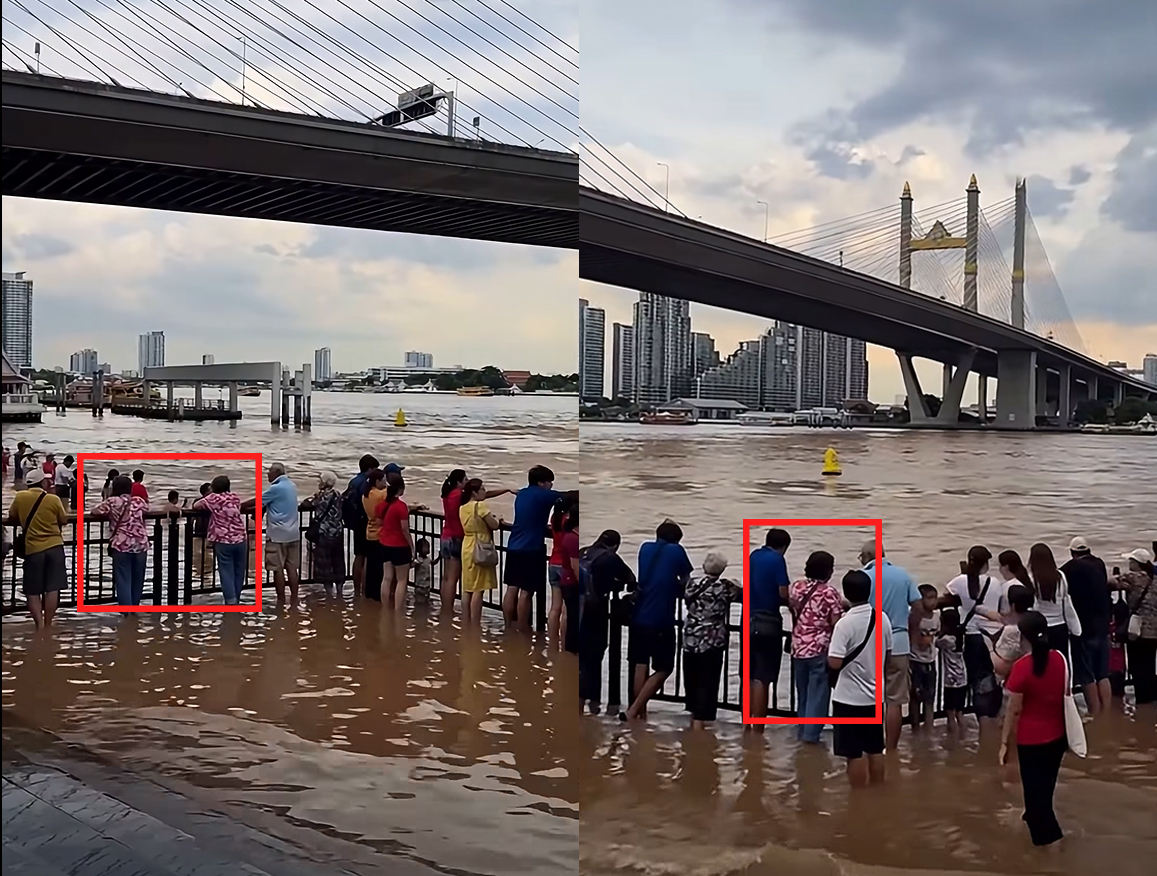 2. Two elderly individuals with remarkably similar appearances and clothing also appeared in the footage.
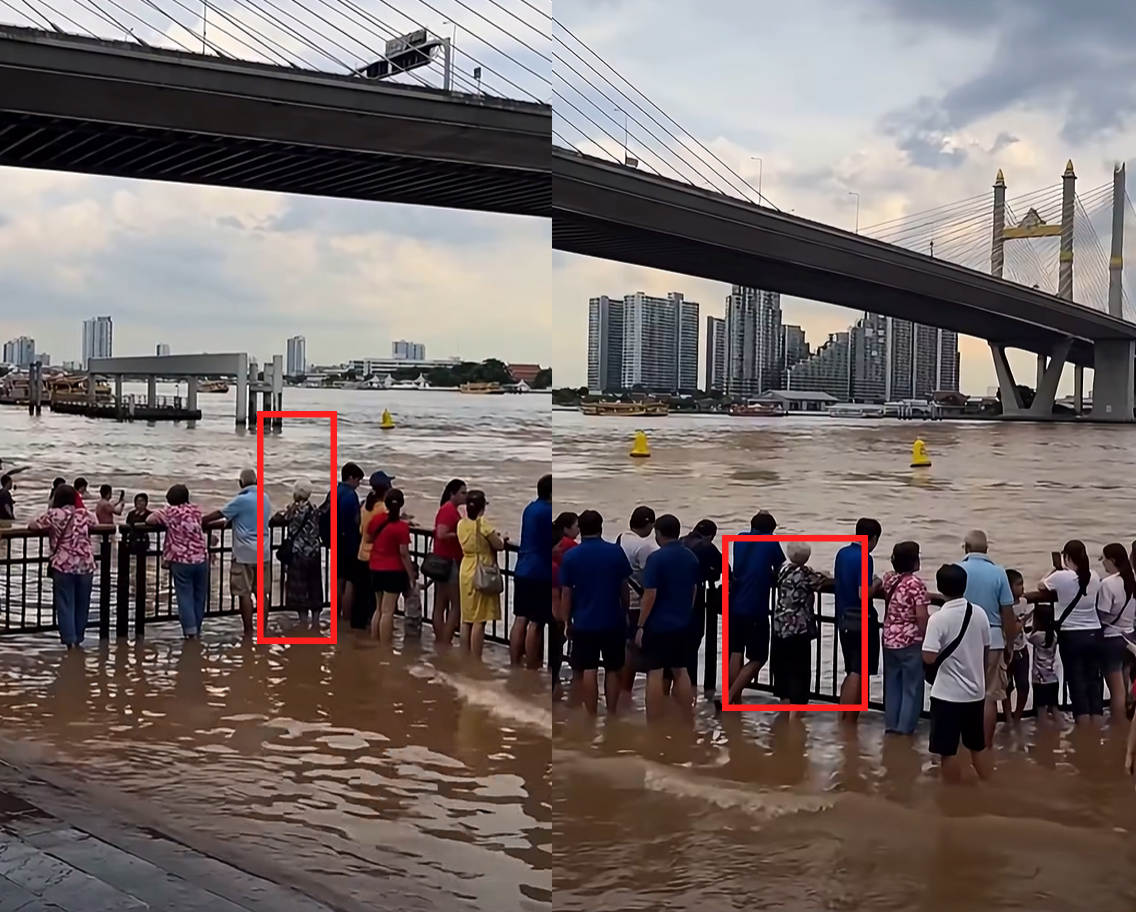
3. Many people displayed nearly identical gestures, including pointing in the same manner.
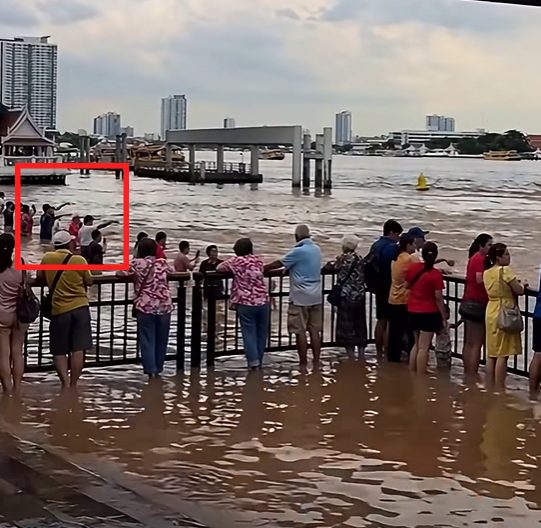
Questions over the location
A comparison between the footage and actual locations on Google Maps revealed a number of environmental inconsistencies.
1. The setting resembles Rama VIII Bridge, but does not match reality
The clip appears visually similar to the area around Rama VIII Bridge. A building on the opposite bank closely resembles Juldis River Mansion and was therefore used as a key reference point in the investigation.
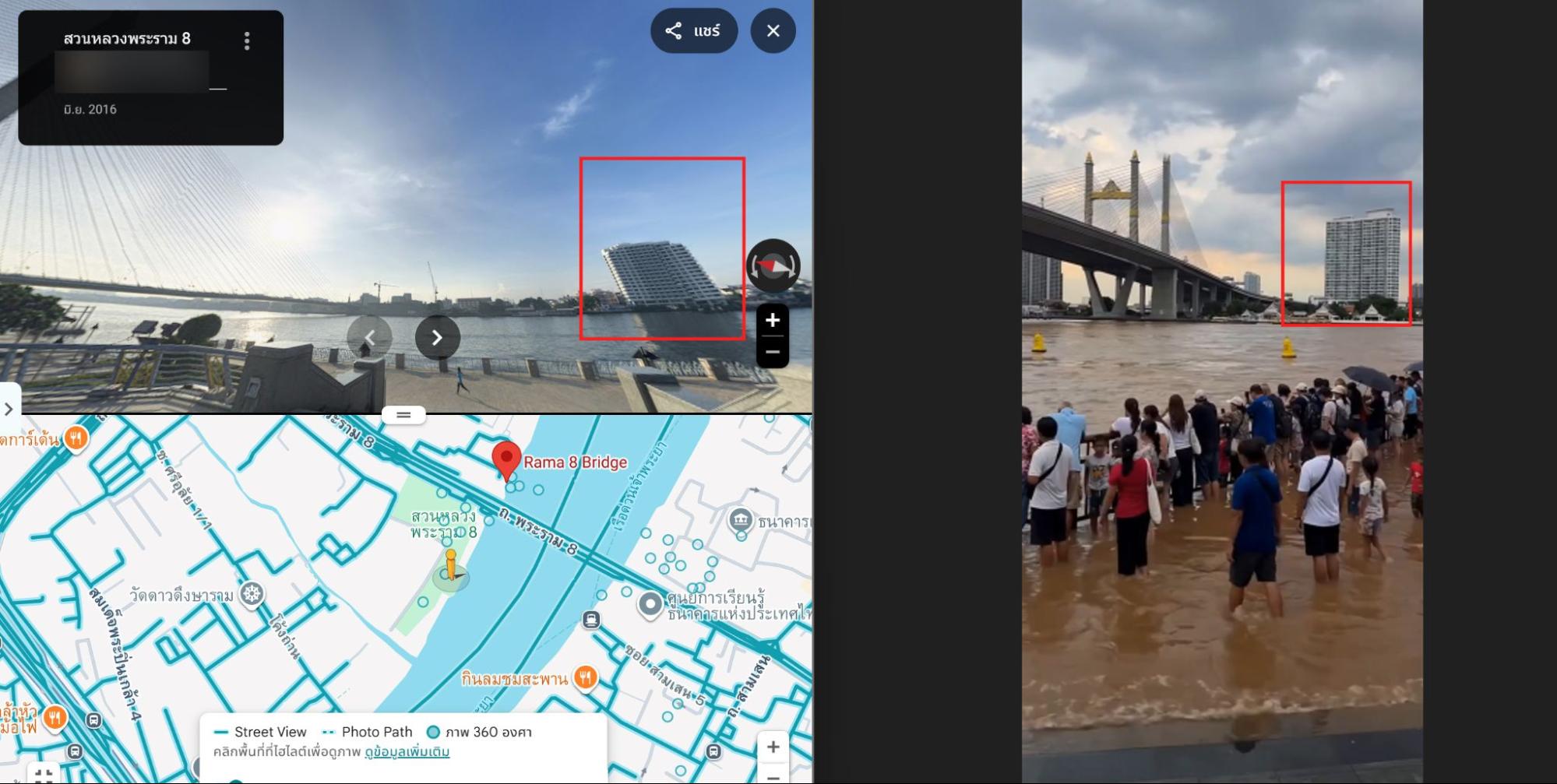
Left, a Google Maps user photograph; right, an image from the AI-generated clip
However, comparisons with Google Maps showed the location in the clip could not be the Rama VIII Bridge area. If the bridge were positioned on the left side of the image, the foreground should correspond to Rama VIII Park.
Across the river, viewers should be able to see the Bank of Thailand Learning Center, followed by Wat Sam Phraya Worawihan (Wat Bang Khun Phrom) and Juldis River Mansion.
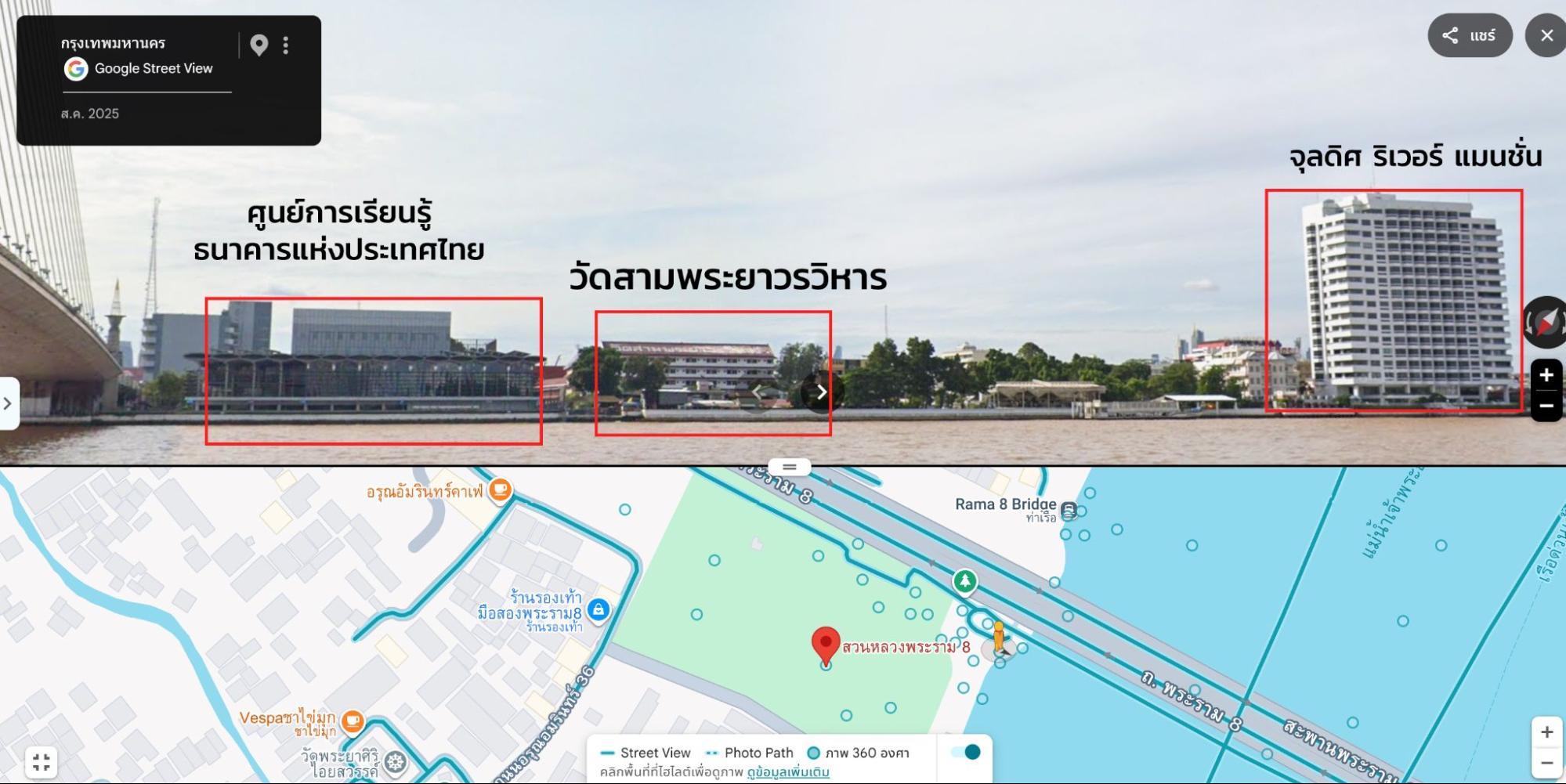
Google Maps
Although the building shown in the clip resembles Juldis River Mansion, closer examination found that several architectural details did not match the actual structure.
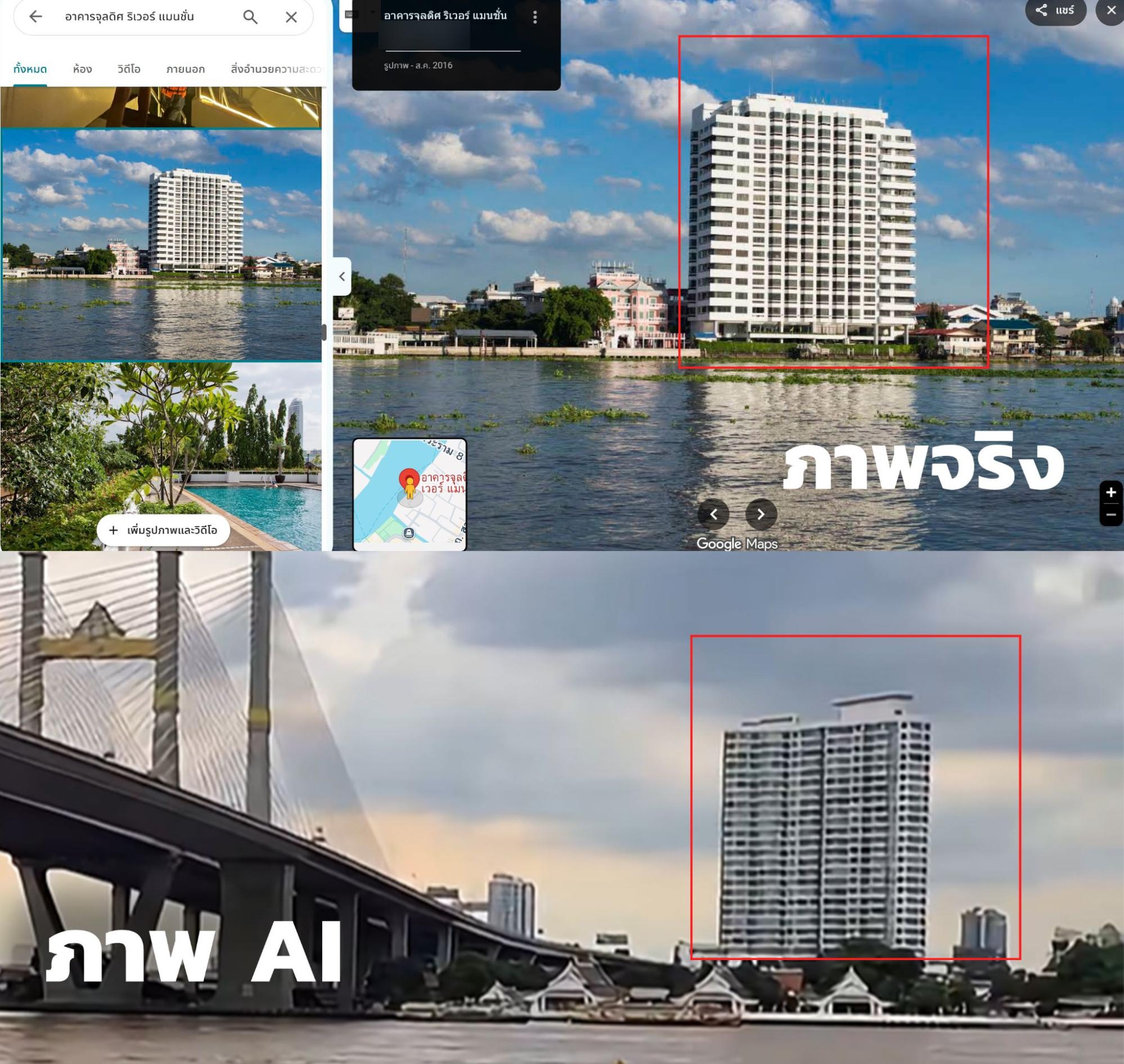
Google Maps
2. No matching white building near Bang Khun Phrom Palace
Another possible location considered was the Bang Khun Phrom Palace compound beside the Bank of Thailand. If the footage had been taken from that area, the opposite bank would face the Phra Borommathat site at Wat Khruhabodi.
However, investigators found no white building matching the one shown in the video.
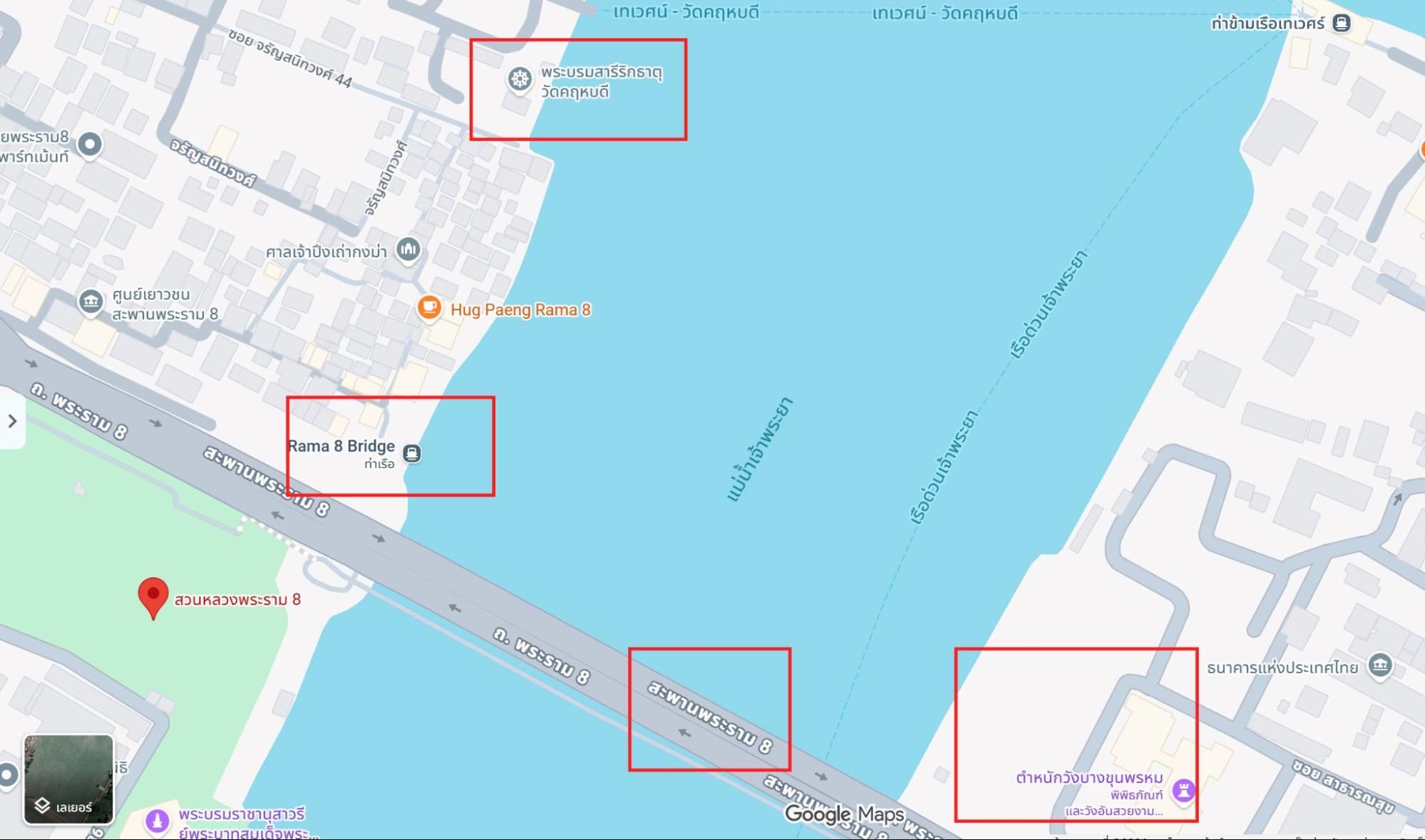
Map showing the area opposite Bang Khun Phrom Palace
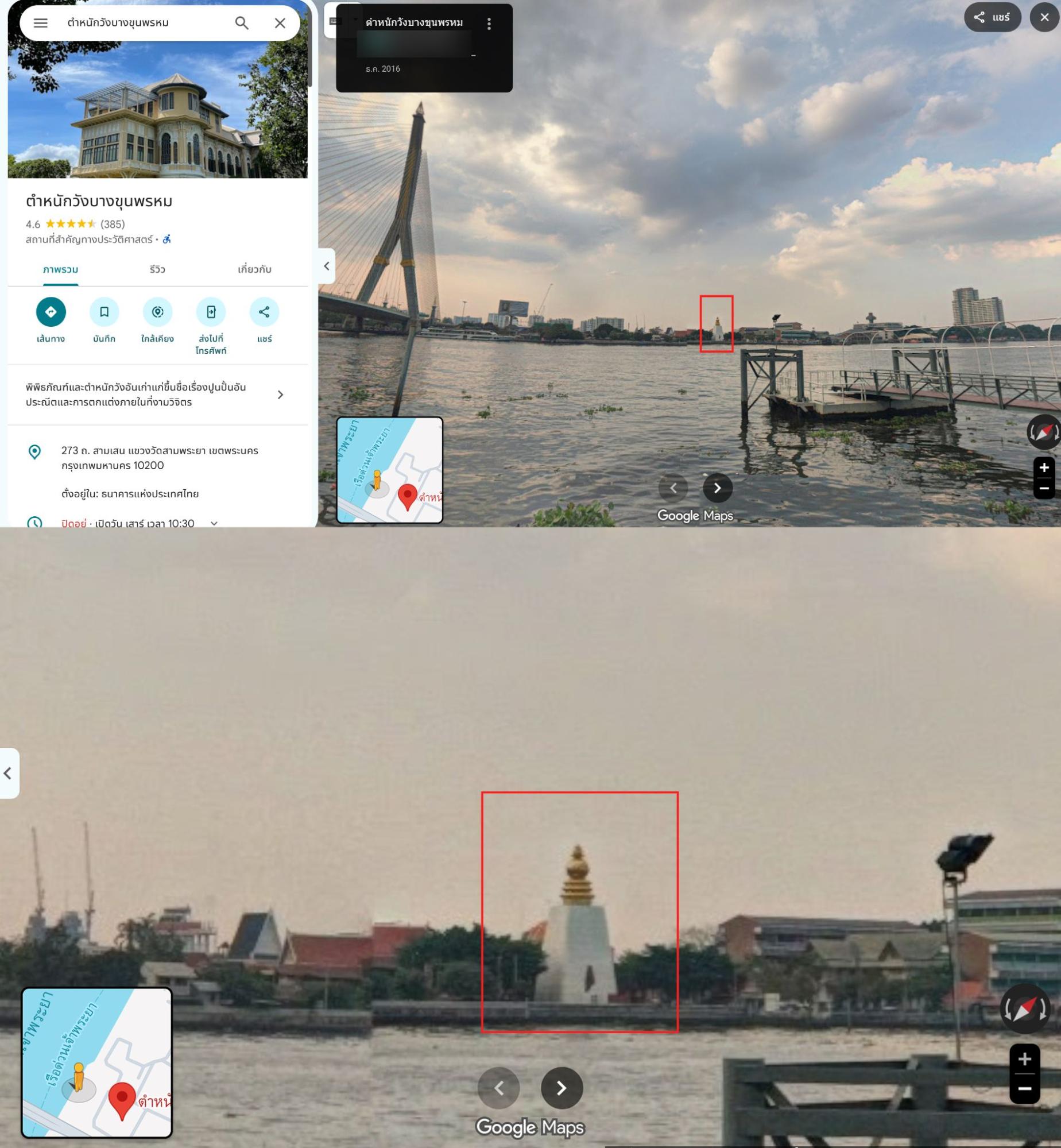
From the Bang Khun Phrom Palace viewpoint, the opposite side of the Chao Phraya River should be the Phra Borommathat area.
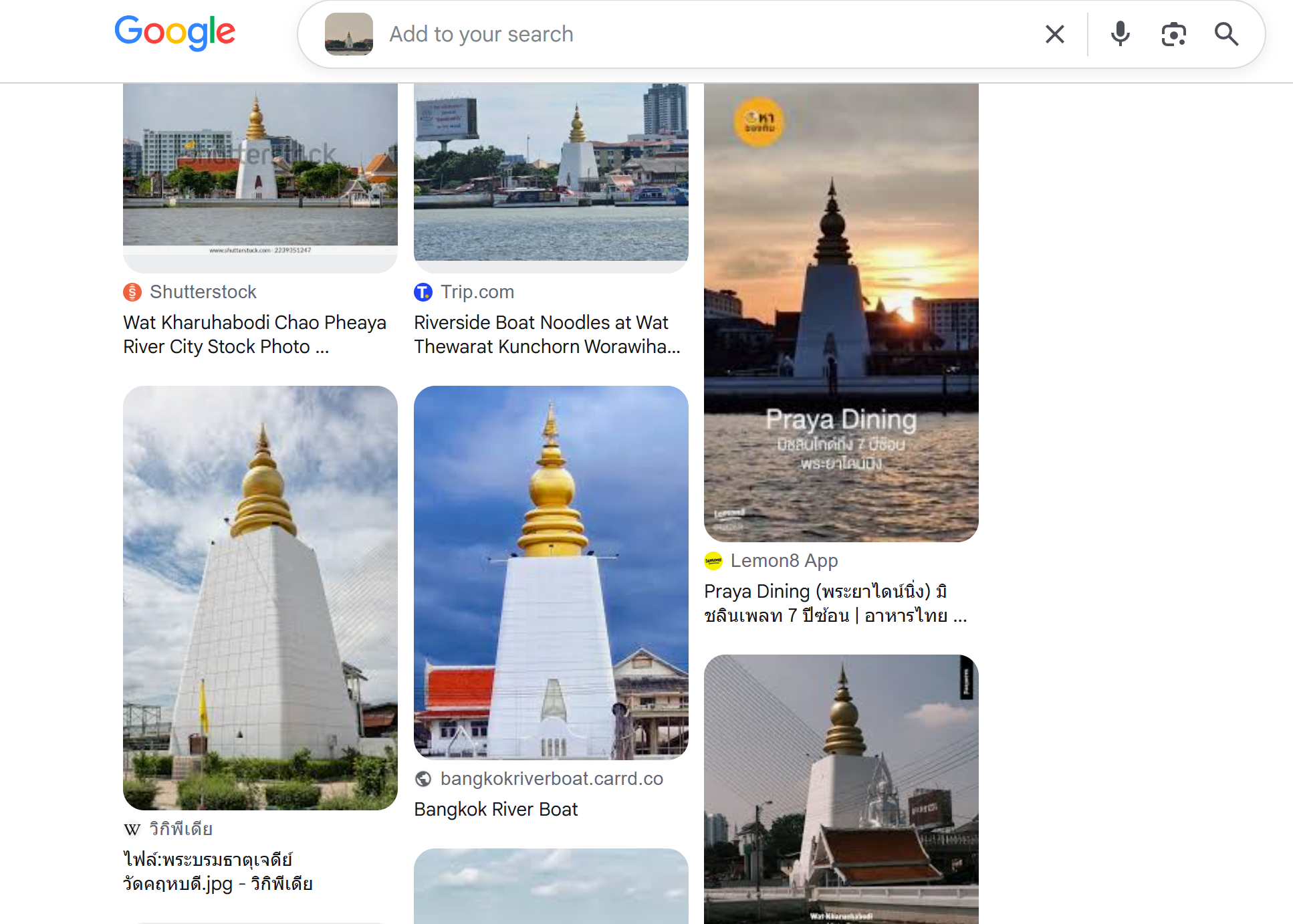
Verification of the Phra Borommathat site using Google Lens
Investigators also found no riverside staircase matching the one visible in the clip.
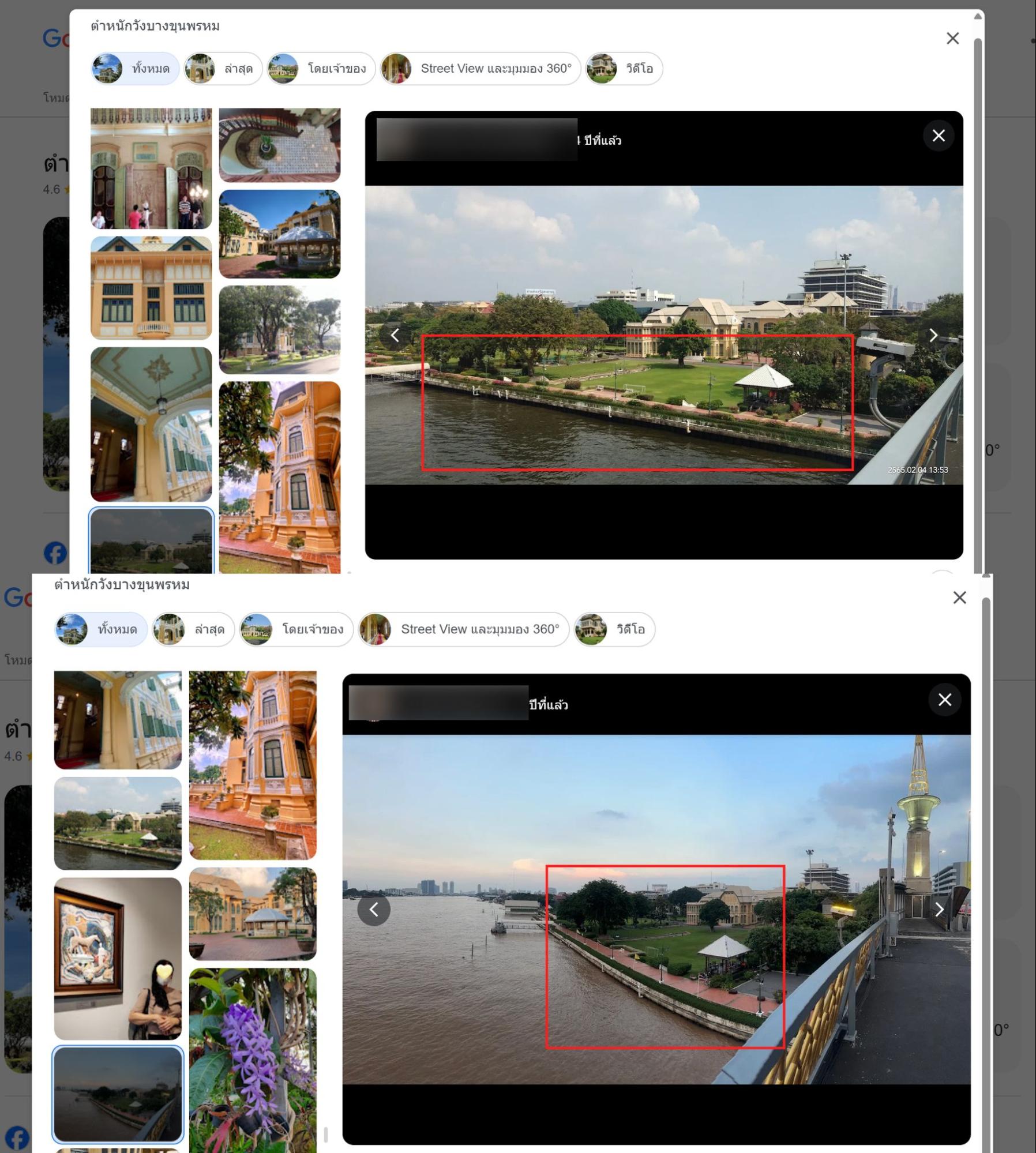
Google Maps
3. Bridge tower differs from real structures
A comparison with all 23 bridges crossing the Chao Phraya River in Bangkok and surrounding provinces found that the bridge tower shown in the clip most closely resembled that of the Thotsamarachan Bridge, also known as Rama X Bridge, which runs parallel to Rama IX Bridge.
However, the actual bridge tower is vertical and does not feature the triangular structure shown in the video.
If the bridge appears on the left side of the frame, the footage could theoretically have been recorded from the 6th Cycle Birthday Anniversary Commemorative Public Park. In that case, the Kasikornbank Rat Burana headquarters should be visible on the opposite bank. No matching white building was found.
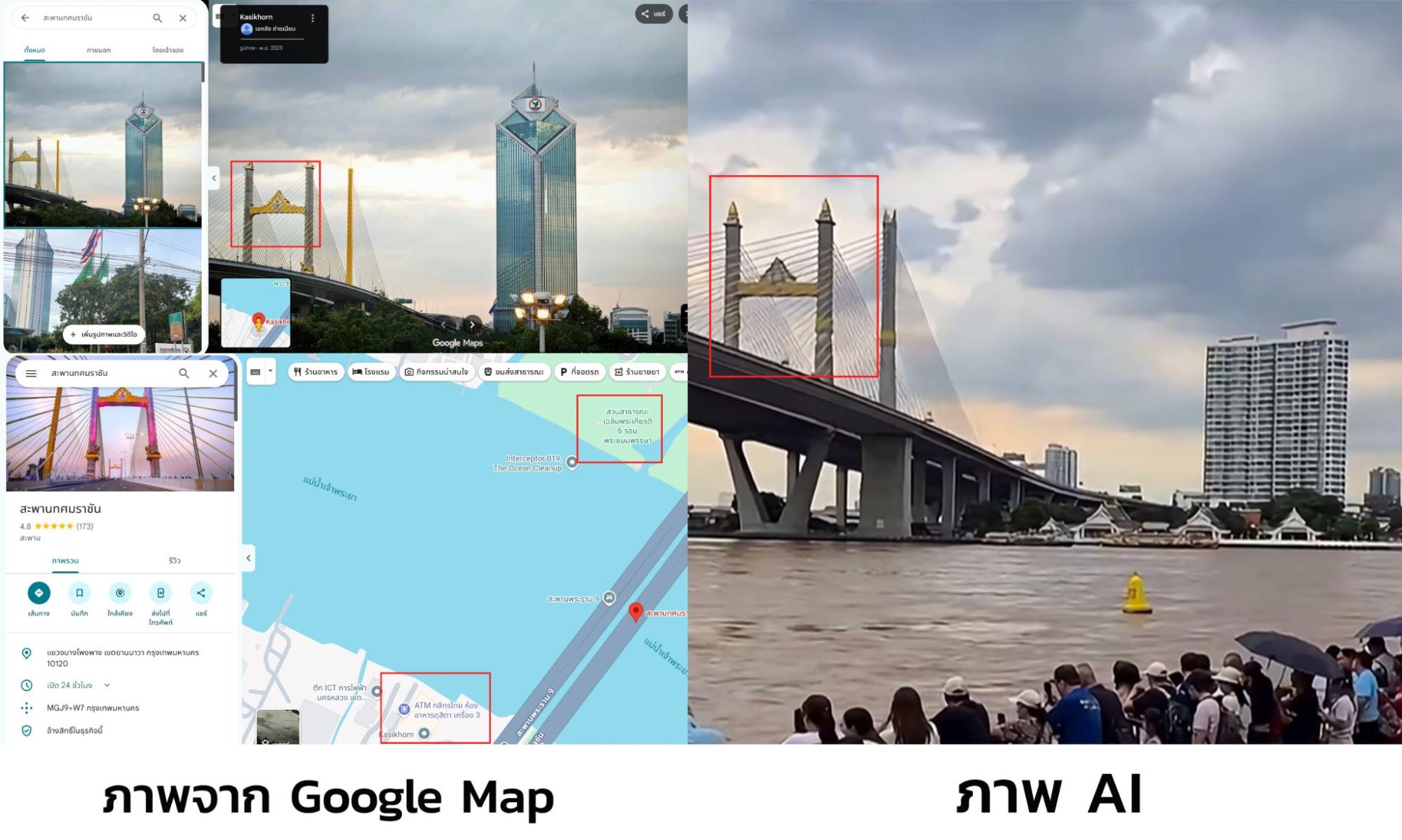
Likewise, if the viewpoint were from the opposite side with the bridge on the left and near the Kasikornbank building, the area would correspond to the Balada restaurant zone. Yet investigators again found no white building resembling the structure shown in the clip.
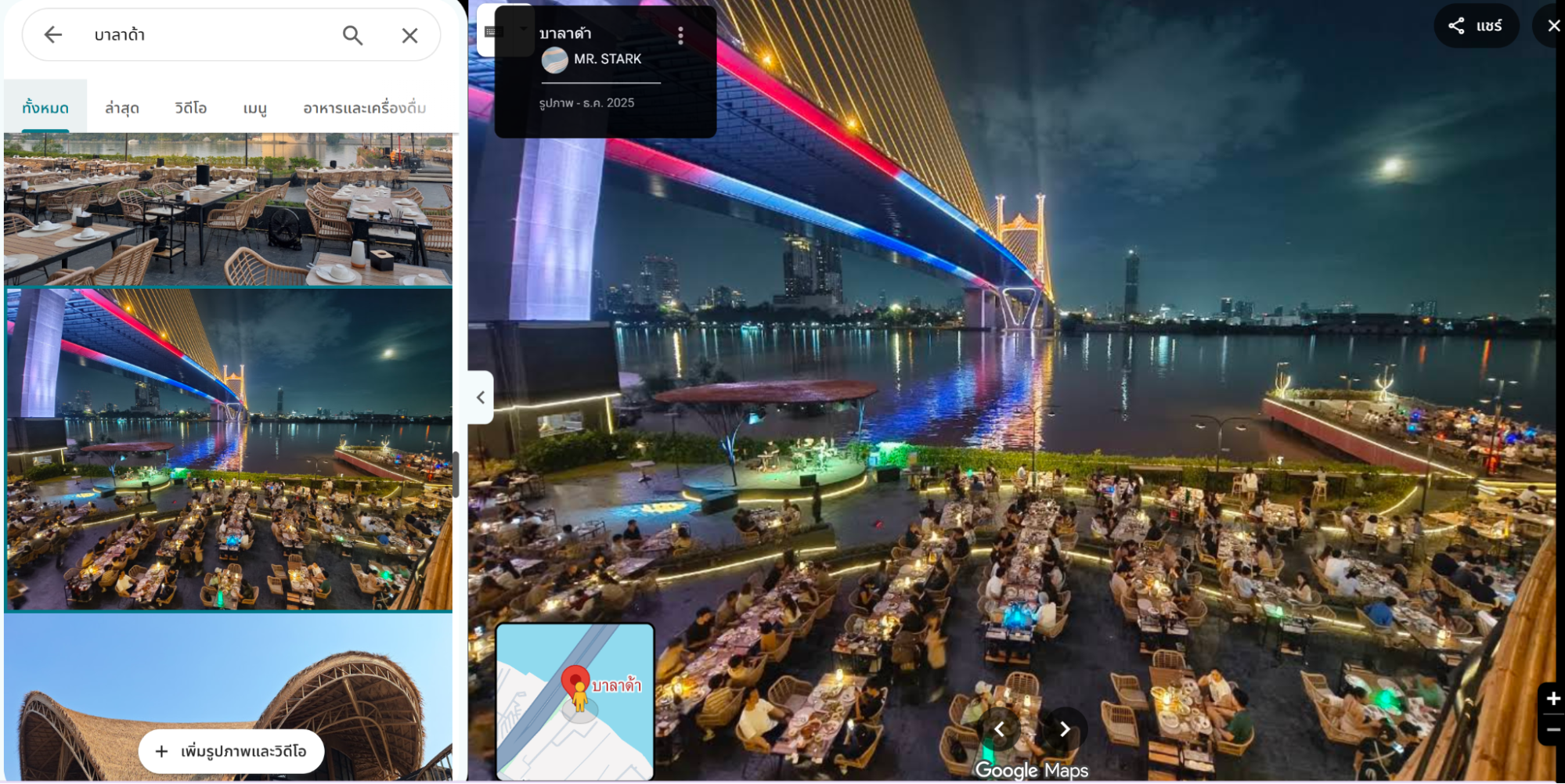
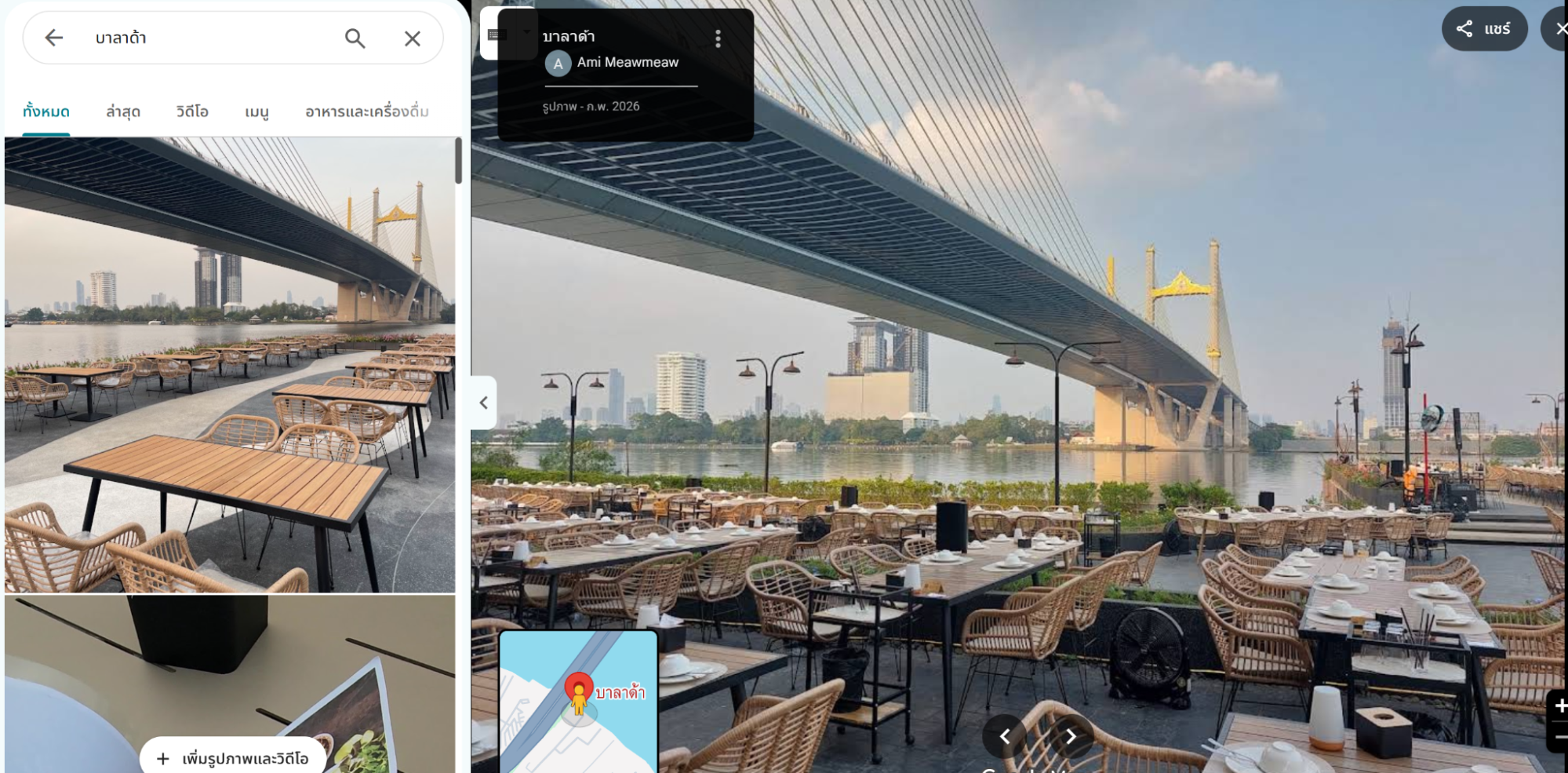
The investigation found numerous environmental details that do not correspond to real-world locations. Combined with findings from AI-detection tools, the evidence strongly suggests the footage was generated using artificial intelligence.
What are the facts?
The video clip claiming that the Chao Phraya River overflowed into nearby areas on Oct 10, 2026 contains numerous inconsistencies when compared with actual locations. These include irregularities in the appearance and behaviour of people, as well as mismatches involving buildings and bridge structures.
AI-detection tools also indicated a strong likelihood that the footage was generated using AI. In addition, no official data has been found confirming water levels at the location shown in the clip on that date.
Verification Process
- Selected frames from the video were analysed using Google Lens, but no original source could be identified.
- The footage was also examined using Hive Moderation’s AI-detection tools, which indicated it was likely AI-generated. Although some segments produced lower-confidence results, repeated reverse-image searches still failed to locate an authentic source.
- Investigators further found that the account responsible for sharing the video had previously posted multiple AI-generated clips.
- Comparisons with Google Maps examined bridge towers, riverside features and buildings on the opposite bank. Multiple discrepancies were found, both around Rama VIII Bridge and in areas near Rama IX and Rama X bridges.
- Investigators also reviewed water-level information for Oct 10, 2026, but found no data directly confirming river conditions at the location depicted in the video. As a result, the footage cannot be used as evidence of actual flooding conditions.
Impact of this misinformation
- The clip could lead people to misunderstand flood conditions by falsely suggesting that the Chao Phraya River reached exceptionally high levels at the location shown.
- It may also cause unnecessary concern, confusion and public alarm among nearby residents.
- The misleading footage could distort risk assessments, potentially influencing travel plans or flood-preparation decisions based on unverified information.
- Because the visuals resemble real locations, the clip may further blur the distinction between authentic imagery and AI-generated content.
- The spread of such false material may also undermine trust in legitimate flood warnings and official information issued by relevant authorities.
What to do with this misinformation?
- Verify the date and location before trusting captions attached to videos. Check whether the time and place of the alleged event are clearly identified.
- Consult official water-level information from agencies such as Bangkok’s Drainage and Sewerage Department or the Royal Irrigation Department, focusing on monitoring stations nearest the area concerned.
- Use Google Lens to search for original versions of images or videos and determine whether old content has been repurposed in a misleading context.
- Watch for visual inconsistencies, including people with near-identical appearances or clothing, repeated gestures, and building or bridge details that do not match real locations. No single clue is conclusive, so several indicators should be considered together.
- Do not share disaster-related content before verifying its authenticity. Always check official sources before reposting material that claims to depict an emergency situation, in order to avoid spreading confusion or unnecessary panic.

Popular Content