Fact‑Check: Claim That Thailand Survived Crisis Because Prayut Stockpiled 90 Tons of Gold
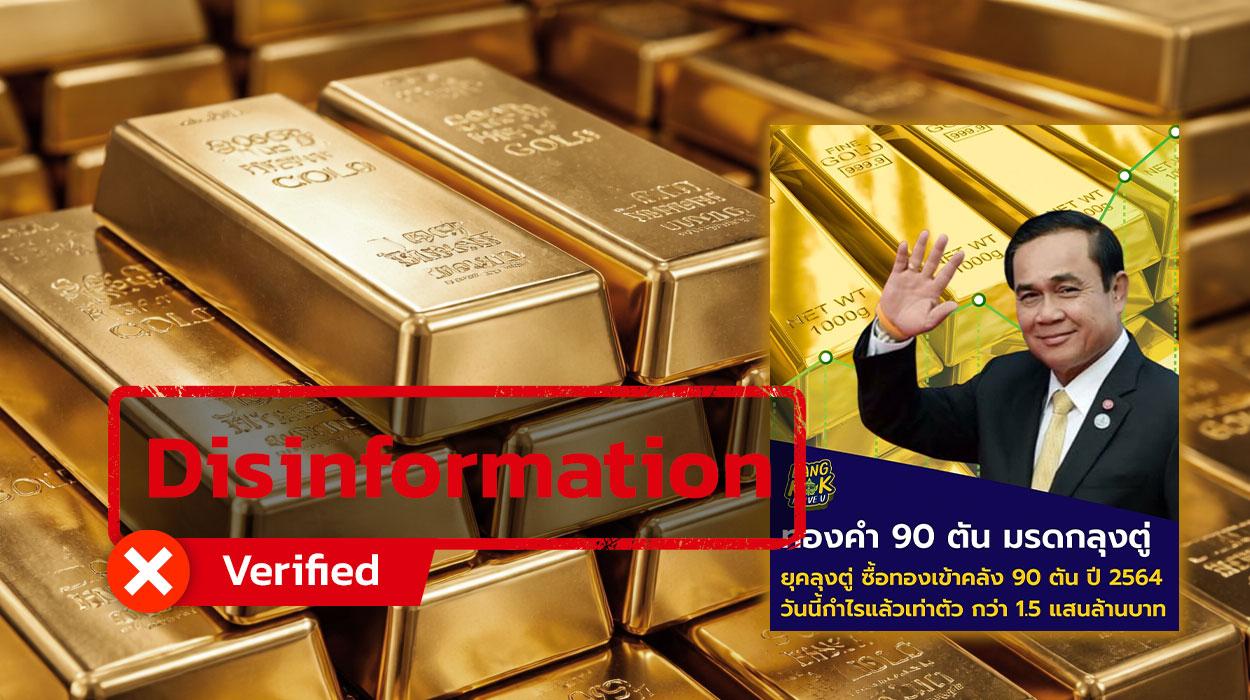
Thai PBS Verify found the news source from: Facebook
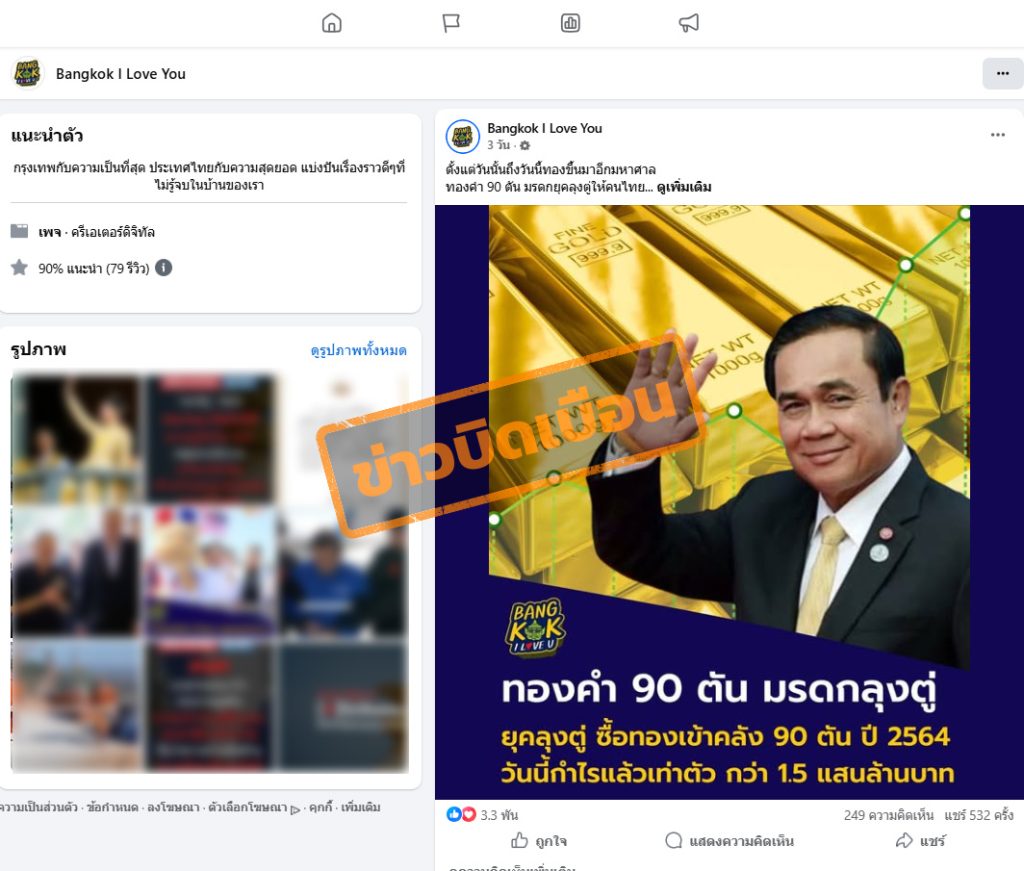
A screenshot shows a post claiming that Thailand survived an economic crisis because former Prime Minister “Gen. Prayut” decided to purchase and store 90 tons of gold in the national reserves.
Thai PBS Verify Checks Facebook Page “Bangkok I Love You.” The page posted an image with text claiming:
“Since that day, gold value has risen enormously.
90 tons of gold — a legacy from the Prayut era for Thai people.
In 2021, Prayut’s government bought 90 tons of gold for the reserves. Today, the profit has doubled.
“Looking back to 2021, the government under Prime Minister Gen. Prayut Chan‑o‑cha made a strategic decision to purchase more than 90 tons of gold for the reserves — equivalent to about 5.9 million “Thai baht‑weight of gold.” At that time, gold was priced at around 30,000 baht per baht‑weight. The decision drew criticism, but the government explained it was meant to strengthen currency reserves and invest in a globally-recognized safe haven asset.
“Four years later, profits have doubled. Now in 2025, gold prices in both global and Thai markets have continued to rise. Domestic gold bars now exceed 60,000 baht per baht‑weight — doubling the price in 2021. This means the reserves allegedly purchased during Prayut’s era have increased in value from about 177 billion baht to more than 350 billion baht today.
“‘Economic Implications’
Holding large amounts of gold provides Thailand with a ‘buffer’ against global economic crises. It diversifies risk and reduces reliance on major currencies alone. The doubling of profits demonstrates long‑term benefits for the country’s financial stability. The purchase of 90-ton gold in 2021, during the Prayut era, at a price of 30,000 baht per baht‑weight, has now become an investment that generated a ‘twofold profit’ within just four years. It is described as an economic decision that was clearly effective in Thai history.”
The post has attracted more than 3,300 reactions and has been shared over 500 times.
Who purchased 90 tons of gold ?
Thai PBS Verify found, through keyword checks, reports confirming that the Bank of Thailand (BoT) purchased the gold in 2022. BoT statistics show that in 2021 — during the administration of Prime Minister Gen. Prayut Chan‑o‑cha — Thailand added 90.2 tons of gold to its reserves in a single year. This made Thailand the world’s largest gold buyer that year, as part of efforts to diversify international reserves.
Was it bought with the “government’s budget” ?
There is a clear distinction between “international reserves” (managed by the Bank of Thailand) and the “national budget” (managed by the government). The Bank of Thailand Act B.E. 2485 (and its amendments) prescribed that the authority of BoT is to manage “international reserves” to safeguard the stability of the currency and the economy.
- Non-taxpayer money: The funds used to buy gold came from BoT’s own assets, not from the government’s budget.
- Independent decision: Buying or selling gold is decided by the BoT’s board to reduce reliance on the U.S. dollar. It is not subject to orders from the Prime Minister.
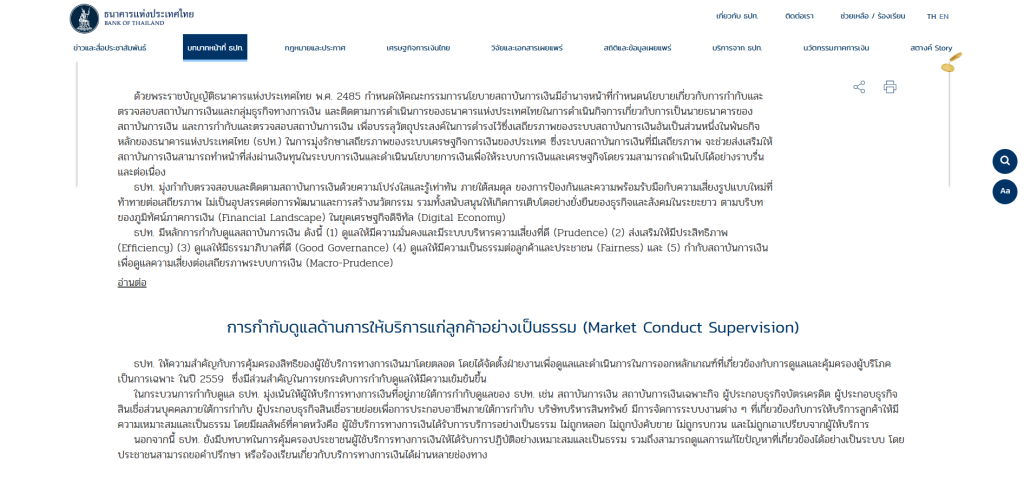
The Bank of Thailand (BoT)’s duty
How has Thailand accumulated gold?
Thailand’s current gold reserves status
The latest information on Thailand’s gold reserves (2019–present), as of early 2026, based on statistics from the Bank of Thailand (BoT) and the World Gold Council, is as follows:
During 2021, Thailand drew global attention for purchasing a massive volume of gold within a short period.
- Before 2010: Thailand’s gold reserves remained stable at around 70–80 tons.
- 2010–2011: Accumulation began after the global financial crisis, rising to 150 tons.
- 2021 (Apr–May): The Bank of Thailand made its largest gold purchase in decades — about 90 tons in just two months — pushing reserves from 154 tons to 244 tons.
- 2022–2023: Holdings remained steady at 244 tons to maintain portfolio balance.
- 2024 (early): Slight adjustments were made in response to market conditions, reducing reserves to 230–235 tons
The value of Thailand’s gold reserves has surged to a historic high, reaching 31.909 billion US dollars (approximately 1.02 trillion baht), due to global gold prices rising by more than 70% in 2025.
Thailand is ranked 18th in the world and 2nd in ASEAN (after Singapore).
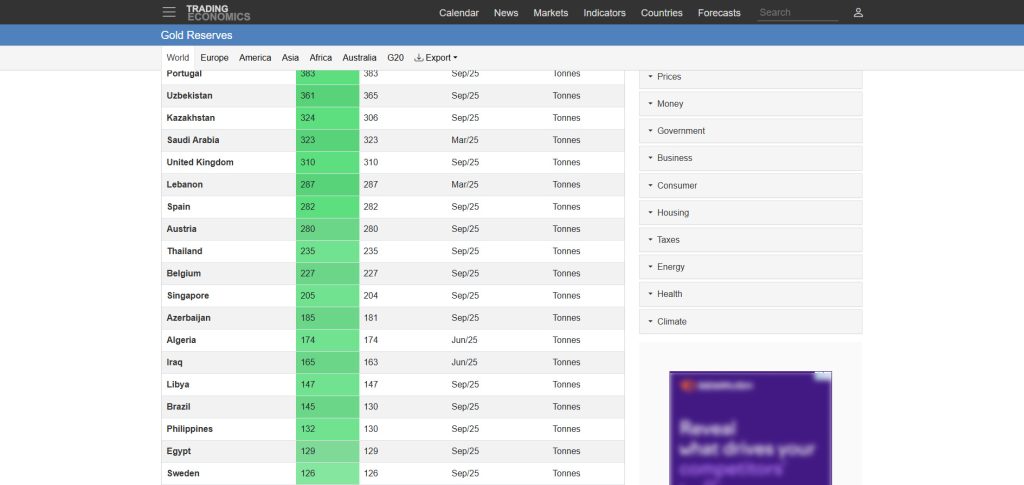
Current information regarding Thailand’s gold holdings
Why did they buy it at that time ?
The Bank of Thailand’s decision to purchase additional gold in 2021 was not political, but a matter of “risk management.”
- At the time, there were global concerns about inflation caused by U.S. money printing, making gold a reliable store of value.
- The BoT sought to reduce reliance on the volatile U.S. dollar.
- Real interest rates were low, which made holding gold (a non‑interest asset) more attractive compared to bonds.
The purchase of 90 tons of gold in 2021 was a strategic move by the Bank of Thailand to guard against global economic crises, not a personal investment or a direct policy from the Prime Minister’s Office.
Why are international reserves important ?
Dr. Somchai Jitsuchon, Director of Inclusive Development Research at the Thailand Development Research Institute, told Thai PBS Verify that the Bank of Thailand has responsibility to manage international reserves at all times. National reserves consist of major currencies, gold, and SDRs (Special Drawing Rights) or international reserve assets created by the IMF, serving as both a unit of account and supplementary reserves for member countries. The Bank of Thailand adjusts the proportion of these holdings as appropriate.

Dr. Somchai Jitsuchon, Director of Inclusive Development Research Thailand Development Research Institute
“The Bank of Thailand makes investment decisions based on prevailing prices and the risks of the time, much like any ordinary investor. It must manage its portfolio by deciding how to allocate international reserves across different asset classes, considering both risk and return. In short, the model follows the same logic as general investment strategies.”
“The Bank of Thailand makes investment decisions based on prevailing prices and the risks of the time, much like any ordinary investor. It must manage its portfolio by deciding how to allocate international reserves across different asset classes, considering both risk and return. In short, the model follows the same logic as general investment strategies.”
Although in the past there were instances of political interference — most notably before the 1997 Asian financial crisis (“Tom Yum Kung crisis”), when intervention was evident — these cases were limited to oversight of financial institutions, such as Bangkok Bank or Bangkok Bank of Commerce (BBC). Even then, the government did not interfere with international reserves.
After the Tom Yum Kung crisis, the picture became clearer: politics no longer intervened, nor could it intervene, in matters of international reserves. This was due to changes in the Bank of Thailand Act, which made political interference much more difficult.
What is the truth ?
The claim that this was the achievement of Gen. Prayut is “structurally inaccurate.” Although the event occurred during the time where Gen. Prayut was serving as Prime Minister, in legal and operational terms it was the work of the Fund Management Committee of the Bank of Thailand. It was not related to the government, nor did it involve the national budget.
Verification Process
- Check gold reserve statistics: Confirmed data from the Bank of Thailand (BoT) and the World Gold Council show that in 2021 Thailand did indeed purchase an additional 90.2 tons of gold — the largest volume increase in the world that year.
- Check legal framework and authority: The Bank of Thailand Act of B.E. 2485 (1942) and its amendments define the relationship between “the government” and “the BoT.” It establishes that the management of international reserves is the independent authority of the BoT, not the government.
- Check the source of funds: An analysis of the definition of “international reserves” shows that they are not part of the national budget funded by taxes or cabinet approval, but rather assets managed within the BoT’s own portfolio.
- Expert interview: Economist Dr. Somchai Jitsuchon has confirmed the independence of the Bank of Thailand, which was deliberately designed to prevent political interference in matters of international reserves.
Impact of this false information
- Misunderstanding of fiscal status: The public may mistakenly believe that the government has “profits from gold” and can use this sum to fund welfare programs or solve debt problems. In reality, however, these reserves exist “to back the value of baht currency” and cannot be drawn upon as part of the national budget.
- Undermining the independence of core institutions: Giving political credit for the technical work of the central bank erodes the credibility and independence of the Bank of Thailand, which is a key mechanism for maintaining the country’s long‑term economic stability.
- Fueling political manipulation: Such information is used as a tool to boost popularity for one side, citing real figures but distorting their origin. This creates social conflict based on misleading data.

A screenshot shows comments from users, most of whom believe that the post is true.
What to do with this misinformation?
- Separate “time period” from “decision‑making authority”: Even if an event occurred during a particular government’s tenure, always check which institution is responsible (e.g., international reserves are managed by the Bank of Thailand, not the Prime Minister’s Office).
- Use tools to verify images: If you see a picture of a politician paired with a quoted statement, use Google Lens to trace the image’s origin or search with keywords to check whether the picture is old and has been repurposed with new text, or whether the claim has already been fact‑checked.
- Observe the page name and source: If the information comes from a page with a clear political stance, assume at the outset that the content may be selectively presented to favor one side.