Photo of North Koreans’ welcome parade for Kim Jong-un distorted to be Anutin’s election win celebration
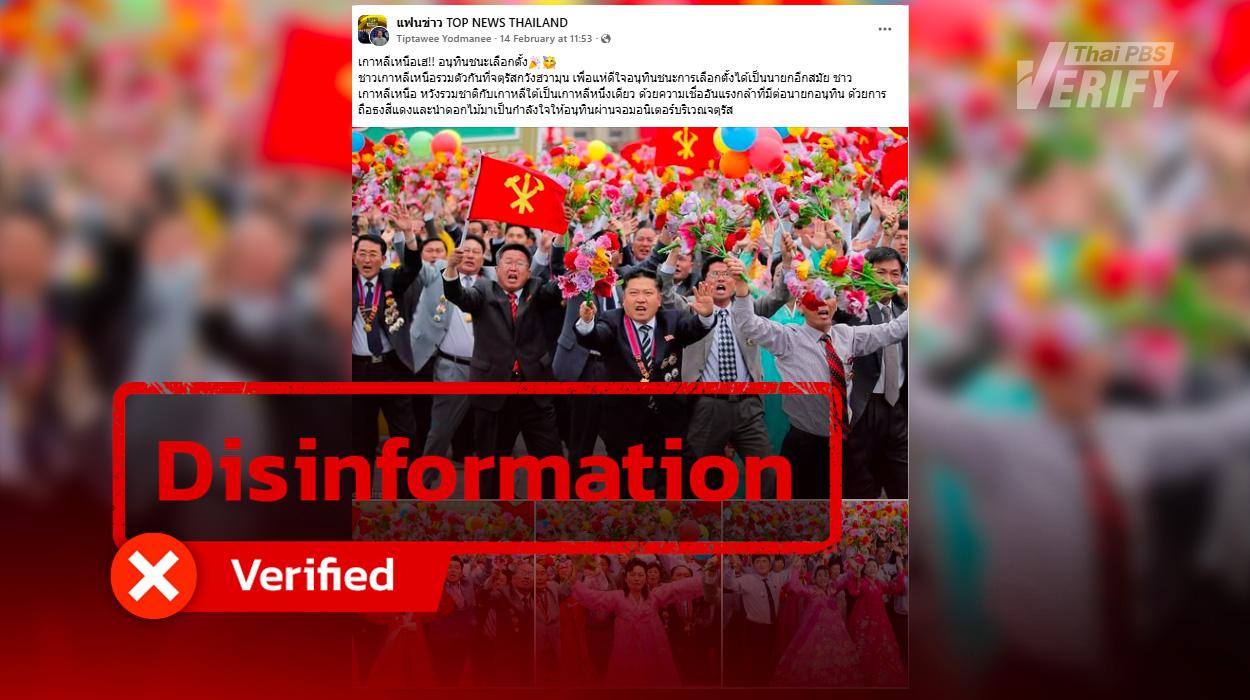
Thai PBS Verify found the fake news from Facebook
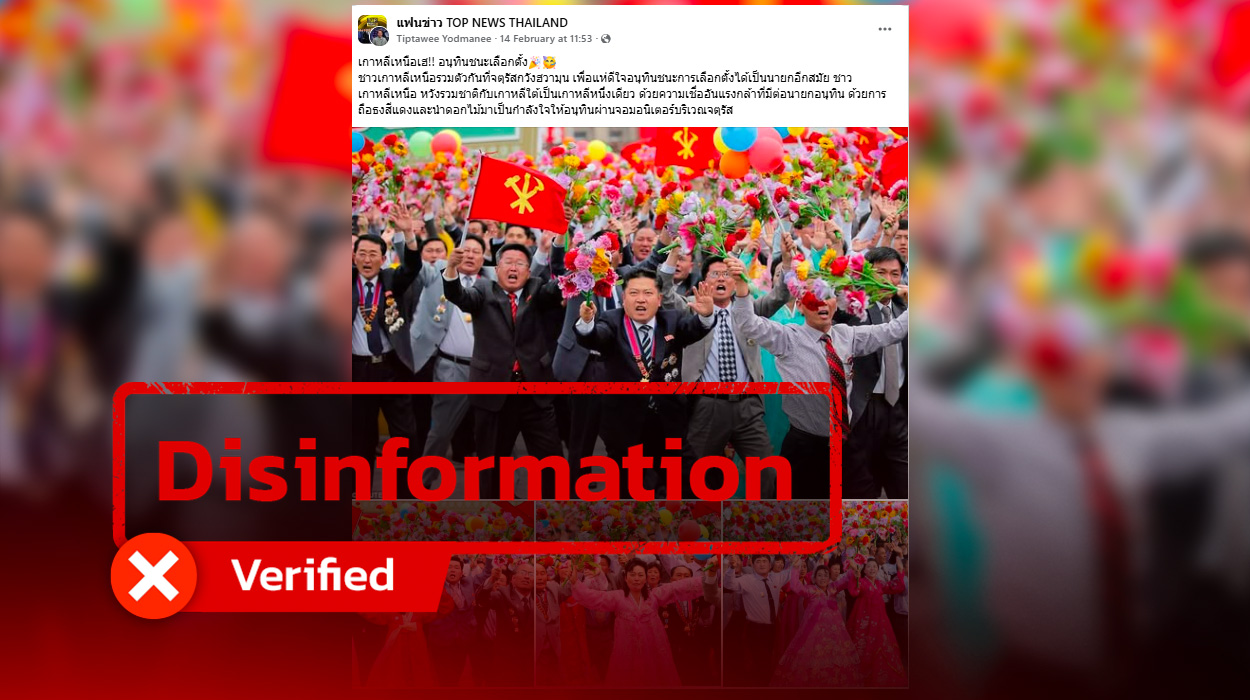
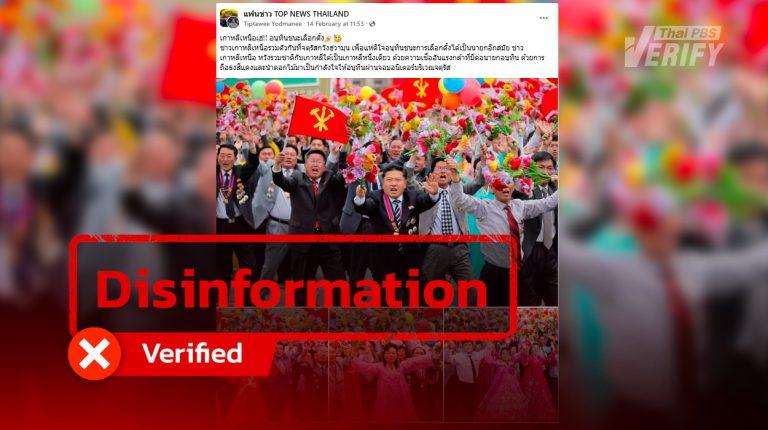
A Facebook page, Fan Kao TOP NEWS THAILAND (แฟนข่าว TOP NEWS THAILAND), shared images of cheerful North Koreans, claiming they were “celebrating that Anutin had won the election.”
Thai PBS Verify found that the Facebook page, Fan Kao TOP NEWS THAILAND (แฟนข่าว TOP NEWS THAILAND), shared images of cheerful North Koreans. The caption reads:
“North Korea congratulates Anutin’s election victory!! North Koreans gather at Gwanghwamun Square to celebrate Anutin’s win as Prime Minister for another term. North Koreans hope to reunite with South Korea as one Korea, with strong faith in Prime Minister Anutin, holding red flags and bringing flowers to encourage him through the giant monitor at the square.”
The post received 440 reactions and 128 comments.
Did North Korea really celebrate Anutin’s election victory?
Thai PBS Verify used Google Lens to examine the images in the post and found that they had actually derived from a parade held in North Korea at Kim Il‑sung Square in Pyongyang. The event was a celebration of the ruling party’s congress, where people reacted with joy upon seeing North Korean leader Kim Jong‑un on May 11, 2016, according to the website HuffPost.
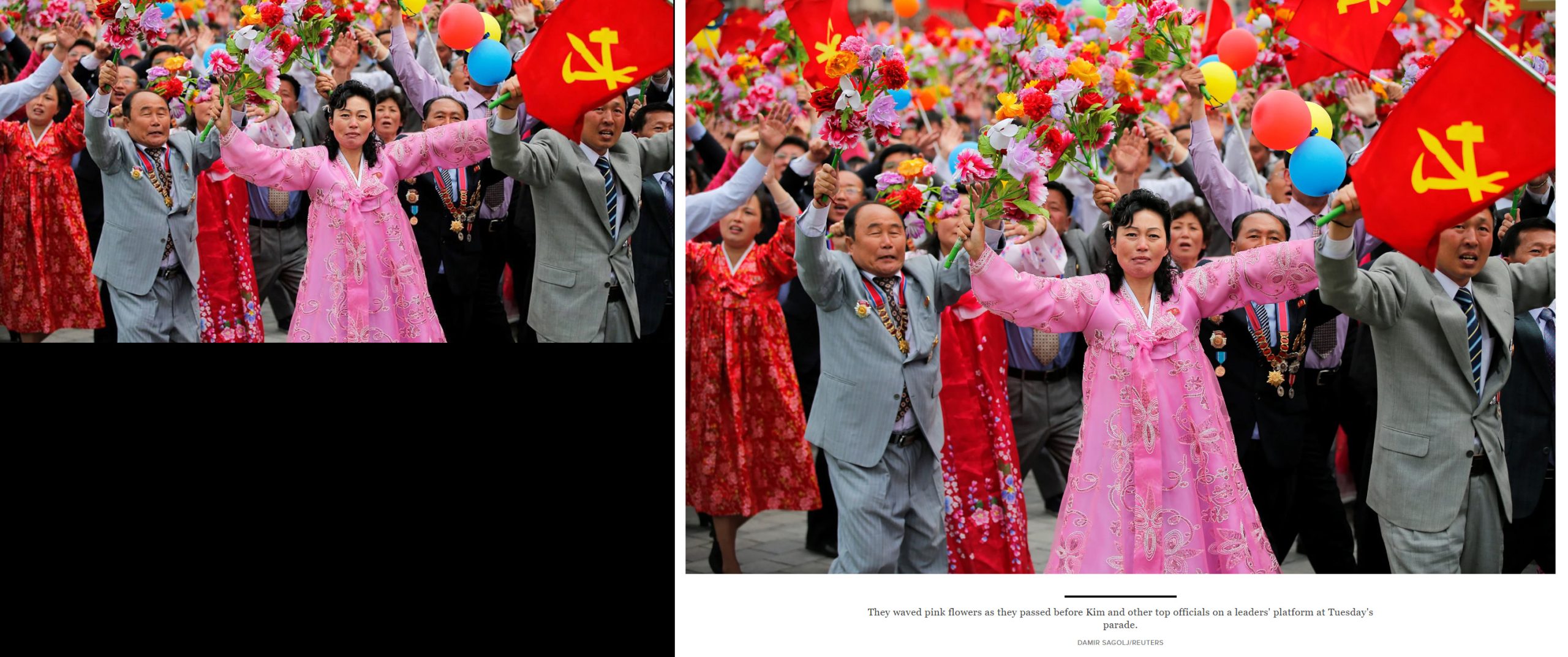
Comparison of images from the post claiming that North Koreans were happy about Anutin’s election victory (left), and the news photo of North Korea’s parade at Kim Il‑sung Square in Pyongyang (right)
In addition, when examining the details on the website, other images were found. A search with Google Maps indicated that the event had taken place at Kim Il‑sung Square in Pyongyang, North Korea.
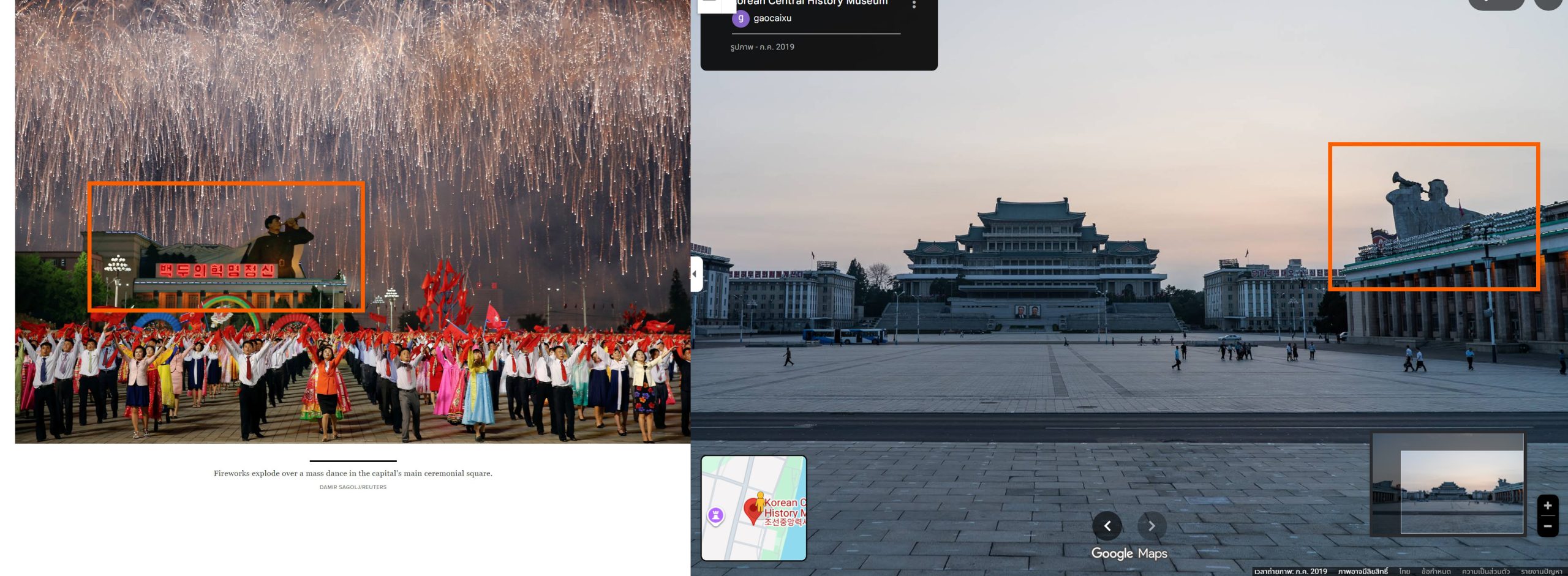
Comparison images: the Korean Central History Museum from the HuffPost website (left) and from Google Maps (right)
What is the truth?
Thai PBS Verify found that the images in question claiming North Koreans were happy about Anutin Charnvirakul’s election victory actually came from a parade held at Kim Il‑sung Square in Pyongyang. The event was a celebration of the ruling party’s congress, where people reacted with joy upon seeing North Korean leader Kim Jong‑un on May 11, 2016. These images were not an event of the North Korean celebration to Anutin’s election victory at all.
Verification Process
- Image verification with Google Lens: When the images were checked by Google Lens, they matched photos of a parade in North Korea at Kim Il‑sung Square in Pyongyang. The event was a celebration of the ruling party’s congress, where people reacted with joy upon seeing North Korean leader Kim Jong‑un on May 11, 2016.
- Verification through Google Maps: When examining the details on the website, other images were also found. A search with Google Maps indicated that the event took place at Kim Il‑sung Square in Pyongyang, North Korea.
Impacts of this false information
- Serious misunderstanding: Those who do not follow international news may believe that foreign countries are interested in Thai politics at an “exaggerated” level, leading to distorted decisions or beliefs.
- Netizens manipulated as agents of misinformation: False information is often designed “to appeal” to one side. When we share it, we unknowingly become part of information operations (IO).
- Increasing disunion: False information like this is often used for satire or to mock the opposing side, which stirs anger and hatred between political groups.
- Undermining the credibility of elections: Fake news about victories that appear “excessive” or “abnormal” (such as foreigners celebrating wildly) can create suspicion about transparency of actual election results.
- Erosion of truth: When fake news becomes widespread, people begin to feel that “no news can be trusted,” leading to cynicism and causing genuine factual information to be overlooked.
- Damage to reputation: Even if the person involved did not create the fake news, “exaggerated praise” often triggers backlash, making them a target of criticism or suspicion of fabricating the story themselves.
- Affect to international relations: Using images of foreign leaders or citizens (in this case, North Korea) for mockery or distortion can affect national image and diplomatic sensitivity if the issue spreads internationally.
What to do with this misinformation?
- Apply the principle of “Stop, Think, and Check”: Do not rush to share or comment, even if the information matches your beliefs or seems amusing. Always ask yourself, “Is this really possible?” For example, why would North Koreans be so interested in the results of Thai elections? Check whether major news agencies have reported the story. If it only appears as a random post on social media, assume it is fake news.
- Verify the “source” and the “context of the image”: Fake news often recycles old images to tell new stories. You can use Google Lens or other reverse image search tools to trace the original source and check the date, because fake news often takes images from past events and presents them as if they were current.
Translation edited by: Peerachai Pasutan

Related Content
Popular Content