Natthaphong’s viral admission of vote buying committed by People’s MP proved to be deepfake
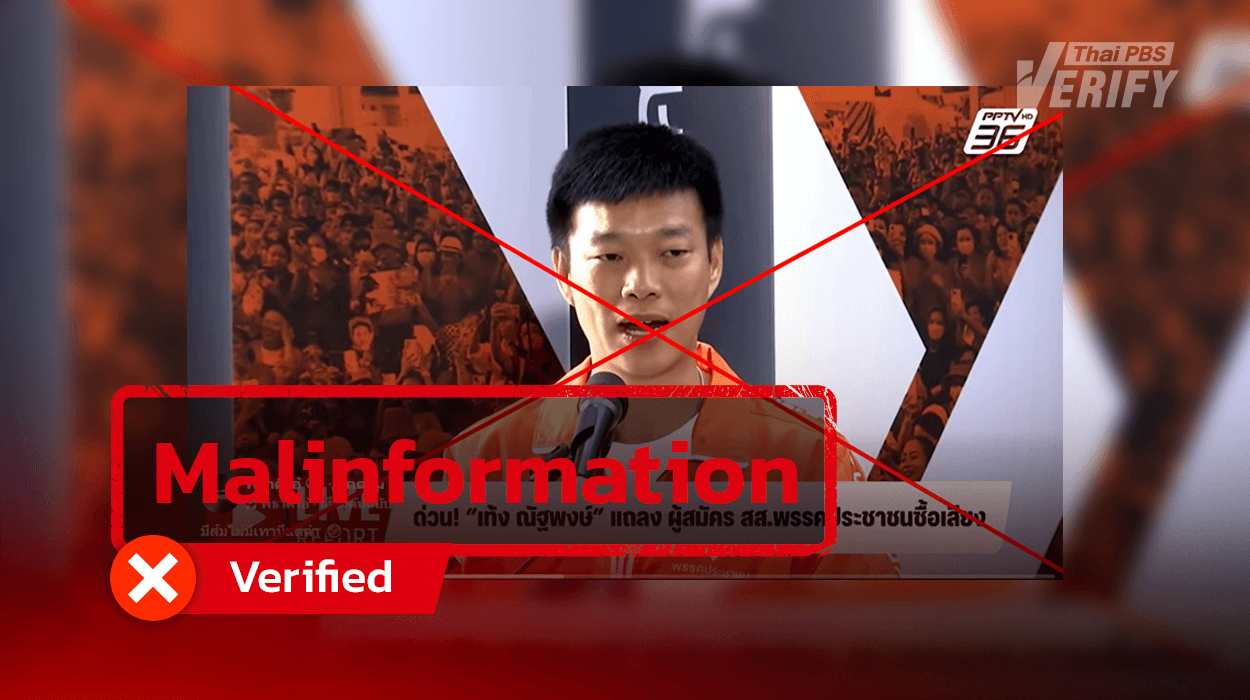
Nevertheless, the clip is a deepfake. The footage was created by editing real news clips overlayed with a fabricated voice. This intentionally distorts the facts of the real statement.
Thai PBS Verify found the piece of disinformation from: Facebook
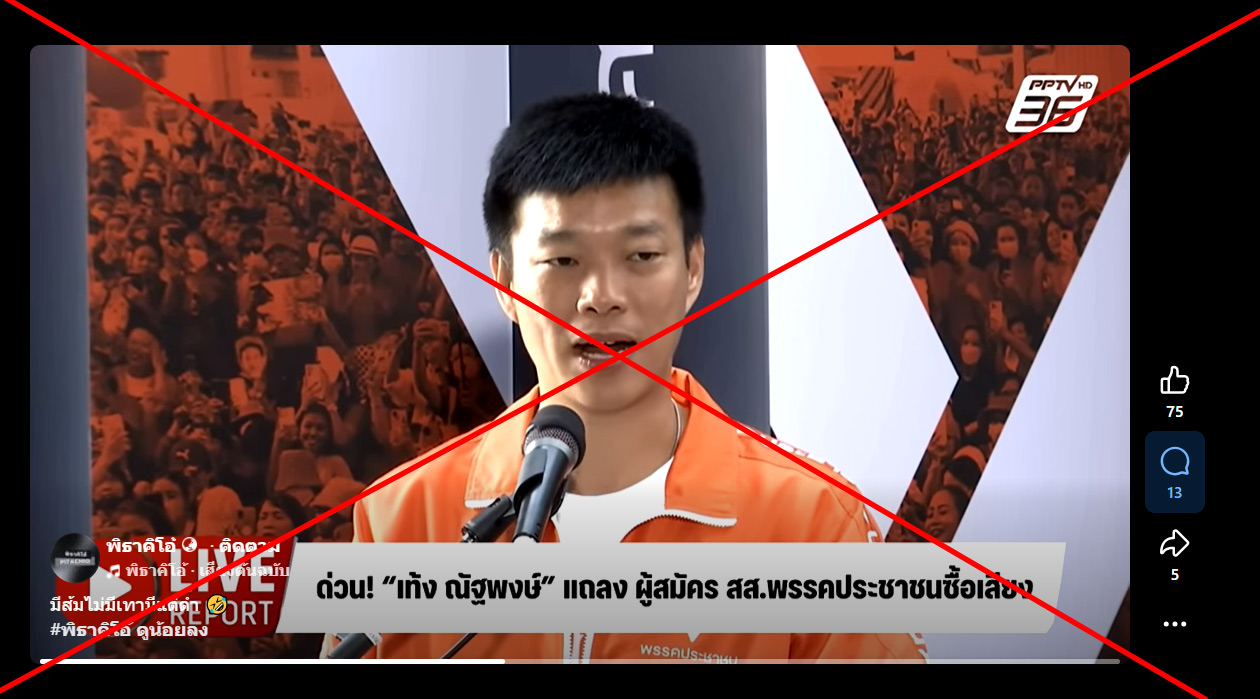
The image of the Facebook post in question
A Facebook user posted a fake clip of Mr. Natthaphong making a statement on vote buying committed by the People’s Party MP. The person in the video states:
“We have investigated the incidents. We found that a certain MP candidate of the People’s Party engaged in behavior that could be classified as vote buying. Even though this matter is minor—merely offering compensation to locals who facilitated field visits and attended party rallies— has led to allegations of vote buying against the People’s Party. Now, we are conducting an urgent internal investigation into this matter.
“Although the courts have not yet ruled on these allegations of violating election laws, this is a matter of principle and the party’s credibility with the public. We sincerely apologize to the people once again, as this resulted from recklessness of the candidate during their campaigns. These actions could potentially be classified as election law violations.
“The People’s Party cannot overlook such actions, even in matters that appear insignificant. We remain determined to our principles and sincerely ask for the public’s continued confidence.”
Is the clip about the People’s Party vote buying authentic or fake?
An examination conducted by Google Lens reveals that this footage derived from a PPTV news report. The actual video shows that Mr. Natthaphong spoke about the arrest of the party’s constituency candidate in Tak province. The original live stream dates back to January 15, 2026
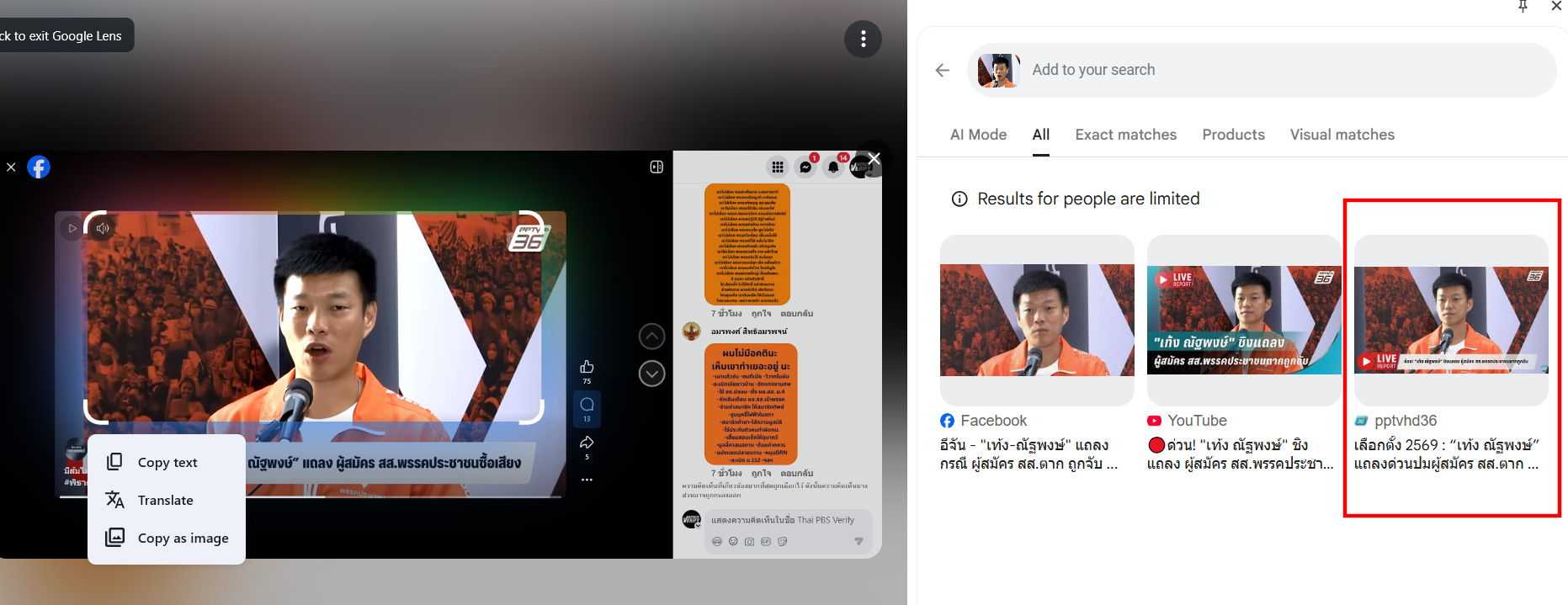
An investigation using Google Lens reveals that this footage originates from a PPTV news report on January 15, 2026.
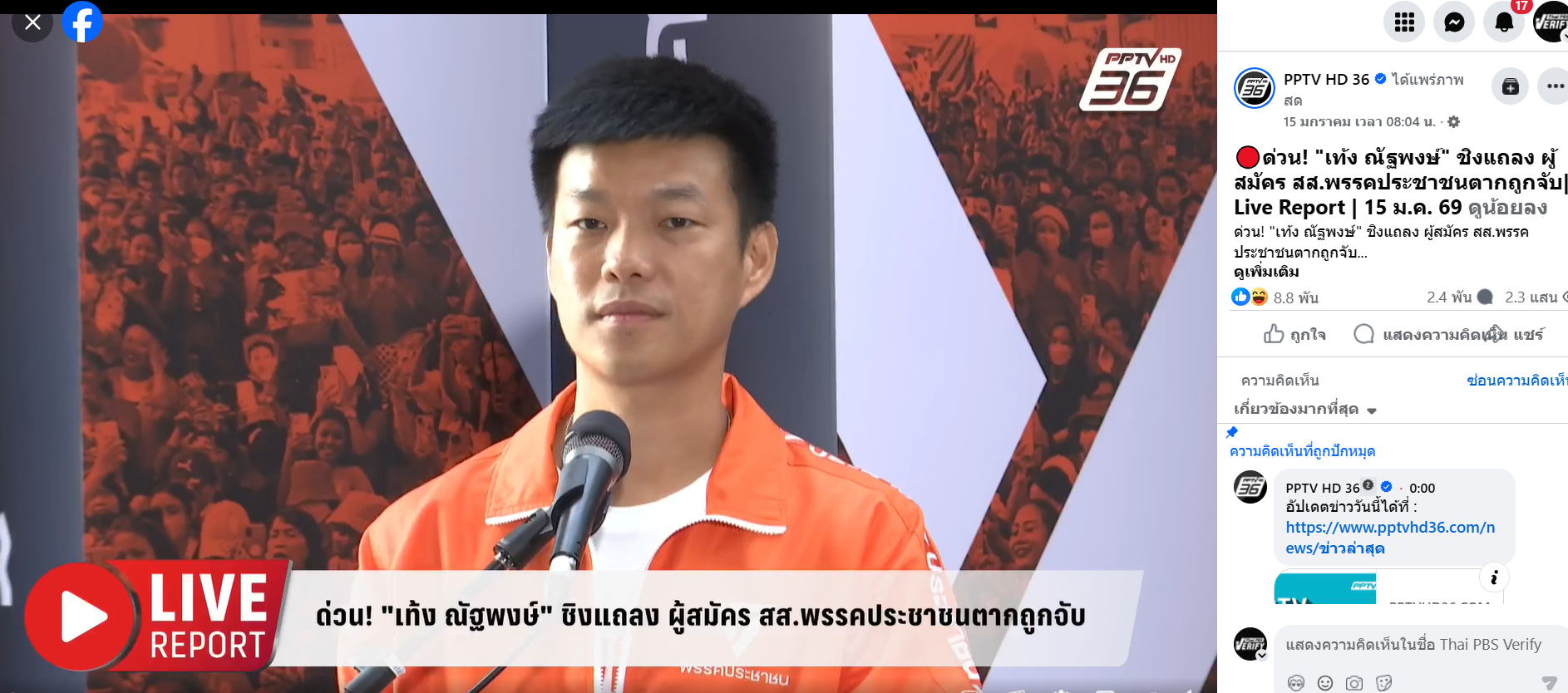
The caption reads: “Breaking! People’s Party leader ‘Teng Natthapong’ addresses the arrest of the party’s Tak MP candidate.” The live broadcast occurred on January 15, 2026
The footage is actually a deepfake
An AI detection analysis by Hive Moderation reveals a 92.8% likelihood that the video was created by AI.
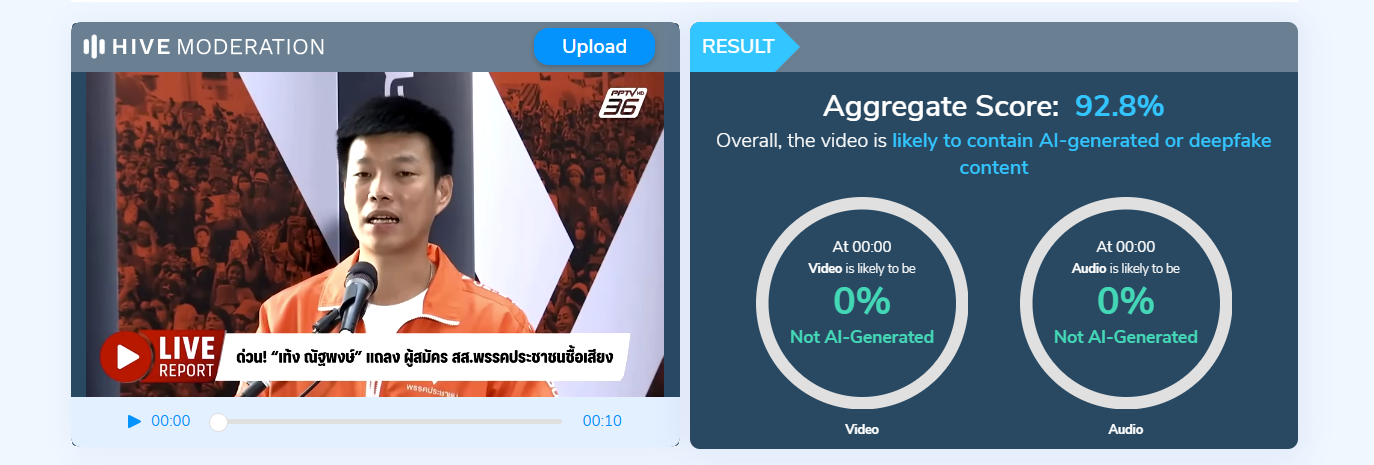
The analysis results by Hive Moderation
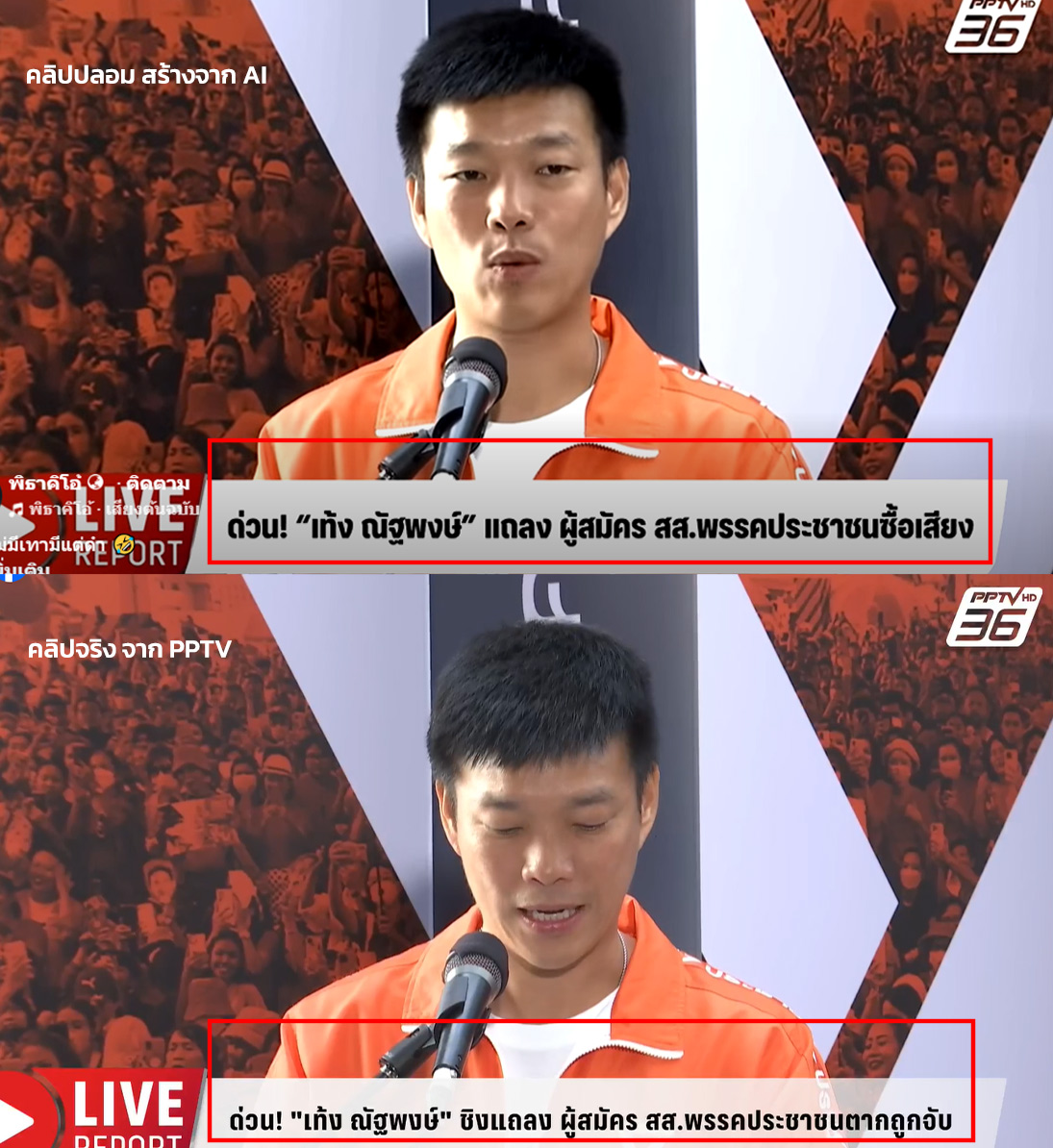
A comparison between the AI-generated clip and the original footage reveals difference in the news headlines
- In the AI-generated clip (above), the headline states: “Breaking news! Teng Natthaphong addresses vote buying involving People’s MP candidate”
- In the original clip (below), the bar reads: “Breaking news! Teng Natthaphong addresses arrest of People’s Party MP candidate for Tak”
It was found that during the January 15, 2026 live streaming conference, Mr. Natthaphong Ruengpanyawut addressed the arrest of a People’s Party MP candidate for Tak’s 2nd district. The candidate was detained over alleged links to online gambling websites. In line with the party’s stance, Mr. Natthaphong emphasized that the People’s Party will not protect any members involved in “grey” or illicit activities and would take decisive action. At the time, the party’s legal team was contacting the candidate to uncover the truth. Therefore, this fake video does not address any issues regarding vote buying.
Furthermore, Thai PBS Verify reached out to the People’s Party for clarification. The party confirmed that the video is AI-created and completely fabricated.
What is the truth?
The clip in which Mr. Natthaphong allegedly admitted that the People’s Party MP candidate bought votes has been confirmed as fake and AI-generated.
An examination reveals that the footage was edited from an authentic PPTV live streaming report on January 15, 2026. The original news piece did feature Mr. Natthaphong, leader of the People’s Party, stating about the arrest of an MP candidate for Tak’s 2nd district, who was detained over alleged links to online gambling websites.
Verification Process
- The team verified the clip’s origin with Google Lens and Reverse Image Search. It was found that the clip matched a news report from PPTV, where the original footage shows Mr. Natthaphong addressing the arrest of a People’s Party MP candidate in Tak province. The original clip was live streamed on January 15, 2026.
- The team compared the video in question and the original footage. It reveals that the AI-generated clip altered the news headline to “People’s Party MP candidates bought votes,” whereas the original headline stated “People’s Party MP candidate in Tak arrested.” Additionally, the audio synchronization in the viral clip does not align with the original broadcast.
- A part of the video in question was analysed with Hive Moderation. The results indicate a 92.8% likelihood that the video was created by AI.
*It is noted that the verification process was conducted with the AI-Generated Content & Deepfake Detection Tools. These tools only serve as a preliminary assessment. A comprehensive analysis is being done in coordination with technical experts to reach a definitive conclusion.
Impacts of disinformation
The dissemination of AI-generated fake video claiming that political leaders have admitted to ‘vote buying’ can lead to several significant impacts.
1) Distorting public perception
The public may be misled into believing that electoral corruption has been admitted, even though the actual event had no connection to vote buying. This leads to a distortion of political information during the election period and influences people’s decision-making.
2) Damaging the credibility of individuals and political parties
Fake clips can severely tarnish the reputation of public figures and political organizations, causing a loss of trust among the citizens.
3) Impacting the electoral process
False information regarding electoral fraud can be weaponized as a political tool to attack opponents and create social division.
4) Increasing the risk of AI-driven information warfare
This case reflects a growing trend where deepfakes are used to create highly convincing fake news. This makes investigation more challenging and increases the threat of sophisticated information attacks.
What to do with this misinformation?
1) Stop and verify before sharing
Avoid the immediate dissemination of unverified reports. Take a moment to check the source, especially with content that impacts a person’s reputation or relates to the election.
2) Verify the original source
Check if the content originates from credible news outlets, such as mainstream media, official statements, or the original, unedited footage.
3) Utilize image and video verification tools
Use digital verification tools, such as Google Lens, reverse image search, or AI detection software to determine if the visuals or audio have been manipulated.
4) Report false content
Identified misinformation should be reported to the appropriate social media channels to assist in minimizing public impact.
Translation edited by: Peerachai Pasutan

Related Content


Popular Content