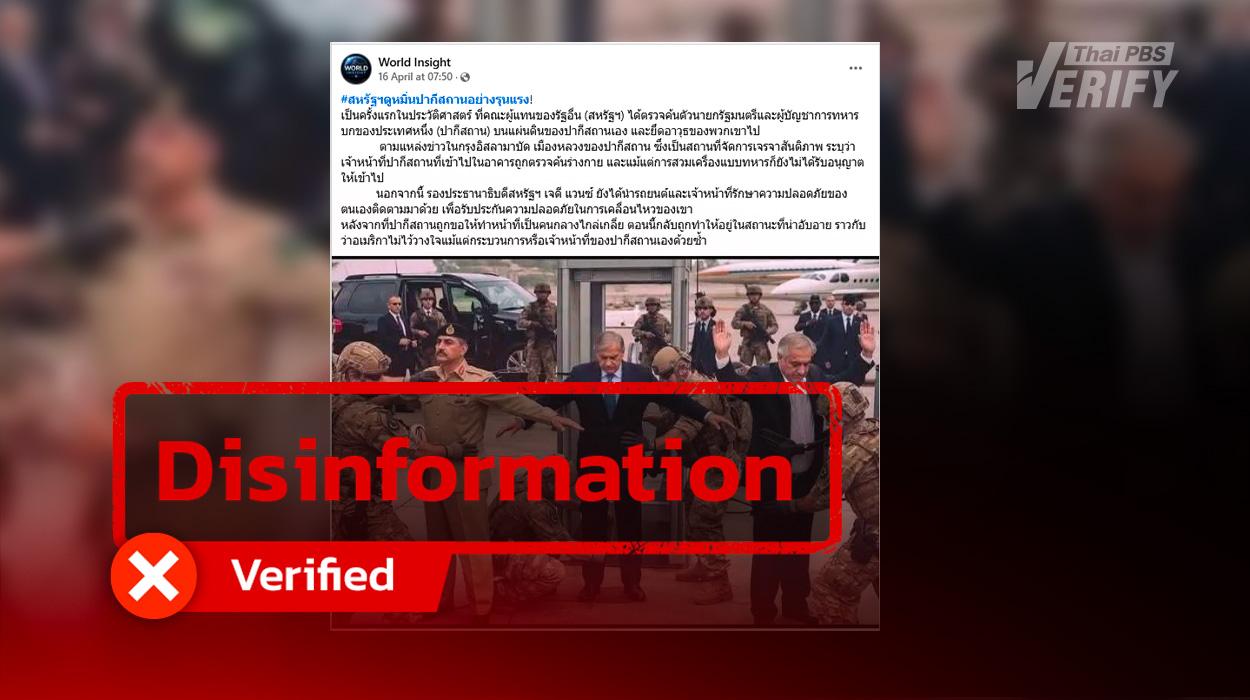
Fake claim about U.S. soldiers searching Pakistani officials before peace talks
Thai PBS Verify found the piece of disinformation on: Facebook
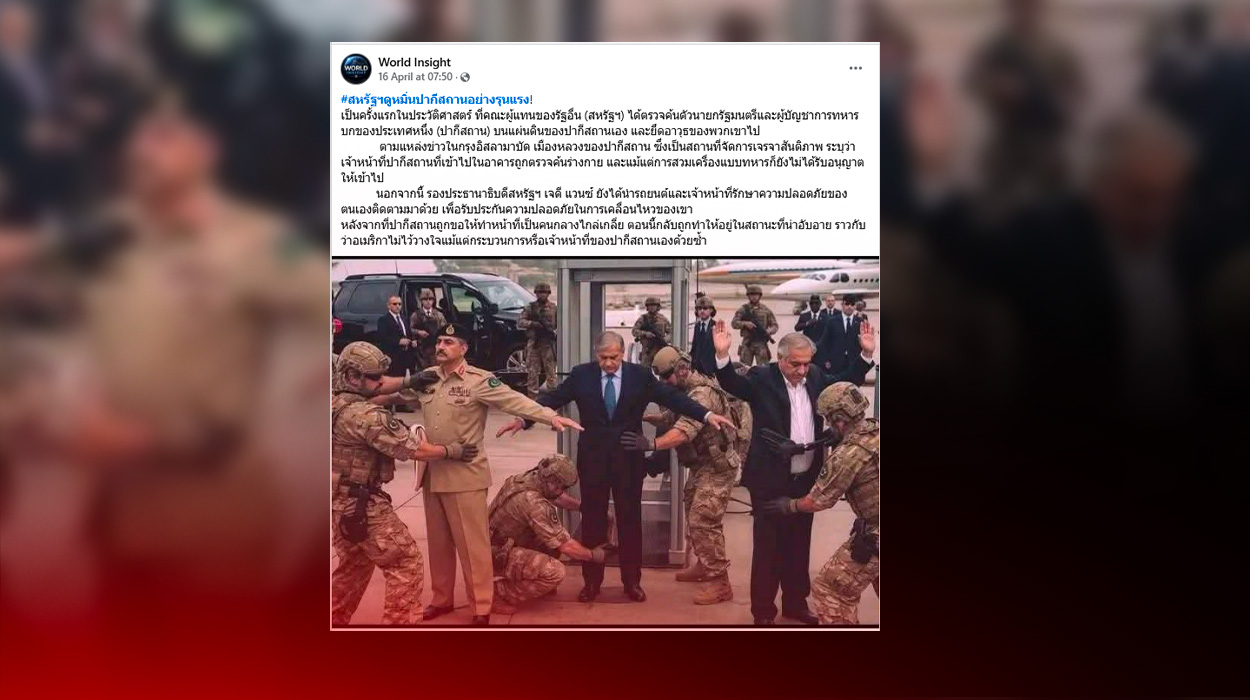
A fake news post was published by the Facebook page ‘World Insight’ on April 16, 2026.
Thai PBS Verify found a video posted on Facebook by the page ‘World Insight’ on April 16, 2026. It shows images of U.S. soldiers and officials searching Pakistani officials. The post was shared during the time of the U.S.–Iran peace talks. The caption reads:
“#The United States severely disrespects Pakistan!
“It is the first time in history that a delegation from another state (the United States) has searched the Prime minister and the Chief of Army Staff of a country (Pakistan) on Pakistani soil itself and confiscated their weapons.
“According to sources in Islamabad, the capital of Pakistan, where the peace negotiations were held, Pakistani officials entering the building were subjected to body searches, and those wearing military uniforms were not allowed to enter.
“In addition, U.S. Vice President J.D. Vance also brought his own vehicles and security personnel to ensure the safety of his movements.
“After Pakistan was asked to act as a mediator, it has now been placed in a humiliating position, as if America does not even trust Pakistan’s process or officials.”
The post received more than 2,800 reactions, 196 shares and 310 comments. Most of the comments believed that the news was true, although some users disagreed based on their own information.
Thai PBS Verify therefore used Google Lens to search for the image and found the same image in higher resolution, which was posted by عبدالخالق نثار on Facebook on April 12, 2026. The caption reads:
الله تعالی مو داسې شرم څخه اوساته
پاکستاني غلا.م چارواکې په خپل اسلام برباد کې تلاشي کیږي
#پاکستاني
#چارواکې
With the aid of Google Translate, the text could be translated as:
“May Allah protect us from such humiliation.
Pakistani thieves, officials are being searched under their own corrupt Islam.
#Pakistan
#Officers”
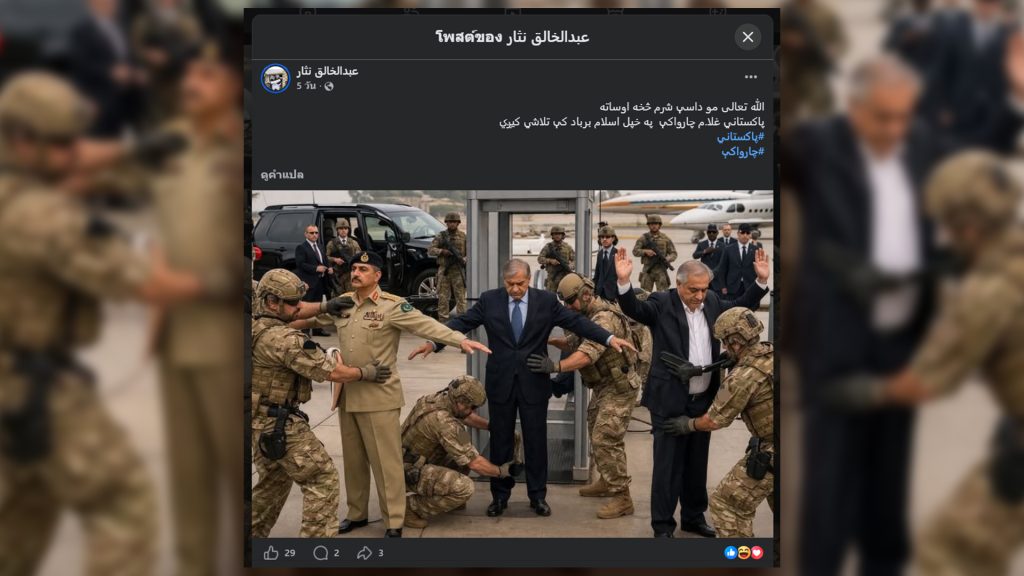
The prior post by another Facebook user, عبدالخالق نثار, was published on April 12, 2026.
The image in question is not real
Thai PBS Verify examined the image with Hive Moderation and other platforms. The results indicate that the image is highly likely to be AI-generated, with the following verification findings:
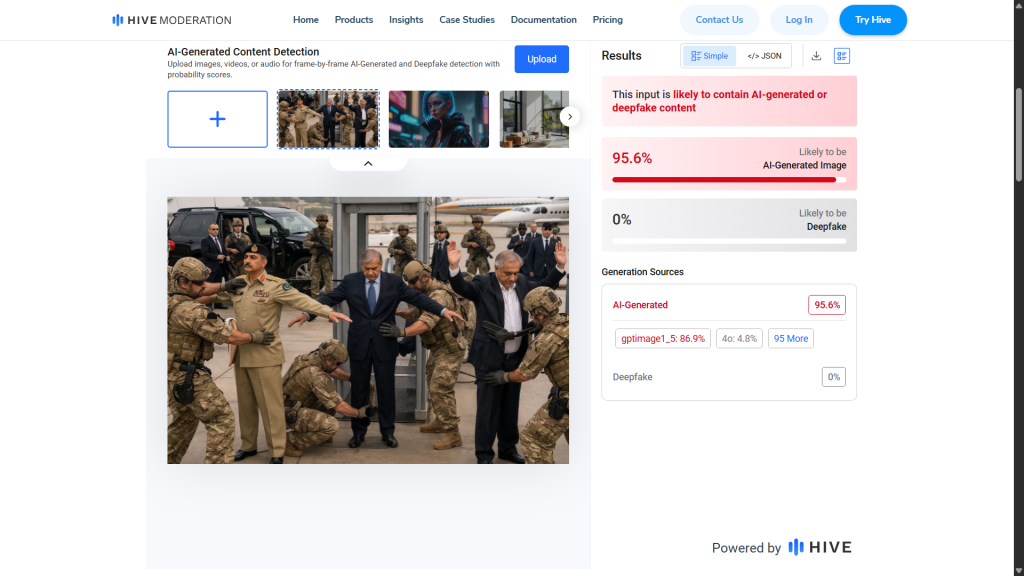
Hive Moderation found a 95.6-percent likelihood of the image being AI-generated.
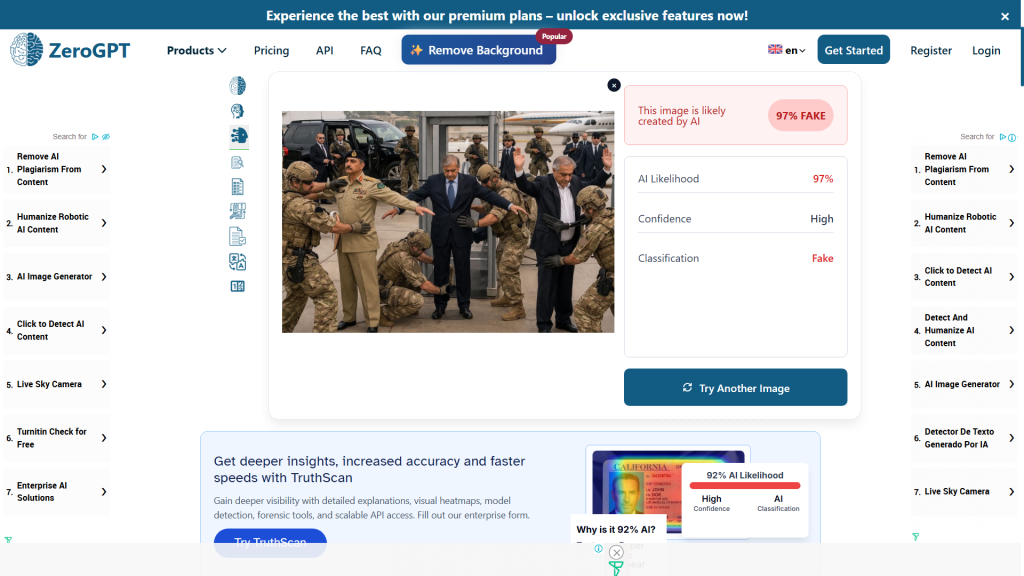
Likewise, ZeroGPT found a 97-percent likelihood of the image being AI-generated.
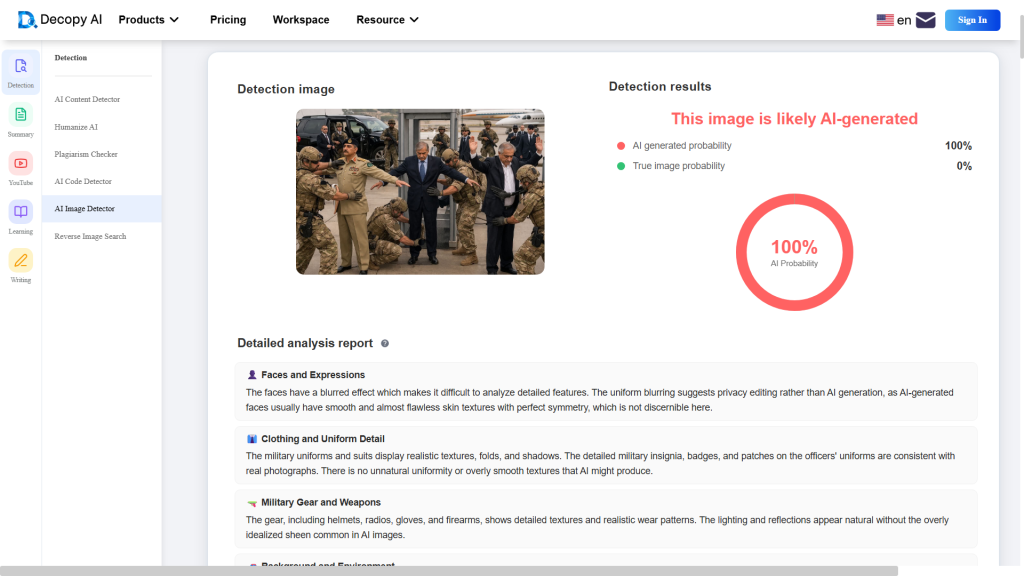
At the same time, Decopy AI indicated a 100-percent probability of the image being AI-generated.
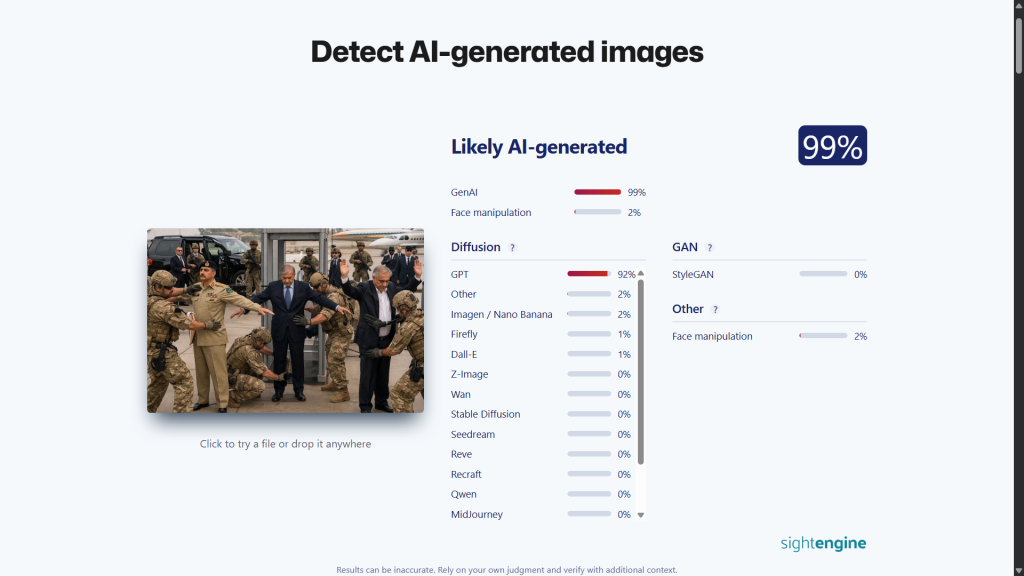
Sightengine also suggested a 99-percent probability of the image being AI-generated.
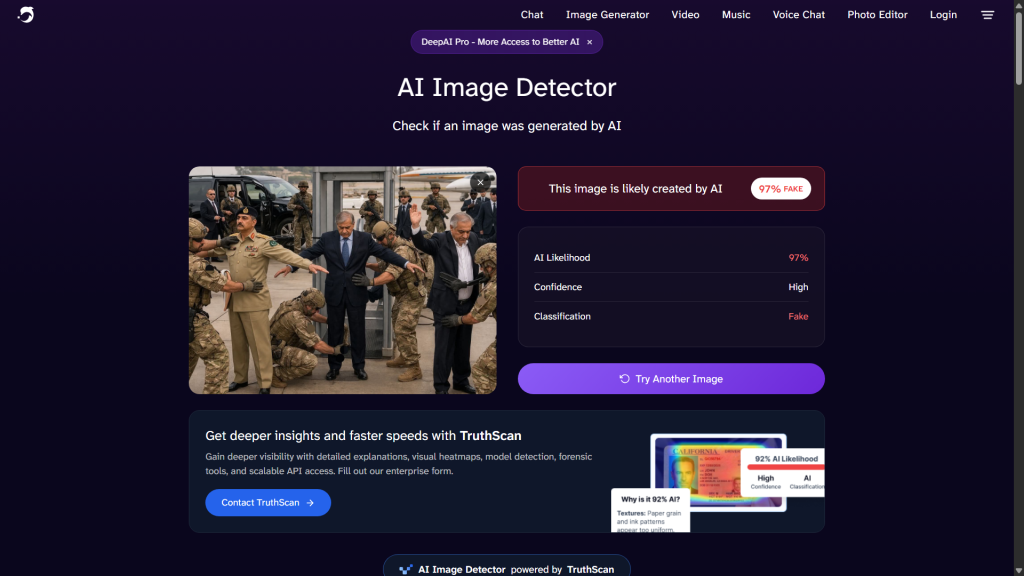
Lastly, Deep AI found a 97-percent probability of the image being AI-generated.
In addition, further examination found abnormalities in the image. For example, members of the U.S. security detail were shown wearing military-style helmets while also wearing suits, or wearing suits with camouflage patterns. In reality, the U.S. Secret Service typically does not use helmets and normally wears plain black suits only (as indicated in the red circles).
Meanwhile, details of vehicles in the background also showed inconsistencies, such as a black car with no visible door edges, and two aircraft where one appeared to have no front windows and others showed irregular proportions (as indicated in the yellow circles).
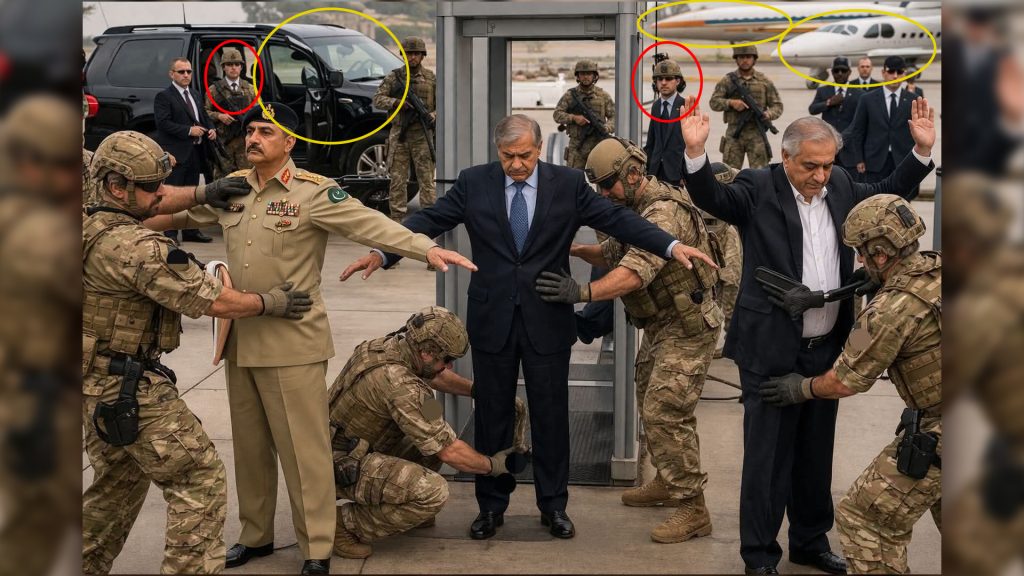
The signs of abnormalities detected in the image.
What is the real situation regarding the U.S.-Iran visit to Pakistan?
Thai PBS Verify searched for additional news related to ceasefire negotiations between the United States and Iran. The team found an article from the New York Times published on April 10, 2026 and last updated on April 14, 2026. The main points can be summarized as follows:
A high-level Iranian delegation, led by Mohammad Bagher Ghalibaf, Speaker of Parliament, and Abbas Araghchi, Minister of Foreign Affairs, traveled to Islamabad to prepare for peace talks with the United States. Meanwhile, the Washington administration sent key figures such as Vice President J.D. Vance, along with Steve Witkoff and Jared Kushner, to participate in discussions aimed at ending a conflict that has lasted nearly six weeks. The conflict has significantly impacted stability in the Middle East and the global economy, particularly due to rising energy prices.
Although the talks have been announced, tensions between the two sides remain clearly visible. Mohammad Bagher Ghalibaf adopted an assertive stance by setting a condition that the United States must unfreeze Iranian assets before any negotiations begin. Meanwhile, President Donald Trump criticized Iran on social media, saying it is misjudging the situation and attempting to use control over the Strait of Hormuz as a tool to threaten the international community, despite Iran having little sustainable bargaining power in the talks.
A key issue in the discussions is the full reopening of the Strait of Hormuz, a critical global route for oil and natural gas transport, after Iran’s blockade had made navigation difficult and hazardous due to the risk of mines. In addition, the United States also faces challenges in managing relations with Israel, as Prime Minister Benjamin Netanyahu continues military operations in Lebanon to dismantle Hezbollah, viewing Israel’s security objectives as not yet achieved.
The overall situation remains highly uncertain, as the number of losses in both lives and property continues to rise. Many people have been killed in Iran, Lebanon, and Israel, and more than one million people in Lebanon have become displaced, amid rising global inflation. The negotiations in Pakistan are therefore seen as an important hope to help ease the crisis. However, if Iran continues to take a hardline stance, the United States is also prepared to take decisive measures to ensure that global interests and regional stability are truly protected.
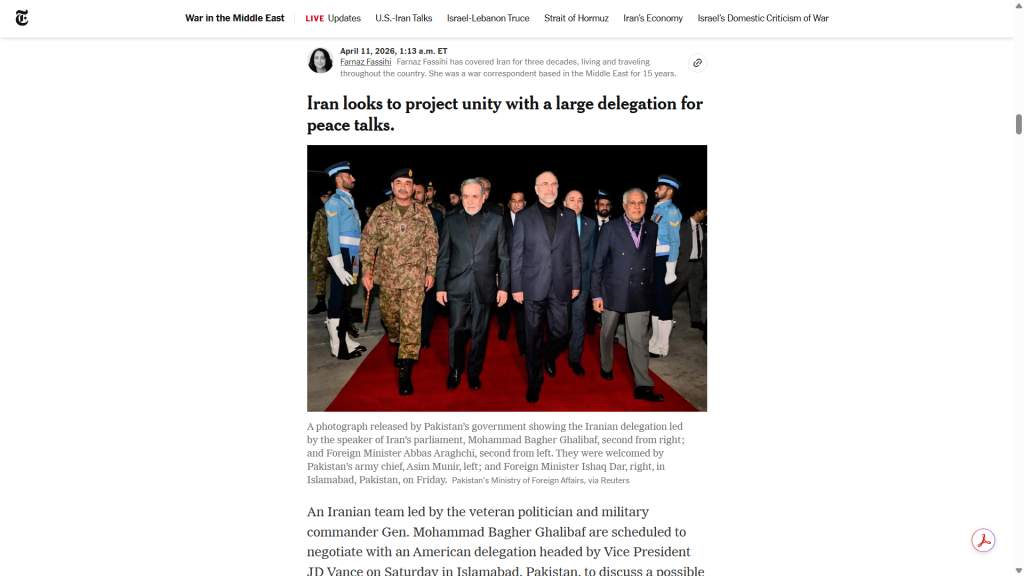
A news report from the New York Times, along with images of the atmosphere before the U.S.-Iran negotiations, was published on April 11, 2026.
In addition, there is no part of the report indicating that U.S. security personnel or Pakistani military forces searched or acted in any disrespectful manner toward representatives of either country, as was claimed in the viral post.
What is the truth?
The image of U.S. security personnel searching the Pakistani Prime minister and Army Chief during the U.S.–Iran peace talks, is not real.
In reality, high-level talks were held in Islamabad. U.S. Vice President J.D. Vance participated in discussions with Iranian representatives to help end tensions in the Middle East and reopen the Strait of Hormuz. There are no reports from major international media outlets such as the New York Times or other global news organizations confirming any violation of Pakistan’s sovereignty or any incident involving the searching of Pakistani leaders.
Therefore, the image is considered to be fabricated and circulated as fake news during a period of heightened geopolitical tension.
Verification Process
■ Image verification tools: Google Lens was used to trace the origin of the image, which led to a Facebook user who had posted the same image in higher resolution. The image was then further analyzed using AI image and video detection websites, which indicated that the image showing the search of the Pakistani Prime minister and military officials was AI-generated.
■ Visual analysis: Several abnormalities were identified within the image, including inconsistencies in background vehicles, as well as irregularities in the uniforms of U.S. security personnel and soldiers.
■ Comparison with international sources: Information was cross-checked with international media outlets such as The New York Times, which reported and confirmed that Pakistan formally and respectfully welcomed representatives from both sides, with no mention of any such incident.
Potential impacts of disinformation
■ Damaging international relations and security: Spreading false claims that high-level leaders were humiliated (by being searched) in their own country can provoke anger among citizens and may escalate into diplomatic tensions.
■ Creating a negative image of the United States: This disinformation frames the U.S. as using intimidation and disrespecting the sovereignty of other countries, contributing to anti-U.S. sentiment in the region without factual basis.
■ Reducing trust in peace negotiation processes: Distorting the atmosphere of the U.S.–Iran ceasefire talks into a narrative of conflict may undermine public confidence in ongoing peace efforts.
■ Engagement farming: The post used emotionally charged headlines such as “#The United States severely disrespects Pakistan” to attract reactions and comments, which helped the false information spread rapidly (over 2.8K likes).
What to do with this misinformation?
■ Use reverse image search tools: Highly unbelievable claims, such as national leaders being searched by foreign military personnel in their own country, often involve images taken from unrelated events or edited visuals. Checking the origin of the image can quickly reveal the truth.
■ Compare information with credible mainstream news sources: In major global events such as the U.S.–Iran negotiations, reputable international media outlets (such as The New York Times or Reuters) usually have correspondents on the ground and provide verified reports with clear supporting images.
■ Consider basic diplomatic principles: According to international diplomatic norms, high-level officials such as prime ministers and army chiefs are granted privileges and immunities. Actions such as physical searches are highly unlikely in formal diplomatic settings.
■ Follow the principle “if unsure, don’t share”: Avoiding likes, comments and shares on posts without clear sources helps reduce the spread of misinformation that can fuel division in global society.
Editor: Nuttapoln Toomma
Translation edited by: Peerachai Pasutan

Related Content