Chiang Mai Public Health Confirms: Over 23,000 AIDS Patients Recorded
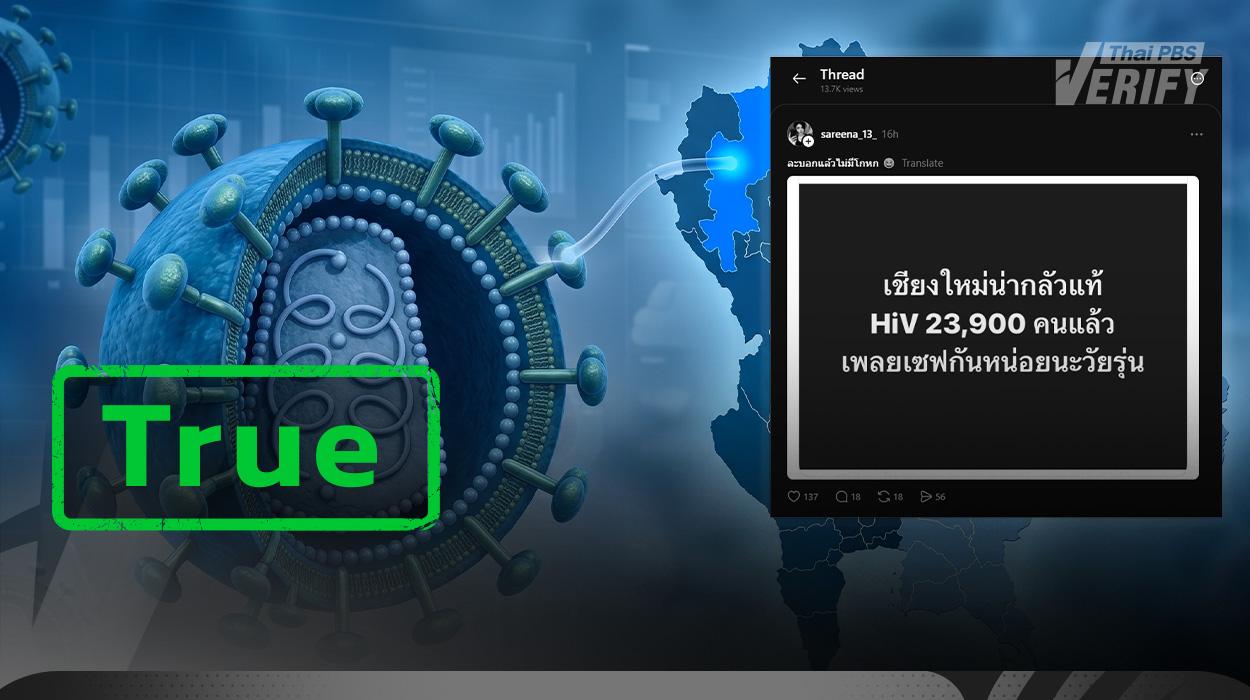
Thai PBS Verify found the original source of this information from: Threads.

A screenshot of a Threads account posted: ‘Chiang Mai is really scary — HIV cases have reached 23,900. Play it safe, guys.’
Thai PBS Verify examined a Threads account under the name sareena_13, which posted:
“Chiang Mai is really scary — HIV cases have reached 23,900. Play it safe, guys.”
The post was published on July 27, 2026, and has since gained over 13,000 views and been shared more than 54 times. Most viewers expressed concern about the reported number of HIV infections.
Is the Reported Number of HIV Cases Accurate ?
A keyword search shows that the figure matches a Thai PBS news report published on July 27, 2026, titled “Chiang Mai records two new HIV cases per day.”
The report stated that Chiang Mai is one of the provinces under HIV surveillance. There are now 23,900 cumulative HIV cases, with 700 new infections — averaging two new cases per day. It also highlighted that, beyond youth and working‑age groups, migrant workers and ethnic minorities also have higher rates of HIV and other sexually transmitted infections compared to other populations.
Video clip from Thai PBS
Current HIV Situation in Chiang Mai
Thai PBS Verify consulted Dr. Waranyu Jamnongprasatporn, Chiang Mai’s Provincial Public Health Doctor, who explained that: At present, Chiang Mai has recorded more than 20,000 cumulative HIV cases (counted cumulatively since the beginning of the HIV epidemic, with deaths already subtracted). Meanwhile, over 23,000 patients are currently receiving antiretroviral treatment in the health system. In 2026 alone, 723 new HIV cases were reported. Importantly, the 20,000+ cumulative figure does not represent new infections from the past year, but rather the total number accumulated over time.

Dr. Waranyu Jamnongprasatporn, Chiang Mai’s Provincial Public Health Doctor
In recent years, the overall trend of new HIV cases in Chiang Mai has remained stable, showing no significant increase or decrease. This stands in contrast to the past, when public health campaigns revealed thousands of new infections annually.
The profile of HIV infections in Chiang Mai has shifted dramatically. New cases are now rarely found among female sex workers. Instead, the majority of infections occur among men who have sex with men (MSM), other specific high‑risk groups, and foreign nationals. Most patients fall within the 25–49 age range.
Although most new HIV cases are found among adults, there are growing concerns regarding children and young people. Data show a rising incidence of other sexually transmitted infections (STIs) such as syphilis and gonorrhea in this age group. This trend is a critical warning sign, reflecting that condom use among youth has declined.
In addition, there are three major challenges in controlling and preventing the disease.
- Reduction of fear due to treatment effectiveness: Modern antiretroviral drugs are so effective that they can suppress the virus to the point where patients show almost no symptoms and face few serious complications. As a result, people living with HIV can maintain lives and health comparable to the general population. This has led to a decline in public concern, with many people becoming less cautious and neglecting to protect themselves.
- Confidence in preventive medication (PrEP/PEP): The use of pre‑exposure and post‑exposure prophylaxis (PrEP/PEP) has led people to avoid other preventive methods, even though condom use still remains the best means of protection.
- Limitations in reaching target groups: As HIV infections have shifted into more specific populations, government agencies have found it increasingly difficult to reach them directly. In Chiang Mai, public health efforts therefore rely on networks of foundations made up of members from the same communities (such as men who have sex with men) to help coordinate and reach these populations for prevention and treatment.
Additionally, there is an assumption that the reported number of HIV cases may be lower than the actual situation. Some individuals may not have undergone testing, may not have registered in the system, or may be reluctant to get tested. It is believed that certain cases are therefore missing from official records. However, the number of unreported cases is estimated to be relatively small, as they are concentrated within specific populations
Limitations of PrEP and PEP in prevention
The use of PrEP (pre‑exposure prophylaxis) and PEP (post‑exposure prophylaxis) has important limitations in prevention as follows:
- Not 100% effective: Although these drugs can help prevent infection to a considerable degree, nothing can provide full protection. The medication only helps partially.
- Leading to neglect of other preventive methods: When people believe that medication alone can provide protection, the rate of self‑protection through other methods decreases accordingly.
- Does not protect against other sexually transmitted infections: The best prevention still remains condom use. Since there is currently an increasing spread of other STIs among youth, such as syphilis and gonorrhea, this indicates that condom use for disease prevention in this group has declined.”

What is the number of infected people nationwide?
From the keyword search, we found a report forecasting the HIV and AIDS situation in Thailand for the year 2025. According to data from the Department of Disease Control, Ministry of Public Health, it states that:
- People living with HIV (cumulative, still alive): approximately 565,598 – 568,565
- New HIV infections: approximately 8,124 – 8,862 (with the highest incidence among youth/adolescents aged 15–24, accounting for nearly half of new cases)
- AIDS-related deaths: approximately 9,067 – 10,217
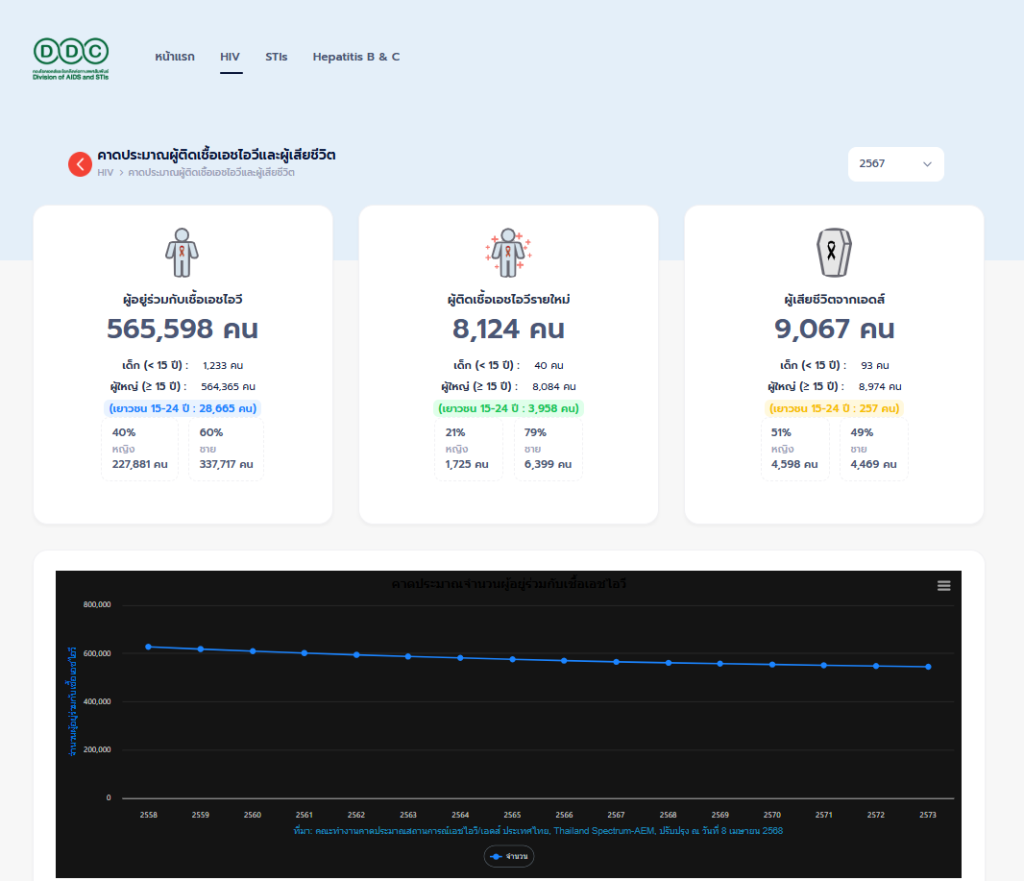
Forecast Report on the HIV and AIDS Situation in Thailand, 2025 — Department of Disease Control, Ministry of Public Health.
What is the actual situation ?
The figure of 23,900 refers to the ‘cumulative patients’: the number shown in the post represents the total cumulative HIV cases in Chiang Mai Province since the beginning of the epidemic. Of these, about 23,000 are patients who are still alive and currently receiving antiretroviral treatment within the health system.”
The number of new HIV infections is 723 cases per year: According to the Chiang Mai Provincial Public Health Office, there were 723 new HIV cases in 2026 (an average of about two new cases per day). Overall, the trend of new infections has remained stable, without a sharp or alarming increase.
Infected groups have shifted — more cases among MSM and migrants: Interview data indicate that new infections are now rarely found among female sex workers. Most cases are observed in MSM and migrant/ethnic groups aged 25–49 years.
The real concern among youth is syphilis and gonorrhea: Although the number of new HIV infections in young people is not high, the rate of other sexually transmitted infections has sharply increased, reflecting a decline in condom use among this group.
Verification Process
Verification of information linkage: It was found that the figures correspond with a Thai PBS news report titled ‘Chiang Mai records two new HIV cases per day’, which reported a cumulative total of 23,900 HIV cases and about 700 new cases per year.
Follow-up interview with local public health executives: The news team consulted Dr. Waranyu Jamnongprasatporn, Chiang Mai’s Provincial Public Health Doctor, who confirmed that the figure of just over 23,000 represents cumulative patients currently receiving antiretroviral treatment within the health system. The number of new HIV infections in 2026 was only 723 cases.
Analysis of challenges and risk behaviors:
- Effective modern antiretroviral drugs reduce fear: Current ARV medications suppress the virus well, allowing patients to remain healthy and live nearly normal lives. As a result, many people feel less concern about prevention.
- Overreliance on PrEP/PEP: Pre‑ and post‑exposure prophylaxis can only provide partial protection, not 100%, and they cannot prevent other sexually transmitted infections such as syphilis or gonorrhea. Condom use remains the most effective method.

Popular Content