Post claims that Thai people often create content by eating dogs
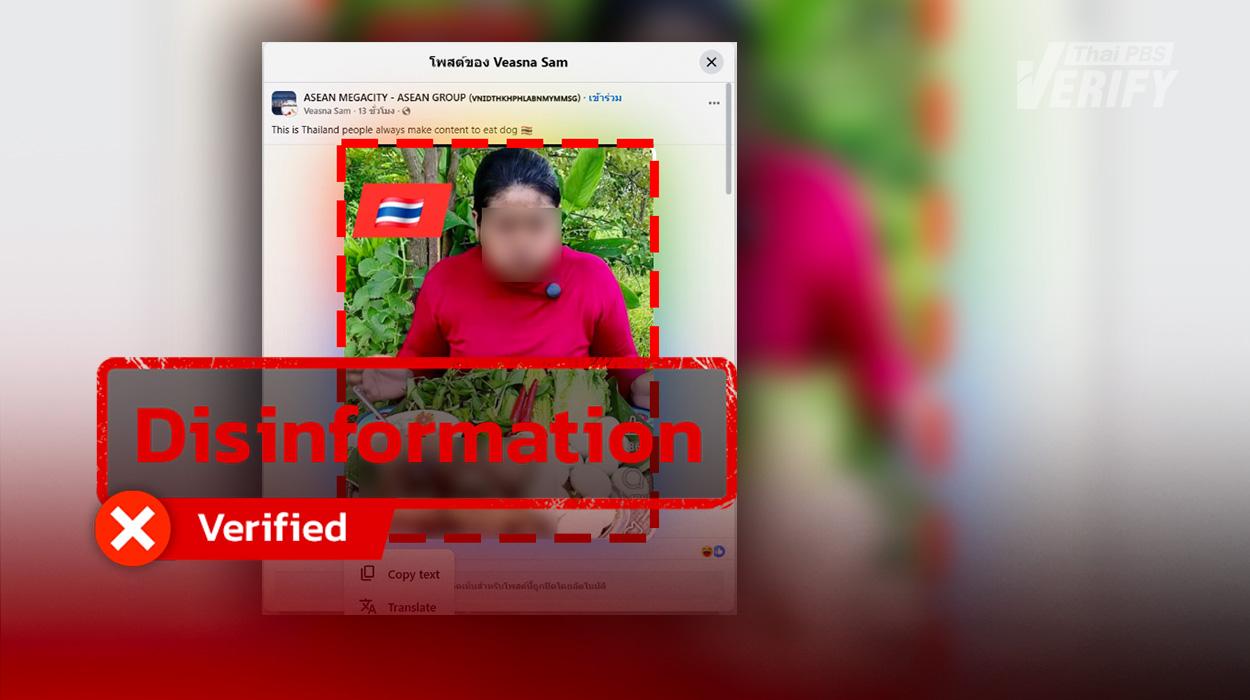
Thai PBS Verify found the source of this false news from: Facebook
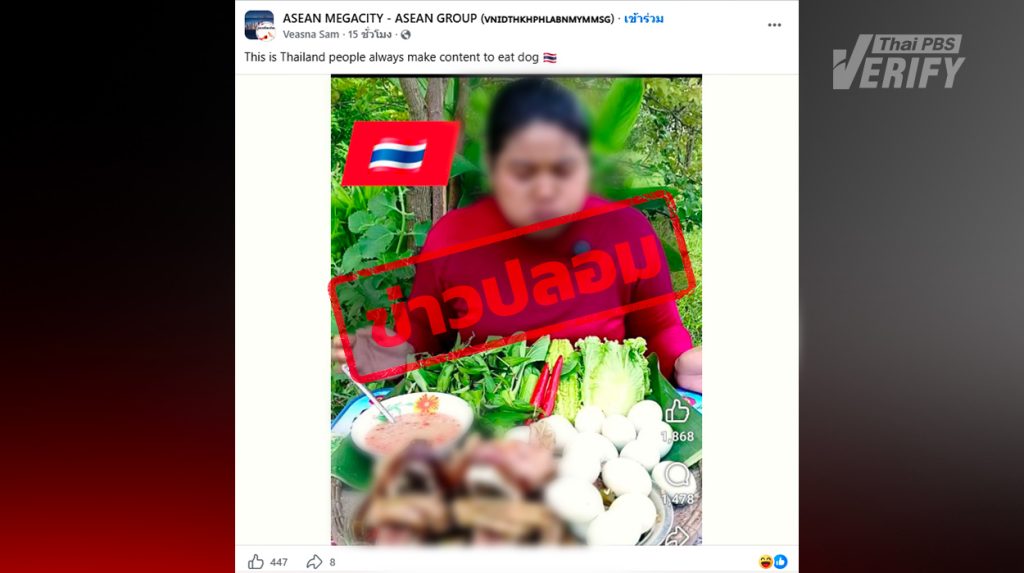
Post claiming that in Thailand people often create content about eating dogs.
Thai PBS Verify found a claim posted by a Facebook user named Veasna Sam in the group ASEAN MEGACITY – ASEAN GROUP. The post stated:
“This is Thailand people always make content to eat dog 🇹🇭”
The post was published on August 16, 2026, attracting more than 430 reactions and generating a large number of comments.
What is the truth?
- Not Thai people, not in Thailand: The claim that “Thai people often create content about eating dogs” is false. The video referenced actually comes from the YouTube channel THEARY-Cooking.
- The creator is Cambodian: Checks revealed that both spoken and written language in the clips is Khmer. Account transparency shows the channel was created on March 30, 2026, with its location clearly listed as Cambodia.
- Cross-border hate content: A Threads user named Veasna Sam reposted the Cambodian YouTuber’s clip in the group ASEAN MEGACITY – ASEAN GROUP on August 16, 2026, falsely labeling it as Thai. This was intended to create a negative image and incite hostility toward Thailand at the regional level.
- Dog-meat practices are illegal in Thailand: While Thailand has no direct law banning dog meat consumption, the processes of catching, killing, transporting, and selling dogs are serious offenses under three major Acts:
- Animal Cruelty Prevention and Welfare Act, 2014: Dogs are not classified as livestock for food. Killing them constitutes animal cruelty (penalty: up to 2 years imprisonment, or a fine up to 40,000 THB, or both).
- Animal Slaughter Control Act, 2016: No licenses exist for dog slaughterhouses. Butchering or selling dog meat is illegal.
- Animal Epidemic Act, 2015: Capturing, moving, or trading dog carcasses without permits is a criminal offense, aimed at preventing rabies.
Is the video of Thai people eating dogs real?
The footage was examined using Google Lens reverse image search. Results showed that the video actually came from a YouTube user named THEARY-Cooking, whose channel regularly posts clips of eating various dishes.
The specific clip referenced was uploaded on August 15, 2026, and at one point shows the consumption of animal parts resembling a dog’s head.
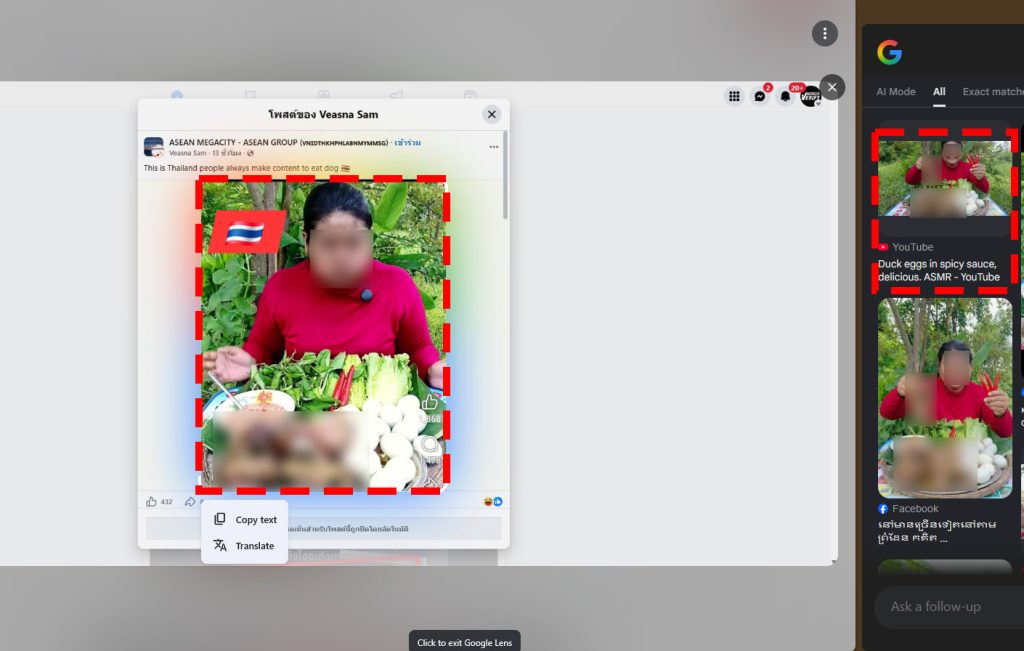
Results of the Google Lens Verification
Further examination of other clips on the same channel revealed that both the spoken and written language used throughout is Khmer.
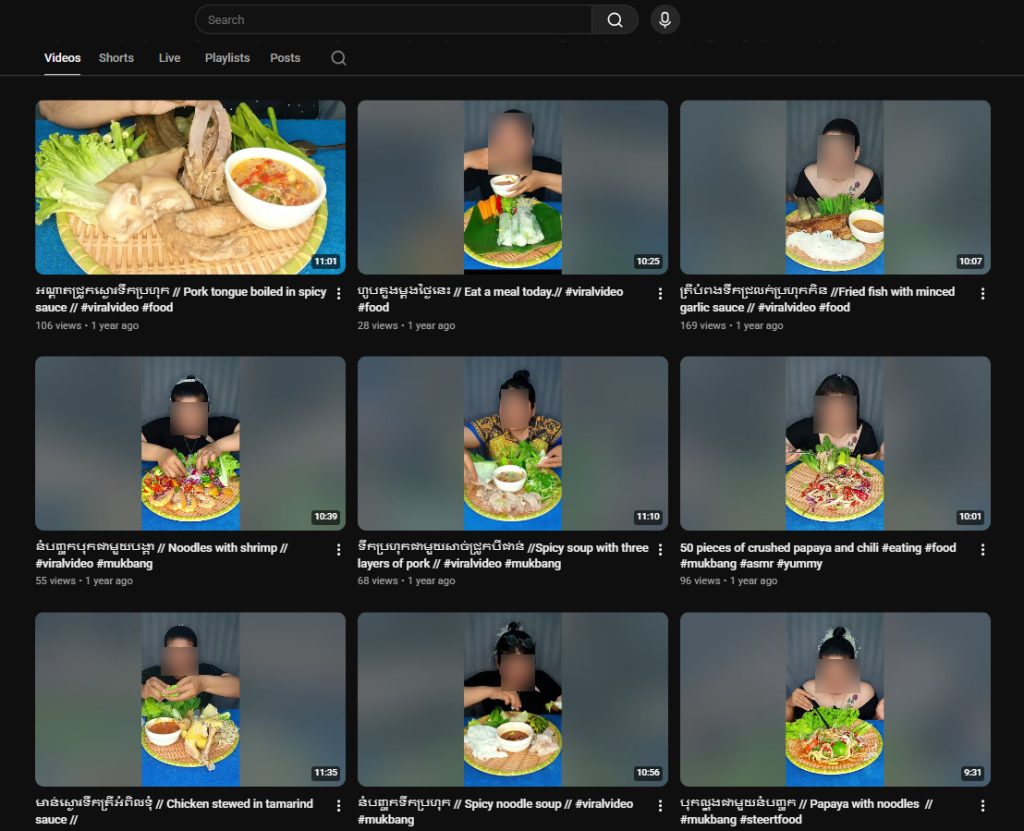
ภาพบันทึกหน้าจอแสดงคำบรรยายคลิปภายในช่อง YouTube ชื่อ THEARY-Cooking
Further account transparency checks revealed that the channel was created on March 30, 2026, with its location clearly listed as Cambodia.
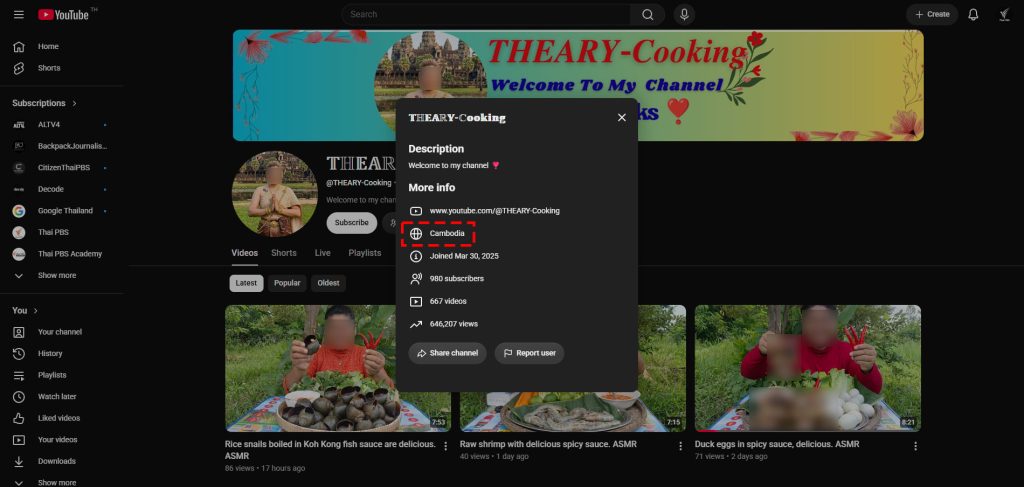
A screenshot showing the account transparency details, indicating the location is Cambodia.
Is Eating Dogs Legal in Thailand?
Thailand does not have a law that explicitly states “dog meat consumption is prohibited.” However, the entire process—from capturing, killing, transporting, to selling dog meat for consumption—is strictly illegal under several Acts, making it impossible to do so legally in practice. The relevant legislation includes three major Acts:
1.Animal Cruelty Prevention and Welfare Act, 2014 (Sections 20):
No one may commit acts of animal cruelty without reasonable cause.
Section 21(1) provides an exception for killing animals for food, but only for “animals raised for consumption” (such as pigs, cattle, chickens). Dogs are not classified as food animals. Therefore, killing dogs for consumption constitutes animal cruelty.
Penalty: Up to 2 years imprisonment, or a fine of up to 40,000 THB, or both.
2. Animal Slaughter Control Act, 2016
The law stipulates that animals may only be slaughtered for meat in licensed slaughterhouses that meet veterinary hygiene standards.
The Department of Livestock Development does not issue licenses for dog slaughterhouses, nor are there hygiene standards for dog meat.
Therefore, butchering or selling dog meat constitutes an offense of operating an unlicensed slaughterhouse and selling meat without authorization.
Movement and trade of animal meat: Capturing, transporting, or trading dog carcasses across provincial boundaries without an official permit for animal/carcass movement is a violation of epidemic control laws (e.g., rabies prevention).
Even though consumers themselves are not directly penalized for eating dog meat, those who capture, kill, butcher, transport, or operate shops selling dog meat commit multiple criminal offenses. These violations carry serious penalties, including imprisonment and heavy fines.
Verification Process
Reverse Image Search: A still image from the clip was checked using Google Lens, which led to the full video on the YouTube channel THEARY-Cooking, published on August 15, 2026.
Language & Content Analysis: Examination of other clips on the same channel showed that both spoken and written language used is Khmer, not Thai.
Account Transparency Check: Further inspection of the channel revealed that the account was created on March 30, 2026, with its registered location listed as Cambodia.
Thai Legal Context: Review of Thai laws on animal welfare, slaughterhouse control, and epidemic prevention confirmed that Thailand has strict legal measures prohibiting the capture, slaughter, transport, and sale of dogs for consumption.
Impact of This False Information
Damaging Thailand’s image and culture: The accusation that Thai people commonly create dog-eating content harms Thailand’s reputation in terms of hygiene, food culture, and animal welfare in the eyes of international audiences.
Inciting hate speech in ASEAN: Spreading this false claim in ASEAN community groups was intended to spark conflict and fuel hostility between Thai citizens and neighboring countries.
What to do with this misinformation?
Check the source and language in the clip before believing: When you see a video claiming unusual behavior in a country, pay attention to spoken language, written text, background sounds, or cultural markers to verify whether it truly matches the country mentioned.
Verify the poster and the group sharing it: Posts in regional social media groups often come from avatar accounts created to stir political or cultural hatred. Review the poster’s history before sharing.
Use legal facts to counter misinformation: When false claims about dog-eating arise, cite Thai legal provisions (e.g., Animal Cruelty Prevention Act, Slaughter Control Act) to clarify the truth.
Do not share, and report instead: If you encounter misleading posts designed to incite cross-border hatred, use the platform’s Report function to flag the post or account immediately, helping reduce the spread of information pollution.