Breaking News Claim! “Japan” reports “North Korea” fired missiles — but the footage actually came from Iran, falsely presented as an incident in Japan
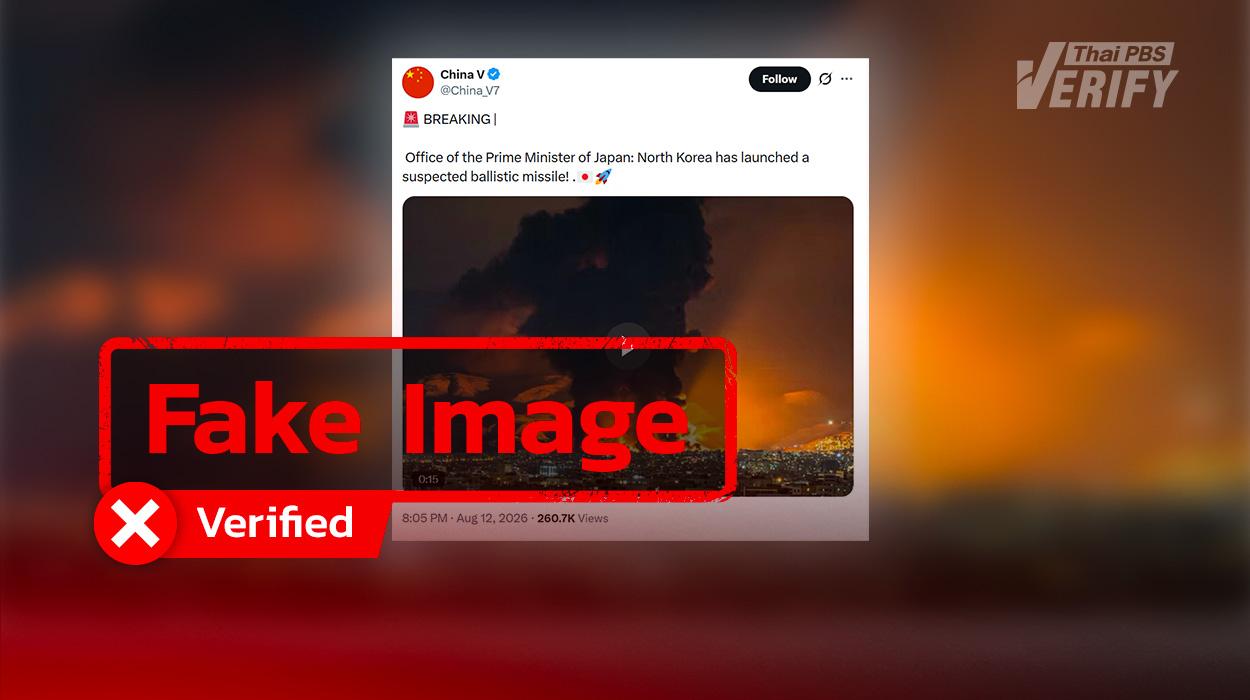
Thai PBS Verify traced the source of this false news to: X
Thai PBS Verify found that an X account named China V posted a clip of a damaged city along with the caption:
Office of the Prime Minister of Japan: North Korea has launched a suspected ballistic missile! .🇯🇵🚀
The post was published on December 12, 2026, and gained more than 253,000 views.
Further checks revealed that the account was created in December 2025, located in West Asia, and had already changed its name six times.
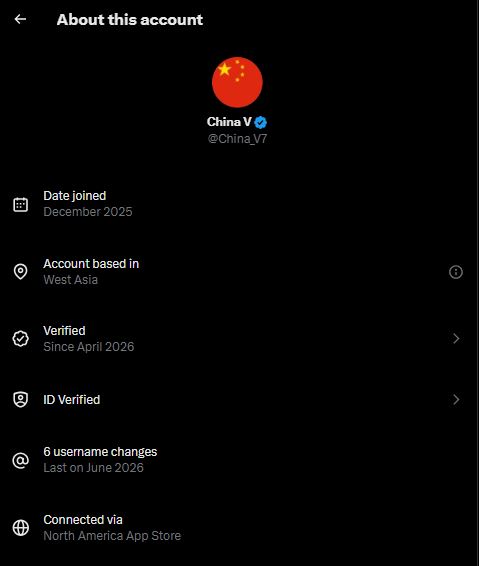
A screenshot showing the account’s transparency information
What’s the Truth?
-
The footage is not from Japan or North Korea: The images of a heavily damaged city shown in the video are not the result of a missile strike on Japan. They are actually footage of an airstrike on an oil depot in Tehran, Iran.
-
The real missile launch occurred in a different context: According to the South Korean Joint Chiefs of Staff (JCS) and the Japanese Ministry of Defense, North Korea did fire a ballistic missile from the Wonsan area into the East Sea (Sea of Japan). However, this was a test launch into the sea, not an attack on Japanese cities as falsely claimed in the video.
-
The account spreading the claim is unreliable: The X account named China V posted the misleading video. This account was created in December 2025, located in West Asia, and has already changed its name six times—a suspicious pattern typical of accounts used to spread disinformation.
Is the North Korea missile video real?
The clip was examined using reverse image search via Google Lens, which revealed that the footage actually matched coverage of an airstrike on an oil depot in Tehran, Iran, on March 7, 2026.
This report had been published by Canada’s public radio and television broadcaster (CBC/Radio-Canada) on March 10, 2026.
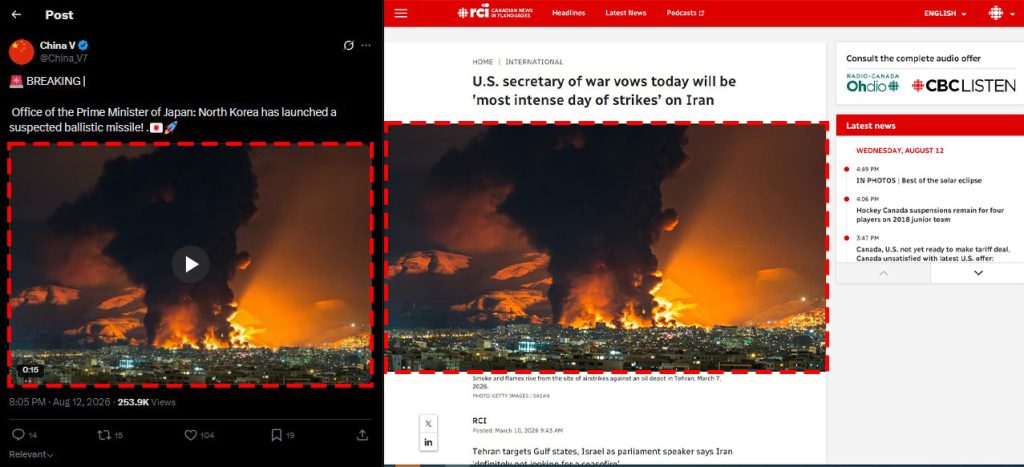
Image from the false post (left) compared with footage from the Tehran airstrike on March 7, 2026 (right).
Did North Korea really fire missiles at Japan?
A keyword search found a Thai PBS report citing the South Korean Joint Chiefs of Staff (JCS) and the Japanese Ministry of Defense. They confirmed that North Korea launched a ballistic missile from the Wonsan area on the country’s east coast at around 06:00 local time, directed into the East Sea (Sea of Japan).
News clip reporting North Korea’s missile launch.
Verification Process
- Account Transparency Check
-
- The account China V was found to be recently created.
- Its location is in West Asia, yet it posts about East Asian security issues.
- The account has changed its name six times, a pattern consistent with spam or disinformation accounts.
- Reverse Image Search
-
- Still frames from the video were examined using Google Lens.
- The footage matched a report published by Canada’s public broadcaster (CBC).
- The report confirmed the event was an airstrike on an oil depot in Tehran, Iran, on March 7, 2026.
- This shows the clip was repurposed and misused to fabricate a new false context.
- Cross-Checking Official Military Reports
-
- Thai PBS verified official intelligence and press briefings.
- The verification confirmed that North Korea did launch a ballistic missile into the East Sea (Sea of Japan). However, it was not a strike on Japanese cities as the misleading video suggested.
Impact of This False Information
- Creates global panic: Using images of a severely destroyed city alongside claims of North Korean missiles misleads audiences into believing a major war or direct attack on Japan has occurred, spreading fear worldwide (with over 253,000 views).
- Undermines government credibility: Falsely attributing the statement to the Office of “the Prime Minister of Japan” confuses the public, making it seem like an official emergency announcement, which harms trust in disaster warning and national security systems.
- Part of information warfare: The use of a deceptive account with multiple name changes to spread false security claims aims to discredit, distort reality, and destabilize the East Asian region.
What to do with this misinformation?
- Check the poster’s account history: If you see a major global news claim from a personal social media account, review its Account Transparency. If the account is newly created, frequently changes its name, or its location does not match the content, treat it as suspicious.
- Do not rely solely on headlines: Fake news creators often misuse the names of government agencies to appear credible. Always cross-check with official websites or mainstream news outlets.
- Use reverse image search: When encountering shocking videos or destruction images, take a screenshot and search with Google Lens to identify the true origin of the footage.
- Rely on mainstream and official security sources: For missile launches or international conflict reports, follow credible outlets (e.g., Thai PBS, Reuters, NHK) or official statements from ministries of foreign affairs/defense.
- Do not share, and report the account: Avoid reposting or sharing unverified content, as this amplifies panic. Instead, report the account to the platform to help reduce the spread of disinformation.