Old smallpox vaccine may offer some protection against mpox
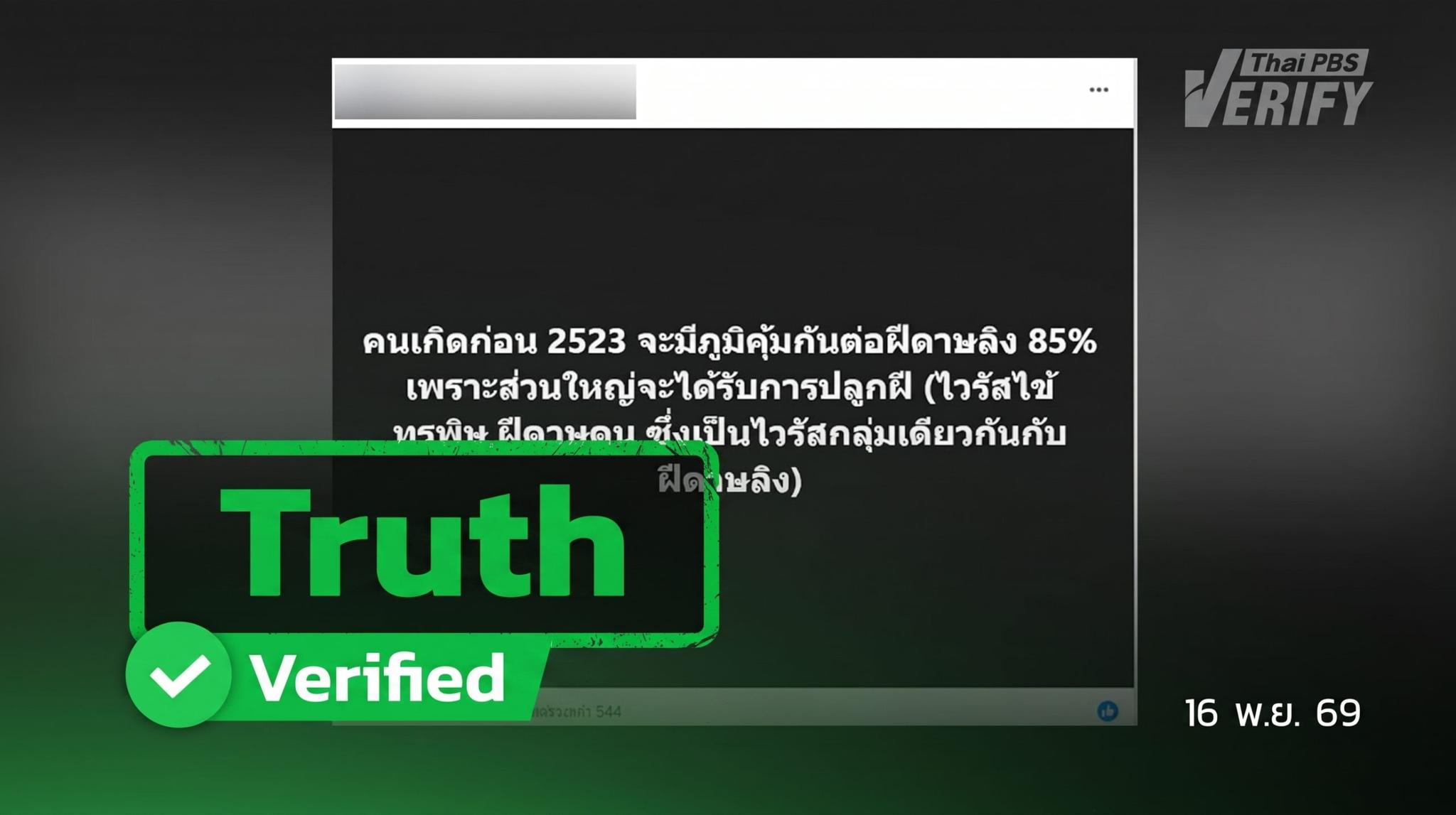
Source identified by Thai PBS Verify: Facebook
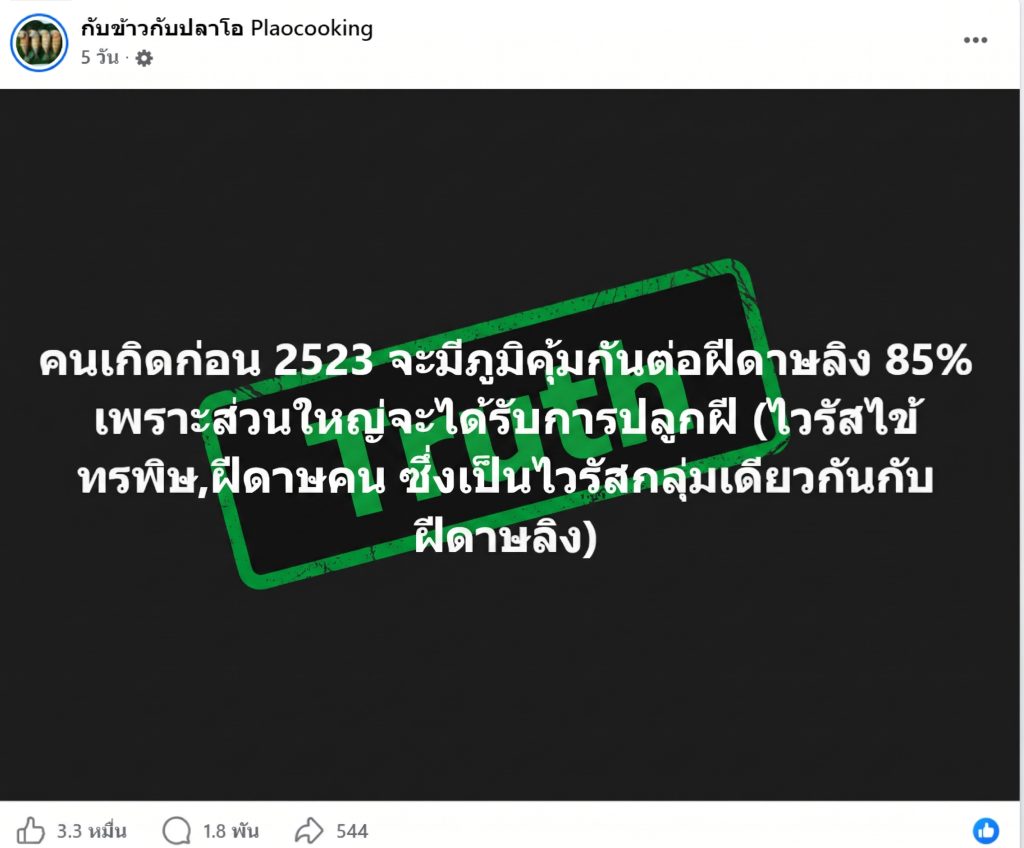
A Facebook post claimed that “people born before 1980 have 85% immunity against mpox because most of them received a smallpox vaccination (smallpox and mpox belong to the same virus family).”
Thai PBS Verify found a Facebook post claiming that “people born before 1980 have 85% immunity against mpox because most of them received a smallpox vaccination (smallpox and mpox belong to the same virus family).”
The post attracted more than 33,000 reactions, 1,800 comments and over 544 shares.
Do people born before 1980 really have immunity against mpox?
Thai PBS Verify contacted the AIDS and Sexually Transmitted Infections Division of the Department of Disease Control, which said international studies suggest that people who received the smallpox vaccine may have around 85% protection against mpox infection because both diseases are caused by viruses from the Orthopoxvirus family.
In Thailand, smallpox vaccination was routinely administered until around 1977. As a result, people who are now aged about 50 or older and received the vaccine may still retain some degree of immunity that could help protect against mpox.
However, the 85% protection figure comes from overseas studies, and no Thai study has confirmed the same level of effectiveness. Health authorities therefore advise the public to continue taking precautions against mpox regardless of vaccination history.

Dr Anan Jongkaewwattana, Director of the Animal Health Innovation and Management Research Group at the National Center for Genetic Engineering and Biotechnology.
Thai PBS Verify also spoke with Dr Anan Jongkaewwattana, who said the 85% immunity figure is based on studies of individuals who had recently received a vaccine and were later tested against mpox exposure. It does not mean that people vaccinated decades ago still retain 85% immunity today, as no research has yet established that.
Dr Anan explained that people who received the smallpox vaccine many years ago may still have some residual immunity, but there is no guarantee it remains at the 85% level. Immunity naturally declines over time. Any remaining protection may still help reduce the risk or severity of illness, but it is likely lower than the figure observed in recently vaccinated individuals.
He added that people who had been vaccinated in the past can still contract mpox. However, symptoms may be milder, or they may not develop the characteristic skin lesions seen in people with no prior immunity. Because their immune systems have previously encountered a related virus, the body may be able to react more quickly and reduce the viral load sooner.
On prevention, Dr Anan said mpox requires close physical contact for transmission and is not easily spread simply by being near an infected person. Activities involving intimate physical contact, including sexual contact that may cause minor skin abrasions, can increase the risk of infection if mucous membranes come into contact with the virus.
He said infection may also occur when contaminated objects, such as towels, are used to touch sensitive areas including the eyes or nose, where the virus can enter the body. Casual contact with intact skin, such as touching the thighs or buttocks, is unlikely to result in infection because the virus cannot easily penetrate normal skin.
Dr Anan noted that touching an infected person or their lesions does not automatically mean infection will occur. Washing hands promptly can reduce the risk. However, if contaminated hands touch the eyes or other mucous membranes, transmission becomes more likely. Understanding how the virus enters the body and reducing exposure to those pathways can significantly lower the risk of infection.
He also stressed that the public should not worry about mpox spreading through coughing or sneezing in the same way as Covid-19. People can remain near infected individuals when necessary and do not need to maintain the same level of isolation used during the coronavirus pandemic. The main precautions involve avoiding risky physical contact and washing hands frequently, as the virus can be destroyed by soap.
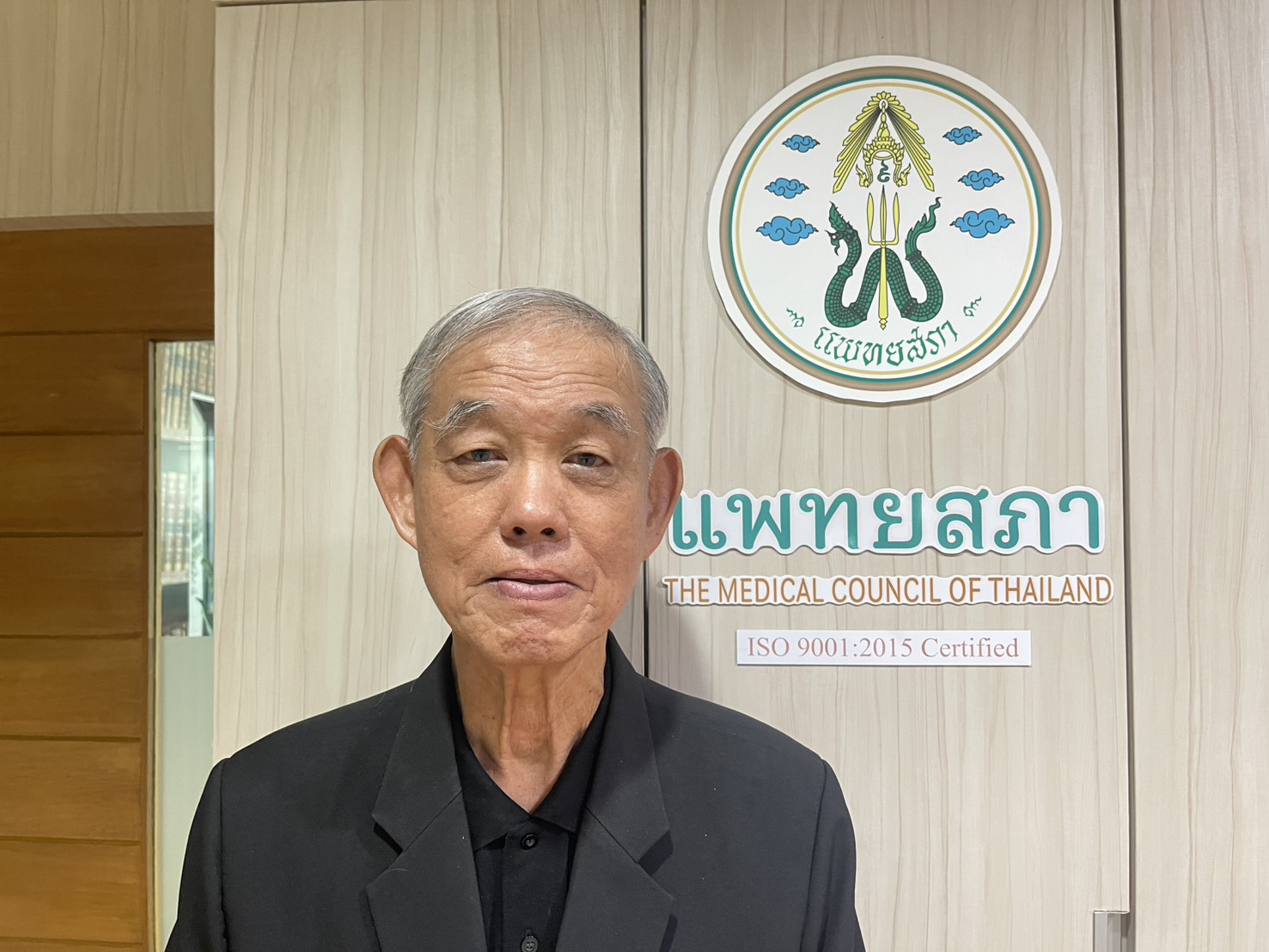
Professor Emeritus Dr. Amorn Leelarasamee, a Thai specialist in infectious diseases and internal medicine.
Thai PBS Verify also consulted Professor Emeritus Dr. Amorn Leelarasamee, who said it is plausible that people vaccinated against smallpox retain partial immunity against mpox because the viruses belong to the same family and may generate cross-protection. However, the actual level of immunity remains unclear and would require further laboratory testing. He said there is currently no evidence confirming the widely cited 85% figure.
Dr Amorn added that further information may be available from sources such as the US Centers for Disease Control and Prevention (CDC) and the US National Institutes of Health (NIH), particularly research comparing T-cell responses in people who received smallpox vaccinations with those who did not.
He noted that smallpox vaccination is generally limited to people aged around 50 and older because the programme was discontinued after the disease was eradicated. He added that some of the information currently circulating is based on older data and should be re-examined.
What is the current mpox situation in Thailand?
According to the latest figures from the Department of Disease Control, reported through the end of October 2026, Thailand recorded 470 cumulative confirmed mpox cases and three deaths between Jan 1 and Oct 31, 2026. This marks a significant increase from the roughly 139 cases reported around the middle of the year, indicating continued domestic transmission.
The Clade Ib strain has become increasingly prevalent and now accounts for a greater share of infections than the previously dominant Clade II strain. Most patients are working-age adults, particularly men aged 18 to 39. Key risk factors include close contact with infected individuals and sexual contact with infected partners. Cases have also been identified among immunocompromised people, including those living with HIV, who face a higher risk of severe illness than the general population.
Verification Process
- Verified with sources: The AIDS and Sexually Transmitted Infections Division of the Department of Disease Control said that people who previously received the smallpox vaccine, particularly those aged 50 and older who were vaccinated before 1977, may retain some immunity that helps reduce the risk of mpox because the viruses belong to the same family. However, the widely cited 85% protection rate is based on overseas studies and has not been confirmed in Thailand. People are therefore advised to continue taking regular preventive measures against infection.
- Verified with sources: Dr Anan Jongkaewwattana, Director of the Animal Health Innovation and Management Research Group at the National Center for Genetic Engineering and Biotechnology, said the 85% immunity figure comes from studies involving recently vaccinated individuals and does not mean that people who received smallpox vaccinations 30 to 40 years ago still retain the same level of protection. Immunity declines over time, although past vaccination may still help reduce disease severity. To prevent infection, people should avoid close contact with infected individuals or contaminated items, particularly where mucous membranes are involved, such as the eyes, nose and genitals, and should wash their hands with soap to reduce the risk of transmission.
- Verified with sources: Emeritus Professor Dr Amorn Lielarasmee, a Thai specialist in infectious diseases and internal medicine, said people who received smallpox vaccinations in the past may have partial immunity against mpox because the viruses belong to the same family. However, the claimed 85% protection rate cannot currently be confirmed. Further laboratory studies are needed, particularly those examining T-cell responses in vaccinated and unvaccinated individuals, to determine the true level of immunity.