Viral clip of giant gas bubbles in Sa Kaeo exposed as AI fake
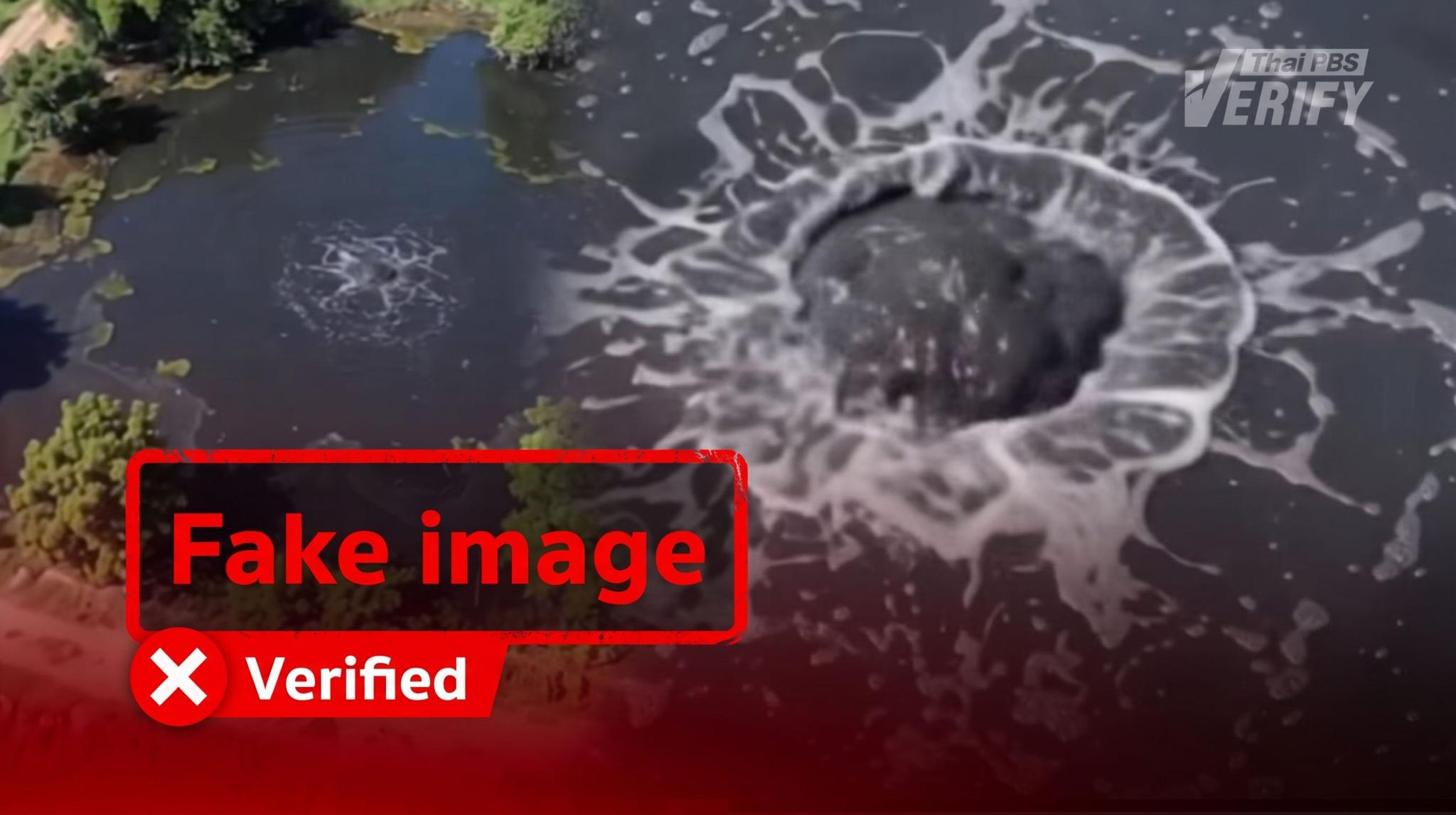
Thai PBS Verify found this fake image on Facebook
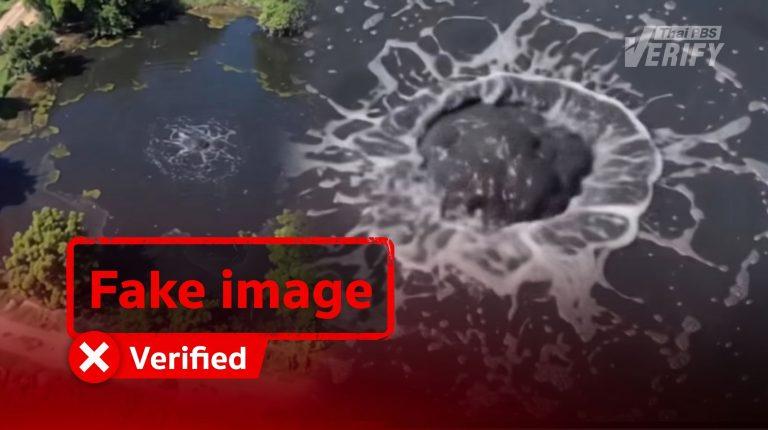
Investigators found the clip, which claimed to show a pit in Nong Bon subdistrict of Muang district in Sa Kaeo, depicting oversized gas bubbles rising from the earth.
The post read, “Clip from Nov 20, 2026. Sorry I forgot to post an update for everyone. Come look at another spot in Nong Bon subdistrict, Muang district, Sa Kaeo province. Locals are terrified after finding gas bubbles or water surging from underground. The water is pitch black, how are we supposed to live like this?”
Uploaded on Nov 21, 2026, the video quickly racked up around 190,000 views.
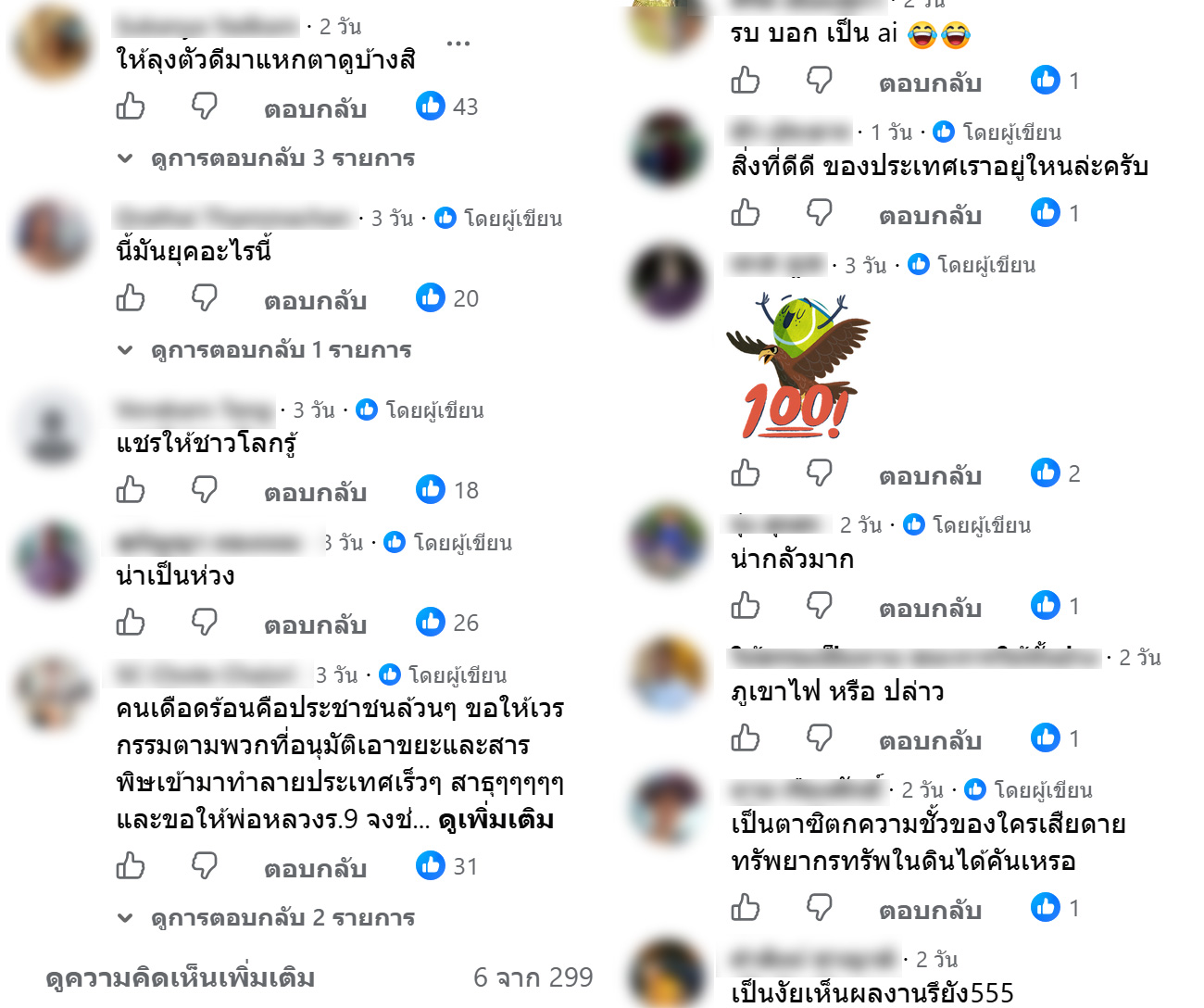
Viewer comments on the viral clip.
Is the Sa Kaeo bubbling ground clip real?
Thai PBS Verify searched keywords related to the incident and located a genuine Thai PBS news report from Nov 19, 2026. The report stated that Sa Kaeo officials had collected additional soil and water samples from an old laterite pit after discovering underground air bubbles that ignited when tested with fire. Residents living near the industrial waste site reported rashes and respiratory problems, prompting urgent health checks and an investigation into the source of the dumping after 13 illegal sites were uncovered across two districts.
Verification showed that while the underground bubbling genuinely occurred, the bubbles and surrounding terrain in the official news footage looked markedly different from the giant gas eruptions shown in the viral clip.
Fact-checkers then analysed the viral video using AI detection tools, including Hive Moderation and Google’s SynthID, both of which indicated the footage was AI-generated.
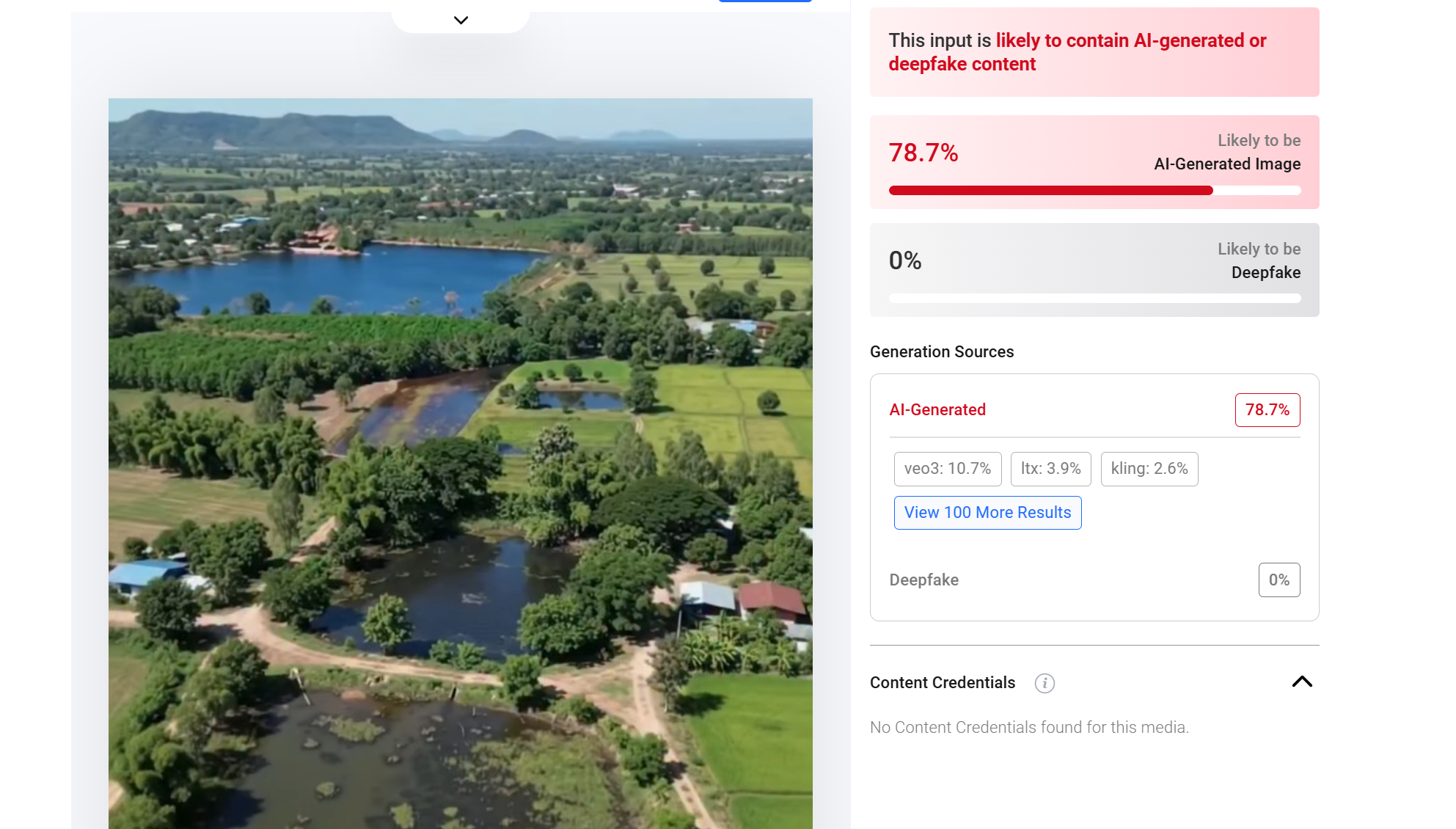
Detection results from Hive Moderation.
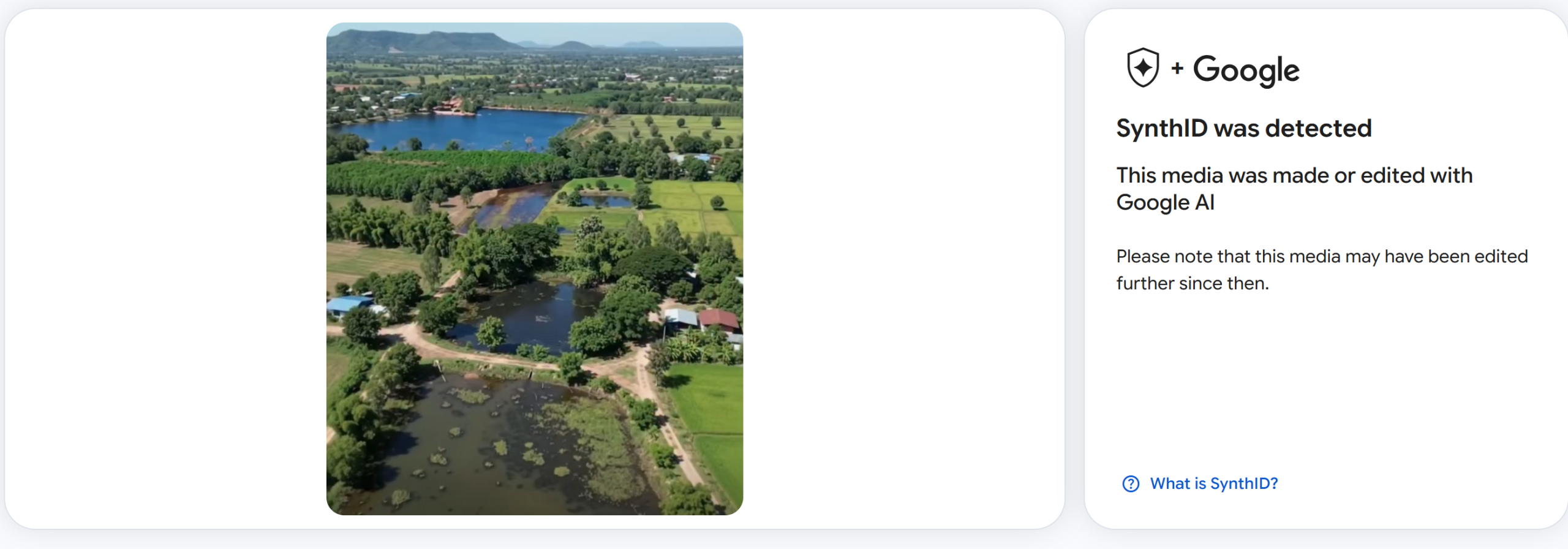
Detection results from Google’s SynthID.
Comparing stills from the AI-generated clip against the actual Thai PBS broadcast revealed stark differences in both the gas bubbles and the surrounding landscape, confirming the viral video did not depict the real event.
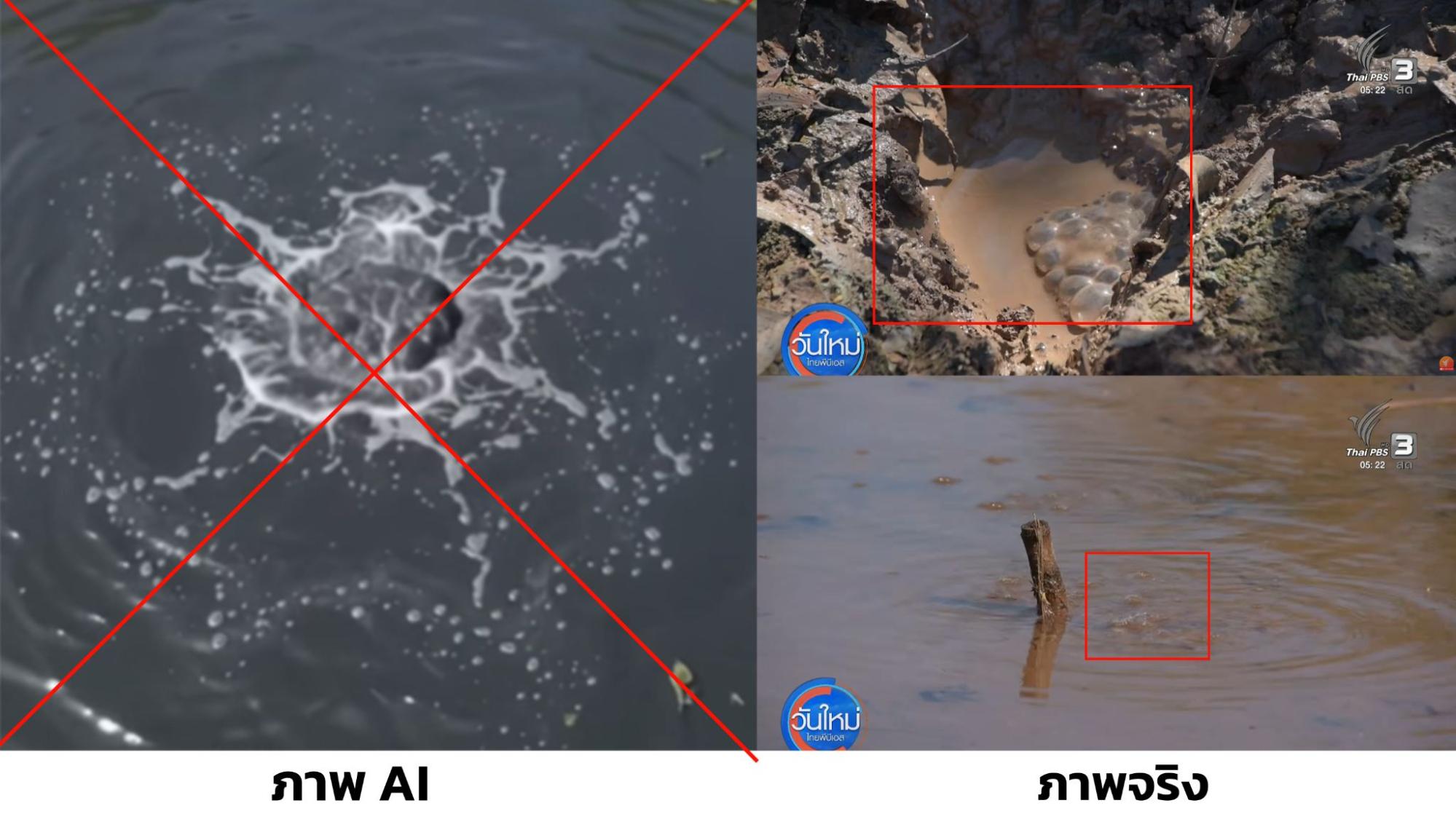
Left, AI-generated image; right, actual footage from Thai PBS.
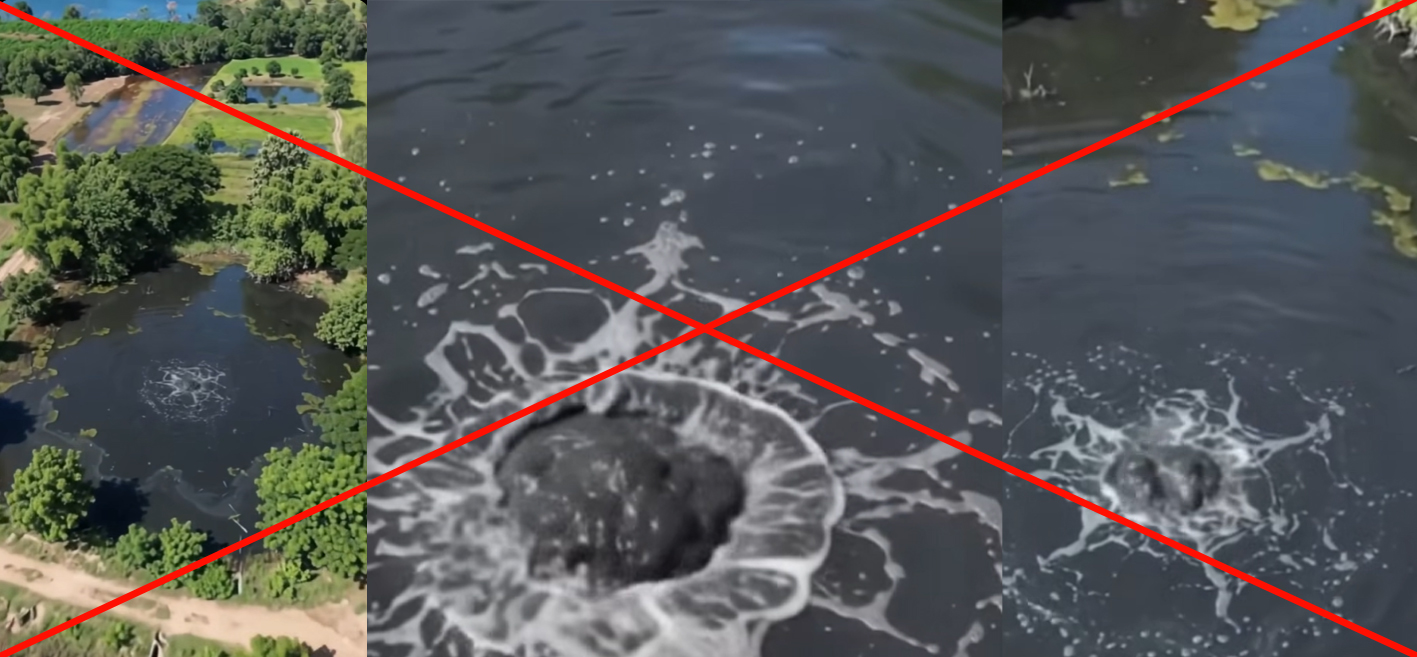
AI-generated image.
Footage of the real incident
Aerial footage of the Sa Kaeo industrial waste pit
Further keyword searches uncovered a Nov 19, 2026 report from Channel 3’s Khao 3 Miti news programme featuring aerial shots of the site. The broadcast covered the ongoing inspection of the industrial waste landfill pit in Sa Kaeo, and a reporter’s social media page confirmed the exact location as Nong Bon subdistrict in Muang district, matching the Thai PBS report.
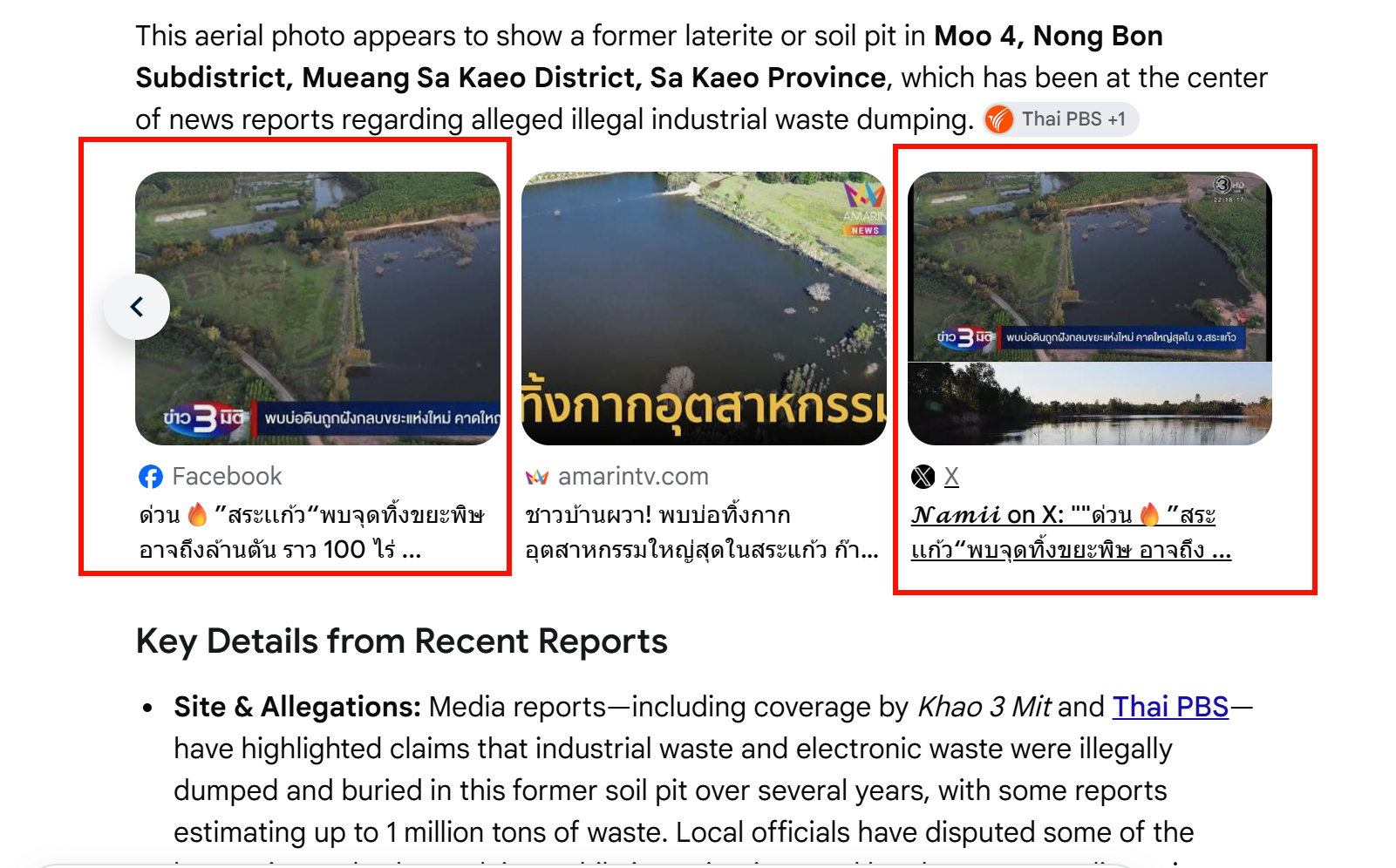
Keyword search results.
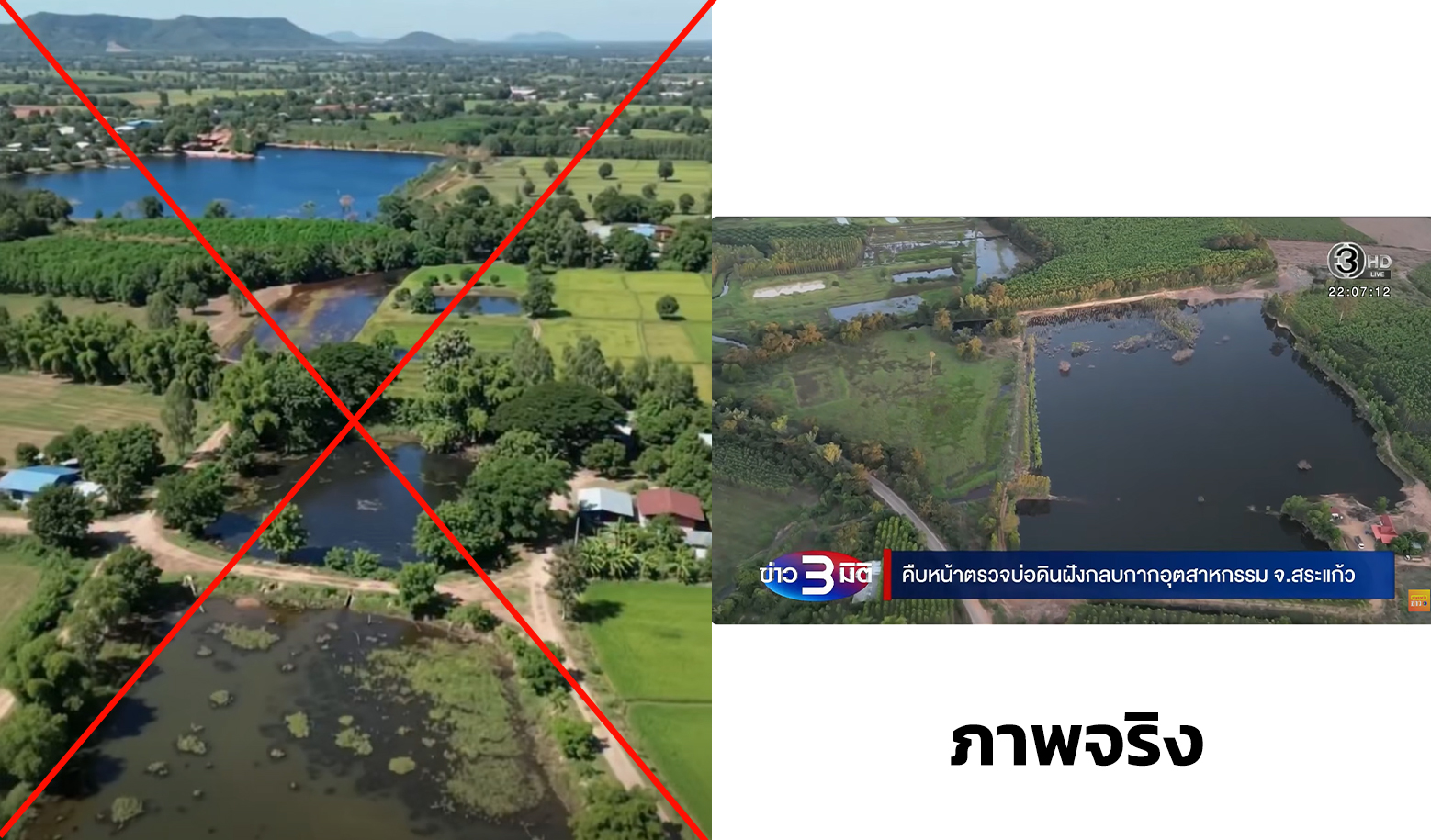
Comparison between the AI-generated image and aerial footage from Khao 3 Miti.
What really happened
Thai PBS Verify confirmed that underground gas bubbles did appear in Nong Bon subdistrict, Muang district, Sa Kaeo, as reported on Nov 19, 2026, when officials inspected an old laterite pit and found gas escaping through an inserted pipe that caught fire when lit.
However, the Facebook video claiming to capture the same event with massive gas bubbles differs completely in visual detail and environment. Results from Hive Moderation and Google’s SynthID confirm the clip was created with AI and falsely passed off as real local footage.
Verification Process
- Keyword searches linked to the incident in Nong Bon subdistrict, Muang district, Sa Kaeo turned up a Nov 19, 2026 Thai PBS report on the inspection of an old laterite pit with underground air bubbles.
- Reviewing the news report’s footage showed that the bubbles and surrounding terrain did not match the Facebook video claiming to show giant gas eruptions.
- Testing the Facebook clip with AI detection tools, including Hive Moderation and Google’s SynthID, indicated the video was generated by AI.
- Side-by-side comparisons between the viral clip and genuine Thai PBS footage highlighted clear discrepancies in both the gas bubbles and the local environment.
- Additional searches located a Khao 3 Miti broadcast featuring aerial footage of the industrial waste pit in Sa Kaeo, and a reporter’s page confirmed the Nong Bon subdistrict location, consistent with the Thai PBS report.
Impact of the misinformation
- Distorting the situation — Presenting AI-generated visuals as real footage can mislead viewers about the true nature and scale of an incident.
- Fuelling confusion over environmental hazards — Adding fabricated imagery to a genuine crisis makes it harder for the public to separate fact from fiction.
- Eroding trust in news — Circulating unlabelled AI visuals can confuse audiences and undermine confidence in legitimate journalism covering the actual event.
- Distracting from key issues — Exaggerated imagery draws attention to fabricated details, sidelining critical coverage of industrial waste investigations, environmental damage and public health risks.
What to do with this misinformation?
- Check the source of the clip to see whether it comes from local residents, established news outlets or relevant authorities.
- Stay sceptical of footage showing extreme or unusual events, and cross-check it against official news reports and government updates.
- Use reverse image search tools such as Google Lens to check where an image has appeared before or whether it matches genuine news footage.
- Run suspicious images or videos through basic AI detection tools if you suspect they are digitally generated.
- Avoid sharing unverified content, as doing so can spread misunderstandings and cause unnecessary alarm among local communities.

Popular Content