Fact-check: Democrat Party’s “5,000-Baht Mother and Child Subsidy” Policy for One Year – Academics Propose 3,000-Baht Universal Grant Until Age Six
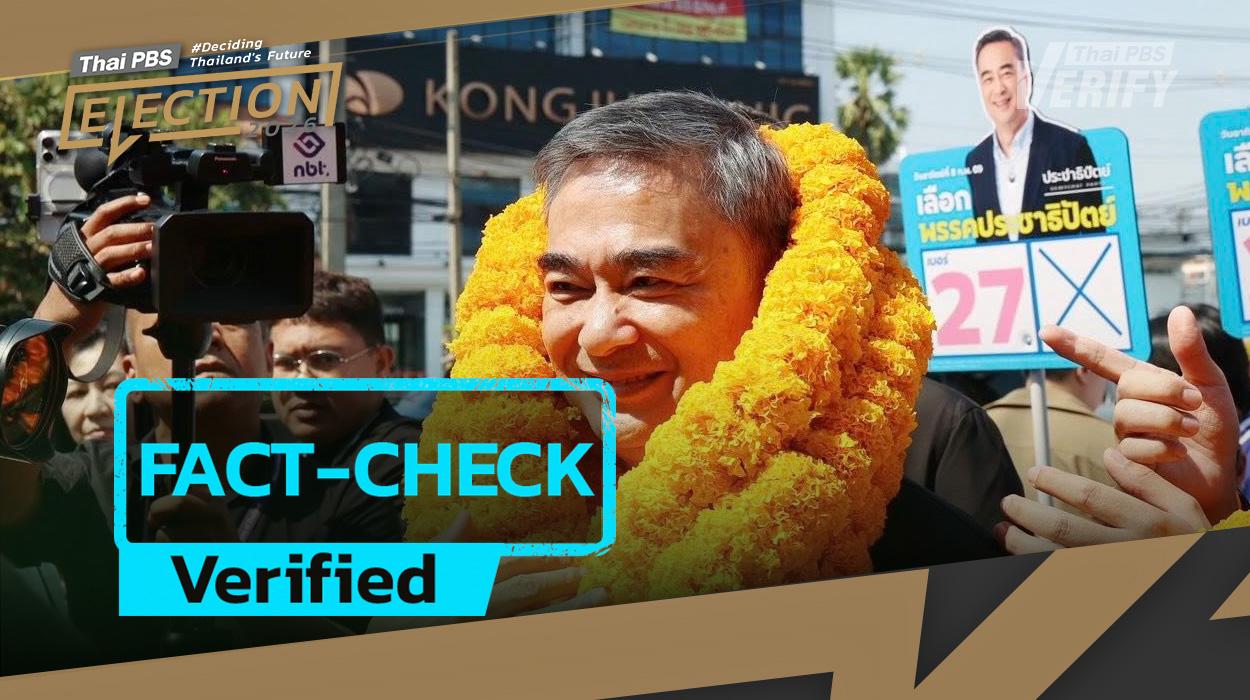
The Democrat Party has unveiled its policy titled “Caring for Mothers, Nurturing Infants,” offering a monthly subsidy of 5,000 baht for mothers and children for 12 months. This is designed as an immediate, universal grant, starting upon receipt of a birth certificate, and requires no means-testing. Additionally, the state would support savings for all Thai children from birth until age 18 at a rate of 500 baht per month to ensure that every child has savings. If these savings are maintained in the account without withdrawal, a special bonus of 10,000 baht will be granted every five years. This policy is regarded as one that the Democrat Party has successfully implemented in the past.
Addressing these issues, Thai PBS Verify has traced the timeline of “newborn” policies to identify which political parties have previously featured them as campaigns and to examine the current direction of newborn welfare policies.
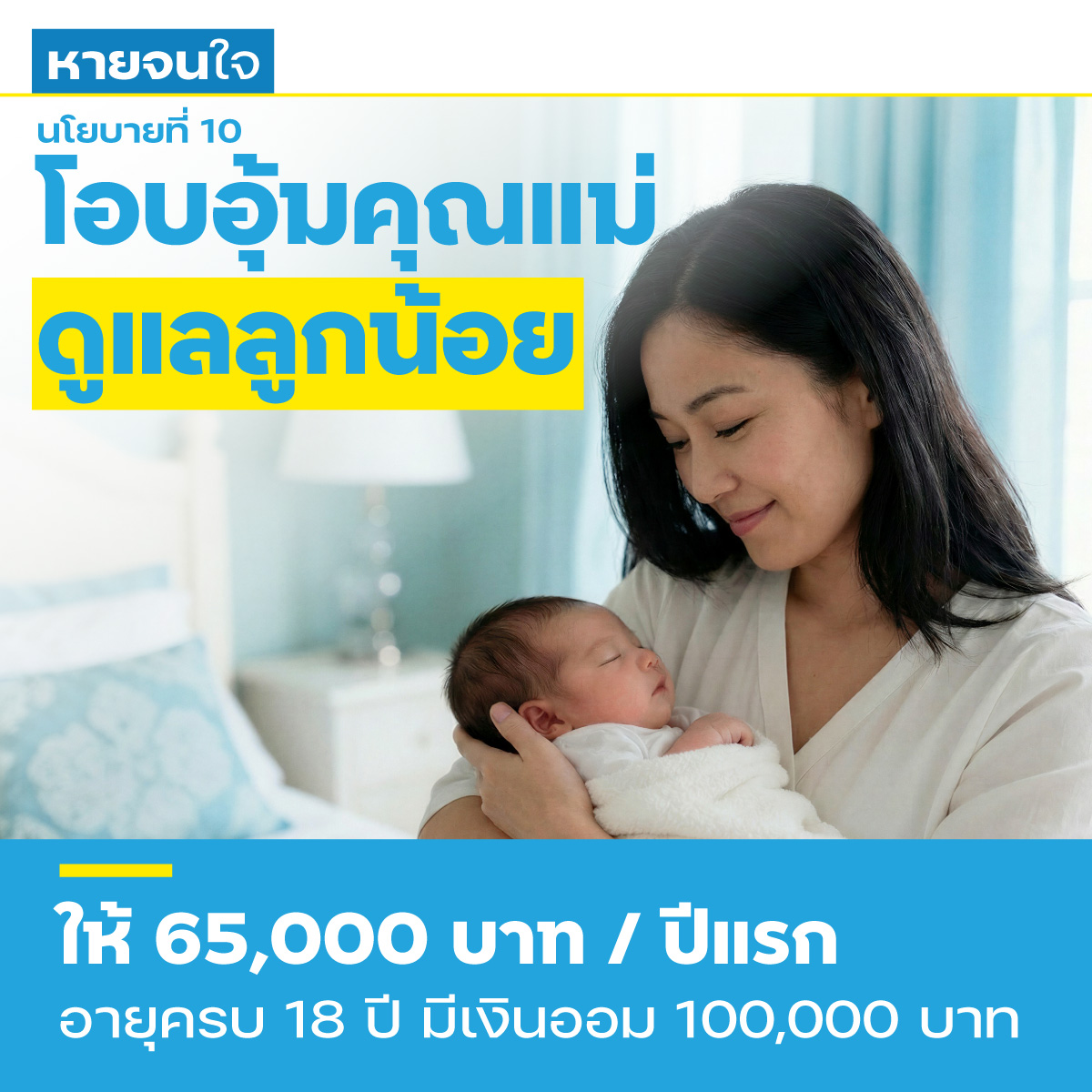
“Caring for Mothers, Nurturing Infants” policy by the Democrat Party
The evolution of the Democrat Party’s newborn policies
- Jan 12, 2009: The government of Abhisit Vejjajiva announced the “15 Years of Quality Free Education” policy as a key urgent measure. It covered student expenses from kindergarten to upper secondary school (including early childhood) by providing support in five core areas: tuition fees, textbooks, school supplies, uniforms, and student development activities.
- Dec 26, 2018: Mr. Abhisit announced the party’s 2019 election campaign under the slogan “Born with a Hundred Thousand baht.” The policy proposed a monthly subsidy of 1,000 baht for newborns from birth until the age of six.
- Jan 20, 2023: During preparations for the 2023 election, the Democrat Party unveiled the “Start at Early Childhood” policy. This initiative focused on providing a universal monthly subsidy of 3,000 baht (as a birth grant) with ongoing monthly support until age six, aiming to resolve inequality in access to welfare rights.
- Jan 7, 2026: In Nakhon Si Thammarat, Mr. Abhisit announced a signature policy proposing a “65,000-baht Newborn Gift” during the first year. This measure aims to boost birth rates and serve as a substantial welfare package for families.
- Jan 11, 2026: The policy was further elaborated in Phuket, being provided additional details on monthly support throughout the first year and a “Savings for the Future” scheme. This plan intends to provide matching state contributions, ensuring that each child accumulates 100,000 baht in savings by the age of 18.
Overview of “newborn” policies: Campaign pledges from the 2023 election
- The now-dissolved Move Forward Party proposed a universal monthly young children subsidy of 1,200 baht (from birth to age 6). The party emphasized that every child must receive this right without undergoing a means-test (poverty screening). Additionally, they proposed a 180-day maternity leave policy that allows parents to share leave days, enabling families to fully participate in child-rearing together.
- The Democrat Party: created the “Start at Early Childhood” policy, which offered an immediate 3,000-baht birth grant, followed by continuous monthly support until age 6 (This was intended to work alongside “Free Education” and “Free School Milk” policies.) This policy was to provide fundamental security for families during the initial years.
- Pheu Thai Party, with its “Having a Child Only Gains” policy, focused on enhancing the childcare ecosystem. This included upgrading local day care centers for better quality and accessibility, and utilizing medical technology through fertility clinics to assist those struggling with conception. They also proposed the “Startup Account” policy to provide long-term matching funds for children.
- Palang Pracharath Party proposed through the “Pracharath Mothers and Children” policy – care would begin during pregnancy with a 10,000-baht monthly support for 5 months (from the 4th to the 9th month of pregnancy). After birth, the party proposed a childcare allowance of 3,000 baht per month until the child reaches age 6.
- Prachachat Party proposed a “Universal Child Welfare” policy providing a total subsidy of 4,500 baht per month for children aged 0-6. This figure was an increase from the 3,000-baht proposal suggested by civil society sectors, aiming to ensure families can realistically provide a good quality of life for their children.
- Thai Sang Thai Party, with its “Care from Pregnancy to Age 6” policy, was presented through the “Childcare Coupon” campaign, providing support from pregnancy until age 6 (approximately 2,000 baht per month). The party also prioritized establishing local childcare centers to allow mothers to work and raise children simultaneously without exhaustion.
What is the current status of newborn welfare policies?
The government currently implements a support program for children from birth to age six by providing a monthly “Child Support Grant” of approximately 600 baht per child. This grant is targeted at families whose income does not exceed the specified threshold. To receive this benefit, guardians must register and meet the qualifications mandated by ministerial regulations. The funds are transferred monthly into the guardian’s bank account. Furthermore, individuals can verify their eligibility or payment status through the Department of Children and Youth’s applications and websites, such as the “Ngern Dek” (Child Money) app or their online tracking system.
Furthermore, individuals employed within the Social Security system (Sections 33 and 39) are entitled to the Social Security Child Allowance. As of 2025, this benefit has been increased to 1,000 baht per month per child, applicable from birth until the age of six, to help alleviate the burden of child-rearing costs. Additionally, the Social Security system provides a lump-sum maternity grant of approximately 15,000 baht per birth for qualified insured members. This serves as another vital support channel for families with newborns.
The low birth rate crisis and the necessity of welfare from birth to age six
Asst. Prof. Sunee Chaiyaros, Chairperson of the ‘Working Group for Universal Early Childhood Welfare,’ stated that the movement for welfare policies covering all life stages, from pregnancy through early childhood, has been driven by civil society for over a decade. Early childhood is the cornerstone for both physical and cognitive development. Consequently, there have been consistent demands for comprehensive care from the womb to age six, a period regarded as the “Golden Age” of life. A key demand is a universal monthly subsidy of 3,000 baht to serve as security for every child.
However, the support provided thus far is limited to children from birth to age six and is subject to “means-testing,” using poverty as a criterion. This does not align with the universal welfare requested by civil society. Furthermore, it contradicts core principles by being discriminatory, leading to a significant number of children falling through the cracks. Since it is difficult to accurately determine the fluctuating income of parents or grandparents raising these children, it is widely accepted that at least 30% of impoverished children, approximately one million individuals, are currently excluded from the existing system. That is the critical reason why we must push for the establishment of a truly universal welfare system.
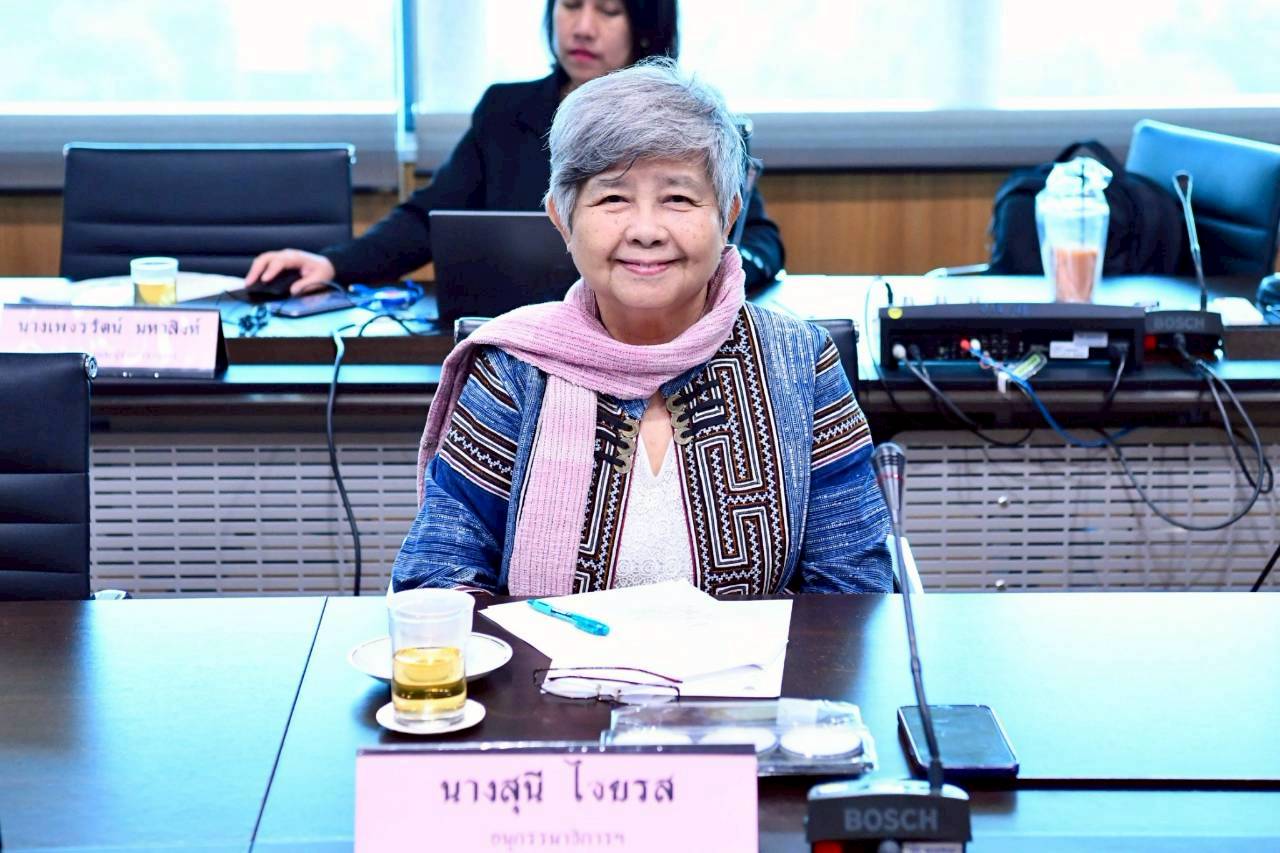
Asst. Prof. Sunee Chaiyaros, Chairperson of the Working Group for Universal Early Childhood Welfare
Civil society accelerates push for “universal child subsidy and quality childcare centers” as state policy
Simultaneously, civil society remains hopeful that various political parties will champion these proposals as official government policies. While certain measures have been implemented, they still fall short of the universal principle. The ultimate vision is a universal child welfare system that operates without income-based screening, complemented by a support system that allows parents to work with confidence. This necessitates an establishment of high-quality, local childcare centers that ensure children receive proper nutrition, learning opportunities, and a safe environment.
Consequently, the push for universal child welfare centers on two vital pillars. There are provisions of universal subsidy grants as an inherent right, and decentralization of power to ensure these services reach children in every area across the country.
The origin of child subsidy figures based on Thailand’s poverty line
Regarding the figure of 3,000 baht, questions have been raised as to why this amount is considered a sufficient average for child-rearing. Tracing back to 2015, when the initial advocacy reached Cabinet consideration, the subsidy was set at 400 baht, with the poverty threshold defined at 36,000 baht per year. Subsequently, as efforts expanded to cover children aged 0–6, an income ceiling of 100,000 baht per year was applied, providing a monthly grant of 600 baht.
This 600-baht figure is considered remarkably low compared to the actual burden of raising a child. The proposed 3,000 baht is indexed to the Thai poverty line. A figure justified as necessary to stabilize a family’s financial situation. While parents consistently affirm that raising a child costs no less than 5,000 baht per month, and even 3,000 baht may fall short, it remains a figure that can tangibly reduce inequality and improve quality of life more effectively than the current 600 baht.
The declining birth rate crisis and the widening care gap – Thai families face heavy burdens without support systems
The current situation regarding newborns in Thailand is deeply concerning, as the number of births has plummeted to just over 300,000 per year and continues to decline, reaching a state of crisis. However, the more pressing issue lies in the quality of life of the children who are born. Every child is a precious asset to society, requiring nurturing care to grow with quality, access to learning opportunities, and appropriate development, regardless of whether they are children with disabilities or special needs. No one must be left behind. This is a situation that can no longer be ignored.
According to the context of the workforce and family responsibilities, modern Thai women face increased professional demands while lacking the traditional support systems of previous generations, where grandparents often assisted with childcare. Many families have transitioned into nuclear households, requiring both parents to work full-time despite a shortage of accessible or high-quality local childcare centers. This has created a “care gap” when parents must be at work but have no one to care for their children. Furthermore, private nurseries are not a viable option for every family due to their prohibitive costs. Meanwhile, the quality of childcare centers under Local Administrative Organizations remains inconsistent. While some are exemplary, many suffer from staffing shortages, overwhelmed caregivers, and inadequate infrastructure. These are systemic issues that demand serious and comprehensive reform.
Why is universal child welfare essential?
Ultimately, the significance of universal welfare lies in long-term investment rather than temporary charity. Children born today will become the nation’s primary workforce in twenty years. If we fail to invest now, Thailand will become an aging society without a sufficient labor force to sustain its economy. The principle of universal welfare is vital because it is non-discriminatory. And it ensures that no one is left behind or excluded from the system.
Receiving quality care from an early age ensures that children achieve proper development, receive adequate nutrition, and avoid chronic health issues in adulthood, which would otherwise require several times the budget for the state to treat. Therefore, universal welfare for children from birth to age six is not a wasted expenditure, but it is the most valuable long-term investment a nation can make.
Surveying the 2026 Thai child budget… who receives what?
Thailand’s 2026 national budget, totaling 3.78 trillion baht, encompasses various assistance programs for early childhood and school-aged children. For early childhood (ages 0–6), which comprises approximately 3.2 million children, the state has allocated a monthly grant of 600 baht aimed at promoting age-appropriate development for children in families earning less than 100,000 baht annually. This covers 2.62 million children, with a total budget allocation of 16,267.9 million baht.
Furthermore, support in the form of cash or essential items is provided on a per-instance basis for underprivileged children or those in home-based foster care (up to ages 18–20). This program serves 172,625 individuals with a budget of 172.6 million baht. Moreover, the Foster Family Subsidy provides monthly support of 2,000 baht for 5,500 children, utilizing a budget of 132 million baht. And the Child Protection Fund care is provided for 4,000 children with an allocated budget of 45 million baht.
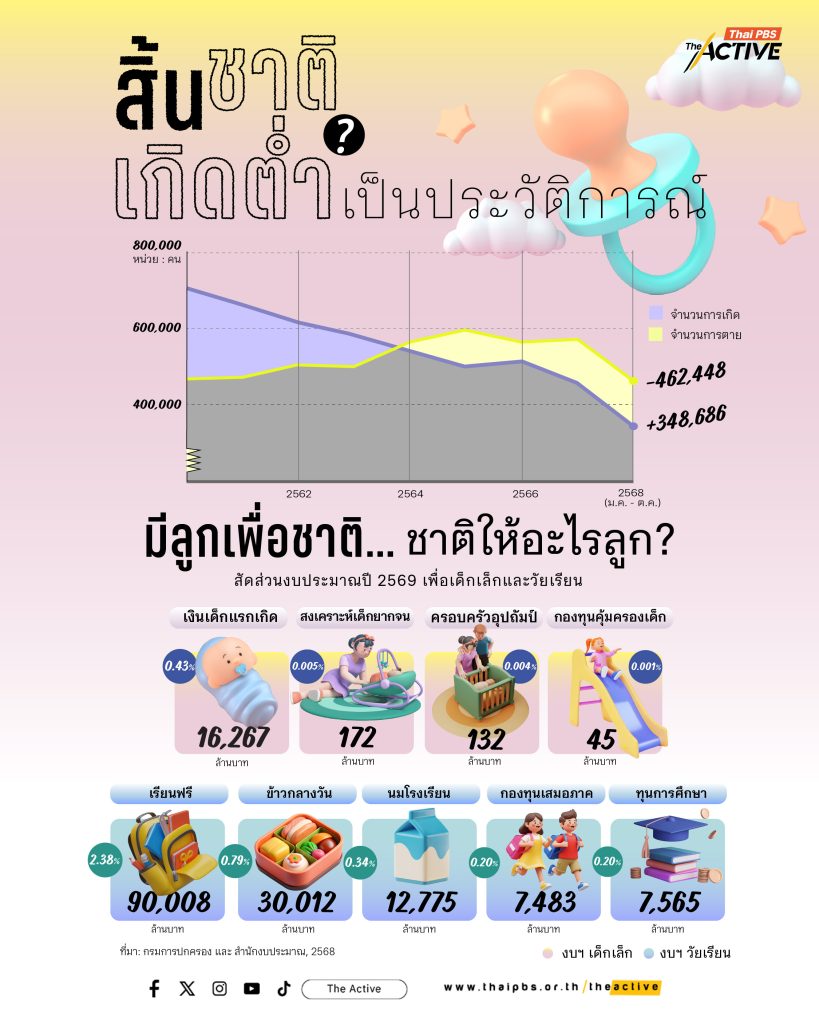
For school-aged children between 7 and 18 years old, who number approximately 9 million, the state allocates a budget for 15 years of free education. This program spans from kindergarten through basic education, covering tuition fees, textbooks, learning supplies, school uniforms, and student development activities for a total of 10.51 million students, utilizing a budget of 90,008.6 million baht. In tandem with this, the state provides support for various fundamental necessities, such as school lunches for 6.06 million students with a budget of 30,012.9 million baht, and nutritional supplements (milk) for 6.24 million children with a budget of 12,775.0 million baht. Furthermore, the Equitable Education Fund assists no fewer than 1.51 million underprivileged individuals through a budget of 7,483.7 million baht, alongside the provision of both domestic and international scholarships for 69,325 students, totaling 7,565.9 million baht.
What’s the truth?
Regarding the actual situation, statistical data from the Bureau of Registration Administration, Department of Provincial Administration, indicates that the number of newborns in Thailand in 2025 stood at 416,574, marking the lowest figure in over 75 years. This total comprises 215,035 males and 201,539 females. These figures reflect a continuous decline in the number of newborns compared to previous years. Retrospective statistics reveal a steady downward trend in 2015, there were 736,352 births. In 2017, the number was 703,003. By 2020, it fell to 587,368, and in 2022, it reached 502,107. Although there was a slight increase to 517,934 in 2023, the number declined again in 2024 to 462,240, before dropping sharply in 2025 to only 416,574. This data demonstrates a severe and persistent decline in birth rates over several consecutive years.
At the same time, academics propose that comprehensive care should be provided from pregnancy until the age of six, utilizing a universal subsidy system of 3,000 baht per month as a security for every child, which is regarded as the most cost-effective long-term investment for the nation. This raises a critical question of whether such policy could successfully stimulate the country’s birth rate, should the Democrat Party lead the government.
Verification Process
- Policy timeline verification: A review of the policy timeline confirms that the Democrat Party has previously utilized this issue as a key campaign platform.
- Data verification: An analysis of the newborn policies proposed during the 2023 election shows that several parties, including the now-dissolved Move Forward Party, the Democrat Party, Pheu Thai Party, Palang Pracharath Party, Prachachat Party, and Thai Sang Thai Party, pledged subsidies ranging from 1,200 to 4,500 baht.
- Source verification: Through an interview conducted by Thai PBS Verify, Asst. Prof. Sunee Chaiyaros, Chairperson of the ‘Working Group for Universal Early Childhood Welfare,’ suggested that care should be provided from pregnancy until age six. She advocates for a universal subsidy system of 3,000 baht per month as security for every child as the most cost-effective long-term investment for the nation.

Related Content