Distorted information on “Cambodia’s demands” from seven MOUs, including healthcare and education budget
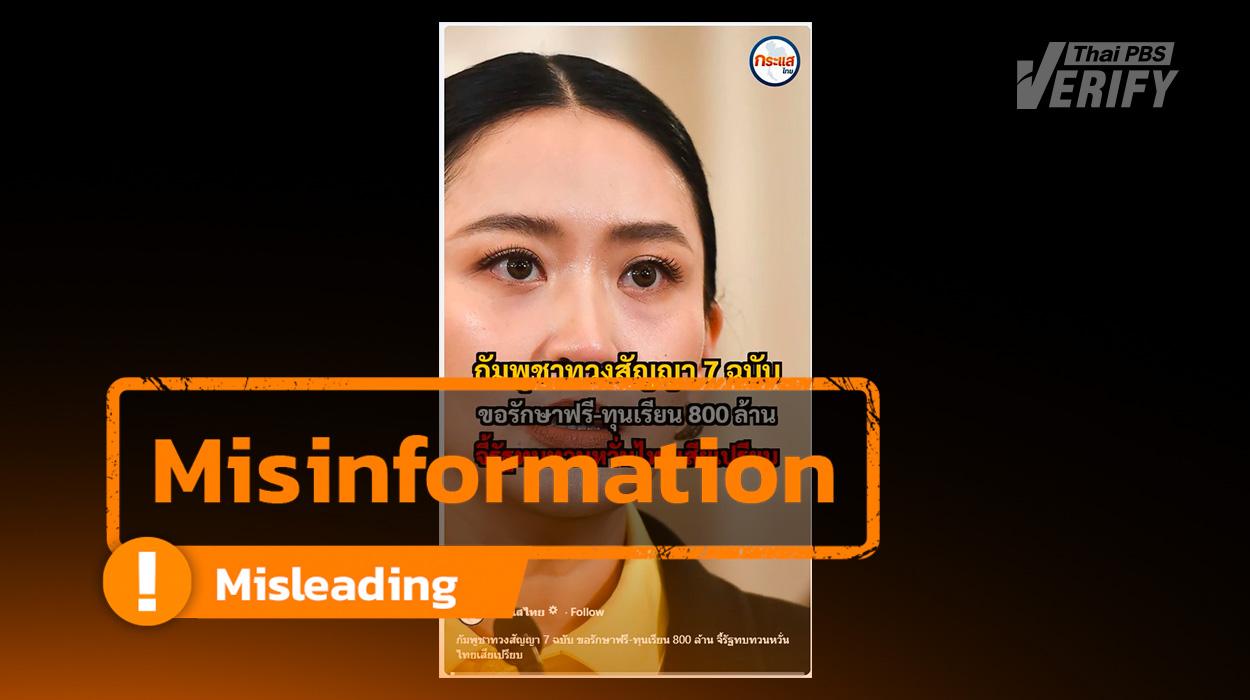
However, Thai PBS Verify has found the actual content to be distorted. In reality, this allocated assistance budget is not earmarked exclusively for Cambodia. Furthermore, the seven agreements actually concern infrastructure and labor cooperation—rather than cash handouts or free medical services for Cambodia as falsely claimed.
Thai PBS Verify found the piece of disinformation on: Facebook
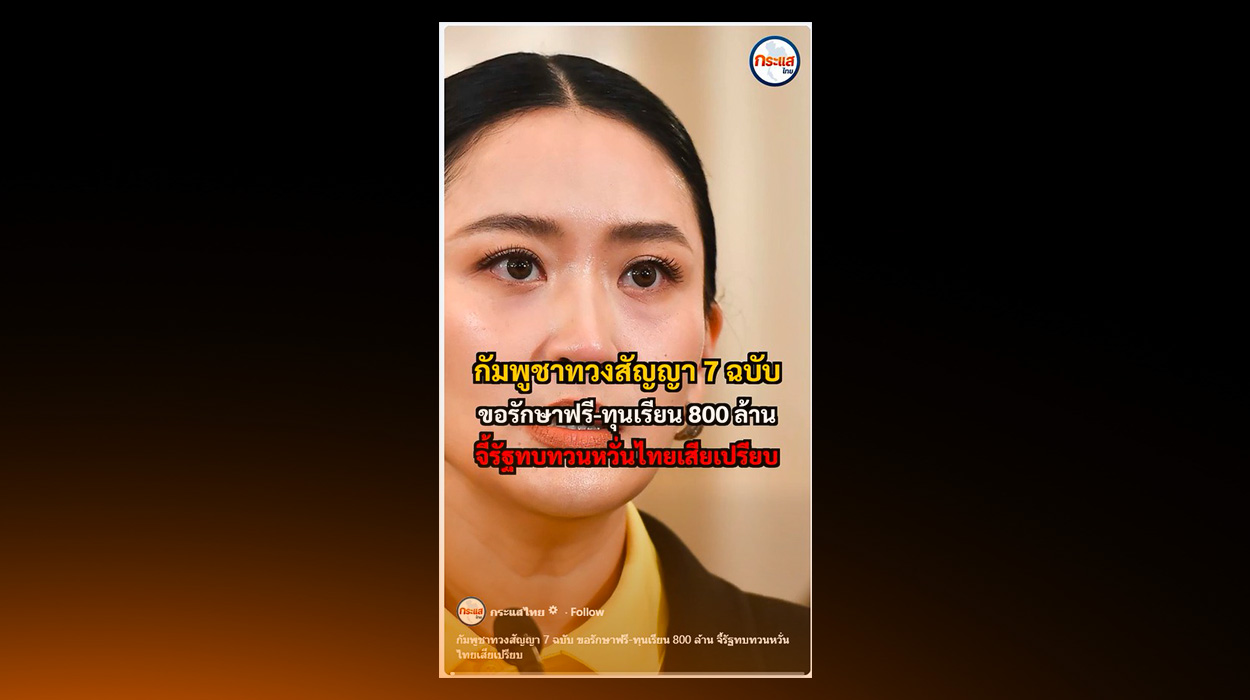
Viral claims allege Cambodian demands for free healthcare and 800-million-baht in scholarships; the Thai government is facing mounting public pressure to review these disadvantageous terms.
Thai PBS Verify looked into a Facebook page named ‘Krasae Thai (กระแสไทย)’ and the video alongside the following claims.
“Cambodia reportedly demands fulfillment of 7 MOUs for free healthcare and 800 million baht in scholarships; the Government is being urged to review the terms, as Thailand may be put at a disadvantage.”
The video clip is 10-minute long, stating that:
“To our audience, here are the facts of the situation. This issue has sparked widespread concern, especially at the Ministry of Foreign Affairs. Our cunning neighboring country, Cambodia, has recently made repeated inquiries regarding the implementation of 7 Memorandums of Understanding (MOUs). These agreements, established under the administration of Prime Minister Paetongtarn Shinawatra, have sparked intense debate over concerns that the terms may significantly disadvantage Thailand.
“The current situation presents a significant setback and growing concerns that Thailand may be placed at a severe disadvantage. The reason for these strong demands is the perception of our domestic political instability. With the new administration still in its early stages and the situation still uncertain, our neighbor is taking this chance to push us for their own benefit.
“Ultimately, it is Ambassador Sihasak Phuangketkeow who must address the complex consequences left behind by previous political decisions. It remains to be seen the troubling details of these seven demanded agreements. They reportedly range from free healthcare and education grants to infrastructure development and agricultural subsidies.
“Is this a strategic national administration or an undue burden on our resources? At what point were these commitments made, and was there sufficient transparency?
Each agreement will be scrutinized to determine whether public funds are being expended without a commensurate return for the nation.
“The primary concern is the policy granting Cambodian citizens free medical treatment, especially for soldiers wounded in combat. This issue raises legitimate questions that should be addressed by the citizenry: where did these injuries originate? If they resulted from border skirmishes, why is the government diverting public health budgets—while Thai citizens wait in endless queues—to treat potential combatants? This is not mere benevolence; it is a direct compromise of national security.
“Furthermore, our border hospitals and healthcare personnel are already stretched to their absolute limits. Is it justifiable to impose the additional burden of providing free care to foreign nationals upon them? What does the Thai public gain from this? While some may argue for humanitarian merit, merit does not sustain a nation—national security and the well-being of its own citizens do.”
“Regarding the budget—a staggering 800 million baht. The administration intends to allocate these funds as scholarships for Cambodian students. Meanwhile, Youths from agricultural households in the Northeast and the North struggle even to afford basic tuition. They are forced to sink into debt, relying on the Student Loan Fund just to survive, burdened by repayment long after graduation. Yet, our ‘benevolent’ government chooses to lavish 800 million baht on foreign students at no cost?
“To what end? Is this an attempt to buy goodwill? Such a notion is utterly preposterous. Once they graduate, they either go back to develop their own country or stay here to compete for Thai jobs. Why does the government make the decision to use Thai taxes to build the elite of another nation so they can come back and outcompete our own children. Is this a strategic masterstroke, or an act of sheer incompetence?
“Adding further insult to disappointment, there is a proposal to allocate hundreds of millions more to construct cross-border infrastructure. It is a question of priority: how can we justify funding foreign infrastructure when our own roads remain in a state of severe disrepair? Who truly stands to benefit? Will these roads serve as a strategic corridor for Thai exports, or will they become a gateway for illegal labor, narcotics, and smuggled goods to saturate our markets? This is not infrastructure development; it is more akin to opening the city gates to an adversary.
“Has any thought been given to the integrity of our border security? To offer such ease of access might yield minor financial returns, but it compromises our invaluable national security. Is this a justifiable exchange? Certainly not. This is a total loss in every dimension.
“If the infrastructure crisis seems dire, the plight of Thai farmers is even more catastrophic. There is an agreement to procure agricultural products from our neighbors. Currently, the prices of our domestic rice, cassava and maize are volatile and severely depressed. Upon the closure of border checkpoints, the prices of domestic goods experience an upward trend. The situation enables Thai farmers to secure better market prices. However, the moment we open the gates to foreign produce, domestic prices will inevitably collapse. It is baffling how a Thai Agriculture Minister could implement measures that serve as a financial windfall for Cambodia while our own agricultural sector collapses.
“Imagine this if we passively adhere to these seven MOUs to the very letter, what exactly is the benefit to Thailand? Our border healthcare facilities will be overwhelmed by foreign nationals seeking free treatment, rapidly exhausting our limited resources. A staggering 800 million baht of our national budget will vanish in an instant. Furthermore, our infrastructure will transform into conduits for illicit trade and contraband. Even more concerning is the prospect that Thai farmers will be forced to liquidate their ancestral lands, rendered unable to compete with the lower production costs of foreign crops.
“This is a catastrophe unfolding at our very doorstep. If we allow this to proceed, Thailand will be nothing more than ‘lambs to the slaughter.’ Why is Cambodia exerting such relentless pressure at this specific moment? Because they are masterfully exploiting our domestic political climate.
“They recognize the current state of upheaval and perceive the Paetongtarn administration as still being in its formative stage, yet to gain full equilibrium. They are capitalizing on our internal distractions to secure their interests while we are still strategically off-balance.
“Cambodia does not view us through the lens of ‘fraternal relations’ or as a ‘brotherly nation,’ but Thais are merely their source of unconditional financial concessions. As our government’s position wavers, they are emboldened to accelerate their game, aiming for a total strategic advantage.
“These agreements were signed by politicians to bolster their public image and perform a theatre of ‘eternal brotherhood,’ while it was the civil servants who endured the grueling negotiations. Therefore, in this entire ordeal, those who truly deserve our empathy are not the politicians, but the dedicated career officials—exemplified by Ambassador Sihasak Phuangketkeow and the specialized teams at the Ministry of Foreign Affairs.
“It is as if politicians ignite a policy crisis and then simply retreat, leaving civil servants to rectify the fallout under an impossible mandate. What is truly intriguing is this: why would the previous administration dare to sign an agreement so profoundly detrimental to our national interests? Were there ‘clandestine’ arrangements involved? Or perhaps a private understanding between the ‘influential figure abroad’ and the neighboring leader?
“This matter requires a thorough examination. It is highly irregular in international negotiations for one party to concede on every front. This MOU is fundamentally misplaced and deviates entirely from its intended purpose.
“The Ministry of Foreign Affairs is tasked with protecting national interests, not acting like a social welfare office or a charity foundation. Diplomacy is based on reciprocity, not unilateral gain.
“Out of the seven MOU points, the only acceptable one is the return of antiquities. If it can be proven that an artifact belongs to another nation, we—as a people of dignity—have no desire to keep stolen goods in our home. However, the verification process must be stringent, supported by clear and indisputable evidence.
“In response to the unfounded claims over our cultural heritage, such as Khon dance drama and Muay Thai, it is time to reclaim justice. We should not let them fuel their nationalist agenda at our expense.
“Consequently, Prime Minister Paetongtarn faces a narrow choice: either push forward and risk being branded a ‘traitor’ by the people, or show the resolve to inform our neighbors that the current terms are unacceptable. Negotiations must be conducted on an equal footing, and any unfair advantages must be thoroughly reviewed.”
“If our neighbors take offense at us protecting our national interests, that is a risk we are willing to take. It is time they reflected on their reliance on Thailand. We need to assert our role as a regional leader with unwavering stability and a strong position. They must learn to respect our boundaries, rather than us being overly submissive to the point of being exploited.
“If Thailand continues to provide unconditional financial support to our neighbors, we will inevitably face a major budgetary crisis, and they will eventually be perceived as having exhausted value. This is the global reality: international relations are built on mutual interest, not on sympathy.
“This issue directly affects every Thai citizen. Whether it be the 800 million baht, or the funds for infrastructure and healthcare—all are derived from the taxpayers. Such capital must be prioritized for domestic infrastructure repairs, educational improvements, and the procurement of medical equipment for the Thai people. Continuous public vigilance and close monitoring of these developments are essential.
“We must not allow any clandestine agreements that compromise our national sovereignty to occur again. If you cherish Thailand and refuse to see future generations subservient to others, Please disseminate this information to the public. Let it be known that the Thai people are well-informed, perceptive, and will not be deceived.
“For those who value uncompromising analysis and the unfiltered truth, please subscribe and enable notifications for our channel. We will remain vigilant and relentless in our oversight. Any actions taken against the national interest will be exposed to the public. We will see you in the next video. Goodbye.”
The aforementioned video, featuring the picture of former Prime Minister Paetongtarn Shinawatra, was published on February 22, 2026. Since its release, the clip has amassed over 980,000 views, garnered more than 27,000 reactions, and has been shared over 15,000 times. Preliminary observations indicate that a significant majority of the audience perceives the content as factual.
What is the actual content of the seven MOUs?
Following a keyword search by Thai PBS Verify, reports were identified regarding the signing of seven Memoranda of Understanding (MOUs) on April 23, 2025. This collective signing took place during the 75th anniversary of Thailand-Cambodia diplomatic relations.
The ceremony was witnessed by then-Prime Minister Paetongtarn Shinawatra and Samdech Thipadei Hun Manet, Prime Minister of the Kingdom of Cambodia.
However, the core substance of these agreements primarily concerns infrastructure development, international labor skill advancement, and environmental cooperation. Contrary to recent claims, the MOUs contain no provisions regarding ‘free medical treatment for foreign military personnel’ or an ‘800-million-baht education scholarship fund’ as alleged.
1st MOU: Operation and Maintenance of the Thai-Cambodian Friendship Bridge (Ban Nong Ian-Stung Bot)
2nd MOU: Cooperation on Transboundary Pollution (PM 2.5)
3rd MOU: Renovation of the Cambodia-Thailand Skills Development Center
4th & 5th MOUs: Agreement on Labor Employment and Protection of Labor Rights
6th MOU: Technical Assistance for the Design of Highway No. 57
7th MOU: Construction of a New Border Bridge (Ban Pakkad, Chanthaburi)
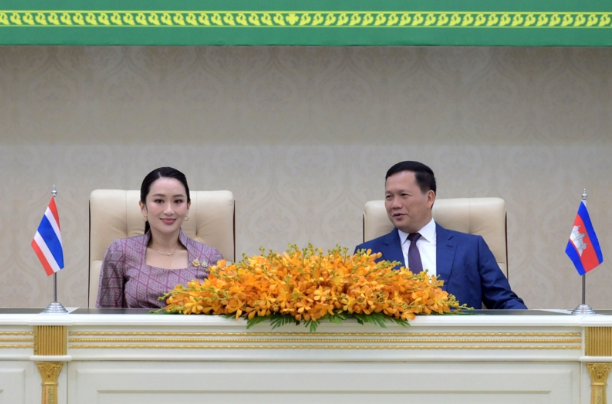
Then-Prime Minister Ms. Paetongtarn Shinawatra and Samdech Moha Borvorn Thipadei Hun Manet, the Prime Minister of the Kingdom of Cambodia, stood as witnesses to the signing of seven Memorandums of Understanding (MOUs) on April 23, 2025.
The signing ceremony video
Pheu Thai Party Deputy Spokesperson confirms video content is distorted
Phayu Nuengjamnong, Deputy Spokesperson for the Pheu Thai Party, posted a clarification regarding the matter. The statement reads:
Clarification: Regarding the online allegations claiming that former Prime Minister Paetongtarn Shinawatra disproportionately conceded national interests to Cambodia through the signing of seven MOUs, such claims are entirely unfounded. The signing of these agreements was intended to strengthen bilateral ties and mutual understanding, while significantly enhancing the trade value between the two nations by optimizing human resources and logistics efficiency.
The content of these Memorandums of Understanding (MOUs) is categorized into the following topics:
1st MOU: Memorandum regarding the Ownership, Operation, and Maintenance of the Thai–Cambodian Friendship Bridge (Ban Nong Ian–Stung Bot).
2nd MOU: Memorandum on Cooperation and Transboundary Pollution Solutions between the Ministries of Environment of both nations.
3rd MOU: Exchange of Letters to amend the essential substance of the Agreement on the Establishment of the Thai-Cambodian Labor Skills Development Center.
4th MOU: Memorandum on Cooperation regarding the Employment of Workers between the Government of Thailand and the Government of Cambodia.
5th MOU: Memorandum of Understanding on Legal Labor Employment and Practices.
6th MOU: Memorandum on Technical Assistance Consultation for the Highway Design of the Improvement Projects for Highway No. 57 and Highway No. 5.
7th MOU: Agreement between the Government of Thailand and the Government of Cambodia on the Construction of a New Border Bridge at the Ban Pakkad Permanent Border Checkpoint, Pong Nam Ron district, Chanthaburi province.
At the time of signing, these agreements were established within the context of mutual cooperation for the benefit of both nations during a period of peace. However, should circumstances transition into a state of conflict or war, these MOUs may be suspended or terminated. Unlike permanent binding treaties, an MOU is a non-binding instrument that can be adjusted or revoked to align with the prevailing situation.
Therefore, it is incorrect to characterize these actions as ‘serving’ Cambodia’s interests based on past agreements, as suggested by recent misinterpretations. It is important to emphasize that, at the time of signing, the full details and contents of these MOUs were disclosed to the public with complete transparency. Furthermore, no objections were raised regarding any potential Undermining of national interest during those negotiations.”
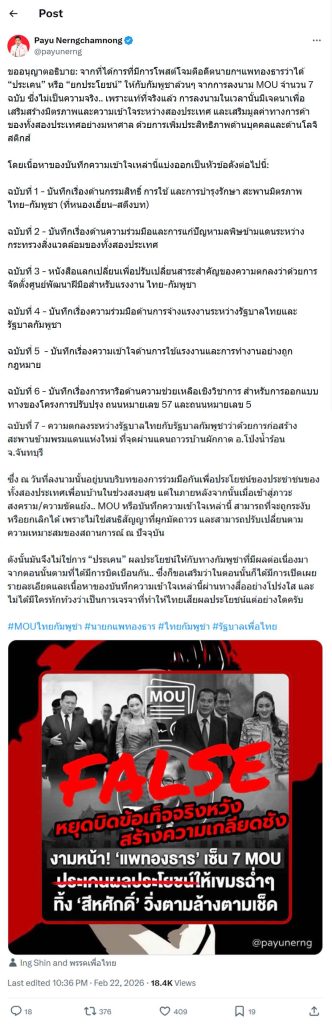
Mr. Phayu Nuengjamnong, Deputy Spokesperson for the Pheu Thai Party, posted a clarification confirming that all the MOUs focus on trade, human resource efficiency, and logistics. They have no connection to medical treatment for Cambodian soldiers or providing educational scholarships to Cambodian children.
Does the 800-million-baht educational aid for Cambodian children really exist?
Based on our keyword search, no budgetary allocation of 800 million baht specifically for free education for Cambodian youth was found in the fiscal plans of either the current or previous administrations.
The team was only able to identify the budget of the Thailand International Cooperation Agency (TICA), under the Ministry of Foreign Affairs. This agency oversees academic and developmental cooperation with neighboring countries. Under this framework, expenditures are allocated for expert speaker fees, training venue costs within Thailand, or infrastructure projects in recipient countries. Funds are not transferred as direct cash grants for foreign governments to manage independently, which is standard international practice.
Furthermore, these limited funds are distributed across multiple nations (CLMV countries). In 2025, the total utilized budget amounted to 625,267,160 baht, which is significantly lower than the alleged 800 million baht and is not exclusively dedicated to a single group in Cambodia.
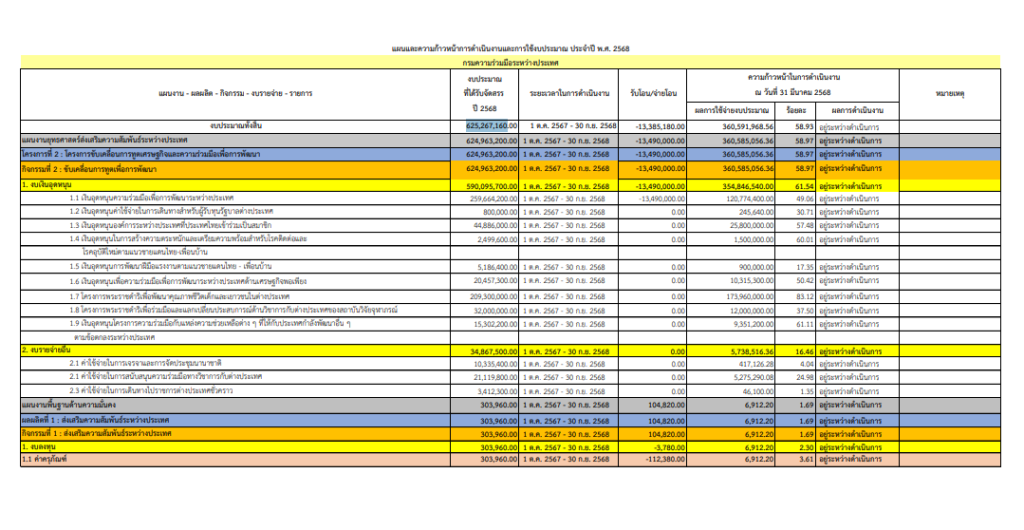
Operational Plan, Progress Report, and Budget Expenditure for Fiscal Year 2025, Thailand International Cooperation Agency (TICA), Ministry of Foreign Affairs
When did the provision of educational and medical assistance begin?
The ‘Education for All’ (EFA) policy is the core framework regarding the education provided by Thailand to migrant or stateless children, including Cambodians. The inception and development of this policy can be divided into two key periods:
- International origin (1990)
The policy officially and globally originated in Thailand during the “World Conference on Education for All” held in Jomtien, Pattaya, in 1990, under the government of General Chatichai Choonhavan. This conference led to the adoption of the “Jomtien Declaration,” in which Thailand and countries worldwide pledged to provide universal and equitable basic education to all people (children, youth, and adults).
- The legal milestone for “everyone” in Thailand (2005)
The starting point for the policy allowing “migrant or stateless children” to attend Thai schools free of charge was established by the Cabinet Resolution on July 5, 2005, during the administration of then-Prime Minister Thaksin Shinawatra. The Cabinet approved a resolution for educational institutions to provide education to individuals without civil registration documents or Thai nationality. Under this mandate, the government provides per-capita budget support equal to that of Thai children. This resolution is the core pillar that has made Thailand a leader in ASEAN for inclusive education (Education for All), regardless of a student’s legal status.
However, the ‘Education for All’ policy is not about ‘handing out money’ to foreign countries. Instead, it represents Thailand’s commitment to providing education to every child living in the Thai territory. Such empowerment facilitates long-term self-sufficiency, ensuring that individuals do not become a societal burden or a source of social instability in the future.
Meanwhile, the provision of ‘Medical Assistance’ for non-Thai nationals or those with legal status issues originated during two key periods, as follows:
- In 2010, during the administration of Prime Minister Abhisit Vejjajiva, the Cabinet passed a resolution on March 23, 2010, to establish the ‘Healthcare Assistance Fund for Individuals with Legal Status and Rights Issues.’ This was intended to grant healthcare rights to individuals assigned a 13-digit identification number (specifically those awaiting nationality verification or long-term residents). This fund provides them with basic healthcare benefits equivalent to the ‘Gold Card’ (Universal Coverage Scheme) enjoyed by Thai citizens.
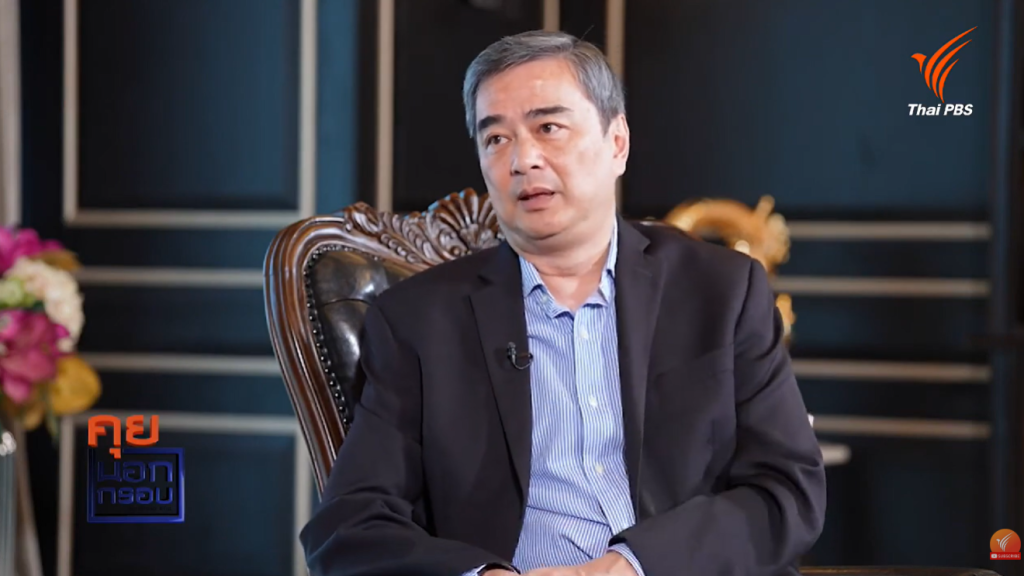
Mr. Abhisit Vejjajiva, former Prime Minister
- Between 2013 and 2015, the subsequent administration under then-Prime Minister Yingluck Shinawatra expanded the policy to cover migrant workers and their dependents (including migrant children) through the ‘Migrant Health Insurance’ scheme. This expansion was based on the principle that ‘everyone on Thai Territory must have access to healthcare’ to prevent the spread of infectious diseases. This approach directly benefits the overall public health security of Thai people.
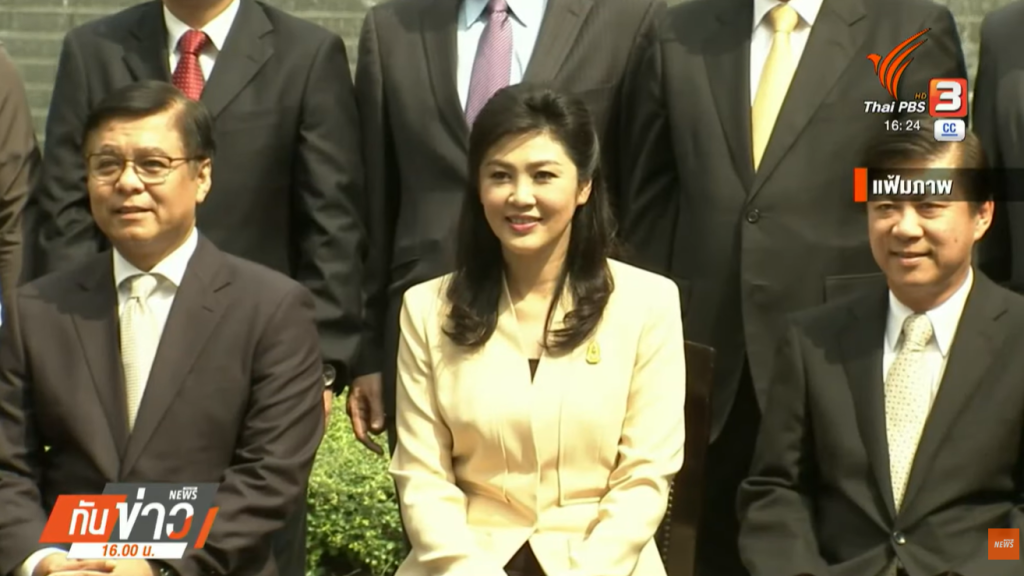
Ms. Yingluck Shinawatra, while serving as Prime Minister in 2013
What is the difference between ‘Free Education Rights’ and ‘Healthcare Rights’?
While both policies are rooted in humanitarian principles, they involve distinct administrative nuances—a divergence that is frequently exploited and misrepresented.
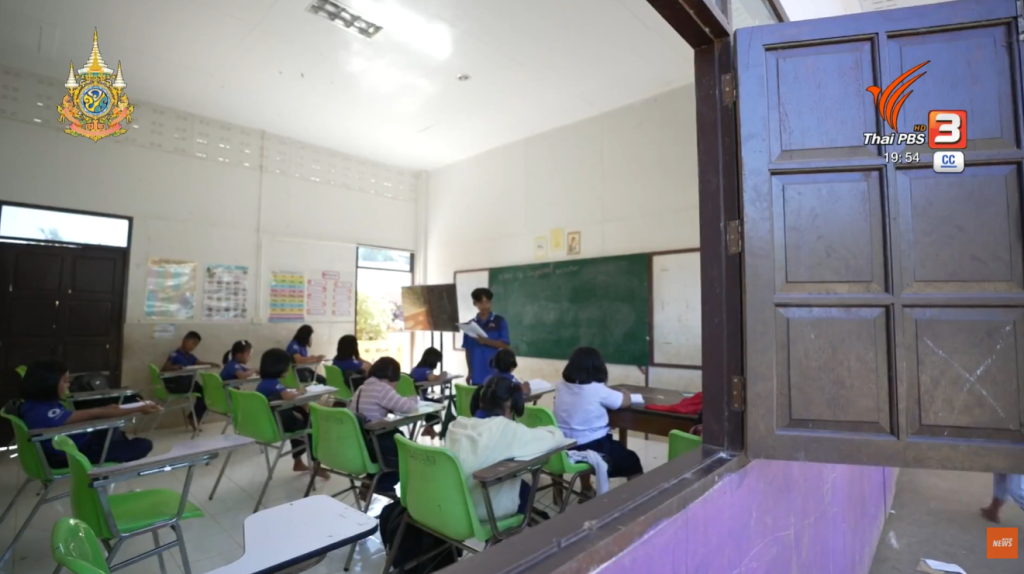
- Education (free for all): The government provides direct per-capita funding to schools to guarantee that every child residing in Thailand, regardless of nationality, receives an education. By doing so, the state seeks to foster social integration and prevent the emergence of systemic social issues or criminal involvement in the long term.
- Healthcare (targeted assistance): Access to these services is not universal. For individuals with unresolved legal status—including those born in Thailand or long-term residents undergoing nationality verification—the government allocates dedicated funding through a specialized health fund to ensure access to essential medical services.
- Migrant labor and minor dependents: Enrollment in health insurance for migrant workers and their children is compulsory and self-funded. This is an individual financial responsibility rather than a state-funded benefit, refuting claims that such healthcare costs are borne by the Thai taxpaying public. By mandating these health insurance purchases, the state ensures that border hospitals maintain fiscal stability. This mechanism prevents these institutions from bearing the financial burden of bad debt resulting from their commitment to humanitarian treatment.
What is the truth?
The seven MOUs executed on April 23, 2025, focus primarily on bilateral cooperation in infrastructure, environmental protection (PM 2.5), and human resource development. It is formally clarified that none of the signed documents include agreements regarding free healthcare for Cambodian soldiers or the disbursement of 800 million baht in educational grants.
Concerning the 800-million-baht aid budget, an examination of the national budget reveals no specific allocation of this magnitude for Cambodia. The nearest equivalent is the FY2025 TICA budget of 625 million baht, which is dedicated to regional technical cooperation (specifically CLMV countries) rather than direct financial transfers to foreign administrations.
Regarding healthcare and education, existing measures serve as a sovereign mandate to oversee individuals residing within Thailand. This is a strategic effort to safeguard public health and communal stability against epidemics and crime, not a concessional agreement to grant rights to outsiders as alleged.
Verification Process
Thai PBS Verify has implemented the following verification procedures:
Official document verification: A keyword-based search of the titles and provisions of the seven Memoranda of Understanding (MOUs) signed under the Paetongtarn Shinawatra administration reveals that the claims presented in the video are entirely inconsistent with the actual contents of the documents.
Governmental budget audit: Reviewing the allocations of the Ministry of Foreign Affairs and TICA confirms that the claimed 800-million-baht budget is erroneous. The funds are structured specifically for technical cooperation projects, which do not constitute the direct distribution of free scholarships as alleged.
Verification of historical cabinet mandates: Tracing the Cabinet Resolutions from 2005 (regarding education) and 2010/2013 (regarding public health) reveals that their primary objective is the management of internal Thai affairs. These policies do not involve any diplomatic compromise or ‘disadvantageous agreements’ as claimed in the clip.
Impacts of disinformation
Provocation of domestic discord and ultranationalist sentiment: Misleading claims regarding significant diplomatic losses to neighboring states serve to trigger nationalistic anger and cultivate international hostility.
Undermining the credibility of targeted political entities: Defamatory allegations based on misinformation lead to public misunderstanding. Such actions unfairly prejudice the parties involved by precluding an immediate opportunity for factual rebuttal.
Distortion of fiscal allocations: Misleading information regarding the use of tax revenue incites public dissatisfaction and undue alarm concerning budgetary administration, predicated upon inaccurate factual grounds.
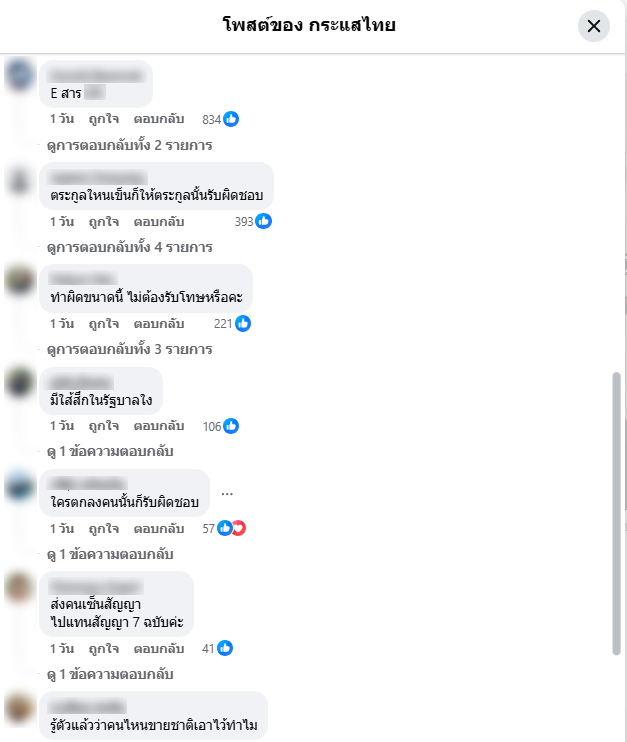
Evidence of public sentiment: Screenshots reveal a prevailing public belief in the veracity of the misleading information.
What to do with this misinformation?
Avoid premature acceptance of unverified allegations: In instances involving extraordinary financial figures—such as the cited 800-million-baht budget, which represents an atypically high allocation—or claims of irregular contractual concessions, it is imperative to utilize keyword searches to cross-reference the data with established journalistic institutions and official records.
Observe emotional triggers: Fraudulent content often utilizes sensationalist rhetoric designed to provoke public outrage. Terms like handing over on a ‘silver platter,’ ‘utterly corrupt,’ or ‘national betrayal’ are strategically used to prioritize emotional reactivity over objective reasoning.
Assessment of information sources: Social media entities that propagate political grievances lacking credible evidentiary support often serve as origins for distorted narratives and unverified content.
Consultation with official agencies: For verified data and official clarifications, refer directly to the digital archives of the Public Relations Department (PRD) or the Ministry of Foreign Affairs (MFA).
Translation edited by: Peerachai Pasutan

Related Content