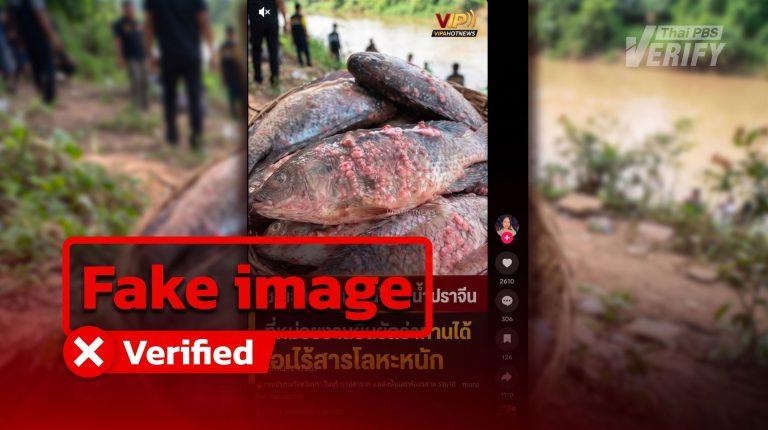
Thai PBS Verify debunks viral TikTok of diseased Prachin Buri fish
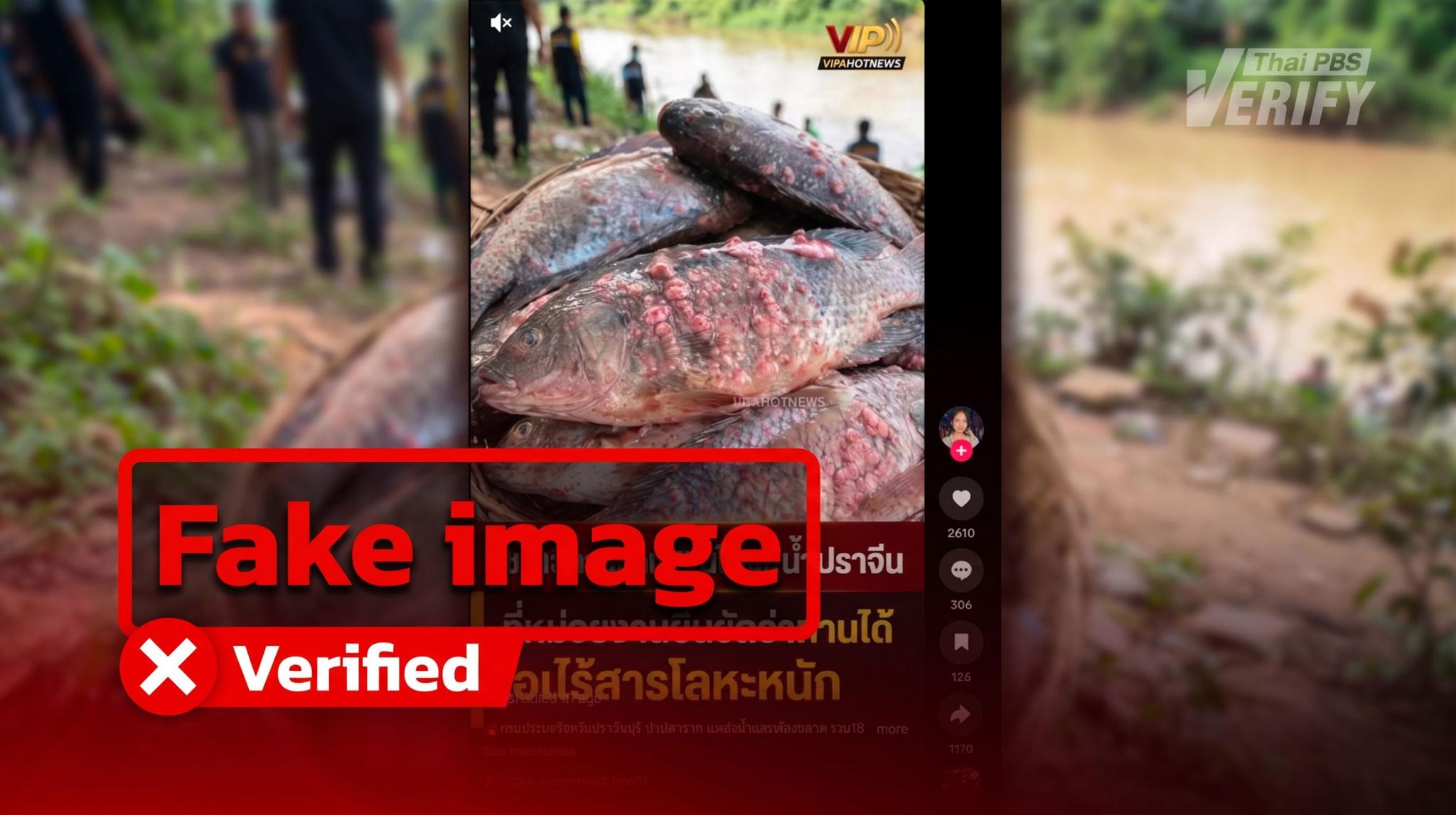
Thai PBS Verify found this fake image on TikTok
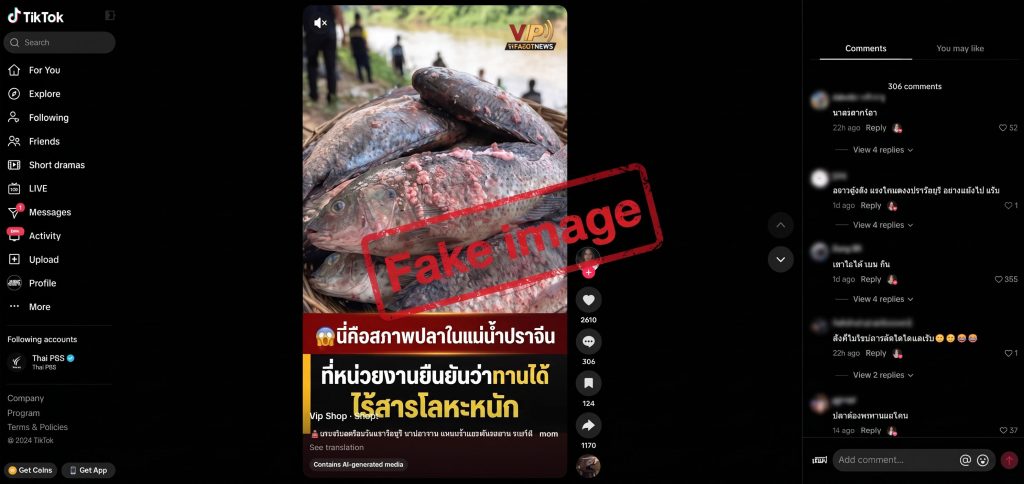
Investigators found that a TikTok account named “vip Shop” posted an image of a fish with abnormally swollen, red skin alongside text claiming it showed the true condition of fish in the Prachin Buri River, located east of Bangkok, despite official assurances that the water is free of heavy metals. The video’s caption read as follows.
🚨The Prachin Buri Provincial Fisheries Office collected 18 types of fish from local waterways and markets for testing.
📌Lab results showed no heavy metals, including mercury, lead, and cadmium, exceeding safety limits set by the Ministry of Public Health, confirming the fish are safe to eat.
“The condition of the fish and the lab results are totally contradictory,” the post added, crediting the report to VIPAHOTNEWS.
Published on Nov 23, 2026, the clip quickly racked up more than 88,000 views and 1,170 shares, with most viewers believing the disturbing image was real.
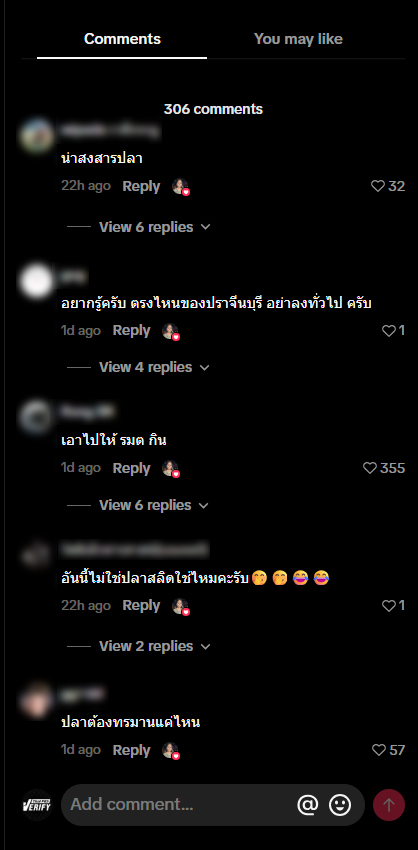
Viewer comments on the viral clip.
Is the Prachin Buri River fish image real?
A closer look at the clip reveals a built-in “AI-generated content” label, which TikTok uses to notify viewers that a video, photo, or audio track was created or altered with artificial intelligence to promote transparency and prevent misunderstandings.
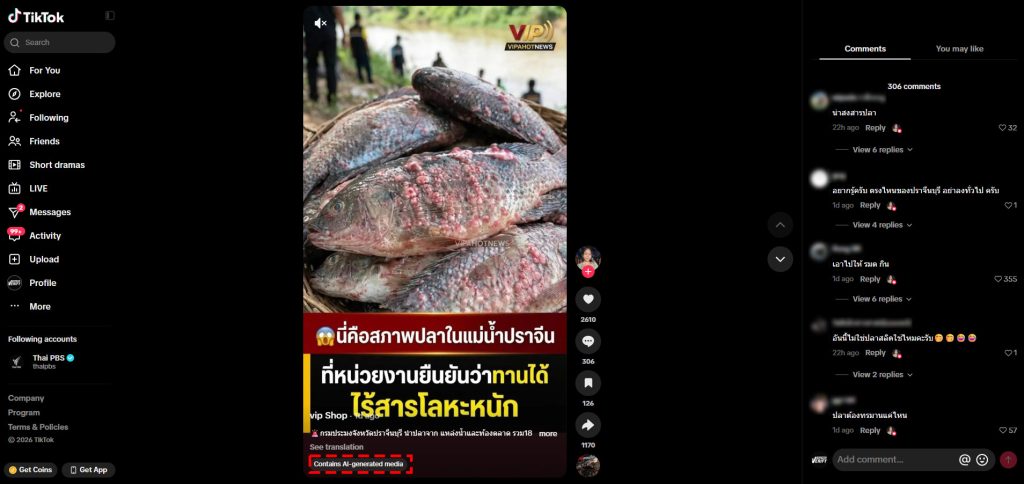
The platform displays a label alerting viewers that the content was created or edited with AI.
Thai PBS Verify also ran the image through Google’s SynthID, a tool designed to detect invisible digital watermarks in AI-generated media. The scan confirmed the image was created using Google AI.
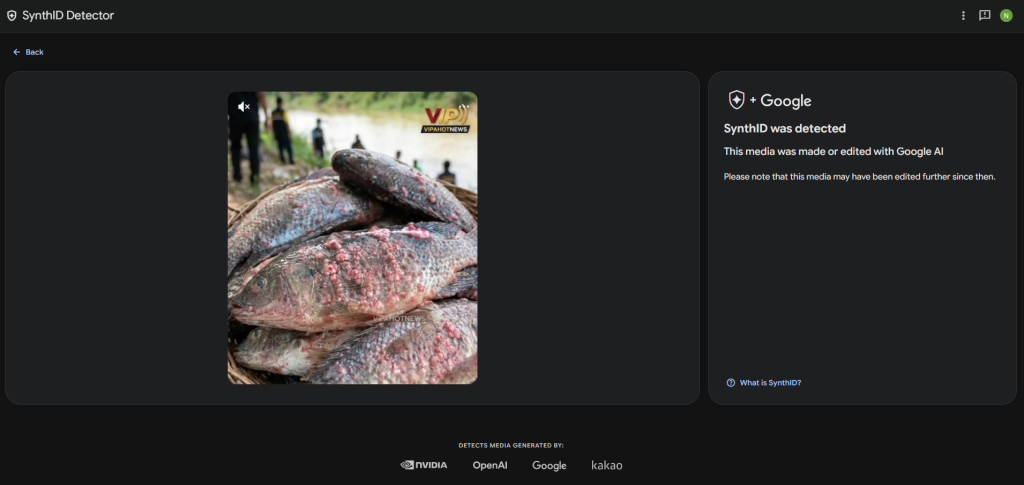
Google’s SynthID analysis confirms the image was generated by AI.
Are the fish really sick from heavy metals?
Assistant Professor Sahaphop Dokkaew, deputy head of the Department of Aquaculture at the Faculty of Fisheries, Kasetsart University, explained that the fish pictured in the clip is a Nile tilapia. He stated that the unnatural skin lesions shown have never been documented in any fish disease, strongly indicating the image is purely a product of AI.
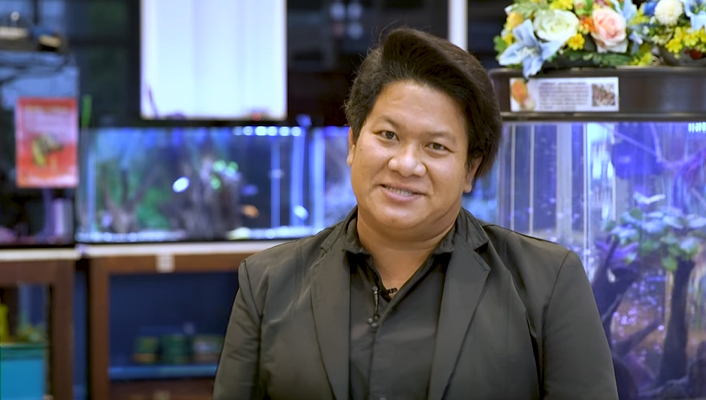
Assistant Professor Sahaphop Dokkaew, deputy head of the Department of Aquaculture at Kasetsart University.
Prachin Buri fisheries officials confirm 18 fish samples are safe
ผลการตรวจดังกล่าวเป็นข้อมูลจากการเก็บตัวอย่างในช่วงวันที่ 4–7 พฤศจิกายน 2569 (ช่วงเวลาเดียวกัน จากต้นน้ำ กลางน้ำ และปลายน้ำ จากกบินทร์บุรี ถึงบ้านสร้างและฉะเชิงเทรา)
A keyword search turned up an official report on the Prachin Buri Provincial Public Relations Office Facebook page showing real Nile tilapia alongside lab findings from the Department of Fisheries’ Inland Fisheries Research and Development Division. Officials collected 18 aquatic animal samples in Prachin Buri province between Nov 4 and 7, 2026, consisting of nine samples from local markets and vendors and nine from natural habitats in the Prachin Buri River.
Testing for three heavy metals, mercury, cadmium, and lead, showed that all 18 samples fell well below the maximum contamination limits established by the Ministry of Public Health.
The samples were collected during the same Nov 4 to 7 period across upstream, midstream, and downstream sections of the river, stretching from Kabin Buri district to Ban Sang district and neighboring Chachoengsao province.
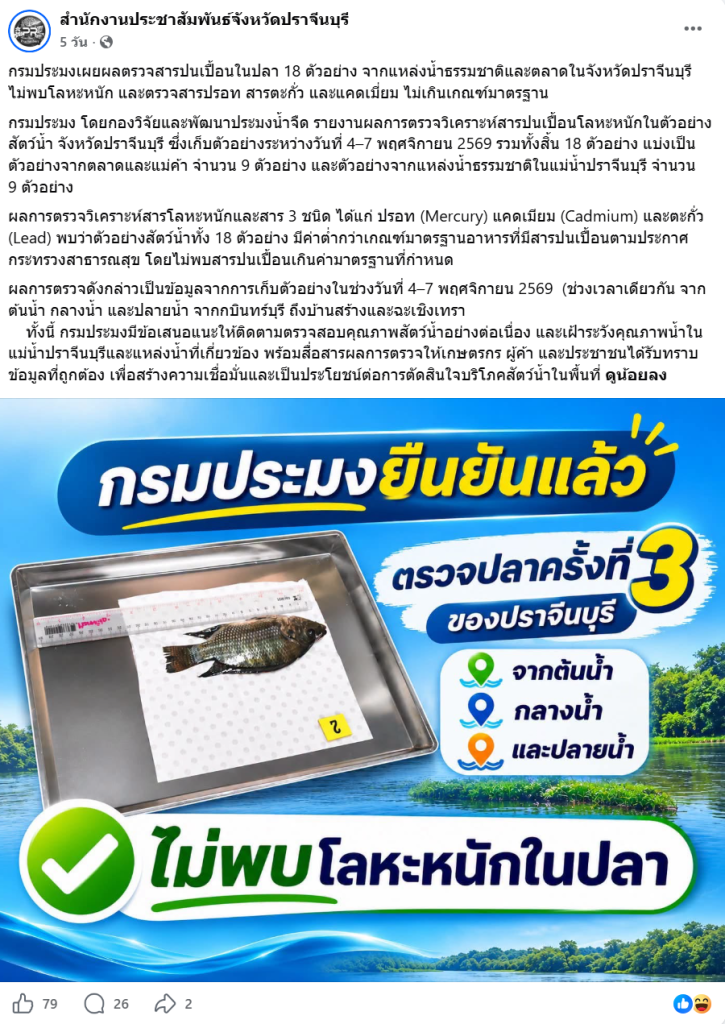
Official lab results for heavy metal contamination in aquatic animal samples from Prachin Buri province.
What is the truth?
Regarding the Nov 23 post by TikTok user “vip Shop” that garnered over 88,000 views and 1,170 shares by claiming the deformed fish contradicted government safety tests, the reality is that the image is an AI fabrication and not a real fish from the Prachin Buri River. The verified facts break down as follows.
- The image was synthesized with Google AI. The original TikTok video carries a clear “AI-generated content” tag, and a digital watermark check using Google’s SynthID tool confirmed it was produced by Google AI.
- An expert confirmed the skin condition does not exist in nature. Assistant Professor Sahaphop Dokkaew of Kasetsart University identified the fish as a Nile tilapia and stated that such skin lesions have never been seen in real fish diseases, pointing directly to AI generation.
- Government lab tests on 18 fish samples are legitimate. Data from the Prachin Buri Provincial Public Relations Office confirms that the Department of Fisheries tested 18 samples from local markets and the length of the Prachin Buri River between Nov 4 and 7, 2026. All samples tested below Ministry of Public Health limits for mercury, cadmium, and lead, making them safe for consumption.
Verification Process
- Checking the platform AI label. Reviewing the original TikTok post revealed an explicit “AI-generated content” tag warning viewers that the media was artificially created or modified.
- Scanning for digital watermarks with SynthID. Analyzing the image through Google’s SynthID tool detected an invisible watermark confirming it was generated by Google AI.
- Consulting a fisheries academic. An interview with Assistant Professor Sahaphop Dokkaew at Kasetsart University confirmed that the unnatural red, swollen skin on the tilapia does not match any known fish disease.
- Cross-checking official government reports. Reviewing announcements from the Prachin Buri Provincial Public Relations Office verified the Department of Fisheries’ lab findings that 18 fish samples from local markets and the river contained safe levels of mercury, cadmium, and lead.
Impact of this misinformation
- Sparking unnecessary food safety panic. Sharing frightening AI-generated images of deformed fish creates baseless fear among consumers and discourages them from eating local seafood.
- Undermining trust in food safety agencies. Pairing a fake image with claims that official lab results are contradictory is designed to erode public confidence in scientific testing conducted by the Department of Fisheries and the Ministry of Public Health.
- Hurting local fishermen and vendors. False rumors about toxic contamination directly threaten the livelihoods of fish farmers, local fishermen, and market vendors in Prachin Buri and nearby provinces.
What to do with this misinformation?
- Look for AI labels on TikTok and social media. Platforms now place an “AI-generated content” notice in the bottom corner of clips. If you see this label, recognize immediately that the imagery is not real.
- Watch for biological anomalies in animals or food. AI-generated visuals often produce exaggerated wounds, lesions, or textures that defy basic biology.
- Verify scientific test results with official agencies. For concerns about food contamination or environmental hazards, check official updates directly from the Department of Fisheries, the Pollution Control Department, or provincial public relations offices.
- Report misleading posts. When you spot AI imagery being used to distort food safety facts and harm local livelihoods, use TikTok’s report feature to flag the post as misinformation.

Popular Content