Viral Video Showing Lion Dragging Woman Reaches 3 Million Views, Revealed to Be AI-Generated
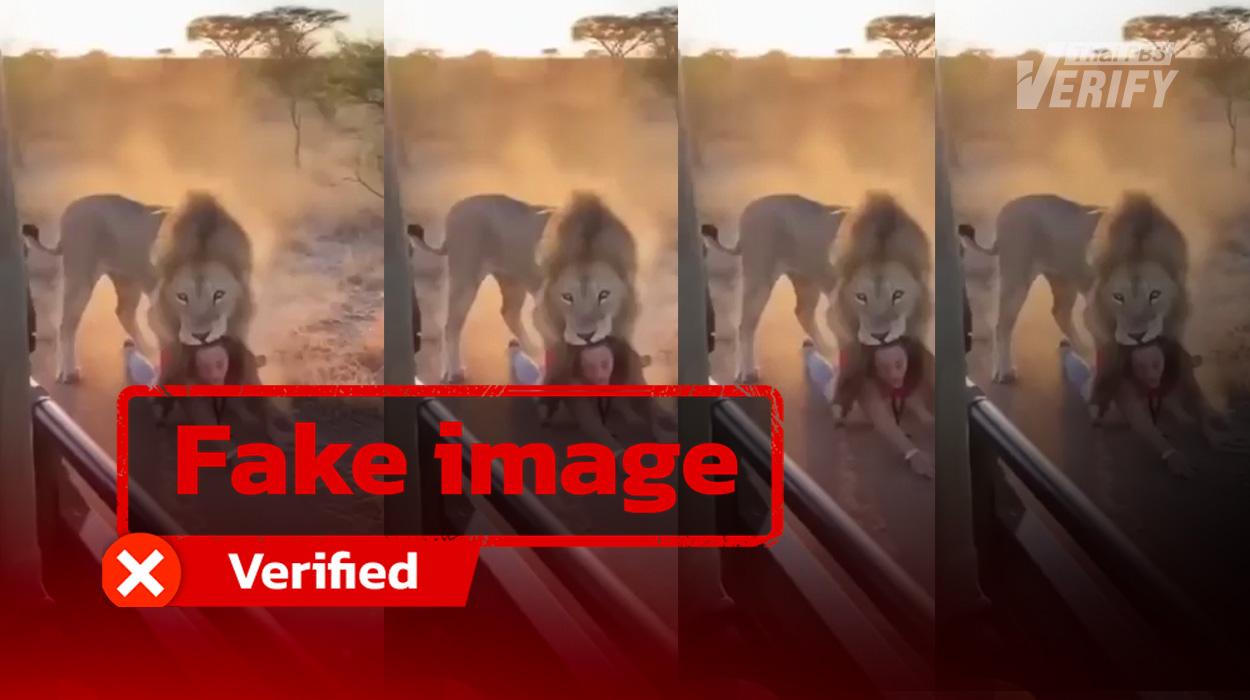
Thai PBS Verify found the fake image originating from X.
Thai PBS Verify found an X account sharing a video of a lion biting a person’s head and dragging a woman along the ground, captured from the viewpoint of a tour bus. Some commenters raised questions as to why no one attempted to help the woman in the clip.
The post has reached 3 million views, 73,000 reactions, 289 comments, and over 395 reposts. It was originally published on July 12, 2026.
Meanwhile, an investigation by Thai PBS Verify revealed that the X account, named “Brutal Clips,” was created in India in March 2025. The account primarily posts videos of accidents, violence, dramatic incidents, and shocking events from around the world.
Does the clip depict a real incident?
After testing the video with AI detection tools like Hive Moderation and FauxLens, Thai PBS Verify concluded there is a strong likelihood that the footage was created using AI.
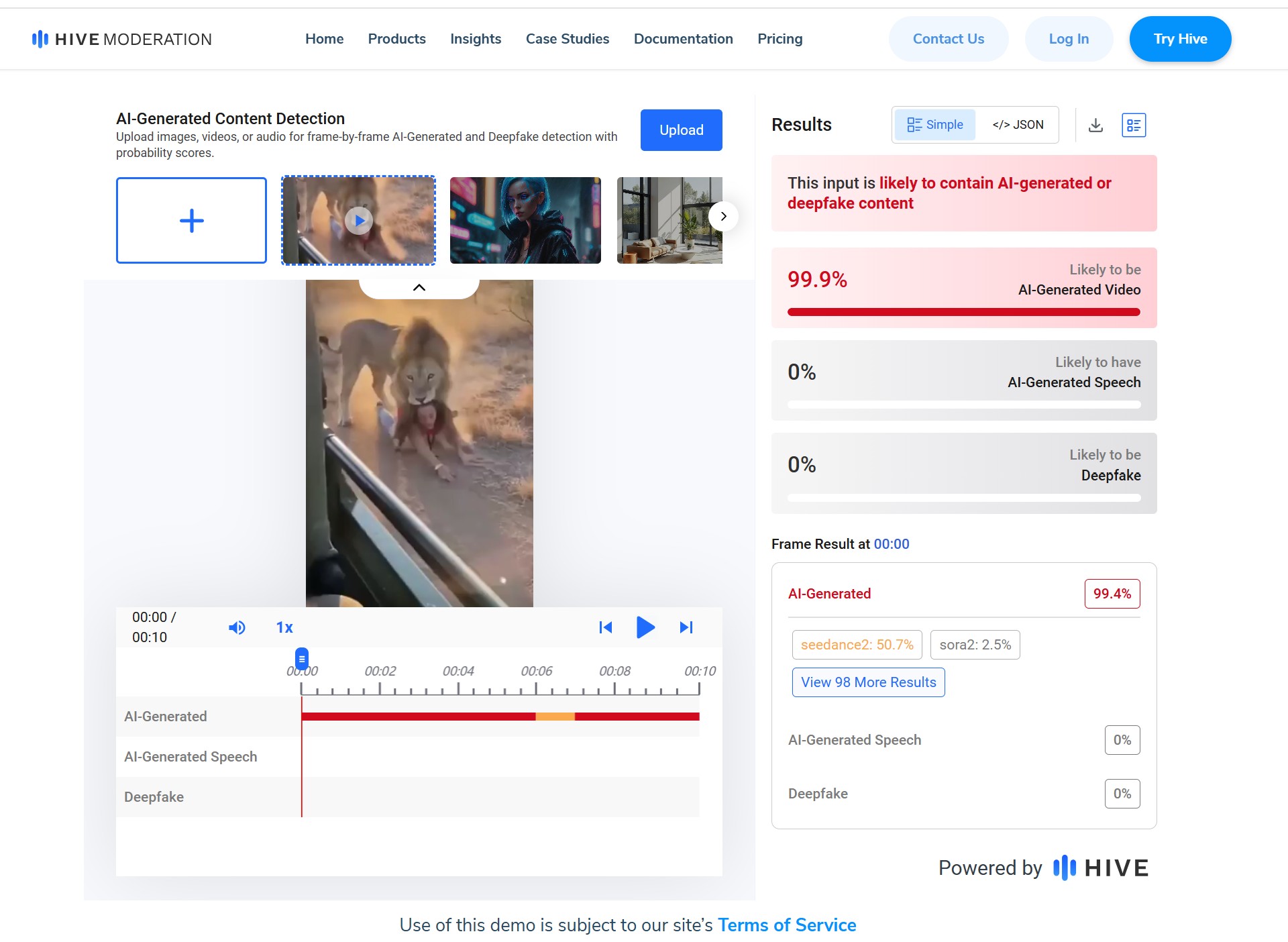
Verification Results from Hive Moderation
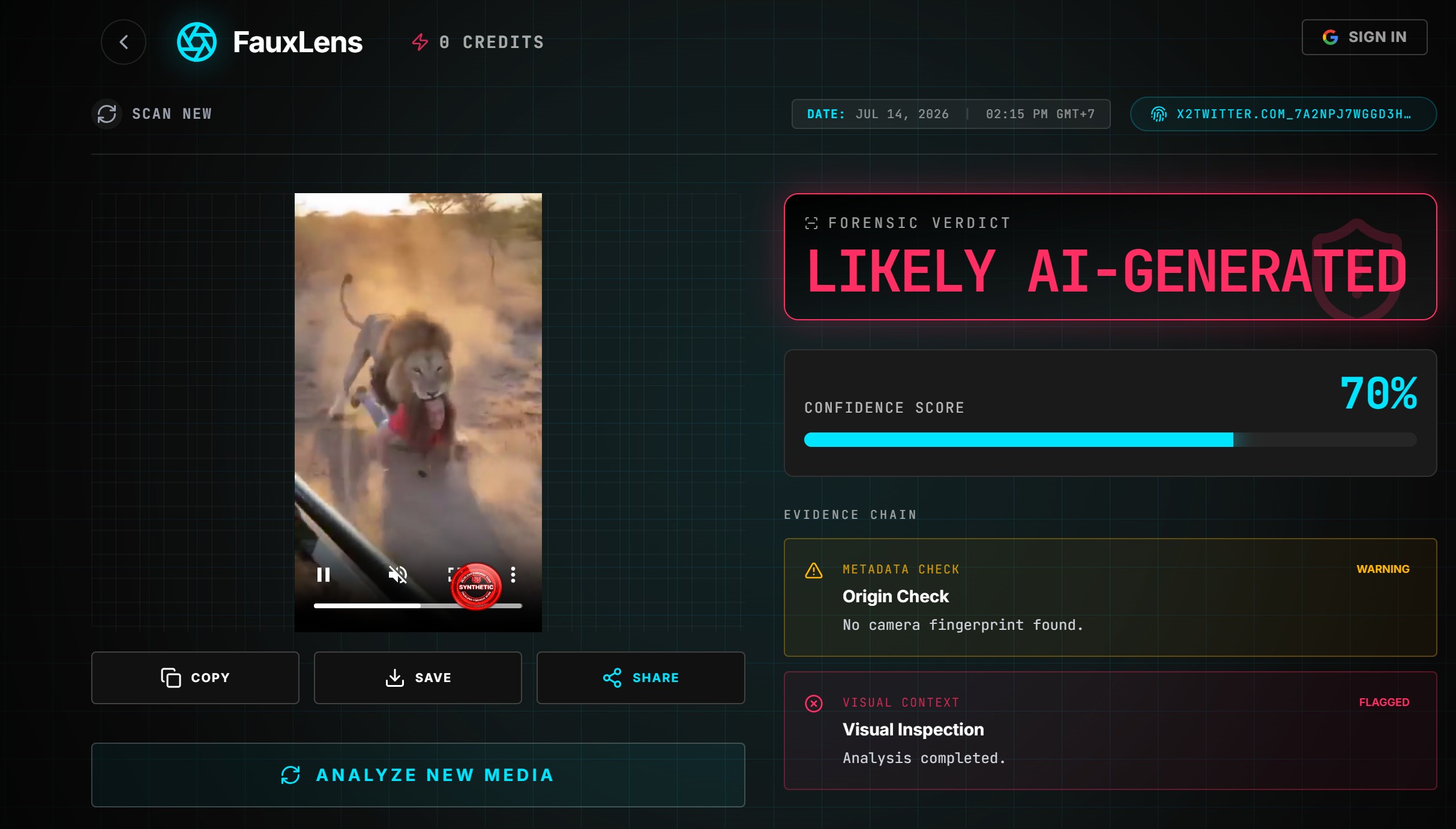
Screenshot of the verification results by FauxLens.
Experts say the lion behavior in the clip “is possible, though rarely observed in nature.
Thai PBS Verify then consulted the Foreign Wildlife Management Division, Department of National Parks, Wildlife and Plant Conservation. The division noted that lions usually hunt by biting lethal spots like the neck to kill prey rapidly via major blood vessels. If the clip were real, the behavior depicted is possible, but extremely rare in nature. (“Natural behavior” is defined as inherent species behavior, applicable to both captive and wild lions.)
Why Was This Video Posted?
Videos depicting animal attacks are often posted because they excel at garnering high engagement—views, likes, and shares—by tapping into human fear and curiosity. By leveraging AI, creators can design footage to be as dramatic or horrifying as desired, with virtually no creative constraints.
At the same time, sharing real footage of a lion attack causing injury or death is classified as graphic violence (Gore/Violence), which violates X’s (Twitter) community guidelines and carries a high risk of account suspension. Consequently, many pages have turned to AI-generated images or simulated videos to evoke that same “shock factor” while bypassing strict content regulations.
Additionally, many accounts monetize through ad revenue sharing. This enables owners to profit quickly from viral videos that succeed by triggering excitement or duping audiences into believing the footage is authentic.
What is the actual truth?
Thai PBS Verify analyzed the video using AI detection tools such as Hive Moderation and FauxLens. The analysis indicated a high probability that the clip was generated by AI technology rather than depicting an actual event.
Subsequently, Thai PBS Verify contacted the Foreign Wildlife Management Division of the Department of National Parks, Wildlife and Plant Conservation. The division explained that lions are natural predators whose hunting instinct involves targeting critical areas to ensure a rapid kill, particularly around the neck where major blood vessels are located. However, regarding the behavior shown in the clip, while theoretically possible if the incident were real, it remains unlikely to occur in a lion’s natural behavior.
Verification Process
- AI Video Detection Verification: The clip was analyzed using AI video detection tools such as Hive Moderation and FauxLens. Analysis results indicated a high probability that the video was created using AI technology rather than depicting an actual event.
- Verification with Expert Sources: Thai PBS Verify reached out to the Foreign Wildlife Management Division under the Department of National Parks, Wildlife and Plant Conservation. Experts stated that as predators, lions instinctively attack lethal areas—such as the neck, which contains major blood vessels—to ensure a swift kill. Nevertheless, analyzing the behavior in the video reveals that even if the incident were authentic, such actions are highly uncommon in terms of natural lion behavior.
The Impact of This Misinformation
- Generating Excessive Panic: Realistic clips mislead viewers into believing that violent incidents occur frequently in real life, despite the low probability. This induces unnecessary fear of wildlife and could negatively impact tourism or outdoor activities.
- Distorting Public Understanding of Wildlife: Misinformation creates misconceptions about animal behavior—such as assuming lions constantly tend to attack humans, whereas most wild animals naturally avoid human contact. This ultimately harms public attitudes and long-term wildlife conservation efforts.
- Eroding the Credibility of Real Information: When fake clips are widely shared, people may begin to doubt authentic videos or real news in the future, leading to a state of complete “information distrust.”
- Fueling Unchecked Sharing: Emotion-driven content, like fear or shock, tends to go viral quickly, causing false information to spread broadly in a short timeframe.
- Risk of Reuse in Deceptive Scenarios: This type of content can easily be modified or recycled into fake news elsewhere—such as falsely claiming it occurred in a particular country to attack its image, or simply using it to generate clicks and ad earnings.
- Eroding Public Trust in AI Technology: Although AI offers numerous benefits, its frequent misuse in creating deceptive content can lead society to view the technology negatively and foster widespread distrust toward digital media as a whole.
What to do with this misinformation?
- Pause and Reflect Before Sharing: When encountering content that sparks intense emotional reactions like alarm, fear, or outrage, take a moment to stay calm. Posts of this nature are deliberately crafted to entice quick, impulsive sharing.
- Check the Source Credibility: Investigate the identity and trustworthiness of the posting account, distinguishing between established news organizations and ordinary users. Additionally, verify whether legitimate news outlets have covered the story.
- Use Verification Tools: Perform a reverse image or video search, or utilize AI detection tools such as InVID, Google Lens, or deepfake verification platforms.
- Spot Content Irregularities: AI-generated clips frequently feature anomalies like unrealistic movement, unnatural light and shadow, blurry details, or behaviors inconsistent with real life.
- Verify Against Academic or Expert Sources: For wildlife cases, reference official agencies or experts. Although some occurrences are technically “possible,” the chances of them actually taking place in reality are remarkably low.
- Verify the Date, Time, and Context: Some clips may be old or taken out of context. It is important to check when the video actually occurred and whether it aligns with the claims being made.