Shooting of Ranger in Narathiwat: AI-Generated Image Found to Enhance CCTV Footage, Making It Impossible to Determine Whether the “Tattoo” Is Real
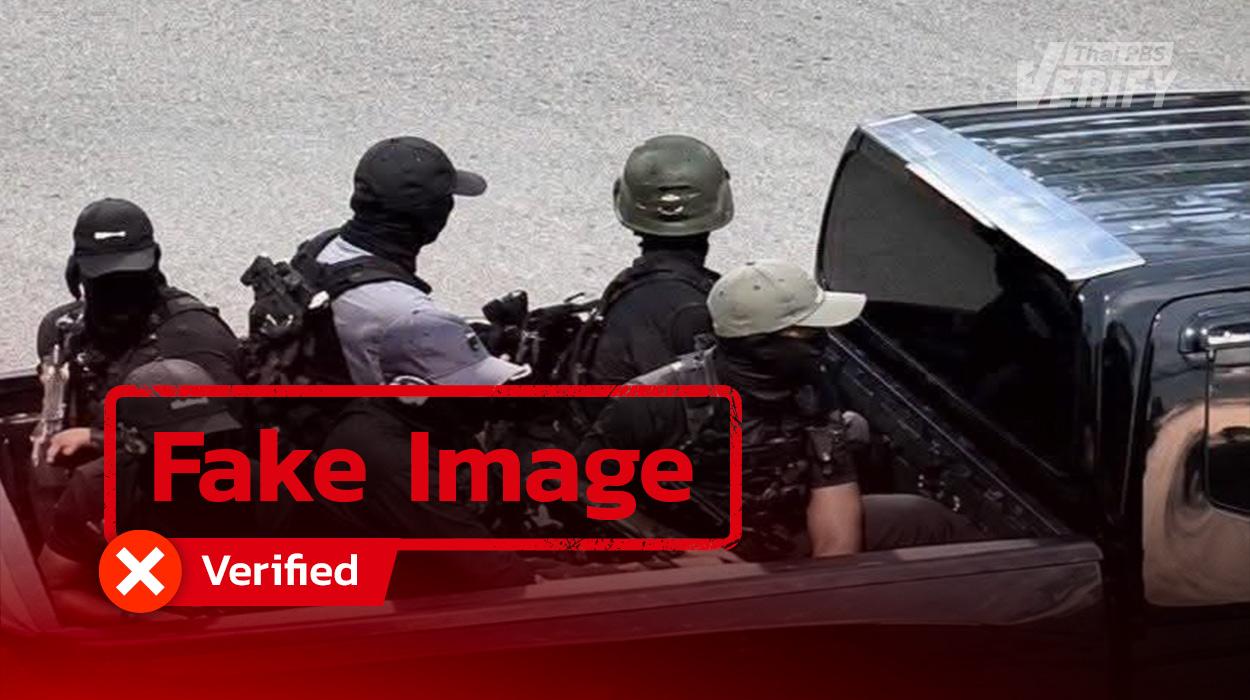
Thai PBS Verify found the source of the fake image: Facebook
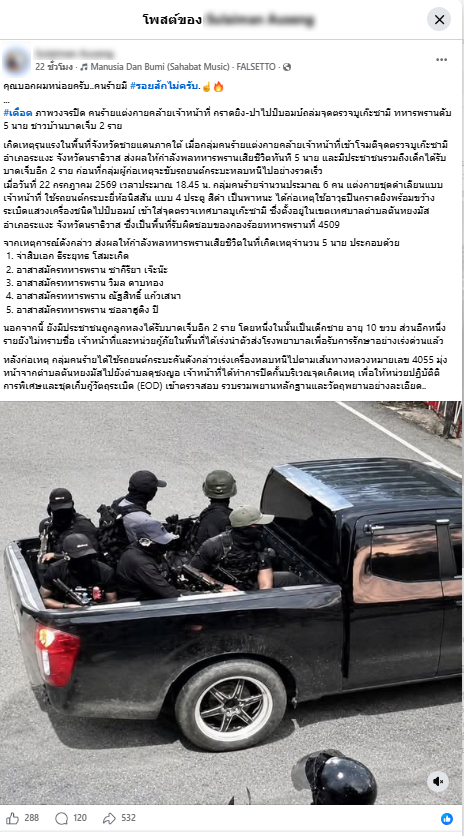
Posting Image of Suspect in Shooting of Ranger, Raising Question of Whether He Has a Tattoo
Posting Image of Suspect in Shooting of Ranger, Raising Question of Whether He Has a Tattoo
Thai PBS Verify examined a post by a Facebook user after the user posted an image related to an incident in which a suspect fired a gun and threw a pipe bomb at rangers at the Buket Sami checkpoint in the Tan Yong Mat Subdistrict Municipality area, Rangae District, Narathiwat Province, while they were on duty providing security for local residents on the evening of July 22, 2026. The attack resulted in the deaths of five soldiers from the 45th Ranger Regiment Task Force. The post stated:
Could you tell me… Does the suspect have a #tattoo or not ?☝️🔥”
The post was published on July 22, 2026, and received more than 280 reactions and was shared more than 530 times.
Is the Image Authentic ?
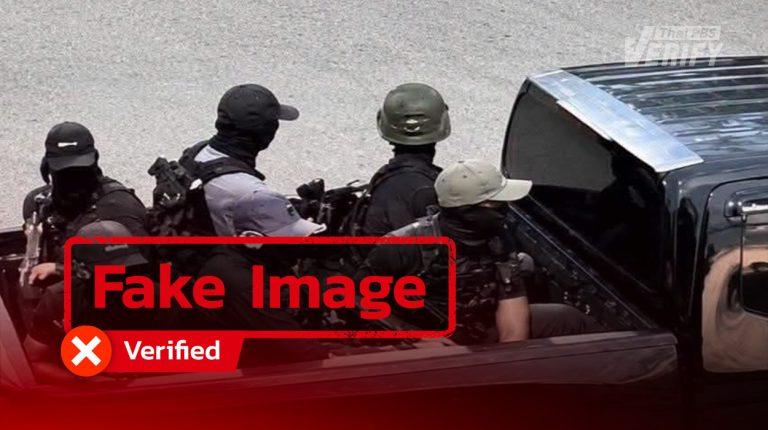
Thai PBS Verify examined the image from the post using relevant keywords and found that the original image was taken from a screenshot of CCTV footage from the incident. This can be observed from the image elements, which match exactly.
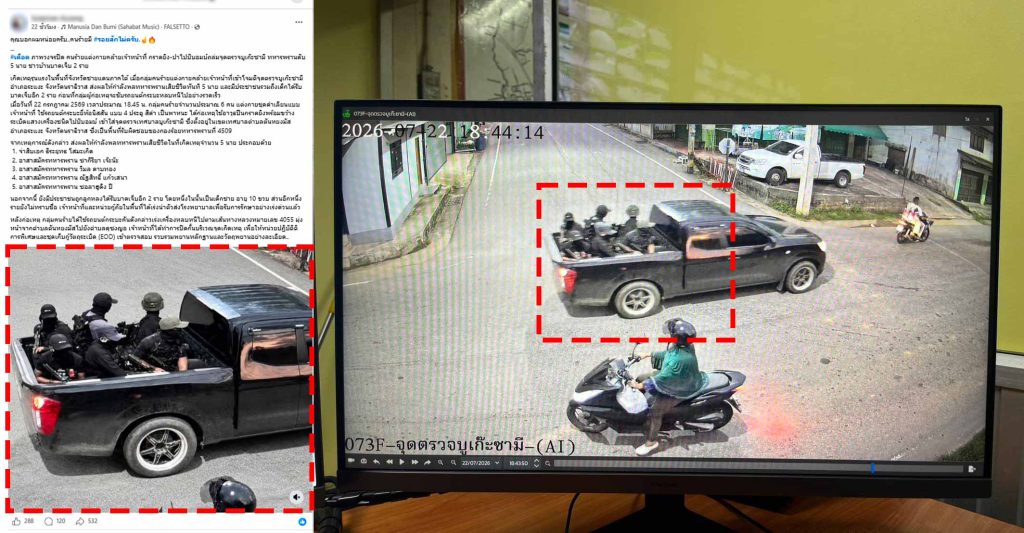
Image from the post (left) compared with CCTV footage from the scene (right)
In addition, when the image was checked using the AI image detection tool from AI or Not, the results showed a 79% likelihood that the image was AI-generated.
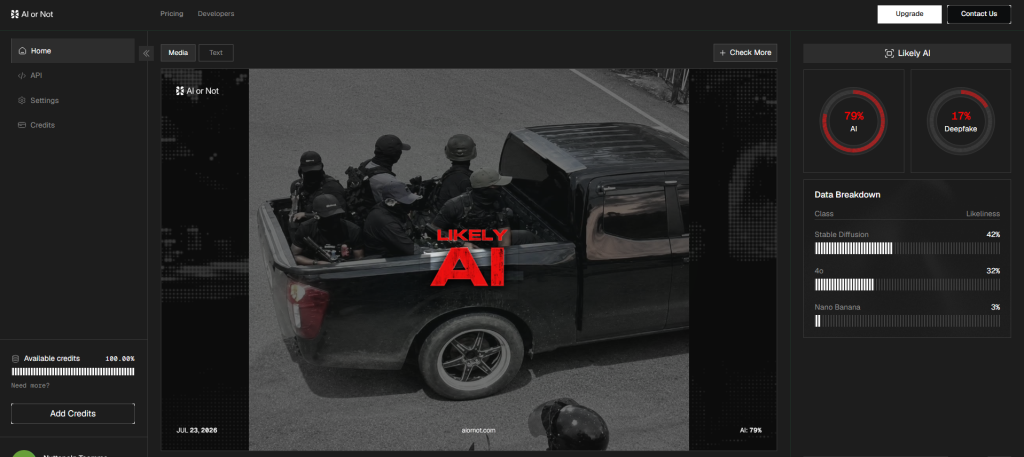
AI Image Detection Results from AI or Not
Technical Flaws Indicating That the AI-Generated Image Does Not Reflect Reality
Thai PBS Verify also found key observations indicating that AI was used to process the image by enhancing its sharpness, resulting in an “AI hallucination,” in which AI guesses and generates objects on its own. The observations include:
The gun held by the suspect does not actually exist: The firearm appearing in the suspect’s hand has a distorted shape and proportions that do not correspond to the physical structure of any type of firearm in the world.
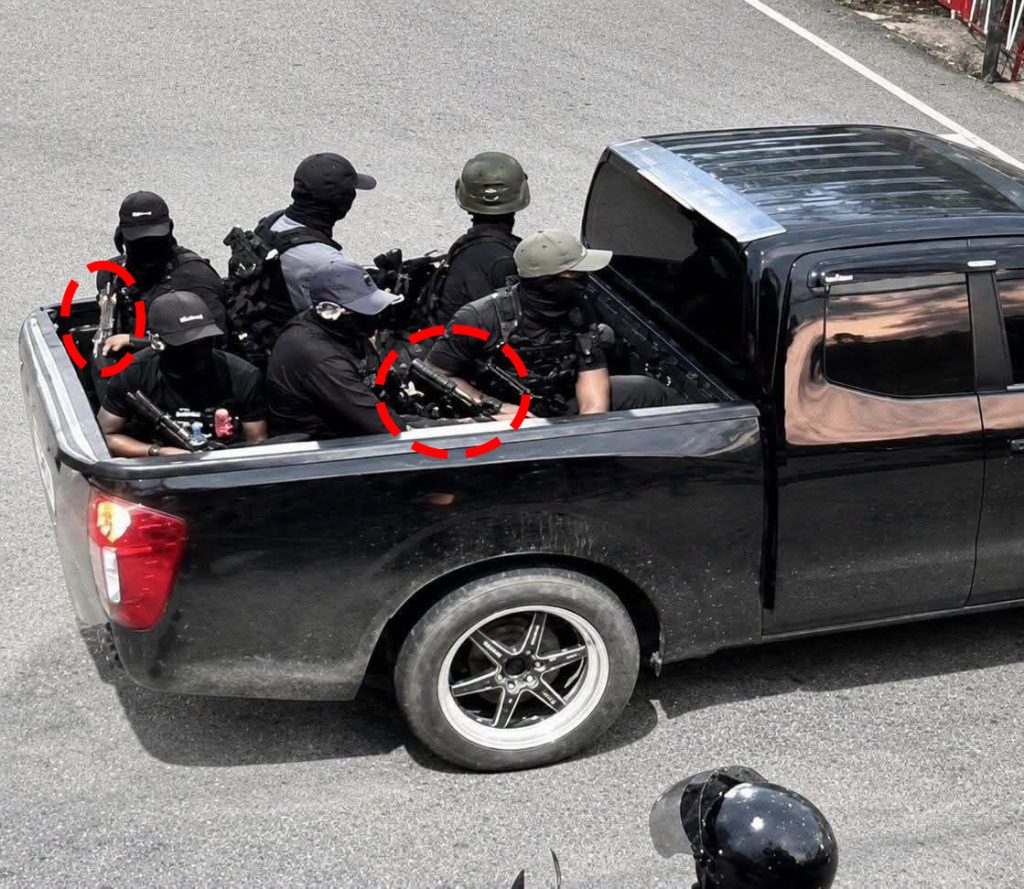
The Gun in the Image Is Distorted and Does Not Match Any Known Firearm
Strange Object Beside the Ear: The man sitting in the middle of the image appears to have a strange object attached beside his ear, which cannot be identified. This is a common behavior of AI, which often fills in shadows or blurry pixels by turning them into oddly shaped objects.
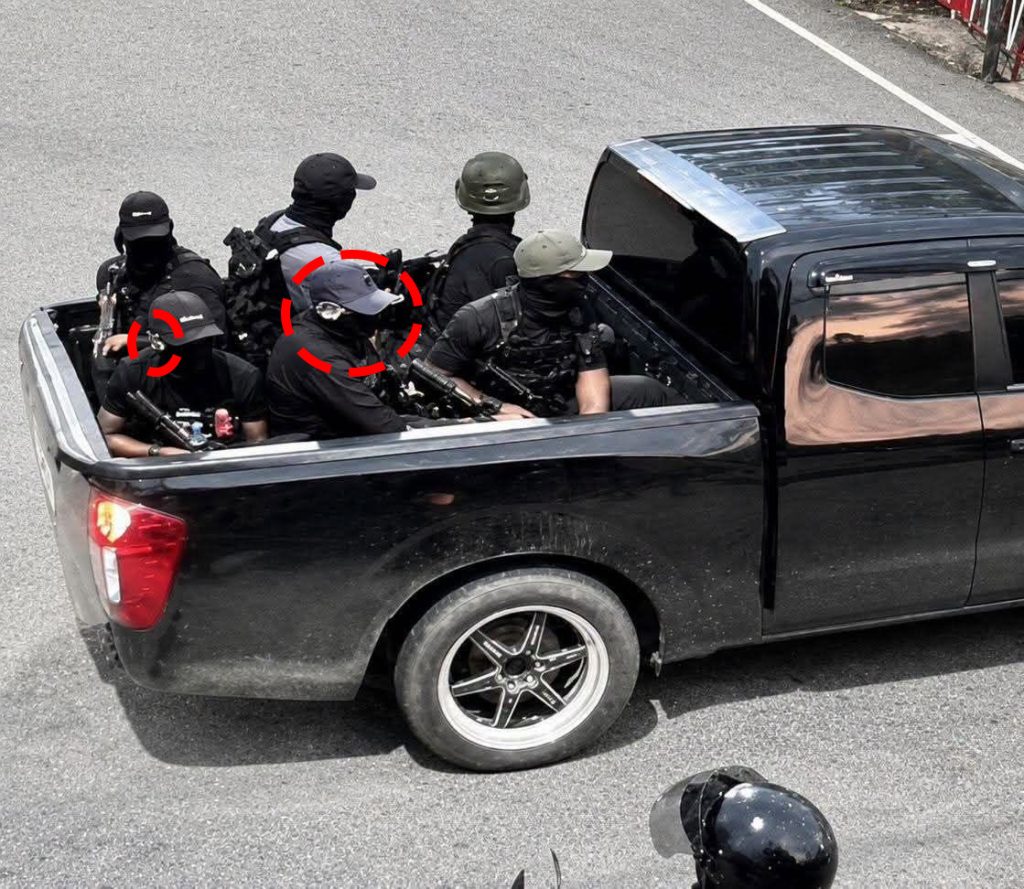
Strange Object Beside the Ear: The object beside the suspect’s ear cannot be identified.
Distorted Fingers and Weapon: The man sitting in the upper-left part of the image appears to be holding a gun that does not match a standard firearm, along with “distorted fingers,” which is often caused by AI-generated images incorrectly calculating the number and angles of fingers.
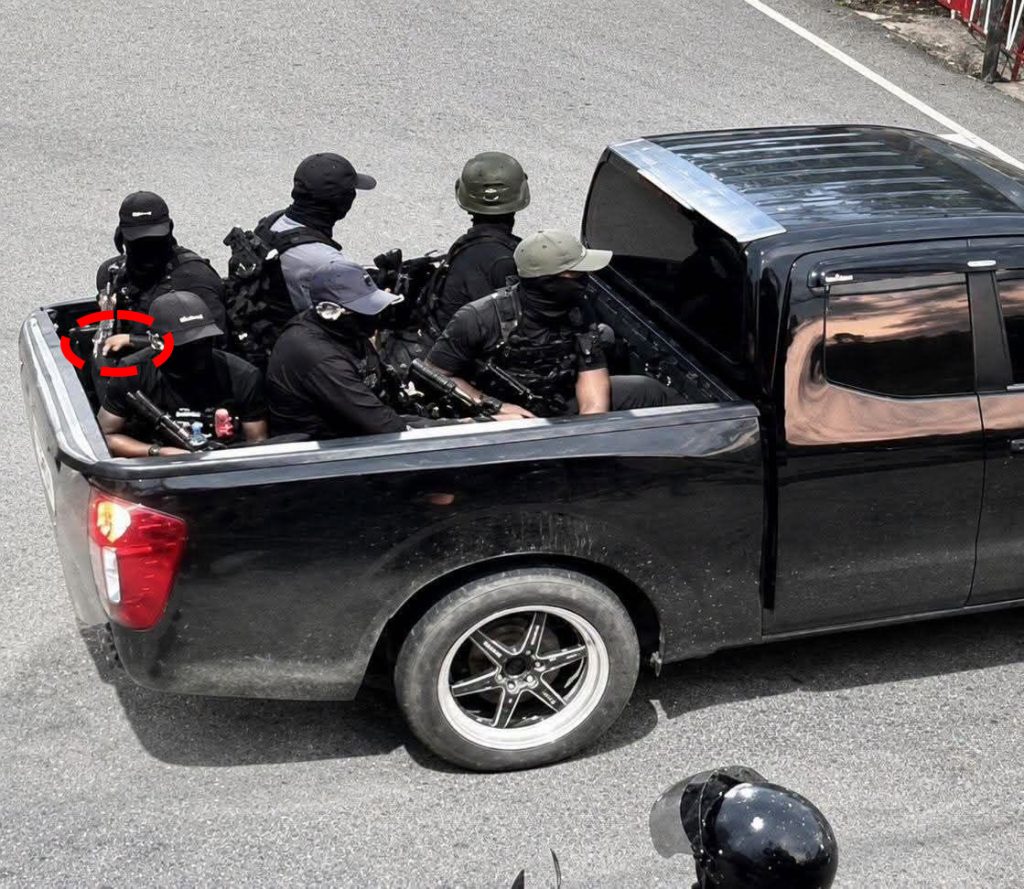
Distorted Fingers Indicate That the Image Was AI-Generated
Expert Says the Weapon in the Image Does Not Match Any Known Firearm
Witthaya Suksomsot, also known as Witthaya Guns Tactics, a firearms expert, commented on the weapon shown in the image, saying that its features are highly distorted. He added that insurgents in Thailand’s southern border provinces typically use assault rifles such as AK-47s or M-16s, which are often weapons previously stolen or seized from state authorities. However, the firearm shown in the image cannot be identified as any particular type of gun.
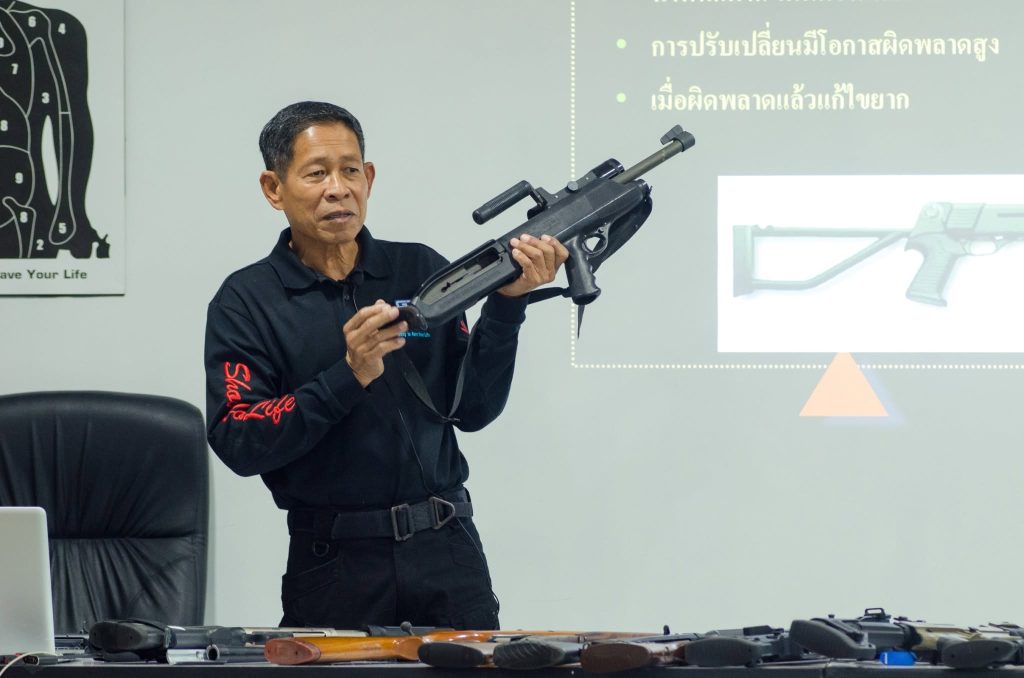
Witthaya Suksomsot, a Firearms Expert
Analysis of the Original Image: Expert Says There Is No Tattoo
Regarding whether the man in the image has a tattoo, we also had the original image analyzed by Krit Lueangcheng, president of the Tattoo Trade and Entrepreneurs Association. The association president said, “Based on the original image, I personally think there is no tattoo whatsoever on the person’s lower arm.”
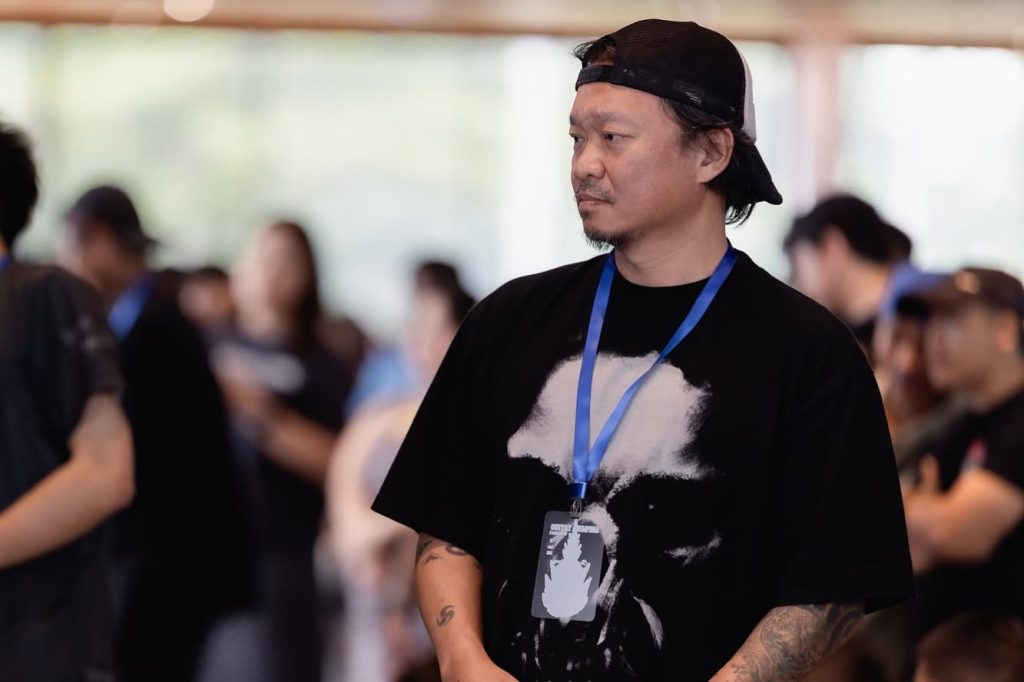
Krit Lueangcheng, President of the Tattoo Trade and Entrepreneurs Association
Why Is AI Upscaling Not Reliable?
Assistant Professor Dr. Jetsada Salathong, a lecturer at the Faculty of Communication Arts, Chulalongkorn University, explained how AI-based image enhancement/upscaling works. He said that AI image enhancement does not “extract hidden information” from a photograph. Instead, it makes a “statistical prediction” about what blurry pixels are likely to represent, and then redraws them based on patterns learned from its training data.
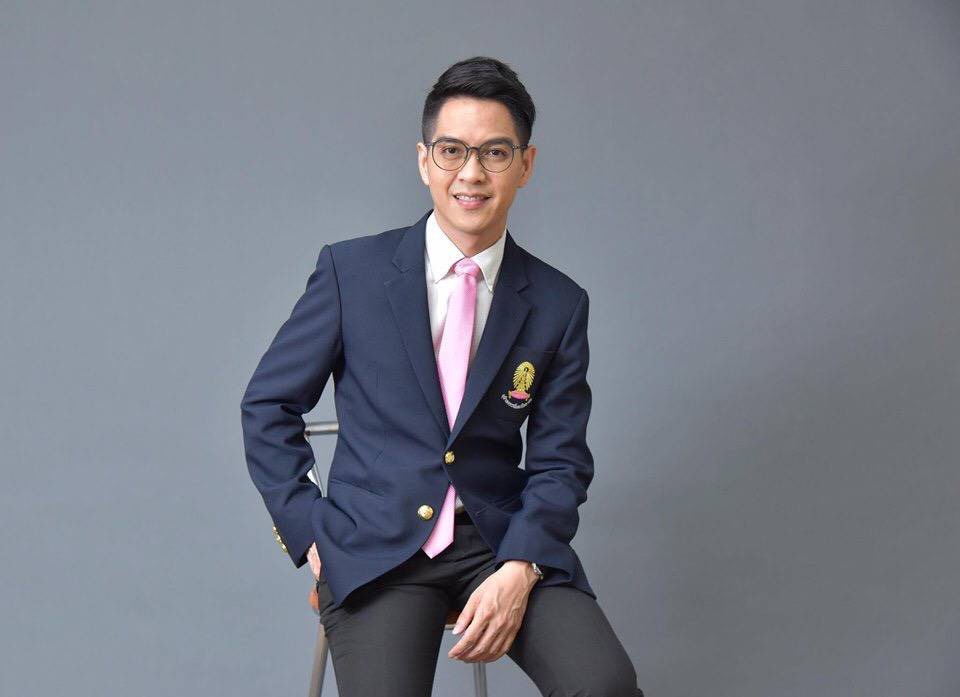
Assistant Professor Dr. Jetsada Salathong, a lecturer at the Faculty of Communication Arts, Chulalongkorn University
Therefore, the result is not a real image with improved clarity, but merely a newly generated image based on a prediction. In addition, AI can produce hallucinations or generate information that does not actually exist. For these two reasons, we should not rely on images processed through AI upscaling.
AI Often Generates Images Based on Bias and Prejudice (AI Bias)
Assistant Professor Dr. Jetsada also pointed out that AI-generated enhancements can incorporate biases. For example, previous research has found that when the term “terrorist” is entered, AI often predicts and generates images of Black people or Muslims, based on associations that are frequently discussed online. Therefore, its use in security-related contexts requires extreme caution.
AI May Increase the Risk of Misinformation and Hasty Judgments in Society, particularly if there is no screening process or requirement that AI be used specifically for forensic purposes. This could allow members of the public to take any image, process it with AI, and then share the newly altered image to create narratives that influence public opinion, such as claims about whether a person has a tattoo in an attempt to identify them. This could lead to people making hasty judgments online and contribute to the alarming spread of false information.
What Is the Truth?
-
- The “tattoo” shown in the image is not from an actual photograph, but was generated by AI (AI Hallucination): The image of the suspect that was posted with a question about whether he had a tattoo was created by processing a still image from CCTV footage through an AI upscaling program. The AI system did not retrieve any actual hidden information, but instead used “statistical prediction” to recreate details, resulting in technical flaws that turned blurry shadows on the skin into what appeared to be a tattoo, as well as generating a strange object beside the ear and a distorted firearm.
- The original image shows “no tattoo”: A detailed analysis of the original CCTV image by an expert confirmed that there was no tattoo whatsoever on the suspect’s lower arm.
- AI detection system indicates a 79% likelihood that the image was AI-generated: When the image was analyzed using the AI or Not detection tool, the results showed a 79% likelihood that the image had been generated or altered using artificial intelligence.
Verification Process
1. Verifying Technical and Physical Anomalies in the Firearm and Other Features
- Firearm analysis: Witthaya Suksomsot (Witthaya Guns Tactics), a firearms expert, pointed out that the weapon shown in the AI-generated image has distorted and irregular proportions that do not correspond to the structure of any known firearm. Insurgents in Thailand’s southern border provinces typically use assault rifles such as AK-47s or M-16s, which have often been seized from authorities.
- Analysis of fingers and strange objects: The suspect’s fingers in the upper-left part of the image appear distorted, while a strange object appears attached beside the ear of the man in the center. These are typical signs of AI miscalculation as it attempts to turn blurry pixels into recognizable objects
2. Verifying the Tattoo from the Original Image
Krit Lueangcheng, president of the Tattoo Trade and Entrepreneurs Association, examined the original CCTV image file side by side and gave his professional opinion that there was no tattoo on the suspect’s lower arm in the original image, contrary to what the altered image appeared to show.
3. Understanding AI Upscaling and AI Bias Assistant Professor Dr. Jetsada Salathong, a lecturer at the Faculty of Communication Arts, Chulalongkorn University, provided two key academic observations:
- AI Upscaling is “guessing,” not retrieving the actual image: Image enhancement programs recreate images based on statistical patterns from their databases. The result is therefore not a clearer version of the original image, but a newly generated image based on what the AI predicts (AI Hallucination).
- Artificial Intelligence Bias (AI Bias): AI often absorbs biases from the internet. When processing terms associated with “terrorists” or “criminals,” AI may automatically predict and add certain characteristics to an image on its own.
Impacts of This False Information
- Creating misleading narratives and prompting hasty judgments: Posting an image that has been guessed and recreated by AI to fuel speculation about a “tattoo” can cause people online to misunderstand the situation, make hasty judgments, and lead to misguided assumptions.
- Interfering with and causing confusion in the forensic process: In national security cases, using AI-upscaled images without academic or scientific support could confuse the public and distort the actual evidence used by police to track down and apprehend suspects.
What to do with this misinformation?
- Do not trust images enhanced with general AI tools: Blurry CCTV images cannot be accurately enhanced using commercially available AI applications because these programs “recreate and add details to the image” rather than reveal the actual image.
- Rely on forensic science to establish identity: Identifying suspects in national security cases must rely on the forensic examination of evidence by police and forensic authorities. People should not use personal applications to alter images and make their own judgments.
- Stop sharing images that create division: If you encounter an image suspected of having been altered with AI to influence discussions about tattoos, nationality, or ethnicity, avoid sharing it. You can also send the link to Thai PBS Verify for fact-checking to help break the cycle of fake news online.
ผ