Policy to demonetize 500–1,000 baht notes as anti‑corruption measure: Academics say it won’t curb corruption, suggesting new banknote designs instead
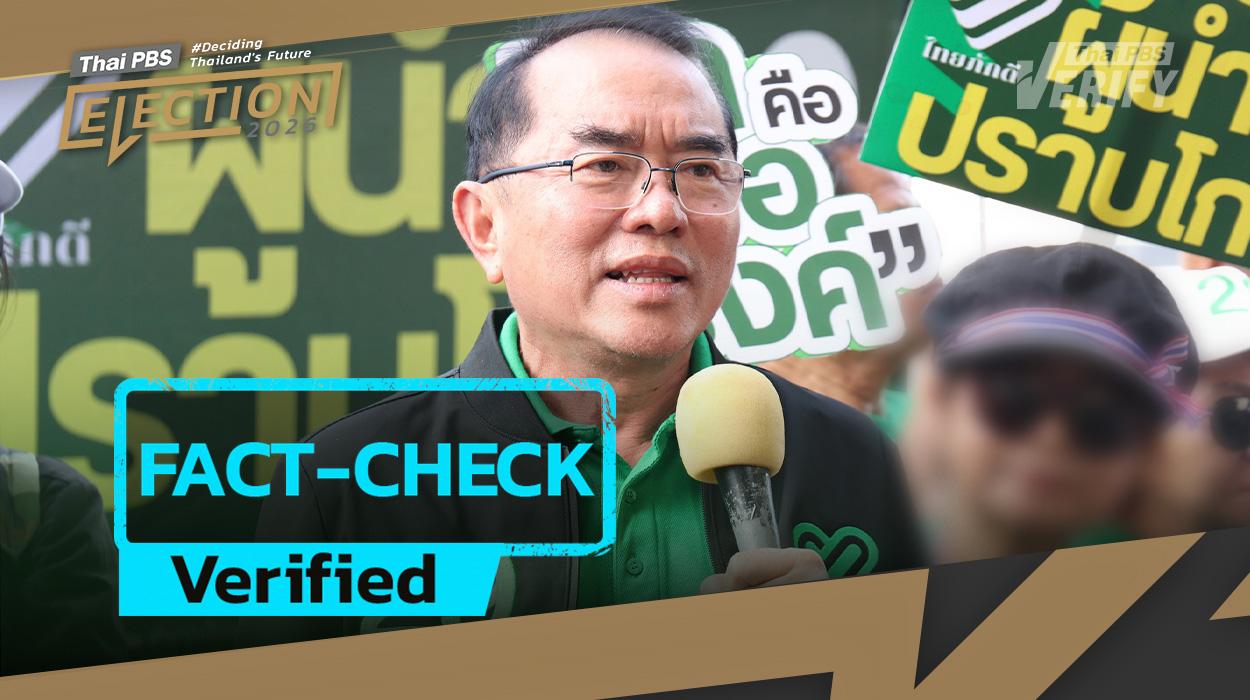
Amid the election campaign, Thai Pakdee Party, led by Dr. Warong Detkitvikrom, M.D., put forward this policy as a way to address basic corruption cases — kickbacks, bribes, procurement fraud, and the buying and selling of positions. Most of these transactions are conducted in cash and stored at residence, leaving no evidence. WhileThailand moving toward a cashless society, the party insists that demonetizing 1,000‑ and 500‑baht notes would help combat corruption, scammers, and online gambling.
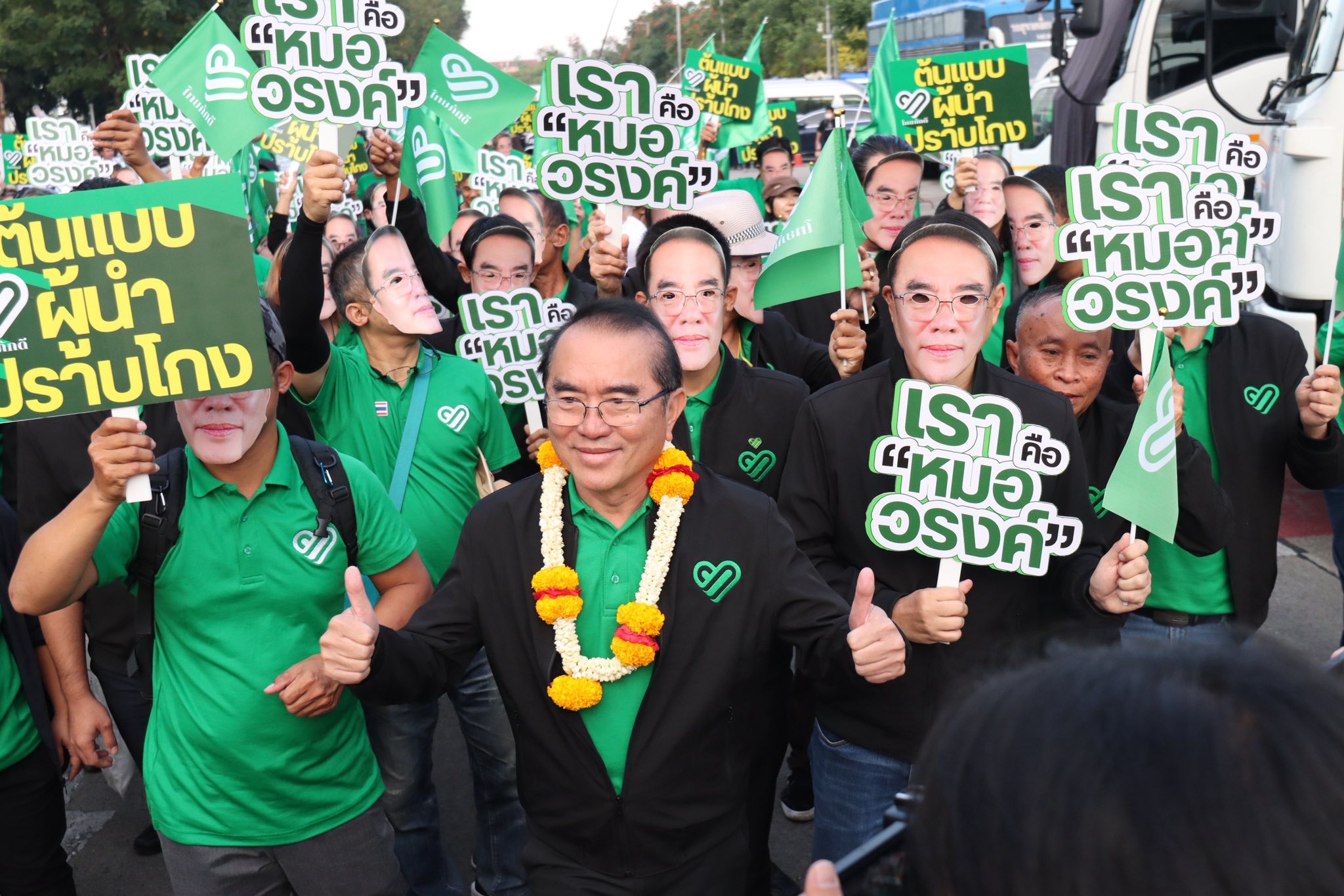
Dr. Warong Detkitvikrom, leader of Thai Pakdee Party

“Every ministry gives cash allowances of about 500,000 to 1 million baht per month to ministers. If there are ten ministers, that’s 5–10 million baht. Monthly police meetings also involve envelopes of cash handed to senior officers. Every agency uses cash. Why do we let this cash circulate — just so corrupt officials can hoard it at home? Thai Pakdee makes its stance clear. As Thailand moves toward a cashless society, why do we need large banknotes? To hide them? We will announce the demonetisation of 1,000‑ and 500‑baht notes. But this doesn’t mean immediate cancellation — we will allow 3–4 months and then review the details.
“Believe me, India once tackled the problem of officials and influential figures hiding cash underground at home. Academics estimated the value in hundreds of billions Indian rupee. Once abolished, that money had to surface, and authorities could trace its origins and collect taxes. So it’s no surprise that 1,000‑ and 500‑baht notes are favored by the corrupt to stash at home. Ordinary citizens like us can use mobile payments. Everyday people and shopkeepers can use mobile phones. This is what Thai Pakdee has studied as a way to fight corruption,” said Dr. Warong Detkitvikrom, the leader of Thai Pakdee Party.
Development of Thai Pakdee’s big banknote demonetisation policy campaign
The 2023 Election
- Oct. 25, 2022: Sanon Boonmee, deputy spokesperson ofThai Pakdee Party, first proposed the idea, arguing that abolishing 1,000‑baht notes would help curb corruption and cut off underground businesses that typically hoard large amounts of cash.
- Nov. 23, 2022: Thai Pakdee Party held a press conference to introduce prospective MP candidates and officially announced its “Anti‑Corruption Overhaul” policy package, highlighting reduced cash usage as a key measure to combat corruption.
- Dec. 26, 2022: Dr. Warong posted on his personal Facebook page to officially launch the campaign “to abolish both the 1,000‑ and 500‑baht notes,” reasoning that most grey money is stored in these denominations and citing India as a case study.
- May 2023: Dr. Warong Detkitvikrom began debating the policy on several platforms, presenting it as a measure to fight graft and stop under‑the‑table payments. At that time, the focus was still only on abolishing 1,000‑baht notes.
The upcoming 2026 Election
- Jan. 3, 2026: The Thai Pakdee Party campaigned at Victory Monument, once again emphasizing its policy to draw an estimated 100 billion baht of “off‑system money” back into the formal banking system.
Thailand’s corruption iceberg that citizens must help break
Dr. Mana Nimitmongkol, President of the Anti‑Corruption Organization of Thailand, said the overall corruption problem this year is not significantly different from the past decade. However, the patterns have become more complex, driven by “networks” of actors at multiple levels. This makes oversight more difficult and the damage in each case more severe. He added that policy‑level corruption involving politicians and senior officials has also increased.
Dr. Mana noted that what has worried citizens the most this year is scammers and grey capital, which form part of Thailand’s vast “informal economy.” Research by the Thai Bankers’ Association estimates that the informal economy accounts for 48.6% of GDP — about 8–9 trillion baht — covering underground lotteries, gambling dens, brothels, narcotics, arms trafficking, online gambling, and scam networks. These networks survive because they are intertwined with corruption in the bureaucracy and political circles, making the problem harder to contain.

Dr. Mana Nimitmongkol, President of the Anti‑Corruption Organization of Thailand
While ordinary citizens alone cannot directly eliminate the informal economy, the “voice of the people” — especially from business leaders, financial experts, academics, and those who understand the problem — should collectively send warning signals to society and pressure those in power. This includes senior officials, justice agencies such as the police or the Anti‑Money Laundering Office (AMLO), as well as politicians, to take responsibility and address the issue seriously. Even if corruption cannot be eradicated entirely, it should at least be controlled, monitored, and punished effectively.
“In the upcoming election, if we continue voting the same way — choosing candidates backed by political dynasties, those who buy votes, or local power brokers — we may get a new government but the same old corruption scheme. But if Thai citizens use their votes with discernment, every single ballot can be transformative. It can change the country in profound ways,” said Dr. Mana Nimitmongkol
Demonetizing banknotes only tackles corruption on the surface
Assoc. Prof. Dr. Aat Pisanwanich, expert in international and ASEAN economics, stated that Thailand is not yet fully ready to become a cashless society. While Bangkok and other major cities have increasingly adopted digital payments, rural areas still rely on cash — especially the elderly, who are not familiar with applications or new technologies. Therefore, he suggested that the readiness of digital platforms should first be improved so that all citizens can access and use them effectively.
On the issue of tackling corruption, Dr. Aat argued that the problem is not confined to cash transactions involving 500‑ or 1,000‑baht notes. Corrupt actors can easily turn to other channels, such as buying gold online and using it for payments, or transferring money electronically. Thus, abolishing cash cannot solve corruption at its root cause.

Assoc. Prof. Dr. Aat Pisanwanich, expert in international and ASEAN economics
Dr. Aat Pisanwanich pointed out that the root of corruption lies in the structure of oversight for government projects. Procurement committees are often drawn from within the same agency, making lobbying easy. If committees were instead composed of experts from diverse fields, independent of a single agency, it would help close loopholes for corruption more effectively.
Cancelling 500‑ and 1,000‑baht notes might only help marginally — perhaps 10–20% — because 80% of the problem remains. For example, even without 500‑baht notes, one could simply bundle 20‑baht notes to reach the same amount, requiring only an extra bag or two.
Academics say scrapping large banknotes is not the answer — suggesting to issue new banknote designs instead
Assoc. Prof. Dr. Thanawat Polvichai, President of the University of the Thai Chamber of Commerce, noted that many countries have abolished banknotes to address corruption or issues linked to grey capital, grey businesses, and illegal activities, since those involved often hoard large amounts of cash. The common method is to declare the old banknotes invalid and issue new ones, while setting a deadline — for example, one year — for citizens to exchange their old banknotes. This forces those holding hundreds of millions or billions in cash to bring it out into the open, making them more easily scrutinized for possible links to illicit transactions.

Assoc. Prof. Dr Thanawat Polvichai, President of the University of the Thai Chamber of Commerce
Dr. Thanawat Polvichai noted that cancelling all banknotes and switching entirely to digital systems without retaining any physical currency is not the path most countries have taken. Many societies, including Thailand, have not yet reached 100% digital adoption. Although services such as PromptPay, bank transfers, credit cards, and other digital channels are increasingly used — and many shops have begun refusing cash — cash transactions remain widespread.
He explained that if large‑denomination notes were abolished, leaving only small notes, people would be forced to carry excessive amounts of cash for everyday spending. Large notes, therefore, remain necessary for the economy. Moreover, no country has eliminated denomination without issuing a new series to replace it. A more practical approach, he said, is to issue redesigned banknotes — changing their format, symbols, or colors — and allow citizens to exchange old notes within a set period. This method has been adopted in many countries and is consistent with international practice.
What is the truth?
Thai PBS Verify found that the policy to demonetize 500‑ and 1,000‑baht banknotes was first proposed by Dr. Warong Detkitvikrom, as part of his anti‑corruption agenda during the 2023 election campaign and has continued to the present. The rationale is that most grey money is stored in cash, particularly in these two denominations.
However, economics scholars argue that Thailand is not yet a fully cashless society. Cash remains necessary, especially in rural areas. They recommend that if corruption is to be addressed effectively, solutions should focus on reforming government structures rather than simply cancelling large banknotes.
Verification Process
-
- Policy timeline check: Reviewing the timeline shows that the proposal to abolish 500‑ and 1,000‑baht banknotes was previously used as a campaign pledge during the 2023 election.
- Expert source interview: Thai PBS Verify interviewed Assoc. Prof. Dr. Aat Pisanwanich, expert in international and ASEAN economics, who argued that abolishing these banknotes only addresses corruption superficially. He suggested instead that reforms should focus on oversight of government projects.
- Expert Source Interview: Thai PBS Verify also contacted Assoc. Prof. Dr. Thanawat Polvichai, President of the University of the Thai Chamber of Commerce. He said that rather than abolishing 500‑ and 1,000‑baht notes outright, solutions should be to issue new banknote designs and limit the period of cash usage as a way to tackle grey capital.