“Ultra-Smooth” Scams: How AI-Driven Fraudsters Trick Victims Effortlessly

No longer just a gelato marketing trend, "Ultra-Smooth" now describes the seamless tactics of AI fraudsters. By leveraging deepfakes, cloned voices, and realistic chats, scammers have made fake information virtually indistinguishable from reality. Thai PBS Verify highlights how to spot these sophisticated traps before you fall victim.
“Ultra Smooth” doesn’t refer to ice cream, but to scammers! From fake images and voices to conversations that seem to come from real people, AI-powered scammers are upgrading their methods to be more sophisticated than ever before. Sometimes, users may not be able to distinguish between real information and fabricated scams designed to steal money or personal data. Thai PBS Verify advises you to be aware of these scams before becoming a victim.
But on the other hand, this subtlety and deception aren’t limited to products and marketing. In the online world, modern scammers are also developing increasingly sophisticated fraudulent tactics.
While previously fraud might be easily detected through unusual messages or unreliable methods, AI technology is now being used to create fake images, audio, video, and text that appear more realistic, sometimes making it difficult for users to distinguish between real information and what is fabricated to deceive.
When “deception” becomes a tool for scammers, online users need to enhance their information verification skills to avoid falling victim to online fraud in the AI era.
How do AI-powered scammers become so convincing that people fall for their tricks?
1. Create deepfakes that are so realistic they’re difficult to distinguish from real photos and videos.
One technique that’s being discussed more frequently is Deepfake, or the use of AI to create or modify images and videos to resemble real people. Scammers may use images of celebrities, executives, or officials to accompany fraudulent messages, such as:
- They claimed that the person was offering investment advice.
- Using fake videos to build credibility.
- The image was edited to make it look like the person was saying something.
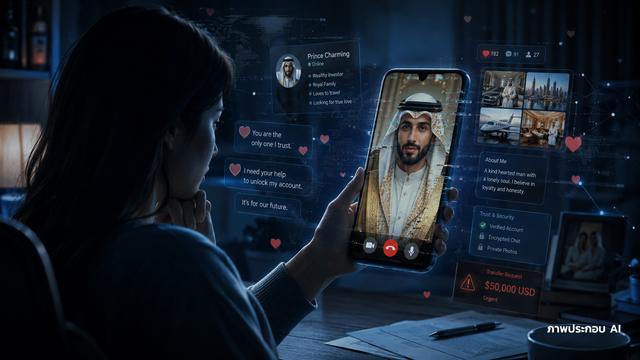
- Deepfake video call scams (romance scams) build trust before swindling money.
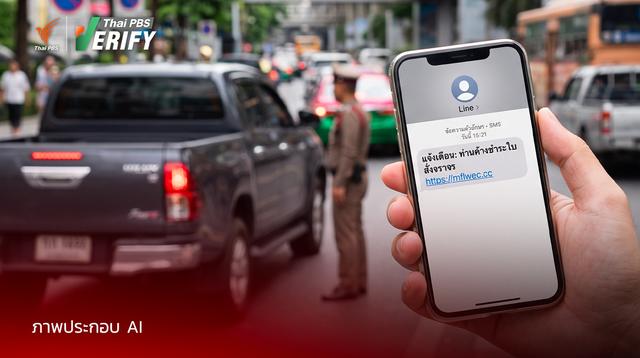
- Deepfakes impersonating police officers create fear and exploit credibility to deceive victims, such as the case of the Poipet police unit.
In addition to impersonating individuals or organizations, AI-powered scammers are using technology to create fake content to trick users into clicking links, signing up for services, or revealing personal information. One common form is:
- Creating fake news, fake videos, or fake posts that appear to come from credible media outlets or news sources, often using images, logos, presentation styles, or the faces of famous people to increase credibility.
The goal of this fake content may not only be to mislead people with false information, but also to use it as a pathway to lure victims into traps, such as links to online gambling websites, personal data forms, and fake websites that mimic real organizations or companies.
- Deepfake celebrities are scamming people by selling products and soliciting investments.
Another strategy that scammers use AI is to create deepfakes that imitate famous people, such as actors, news anchors, experts, or executives, in order to make advertisements appear credible.
For example, using the faces of celebrities in fake videos claiming to endorse products, using voices of famous people to recommend investments, editing the videos to make it seem like the person is saying things they never actually said, and then using them in misleading advertisements to trick people into clicking links.
When viewers see a familiar person, they may lower their guard and assume the product or service is genuinely endorsed.

An example image from a Thai PBS Verify news investigation revealed a Facebook page, Muscle Merge, using the logo of the Thai PBS World Tonight program and publishing a video interview with Mr. Tos Chirathivat, Chairman of the Executive Board of Central Group, and Mr. Klin Sarasin, Honorary Chairman of the Thai Chamber of Commerce and the Federation of Thai Chambers of Commerce. The content of the video contained solicitations for investment.
2. Clone Voice: Convincely impersonate the voice of someone close to you.
AI can create voice imitations of individuals from short audio samples, leading to new forms of fraud, such as:
- They call claiming to be a relative or acquaintance.
- Use a voice similar to that of an executive to order a money transfer.
- Impersonating officials from various agencies.
3. Use AI to cleverly create fake stores and reviews.
Online shopping is another channel where scammers are using AI, for example:
- Create product images that look unrealistically beautiful.
- Write professional-looking advertising copy.
- Create fake reviews to increase credibility.
- Creating fake pages that mimic real stores.
4. Use AI to create deceptive messages.
Scammers can use AI to help write more formal-sounding messages, such as:
- Fake bank alert message.
- The message claims to be from a government agency.
- Investment solicitation message
- Prize notification message.
How to spot the “ultra-smooth” level of deception by scammers.
1. Don’t believe something just because it seems plausible.
Images, sounds, or videos that appear realistic may be created or manipulated using AI. Always verify information from other sources.
2. Beware of rushing into making a decision.
Scammers often create pressure, such as:
- Immediate action is required.
- Failure to do so will result in account suspension.
- The special offer is expiring.
- The money must be transferred within the specified time.
This rush leaves the victims with no time to verify the information.
3. Verify identity and source.
If you receive a call, please verify the information through official channels, such as:
- Call back using the number you found yourself.
- Contact the agency directly.
- Check the official website or account.
4. Observe any abnormalities in the AI.
Even though AI has advanced significantly, there are still some things to note, such as:
- The tone of voice is strange and unnatural.
- Irregular speech rhythm
- The facial expressions, mouth, or movements are not synchronized.
- The details in the image are distorted.
However, one should not rely on a single observation to make a decision; other information must be checked as well.
How to protect yourself from becoming a victim.
1. Stop and think, take a moment to consider before believing anything, especially when it comes to money.
When receiving text messages, phone calls, or information related to money, pause and think before acting, even if the contact claims to be an official, a banker, a company representative, or an acquaintance. Modern scammers can create realistic scenarios and use AI to make messages, voices, or images appear more believable.
Don’t make decisions based on panic, fear, or greed, such as claiming account problems, winning a prize, or an investment opportunity that requires a quick decision.
2. Do not transfer money because you are being rushed or pressured.
One of the key techniques used by scammers is to create a sense of urgency, preventing victims from having time to think or ask others. For example:
- “The transfer must be made today.”
- “If no action is taken, the account will be suspended.”
- “Special privileges are running out.”
- “Fees must be paid before withdrawing money.”
If you encounter a situation like this, you should stop and verify the information yourself, such as contacting the relevant authority through official channels or searching for additional information before transferring money.
- Do not disclose OTP codes, passwords, or other important information.
No trustworthy organization will ask for OTP codes, passwords, or account security information via phone call, chat, or text message.
Information that should be kept confidential includes:
- OTP code
- Bank app password
- Card PIN
- Unnecessary ID card information.
- Bank account information
Even if the contact claims to be an official or possesses some of our personal information, it doesn’t necessarily mean they are genuine, as some information may have been obtained from leaked databases or online sources.
4. Set up security settings for your online account.
Enhance account protections to reduce risk in case of data breaches or attempted access, such as:
- Enable two-factor authentication.
- Create a strong, hard-to-guess password and don’t use the same password for all your accounts.
- Update your operating system and applications to the latest version.
- Periodically check logins or devices connected to your account.
Adding security measures can help reduce the chances of criminals accessing personal information.
5. Limit the sharing of personal information on social media.
The information we share online could be used to commit fraud, for example:
- Name-Surname
- birthday
- Workplace
- Family information
- Personal photos
- Travel information or daily routine.
Scammers may use this information to create believable stories or impersonate people close to you.
You should check your account’s privacy settings and avoid posting unnecessary information publicly.
6. If in doubt, ask someone close to you or the relevant organization directly.
When faced with an unusual situation, don’t make decisions alone. Ask those around you or use official contact channels to verify information.
For example,
- If someone claims to be from a bank, call the number listed on their official website or app to verify their identity.
- If they claim to be a government agency, contact that agency directly.
- If someone claims to be an acquaintance and asks to borrow money, they should call back using the contact method we usually use.
Because scammers can fake entire accounts, photos, audio, and conversations, verifying from genuine sources can help stop the fraud.