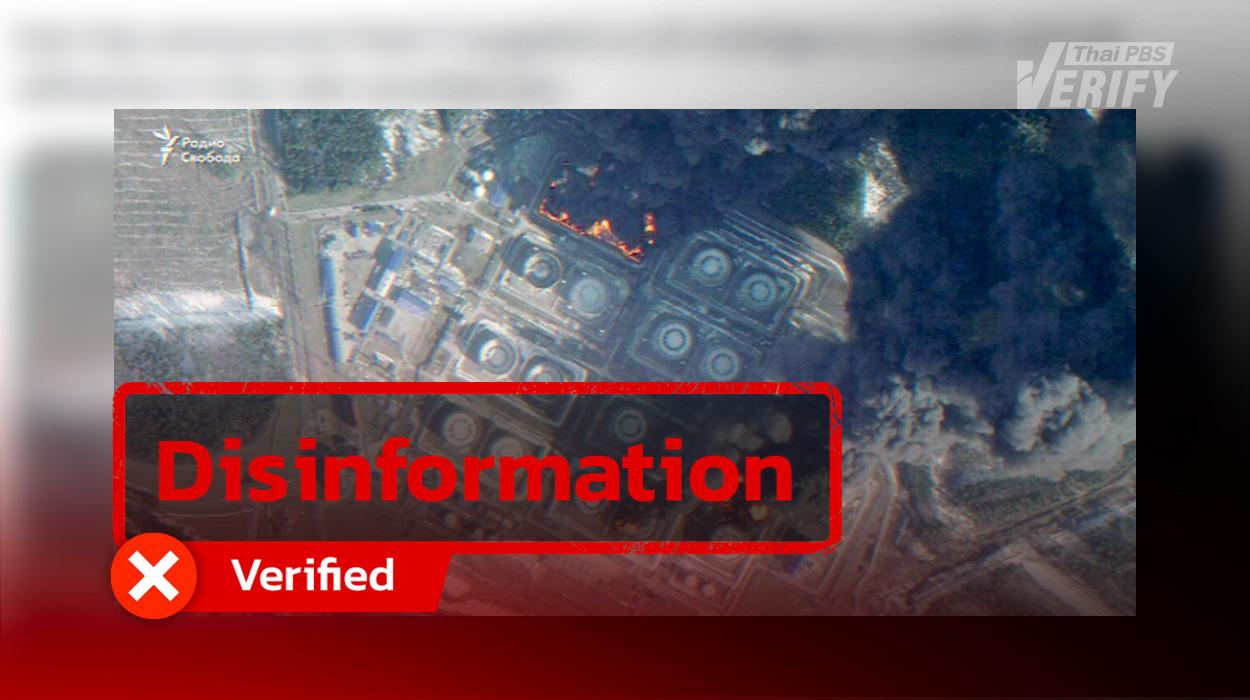
Russia-Ukraine war footage distorted as recent Iranian strikes on UAE and Bahrain oil refineries
Thai PBS Verify found the piece of disinformation on: X
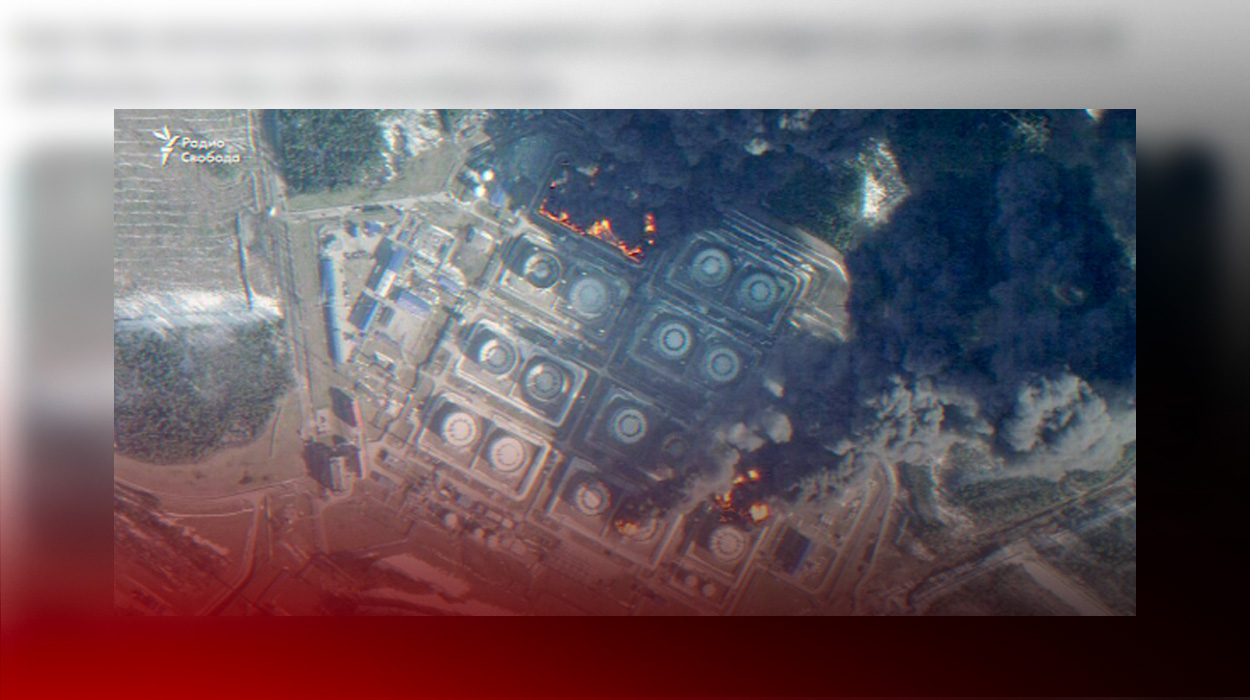
A video posted by an X user named ‘GBX’ asserts that Iran targeted a U.S. intelligence facility and oil refineries in the United Arab Emirates and Bahrain.
Thai PBS Verify identified a video post on the X platform, published by an account under the name GBX. The caption reads:
“🚨 BREAKING
Iran has announced that it targeted a US intelligence center and oil “refineries in the UAE and Bahrain.”
Published on May 3, 2026, the clip in question went viral, amassing over 1.4 million views.
The video does not depict Iran attacks on oil refineries in the UAE and Bahrain
A verification on Google Lens allowed Thai PBS Verify to trace the video to an Al Jazeera report dated March 23, 2026. The original coverage identified the incident as a Ukrainian assault on a critical port and oil refinery in Primorsk, Russia.
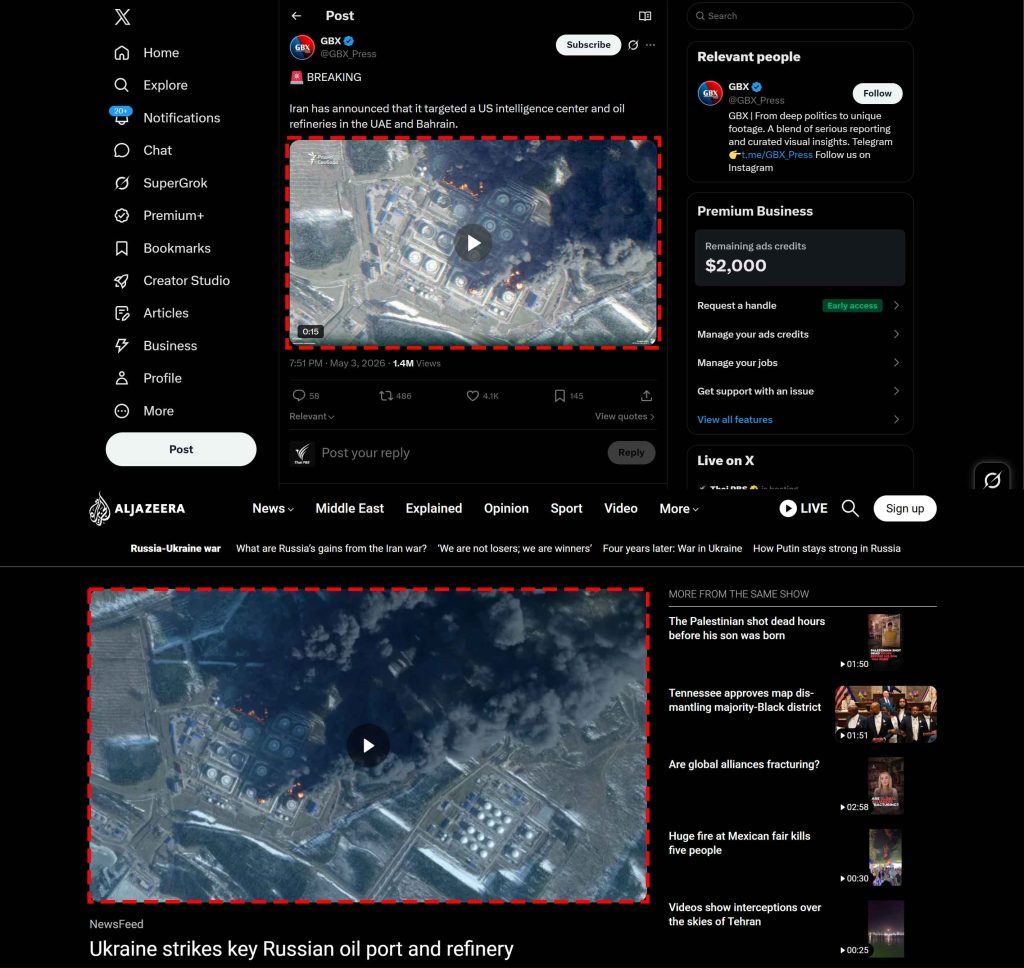
A comparison between the false post (top) and Al Jazeera’s report on Ukraine’s strike on Primorsk, Russia (bottom).
Similarly, The Guardian published the same image in its report, titled ‘Ukraine war briefing: Strikes on Russia’s Primorsk oil port and ships.’ The outlet specified that the satellite imagery, captured on March 29, 2026, shows smoke rising from damaged oil storage tanks at the Russian port of Primorsk following a Ukrainian strike.
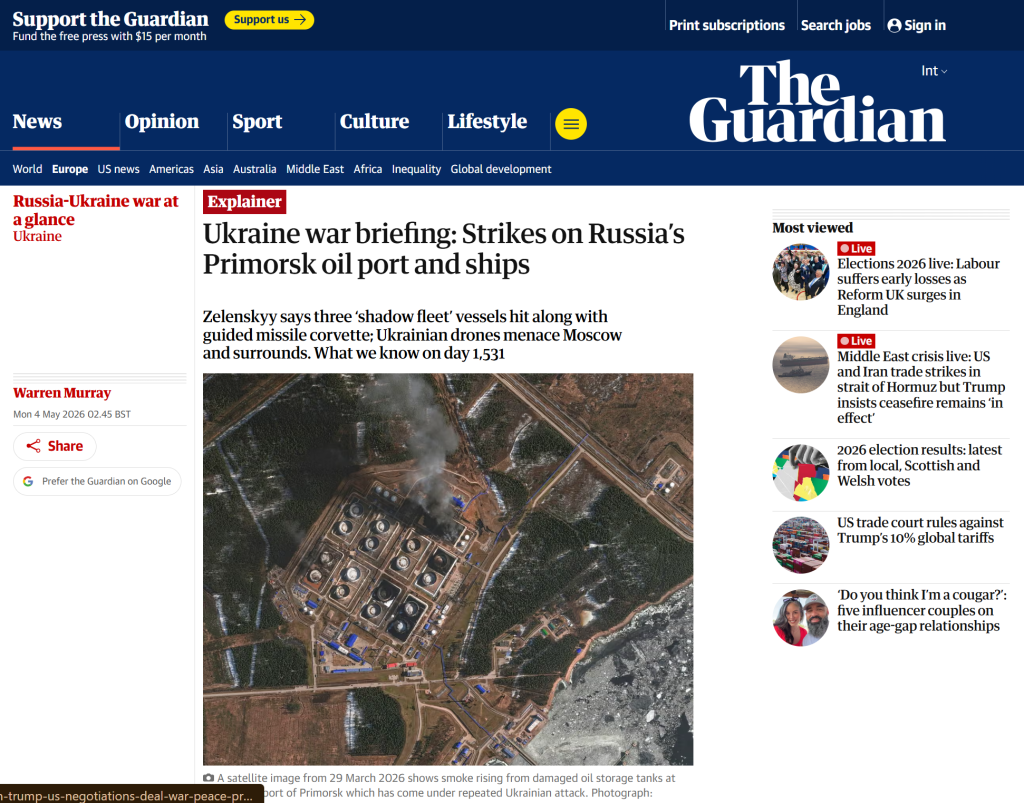
The Guardian’s news report features satellite imagery of the Primorsk port in Russia (March 29, 2026).
Where was the footage in the video captured?
Additionally, the exact location in the video was able to be verified thanks to targeted keyword searches on Google Earth. It proved that the imagery depicts a critical Russian port and oil refinery in Primorsk, completely unrelated to any facility in the United Arab Emirates or Bahrain.
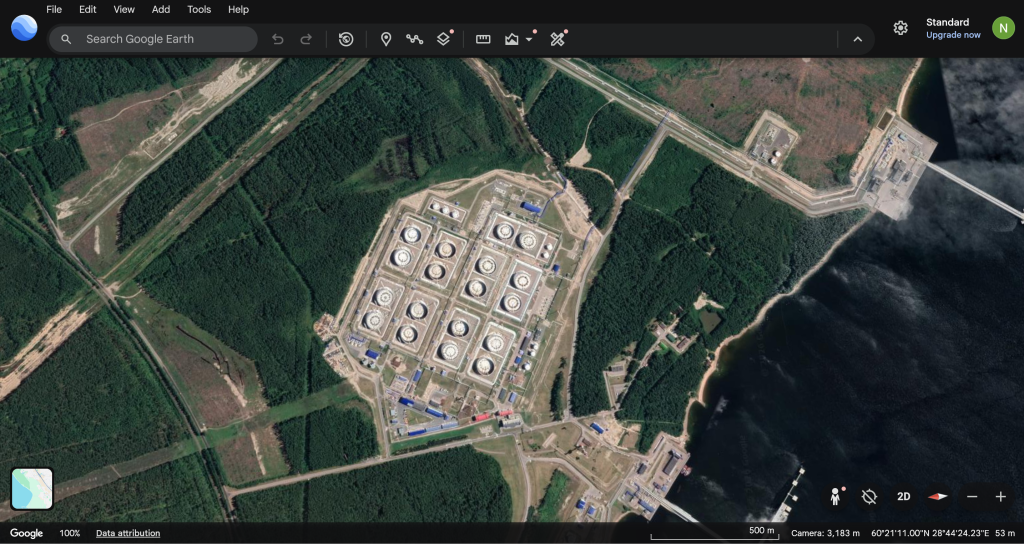
A Russian port and oil refinery facility in the city of Primorsk.
The location of the oil refinery at Russia’s Primorsk port
What is the truth?
Thai PBS Verify has debunked the claims shared by the X account ‘GBX,’ regarding alleged Iranian strikes on a U.S. intelligence center and oil refineries in the UAE and Bahrain. These claims are classified as false. The truth of the matter is outlined below:
- Incident in Russia: The video actually depicts a Ukrainian attack on a major Russian port and oil refinery in the city of Primorsk.
- Timing verification: The genuine event was publicized by Al Jazeera on March 23, 2026, establishing that it took place before the misleading claims surfaced later in May.
- Video setting: Google Earth analysis has confirmed that the footage was captured in Primorsk, Russia, completely ruling out any oil refinery location in the Middle East.
Verification Process
- Source verification: The video imagery was verified with Google Lens. It led to the authentic information published by Al Jazeera.
- Cross-referencing the footage: Comparing the visuals from the initial post with the news clip of Ukraine’s strike on the Russian refinery, Thai PBS Verify confirmed that both sources utilized identical footage.
- Geolocation authentication: Through a keyword-based analysis on Google Earth, the architectural design and spatial features within the footage were examined, affirming that the facility is indeed an oil refinery and port located in Primorsk, Russia.
Potential impacts of disinformation
- Market disruption: False reports concerning oil refineries in the Middle East typically lead to immediate fluctuations in global oil prices, consequently causing panic within the investment community.
- International security risks: Alleging an assault on a U.S. intelligence center could create misleading narratives about a regional conflict expansion in the Middle East, adding to existing international tensions.
- High velocity of circulation: Driven by more than 1.4 million views, the misleading report spread extensively in next to no time.
What to do with this misinformation?
- Source observation: In cases where information is published by alternative social media accounts utilizing high-impact buzzwords (e.g., “BREAKING”), readers are advised to question the validity and perform cross-referencing with official sources.
- Date and time verification: Outdated video materials are often re-circulated under false contexts during periods of political or international tension to create sensationalism.
- Reverse image search: Verify violent incident photos yourself using Google Lens. If you are unsure, report the information to Thai PBS Verify for a thorough accuracy check.